2027 Online Addiction Psychology Degree Programs With No Letters of Recommendation Required

Co-Founder and Chief Data Scientist
Applying to an online addiction psychology program can be difficult when you do not have recent professors or supervisors who can write recommendations. Programs with no required letters can reduce that barrier while still reviewing academic readiness and career fit. The U.S. Bureau of Labor Statistics projects 19% growth in jobs for substance abuse, behavioral disorder, and mental health counselors from 2023 to 2033, increasing interest in behavioral-health education.
This guide helps prospective students identify no-recommendation options, verify legitimacy, compare costs, and choose a degree aligned with their intended role.
Key Things You Should Know
- "No letters of recommendation required" means recommendation letters are not part of the standard application; it does not mean automatic admission, and schools may still require transcripts, a minimum GPA, an application, or transfer-credit records.
- Many online undergraduate psychology programs offer addictions, addiction counseling, or recovery-related concentrations with streamlined admissions, but a bachelor's degree alone does not usually qualify a graduate for independent psychologist licensure or every state addiction-counselor credential.
- The Bureau of Labor Statistics projects 19% employment growth for substance abuse, behavioral disorder, and mental health counselors from 2023 to 2033; compare institutional accreditation, state credential rules, total price, and practicum requirements before enrolling.
Which Online Addiction Psychology Degree Programs Require No Letters of Recommendation?
Standalone degrees called "addiction psychology" are relatively uncommon. More often, students will find an online bachelor's degree in psychology with an addictions concentration, an addiction counseling emphasis, or a recovery-focused behavioral-health curriculum. At the undergraduate level, many institutions use transcript-based admissions and do not list letters of recommendation as a standard requirement.
The options below are examples of programs whose published undergraduate admissions materials have generally emphasized an application and academic records rather than recommendation letters. Requirements can change by term, applicant type, and transfer status, so applicants should confirm the exact program checklist directly with admissions before paying an application fee.
| Institution and online program area | Typical degree level | How the addiction focus may appear | Published admissions pattern to verify |
| Southern New Hampshire University | Bachelor's | Psychology degree with an addictions concentration | Application and transcripts; recommendations are generally not listed for standard undergraduate admission |
| Liberty University | Bachelor's | Psychology degree with addictions and recovery coursework | Application and prior-school records; confirm requirements for transfer applicants |
| Purdue Global | Bachelor's | Psychology curriculum with addiction-related study options | Application and academic documentation; verify the current concentration and checklist |
| Grand Canyon University | Bachelor's | Psychology program with an addiction counseling emphasis | Application and transcripts; requirements can differ for students with prior college credit |
Do not treat this as a ranking or a guarantee that every applicant is exempt. Some schools may request extra documentation after reviewing a transcript, while a graduate counseling program at the same university may require letters even if its bachelor's program does not.
A no-letter option is often especially useful for working adults, career changers, military-affiliated learners, and applicants returning after a long educational break. It may be a weaker fit for someone whose goal is a master's-level clinical counseling program that expects faculty references or for someone who needs a program built specifically around a state addiction-counselor credential.
What Are the Admission Requirements for Online Addiction Psychology Degree Programs With No Recommendation Letters?
Streamlined admissions remove one document; they do not remove academic review. For bachelor's programs, schools commonly assess high school completion, previous college work, and whether the applicant can succeed in college-level reading, writing, and introductory social science courses. Graduate programs in addiction counseling or psychology are more likely to request a bachelor's degree, a stronger GPA, a statement of purpose, and sometimes recommendations.
The following materials commonly replace or supplement recommendation letters in an online undergraduate application.
| Requirement | What the school learns | What applicants should check |
| Official or unofficial transcripts | Course history, grades, earned credits, and academic trend | Minimum GPA, transcript deadline, and whether official records are required before enrollment |
| Online application | Identity, educational history, intended program, and enrollment term | Whether the application fee is waived and whether separate program forms are needed |
| Personal statement or short responses | Motivation, career direction, and writing readiness | Prompt length, required topics, and whether the essay is optional |
| Resume or employment history | Relevant behavioral-health, recovery-support, human-services, or leadership experience | Whether experience can support admission, transfer review, or prior-learning credit |
| Placement or prerequisite review | Readiness for writing, math, statistics, or psychology coursework | Whether prior coursework satisfies requirements or testing is needed |
Request transcripts early, particularly if you attended several colleges. Applicants interested in a health-profession route rather than a behavioral-health degree can also compare admissions structures for RN to BSN online programs, which have different licensure and clinical-background expectations.
Before applying, ask admissions whether "no letters required" applies to your specific program, degree level, and start date. Also ask whether a background check, immunization record, field-placement approval, or additional forms could be required later for internships or experiential learning.
Are Online Addiction Psychology Programs With No Letters of Recommendation Easier to Get Into?
They may be easier to apply to, but they are not necessarily easier to enter or complete. Removing letters reduces the time and access barriers associated with contacting former instructors or supervisors. Admissions teams can still deny applicants based on academic records, incomplete documentation, unmet prerequisites, or institutional eligibility standards.
Open-access or broadly accessible undergraduate institutions may place more weight on proof of high school completion and transfer records than on a holistic file. More selective programs may use essays, GPA, prerequisite grades, interviews, or professional experience instead. Graduate-level clinical programs usually maintain additional screening because students may later pursue supervised practice, licensure, or certification.
The practical distinction is shown below: simplified admissions concerns the application process, while academic rigor concerns what students must learn and demonstrate after enrollment.
| Factor | What no-recommendation admissions can change | What it does not establish |
| Application workload | Fewer outside documents and less dependence on referees | That admission is guaranteed |
| Academic review | Greater reliance on transcripts and direct applicant materials | That GPA or prerequisites are ignored |
| Program quality | No direct effect on curriculum or accreditation | That the program meets licensure requirements |
| Career preparation | Can make entry more accessible for experienced adults | That the degree alone authorizes clinical practice |
A common mistake is choosing the fastest-looking application instead of the best professional fit. Students who want to become psychiatric nurses, for example, need a nursing pathway rather than a psychology major; comparing affordable FNP programs can clarify how a clinically licensed route differs from an addiction psychology degree.
What Do Online Addiction Psychology Programs Evaluate Instead of Letters of Recommendation?
Without letters, admissions teams generally rely more heavily on evidence that comes directly from the applicant or from verified educational records. This approach can help applicants who have relevant life or work experience but lack a recent academic reference, although applicants should still present a complete and accurate record.
For an addiction-focused psychology program, the most useful evidence often includes a stable or improving academic record, clear career goals, and demonstrated readiness for sensitive human-services coursework. Relevant experience might include peer recovery support, case management, community outreach, residential treatment support, social services, or volunteer work. Experience is valuable context, but it does not replace a required degree, prerequisite, or state credential.
Applicants can strengthen a no-letter application with a focused sequence of steps.
- Read the program's current admissions page and catalog rather than relying on third-party summaries or an older email.
- Order every required transcript and review it for missing courses, name discrepancies, or unresolved holds.
- Use any personal statement to connect your preparation to a realistic goal, such as behavioral-health support, case management, graduate study, or addiction-services administration.
- Describe relevant work accurately and avoid implying that volunteer or recovery-support experience is equivalent to a licensed clinical credential.
- Contact admissions in writing if the website does not clearly state whether recommendations are required, optional, or waived for your applicant category.
GRE requirements have become less common at many institutions, but applicants should not assume a test-free policy. A school may not request letters while still requiring a placement assessment, an essay, or a minimum cumulative GPA.
How Can You Tell if an Online Addiction Psychology Degree With No Recommendation Requirement Is Accredited and Legitimate?
Start with institutional accreditation. A legitimate college should identify its institutional accreditor and maintain recognized accreditation status. Verify that claim through the U.S. Department of Education's Database of Accredited Postsecondary Institutions and Programs or the Council for Higher Education Accreditation directory, rather than relying only on a school's marketing language.
Institutional accreditation matters for transfer credit, federal aid eligibility, and employer confidence, but it does not automatically establish professional licensure eligibility. Addiction counseling credentials are governed differently across states, and psychologist licensure typically requires graduate education, supervised experience, and examinations. A psychology bachelor's degree can be a useful foundation, but it is not ordinarily the complete path to independent practice as a psychologist.
Use these checks before you apply or accept an offer.
- Confirm the institution's exact legal name, accreditor, accreditation status, and any published sanctions or warning notices.
- Review the curriculum for research methods, ethics, abnormal psychology, substance-use disorders, counseling foundations, and any required experiential learning.
- Ask whether the degree is designed to meet requirements for a particular state addiction-counselor credential and obtain that answer in writing.
- Check your state licensing board if your goal involves counseling, social work, marriage and family therapy, psychology, or another regulated profession.
- Compare the school's published tuition, refund policy, transfer policy, faculty information, and student-support services for consistency and transparency.
Red flags include vague accreditation claims, pressure to enroll immediately, unclear total tuition, promises of licensure without identifying a state, or a curriculum that omits the courses required for your stated goal. Employers generally focus on the degree-granting institution, accreditation, relevant skills, experience, and any required credential - not whether an applicant submitted recommendation letters years earlier.
How Much Do Online Addiction Psychology Degree Programs With No Letters of Recommendation Cost?
No-recommendation admissions do not determine tuition. Online addiction psychology costs vary based on public or private control, residency policies, transferred credits, course load, technology fees, books, and whether the curriculum includes required field experiences. Compare the complete degree price, not only the advertised cost per credit.
For context, the College Board reported average published tuition and fees of $11,610 for in-state students at public four-year institutions and $43,350 at private nonprofit four-year institutions for the 2024-25 academic year. Those figures are broad campus-based benchmarks, not online-program quotes, but they show why obtaining a written estimate from each school matters.
| Cost item | Why it matters for online students | Question to ask |
| Per-credit tuition | Determines the base cost and can vary by residency or transfer status | Is one tuition rate offered to all online students? |
| Total credits remaining | Transfer credit can substantially change the final bill | How many credits will the school accept after an official evaluation? |
| Mandatory fees | Technology, graduation, assessment, and course fees can add costs | Which fees are charged per term, per course, or one time? |
| Books and course materials | Digital materials may be included or billed separately | Are textbooks included in tuition? |
| Field-placement expenses | Travel, background checks, and liability requirements may apply | Does the program require local placement expenses? |
Compare written estimates for tuition and required fees before borrowing. Students exploring shorter allied-health training alongside behavioral-health options may also find it useful to compare accredited medical billing and coding schools online with financial aid, since certificate programs can have different timelines and cost structures.
Can You Get Financial Aid for an Online Addiction Psychology Degree With Streamlined Admissions?
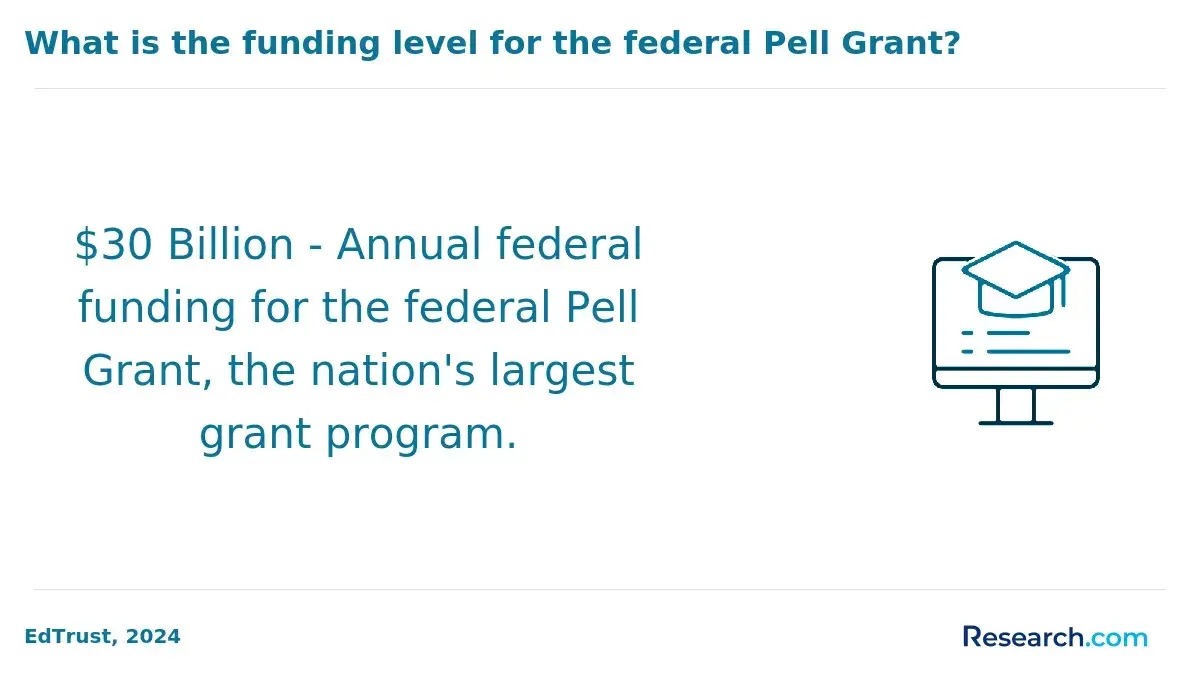
Yes. Whether a program asks for recommendation letters generally has no bearing on federal financial aid eligibility. Students at eligible accredited institutions may submit the Free Application for Federal Student Aid (FAFSA) to determine potential eligibility for grants, work-study, and federal student loans. Aid depends on the school, program, enrollment level, financial circumstances, satisfactory academic progress, and other federal rules.
Online students should also investigate institutional scholarships, employer tuition assistance, workforce-development funding, veterans' education benefits, and state programs when available. Federal aid can apply to distance education at participating institutions, but a school should confirm that the specific online program is eligible.
Before committing, complete these financial checks to avoid a preventable enrollment mistake.
- Submit the FAFSA early enough for the school's priority aid deadline.
- Ask the financial aid office for a net-price estimate that separates grants, scholarships, loans, and out-of-pocket costs.
- Confirm how many credits count as full-time, half-time, or less-than-half-time because enrollment intensity can affect aid and loan eligibility.
- Read satisfactory academic progress rules, including the GPA and course-completion standards needed to retain aid.
- Decline or reduce loan amounts that exceed your documented educational need after considering a realistic repayment plan.
Be cautious of claims that admission simplicity means a program is "free" or automatically funded. Financial aid is separate from admissions, and loan funds must generally be repaid. For students considering adjacent health careers, a masters in dietetics may involve different aid, supervised-practice, and credentialing considerations.
How Long Does an Online Addiction Psychology Degree With No Letters of Recommendation Take to Complete?
Completion time depends primarily on degree level, transferred credits, course sequence, and enrollment pace - not on whether letters are required. A typical bachelor's degree includes about 120 credits. A full-time student beginning with no transferable credit may plan around four academic years, while a transfer student or year-round online learner may finish sooner. Part-time study can be the better choice for working adults but usually extends the calendar timeline.
Programs delivered asynchronously can offer scheduling flexibility, but they still use firm assignment deadlines and may require scheduled examinations, group work, live sessions, or local field experiences. Review the academic calendar before selecting an accelerated format; compressed terms can increase weekly reading and writing demands.
| Student situation | Likely timeline factor | What to verify |
| First-time bachelor's student | General education and major courses must both be completed | Credit total, course sequence, and full-time availability |
| Community college transfer student | Accepted credits may reduce remaining coursework | Formal transfer evaluation and major-course equivalencies |
| Working adult studying part time | Fewer credits per term can improve manageability | Maximum time to degree and frequency of course offerings |
| Student seeking graduate counseling preparation | Prerequisites and research methods may be important | Whether the bachelor's curriculum supports graduate admissions goals |
Do not equate accelerated delivery with reduced learning requirements. If your main objective is a shorter health-related degree route, compare program length, required credits, and professional outcomes with an accelerated nutrition degree online before changing fields solely for speed.
Can You Transfer Credits Into an Online Addiction Psychology Degree Program With No Recommendation Letters?
Often, yes. Transfer admission and recommendation-letter policies are separate. Schools may accept eligible credits from accredited institutions, but the number accepted, minimum grade, age of coursework, and application toward major requirements can vary considerably. An unofficial estimate is useful for planning, but only a formal evaluation determines the credits that apply to your degree.
Psychology and general education courses commonly considered for transfer include introductory psychology, sociology, statistics, English composition, biology, human development, and college algebra. Addiction-specific courses may transfer only if the receiving school determines that learning outcomes substantially match its curriculum.
Applicants should take a careful approach to transfer planning.
- Send transcripts from every prior college, even if you withdrew or earned few credits.
- Request a written transfer-credit evaluation before committing to an enrollment date whenever possible.
- Ask which transferred courses satisfy general education, psychology core, addictions concentration, and elective requirements.
- Keep syllabi and course descriptions for psychology, counseling, and addiction-related classes that may need departmental review.
- Check whether military training, professional credentials, examinations, or prior learning can be evaluated for credit under the school's policy.
A frequent mistake is assuming that accepted credits automatically shorten the degree by the same number of courses. Credits can transfer as electives yet leave required major courses unfinished, so compare the remaining degree map rather than only the total number of accepted credits.
How Should You Compare Online Addiction Psychology Degree Programs That Do Not Require Letters of Recommendation?
Use admissions simplicity as one comparison point, not the deciding factor. The strongest option is the one that is accredited, financially manageable, academically appropriate, and connected to your intended career path. For example, a student aiming for recovery-support work may value applied addiction coursework, while a student planning graduate study may need statistics, research methods, and faculty access.
This comparison framework helps distinguish an accessible application from a well-matched degree.
| Comparison category | What a strong answer looks like | Potential concern |
| Recommendation policy | The program page clearly states that letters are not required for your applicant type | The school only provides a verbal assurance or the policy applies to another degree level |
| Accreditation | Recognized institutional accreditation is easy to verify | Unclear accreditor name or unsupported approval claims |
| Curriculum | Courses align with addiction psychology, behavioral health, research, ethics, and your next-step goal | Generic course titles with little information about learning outcomes |
| Career and licensure fit | The school explains limitations and state-specific pathways clearly | Broad promises of counseling or psychologist licensure |
| Total cost | A written estimate includes tuition, fees, transfer assumptions, and likely materials | Only a low per-credit figure is disclosed |
| Online support | Advising, tutoring, library access, disability services, and placement support are available remotely | Students cannot identify who provides academic or career support |
Bring the same questions to each admissions call: Are letters truly not required? What documents are required instead? How many credits will transfer? Does the curriculum support my state credential goal? What is my estimated total cost? Can I see the course sequence and refund policy before enrolling?
Readers weighing behavioral-health education against nutrition-focused health careers can compare curriculum depth and credential outcomes through masters in dietetics options. The best choice depends on the population you want to serve and the credential your intended role requires.
Other Things You Should Know About Addiction Psychology
Usually, yes. No-recommendation programs can be practical for returning adults who no longer have contact with instructors. You may still need to provide transcripts, proof of graduation, and any required placement information. A concise explanation of your work history and educational goals can help where an essay or resume is requested.
Yes. Some schools label letters as optional, while others waive them only for undergraduate, transfer, or certain online applicants. Optional does not mean required, but it also does not mean the same policy applies to every degree. Confirm the policy for your specific program and start term.
Not by itself in most cases. State requirements differ, but licensed counseling roles commonly require a relevant graduate degree, supervised experience, and examinations. A bachelor's degree may support entry-level behavioral-health, case-management, outreach, or support roles and can prepare you for further study.
Read the current program admissions page and academic catalog, then ask admissions by email whether letters are required for your degree level and applicant category. Keep the written response with your records, especially if the website uses broad language such as "supporting materials may be requested."
References
- Best Online Bachelor's Degrees In Psychology Of 2025 https://www.psychology.org/rankings/best-online-bachelor-degree-programs/
- Careers In Addiction Counseling https://www.affordablecollegesonline.org/degrees/counseling-programs/addiction-counseling/careers/
- Top Online Addiction Counselor Degree and Certificate Options https://www.addiction-counselors.com/online-degrees/
- Online Addiction Counseling Bachelor's Degrees - BS in Counseling https://addiction-counselor.org/degrees/online-bachelors/
- A Guide to Professions in Addiction Studies and Recovery https://www.ucumberlands.edu/blog/guide-to-professions-in-addiction-studies-and-recovery
- 2025 Best Online Substance Abuse Counseling Degrees https://www.onlineu.com/degrees/substance-abuse-counseling
- Degrees for Mental Health and Addiction Professionals https://www.drugrehab.com/guides/addiction-professional-degrees-careers/
- Online Certificate in Substance Abuse Psychology | AE.org https://academicearth.org/certificate-in-substance-abuse-psychology/
- Substance Abuse Counselor https://onlinecounselingprograms.com/become-a-counselor/counseling-careers/substance-abuse-counselor/
- Online Master's in Addiction & Substance Abuse Counseling Programs https://www.onlineeducation.com/counseling/masters-in-addiction-substance-abuse-counseling-programs