2027 Online Addiction Psychology Degree Programs With University Scholarships: Awards, Eligibility, and Net Cost

Co-Founder and Chief Data Scientist
An online addiction psychology degree can look affordable until tuition, technology fees, transfer-credit limits, and scholarship renewal rules are considered together. College Board reports that average published tuition and fees at public four-year institutions reached $11,610 for in-state students in 2024-25, before aid.
This guide is for prospective undergraduate and graduate students comparing online psychology, substance-use, and behavioral-health pathways. It explains institutional scholarships, qualifying rules, renewable awards, and net cost so you can compare written financial-aid offers - not tuition headlines - and choose the option that fits your budget and career plans.
Key Things You Should Know
- Institutional scholarships are university-funded awards that reduce charges but vary widely by school, online enrollment status, academic level, residency, and available funds; a quoted award is not a guaranteed offer.
- For 2024-25, the maximum Federal Pell Grant was $7,395 for eligible undergraduate students, but Pell eligibility, university scholarships, loans, and outside awards can change the final aid package.
- Compare annual net cost - tuition, mandatory fees, books, and other required expenses minus grants and scholarships - not the largest advertised scholarship or lowest published tuition alone.
Which Online Addiction Psychology Degree Programs Offer University Scholarships?
"Addiction psychology" is usually a concentration within an online psychology, behavioral science, counseling, addiction studies, or human-services degree rather than a single standardized degree title. That distinction matters because scholarship eligibility is generally set by the university and degree level, not by the concentration itself.
Schools most likely to have a meaningful institutional-aid process are regionally accredited universities that enroll online students in the same degree-seeking population as campus students, private nonprofit universities with institutional grant budgets, and public universities that extend selected scholarships to distance learners. Some fully online divisions offer tuition discounts or limited scholarships instead of broad merit awards.
The comparison below identifies the scholarship models to look for when reviewing online programs. Confirm every item with the institution's financial-aid office because online eligibility and award availability can change by term.
| Program setting to investigate | Likely institutional-aid model | Best fit | Important verification point |
| Public university online psychology or behavioral-health bachelor's program | Transfer, merit, donor-funded, or limited distance-learning scholarships | Students seeking lower public tuition or eligible in-state rates | Whether online students may receive the same awards as campus students |
| Private nonprofit online psychology or counseling-related program | Institutional grants, adult-learner awards, and merit scholarships | Students with strong academic records or demonstrated financial need | Whether the grant is a discount, a scholarship, or aid that can be reduced later |
| University online completion program | Transfer-credit, returning-adult, employer-partner, or need-based grants | Students bringing substantial transferable credit | Minimum transfer credits, enrollment intensity, and program exclusions |
| Graduate addiction, counseling, or psychology program | Departmental, alumni, donor, or assistantship-related awards | Applicants with relevant academic or professional backgrounds | Whether fully online students are eligible and whether aid covers all terms |
Do not assume an online psychology degree automatically prepares you for independent clinical practice. Addiction counselor, social worker, psychologist, and mental-health counselor licenses have state-specific education, supervised-practice, examination, and program-accreditation requirements. A bachelor's degree may support entry-level behavioral-health roles or graduate-school preparation, while many clinical roles require graduate education.
Students considering adjacent health pathways should evaluate each field's clinical and licensing expectations separately. For example, online RN to BSN online options address a different professional pathway and should not be treated as substitutes for addiction counseling preparation.
How Much Scholarship Money Can Online Addiction Psychology Degree Students Receive?
There is no universal institutional-scholarship amount for online addiction psychology students. Universities may publish a maximum award, but the actual offer can depend on GPA, transfer record, FAFSA-based need, admission date, available funding, and whether the student enrolls full time. Treat any published figure as a ceiling or eligibility range unless it appears in your written award letter.
Use this framework to interpret award amounts. It separates aid that lowers the bill from financing that must normally be repaid.
| Funding type | Typical purpose | Does it reduce net cost? | What to confirm |
| University merit scholarship | Rewards academic record, talent, leadership, or other stated criteria | Yes, if applied to billed charges | Annual amount, renewal GPA, credit minimum, and term limit |
| University need-based grant | Addresses financial need under the school's methodology | Yes | FAFSA requirement, annual review, and whether institutional need changes the amount |
| Donor or departmental scholarship | Supports a defined major, population, service interest, or academic purpose | Yes | Separate application, selection date, and whether online students qualify |
| Federal Pell Grant | Need-based undergraduate federal grant | Yes | FAFSA eligibility, enrollment intensity, and remaining lifetime eligibility |
| Federal student loan | Helps finance educational costs | No; it is borrowed money | Annual borrowing amount, interest, and repayment obligations |
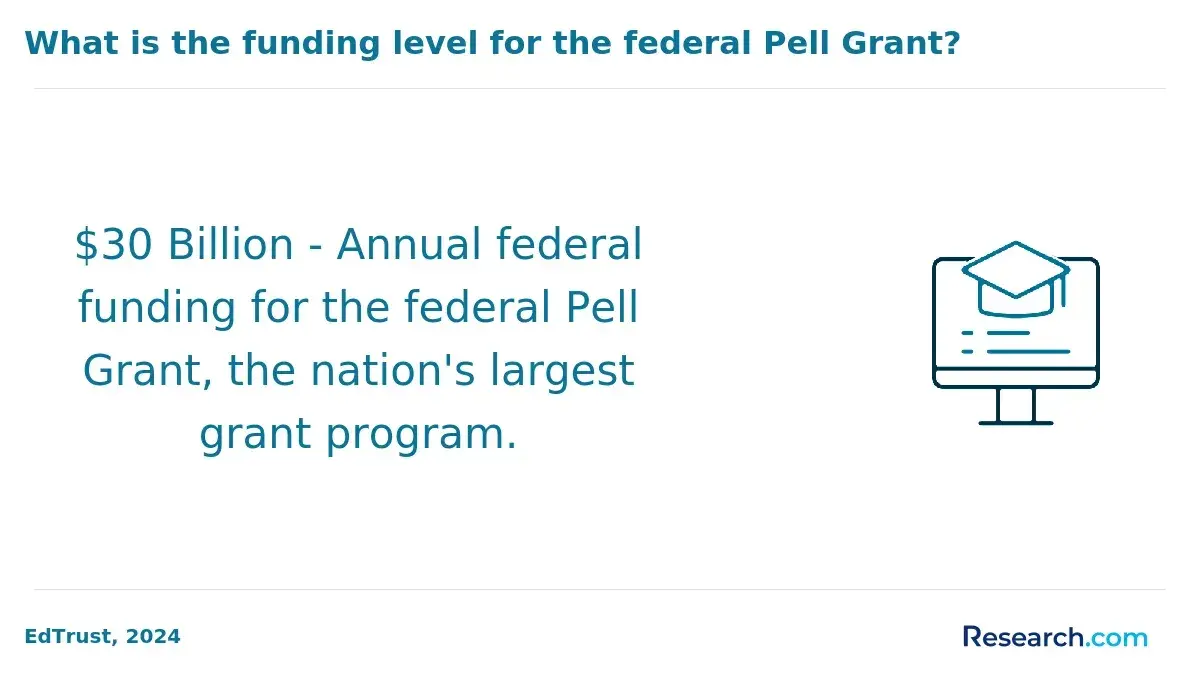
The maximum Federal Pell Grant for the 2024-25 award year was $7,395. That federal benchmark can help an eligible undergraduate understand the potential role of grant aid, but it does not indicate what a university will award or cover a program's full cost.
Ask each school for a term-by-term estimate rather than only an annual scholarship amount. A $4,000 annual scholarship has a different practical value at a lower-cost public university than at a higher-tuition private institution, and it may be split across fall and spring or unavailable during summer enrollment.
What Are the Eligibility Requirements for Online Addiction Psychology Degree Scholarships?
Eligibility requirements determine whether an award is available in the first place and whether it continues. Online students should obtain the written criteria because a scholarship page aimed at "undergraduates" may contain an enrollment, campus, residency, or program restriction in its terms.
Common requirements fall into the following categories, although no single university uses every requirement.
- Admission to an eligible degree-seeking online psychology, behavioral-health, counseling-related, or addiction-studies program.
- A minimum admission, cumulative, or transfer GPA for merit consideration or renewal.
- A stated enrollment level, such as full time, half time, or a minimum number of credits in each payment period.
- Completion of the FAFSA for need-based institutional aid and, at some schools, for all institutional-aid consideration.
- US citizenship or eligible noncitizen status for federal aid; separate university scholarships may have different citizenship rules.
- Submission by an admission, FAFSA, or separate scholarship deadline.
- Continued satisfactory academic progress and no conflicting award that exceeds the school's cost-of-attendance or institutional-aid limits.
Read the definition of "online student" carefully. A student enrolled through a university's main campus may qualify differently from a student enrolled through a separately administered online division, even when course delivery looks similar. Transfer students should also ask whether the GPA used is their prior-college GPA, institutional GPA after enrollment, or both.
Students evaluating clinically oriented graduate options should distinguish financial-aid eligibility from professional eligibility. Affordable FNP programs, for example, follow nursing-specific admissions and clinical requirements that do not apply to a psychology concentration.
How Do You Apply for University Scholarships for an Online Addiction Psychology Degree?
Start early enough to meet both admission and aid deadlines. Some universities automatically review admitted applicants for merit scholarships; others require a scholarship portal, essays, recommendations, or a FAFSA before they can make an institutional award decision.
Follow these steps to create comparable offers rather than incomplete estimates.
- Identify the exact online degree, concentration, start term, and enrollment plan you intend to use.
- Ask admissions whether online students in that program are eligible for institutional scholarships and whether consideration is automatic.
- Submit the admission application and official transcripts before the school's priority scholarship deadline.
- Complete the FAFSA when eligible and list each prospective university so it can assess federal and need-based institutional aid.
- Complete any separate university, departmental, donor, military, or transfer-scholarship applications.
- Request a written aid offer showing tuition, mandatory fees, grants, scholarships, loans, work-study if applicable, and the terms for each award.
- Compare offers using the same enrollment period and ask for clarification before accepting an award or paying a deposit.
Keep copies of award letters, scholarship terms, and communications. A verbal estimate from admissions is useful for planning, but the financial-aid office's written offer and published conditions are more reliable for a cost comparison.
Financial-aid processes vary across healthcare education. Students also researching accredited medical billing and coding schools online with financial aid should request program-specific estimates instead of assuming awards transfer across programs.
Are Scholarships for Online Addiction Psychology Degree Programs Renewable Every Year?
Some scholarships are renewable, but renewal is never automatic unless the award terms say it is. A renewable scholarship usually continues for a defined number of semesters or years while the student meets stated conditions; it may still be adjusted if enrollment changes, the student withdraws, or total aid exceeds applicable limits.
Before accepting an award, review these renewal conditions and ask for them in writing.
- Required cumulative GPA and whether the school reviews it every term or annually.
- Required enrollment intensity, including whether part-time, summer, accelerated, or leave-of-absence terms count.
- Maximum number of funded semesters, credits, or academic years.
- Requirement to remain in the original major, degree level, or online program.
- Satisfactory academic progress standards, which often include both GPA and pace of completion.
- Whether a reduced course load, repeated class, withdrawal, or transfer credit can affect the award.
- Whether university funding is re-evaluated after FAFSA information, outside scholarships, or other grants are received.
A renewable $2,000 award for four eligible years may be more valuable than a larger first-year award that ends after one term, but only if the student can realistically meet its academic and enrollment conditions. Ask the school to show the scholarship's total potential value and the circumstances that would reduce or cancel it.
Can You Combine an Online Addiction Psychology Scholarship With FAFSA and Other Financial Aid?
In many cases, yes. FAFSA is the application used to determine eligibility for federal student aid and is also commonly used by universities to assess need-based institutional funding. An institutional scholarship can often be combined with federal grants, state grants, outside scholarships, and loans, subject to university packaging policies and federal cost-of-attendance rules.
Stacking aid does not always mean every award stays unchanged. If combined grants and scholarships exceed allowable educational costs or the university's packaging limit, the school may reduce one award - often loans or institutional aid, depending on policy. Ask which aid is reduced first and whether the scholarship is "last-dollar," meaning it fills remaining eligible charges after other grants.
Use this simple calculation for planning: estimated net billed cost = tuition + mandatory fees − grants − scholarships. Then separately budget for books, required software, transportation for any practicum, and living expenses. Loans can cover some remaining costs for eligible students, but they are not a discount and should not be subtracted when judging affordability.
If an employer offers tuition assistance, ask whether it can be used with university scholarships and whether it requires continued employment or repayment after departure. Outside awards should be reported promptly because universities need them to finalize compliant aid packages.
How Much Does an Online Addiction Psychology Degree Cost After Scholarships and Financial Aid?
Your actual cost depends on the program's per-credit tuition, required credits after transfer evaluation, mandatory fees, enrollment pace, scholarship terms, and grant eligibility. An online format can reduce commuting or housing expenses for some students, but it does not eliminate tuition, books, technology charges, or costs associated with field experiences where required.
This illustrative calculation shows why the largest scholarship is not necessarily the best offer. The figures are examples only, not published prices or awards from a particular university.
| Annual estimate component | Lower-tuition option | Higher-tuition option with larger scholarship |
| Tuition and mandatory fees | $12,000 | $22,000 |
| University scholarship | $2,000 | $6,000 |
| Federal or state grants | $3,000 | $3,000 |
| Estimated net billed cost before loans | $7,000 | $13,000 |
In this example, the second option advertises the larger scholarship but still leaves a higher estimated net billed cost. Apply the same method to each actual offer, using the school's stated tuition and your own written awards. Also calculate the projected cost to completion, particularly if transfer credits, required prerequisites, or part-time enrollment could extend the timeline.
Ask whether the quoted tuition rate is locked for continuing students, whether fees rise after the first term, and whether the degree requires internships, residency sessions, background checks, or other expenses. These details can materially change the affordability of a behavioral-health program.
Students exploring nutrition-related options should likewise compare total program costs and prerequisites; an accelerated nutrition degree online may have a different timeline and cost structure from a psychology-based addiction studies pathway.
Are There Scholarships for Transfer, Adult, Military, and Other Online Addiction Psychology Students?
Many universities reserve some institutional funds for students whose path does not follow a traditional first-time, full-time enrollment pattern. Availability varies, but transfer, adult, military-affiliated, veteran, employer-sponsored, first-generation, and returning students may find awards designed for their circumstances.
The following comparison helps identify questions to ask rather than assuming a category guarantees aid.
| Student group | Possible university-aid opportunity | Key documentation or condition to verify |
| Transfer student | Transfer merit scholarship or completion grant | Minimum transferable credits, transfer GPA, and whether all prior credits are accepted |
| Adult or returning student | Adult-learner, re-entry, or degree-completion scholarship | Age, enrollment history, degree-completion status, and part-time eligibility |
| Military service member or veteran | Military tuition benefit, university military scholarship, or veteran-focused donor award | Service documentation, benefit coordination, residency rules, and program participation |
| Employee partner student | Employer-affiliation discount or workforce scholarship | Eligible employer list, employment verification, and whether the benefit can be combined with aid |
| First-generation or underserved student | Donor-funded or access scholarship | Definitions, separate application requirements, and funding availability |
Transfer credit has two financial effects: it may shorten the degree and reduce total tuition, but it can also affect eligibility when scholarships require a certain number of institutional credits or semesters. Request a preliminary transfer evaluation before deciding that a scholarship offer represents the better overall value.
For students weighing other allied-health study routes, program requirements can differ substantially. A masters in dietetics may involve distinct prerequisite, supervised-practice, and financial-aid considerations from an online addiction psychology degree.
What Is the Difference Between Merit-Based and Need-Based Scholarships for Online Addiction Psychology Degrees?
Merit-based scholarships are awarded primarily for qualifications such as GPA, academic achievement, leadership, service, or a particular talent. Need-based scholarships consider financial circumstances, usually through FAFSA information and the university's own methodology. A student may qualify for one, both, or neither.
The practical difference is predictability. A merit award may be easier to estimate from published GPA tiers when those tiers are available, but it can carry a firm GPA renewal threshold. Need-based institutional aid can be especially valuable for eligible students but may change if family finances, enrollment, federal aid eligibility, or university funding changes.
| Feature | Merit-based scholarship | Need-based scholarship or grant |
| Primary basis | Academic or other stated achievement | Demonstrated financial need |
| FAFSA commonly required | Sometimes | Usually |
| Can award change annually? | Yes, especially if renewal standards are missed | Yes, because financial circumstances and funding can change |
| Best comparison question | What GPA, enrollment, and term limit apply? | How is need reassessed and what happens if other aid is added? |
Neither type is inherently better. A lower merit award with stable renewal conditions and lower tuition may outperform a larger need-based award at a higher-cost school. Compare the projected multi-year net cost and the conditions needed to retain each award.
How Should You Compare Scholarship Offers From Online Addiction Psychology Degree Programs?
Compare offers only after placing them on the same timeline and enrollment assumption. A fall-only offer cannot be fairly compared with a full academic-year package, and an award for full-time students may not apply if you plan to take one or two online courses at a time.
Use this decision process after receiving written offers.
- Confirm that each program supports your intended addiction psychology, behavioral-health, or psychology career direction and any future graduate or licensure plans.
- Calculate tuition and mandatory fees for the same academic year, using your expected number of credits.
- Subtract only grants and scholarships that are confirmed in writing; keep loans in a separate column.
- Add predictable non-tuition expenses, including books, technology, proctoring, practicum, and travel requirements.
- Check whether each award is renewable, for how long, and under what GPA and enrollment conditions.
- Compare transfer-credit evaluations and the remaining credits required to graduate.
- Ask each financial-aid office what could cause the offer to change before accepting enrollment.
Red flags include an award with no written renewal terms, an offer that lists loans alongside scholarships without clear labels, unexplained "estimated" institutional grants, and a program that cannot confirm online-student eligibility. Another common mistake is choosing the biggest award without calculating the remaining balance, required borrowing, and time to completion.
The best scholarship value is the offer that combines a suitable academic pathway, realistic renewal conditions, accepted transfer credit, and the lowest manageable net cost for your circumstances. If two options are close, request a financial-aid review with competing written offers, but do not assume a university will match another school's scholarship.
Other Things You Should Know About Addiction Psychology
A bachelor's degree may support entry-level roles in behavioral-health support, case management, community outreach, recovery services, or admissions, depending on employer and state requirements. Independent counseling, clinical psychology, and many therapy roles usually require graduate education, supervised experience, examinations, and state licensure.
Acceptance depends more on institutional accreditation, curriculum, faculty oversight, academic performance, and fit with the receiving employer or graduate program than on online delivery alone. Verify that the degree meets prerequisites for any graduate program or license you may pursue.
Completion time depends on degree level, credit requirements, transfer credits, course availability, and enrollment pace. A transfer evaluation is the most reliable way to estimate remaining time because a large number of accepted credits can reduce both time and total tuition.
Some programs are fully coursework-based, while others include field experience, especially applied human-services or counseling-related curricula. Ask whether placement is required, who arranges it, whether it must occur in your state, and what costs or background checks may apply.
References
- 50+ Scholarships & Resources for Counseling Master's Students https://www.onlinemastersdegrees.org/student-resources/counseling/
- Scholarships & Other Financial Assistance - Texas Association of Addiction Professionals https://www.taap.org/page/900
- College Scholarships for Recovering Addicts - Addiction-Counselors.com https://www.addiction-counselors.com/blog/college-scholarships-for-recovering-addicts/
- Best Online Master's In Addiction & Recovery 2025 https://www.psychology.org/degrees/addictions-and-recovery/masters/
- Sharon Stephens Brehm Undergraduate Psychology Scholarships - American Psychological Foundation https://ampsychfdn.org/funding/brehm-undergraduate-scholarships/
- Counseling Scholarships with an Emphasis on Addiction & Substance Abuse Counseling https://addiction-counselor.org/resources/scholarships/
- 20 Best Value Online Master's in Addiction/Substance Abuse Counseling Programs - BestMedicalDegrees.com https://www.bestmedicaldegrees.com/rankings/best-online-masters-in-addiction-substance-abuse-counseling/
- How to Find and Win Psychology Scholarships https://www.onlinepsychologydegrees.com/psychology-scholarships/
- Counseling Scholarships https://onlinecounselingprograms.com/become-a-counselor/resources/scholarships/
- Academic Scholarships for Behavioral Health Students https://americanaddictioncenters.org/behavioral-health-academic-scholarship