2027 Best Online Addiction Psychology Master's Programs at Nonprofit Universities

Co-Founder and Chief Data Scientist
Choosing an online addiction psychology master's program means balancing counseling licensure goals, total cost, and the reality of completing supervised clinical work locally. This matters because 48.4 million people age 12 or older had a substance use disorder in the most recently reported National Survey on Drug Use and Health data. This guide helps prospective graduate students compare reputable nonprofit options, understand accreditation and practicum requirements, estimate affordability, and decide whether an online addiction-focused degree fits their intended career.
Key Things You Should Know
- For clinical addiction counseling, prioritize a 60-credit program with institutional accreditation, CACREP counseling accreditation when available, and confirmed eligibility for licensure in the state where you plan to practice.
- Strong nonprofit online options commonly include the University of North Dakota, University of South Dakota, University of the Cumberlands, Grand Canyon University, and Liberty University; program availability, state authorization, and clinical-placement rules must be verified directly before applying.
- The U.S. Bureau of Labor Statistics reports a $59,190 median annual wage for substance abuse, behavioral disorder, and mental health counselors in May 2024, but a master's degree alone does not confer counseling licensure or guarantee a particular salary.
Which Nonprofit Universities Offer the Best Online Addiction Psychology Master's Programs, and How Were They Selected?
"Addiction psychology" is often used as a search term rather than a uniform degree title. At the master's level, the closest career-focused programs are usually titled addiction counseling, clinical mental health counseling with an addiction emphasis, or counseling and prevention. These programs focus on assessment, treatment planning, recovery support, co-occurring disorders, ethics, and supervised clinical practice.
The programs below are a practical shortlist rather than a numerical ranking. They were selected because they are offered by nonprofit institutions, have online or primarily online delivery pathways, provide addiction-focused graduate preparation, and publish meaningful information about curriculum, clinical training, or counseling accreditation. Students should confirm current tuition, enrollment availability, and authorization for their state before treating any program as a final option.
This comparison shows the major distinctions that matter more than a generalized "best" label: the degree design, approximate academic scope, and likely fit.
| Nonprofit university | Online addiction-focused degree pathway | Typical scope | Best fit | Key verification step |
| University of North Dakota | MA in Addiction Counseling | Master's-level counseling preparation with clinical training | Students seeking an addiction-specific counseling curriculum at a public university | Confirm current CACREP status, practicum arrangements, and state licensure alignment |
| University of South Dakota | MS in Addiction Counseling and Prevention | Addiction counseling and prevention coursework with field experience | Students interested in prevention, treatment, and public-service settings | Confirm online cohort format and local site requirements |
| University of the Cumberlands | MA in Addiction Counseling | Graduate counseling curriculum designed around addiction services | Working adults seeking a structured online counseling option | Confirm whether the degree meets requirements in the intended licensing state |
| Grand Canyon University | MS in Addiction Counseling | Addiction-focused counseling education with supervised practice components | Students who want a private nonprofit university and online coursework | Review internship support, residency expectations, and state disclosures |
| Liberty University | MA in Addiction Counseling | Addiction counseling preparation with online course delivery | Students seeking a faith-based private nonprofit environment | Confirm clinical requirements, licensure pathway, and employer fit |
Public nonprofit universities may offer lower resident tuition, while private nonprofit universities may provide more frequent start dates or standardized online pricing. Neither model is automatically superior. The better choice is the program that is authorized in your state, fits your credential goal, and provides a realistic route to supervised training.
When comparing adjacent healthcare education routes, nurses considering behavioral-health advancement can also review RN to BSN online with no clinicals options. That path is not a substitute for counseling education, but it can help licensed nurses evaluate another online degree format.
Why Choose a Nonprofit University for an Online Addiction Psychology Master's Degree?
A nonprofit university reinvests revenue into its educational mission rather than distributing profits to owners or shareholders. Public universities are generally nonprofit government institutions; private nonprofit institutions are commonly organized as tax-exempt educational entities. Nonprofit status can be a useful screening factor, but it does not independently establish academic quality, affordability, or licensure eligibility.
The strongest reasons to consider a nonprofit institution are its established academic governance, eligibility to participate in federal student aid when approved, and potentially broader access to faculty, alumni, libraries, and field-placement networks. Students should still evaluate the actual program rather than relying on the institutional label.
Compare these features alongside nonprofit status before committing.
- Institutional accreditation: The university should be accredited by an accreditor recognized by the U.S. Department of Education or the Council for Higher Education Accreditation.
- Professional preparation: A counseling program may have CACREP accreditation or another clearly documented path toward state counseling requirements.
- State authorization: The school must be allowed to enroll online students in your state and support required clinical experiences there.
- Transparent outcomes: Look for published completion, licensure, employment, or internship information where available.
- Total price: Compare tuition, mandatory fees, technology charges, travel, background checks, and clinical-placement expenses.
Private nonprofit programs can be appealing for students who need multiple annual start dates and standardized scheduling. Public nonprofit programs can be especially compelling for residents who qualify for lower in-state tuition. If a school cannot clearly explain how its program meets your state's professional requirements, choose a program that can.
What Accreditation Should an Online Addiction Psychology Master's Program Have?
Accreditation is the most important legitimacy check for an online addiction-focused master's degree. Institutional accreditation evaluates the university as a whole. Programmatic accreditation evaluates a particular professional program. For aspiring licensed counselors, both levels matter.
For addiction counseling and clinical mental health counseling, CACREP accreditation is a major quality signal because it evaluates counseling curriculum, faculty, clinical training, and student-learning standards. However, CACREP accreditation does not replace a state license. Licensing boards set their own coursework, supervised-experience, examination, and background-check requirements.
This table separates credentials that students often confuse when evaluating addiction psychology programs.
| Credential or approval | What it evaluates | Why it matters | What it does not guarantee |
| Institutional accreditation | The university's overall academic and administrative quality | Supports degree recognition and often affects federal aid eligibility | That a counseling curriculum meets licensure requirements |
| CACREP accreditation | Master's counseling programs and related professional standards | Can simplify evaluation for counseling licensure and employers | Automatic licensure in every state |
| State board approval or alignment | Compatibility with a state's counseling regulations | Determines whether the curriculum can support a license application | That the student will complete postdegree supervised hours or pass exams |
| Addiction counselor certification eligibility | Preparation for a state or national substance-use counseling credential | May improve fit for specialized addiction-service roles | Eligibility for psychologist licensure |
An addiction counseling master's is not the same as a psychology doctorate. In most states, independent psychologist licensure requires a doctoral degree in psychology and additional supervised experience. Do not enroll in a master's program expecting it to qualify you as a licensed psychologist unless the state board explicitly confirms that pathway.
Before applying, use this sequence to prevent an expensive mismatch.
- Identify the license or credential required for your target job and state.
- Read the state licensing board's current education rules.
- Ask the university for a written state-authorization and licensure disclosure.
- Compare the required credits, practicum hours, internship hours, and course titles against state rules.
- Save the school's response and recheck requirements before beginning fieldwork.
How Much Does an Online Addiction Psychology Master's Degree at a Nonprofit University Cost?
The advertised per-credit tuition rate is only one part of the cost. Addiction counseling programs commonly require substantial clinical training, and students may pay for background checks, fingerprinting, liability insurance, site travel, clinical software, books, and residency travel in addition to tuition.
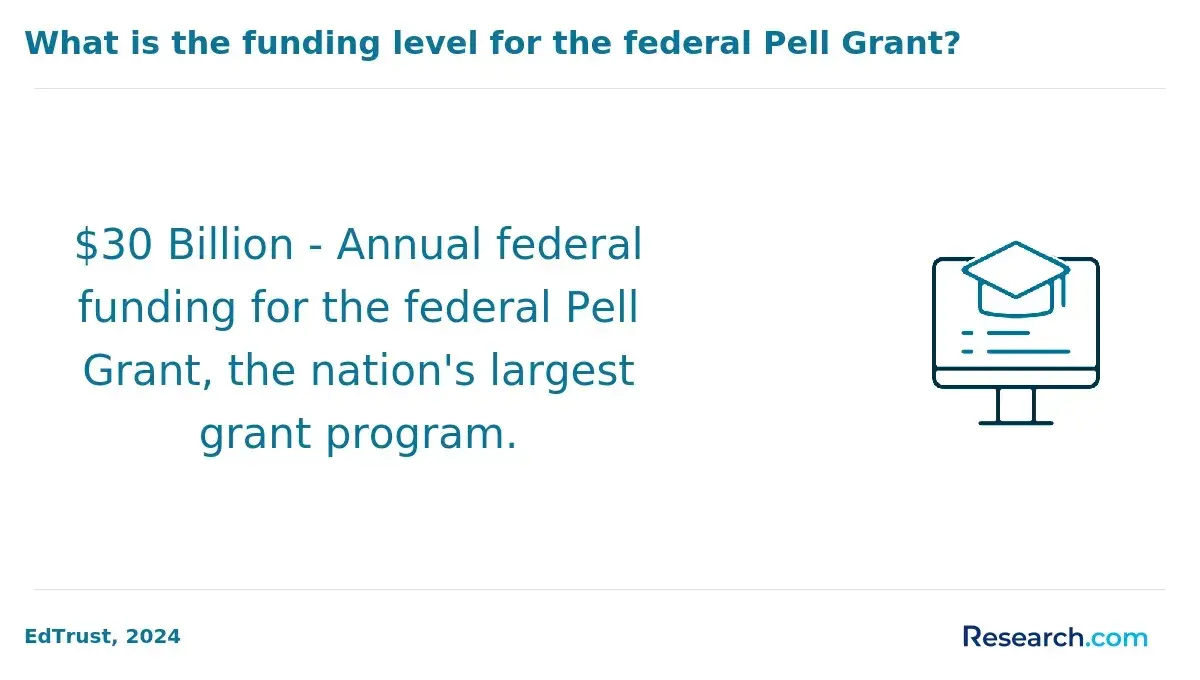
As a broad national benchmark, average graduate tuition and fees for the 2023-24 academic year were $12,596 at public institutions and $29,931 at private nonprofit institutions, according to the College Board. Those figures cover graduate education broadly, not addiction counseling programs specifically, so use them only to frame the public-versus-private cost trade-off.
This cost framework helps applicants build a realistic comparison rather than choosing solely on the lowest stated tuition.
| Cost category | How it is commonly charged | Why students overlook it | How to compare it |
| Tuition | Per credit or per term | Rates may differ by residency, online status, or cohort | Multiply the current rate by all required credits |
| Mandatory university fees | Per term, per course, or annually | They may not appear in promotional tuition figures | Request an itemized program estimate |
| Clinical expenses | Variable | Local placement, travel, insurance, and screening needs differ | Ask for a typical clinical-year budget |
| Residency travel | Variable | "Online" programs may include required campus intensives | Include transportation, lodging, and missed-work costs |
| Financing cost | Depends on borrowing | Federal graduate loans accrue interest | Compare borrowing need, not only sticker price |
Complete the Free Application for Federal Student Aid if you may use federal aid, and ask each school about graduate assistantships, employer tuition assistance, scholarships, payment plans, and institutional grants. A lower-priced program that cannot arrange an approved practicum in your area may become more costly than a slightly higher-priced program with reliable placement support.
A common mistake is assuming that an accelerated schedule is automatically cheaper. Faster enrollment can reduce the time spent in school, but intensive terms can also limit work hours and increase the need for borrowing. Healthcare workers exploring short clinical education routes can compare accelerated LPN programs, although LPN preparation is a separate pathway from graduate addiction counseling.
What Are the Admission Requirements for Online Addiction Psychology Master's Programs?
Admission requirements vary by institution, but most nonprofit online addiction counseling programs expect a completed bachelor's degree from an accredited college or university. A psychology major is helpful but not universally required. Programs may admit students from social work, human services, education, criminal justice, nursing, and other fields when they can demonstrate readiness for graduate counseling work.
Applicants should expect to assemble several materials that allow the program to assess academic preparation, communication skills, and professional fit.
- Official undergraduate transcripts and a bachelor's degree confirmation
- A minimum undergraduate GPA, often with a separate review process for applicants below the stated threshold
- Statement of purpose describing interest in addiction counseling or behavioral health
- Professional or academic recommendation letters
- Resume documenting relevant work, volunteer, research, or service experience when requested
- Interview, writing sample, or prerequisite coursework at some institutions
- Background-check eligibility and ability to complete clinical training requirements
GRE requirements have become less common in many online counseling admissions processes, but applicants should never assume a test is waived without checking the current cycle's requirements. International applicants, students with coursework completed outside the United States, and applicants seeking transfer credit may have additional documentation requirements.
Ask admissions staff whether transfer credits are accepted, how old eligible graduate credits may be, and whether transferred coursework affects programmatic accreditation or licensure review. Admissions approval does not mean that a student has been cleared by a future practicum site or licensing board.
What Will You Study in an Online Addiction Psychology Master's Program?
Online addiction psychology master's programs generally teach applied counseling and behavioral-health practice rather than only the theory of addiction. Students learn how biological, psychological, family, cultural, social, and policy factors affect substance use and recovery. Programs built for licensure also include foundational counseling content that extends beyond addiction-specific treatment.
A strong curriculum typically includes the following areas because addiction work frequently involves co-occurring mental health conditions and complex ethical decisions.
- Psychopathology and co-occurring disorders
- Assessment, diagnosis, screening, and treatment planning
- Evidence-informed substance-use counseling approaches
- Motivational interviewing, group counseling, and family systems
- Trauma-informed and culturally responsive care
- Prevention, recovery support, relapse prevention, and community resources
- Counseling ethics, law, documentation, and telebehavioral-health practice
- Research methods, program evaluation, and clinical practicum or internship
Course titles vary, so compare syllabi and course descriptions rather than assuming two similarly named degrees cover the same topics. If you want to work in clinical practice, make sure the curriculum includes diagnosis, individual counseling, group work, ethics, assessment, and adequate supervised field training. If you prefer prevention, policy, outreach, or program administration, a program with prevention and community-health coursework may be the better fit.
Behavioral health is increasingly interdisciplinary. For example, food access and nutrition can affect recovery planning for some clients; students exploring that distinct field can review an online dietitian degree. Dietetics credentials do not replace addiction counseling education, but the comparison illustrates why specialized scope of practice matters.
How Flexible Are Online Addiction Psychology Master's Programs, and How Long Do They Take?
Most online addiction counseling master's programs use asynchronous coursework, scheduled live sessions, or a combination of both. Asynchronous classes can help working adults complete readings, discussion posts, and assignments around employment. Synchronous sessions provide real-time skills practice and faculty interaction. Neither format removes the need for dependable weekly study time or clinical availability.
Many licensure-oriented counseling degrees require approximately 60 graduate credits. Full-time students may finish coursework in about two to three years, while part-time students often need longer. The practicum and internship sequence can become the pacing constraint because site schedules are set by community agencies, not by the online course platform.
This comparison clarifies the trade-off between flexibility and clinical readiness.
| Format feature | Advantage | Potential limitation | Best for |
| Asynchronous online courses | Flexible access to lectures and assignments | Requires strong self-management and may still have weekly deadlines | Students with variable work schedules |
| Live online classes | Supports role-play, discussion, and faculty contact | Requires attendance at scheduled times | Students who prefer structured interaction |
| Fully online coursework with local fieldwork | Reduces campus travel | Placement quality and commuting depend on the local area | Students near approved behavioral-health sites |
| Hybrid or residency model | Provides concentrated in-person skills training | Adds travel and scheduling costs | Students able to attend required intensives |
Before enrolling, ask whether clinical work can begin only after core courses are completed, whether the school finds sites or expects students to secure them, and whether evening or weekend placements are realistic. Students drawn to compressed professional programs should understand that speed and clinical flexibility are not the same thing; 1 year FNP programs are an example of a separate accelerated healthcare pathway with its own clinical and eligibility constraints.
What Student Support, Faculty Access, and Networking Do Online Addiction Psychology Master's Programs Offer?
Online delivery should not mean isolated learning. Because addiction counseling depends on interpersonal skills, ethical judgment, supervision, and professional relationships, students should evaluate support services as carefully as course convenience.
High-value support can make the difference between completing online coursework and being prepared for clinical placement and employment.
- Faculty access: Regular office hours, timely feedback on counseling skills, and instructors with current behavioral-health experience.
- Clinical-placement support: Clear guidance on site approval, affiliation agreements, supervisor qualifications, and documentation.
- Academic support: Online library access, writing help, tutoring, accessibility services, and technology assistance.
- Career services: Resume review, interviewing practice, job boards, employer events, and licensure-planning resources.
- Professional networking: Student counseling associations, virtual speaker events, alumni connections, and local professional referrals.
- Well-being resources: Counseling services, crisis contacts, and policies that recognize the emotional demands of clinical training.
Ask to speak with a current online student or recent graduate, if the school can arrange it. Useful questions include how quickly faculty respond, whether students obtained local placements, how often skills are observed, and whether graduates felt prepared to pursue their intended credentials. Be cautious if a program cannot describe its supervision model or gives only vague answers about clinical support.
What Jobs, Salaries, and Career Outcomes Can You Expect From an Online Addiction Psychology Master's Degree?
An online addiction-focused master's degree can support careers in substance-use treatment, behavioral health, prevention, case management, recovery services, and program coordination. The exact job title and level of independence depend on the degree, state law, employer standards, certifications, and whether the graduate completes licensure requirements.
The U.S. Bureau of Labor Statistics reported a May 2024 median annual wage of $59,190 for substance abuse, behavioral disorder, and mental health counselors. BLS projects employment in that occupation to grow 19% from 2023 to 2033, much faster than the average for all occupations. This is a national occupational estimate, not a salary promise: earnings vary substantially by state, setting, experience, reimbursement model, and licensure status.
The table outlines common directions graduates may pursue after meeting the applicable employer and state requirements.
| Potential role | Typical responsibilities | Common additional requirement | Relevant work setting |
| Substance-use counselor | Assessment, individual and group counseling, treatment planning, recovery support | State credential, supervised experience, or licensure may be required | Outpatient treatment, residential care, community agencies |
| Licensed professional counselor pathway | Clinical counseling for mental health and substance-use concerns | Qualifying master's degree, exams, and postdegree supervised hours | Clinics, hospitals, schools, group practices |
| Prevention specialist | Community education, prevention programming, grant-supported initiatives | Employer-preferred prevention credential or experience may help | Public health agencies, schools, nonprofits |
| Behavioral-health case manager | Care coordination, referrals, benefits navigation, follow-up | Employer-specific requirements; licensure may not be required | Health systems, managed-care organizations, community programs |
| Program coordinator | Operations, quality improvement, outreach, reporting, staff coordination | Experience in treatment services and program administration | Nonprofit providers, government agencies, recovery organizations |
Career fit improves when the degree matches the work you actually want to perform. Choose a licensure-oriented counseling program if you want to provide psychotherapy under a counseling license. Consider public health, social work, healthcare administration, or peer-recovery training if your goal is prevention, systems coordination, or nonclinical support rather than independent counseling.
Behavioral-health employers also work alongside workplace safety and public-health teams, particularly in prevention and employee-assistance contexts. Professionals interested in that broader operational area can explore an online environmental health and safety degree, which is distinct from clinical addiction counseling.
Is an Online Addiction Psychology Master's Degree From a Nonprofit University Worth It?
An online addiction psychology or addiction counseling master's degree can be worth the investment when it is the required educational step toward your intended credential and the total cost is manageable relative to your career plan. It is especially relevant for people seeking clinical addiction counseling, integrated behavioral-health work, prevention leadership, or advancement from an entry-level human-services role.
The degree is less likely to be a good value if the program cannot serve students in your state, does not include the clinical preparation required for your goal, requires borrowing that is disproportionate to likely early-career earnings, or is being used as a substitute for a credential it does not provide. For example, an addiction counseling master's does not by itself qualify someone for psychologist licensure.
Use these final checks to make a decision based on fit rather than marketing language.
- Write down your target job, state, desired license or certification, and preferred work setting.
- Confirm that the degree meets educational requirements with the relevant state board or credentialing body.
- Request a complete cost estimate that includes tuition, fees, residencies, and anticipated clinical expenses.
- Ask how local practicum and internship placements are approved and supported.
- Compare the course sequence, completion timeline, and live-session requirements with your work and caregiving schedule.
- Review available graduate outcomes and speak with admissions staff about limitations rather than relying on advertised salary claims.
- Apply only after you can explain how the program leads to your intended next credential or role.
The best nonprofit online program is not necessarily the lowest-cost or fastest option. It is the one with verified accreditation, a credible clinical-training plan, transparent costs, and a degree structure that supports your state-specific career path.
Other Things You Should Know About Addiction Psychology
Your transcript generally identifies the degree and awarding institution, not necessarily the delivery format. Employers usually focus on institutional reputation, accreditation, clinical experience, licensure status, and relevant skills. You should be prepared to discuss your supervised training and counseling competencies.
Many students work during online coursework, particularly in part-time formats. Clinical practicum and internship periods are harder to schedule because sites may require daytime hours. Ask the program for typical weekly fieldwork expectations before deciding how much employment you can maintain.
Possibly. Each university sets its own transfer-credit limit, grade requirement, course-age rule, and equivalency review. Transfer approval can also affect course sequencing, so ask whether accepted credits will preserve your ability to meet clinical and licensure requirements.
Not always. Addiction psychology may describe the study of addictive behaviors, while addiction counseling is a professional practice field focused on assessment, treatment, recovery, and client services. Read the degree title, curriculum, and licensure disclosures to determine whether a program is research-oriented, counseling-oriented, or both.
References
- Tuition & cost of attendance https://admission.universityofcalifornia.edu/tuition-financial-aid/tuition-cost-of-attendance/
- A Guide to Professions in Addiction Studies and Recovery https://www.ucumberlands.edu/blog/guide-to-professions-in-addiction-studies-and-recovery
- Higher Education Guide: Chapter 2 - College Based Support Programs | Juvenile Law Center https://jlc.org/resources/higher-education-guide-chapter-2-college-based-support-programs
- How much do in-state students pay in tuition and fees to attend four-year public universities? - APLU https://www.aplu.org/our-work/publicuvalues/college-costs/
- Substance Abuse Counseling Careers Guide https://www.onlineu.com/degrees/substance-abuse-counseling/careers
- Practicum (Internship) https://www.ttccollege.org/practicum/
- Online Master's in Addiction Counseling | Hazelden Betty Ford https://www.hazeldenbettyford.org/graduate-school-addiction-studies/online-masters
- Best Online Master's In Addiction & Recovery 2025 https://www.psychology.org/degrees/addictions-and-recovery/masters/