2027 Best Online Addiction Psychology Degree Programs at Nonprofit Universities

Co-Founder and Chief Data Scientist
Choosing an online addiction psychology degree means weighing more than convenience: the credential must support your intended role, state requirements, and budget. The U.S. Bureau of Labor Statistics projects 19% employment growth for substance abuse, behavioral disorder, and mental health counselors from 2023 to 2033, much faster than average.
This guide helps prospective students compare nonprofit online programs, understand degree levels, verify quality, estimate costs, and build a shortlist that fits their career and financial goals.
Key Things You Should Know
- "Addiction psychology" is often offered as a concentration within psychology, addiction studies, behavioral health, social work, or counseling rather than as a standalone online degree; match the curriculum and degree level to the job you want.
- For counseling roles, a bachelor's degree may support entry-level behavioral-health work, while independent clinical practice typically requires a qualifying graduate degree, supervised experience, and state licensure.
- The strongest nonprofit online option is not automatically the least expensive: compare institutional accreditation, total cost after transfer credit and aid, required fieldwork, scheduling, and graduate-school or licensure alignment.
What Makes an Online Addiction Psychology Degree Program at a Nonprofit University Different?
An online addiction psychology degree examines how substance use, compulsive behaviors, trauma, mental health, family systems, prevention, and recovery interact. At nonprofit universities, programs may be delivered by public institutions or private nonprofit institutions. Neither nonprofit status nor public/private status alone confirms academic quality, affordability, or career value.
A program may lead to an associate degree, bachelor's degree, master's degree, or doctoral degree. Because program titles vary, students should search for related names such as psychology with an addiction concentration, substance use counseling, addiction studies, behavioral health, or clinical mental health counseling. The title matters less than the courses, experiential requirements, accreditation, and the credential required for the intended career.
This comparison shows how common degree paths differ. It helps students avoid enrolling in a program whose level does not meet their professional objective.
| Degree path | Typical purpose | Potential next step | Important limitation |
| Associate degree | Entry-level human-services support and transfer preparation | Bachelor's completion program | Usually does not qualify a graduate for independent counseling practice |
| Bachelor's degree | Behavioral-health support roles, case management preparation, psychology foundation | Master's degree or selected entry-level roles | Psychology bachelor's degrees alone generally do not confer clinical licensure |
| Master's degree | Advanced counseling, behavioral-health, or addiction-services preparation | Supervised practice and licensure pathway where applicable | State rules and program accreditation must be checked before enrollment |
| Doctoral degree | Psychology practice, research, teaching, or leadership preparation | Licensure, postdoctoral training, or academic work | Longer and more selective; online availability may be limited by clinical requirements |
A general psychology program can fit students exploring several behavioral-health careers or planning graduate school. A specialized addiction-focused program may fit students who already know they want prevention, recovery support, substance-use services, or related community work. Specialized coursework is valuable only when it complements - not replaces - the degree, clinical training, and state-approved pathway required for a regulated role.
How Can Students Verify Accreditation for an Online Addiction Psychology Degree at a Nonprofit University?
Students should verify both the university and, when relevant, the professional program. Institutional accreditation evaluates the college or university as a whole. Programmatic accreditation evaluates a particular discipline or professional program. A school can be institutionally accredited while a counseling program does not meet requirements for a specific counseling license.
Use this verification sequence before applying. It is particularly important for students who may move states, seek professional licensure, or use federal financial aid.
- Confirm that the university holds institutional accreditation recognized by the U.S. Department of Education or the Council for Higher Education Accreditation.
- Ask whether the exact online program has discipline-specific accreditation or meets educational standards relevant to the intended license.
- Request written confirmation of whether the curriculum meets licensing educational requirements in the state where you expect to practice.
- Review whether internships, practicum placements, residency sessions, background checks, and supervision are required and who arranges them.
- Verify that transfer credits and the completed degree will be accepted by the graduate school, employer, or licensing board you intend to use.
For a bachelor's degree in psychology or addiction studies, specialized accreditation is less common and may not be essential. For a master's program intended to lead toward professional counseling, social work, marriage and family therapy, or psychology licensure, specialized standards and state approval become much more consequential.
A common mistake is accepting an admissions representative's general statement that a program is "accredited." Ask for the accreditor's name, the program's accreditation status, and a written state-authorization or licensure disclosure for your location. If the school cannot clearly answer, treat that as a red flag.
How Rigorous Are Online Addiction Psychology Degree Programs at Nonprofit Universities?
Rigorous online programs use the same learning outcomes expected of campus programs, but the delivery method changes. Students can expect research reading, academic writing, case analysis, statistics or research methods, ethics, developmental and abnormal psychology, and courses addressing substance use, assessment, prevention, intervention, recovery, and cultural responsiveness.
Academic rigor is especially important in a field involving vulnerable people. Strong programs teach students to distinguish evidence-based practice from unsupported claims, protect confidentiality, recognize crisis situations, work within scope of practice, and make appropriate referrals. Online study can develop these skills through faculty feedback, discussion-based case analysis, simulations, recorded presentations, and supervised placements.
Students should compare the curriculum rather than assume that an addiction-related program is clinically focused. These indicators help identify whether the academic experience matches your plans.
- A sequenced curriculum includes research methods, ethics, psychopathology or abnormal psychology, and addiction-specific coursework.
- Faculty credentials and clinical or research experience are clearly available, along with regular opportunities for feedback.
- Fieldwork requirements are documented with placement, supervision, hour, location, and cost expectations.
- Assessment includes substantive writing, applied analysis, projects, examinations, or competency demonstrations rather than participation alone.
- The program publishes expectations for technology, attendance, response times, academic integrity, and online collaboration.
Accelerated terms can be appropriate for organized working adults, but they compress weekly reading and assignment deadlines. Traditional 15- or 16-week terms may be easier for students managing caregiving, demanding employment, or a return to college after time away. Healthcare professionals considering a broader career change can also compare adjacent pathways, such as RN to BSN online options, when their goal is nursing advancement rather than addiction counseling.
How Much Does an Online Addiction Psychology Degree Cost at a Nonprofit University?
Cost depends on residency, degree level, credits required after transfer, mandatory fees, technology charges, books, and any travel or background-check costs connected with fieldwork. A public nonprofit university may offer a lower in-state tuition rate, while an online private nonprofit may charge one rate regardless of location. The best value is the lowest realistic net cost for a credential that supports the student's career plan.
For broad context, College Board reported average published tuition and fees of $11,610 for in-state students at public four-year institutions and $43,350 at private nonprofit four-year institutions for 2024-25. Those averages are not online-program prices or net prices, but they show why students should compare a complete institutional estimate rather than assume all nonprofit colleges cost roughly the same.
Use the following cost categories when requesting estimates from each finalist. A school's advertised per-credit rate may exclude several of them.
| Cost category | What to confirm | Why it affects value |
| Tuition | Rate by credit, residency rules, and future tuition increases | Determines the main direct cost |
| Required credits | Credits remaining after evaluated transfer work | Changes the total more than a small per-credit difference |
| Fees and materials | Online, technology, graduation, proctoring, books, and testing charges | Can materially increase the published price |
| Experiential learning | Travel, liability insurance, health screenings, background checks, and placement costs | Often applies to clinically oriented pathways |
| Opportunity cost | Reduced work hours, schedule disruption, and time to completion | Helps compare accelerated and part-time options fairly |
Ask each school for a written estimate based on your actual transfer evaluation and planned course load. Students exploring other health-adjacent administrative paths may also compare accredited medical billing and coding schools online with financial aid, but should not assume those credentials lead to the same responsibilities or career trajectory as addiction psychology.
What Financial Aid Is Available for an Online Addiction Psychology Degree at a Nonprofit University?
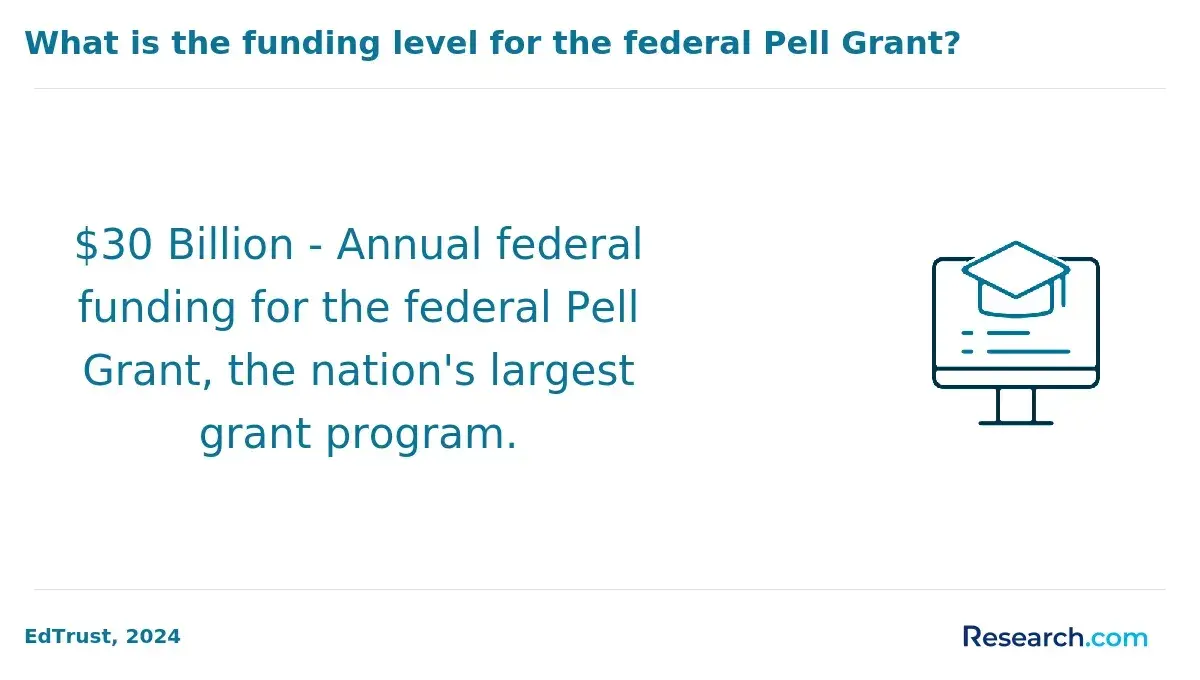
Eligible students at institutionally accredited nonprofit universities may qualify for federal student aid by submitting the Free Application for Federal Student Aid (FAFSA). Aid can include need-based grants, federal loans, work-study opportunities, state programs, institutional scholarships, outside scholarships, and employer tuition assistance. Eligibility, award amounts, and loan limits depend on individual circumstances and enrollment status.
Financial aid should be compared as a multiyear plan, not as a first-term discount. A larger scholarship can be less valuable if it has a difficult renewal condition, applies only to tuition, or requires full-time enrollment that conflicts with work and family obligations.
Before accepting an offer, ask financial-aid staff to clarify these details in writing.
- Whether institutional grants renew automatically and the GPA, credit-load, and deadline requirements for renewal.
- Whether online students are eligible for the same scholarships, work-study options, and emergency assistance as campus students.
- Which charges are covered by aid and which expenses, including books or fieldwork costs, remain out of pocket.
- How transfer credits, repeated courses, part-time attendance, or accelerated sessions affect satisfactory academic progress and aid eligibility.
- How much borrowing is necessary for the full program and what the projected monthly repayment could mean for your household budget.
Do not borrow based on a hoped-for salary or assume employment after graduation. Compare the debt required with the likely credential level, your current earnings, and the time needed to pursue any additional graduate education. Registered nurses considering advanced clinical practice face a separate educational and aid calculation; reviewing affordable FNP programs can clarify how graduate professional preparation differs from a psychology-based route.
How Flexible Are Online Addiction Psychology Degree Programs at Nonprofit Universities?
Online does not always mean self-paced. Most nonprofit university programs use either asynchronous courses, where students complete work by weekly deadlines, or synchronous courses, where students attend scheduled live sessions. Hybrid models may combine both, and clinically oriented programs may require in-person practicum, internship, skills training, or short residencies.
Asynchronous study usually gives the most day-to-day flexibility for working adults, but it still requires steady weekly participation. Synchronous formats can provide immediate interaction and structure, yet may be difficult across time zones or shift-work schedules. Self-paced enrollment is comparatively uncommon in programs that rely on cohorts, faculty-guided discussion, or sequenced clinical content.
This format comparison can help students decide whether an online program is genuinely workable before they apply.
| Format | Best fit | Trade-off to investigate |
| Mostly asynchronous | Students needing flexible weekly study windows | May require strong self-management and still have fixed deadlines |
| Scheduled synchronous | Students who value live instruction and routine | Live attendance can conflict with work and caregiving |
| Hybrid or residency-based | Students seeking some face-to-face skills development | Travel, lodging, and schedule commitments add cost and complexity |
| Part-time sequence | Working students prioritizing manageable course loads | Longer time to completion and possible aid implications |
| Accelerated sequence | Students with ample weekly study capacity | Compressed deadlines can make withdrawals more likely if life changes occur |
Request a sample course schedule and ask how often live meetings occur, whether they are recorded, and whether fieldwork can be completed near your home. Never assume a placement is available locally or that an online program can enroll residents of every state.
What Student Support Services Do Nonprofit Universities Provide for Online Addiction Psychology Degree Students?
Online students need more than a learning platform. Useful nonprofit university support includes academic advising, tutoring, library access, writing assistance, accessibility services, career coaching, technical help, mental-health resources, and responsive financial-aid advising. For addiction-related study, help locating and managing supervised experiential learning can be particularly important.
Support quality is best evaluated by access and accountability rather than by a long services list. Ask whether online students use the same career office and library databases as campus learners, how quickly advisors respond, and whether the school tracks progress toward graduation.
Students should pay special attention to the following services because they affect both persistence and professional preparation.
- Dedicated online academic advising that can explain degree audits, transfer-credit decisions, and sequencing.
- Career services that offer résumé feedback, interview preparation, internship guidance, and behavioral-health employer connections.
- Library and research support for psychology databases, citation help, and evidence-based practice assignments.
- Accessible technology support during evenings or weekends if courses use proctoring, videoconferencing, or specialized software.
- Fieldwork coordination that clearly explains whether the school finds placements, approves student-found sites, or leaves placement arrangements to students.
A red flag is vague language about internships or practicum. Students should know who is responsible for securing the site, whether a placement agreement is needed, how supervision is verified, and what happens if an approved site cannot be found in the student's area.
Do Online Addiction Psychology Degree Programs at Nonprofit Universities Prepare Graduates for In-Demand Careers?
An online addiction psychology degree can prepare graduates for behavioral-health and human-services work, but the outcome depends heavily on degree level, prior experience, local employers, and state rules. Bachelor's graduates may pursue positions such as behavioral-health technician, recovery support specialist, case manager, prevention coordinator, intake specialist, community outreach worker, or research assistant. Job titles and minimum requirements vary widely.
The labor market supports demand for trained professionals, especially in counseling-related roles. The U.S. Bureau of Labor Statistics projects 19% growth in employment for substance abuse, behavioral disorder, and mental health counselors from 2023 to 2033. That projection describes the occupation overall; it does not mean a bachelor's degree alone qualifies someone for counselor licensure or guarantees an individual job offer.
Students should connect coursework to employable skills that apply across behavioral-health settings, including ethical communication, documentation, motivational approaches, cultural humility, referral practices, data literacy, case conceptualization, and understanding of co-occurring conditions. AI tools may increasingly support administrative tasks such as drafting and record organization, but they do not replace clinical judgment, confidentiality obligations, human rapport, or licensure requirements.
Career fit is clearer when roles are compared by the education they commonly require.
| Career direction | Common educational starting point | Key consideration |
| Peer recovery or support work | Varies by employer and state; certification may be relevant | Lived experience requirements and certification rules may apply |
| Entry-level behavioral-health services | Associate or bachelor's degree, depending on role | Often involves supervised support rather than independent diagnosis or therapy |
| Substance-use or mental-health counseling | Requirements vary; many clinical pathways require graduate education and supervised practice | Verify state-specific license or certification standards |
| Psychologist roles | Typically doctoral education plus required supervised training and licensure | A bachelor's or master's alone generally is not the final practice credential |
Students drawn to prevention and whole-person wellness may also explore related education options such as a masters in dietetics. It is a distinct professional path with different science prerequisites, supervised practice expectations, and credentialing standards.
Can an Online Addiction Psychology Degree From a Nonprofit University Prepare Students for Graduate School?
Yes, an online bachelor's degree from an appropriately accredited nonprofit university can prepare students for graduate school when it includes the prerequisite courses and academic performance expected by the target program. Graduate admissions commonly evaluate cumulative and major GPA, research methods and statistics coursework, writing ability, recommendation letters, relevant experience, and alignment between the applicant's goals and the program.
Students seeking a master's in clinical mental health counseling, social work, marriage and family therapy, applied behavior analysis, public health, or psychology should identify prerequisite requirements before choosing undergraduate electives. A psychology major with no research methods, statistics, abnormal psychology, or developmental psychology may limit options at some graduate schools.
Take these steps early, ideally before the final year of a bachelor's program.
- Create a list of realistic graduate programs and record each program's prerequisites, GPA expectations, format, residency requirements, and state licensure disclosures.
- Choose electives that fill gaps in statistics, research methods, developmental psychology, abnormal psychology, and substance-use or behavioral-health studies.
- Develop relationships with faculty through substantive coursework, research assistance, office hours, or supervised projects to support future recommendation requests.
- Seek relevant volunteer, human-services, research, or community experience while respecting role boundaries and privacy rules.
- Confirm that your intended graduate program meets the educational standards for the state where you plan to seek licensure.
A master's degree is often the practical next credential for students pursuing counseling-oriented careers, while doctoral study fits students aiming for psychologist licensure, advanced research, or academic roles. Students interested in a faster wellness-focused undergraduate route can compare an accelerated nutrition degree online, but should evaluate whether its prerequisites and professional outcomes fit their goals rather than treating it as a substitute for addiction psychology preparation.
How Should Students Compare the Best Online Addiction Psychology Degree Programs at Nonprofit Universities?
The best online addiction psychology program is the one that meets your credential goal at a manageable total cost and schedule. Because exact program names and requirements differ, build a short list of three to five nonprofit universities and compare their written disclosures instead of relying on rankings, marketing language, or tuition alone.
Use this decision framework to score each finalist consistently. A program that performs well across these categories is usually a stronger choice than one with a single attractive feature.
| Comparison factor | What to look for | Decision impact |
| Credential alignment | Degree level and curriculum support the specific role or graduate-school plan | Prevents paying for a credential that cannot meet your objective |
| Accreditation and authorization | Recognized institutional accreditation and applicable program or state disclosures | Supports aid eligibility, transferability, and professional planning |
| Total net cost | Tuition, fees, transfer evaluation, aid, books, and fieldwork expenses | Shows the actual financial commitment |
| Format and timeline | Live-session schedule, course length, part-time options, residencies, and placement timing | Determines whether completion is realistic |
| Curriculum | Addiction content, ethics, research, statistics, cultural responsiveness, and experiential learning | Indicates academic and career relevance |
| Student support | Advising, tutoring, career services, library access, and placement assistance | Can affect persistence and transition to work or graduate study |
| Outcomes transparency | Clear graduation, retention, licensure, or placement information when available | Helps test claims without assuming outcomes are guaranteed |
Before making a deposit, contact admissions, financial aid, and - if applicable - the program's fieldwork or licensure office. Ask for answers in writing, especially when a claim affects transfer credit, state eligibility, internship placement, scholarship renewal, or total cost.
Common mistakes include assuming nonprofit status ensures quality, choosing only by advertised tuition, overlooking synchronous sessions or residencies, confusing institutional and programmatic accreditation, and selecting a degree without checking state licensure rules. A lower-cost bachelor's may be excellent for behavioral-health support work, while a higher-cost master's may be necessary for a licensed counseling goal; the right investment depends on the outcome you actually need.
Other Things You Should Know About Addiction Psychology
Sometimes, but many colleges use related titles such as addiction studies, substance-use counseling, behavioral health, or psychology with an addiction concentration. Review the curriculum, not just the program name, to determine whether it covers the knowledge and training you need.
Usually not. A bachelor's degree can support entry-level behavioral-health roles and graduate-school preparation, but therapist and independently licensed counselor pathways commonly require a qualifying graduate degree, supervised experience, examinations, and state licensure.
Employers generally focus on the degree, the institution's accreditation, relevant skills, experience, and any required license or certification. Choose a program that clearly identifies the institution, credential, curriculum, and experiential-learning expectations on its transcript and official materials.
Consider a bachelor's or associate pathway that supports behavioral-health support, case-management, prevention, or recovery-services roles. Check local employer postings and state certification rules first, because some positions require specific credentials, supervised hours, or lived-experience qualifications.
References
- Best Online Master's In Addiction & Recovery 2025 https://www.psychology.org/degrees/addictions-and-recovery/masters/
- 20 Best Value Online Master's in Addiction/Substance Abuse Counseling Programs - BestMedicalDegrees.com https://www.bestmedicaldegrees.com/rankings/best-online-masters-in-addiction-substance-abuse-counseling/
- Online Addiction Counseling Bachelor's Degrees - BS in Counseling https://addiction-counselor.org/degrees/online-bachelors/
- 2025 Most Affordable Online Colleges for Psychology Degrees https://www.onlineu.com/most-affordable-colleges/psychology-degrees
- Financial Aid for Psychology Students https://www.onlinepsychologydegrees.com/financial-aid/
- Top Online Addiction Counselor Degree and Certificate Options https://www.addiction-counselors.com/online-degrees/
- Tuition https://sobercollege.com/substance-use-counselor/counseling-course-tuition/
- How to Get Your Bachelor's Degree Recognized in the U.S. | ECE® https://www.ece.org/Blogs/Bachelors-Degree-Recognized.htm