2027 BS in Business Administration Curriculum: How to Evaluate Preparation in No-Code Business Tools
Audited and Verified:
Our Editorial and Data Verification Process
Research.com uses government datasets, official education statistics and primary institutional information to support its career and degree guides. Our review process checks factual accuracy, occupational definitions, source dates and the requirements associated with the credentials discussed.
How This Article Was Fact-Checked
Our editorial team verifies salary estimates, employment projections, education requirements and program information against original data providers and official organizations. Salary figures are checked against the relevant occupational definitions and reporting periods. Information about licensure, accreditation and required in-person training is reviewed separately.
Fact-checked and verified on:

Co-Founder and Chief Data Scientist
A business degree may advertise digital skills without showing whether students actually build a useful workflow, dashboard, or customer process. That distinction matters if you want to leave college with evidence of practical work, not just familiarity with software names.
This guide is for prospective BS in Business Administration students comparing curricula. It explains where no-code tools fit, what assignments demonstrate competence, and which program details to verify before committing your time and money.
Key Things You Should Know
- Look for assessed projects that connect a business decision to a working no-code tool, documented data choices, and a clear explanation of limitations - not merely a software mention in a course description.
- A typical bachelor's degree requires about 120 semester credits, but the credits, prerequisites, and course sequence still needed for graduation depend on the school and any approved transfer evaluation.
- Prioritize transferable skills such as spreadsheet analysis, workflow design, and responsible data handling over a particular vendor; no-code proficiency alone does not establish job readiness or a professional credential.
What Is a Business Administration Degree With No-Code Tool Training?
A BS in Business Administration is an undergraduate business degree. No-code tools let users create spreadsheets, dashboards, forms, databases, or automated workflows through visual interfaces rather than writing conventional software code. Training in those tools is usually embedded in courses or projects; it is not necessarily a named concentration or separate qualification.
The educational value comes from joining the tool to a business problem. A student might map how customer requests move between teams, create a form to capture them, and use a dashboard to identify delays. The stronger assignment also asks whether the data are reliable, who may access them, and whether the proposed process would work for its users. Building an interface without those decisions demonstrates less business preparation.
Degree labels do not settle the issue: a BS, BBA, or specialized business degree may offer more or less applied technology work. When you compare online business school options across the United States, check the actual catalog and recent course materials rather than inferring no-code training from the degree title.
What Does a Business Administration Curriculum Typically Include?
Business administration programs commonly combine general education with accounting, economics, finance, marketing, management, operations, quantitative methods, and a culminating course or project. Schools determine the precise requirements. No-code work is most useful when it reinforces those subjects: a dashboard needs meaningful measures, while an automated purchasing request needs an understanding of approvals and costs.
The table distinguishes introductory exposure from the kind of assessed work that can show applied learning. These are examples to look for, not requirements every program includes.
| Curriculum area | Possible no-code application | What the assignment could assess |
| Accounting or finance | Spreadsheet budget or cash-flow scenario | Correct assumptions and interpretation of financial measures |
| Marketing | Customer feedback form and results dashboard | Question quality, data limitations, and recommendations |
| Operations or management | Request-tracking workflow | Process logic, ownership, exceptions, and controls |
| Analytics or information systems | Connected data table and visual report | Data quality, access permissions, and decision usefulness |
An elective may provide deeper practice, but it does not become an official concentration unless the school designates and awards one. Check prerequisite chains and when applied courses run: fast-paced online business degrees can shorten the calendar only if required courses are available in a workable order.
How Can You Evaluate No-Code Skills in a Business Degree Program?
Ask for evidence of what students make and how faculty assess it. A course title such as "business analytics" may indicate statistical interpretation, software demonstrations, or hands-on dashboard development. None should be assumed without a syllabus or assignment description.
Use the following checks when speaking with an adviser or instructor; together, they distinguish repeatable skill development from a one-off demonstration.
- Identify required courses - not just optional electives - that use spreadsheets, visual analytics, forms, databases, or workflow builders.
- Request a recent syllabus or sample assignment showing the deliverable, assessment criteria, feedback, and revision opportunities.
- Ask whether students must define a business question, validate inputs, explain assumptions, and communicate a recommendation, rather than only complete software steps.
- Confirm who supplies software access and project data, and whether students can produce a redacted portfolio sample under school and employer rules.
For employed students, a workplace project may be especially relevant, but it needs faculty approval if used for academic credit and employer permission if it uses internal information. A simulation with permitted sample data can be a better assignment than an unauthorized "real-world" project. If fitting projects around a job matters, compare business administration degrees for working learners alongside their actual assignment and scheduling requirements.
There is no universal software checklist. For broad business preparation, prioritize spreadsheets for calculations and scenarios, visual reporting tools for explaining measures, and forms or workflow tools for capturing and routing work. A simple database can help students understand records, relationships, and access controls. Product names matter less than the ability to move the underlying method to another platform.
Match the tool to the intended function. An operations student might use a workflow builder to show how purchasing requests are approved; a marketing student might use a form and dashboard to examine feedback. Neither project proves professional expertise unless the student can defend the data, process, and recommendation. Automation also needs checks for errors, duplicate records, inappropriate access, and tasks that still require human judgment.
If your goal is specifically supply chain work, compare the degree's operations content and project access with a specialized program - not just its software list. Supply chain college costs versus potential career outcomes provide one context for that broader choice.
Institutional accreditation and business accreditation answer different questions. Institutional accreditation concerns the institution; AACSB, ACBSP, and IACBE accreditation, where applicable, concerns a business school or specified business programs within an accreditor's scope. Confirm that the institution is accredited and check whether the particular degree is covered by any claimed business accreditation.
Accreditation can provide evidence that a program defines learning outcomes and reviews educational quality. It does not certify that graduates can use a particular dashboard, automation platform, or no-code product. For that decision, examine current syllabi, assignments, and access to tools. Nor should an accreditation claim substitute for checking affordability: when considering business administration degree costs after FAFSA-based assistance, verify the institution's aid eligibility and your own award separately.
First-year applicants generally submit evidence of secondary-school completion; transfer applicants generally provide transcripts from prior colleges. A school may also set GPA rules or require preparation in mathematics, statistics, accounting, or economics before entry to the business major or particular upper-level courses. Requirements vary, and admission to the institution is not always admission to the major.
If you have previous coursework, ask for an official evaluation showing not only credits accepted but which satisfy business-core, prerequisite, and elective requirements. That distinction affects when you can reach the analytics or information-systems courses you want. A prospective HR-focused transfer student, for example, can evaluate transfer-friendly online HR colleges while asking each school how prior business and quantitative courses apply. The receiving institution makes the final credit and degree-requirement determination.
Either format can teach no-code tools effectively if students have suitable software, feedback, and opportunities to explain their decisions. Campus courses may offer scheduled lab help and in-person team meetings. Online courses may make it easier to access recorded demonstrations, but they can still require live presentations, group coordination, fixed deadlines, or proctored assessments.
For a fair comparison, ask how students obtain software licenses, technical support, and accessible alternatives; how group projects are scheduled; and whether a capstone or internship requires attendance at a particular place or time. These details matter more than the word "online." If shorter terms appeal to you, online degrees with accelerated terms are worth evaluating against your weekly workload and the availability of required business courses.
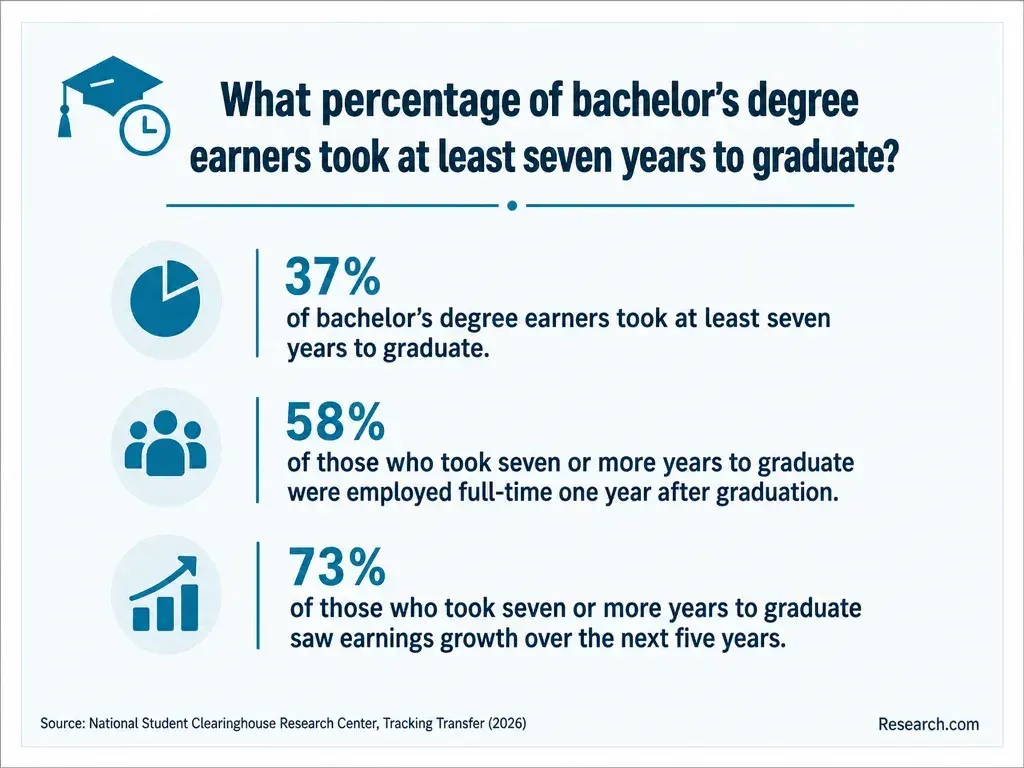
A bachelor's program commonly totals about 120 semester credits, with roughly four years of full-time study from the start. Part-time enrollment, transfer credit, prerequisites, and course scheduling can change the time needed. An accelerated term changes the pace of coursework; it does not automatically remove required credits.
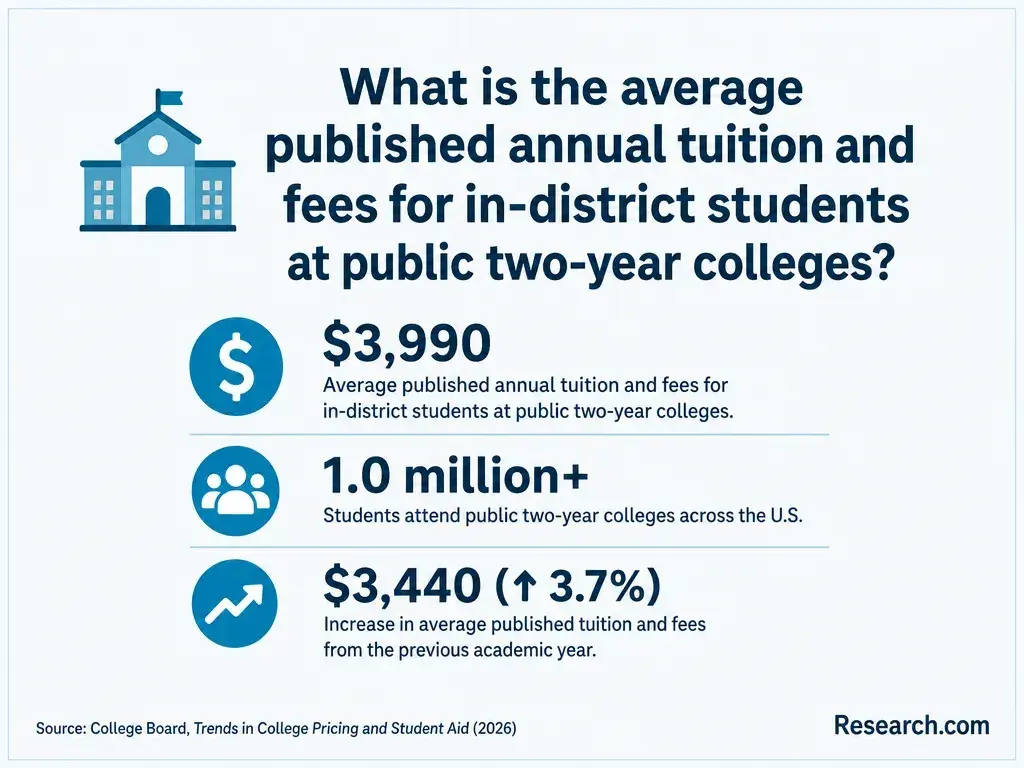
Calculate cost from the courses you still need, not an advertised per-credit figure alone. Include tuition, mandatory fees, books, software or technology charges, and any travel or lost work time. Compare schools only after receiving their written credit evaluations and confirming which required courses are offered in your likely enrollment terms. Online business administration program cost-and-time comparisons can help narrow a shortlist, but your remaining-credit audit and aid offer determine your more useful personal comparison.
No-code work samples can support applications for roles involving reports, coordination, customer information, or process tracking. Examples include marketing coordinator, operations coordinator, project coordinator, and administrative or HR support positions. The relevant evidence is task-specific: a hiring team may value a clearly explained reporting dashboard or request workflow more than a list of platform names.
These are pathways, not jobs conferred by a degree. Employers may require industry knowledge, internships, relevant work experience, or deeper analytical and technical skills. A graduate targeting project coordination should compare the business degree's assignments and career support with more focused training; affordability checks for accredited project management programs may help if that specialty warrants a different degree. A tool-based classroom project does not itself award a project-management credential or qualify someone to manage a major budget.
What Salaries and Job Outlook Can Business Graduates Expect?
There is no reliable single salary for graduates of a BS in Business Administration with no-code training. Pay depends on the occupation, experience, location, industry, and responsibilities. As one occupation-specific reference, the U.S. Bureau of Labor Statistics reports a $78,760 median annual wage for market research analysts in May 2025 and projects 7% employment growth from 2025 to 2035. Those figures describe the occupation as a whole, not starting pay or employment prospects for every business graduate; its analytical work also extends well beyond building dashboards.
Use a target role's requirements to judge whether a program's coursework and projects close your skill gaps. Then weigh the remaining degree cost against realistic entry routes, rather than treating an occupational median as a return on tuition. Comparing tuition for online business colleges is a starting point, but fees, aid, transfer-credit applicability, and time away from work belong in the decision too.
Other Things You Should Know About Business Administration
No. A certificate documents completion under the vendor's terms. A college awards credit only under its own approved transfer or prior-learning policies.
Usually not for the visual tool itself. Check the course prerequisites, though: data, statistics, or information-systems courses may expect other preparation.
Not necessarily. Ask whether the school provides licenses, uses free educational access, or requires a paid account - and whether access continues after the course ends.
It depends on the platform license and ownership rules. Before a course ends, ask how to export permitted files and preserve a portfolio explanation without retaining restricted data.
- Enforcement Guidance on Reasonable Accommodation and Undue Hardship under the ADA https://www.eeoc.gov/laws/guidance/enforcement-guidance-reasonable-accommodation-and-undue-hardship-under-ada
- Demand for digital skills, skill gaps and graduate employability | nih.gov https://pmc.ncbi.nlm.nih.gov/articles/PMC11387931/
- Department Expectations: Curriculum | New York State Education Department https://www.nysed.gov/college-university-evaluation/department-expectations-curriculum
- Chapter II: Proposal Preparation Instructions | NSF https://www.nsf.gov/policies/pappg/23-1/ch-2-proposal-preparation
- Online Bachelor's in Business | University of Phoenix https://www.phoenix.edu/online-business-degrees/business-bachelors-degree.html
- Bachelor of Science in Business Administration | Purdue University Global Academic Catalog https://catalog.purdueglobal.edu/undergraduate/business-information-technology/business-administration-bs/
- Bachelor of Business Administration (BBA) | National University https://www.nu.edu/degrees/accounting-finance-economics/programs/bachelor-business-administration/
- What is really happening to jobs? Separating AI hype from reality https://siepr.stanford.edu/publications/policy-brief/what-really-happening-jobs-separating-ai-hype-reality
- Bachelor of Business Administration in Information Systems Management | walshcollege.edu https://walshcollege.edu/programs/bachelor-of-business-administration-information-systems-management/
- Bachelor of Science in Business Administration | San Francisco Bay University https://www.sfbu.edu/programs/bachelor-science-business-administration