2027 Business Administration BS Cost Planning: Study Faster or Keep More Paid Work Hours?
Audited and Verified:
Our Editorial and Data Verification Process
Research.com uses government datasets, official education statistics and primary institutional information to support its career and degree guides. Our review process checks factual accuracy, occupational definitions, source dates and the requirements associated with the credentials discussed.
How This Article Was Fact-Checked
Our editorial team verifies salary estimates, employment projections, education requirements and program information against original data providers and official organizations. Salary figures are checked against the relevant occupational definitions and reporting periods. Information about licensure, accreditation and required in-person training is reviewed separately.
Fact-checked and verified on:

Co-Founder and Chief Data Scientist
Finishing a BS in Business Administration sooner can reduce time in school, but a heavier course load may also cost you paid shifts. For employees balancing tuition with household income, the cheapest schedule is not necessarily the fastest - or the one with the lowest tuition bill.
This guide shows how to compare accelerated and work-compatible schedules using remaining degree requirements, term charges, lost wages, and aid rules. You will leave with a practical way to choose a pace you can afford and sustain.
Key Things You Should Know
- Compare total completion cost, not tuition alone: include required fees, borrowing costs, and wages you would forgo under each schedule.
- A shorter calendar timeline preserves paid hours only if its scheduling demands do not displace more work than the extra terms would; calculate lost wages as hourly pay × unpaid hours × affected weeks.
- Get an official degree audit and price at least two feasible schedules. One fewer term matters financially only after accounting for term charges, aid eligibility, employer benefits, and the risk of repeating a course.
What Is a Business Administration Bachelor's Degree?
A BS in Business Administration is an undergraduate degree covering several business functions rather than preparing students for a single occupation. Schools set their own requirements, but the degree commonly combines general education with accounting, finance, marketing, management, operations, and quantitative coursework. A BBA or specialized business bachelor's may cover some of the same subjects without having an identical curriculum.
That breadth can suit an employee seeking wider business responsibilities. If your goal is specifically to coordinate projects, compare the required courses with low-cost project management schools and aid options before paying for a broader degree. Neither pathway, by itself, establishes professional certification eligibility or qualifies someone to manage a team.
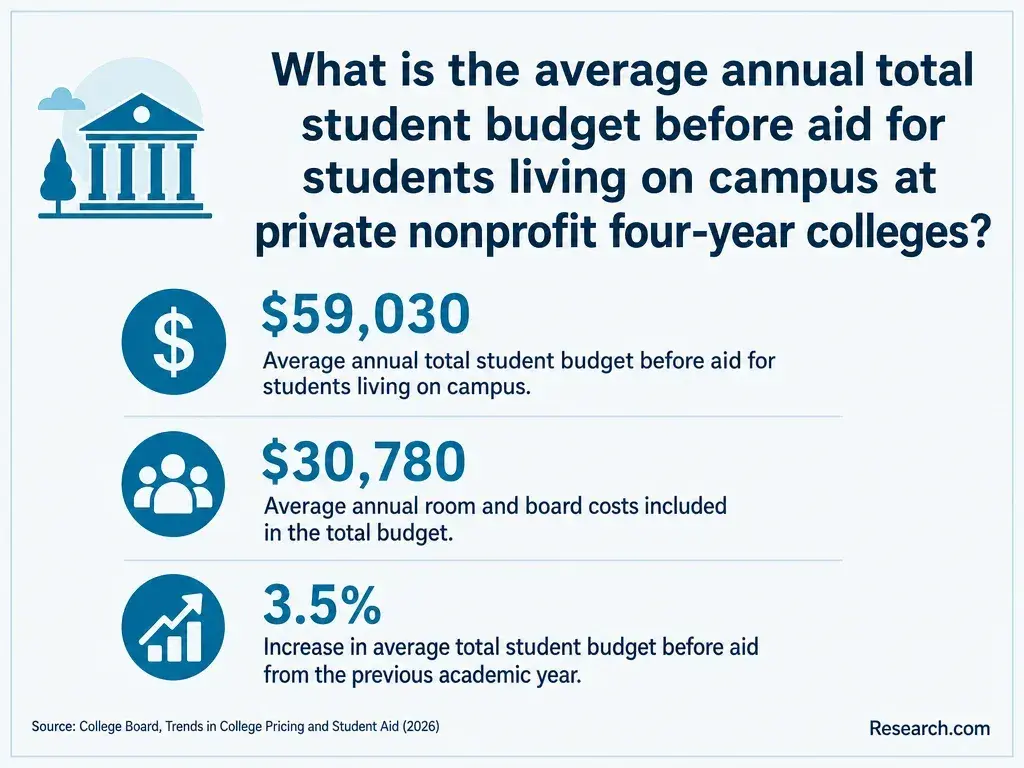
How Much Does a Business Administration Degree Cost?
Your relevant price is the cost of finishing, not the advertised price of a full degree. Request a written estimate based on credits that actually satisfy your requirements, then account for tuition, mandatory fees, books or software, travel or proctoring, and any borrowing costs. Accepted transfer credit may count only as an elective; it does not necessarily replace a required business course.
Compare how each school charges. A per-credit program may cost much the same in tuition at either pace, while term-based charges can make extra terms more expensive. Conversely, a flat term price saves money through acceleration only if you can complete the additional applicable coursework without losing more wages or needing to repeat it. Use inexpensive business administration degree options as a starting point, then obtain a school-specific completion estimate rather than relying on a published price alone.
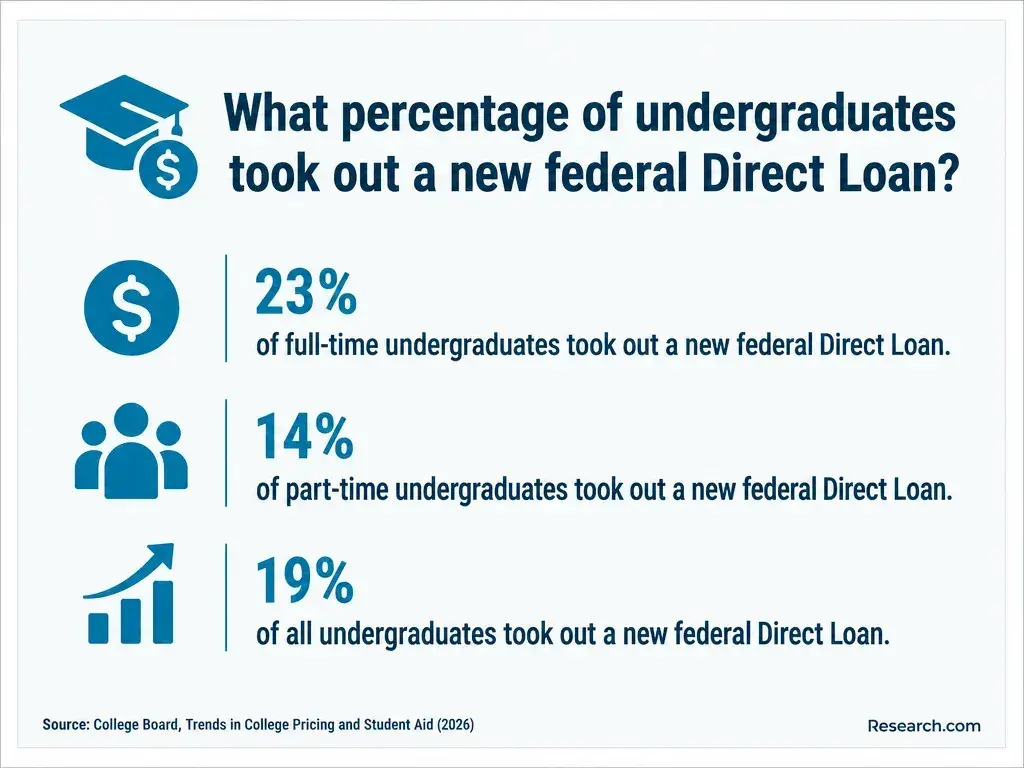
Keep net cost separate from cash flow. A grant may reduce the eventual bill, while employer reimbursement may arrive only after you pay tuition and meet a grade requirement. Ask the financial-aid office how each proposed course load affects aid, satisfactory academic progress, and loan eligibility; ask your employer about benefit caps, timing, and any repayment obligation.
Can Studying Faster Preserve More Paid Work Hours?
Sometimes - but finishing sooner is not the same as working more paid hours. An accelerated term may require fewer months of enrollment while taking away evenings, weekend shifts, or overtime now. A steadier schedule may protect current income but extend fees, commuting, or the wait for a job that requires a bachelor's degree. An earlier wage increase belongs in the comparison only if it is reasonably supported by a specific promotion or job opportunity, not assumed because you graduate sooner.
Compare schedules using the same remaining degree requirements. This sequence keeps the calculation focused on money you would actually gain or lose:
- Obtain an official degree audit and map when every remaining required course is offered.
- For each feasible schedule, total tuition, fees, materials, and expected aid or employer payments under its enrollment intensity.
- Estimate shifts or paid hours you cannot work, multiply by your actual pay, and account for benefits or overtime you could lose.
- Compare the totals and test what happens if a required course is unavailable or you must repeat one.
Employer support can change the result. If a slower pace keeps you eligible for reimbursement that acceleration would exceed, review project management bachelor's tuition assistance options only if that degree is also relevant to your goal; confirm the rules for your actual business program with your employer. Choose the faster schedule when its avoided costs and credible earlier earnings outweigh lost work income without making successful completion unlikely. Otherwise, protecting shifts can be the better financial decision.
The time remaining depends on your approved transfer credits, prerequisite sequence, course availability, and how many courses you can complete while working. An accelerated calendar does not necessarily reduce the number of required courses. It may simply compress them into shorter terms or require more simultaneous coursework.
Ask an adviser for graduation maps at both your faster and work-compatible paces, including a backup if a required course is not offered when expected. If your target role is specifically in supply chain, fast-track online supply chain bachelor's options offer a separate timeline to investigate; compare them using your evaluated credits, not the advertised completion time. The best timeline is one you can finish while meeting both degree requirements and essential work commitments.
Online study can remove a commute, which may protect work hours, but it does not guarantee that classes are self-paced. Live sessions, timed exams, group projects, presentations, and fixed weekly deadlines can still conflict with shifts. Campus study may offer useful in-person access but add travel and scheduled attendance.
Request sample course schedules and assessment rules before deciding. Check whether required courses - not just electives - are available in your preferred format, and whether internships or capstones require meetings during work hours. Compare online business administration programs with work-compatible schedules against your actual shift pattern. A format is flexible for you only if its recurring obligations fit your calendar.
Business administration curricula typically build from introductory accounting, economics, and quantitative work toward finance, marketing, operations, management, and an integrative project or capstone. Your school's catalog and degree audit determine the actual requirements. Review prerequisite chains carefully: taking fewer courses in one term may delay a later required course if it is offered infrequently.
Choose electives for the work you want to do, but do not mistake an elective cluster for an officially awarded concentration. For example, an employee pursuing HR work should compare the program's HR coursework with a dedicated HR degree and the costs of an HR degree. The useful comparison is the additional relevant learning and credits you would need - not the concentration label alone.
Schools may evaluate previous college work, secondary-school records, GPA, and preparation in mathematics or other subjects. Admission to the institution, entry into the business major, and application of transfer credits to graduation requirements are separate decisions. An employee returning to school should obtain official transcripts and ask when the school can issue a degree audit.
Before planning an accelerated start, check credit and eligibility rules for business administration admission, then confirm the applicable catalog with admissions and advising staff. A missing prerequisite or an accepted course that applies only as an elective can change both your timeline and your cost.
Check the institution's accreditation status with the accreditor and confirm that the accreditation applies to the school awarding your degree. Then check any claimed business-specific accreditation - such as AACSB, ACBSP, or IACBE - directly with that accreditor, including whether the relevant school or program falls within its stated scope. Institutional and business-specific accreditation are different claims; neither guarantees a particular job or salary.
When reviewing affordable online business program comparisons, verify accreditation alongside the exact degree title and current delivery format. A low quoted price is of limited use if the program, requirements, or credits differ from what your completion plan assumes.
Depending on prior experience and the job posting, graduates may seek operations coordinator, administrative specialist, sales support, HR assistant, or marketing coordinator positions. Someone already doing related work may use the degree to meet an employer's education requirement for greater responsibility. Graduation alone does not make an applicant a manager or replace function-specific experience.
Match your coursework and existing responsibilities to the role's tasks: budgets or spreadsheets for operations, customer and campaign work for marketing, or documented personnel processes for HR. For an HR-focused move, employees with substantial prior college credit can compare human resources bachelor's credit transfer options with a business administration completion plan. Ask each school which credits apply to required courses before assuming the specialized route is faster.
What Salary and Job Outlook Can Business Graduates Expect?
There is no single salary or job-growth rate for a business administration degree; labor data describe occupations, not everyone who holds the credential. For example, the U.S. Bureau of Labor Statistics reports a May 2025 median annual wage of $75,940 for human resources specialists and projects 6% employment growth from 2025 to 2035. Those occupation-wide figures include experienced workers and are not a starting-salary estimate for a new graduate.
For your cost decision, compare pay for specific roles you could realistically pursue, considering your experience, location, and employer's hiring requirements. If project coordination is the goal, cost-conscious project management college options may merit comparison with a broad business degree. Do not count a future raise in your financial plan until you have a credible basis for its amount and timing.
Other Things You Should Know About Business Administration
Possibly. Faculty must approve the assignment, and your employer may need to approve the project and use of workplace data. Routine job duties do not automatically satisfy capstone requirements.
Ask about course-drop deadlines, leave policies, and whether required courses will be available when you return. Speak with financial aid before changing enrollment intensity because aid and loan eligibility may change.
Usually not, but readmission rules, catalog changes, course recency policies, and financial-aid standing can affect your remaining path. Request an updated audit before taking a break or returning.
Only if it provides relevant experience you cannot reasonably gain through paid work or another approved activity, and you can afford the lost income. Confirm any academic requirement and approval process before giving up shifts.
- 8 Things You Should Know About Federal Work-Study | studentaid.gov https://studentaid.gov/articles/8-things-federal-work-study/
- Direct Assessment (Competency-Based) Programs | ed.gov http://www.ed.gov/laws-and-policy/higher-education-laws-and-policy/higher-education-policy/direct-assessment-competency-based-programs
- Pell Grant Enrollment Intensity and Cost of Attendance | ed.gov https://fsapartners.ed.gov/knowledge-center/fsa-handbook/2025-2026/vol7/ch3-pell-grant-enrollment-intensity-and-cost-attendance
- Employer-offered educational assistance programs can help pay for college | Internal Revenue Service https://www.irs.gov/newsroom/employer-offered-educational-assistance-programs-can-help-pay-for-college
- Competency Based Education Programs | Academics | Miami Dade College https://www.mdc.edu/academics/programs/competency-based-education.aspx
- Business Administration Bachelor's Degree Online | The Pennsylvania Institute of Technology https://www.pit.edu/programs/b-s-business-administration/
- Understanding the Impacts of Employment on Students' Lives | pdx.edu https://pdxscholar.library.pdx.edu/cgi/viewcontent.cgi
- Schedule of Classes - Enrollment Management https://enrollmentmanagement.baruch.cuny.edu/registrar/schedule-of-classes/
- Tuition & Fees | National University https://www.nu.edu/admissions/tuition/