2027 Paying for an Online BS in Business Administration: A Self-Employed Applicant with Irregular Income
Audited and Verified:
Our Editorial and Data Verification Process
Research.com uses government datasets, official education statistics and primary institutional information to support its career and degree guides. Our review process checks factual accuracy, occupational definitions, source dates and the requirements associated with the credentials discussed.
How This Article Was Fact-Checked
Our editorial team verifies salary estimates, employment projections, education requirements and program information against original data providers and official organizations. Salary figures are checked against the relevant occupational definitions and reporting periods. Information about licensure, accreditation and required in-person training is reviewed separately.
Fact-checked and verified on:

Co-Founder and Chief Data Scientist
When you work for yourself, a profitable year on a tax return may not reflect the cash available when tuition is due. That gap matters if you are considering an online BS in Business Administration while keeping a business running.
This guide explains how self-employment income affects financial aid, which payment options can handle uneven revenue, and how to compare programs by the cost of finishing - not just advertised tuition. You will leave with a practical way to decide whether, when, and how much to enroll.
Key Things You Should Know
- File the FAFSA even if your business income varies: aid generally starts with an earlier tax year, and a later income decline may warrant a documented review by the school.
- Compare the cost of remaining required credits, fees, financing, and time away from paid work; a lower per-credit rate does not always produce a lower completion cost.
- Build a payment plan around your lowest-revenue months. Federal student loans generally require at least half-time enrollment, while grant amounts can change with enrollment intensity.
What Is an Online BS in Business Administration?
An online BS in Business Administration is an undergraduate degree covering business functions such as accounting, management, marketing, operations, and decision-making. "Online" describes delivery, not necessarily a self-paced schedule: courses may have weekly deadlines, live meetings, group work, or proctored exams.
For a self-employed applicant, the degree may help fill gaps in budgeting, pricing, customer research, or operations while satisfying a bachelor's requirement for a future job. It does not guarantee business growth or a management position. Compare the actual curriculum and scheduling policies - not just the degree title - with business administration programs for advancement while working.
How Can Self-Employed Applicants Pay for an Online Business Degree?
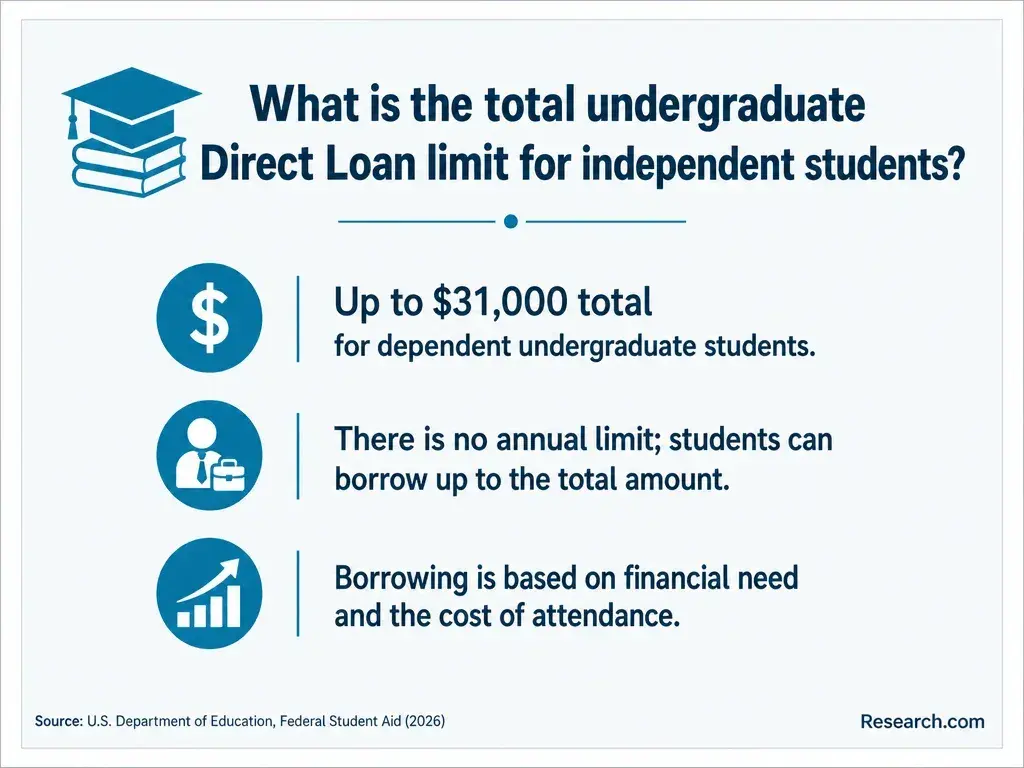
Start with the FAFSA and the school's financial-aid application requirements. Depending on eligibility and the institution, a package may include federal grants, institutional or outside scholarships, and federal student loans. A self-employed student can apply for federal aid; having no employer tuition benefit does not disqualify them.
The best mix depends on net cost and payment timing. Grants and scholarships reduce what you owe, but may have enrollment or renewal conditions. A school payment plan can spread bills across a term, although installments may still fall during a slow sales month. Loans can bridge that gap but add repayment obligations and potentially interest. Guidance on federal aid for undergraduate project management study also explains aid mechanisms that can apply to eligible business undergraduates; confirm the rules with your chosen school.
Before accepting a loan or payment plan, set aside money for business taxes and essential operating expenses. Do not use an optimistic revenue forecast as the amount you can safely pay each month.
How Does Irregular Self-Employment Income Affect Financial Aid?
The FAFSA generally uses income from an earlier tax year, so a strong year may affect an aid offer even after current revenue falls. Report income and any required assets according to the application's instructions; business sales are not the same thing as personal income, and the treatment of business assets depends on the applicable FAFSA rules.
If income has materially declined, ask the financial-aid office whether it will consider a professional judgment review. Provide the documents it requests, which may include tax returns, current profit-and-loss records, and evidence of lost contracts. The school decides whether an adjustment is warranted; irregular income alone does not guarantee more aid. The same FAFSA questions can arise when comparing affordable accredited business administration programs accepting FAFSA.
Also ask how a lighter course load changes grants, loan eligibility, and satisfactory academic progress. A lower tuition bill this term can mean less aid or a longer path to graduation.
Check that the institution has recognized institutional accreditation and that the specific online program is eligible for the federal aid you plan to use. Then check whether the business school or program holds AACSB, ACBSP, or IACBE accreditation, if that distinction matters to you. These accreditors have different scopes; accreditation of a school does not automatically establish coverage of every program it offers.
Accreditation is a screening factor, not proof that a degree fits your budget or schedule. When reviewing US business college rankings for online learners, verify the institution's status and the degree's coverage directly with the institution and accreditor before paying an enrollment deposit.
Requirements vary by school and by whether you apply as a first-year or transfer student. Expect to provide official records of prior education; a program may also specify GPA standards, mathematics preparation, or separate admission requirements for its business major. Running a business can strengthen an application, but it does not automatically replace academic prerequisites or earn credit.
If you have previous college study, request an evaluation showing where accepted credits apply: general education, business core, electives, or nowhere toward this degree. That distinction matters more to your final bill than the number of credits accepted. The same issue appears in transfer credit evaluations for project management majors, but only your prospective business program can approve your degree audit.
Programs commonly combine general education with accounting, economics, finance, marketing, management, operations, and quantitative coursework. For a business owner, managerial accounting and cash-flow analysis may be immediately useful, while marketing or operations assignments may help examine a specific customer or delivery problem.
Review the sequence as well as the course names. An accounting or statistics prerequisite can delay a later course if it is offered infrequently. If your business is principally about purchasing and distribution, compare the general degree's operations courses with a specialized pathway such as accelerated supply chain bachelor's degrees. A concentration is worthwhile only if its added courses serve your goal without an unacceptable increase in cost or time.
Ask whether a capstone may use your business as a case. Academic approval is separate from permission to use customer, employee, or financial records.
Completion time depends on credits that apply to the degree, prerequisites, course availability, and how much study you can sustain alongside client work. Accelerated calendars may shorten elapsed time without reducing required work; part-time enrollment may protect business income but extend the period over which fees or price increases affect you.
Ask an adviser for a term-by-term plan that includes required courses, live-session obligations, and a fallback if you need to reduce enrollment during a busy season. Compare that plan with alternatives, including fast-paced online organizational leadership bachelor's programs, only if their curriculum also fits your objective. A faster advertised timeline is not a personalized graduation estimate.
There is no reliable single price without a school, a confirmed degree audit, and a course schedule. Ask each institution for a written estimate using the same assumptions. The table separates charges from the cash-flow risks that matter when revenue arrives unevenly.
| Cost component | What to compare | Why it matters |
| Tuition | Rate basis and remaining required coursework | A low advertised rate may not offset more courses to finish. |
| Fees and materials | Technology, software, books, and exam charges | These may be due before aid or client payments arrive. |
| Financing | Net aid, payment-plan terms, and borrowing | A manageable installment is not the same as a low total cost. |
| Time | Course availability and hours away from paid work | Delay or lost billable time can change the comparison. |
Use each school's estimate to compare affordable colleges for online business degrees, then ask what happens to your bill and aid if you withdraw, pause, or change course load. Keep your business emergency reserve separate from tuition you expect to owe.
If you intend to keep operating your business, the most immediate career value may be better financial, marketing, or operational judgment - not a new job title. If you want salaried work, your experience may support applications in operations coordination, sales operations, purchasing support, or other roles related to what you actually did for customers and suppliers.
Document responsibilities and results accurately: managing invoices is different from qualifying as an accountant, and hiring a contractor is different from managing a large department. If the degree is mainly a route out of self-employment, compare the cost of completion - including options among budget-friendly colleges for business administration online - with targeted training and the requirements in job postings you would pursue.
What Salaries and Job Outlook Can Business Graduates Expect?
There is no single salary or employment projection for BS in Business Administration graduates. As one relevant occupation, the U.S. Bureau of Labor Statistics reports a $75,940 median annual wage for human resources specialists in May 2025 and projects 6% employment growth from 2025 to 2035. Those are occupation-wide figures, not starting pay or an expected return on this degree; HR roles also require skills that running a business may not have developed.
For a financing decision, use a realistic target role, local job requirements, and your existing experience rather than applying an occupational median to a loan calculation. A business administration education length and salary outlook guide can broaden that comparison, but no salary figure replaces a program-specific cost estimate or an assessment of your likely entry route.
Other Things You Should Know About Business Administration
Do not assume you can. Tax treatment depends on whether education maintains or improves skills in your current work or qualifies you for a new trade or business, among other rules. Ask a qualified tax professional to review your circumstances and any education-credit eligibility.
Usually not without comparing the interest cost and accounting implications. A card may solve a short-term due date while creating expensive debt; check school payment options first.
You can transfer funds for personal expenses, but record the transaction correctly for your business structure. Paying from a business account does not, by itself, make tuition a deductible business expense.
Eligible borrowers who enroll at least half-time may qualify for an in-school deferment. Confirm your enrollment status and loan details with your servicer; interest may still accrue on some loans.
- Self-employed individuals tax center | Internal Revenue Service https://www.irs.gov/businesses/small-businesses-self-employed/self-employed-individuals-tax-center
- Cost of Attendance (Budget) | 2025-2026 Federal Student Aid Handbook https://fsapartners.ed.gov/knowledge-center/fsa-handbook/2025-2026/vol3/ch2-cost-attendance-budget
- Subsidized and Unsubsidized Loans | studentaid.gov https://studentaid.gov/understand-aid/types/loans/subsidized-unsubsidized
- Your financial path to graduation | consumerfinance.gov https://www.consumerfinance.gov/paying-for-college/your-financial-path-to-graduation/
- Eligibility - Office of Student Financial Aid | The University of Iowa https://financialaid.uiowa.edu/eligibility
- Eligibility For Financial Aid | University of Arizona Office of Scholarships & Financial Aid https://financialaid.arizona.edu/policies/eligibility-for-financial-aid
- Professional Judgment for FAFSA | Income Adjustment Guide | PCI https://porterchester.edu/financial-aid/professional-judgement-income-adjustment/
- What is the Student Aid Index (SAI)? | baylor.edu https://onestop.web.baylor.edu/node/2096
- Financial Aid - Online BA in Business Administration https://extension.fullerton.edu/onlinedegrees/baba/financial-aid.aspx
- FAFSA Verification | Shawnee State University https://www.shawnee.edu/financial-aid/fafsa-verification.html