2027 Parent Student Loans vs Student Borrower Loans

Student Finance & Loan Expert
Deciding how to finance graduate school often confronts prospective students and their families with a tough choice: should a parent take out a loan or should the student borrow directly? Each option carries distinct financial implications, affecting credit profiles and repayment responsibilities. The complexity of federal and private loan terms can confuse borrowers trying to plan their finances effectively. Understanding these differences is crucial for minimizing long-term debt stress while maximizing access to funds. This article examines the key distinctions between parent student loans and student borrower loans, aiming to guide readers toward informed decisions that best suit their financial circumstances.
- What are the key differences between parent student loans and student borrower loans? Parent vs Student
- How do federal Parent PLUS Loans compare to federal student Direct Loans? PLUS vs Direct
- When should families use parent loans instead of student loans to cover college costs? When Use Parent Loans
- Who is eligible for parent student loans versus student borrower loans, and what are the requirements? Eligibility
- How do borrowing limits and interest rates differ for parent loans and student loans? Limits & Rates
- How do repayment options and monthly payments differ for parent and student loan borrowers? Repayment Options
- What loan forgiveness and discharge options exist for parent borrowers versus student borrowers? Forgiveness Options
- How do credit checks, cosigners, and private lenders affect parent and student loan approval? Credit & Private
- What are the risks of default and credit damage for parents compared with student borrowers? Default Risks
- How can families refinance or consolidate parent and student loans to lower costs? Refinance & Consolidate
What are the key differences between parent student loans and student borrower loans?
Parent student loans and student borrower loans differ mainly in who takes responsibility, eligibility conditions, and repayment terms. Parent PLUS loans are borrowed by parents to cover their dependent undergraduate child's education, while student borrower loans, such as Grad PLUS loans, are taken directly by graduate or professional students.
Some distinctions between parent loans for student borrowers and student loans include:
- Borrower responsibility: Parents are fully responsible for Parent PLUS loans, whereas student borrowers are accountable for Grad PLUS or Direct Subsidized and Unsubsidized loans.
- Credit requirements: Parent PLUS loans enforce a stricter credit check, disqualifying applicants with adverse credit history; graduate student loans have credit requirements but are generally easier to qualify for.
- Interest rates and fees: Both loan types have higher fixed interest rates compared to undergraduate Stafford loans, but minor differences exist.
- Repayment options: Repayment plans differ as Parent PLUS loans do not qualify for all income-driven options accessible to students, limiting repayment flexibility.
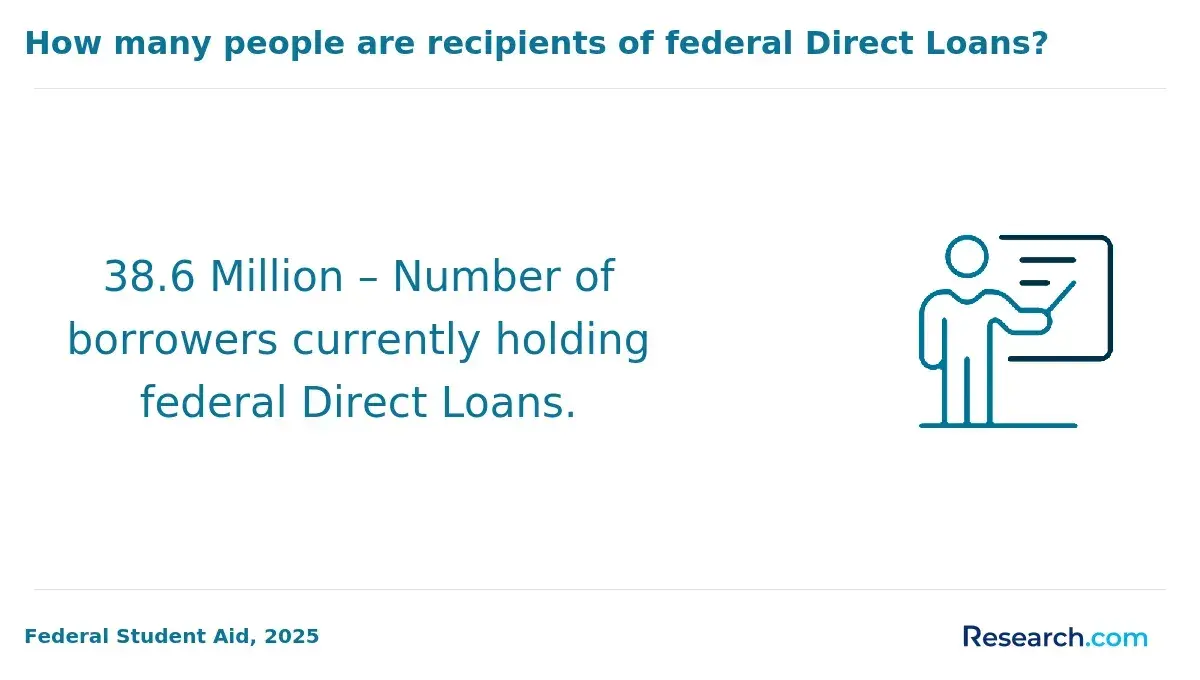
Federal data reveals parents hold about 6.7% of the $1.693 trillion federal student loan debt via Parent PLUS loans, while graduate students account for 6.8% through Grad PLUS loans among 42.8 million borrowers. Understanding the differences between parent and student loans can help borrowers navigate financing options more effectively.
For those needing quick funding alternatives, learning how to get last minute student loans can be a useful resource.
How do federal Parent PLUS Loans compare to federal student Direct Loans?
Federal Parent PLUS Loans and federal student Direct Loans serve different needs in borrowing. Parent PLUS Loans are credit-based loans for parents of dependent undergraduates, while Direct Loans primarily benefit students themselves. A key difference in a comparison of federal parent plus and student direct loans is the interest rate: Parent PLUS Loans currently carry rates around 8.05%, notably higher than Direct Subsidized and Unsubsidized Loans, which usually range between 4.99% and 5.50% for undergraduates.
Unlike Direct Subsidized Loans, Parent PLUS Loans do not provide an interest subsidy, so interest starts accruing from the time of disbursement. Repayment for Parent PLUS Loans typically begins within 60 days after funds are fully disbursed, though deferment options are available upon request. Direct Loans often feature more flexible repayment plans, including income-driven options available to students but not to Parent PLUS borrowers.
Borrowing limits also showcase differences: Parent PLUS Loans can cover the full cost of attendance minus other aid, while Direct Loans have annual and aggregate caps-generally maxing out at $57,500 for undergraduate borrowing. This flexibility makes Parent PLUS Loans useful for families covering funding gaps, but eligibility is limited by credit checks and higher borrowing costs.
About 14% of undergraduates receive Parent PLUS Loans, making up roughly 11% of federal student loan debt in 2022 (WCER/University of Wisconsin-Madison). Those considering federal parent plus loans vs direct student loans should carefully evaluate total loan costs and repayment ability. Additionally, it's important to be aware of deadlines, such as the student loan deadline for fall semester, when planning borrowing strategies.
When should families use parent loans instead of student loans to cover college costs?
Families should consider parent loans over student loans for college expenses when the student has exhausted federal Direct Subsidized and Unsubsidized Loan limits but still requires additional funds. Parent PLUS Loans allow borrowing up to the full cost of attendance minus any other aid, making them a viable option to cover tuition, room, board, and other related costs.
Choosing between parent loans vs student loans for college expenses often depends on the student's borrowing capacity. Parent loans suit upperclassmen or graduate students who have reached their limits, or families wanting to protect the student's credit history by placing repayment responsibility on the parent. However, these loans typically carry higher interest rates and origination fees, which can influence overall family financial planning.
Large parent loans may also affect future financial aid eligibility by reducing need-based aid, while student loans impact aid calculations differently, potentially preserving eligibility. Among Parent PLUS borrowers, average loan amounts rose from about $11,500 to $13,000 over a decade, even as the number of borrowers declined, indicating parents are assuming larger debts to fill funding gaps.
Families facing limited student loan options should evaluate when to choose parent loans over student loans carefully. Consulting a financial aid advisor is crucial to balancing loan obligations and optimizing aid opportunities. Additionally, prospective borrowers may find value in exploring grants for adults going back to school to supplement their funding sources.
Who is eligible for parent student loans versus student borrower loans, and what are the requirements?
Parent PLUS loans are designed for biological or adoptive parents of dependent undergraduate students enrolled at least half-time in eligible institutions. Eligibility criteria for parent student loans require parents to pass a credit check without adverse history. If this check is not passed, parents can still qualify by obtaining an endorser or providing documentation of extenuating circumstances.
Student borrower loans, including federal Direct Subsidized and Unsubsidized Loans, are available directly to eligible undergraduates without credit checks. Requirements for student borrower loans include U.S. citizenship or eligible non-citizen status, satisfactory academic progress, and at least half-time enrollment. Subsidized loans consider financial need, whereas unsubsidized loans do not.
Interest rates and fees differ between these loan types. Parent PLUS loans carry an 8.94% fixed interest rate and a 4.228% origination fee for loans disbursed between July 1, 2025, and June 30, 2026. In comparison, federal undergraduate Direct Loans have a lower rate of 6.39% and smaller fees, affecting overall repayment costs.
If a parent cannot qualify for a PLUS loan, the student might increase borrowing through unsubsidized loans or explore private options. Parents can apply directly for PLUS loans to cover costs not met by student loans. Eligibility checks for Parent PLUS involve citizenship, credit history, and the parent-student relationship, while student loans focus on enrollment, FAFSA submission, and academic standing without credit review.
For more detailed options, reviewing a list of best bank student loans can help families make informed decisions.
How do borrowing limits and interest rates differ for parent loans and student loans?
Parent PLUS loans let parents borrow up to the full cost of attendance, minus other financial aid, with no fixed annual or aggregate limits. This flexibility helps cover higher education costs but can result in substantial debt. In contrast, federal student loans have set limits based on the student's year and dependency status, typically ranging from $5,500 to $12,500 annually for undergraduates, and a maximum aggregate limit of $57,500 for dependent students.
Interest rates differ notably between these loan types. Parent PLUS loans carry a fixed rate of 8.05% for 2026, which is higher than most federal student loan rates. Undergraduate Direct Subsidized and Unsubsidized Loans range from 4.99% to 6.54%, depending on grade level, while graduate student loans are closer to 7.54%. This means parents often pay more interest over the life of the loan compared to their children for similar amounts borrowed.
Among federal loan borrowers aged 62 and older, many with Parent PLUS loans, the average balance is $42,780. This highlights how parent borrowing can extend into retirement years and affect long-term financial planning (Education Data Initiative, 2026).
Families should consider these points:
- Assess repayment ability before borrowing large PLUS loans, given higher interest rates and no borrowing caps.
- Maximize lower-interest federal student loans before resorting to parent loans.
- Explore scholarships, grants, and work-study options to reduce borrowing needs.
How do repayment options and monthly payments differ for parent and student loan borrowers?
Parent PLUS loans have a fixed interest rate of 8.94% through 2025-2026, with mandatory payments starting right after disbursement unless deferred. Because they are not eligible for income-driven repayment (IDR) plans, parent borrowers face generally higher monthly payments that remain fixed based on the loan amount and a standard 10-year repayment term.
Federal Direct Student Loans offer more repayment flexibility. Borrowers can choose from various IDR plans such as Income-Based Repayment (IBR) and Pay As You Earn (PAYE), which adjust monthly payments according to income and family size. These plans often reduce payments significantly and provide forgiveness after 20 or 25 years of qualifying payments, easing the financial burden for undergraduate and graduate students alike.
Private parent loans typically advertise lower starting interest rates near 5.09%, but they often include origination fees up to 5% and do not offer protections like deferment or IDR options found in federal loans. This can increase overall costs and financial stress if income fluctuates.
Key considerations include:
- Parent borrowers should expect fixed, often higher monthly payments without income adjustment options.
- Student borrowers benefit from income-driven plans that can lower monthly payments and offer forgiveness.
- Comparing federal and private loans is important due to differences in fees and repayment flexibility.
What loan forgiveness and discharge options exist for parent borrowers versus student borrowers?
Parent borrowers face far fewer loan forgiveness or discharge options compared to student borrowers. Federal Parent PLUS loans are typically ineligible for Public Service Loan Forgiveness (PSLF), a program that many federal student loan borrowers access after 120 qualifying payments while working in qualifying government or nonprofit jobs.
Parent PLUS loans qualify for discharge only in rare cases like death or permanent disability of the borrower or the student. Student borrowers, however, have additional discharge options, including closed school discharge, false certification discharge, and total and permanent disability discharge.
Income-Driven Repayment (IDR) plans offer eventual forgiveness after 20-25 years, but these are directly accessible only to student borrowers. Parents with PLUS loans must consolidate into a Direct Consolidation Loan to access IDR plans, which can extend repayment periods and potentially result in forgiven amounts being taxed as income.
The accessibility of loan forgiveness significantly affects debt outcomes across racial groups. White and Asian families typically carry the highest average Parent PLUS debt-around $30,000 to $35,000-while racially minoritized borrowers often use these loans to cover family expenses beyond tuition, increasing financial pressure (WCER/University of Wisconsin-Madison).
Prospective borrowers should carefully weigh these limitations when planning repayment strategies or applications, considering the broader forgiveness options available to student Direct Loan borrowers.
How do credit checks, cosigners, and private lenders affect parent and student loan approval?
Credit checks, cosigners, and private lenders play critical roles in loan approval for parents and students. Federal Parent PLUS Loans do not require a specific credit score minimum but involve an adverse credit history review. Parents with recent delinquent debt or bankruptcy may be denied; however, they can appeal or find an endorser (cosigner) to help secure the loan. Parent PLUS loans supported about $11 billion in borrowing in 2022, mainly benefiting students at public (51%) and private nonprofit (42%) four-year institutions, according to WCER/University of Wisconsin-Madison.
Undergraduate federal student loans do not require a credit check, so approval is virtually guaranteed regardless of credit history. In contrast, private student loans depend heavily on the borrower's creditworthiness and usually require a cosigner, often a parent. Private lenders consider income, credit history, and debt-to-income ratios more strictly than federal programs.
Approval odds with private lenders vary because they set their own criteria. Good credit can secure lower interest rates, while weaker credit often leads to higher costs, denial, or mandatory cosigners. Families must weigh the benefits of federal Parent PLUS loans, which allow some flexibility with endorsers but a stricter credit review, against private loans that generally require stronger credit.
- Parent PLUS loans allow endorsers but involve a credit review.
- Federal student loans require no credit check, ensuring approval.
- Private loans need solid credit or a cosigner and may have higher rates.
- Knowing these differences helps families plan financing based on their credit situation.
What are the risks of default and credit damage for parents compared with student borrowers?
Parent borrowers are at a higher risk of credit damage and default than student borrowers due to stricter loan terms and fewer repayment options. Parent PLUS loans do not qualify for income-driven repayment plans, limiting flexibility and increasing default risk. In contrast, federal student loans offer various income-driven plans that reduce financial strain and lower default chances.
The impact of defaulting on a parent loan is often more severe on the parent's credit score than it is for students. Parents are responsible for their loans immediately after disbursement, with very limited deferment or grace period options. This can lead to cascading credit issues if the loan falls behind on payments.
Student borrowers enjoy more supportive repayment options, such as deferments, forbearance, and income-driven plans. Public Service Loan Forgiveness and other forgiveness programs are available to students but not to parents. For example, students can reduce payments to zero temporarily during unemployment, while parents lack such alternatives and face higher delinquency risks.
Data from NCES (2024 release) shows a decline in undergraduates receiving loan aid from 50% to 38% between 2010-11 and 2020-21, yet PLUS borrowing and loan amounts have increased, raising parental debt burdens and default risk.
Parents should evaluate their repayment capacity carefully before borrowing. Students are advised to maximize federal student loans to access income-driven plans and limit parental debt exposure.
How can families refinance or consolidate parent and student loans to lower costs?
Families looking to refinance or consolidate parent and student loans can reduce costs by carefully comparing loan types and interest rates. Parent PLUS loans often carry higher fixed interest rates than federal student loans. While refinancing through private lenders may lower rates, it removes federal protections like income-driven repayment plans and loan forgiveness options.
Parents can consolidate Parent PLUS loans into a Direct Consolidation Loan, potentially lowering monthly payments by extending loan terms, but this may increase total interest paid. Students with federal loans can also consolidate through a Direct Consolidation Loan to simplify payments but should avoid mixing federal and private loans in the same consolidation.
Practical steps include:
- Comparing current interest rates on individual loans versus available refinancing offers.
- Evaluating eligibility for federal income-driven repayment or forgiveness programs before refinancing.
- Separating federal and private loans for consolidation to maintain federal benefits.
- Improving credit scores to secure better refinancing terms.
Data from TICAS's 2025 update shows nearly 27% of private student loan borrowers in 2019-20 bypassed safer federal Direct Loans, and 11% did not apply for federal aid at all, increasing their borrowing risk and likely costs. Families should fully explore federal loan options and subsidies before considering private refinancing.
Strategically prioritizing federal protections and comparing loan terms carefully helps lower costs while preserving valuable borrower benefits.
Other Things You Should Know About
No, a Parent PLUS Loan is legally the responsibility of the parent borrower and cannot be transferred to the student under any circumstances. The student cannot assume or take over the loan payments during or after their education. Refinancing may be an option in some cases, but it requires a new loan agreement and credit approval.
If a parent borrower dies or becomes totally and permanently disabled, the federal Parent PLUS Loan is discharged, meaning the remaining balance is canceled. This discharge does not affect the student's credit and the student is not responsible for repayment. Verification and documentation are required to process this discharge.
In 2027, Parent PLUS Loans are not directly eligible for income-driven repayment plans. However, if they are consolidated into a Direct Consolidation Loan, they may qualify for the Income-Contingent Repayment (ICR) plan, which is an income-driven option.
Yes, students can receive both federal Direct Loans in their name and Parent PLUS Loans in the same academic year to help cover education expenses. However, combined borrowing must stay within federal aggregate limits. Families often use this approach to maximize federal borrowing while balancing financial responsibility between parent and student.