2027 Can You Refinance Student Loans While in School?

Student Finance & Loan Expert
Many students accumulate significant debt during their undergraduate studies and wonder if refinancing these loans while still enrolled can ease financial strain. The challenge lies in balancing ongoing education with managing interest rates and monthly payments effectively.
Refinancing offers potential benefits like lower rates but also comes with eligibility requirements and possible trade-offs, such as losing borrower protections. This article examines whether refinancing student loans during school is viable and outlines key considerations to help borrowers make informed decisions tailored to their financial goals and academic status.
- Can you refinance student loans while still in school? In-School Refinance
- What happens when you refinance federal student loans? Federal Tradeoffs
- Which student loans qualify for refinancing? Eligible Loans
- What is the difference between refinancing and consolidation? Refinance vs Consolidation
- How do federal and private student loans compare? Federal vs Private
- What repayment options are available before graduation? Pre-Grad Repayment
- When should borrowers consider refinancing student loans? Refinance Timing
- Can parent loans and graduate loans be refinanced? Parent and Grad Loans
- How do deferment and forbearance affect student loans? Deferment Options
- How does student loan refinancing affect credit and forgiveness? Credit and Forgiveness
Can you refinance student loans while still in school?
Refinancing student loans while still enrolled is generally unavailable through most lenders because they require graduates or former students with steady income and credit to qualify. Federal loans cannot be refinanced through the government, but borrowers can consolidate or refinance them with private lenders once enrollment ends.
Some specialized lenders offer refinancing to students enrolled at least half-time, but these often have stricter credit requirements and higher interest rates, frequently necessitating a co-signer for those without established credit or income.
Refinancing during college or shortly after may result in losing federal benefits such as income-driven repayment plans and deferment options. Borrowers considering how to refinance student loans during college should weigh potential interest savings against the loss of these protections. Reasons to consider refinancing include:
- Accessing lower interest rates if credit improves.
- Reducing monthly payments through extended terms.
- Consolidating multiple loans into a single payment.
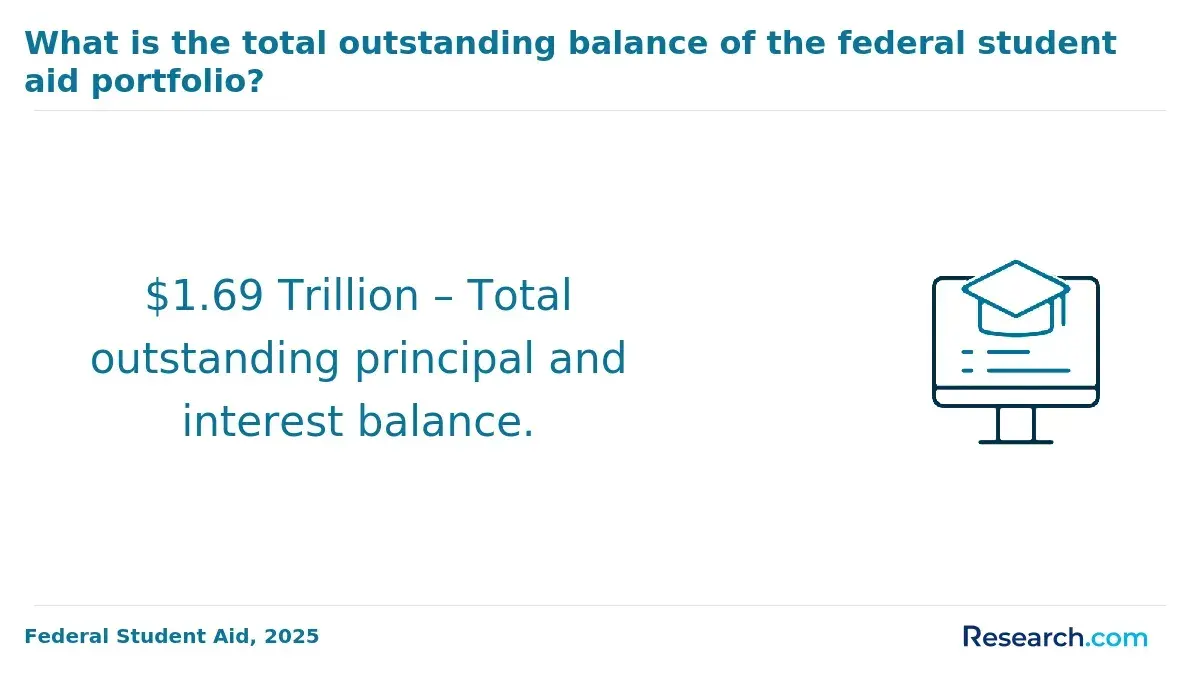
Increased student borrowing, totaling $102.6 billion annually, highlights the importance of managing debt effectively. Prospective borrowers should carefully review lender terms and eligibility. Additionally, students might explore options like using student loans for rent to manage expenses during studies.
What happens when you refinance federal student loans?
Refinancing federal student loans replaces your existing government-backed debt with a new private loan, often offering lower interest rates and different terms. For example, rates can start as low as 3.95% fixed or 3.65% variable for highly qualified borrowers, potentially reducing monthly payments or the total loan cost.
However, refinancing federal student loans benefits come with trade-offs: borrowers lose access to federal protections like income-driven repayment plans, deferment options, and eligibility for Public Service Loan Forgiveness once switching to private lenders.
Students currently enrolled usually cannot refinance because most private lenders require borrowers to have graduated or left school. Those who attempt refinancing while still in school often need cosigners and face higher risks due to unstable incomes. Understanding the impact of refinancing federal student loans while in school is critical for avoiding financial setbacks.
Key benefits of refinancing include fixed or variable interest rates, flexible repayment terms ranging from 5 to 20 years, and the convenience of consolidating multiple loans into a single payment.
Downsides include losing federal protections and potentially no longer qualifying for loan forgiveness programs. Borrowers should carefully compare rates, terms, and benefits before committing.
For individuals with credit challenges, exploring options such as bad credit student loans may also be advisable alongside refinancing considerations.
Which student loans qualify for refinancing?
Refinancing eligibility depends largely on the type of student loans held. Most private lenders allow refinancing of both federal and private student loans, but they primarily focus on consolidating private loans or combining private loans with federal ones.
Federal loans like Direct Subsidized and Unsubsidized Loans, PLUS Loans, and Perkins Loans can be refinanced; however, doing so converts them into private loans, resulting in loss of federal benefits such as income-driven repayment plans and loan forgiveness programs.
Loans frequently eligible for refinancing include Direct Loans, Stafford Loans, Grad PLUS Loans, and private student loans taken individually or with a cosigner. Parent loans for college like Parent PLUS Loans are often excluded or need a separate application from the parent.
Many lenders impose requirements such as minimum credit scores, income levels, or employment status, especially for federal loans initially obtained by students still enrolled.
Refinancing while still in school can be difficult since most lenders require graduation or current employment, limiting options for enrolled students. Still, refinancing private loans accumulated before or during study is often possible when meeting eligibility criteria. Understanding which federal and private student loans can be refinanced helps borrowers make informed financial decisions.
Private student loan debt reached $167.378 billion by the third quarter of 2025, with 17.7% being refinance loan debt, highlighting the significant role refinancing plays. This data from Education Data Initiative underlines the strong demand for refinancing among those seeking to optimize loan terms.
What is the difference between refinancing and consolidation?
Refinancing and consolidation serve distinct roles in student loan management, with different advantages depending on your needs. Refinancing replaces one or more existing loans with a new private loan, often lowering the interest rate or improving terms to reduce monthly payments or shorten repayment periods.
For borrowers weighing the student loan refinancing vs consolidation options, refinancing may offer savings but often means losing federal protections like income-driven repayment plans or forgiveness programs. A borrower with both federal and private loans might refinance into a single private loan at a 4.5% interest rate, lowering monthly costs.
Consolidation, however, combines multiple federal student loans into one Direct Consolidation Loan via the Department of Education without lowering the interest rate. The new rate is the weighted average of the original loans rounded up to the nearest one-eighth percent.
This process simplifies payments and can extend the repayment term, resulting in lower monthly payments but possibly more interest paid over time. The difference between student loan consolidation and refinancing is crucial-consolidation preserves federal benefits and is available only for federal loans.
- Refinancing is offered by private lenders and may cause loss of federal borrower protections.
- Consolidation applies only to federal loans and maintains federal assistance eligibility.
- Despite possible savings, only about 10% of eligible borrowers refinance, according to Earnest.
Students currently enrolled should consider if lower interest rates from refinancing outweigh losing federal safeguards. Those managing multiple federal loans might prefer consolidation to simplify payments without affecting federal benefits. Learn more about how to refinance student loans for a detailed look at refinancing options and impacts.
How do federal and private student loans compare?
Federal and private student loans differ notably in eligibility, interest rates, and repayment flexibility. Federal loans, issued by the U.S. Department of Education, usually come with fixed, lower interest rates and offer flexible repayment options like Income-Driven Repayment (IDR) plans.
These plans adjust monthly payments based on income and can lead to loan forgiveness after 20-25 years. Private loans, by banks or other lenders, often feature variable interest rates that may rise over time and offer fewer repayment options, which vary by lender.
Credit requirements are a major distinction. Most federal undergraduate loans do not require a credit check or co-signer, broadening access for students. In contrast, private lenders typically require good credit or a co-signer, limiting who qualifies.
When it comes to refinancing, federal loans usually cannot be refinanced without losing federal protections, though private loans can often be refinanced for better rates but with potential downsides.
Loan aid trends reveal that 38% of first-time, full-time undergraduates received federal loans in 2020-21, down from 50% a decade earlier, leading to growing interest in private lending and refinancing. For students wanting to refinance while in school, private loans allow it but demand stricter credit checks; federal loans require graduation and consolidation for refinancing.
What repayment options are available before graduation?
Federal student loans enter a grace period of typically six months after leaving school, during which no payments are required. Borrowers may make interest-only payments during this time to limit accumulating interest.
Income-driven repayment (IDR) plans are accessible for those still enrolled if they show financial hardship or request deferment. These plans, including Income-Based Repayment (IBR) and Pay As You Earn (PAYE), adjust monthly payments based on income and family size, sometimes lowering payments to zero.
Deferment and forbearance offer temporary payment pauses. In-school deferment applies while enrolled at least half-time and postpones payments without accruing interest on subsidized federal loans. Borrowers can consider refinancing private or federal loans before graduation, though this carries risks.
More than 3.72 million federal borrowers qualify for Public Service Loan Forgiveness (PSLF) due to their employment status, according to the Education Data Initiative. Refinancing federally backed loans into private debt disqualifies borrowers from PSLF benefits, eliminating this valuable relief option.
Key considerations include:
- Grace periods allow payment breaks immediately after school.
- IDR plans can lower or pause payments based on income.
- Deferment prevents interest growth on subsidized loans.
- Refinancing may save money short-term but sacrifices federal protections and forgiveness eligibility.
Exploring federal repayment assistance programs and consolidation options can help maintain eligibility for loan forgiveness and provide manageable payment plans.
When should borrowers consider refinancing student loans?
Refinancing student loans can lower monthly payments and overall borrowing costs by securing a better interest rate than your existing loans. This option is often viable after graduation when borrowers have established stable income and improved credit scores. For example, refinancing from 7% to 4.5% interest on private loans could save hundreds monthly.
Many borrowers refinance to simplify payments by consolidating multiple loans into one. However, refinancing federal loans into private ones means losing access to income-driven repayment plans and federal forgiveness programs, so this approach fits those confident they won't need these protections.
While refinancing is possible during school, it's less common because lenders often require proof of income or graduation, and terms may be less favorable. Generally, waiting until after completing your degree allows better refinancing options by verifying income.
Key factors to consider include income growth, job stability, and high current interest rates. Checking refinancing offers annually can help manage debt more effectively, especially since average student loan amounts have shifted over time.
- Lower interest rates reduce monthly payments and total cost.
- Consolidate multiple loans for simpler management.
- Refinancing federal loans involves losing certain federal benefits.
- Best done after graduation with verified income.
Carefully weigh potential savings against risks and review lender terms before refinancing.
Can parent loans and graduate loans be refinanced?
Parent PLUS loans and graduate student loans can be refinanced, but the process differs significantly from refinancing undergraduate federal loans. Refinancing replaces existing loans with a new private loan, often to secure a lower interest rate or better terms.
Parent PLUS loans are federal loans taken out by parents to assist with a child's education expenses. Refinancing these loans with a private lender means losing federal protections such as income-driven repayment plans and forgiveness options. Approval depends on the parent's credit and income, which can limit refinancing opportunities if their financial profile is less favorable.
Graduate student loans, including Direct Unsubsidized and Grad PLUS loans, are also eligible for refinancing through private lenders. While refinancing can reduce interest rates and monthly payments, it removes access to federal benefits like deferment, forbearance, and public service loan forgiveness.
Whether to refinance depends on your financial situation and goals. Benefits include:
- Lower interest rates.
- Consolidated payments.
- Potentially reduced monthly costs.
However, those relying on federal borrower protections should carefully consider the risks before refinancing. According to College Board Research, students borrowed $102.6 billion in federal and nonfederal loans for postsecondary education in 2024-25, underscoring the significance of refinancing decisions in the broader loan market.
How do deferment and forbearance affect student loans?
Deferment and forbearance provide temporary relief by pausing or reducing student loan payments, but their effects on interest differ. Deferment suspends payments without accruing interest on federal subsidized loans; however, unsubsidized federal and private loans continue to accumulate interest. In contrast, forbearance pauses payments for all loan types but interest keeps growing, raising the total balance.
During these periods, the principal does not decrease as payments are paused. Interest accrued during forbearance is capitalized, meaning it's added to the principal balance after the pause, which increases future monthly payments and total interest.
Refinancing while still in school can lower monthly payments by extending terms up to 20 to 25 years, according to EducationData.org. However, refinancing converts loans into private debt that typically lacks federal benefits such as deferment, forbearance, income-driven repayment plans, and loan forgiveness.
Those considering deferment, forbearance, or refinancing should evaluate:
- Whether payment pauses might be necessary based on personal or career plans.
- Loan types and their eligibility for federal relief options.
- The trade-off between lower monthly payments and the loss of federal protections.
Seeking professional financial advice ensures informed decisions when balancing short-term affordability with long-term loan management.
How does student loan refinancing affect credit and forgiveness?
Refinancing federal student loans while still enrolled in school can have significant effects on your credit and loan forgiveness eligibility. When you refinance, the original federal loan is replaced by a private loan, which usually involves a credit check.
This process often causes a temporary drop in your credit score due to the hard inquiry but managing repayments responsibly on the new loan may gradually improve your credit.
One important consideration is that refinancing generally disqualifies your loan from federal forgiveness programs like Public Service Loan Forgiveness (PSLF) and income-driven repayment (IDR) forgiveness, which require 20-25 years of qualifying payments on federal loans. Private loans do not qualify for these benefits, potentially impacting long-term forgiveness plans.
Some lenders, such as RISLA, provide refinancing options that preserve access to income-based repayment plans and have eliminated fees like late-payment or insufficient funds charges, offering more borrower flexibility. However, refinancing typically results in losing federal loan protections like deferment and forbearance.
Before refinancing while in school, consider these points:
- Credit checks may lower your credit score temporarily, but timely payments can build credit.
- Refinanced loans no longer qualify for PSLF or IDR forgiveness.
- Certain lenders, including RISLA, offer refinancing without fees and maintain repayment options.
- Federal benefits like deferment and forbearance are usually lost after refinancing.
Other Things You Should Know About
Yes, some lenders allow you to refinance student loans while still in school. However, eligibility criteria such as credit score and income may vary by lender, and you might need a cosigner if you lack a strong financial profile. It's advisable to research specific lenders' requirements in 2027 for the most accurate information. **Question** Does refinancing impact eligibility for federal loan forgiveness programs? **Answer** Refinancing federal student loans with a private lender in 2027 results in a loss of eligibility for federal forgiveness programs. If you convert your federal loans to private loans through refinancing, you will no longer have access to benefits like income-driven repayment or Public Service Loan Forgiveness. Carefully consider the trade-offs before refinancing. **Question** Are there risks to refinancing private student loans? **Answer** Yes, there are risks to refinancing private student loans in 2027. Signing new loan terms could potentially lead to unfavorable interest rates if market conditions change. You may also lose existing borrower benefits, such as flexible repayment options. Evaluate both the potential savings and any risks before proceeding with refinancing. **Question** Can refinancing help if you have bad credit or a low income? **Answer** Refinancing with bad credit or low income in 2027 may be challenging. Lenders typically look for strong financial indicators, so a cosigner might be necessary. Comparatively higher interest rates could also apply. It's advisable to improve your financial standing to qualify for better refinancing terms.
Refinancing federal student loans with a private lender effectively disqualifies those loans from federal forgiveness programs, such as Public Service Loan Forgiveness. Borrowers who want to benefit from federal forgiveness should carefully consider this trade-off before refinancing. Maintaining federal loans is critical to preserving eligibility for income-driven repayment and forgiveness options.
Refinancing private student loans can help reduce interest rates or monthly payments but may also lengthen repayment terms or increase total interest costs over time. Additionally, refinancing might eliminate any benefits tied to the original loans, such as flexible repayment options or hardship protections. Borrowers should weigh these risks alongside potential savings before proceeding.
Refinancing is generally more accessible to borrowers with good credit and stable income because lenders rely on these factors to approve loans and offer favorable rates. Those with poor credit or low income may face higher interest rates or may not qualify for refinancing at all. In such cases, working to improve credit or considering federal loan options may be more advantageous.