2027 Online Paralegal Studies Degrees for Students Who Want In-House Legal Department Careers

Co-Founder and Chief Data Scientist
Choosing an online paralegal studies degree is really a career-fit decision: will the program prepare you for contracts, compliance, litigation support, and corporate governance inside a legal department?
The U.S. Bureau of Labor Statistics reported a 2024 median pay of $61,010 for paralegals and legal assistants, but in-house roles often reward specialized business, technology, and regulatory skills. This guide is for students comparing online options, career changers, and legal support workers who want a practical path into corporate legal teams.
Key Things You Should Know
- For U.S. paralegals and legal assistants, the 2024 median salary was $61,010, so program cost and time-to-completion matter when estimating return on investment.
- Online paralegal degrees can support in-house legal careers when they include contracts, business organizations, compliance, legal research, e-discovery, and document management rather than only general legal office courses.
- ABA approval is helpful but not mandatory for every employer; institutional accreditation, transparent outcomes, qualified legal faculty, internship access, and corporate-law electives are the core quality checks.
What is an online paralegal studies degree and how does it prepare you for in-house legal work?
An online paralegal studies degree is an academic program that teaches students how to support attorneys with legal research, document drafting, case organization, factual investigation, regulatory filings, and client or business communication.
In an in-house legal department, the "client" is usually the company itself, which changes the work. Instead of serving many outside clients, in-house paralegals often support internal business units such as sales, human resources, procurement, finance, privacy, compliance, and operations.
The strongest online programs prepare students for that environment by connecting legal fundamentals with business workflows. A litigation-focused assignment might teach pleadings and discovery, while an in-house-oriented assignment might ask students to track contract obligations, organize due diligence materials, support a policy rollout, or manage records for a regulatory audit.
The degree does not make a graduate a lawyer, and paralegals cannot provide legal advice or represent clients in court unless a specific state rule allows a limited legal role. It can, however, build the legal, technical, and organizational skills corporate attorneys rely on every day.
Students should also understand how online delivery affects preparation. A well-designed online paralegal program is not just recorded lectures and quizzes. It should require writing, legal citation, database research, document review, team communication, and software-based assignments that resemble real legal department work.
If you are comparing broader majors, reviewing online interdisciplinary studies tuition costs can also help you see how paralegal studies fits into the wider market for flexible, career-focused online degrees.
In-house legal departments increasingly use contract lifecycle management systems, matter management platforms, e-billing tools, e-discovery software, privacy trackers, and AI-assisted research tools.
A useful degree should therefore help students develop judgment about technology, not just familiarity with buttons. Employers want paralegals who can protect confidentiality, recognize when attorney review is required, document decisions, and keep legal work moving without creating risk.
What types of online paralegal degrees best support careers in corporate legal departments?
The best credential depends on your prior education, budget, timeline, and target role. In-house legal departments hire people with certificates, associate degrees, bachelor's degrees, and sometimes graduate-level legal studies credentials, but the right choice is not the longest program by default. It is the program that closes your specific skills gap at a reasonable cost.
The table below compares common online paralegal education paths and how each one tends to fit corporate legal department goals. Use it to narrow your options before asking schools about curriculum, transfer credit, internships, and employer connections:
| Credential type | Best fit | Typical strengths for in-house work | Potential limitation |
| Undergraduate certificate in paralegal studies | Students who already have a degree or legal office experience | Fast legal skills training, often focused on research, writing, litigation, contracts, and ethics | May not satisfy employers that prefer an associate or bachelor's degree |
| Associate degree in paralegal studies | First-time college students seeking entry-level legal support roles | Combines general education with legal foundations and practical assignments | May offer fewer advanced business-law electives than a bachelor's program |
| Bachelor's degree in paralegal studies or legal studies | Students targeting corporate, compliance, contracts, or advancement-oriented roles | More room for business law, compliance, technology, management, writing, and electives | Higher total cost and longer completion time if transfer credits are limited |
| Post-baccalaureate certificate | Career changers with a bachelor's degree in another field | Efficient legal specialization without repeating general education requirements | Quality varies widely; students must check accreditation and employer recognition |
| Master's in legal studies or related field | Experienced professionals moving toward compliance, risk, contracts, or legal operations | Advanced regulatory, business, and leadership coursework | Usually not necessary for entry-level paralegal roles |
For students who are not fully committed to paralegal work, related online majors can open adjacent paths. A criminal justice bachelor degree online may make more sense for students interested in investigations, public safety, courts, or law enforcement administration, while paralegal studies is usually the more direct route for legal department support roles.
A practical rule is to match the credential to the job posting you want one to three years after graduation. If postings for contract administrator, legal assistant, or junior paralegal in your target region ask for an associate degree, a lower-cost associate program may be enough.
If postings emphasize corporate governance, compliance, privacy, securities, or legal operations, a bachelor's degree with business-law electives may offer stronger preparation.
How do online paralegal programs compare to campus-based options for in-house career preparation?
Online and campus-based paralegal programs can both prepare students for in-house legal work, but they do so differently. The key question is not whether the program is online; it is whether the format gives you enough practice, feedback, networking, and access to legal tools to become employable.
The comparison below highlights the practical trade-offs students should evaluate. It focuses on career preparation rather than convenience alone, because in-house employers care more about competence than delivery format:
| Factor | Online paralegal program | Campus-based paralegal program | Decision guidance |
| Schedule flexibility | Often better for working adults, parents, and students outside commuting range | More fixed meeting times and location requirements | Choose online if work experience and income continuity are important to your ROI |
| Classroom interaction | Depends on discussion boards, live sessions, group projects, and faculty responsiveness | More immediate face-to-face interaction | Choose the format with stronger writing feedback and legal research support |
| Local legal networking | Can be strong if the school has virtual employer events and local internship partners | Often easier if the campus is near courts, firms, agencies, or corporate offices | Ask where recent students completed internships before assuming one format is better |
| Technology preparation | Often mirrors remote legal work, cloud collaboration, and digital document handling | May provide more supervised lab time depending on the school | For in-house careers, online programs with legal tech assignments can be especially relevant |
| Accountability | Requires strong self-management and written communication | Provides more physical structure | Online works best for students who can meet deadlines without frequent reminders |
Online study can be a strong match for corporate legal department preparation because many legal teams now work in hybrid environments and rely heavily on digital documents. However, students should avoid programs that use "online" as a substitute for meaningful instruction. Look for courses with graded drafting assignments, instructor comments, research demonstrations, simulated client files, and collaborative projects.
Campus programs may be better for students who need more structure, want face-to-face networking, or live near a school with strong legal employer partnerships. If you are already employed full time, an online program with asynchronous coursework and an internship or capstone may provide a better balance of flexibility and practical experience.
What accreditation and institutional quality standards should online paralegal programs meet?
Accreditation is one of the most important safeguards when choosing an online paralegal studies degree. At a minimum, the college or university should hold recognized institutional accreditation. This affects transfer credit, federal financial aid eligibility, employer trust, and the credibility of the credential if you later pursue additional education.
Programmatic approval is a separate issue. The American Bar Association approves some paralegal education programs, and ABA approval can be a strong quality signal. However, not every reputable paralegal program has ABA approval, and employer preferences vary by region and organization. Students should verify the program's current status directly with the school and through the relevant approval or accreditation directories before enrolling.
Because paralegal work overlaps with law, ethics, confidentiality, and client protection, quality standards should be practical as well as academic. Before committing, students should look for the following evidence of substance:
- Institutional accreditation recognized for U.S. higher education and clearly disclosed on the school's website.
- Transparent paralegal curriculum with required legal research, legal writing, ethics, civil litigation, contracts, and business-law exposure.
- Faculty with legal practice, paralegal management, compliance, or corporate legal department experience.
- Access to professional legal research tools, citation instruction, document-management assignments, and writing feedback.
- Clear internship, practicum, or capstone options that let students demonstrate job-ready work products.
- Published tuition, fees, transfer policies, graduation requirements, and student support services.
A common mistake is assuming that "nationally advertised" means high quality. Advertising visibility is not the same as accreditation, employer reputation, or curriculum depth. Another mistake is enrolling in a general legal studies program without checking whether it actually teaches paralegal tasks. A program can be academically interesting but still weak preparation for corporate legal support work.
What courses and skills do online paralegal programs emphasize for in-house legal roles?
In-house paralegals need a mix of legal knowledge, business awareness, technology confidence, and professional judgment. A program that focuses only on court filings may still be useful, but corporate departments often need broader skills in contracts, governance, compliance, employment matters, privacy, and vendor management.
The table below shows course areas that are especially relevant to in-house work. It can help you read a curriculum page more critically and identify whether the program aligns with your target role:
| Course or skill area | Why it matters in-house | Examples of job tasks it supports |
| Legal research and writing | Corporate attorneys rely on concise, accurate summaries before making decisions | Research memos, issue summaries, policy support, jurisdictional comparisons |
| Contracts and business organizations | Many in-house teams handle vendor, customer, partnership, and entity matters | Contract intake, clause tracking, entity records, signature packets |
| Civil litigation and e-discovery | Companies need support when disputes, investigations, or subpoenas arise | Document holds, discovery organization, case chronologies, matter files |
| Compliance and regulatory law | Legal departments often help prevent violations before they become disputes | Policy updates, training records, audit support, compliance calendars |
| Employment law | Human resources and legal teams frequently collaborate on workplace issues | Personnel file organization, investigation timelines, accommodation documentation |
| Legal technology and data management | Corporate departments use digital workflows to control risk and cost | Matter tracking, contract databases, e-billing support, document review |
AI is changing how legal support work is performed, but it is not removing the need for careful paralegal judgment. AI tools may help summarize documents, draft first-pass checklists, or identify patterns in large files, but paralegals still need to verify citations, protect privileged information, flag uncertainty, and follow attorney instructions. A strong program should teach students to use technology ethically and critically.
Students who want in-house roles should also build business communication skills. That means writing short status updates, asking precise questions, documenting decisions, and translating legal process for non-lawyer colleagues. In a company setting, the most valuable paralegal is often the person who can keep a project organized while reducing friction for busy business teams.
What are typical admission requirements and application steps for online paralegal degrees?
Admission requirements vary by school and credential level, but most online undergraduate paralegal programs are designed to be accessible. Certificate programs may require a high school diploma or prior college credit, while post-baccalaureate certificates require a bachelor's degree. Bachelor's completion programs often expect transferable credits, and associate programs typically admit first-time college students.
Before applying, confirm whether the program is intended for beginners, transfer students, or students who already hold a degree. This prevents a common mistake: choosing a program that looks affordable but requires prerequisites you have not completed.
Most applicants can expect a process similar to the following:
- Choose the credential level that matches your current education and target job postings.
- Verify institutional accreditation and, if important to you or local employers, ABA approval status.
- Request an official transfer credit evaluation before estimating total cost or graduation date.
- Prepare transcripts, identification materials, a short statement if required, and any application fee or fee-waiver request.
- Ask admissions how online students access legal research tools, tutoring, career services, internships, and disability accommodations.
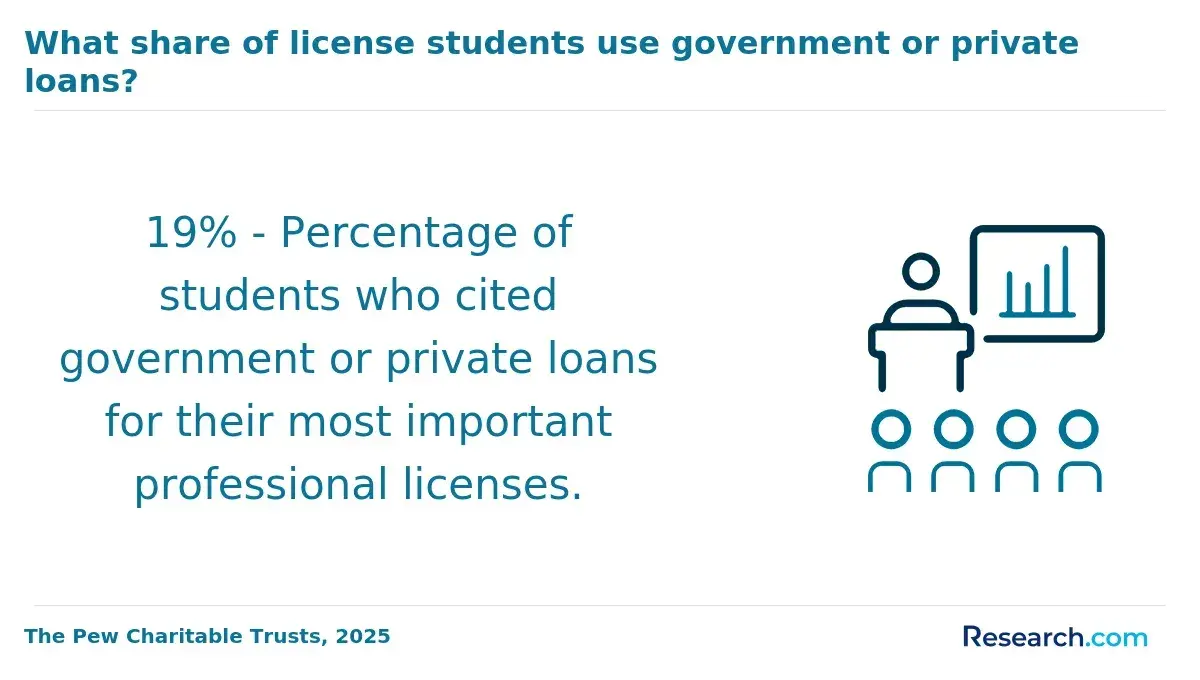
- Compare financial aid offers, payment plans, required technology costs, and withdrawal policies before enrolling.
Some students also compare paralegal studies with adjacent public-safety or legal-system degrees. If your goal is broader court, corrections, or law enforcement work rather than corporate legal support, researching criminal justice degree cost can help you compare the financial side of a different but related academic path.
Students with prior college credit should pay close attention to transfer rules. A program that accepts more credits may be less expensive overall even if its per-credit tuition is higher. Conversely, a low advertised tuition rate may not be the best deal if the school accepts few transfer credits or requires many institution-specific courses.
How long do online paralegal programs take, and what do they cost?
Online paralegal program length depends on credential level, transfer credit, enrollment intensity, and whether courses are offered every term. Certificates may take a few months to a year, associate degrees commonly take about two years of full-time study, and bachelor's degrees often take about four years for first-time students. Bachelor's completion students with substantial transfer credit may finish sooner.
Cost varies widely, so students should compare total program cost rather than tuition alone. The College Board reported 2024-25 published tuition and fees of $4,050 for public two-year in-district students, $11,610 for public four-year in-state students, and $43,350 for private nonprofit four-year students.
These figures are not paralegal-specific, but they give a useful benchmark for judging whether a quoted online price is unusually low, typical, or expensive.
The table below summarizes major cost and timeline variables. It is meant to help you ask better questions before enrolling, not to predict the exact price of a specific school:
| Program type | Common full-time timeline | Cost factors to check | Best-value scenario |
| Paralegal certificate | Several months to one year | Per-course tuition, legal database fees, required textbooks, whether credits transfer | You already have a degree and need focused paralegal training |
| Associate degree | About two years | In-district tuition, online fees, general education requirements, transfer pathway | You need an entry-level credential and want a lower-cost starting point |
| Bachelor's degree | About four years, or less with transfer credit | Upper-division tuition, transfer limits, residency requirements, elective availability | You want corporate, compliance, contracts, or advancement-oriented roles |
| Post-baccalaureate certificate | Often less than one year to about 18 months | Graduate versus undergraduate tuition, course sequencing, employer tuition benefits | You already hold a bachelor's degree and want a career change without a second degree |
To reduce cost, start with transfer credit, employer tuition assistance, community college pathways, and public online programs before assuming the cheapest advertised option is the best.
Students comparing business-adjacent graduate credentials may also find it useful to look at how tuition, duration, and earnings are weighed in a master's degree in marketing, because the same ROI logic applies: cost only makes sense in relation to realistic career outcomes.
Financial aid can include federal grants, loans, scholarships, state aid, military education benefits, employer reimbursement, and payment plans, depending on the institution and student eligibility.
Be cautious with private loans, and avoid borrowing based on best-case salary assumptions. A safer approach is to compare the total amount you would borrow with entry-level legal support salaries in your local market.
What corporate and in-house legal department jobs can paralegal graduates pursue?
Online paralegal studies graduates can pursue several roles in corporate legal departments, although job titles vary by company size and industry. A small company may have one legal assistant who handles contracts, records, litigation files, and corporate housekeeping.
A large company may separate those duties across specialized teams such as legal operations, compliance, privacy, procurement, employment, or intellectual property.
The table below outlines common in-house roles and the responsibilities graduates may encounter. It can help students connect coursework with actual job descriptions:
| Role | Typical responsibilities | Helpful preparation |
| Corporate paralegal | Maintains entity records, prepares board materials, supports filings, organizes corporate documents | Business organizations, legal writing, governance, document management |
| Contracts paralegal or contract administrator | Tracks contract requests, routes approvals, maintains templates, monitors renewal dates | Contracts, business law, negotiation basics, contract lifecycle systems |
| Litigation support paralegal | Manages matter files, discovery, legal holds, subpoenas, timelines, and outside counsel coordination | Civil litigation, e-discovery, legal research, spreadsheet skills |
| Compliance assistant or compliance analyst | Supports policy updates, audit records, training documentation, and regulatory calendars | Compliance, administrative law, risk management, data organization |
| Employment law paralegal | Supports workplace investigations, personnel records, policy projects, and agency responses | Employment law, confidentiality, interviewing basics, records management |
| Legal operations coordinator | Helps manage matter systems, e-billing, vendor records, reports, and process improvements | Legal technology, project management, analytics, professional communication |
Entry-level graduates often begin as legal assistants, junior paralegals, contracts assistants, records coordinators, or compliance support specialists. Advancement usually depends on work quality, industry knowledge, software fluency, and the ability to handle increasingly complex matters with less supervision.
Industries with in-house legal teams include healthcare, financial services, insurance, technology, manufacturing, retail, energy, real estate, education, logistics, and media.
Students should review job postings in their preferred industry because a healthcare employer may value HIPAA and regulatory knowledge, while a technology company may prioritize privacy, software contracts, intellectual property, and data security.
What salary ranges and job outlook can in-house paralegals expect in the U.S.?
Salary depends on region, employer size, industry, experience, specialization, and whether the role is truly paralegal work or a broader legal operations position.
According to the U.S. Bureau of Labor Statistics, paralegals and legal assistants had a 2024 median annual wage of $61,010. The median is a midpoint, not a promise; entry-level roles may pay less, while experienced corporate paralegals in high-cost metro areas or specialized industries may earn more.
The BLS projects employment for paralegals and legal assistants to grow 1% from 2023 to 2033, which is slower than many occupations. For students, this means the degree should be paired with practical skills that make them competitive: contracts, e-discovery, compliance support, legal technology, and strong writing. A credential alone is unlikely to be enough in a slower-growth labor market.
The table below explains how common factors can affect earning potential. It avoids promising outcomes and instead shows what students should evaluate when estimating career value:
| Factor | How it can influence salary | What students can do |
| Location | Large metro areas and high-cost regions often offer higher pay but may also have higher living costs | Compare local job postings, not only national medians |
| Industry | Finance, technology, healthcare, and regulated industries may value specialized legal support | Choose electives and internships tied to a target industry |
| Experience | Employers often pay more for paralegals who can work independently and manage complex matters | Build a portfolio of writing samples, contract projects, and technology experience |
| Technology skills | Legal operations, e-discovery, contract systems, and data reporting can expand responsibilities | Seek courses or certificates involving legal tech and project management |
| Credential fit | Some employers prefer a degree, certificate, ABA-approved program, or prior bachelor's degree | Match the program to job descriptions in your target market |
Students should be careful with salary claims on school websites or advertisements. Ask whether reported outcomes are based on all graduates, survey respondents, program-specific graduates, or a broad occupational category. The most reliable ROI estimate combines published tuition, your likely borrowing, local job postings, and realistic entry-level wages.
How can students evaluate and choose a reputable online paralegal program for in-house careers?
Choosing a reputable online paralegal program requires more than comparing tuition and course titles. The best decision starts with your target role, then works backward to the credential, curriculum, format, cost, and support services that make that role realistic.
Use the following steps to evaluate programs in a practical order. This sequence helps you avoid paying for a credential that does not match your career goal:
- Collect five to 10 job postings for in-house paralegal, contracts, compliance, or legal operations roles in your preferred region or remote market.
- List the recurring requirements, including degree level, software tools, contract experience, litigation support, compliance exposure, and writing skills.
- Compare each program's required courses against those requirements, giving extra weight to contracts, business organizations, compliance, legal research, writing, and technology.
- Verify institutional accreditation, programmatic approval if relevant, faculty qualifications, transfer policies, and whether credits can apply to a future degree.
- Ask for total program cost, not just tuition, including fees, textbooks, legal database access, graduation fees, and required software.
- Confirm how online students get internships, career advising, resume help, mock interviews, alumni contacts, and employer introductions.
- Review student support carefully, especially writing tutoring, library access, technical support, disability services, and faculty response expectations.
- Choose the lowest-cost reputable option that meets your target job requirements without sacrificing legal writing practice or career support.
Red flags include vague accreditation claims, pressure to enroll immediately, unclear tuition, no named legal faculty, no access to legal research tools, limited writing assignments, no career services for online students, and promises of guaranteed employment. Another warning sign is a curriculum that has many general business or criminal justice courses but only a thin paralegal core.
A strong program should be able to explain who its graduates serve, what kinds of legal work students practice, and how online learners build job-ready evidence. Before enrolling, ask admissions for sample syllabi, internship examples, employer partners, bar association connections, and graduate support services. If the answers are vague, keep comparing.
Other Things You Should Know About Paralegal Studies
Yes. Many professional paralegal associations offer student memberships, webinars, job boards, mentoring, and certification information. Joining while enrolled can help students learn employer expectations and build a professional network before graduation.
Certification is usually voluntary, but it can strengthen a resume. Options vary by organization and experience level, so students should check eligibility rules before paying for exam preparation or assuming a certification is required.
A 2027 online paralegal studies degree provides essential legal skills, such as document management and legal research, making candidates well-suited for in-house legal department roles. This specialized education aligns with the evolving needs of corporate environments, ensuring students can support company-specific legal tasks.
Remote roles exist, especially in contracts, e-discovery, and legal operations, but many employers prefer new paralegals to have supervised experience first. Students interested in remote work should prioritize legal technology, writing samples, and internships that involve digital collaboration.
References
- How to break into in-house legal jobs https://www.sellickpartnership.co.uk/resources/blog/how-to-break-into-in-house-legal-jobs/
- Step-by-Step: Securing Your First Corporate Paralegal Job https://www.paralegalinst.com/entry-level-corporate-paralegal-jobs
- The Best Alternative Career for Paralegals (+Other Roles to Consider) | Brightflag https://brightflag.com/resources/paralegal-career-change/
- Paralegal Certificate from a non-ABA Accredited Program https://www.online-paralegal-degree.org/faq/non-aba-accredited-program-credibility/
- Affordable Online Paralegal Certification - Get Certified Today https://www.expertrating.com/certifications/personal-development-and-enrichment/paralegal-certification.asp
- In-House Counsel Salary Guide 2026: What GCs and Lawyers Can Expect - Paragon Legal https://paragonlegal.com/insights/general-counsel-salary/
- 8 Things to Consider When Choosing a Paralegal Program - Paralegal College | Center for Advanced Legal Studies https://paralegal.edu/blog/8-things-to-consider-when-choosing-a-paralegal-program/