2027 Choosing a Major as a Transfer Student

Co-Founder and Chief Data Scientist
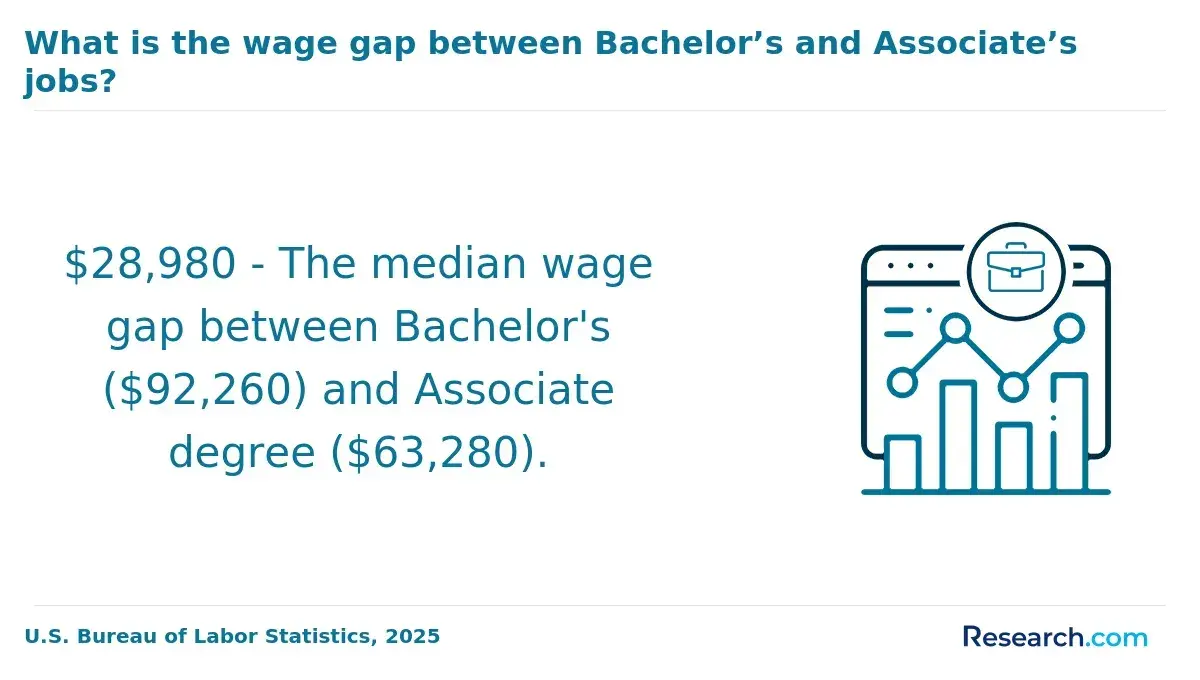
Choosing a major after transferring is really a credit, cost, and career decision. The stakes are high: the BLS reported that workers with a bachelor's degree had median weekly earnings of $1,543 in 2024, compared with $1,099 for associate degree holders. This guide is for community college transfers, four-year college transfers, returning adults, and undecided students. You'll learn how to protect credits, compare majors, avoid delayed graduation, and choose a path that fits your budget, timeline, strengths, and career goals.
Key Things You Should Know
- Start with credit fit: a major that accepts more of your completed general education, electives, and prerequisite courses can reduce both time to graduation and tuition exposure.
- Use labor-market data, not assumptions: BLS 2024 data shows bachelor's degree holders had median weekly earnings of $1,543, but outcomes vary sharply by field, location, experience, and licensure.
- Check total cost before declaring: College Board reported average published 2024-25 tuition and fees of $11,610 for in-state public four-year students and $43,350 at private nonprofit four-year colleges, before aid.
How should transfer students align previous credits with potential majors to avoid delays?
Transfer students should choose a major only after seeing how their previous credits apply to that specific degree, not just to the university overall. A college may accept 60 credits for admission but count fewer credits toward a selective major if the courses do not match required prerequisites, sequencing, or minimum grade rules.
The most important distinction is between accepted credits and applicable credits. Accepted credits appear on your transcript; applicable credits actually satisfy requirements in your major, general education core, or electives. The second category is what determines whether you graduate on time.
Use this comparison to understand where transfer credits can help or create delays.
| Credit category | How it affects your major choice | What to verify |
| General education credits | Can shorten the path if they fulfill the receiving school's core curriculum | Whether the school requires specific writing, math, lab science, or diversity courses |
| Major prerequisites | Often determine whether you can enter upper-division coursework immediately | Course equivalency, minimum grade, and whether the sequence is complete |
| Elective credits | May count toward total credits but not reduce major requirements | Maximum elective credits allowed in the degree plan |
| Technical or career credits | May transfer well into applied majors but less often into traditional liberal arts majors | Whether the program has an articulation agreement or prior learning policy |
| AP, IB, CLEP, military, or workplace learning | Can help, but policies vary widely by institution and major | Score thresholds, documentation rules, and whether credits duplicate completed courses |
Before committing, request a written degree audit or transfer evaluation for each major you are seriously considering. Then compare how many credits apply directly to graduation in each option.
- Ask the admissions or registrar's office for a course-by-course transfer evaluation.
- Ask the academic department whether your prerequisites satisfy the major, not just the university.
- Compare the number of remaining credits, required course sequences, and expected graduation term for each major.
- Identify any courses that are offered only once per year because they can create hidden delays.
- Get the final plan in writing before paying an enrollment deposit if the major is central to your decision.
A common mistake is choosing the "most interesting" major without checking whether key prerequisites transferred. That can turn a junior transfer into a student who still needs sophomore-level gateway courses.
What factors matter most when choosing a major as a transfer student?
The best major for a transfer student is usually the one that balances five factors: credit efficiency, academic fit, career relevance, cost, and access. A major can be intellectually exciting but still be a poor fit if it requires too many additional semesters, has GPA barriers you do not meet, or does not support your target career.
Think of the decision as a trade-off rather than a single "right" answer. The table below summarizes how different priorities should shape your choice.
| Decision factor | Why it matters for transfers | Best-fit major strategy |
| Credit efficiency | Transferred courses may not all apply to the new major | Choose a major where prerequisites and electives align with completed coursework |
| Academic readiness | Upper-division courses may assume specific math, writing, lab, or technical skills | Review syllabi and prerequisite chains before declaring |
| Career alignment | Some careers require specific majors, licenses, or graduate prerequisites | Work backward from job postings, licensing boards, or graduate admissions requirements |
| Cost and aid | Extra semesters can increase tuition and reduce remaining financial aid eligibility | Compare total remaining cost, not only annual tuition |
| Admission access | Competitive majors may require higher GPA, portfolios, auditions, or completed prerequisites | Confirm whether you are admitted directly to the major or only to the institution |
Some majors are flexible for transfers because they accept a wide range of prior coursework. Others are structured tightly from the first year. Nursing, engineering, architecture, education licensure, accounting, and many laboratory science pathways often require specific course sequences, clinical placements, or accreditation rules.
Use these questions to narrow your list without overfocusing on prestige or pressure from others.
- Which major uses the greatest number of credits I have already earned?
- Which major leads to careers I would realistically apply for after graduation?
- Which major has prerequisites I can complete without adding more than one extra term?
- Which major matches how I learn best: writing, quantitative analysis, lab work, design, communication, caregiving, research, or problem-solving?
- Which major gives me a backup path if I change my career goal later?
A red flag is any program that gives only vague transfer answers such as "most credits should count." For transfer students, vague answers can become expensive surprises after enrollment.
How can transfer students match majors to long-term career and salary goals?
Transfer students should match majors to careers by looking at actual job requirements, not just broad salary averages. Some majors prepare students for a direct occupation, while others build transferable skills that may lead to several industries.
The BLS reported a median annual wage of $105,990 for computer and mathematical occupations in May 2024. That does not mean every computer science or data-focused graduate will earn that amount, but it signals strong demand for technical skills in roles where employers often value portfolios, internships, and applied projects.
The table below shows how major types often connect to career pathways. Use it as a starting point, then check job postings in your target city or remote-work market.
| Major area | Typical career direction | Important transfer consideration |
| Business, accounting, or finance | Analyst, accountant, operations, sales, management trainee | Accounting and finance tracks may require specific prerequisite sequences |
| Computer science, IT, or data analytics | Software, cybersecurity, systems, data, technical support | Math, programming, and project requirements can affect entry into upper-division courses |
| Nursing, allied health, or public health | Clinical care, health administration, community health, care coordination | Licensure, clinical placements, and program accreditation are critical |
| Education | Teaching, instructional support, youth programs, training | State licensure and student-teaching requirements can limit flexibility |
| Psychology, sociology, or human services | Case management, HR, research support, nonprofit programs | Many counseling or clinical roles require graduate study |
| Communications, English, or media | Marketing, writing, editing, public relations, content strategy | Portfolio quality and internships may matter as much as the major name |
If your main concern is work style, not just salary, compare majors with the environments they lead to. For example, students who prefer independent analysis, writing, data work, or limited public-facing interaction may want to explore career paths similar to those described in guides to the best jobs for introverts.
To connect a major to long-term goals, follow a reverse-planning process.
- Choose three target job titles you would consider after graduation.
- Review current job postings and note required majors, skills, software, certifications, and experience.
- Check whether the major includes internships, capstones, labs, portfolios, or clinical placements that build evidence of skill.
- Ask the department for recent graduate outcomes, but treat salary data as a range, not a promise.
- Choose the major that gives you the strongest combination of required credentials and adaptable skills.
AI is changing this decision because employers increasingly expect graduates to use digital tools, analyze information, and adapt workflows. Majors that build human judgment, domain knowledge, communication, and technical fluency may be more resilient than majors chosen only for a job title.
How do online and campus-based programs differ for transfer students choosing a major?
Online and campus-based programs can both work well for transfer students, but they solve different problems. Online programs often help students who work, parent, commute long distances, or need flexible scheduling. Campus programs may offer more face-to-face advising, labs, studio space, clinical access, research opportunities, or student organizations.
The right format depends on your major's requirements. A fully online business or psychology completion program may be straightforward, while nursing, engineering, laboratory science, art studio, theater, or teacher preparation may require in-person components.
This comparison can help you decide which format fits your transfer situation.
| Program format | Best for | Potential drawback |
| Fully online | Working adults, parents, military students, and students far from campus | May offer fewer in-person labs, networking events, or campus recruiting options |
| Hybrid | Students who need flexibility but also benefit from labs, studios, or periodic meetings | Travel requirements can still create scheduling conflicts |
| Campus-based | Students who want in-person advising, labs, student life, internships, or research | Commute, housing, and schedule rigidity may raise total cost |
| Competency-based | Self-directed students with prior knowledge or work experience | Not ideal for students who need frequent structure or cohort support |
Online transfer pathways are especially useful when the major is designed as a degree-completion program. Students who want to move quickly should compare course intensity, credit acceptance, and support services before choosing among accelerated online degrees.
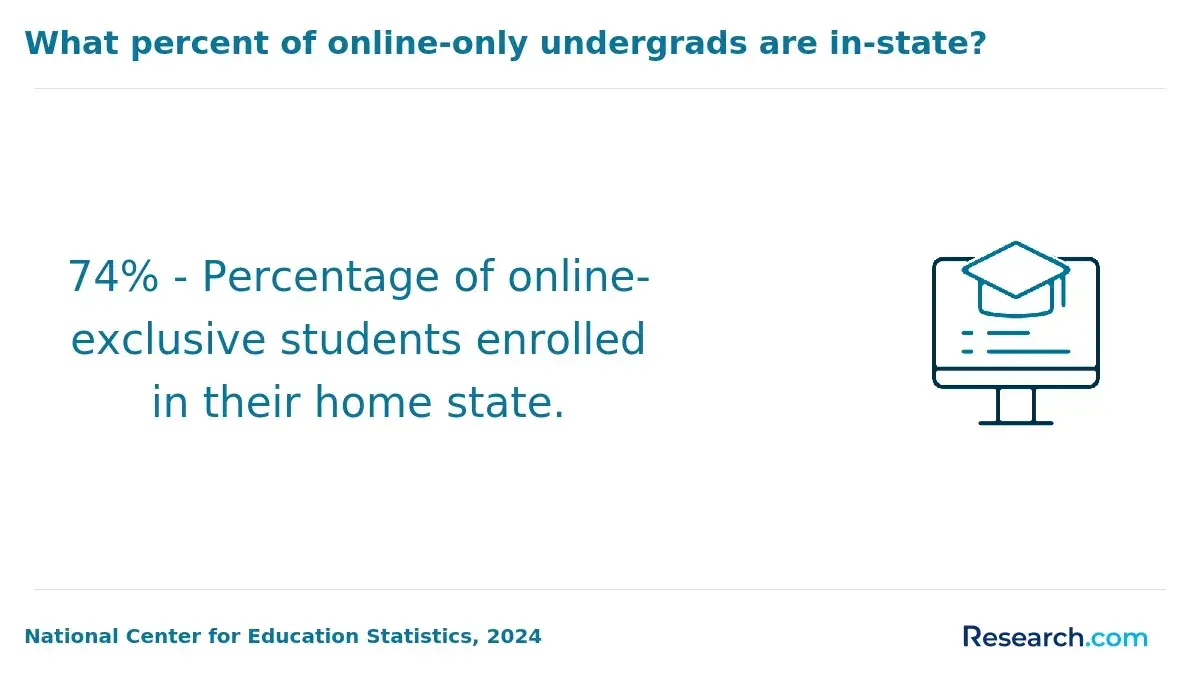
Do not assume online means easier or cheaper. Ask whether tuition differs for online students, whether out-of-state students pay a separate rate, and whether online courses include technology fees, proctoring fees, placement requirements, or synchronous meeting times.
- Choose online if your credits transfer cleanly, your major does not require frequent in-person work, and you need schedule flexibility.
- Choose campus-based if your major depends on labs, studios, clinical placements, undergraduate research, or local employer recruiting.
- Choose hybrid if you need flexibility but want some faculty access, peer connection, or hands-on learning.
A common mistake is selecting an online major before checking whether the program is authorized for students in your state or whether it meets licensing requirements where you plan to work.
How does college accreditation affect transferability of credits and future licensing?
Accreditation affects both transferability and future options. At the institutional level, accreditation signals that a college has met recognized quality standards. At the program level, specialized accreditation may be required or strongly preferred in fields such as nursing, education, social work, engineering, counseling, architecture, and business.
For transfer students, accreditation matters because receiving schools often review whether previous credits came from a recognized institution. Employers, graduate schools, and licensing boards may also care where and how your degree was earned.
The table below explains the major accreditation checks transfer students should make before declaring a major.
| Accreditation type | Why it matters | Examples of fields where it can be important |
| Institutional accreditation | Supports credit transfer, federal financial aid eligibility, and general institutional legitimacy | All degree fields |
| Programmatic accreditation | May affect licensing, certification, employer preference, or graduate school admission | Nursing, engineering, social work, education, counseling, architecture |
| State approval or authorization | May be required for educator preparation, nursing clinicals, or online enrollment across state lines | Teaching, nursing, counseling, public safety fields |
| Professional recognition | Can influence whether a program is respected in a specific industry | Business, technology, design, health administration |
Licensure-focused majors require extra caution. A program may be legitimate and accredited but still not meet licensing requirements in every state. This is especially important if you study online in one state and plan to work in another.
Before enrolling, take these steps.
- Search the college's accreditation status through recognized accreditation resources or the institution's official accreditation page.
- Ask the department whether the major has programmatic accreditation if your career field expects it.
- Check the licensing board in the state where you plan to work.
- Ask whether transfer credits can satisfy program-accredited course requirements or whether some courses must be completed at the receiving school.
- Keep copies of syllabi from prior courses in case the department needs them for equivalency review.
The biggest red flag is a school that avoids direct answers about accreditation, licensure eligibility, or transfer credit evaluation. If the answer affects your ability to work, get it in writing.
What admission and GPA requirements affect access to competitive majors as a transfer?
Admission to a college does not always mean admission to your preferred major. Competitive majors may have separate GPA thresholds, prerequisite grades, application deadlines, interviews, auditions, portfolios, background checks, or space limits.
This matters because some transfer students enter as pre-major students. They may need to complete additional courses after transfer before being officially admitted to the major. If the program is highly sequenced, this can delay graduation even if the student has enough total credits.
The table below shows requirements that commonly affect access to selective majors.
| Requirement | Where it commonly appears | Why it matters for transfers |
| Minimum cumulative GPA | Business, engineering, nursing, education, computer science | Your previous college GPA may determine whether you can enter the major immediately |
| Minimum prerequisite grade | Math, science, accounting, health, language sequences | A course may transfer but fail to meet the grade requirement for the major |
| Portfolio or audition | Art, design, music, theater, architecture | Creative evidence may matter more than credits alone |
| Background check or health clearance | Nursing, education, social work, public safety | Field placements may require approval before upper-division work |
| Application deadline | Selective or cohort-based programs | Missing a deadline can push entry back by a full term or year |
If your GPA is near the cutoff, ask whether the department uses a hard minimum or a competitive review. Also ask whether repeated courses, withdrawals, or prerequisite retakes are treated differently from your overall college GPA.
- Apply to at least one realistic major option where you meet published requirements.
- Ask whether admission is guaranteed after prerequisites or based on available space.
- Confirm whether transfer students are reviewed separately from first-year students.
- Consider a related backup major that uses similar credits if your first-choice program is not available.
A common mistake is assuming a high number of completed credits makes you competitive. For many departments, the specific prerequisite GPA matters more than total credits earned.
How can transfer students evaluate curriculum and prerequisites before declaring a major?
Transfer students should evaluate curriculum before declaring because the same major name can mean different requirements at different colleges. One school's psychology major may emphasize research methods and statistics, while another may offer more applied human services courses. One business program may require calculus; another may not.
Start by reviewing the degree map, course catalog, prerequisite chain, and sample four-semester plan. Pay special attention to courses that must be taken in order, courses offered only in fall or spring, and graduation requirements that cannot be satisfied by transfer credit.
The table below summarizes the curriculum items that most often change a transfer student's timeline.
| Curriculum item | What to look for | Why it affects your decision |
| Gateway courses | Introductory courses required before upper-division work | Missing one course can block several later requirements |
| Prerequisite sequences | Math, science, language, accounting, programming, or methods sequences | Sequences can add time if you enter midway or need review |
| Residency requirement | Minimum credits that must be completed at the new institution | Limits how much prior coursework can shorten your degree |
| Capstone, internship, clinical, or practicum | Required applied experience near the end of the program | May require scheduling flexibility, transportation, or background clearance |
| Graduate school prerequisites | Courses needed for future master's, professional, or licensure programs | Choosing the wrong electives can create gaps later |
If you are considering graduate school later, compare undergraduate major requirements with future admissions expectations. Students planning a fast graduate pathway may also want to understand how prerequisite planning affects options such as one-year online master's programs.
Use a practical curriculum review before you declare.
- Download the official degree requirements for the catalog year you will enter.
- Mark every requirement already satisfied by transfer credit.
- Circle every course with prerequisites or limited-term availability.
- Ask the department which courses transfer students most often miss.
- Build a term-by-term graduation plan and check whether each course is actually offered when needed.
One red flag is a major that looks short on paper but depends on a course sequence you cannot start until the following year. The total number of remaining credits is less important than whether those credits can be completed in a workable order.
How do program length, tuition, and financial aid change when switching majors while transferring?
Switching majors while transferring can change your timeline, tuition bill, and financial aid strategy. The financial impact usually comes from three sources: credits that no longer apply, prerequisites you still need, and aid limits based on satisfactory academic progress or maximum attempted credits.
College Board reported average published 2024-25 tuition and fees of $11,610 for in-state students at public four-year institutions and $43,350 at private nonprofit four-year institutions. These figures are before grants and scholarships, but they show why even one extra semester can matter.
The table below shows cost factors transfer students should compare before choosing or changing a major.
| Cost factor | How it can change after transfer | What to ask |
| Remaining credits | A new major may not use prior electives or prerequisites | How many credits are left for each major option? |
| Tuition rate | Online, out-of-state, upper-division, or professional programs may charge different rates | Is tuition the same for my major and format? |
| Fees | Labs, clinicals, technology, proctoring, studios, or insurance may add costs | What required fees are not included in tuition? |
| Financial aid eligibility | Excess attempted credits or slow progress can affect aid | Will my transfer credits count toward aid progress limits? |
| Opportunity cost | Extra terms may delay full-time earnings or advancement | How does a longer path affect my work and income plans? |
Students who need to finish quickly should compare the total program design, not just marketing language. Some accelerated degree programs reduce time through shorter terms, year-round enrollment, generous transfer policies, or prior learning credit, but the pace may be demanding.
Before switching majors, take these steps to protect your budget.
- Ask for a side-by-side degree audit for your current intended major and the new major.
- Calculate tuition and required fees for the remaining credits in each path.
- Ask financial aid whether changing majors affects satisfactory academic progress.
- Check scholarship rules because some awards are tied to a college, department, or full-time status.
- Decide whether the career benefit of switching justifies any added time and cost.
A common mistake is comparing only tuition per credit. Transfer students should compare total remaining cost, aid eligibility, schedule feasibility, and expected completion date.
What tools and advising resources help undecided transfer students choose a major?
Undecided transfer students should use advising as a decision tool, not just a registration requirement. The best advisors can help you compare majors by credit fit, graduation timeline, department rules, and career relevance.
Adult learners, parents, and students returning after a break may need different support than traditional full-time students. If flexibility is central to your decision, resources that compare options such as the best online degrees for stay-at-home moms can help you think through scheduling, support, and career fit.
The table below lists advising resources that can make the major decision clearer.
| Resource | What it helps you evaluate | Best time to use it |
| Transfer advisor | Credit evaluation, degree audit, articulation rules | Before enrollment and before declaring |
| Department advisor | Major prerequisites, course sequence, competitive admission rules | Before choosing among similar majors |
| Career center | Job titles, internships, resumes, employer expectations | Before finalizing a career-focused major |
| Faculty mentor | Academic fit, research areas, graduate school preparation | When comparing upper-division coursework |
| Financial aid counselor | Aid limits, scholarship rules, satisfactory academic progress | Before changing majors or adding terms |
| Alumni or current students | Real workload, internship access, program culture | After narrowing your list to two or three majors |
Bring specific documents to every advising appointment so you receive actionable answers instead of general encouragement.
- Unofficial transcripts from every prior college.
- Course syllabi for classes that may need manual review.
- Your transfer credit evaluation, if available.
- A list of two or three majors you are comparing.
- Target job titles, graduate programs, or licensing goals.
- Questions about timeline, GPA rules, course availability, and costs.
Good advising should leave you with a next step, not just reassurance. If you still cannot compare your options after the meeting, ask for a written plan or a referral to the department that controls the major.
How do job outlook and industry demand influence smart major choices for transfers?
Job outlook should influence your major choice, but it should not be the only factor. A high-growth field may still be a poor fit if you dislike the work, lack the required prerequisites, or need a license you cannot reasonably complete. A lower-growth field may still be viable if it builds strong transferable skills and you pair it with internships, technical tools, or a focused portfolio.
The BLS projected overall U.S. employment to grow 4% through 2033. Use that baseline carefully: occupations tied to healthcare, data, software, skilled technical work, and business analysis may differ substantially from the average, while local demand can vary by region.
The table below shows how labor-market signals should affect a transfer student's decision.
| Labor-market signal | What it means | How to use it when choosing a major |
| Projected job growth | Indicates whether an occupation is expected to expand, contract, or stay stable | Compare growth with your interest, readiness, and location |
| Median wage | Shows a midpoint for workers in an occupation, not a guarantee for new graduates | Use it to estimate ROI, but consider entry-level wages and cost of living |
| Licensing requirements | Some fields require approved education, exams, supervised hours, or state approval | Choose a major that meets the rules where you plan to work |
| Skill requirements | Employers may expect software, writing, data, communication, or project experience | Select electives, minors, certificates, or internships that fill skill gaps |
| Automation exposure | Routine tasks may be changed by AI and software tools | Prioritize majors that build judgment, ethics, domain expertise, and adaptable technical skills |
Smart transfer students treat the major as one part of an employability plan. The plan should include internships, applied projects, faculty references, career-center support, and proof of skills.
- Choose a direct-career major if the occupation requires a specific credential, such as nursing, accounting preparation, engineering, or teacher licensure.
- Choose a flexible major if you want options across industries and are willing to build experience through internships, minors, or certificates.
- Choose a technical or quantitative major if you enjoy structured problem-solving and are ready for the prerequisite sequence.
- Choose a people-centered major if your strengths include communication, service, leadership, counseling, training, or community work.
A common mistake is chasing the highest salary field without testing fit. Shadowing professionals, completing an introductory course, or doing an informational interview can reveal whether the daily work actually matches your strengths.
Other Things You Should Know About
Yes, but it can affect your graduation date, financial aid, and credit use. Ask for a new degree audit before changing so you know how many credits will still count toward the new major.
The best major is the one that uses your prior credits efficiently, meets your academic strengths, supports your career goal, and fits your budget. There is no universal best choice because transfer credit rules and career plans vary by student.
Salary should be part of the decision, but not the whole decision. Compare wages, job outlook, licensing requirements, personal fit, and the total cost of finishing the degree.
Ask how many credits apply to the major, which prerequisites are missing, whether the major has separate admission rules, how long graduation will take, and whether the program meets licensing or graduate school requirements.
References
- Choosing an Online School as a Transfer Student | OEDb.org https://www.oedb.org/advice/choosing-an-online-school-for-transfer-students/
- Transfer Student Requirements: What Do Universities Look For? · PrepScholar https://blog.prepscholar.com/what-do-universities-look-for-in-a-transfer-student
- Why Industry Trends Affect Education and Job Choices https://www.atlcf.org/how-industry-trends-influence-education-choices-and-career-paths/
- How to Choose a Major As a Transfer | University of Bridgeport https://www.bridgeport.edu/news/choose-major-as-a-transfer-student/
- Satisfactory Academic Progress https://ccsfkb.blackbelthelp.com/it/can-i-change-my-major-and-still-get-financial-aid/
- Long-Term Career Goals: 20 SMART Goal Examples and How to Set Them https://www.qooper.io/blog/long-term-career-goals
- Why Accreditation Matters | C-RAC https://www.c-rac.org/why-accreditation-matters
- 4 Factors in Choosing Between Online and Traditional Degrees | ProFellow https://www.profellow.com/tips/4-factors-in-choosing-between-online-and-traditional-degrees/
- Why Is Accreditation Important? | ACE Blog https://ace.edu/blog/why-is-accreditation-important/
- 7 Tips for Setting Realistic Long-Term Career Goals https://www.snu.edu/blog/7-tips-for-setting-realistic-long-term-career-goals