2027 Best Majors for Students Who Like Technology

Co-Founder and Chief Data Scientist
Choosing a technology major is harder now because "tech" can mean software, cybersecurity, data, engineering, design, business systems, or AI. The stakes are high: the U. S. Bureau of Labor Statistics reports that computer and IT occupations had a median annual wage of $105,990 in May 2024, far above the $49,500 median for all occupations.
This guide is for students comparing college majors, parents weighing costs, and working adults considering a switch. You will learn which tech majors fit different strengths, what they cost, and how they connect to real careers.
Key Things You Should Know
- Computer science, cybersecurity, data science, information systems, software engineering, and computer engineering are among the strongest technology majors, but the best choice depends on whether you prefer coding, security, analytics, hardware, business systems, or product design.
- BLS May 2024 data places the median annual wage for computer and IT occupations at $105,990, but salaries vary widely by role, location, experience, portfolio quality, internships, and employer type.
- Program quality matters as much as the major name: students should check institutional accreditation, industry-aligned coursework, hands-on labs, internship support, transfer policies, and whether certifications or licensure are relevant to the target career.
What are the best college majors for students who are passionate about technology?
The best college majors for students who like technology are the ones that match both the student's interests and the kind of problems they want to solve. A "technology major" can focus on building software, protecting systems, analyzing data, designing digital products, managing information systems, or engineering computing hardware.
If you want the broadest technical foundation, computer science is often the safest starting point. If you want a clearer bridge to business roles, information systems or management information systems may be a better fit. If you want to work with AI, analytics, or automation, data science, statistics, or applied mathematics can be powerful choices.
Students who need a faster path while balancing work may also compare major options within accelerated online degrees, especially if they already have transfer credits.
The table below compares common technology-focused majors by best fit. Use it to narrow your options before looking at individual schools:
| Major | Best fit for students who enjoy | Common career direction | When it may not be the best fit |
| Computer Science | Programming, algorithms, software design, AI foundations | Software development, machine learning, systems engineering | You dislike abstract math or extended coding projects |
| Software Engineering | Building reliable applications with structured development processes | Application development, DevOps, quality engineering | You want a more theoretical or research-heavy computing degree |
| Cybersecurity | Protecting networks, investigating threats, risk management | Security analyst, penetration tester, cyber risk specialist | You prefer creating products over monitoring, auditing, or defending systems |
| Data Science | Statistics, programming, visualization, prediction, AI tools | Data analyst, data scientist, machine learning analyst | You want less math or do not enjoy cleaning and interpreting data |
| Information Systems or MIS | Business processes, databases, enterprise software, project coordination | Business systems analyst, IT consultant, product operations | You want a highly technical engineering or research career |
| Computer Engineering | Hardware, embedded systems, electronics, low-level programming | Embedded systems engineer, hardware engineer, firmware developer | You want to avoid physics, circuits, and lab-based engineering courses |
| Information Technology | Networks, cloud platforms, support systems, infrastructure | Network administrator, cloud support, systems specialist | You want intensive software theory or advanced AI research preparation |
| Human-Computer Interaction or UX Design | User research, design, accessibility, product usability | UX designer, product designer, UX researcher | You want a coding-heavy or hardware-focused career |
A common mistake is choosing the major that sounds most impressive instead of the one that matches the work you actually want to do. A student who loves people, process improvement, and business software may thrive in MIS even if computer science appears more technical. A student who wants to build operating systems, AI models, or developer tools should usually choose a more code-intensive major.
How do different technology-focused majors compare in coursework and learning focus?
Technology majors can share course names but differ sharply in learning focus. For example, a computer science student may study algorithms and operating systems, while an information systems student may study databases, enterprise platforms, and business analytics. Understanding that difference prevents students from enrolling in a program that does not match their goals.
The table below shows how coursework usually differs across major options. Individual programs vary, so students should always review the catalog, prerequisites, lab requirements, and capstone structure:
| Major | Typical coursework | Main learning focus | Strong preparation for |
| Computer Science | Programming, data structures, algorithms, discrete math, operating systems, databases | How software and computing systems work from the inside | Software engineering, AI, graduate study, technical product roles |
| Cybersecurity | Network security, cryptography, digital forensics, secure coding, risk management | How to prevent, detect, and respond to cyber threats | Security operations, compliance, incident response, penetration testing |
| Data Science | Statistics, Python or R, machine learning, databases, data visualization | How to turn data into decisions and predictive models | Analytics, machine learning, business intelligence, research support |
| Information Systems | Systems analysis, databases, project management, enterprise software, business analytics | How organizations use technology to improve operations | Business analyst, systems analyst, IT project coordination |
| Computer Engineering | Calculus, physics, circuits, digital logic, embedded systems, computer architecture | How hardware and software interact | Firmware, robotics, hardware systems, embedded computing |
| Information Technology | Networking, cloud administration, Linux or Windows systems, cybersecurity basics, scripting | How to deploy, maintain, and support technology infrastructure | IT support, systems administration, cloud operations, network roles |
Students should also compare how much math, writing, lab work, and teamwork each program requires. Computer science, data science, and computer engineering usually involve more math. Cybersecurity and IT often involve hands-on labs and scenario-based exercises. Information systems programs usually include more business communication, process design, and project management.
Before choosing, review at least three course descriptions beyond the first-year level. Introductory classes can look similar, but junior- and senior-level courses reveal what the major is really designed to produce.
Which tech majors lead to the highest-paying and most in-demand careers?
The highest-paying technology majors usually lead toward software engineering, AI, data science, cybersecurity, cloud infrastructure, and technical management. However, pay depends on role, region, employer, internships, skill depth, and portfolio quality.
Students comparing earnings should look at career outcomes, not just the major title; broader comparisons of what degree makes the most money can also help place technology majors in context.
BLS May 2024 data shows that computer and IT occupations had a median annual wage of $105,990. For students, that means technology can offer strong earning potential, but the best results typically come from pairing the degree with practical experience, projects, and marketable tools.
The table below summarizes several high-demand technology career paths and the majors that commonly support them. Salary and growth figures are occupation-level indicators, not promises for individual graduates:
| Career path | Commonly aligned majors | BLS median annual wage, May 2024 | BLS projected growth, 2024-2034 | What the work emphasizes |
| Software developers, quality assurance analysts, and testers | Computer science, software engineering, information technology | $133,080 | 15% | Building, testing, and improving software applications and systems |
| Information security analysts | Cybersecurity, computer science, information technology | $124,910 | 29% | Monitoring threats, securing systems, responding to incidents, reducing risk |
| Data scientists | Data science, statistics, computer science, applied mathematics | $112,590 | 34% | Analyzing data, building models, communicating insights, supporting decisions |
| Computer and information research scientists | Computer science, data science, computer engineering | $140,910 | 20% | Developing new computing methods, algorithms, AI systems, and advanced tools |
| Computer and information systems managers | Information systems, computer science, IT, business with technology concentration | $171,200 | 15% | Leading technology teams, budgets, strategy, security, and systems implementation |
AI is changing what employers expect from technology graduates. It is not replacing the need for strong fundamentals; it is increasing the value of students who can use AI tools responsibly, verify outputs, secure data, automate workflows, and explain technical choices to nontechnical teams.
Students who want the strongest employment flexibility should graduate with evidence of skill, not just coursework. Useful evidence includes internships, GitHub repositories, cloud labs, cybersecurity competition results, data dashboards, open-source contributions, capstone projects, or employer-recognized certifications.
What degree pathways exist for tech majors, from associate to graduate programs?
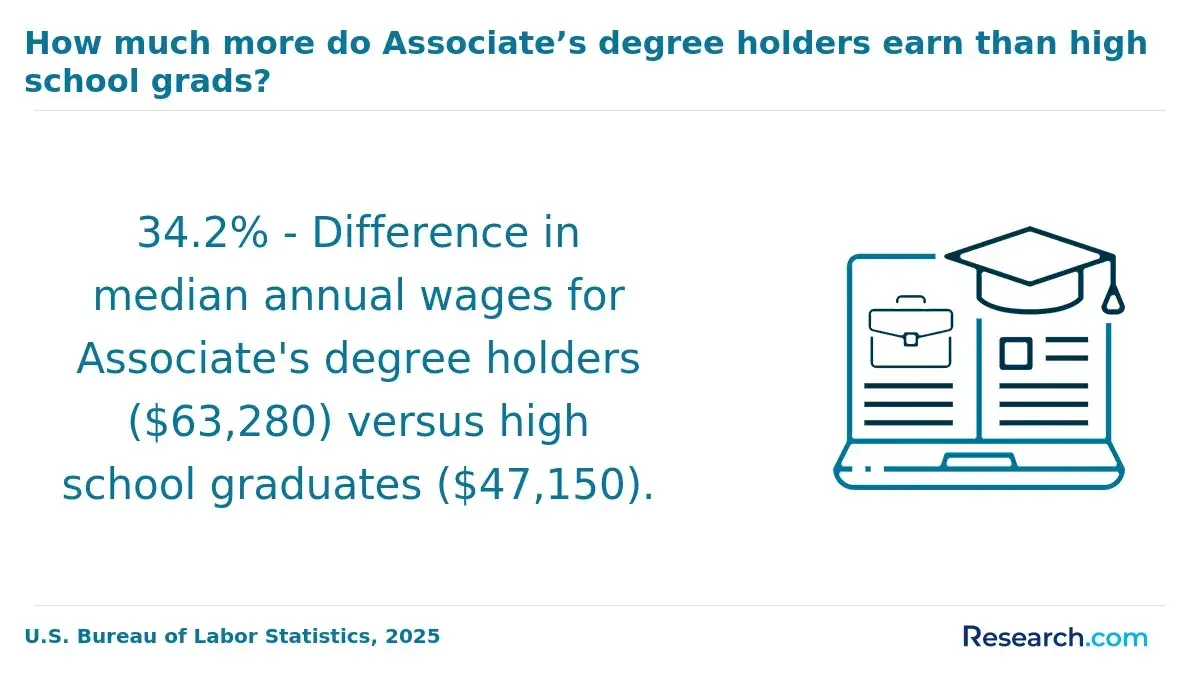
Technology education is not limited to a traditional four-year bachelor's degree. Students can start with an associate degree, transfer into a bachelor's program, add certificates, or pursue graduate study for specialization. The right pathway depends on budget, timeline, current experience, and target role.
Students who already hold a bachelor's degree and want a focused graduate credential may compare a 1-year masters option in fields such as data analytics, cybersecurity, software engineering, or information systems. These programs can be efficient, but they are usually best for students who already meet prerequisite expectations.
The table below compares common degree levels and what each one is usually designed to accomplish:
| Pathway | Typical length for full-time students | Best for | Possible outcomes | Important limitation |
| Certificate or bootcamp | A few months to one year | Learning a specific tool, language, or job skill quickly | Portfolio projects, entry-level support, career pivot preparation | May not replace a degree for employers that require one |
| Associate degree | About two years | Lower-cost start, transfer planning, IT support, networking foundations | Help desk, junior IT, transfer to bachelor's program | Transfer credits must be checked before enrolling |
| Bachelor's degree | About four years | Most students seeking broad career flexibility in technology | Software, cybersecurity, data, systems, business technology roles | Can be expensive without transfer credit or aid planning |
| Master's degree | One to three years | Specialization, leadership, career change, advanced analytics or AI | Senior technical roles, research-oriented roles, management track | May require prerequisite courses if the bachelor's degree was unrelated |
| Doctorate | Several years | Research, university teaching, advanced AI or computing theory | Research scientist, professor, advanced lab roles | Usually unnecessary for most industry technology jobs |
A practical route for cost-conscious students is to complete general education and introductory programming at a community college, then transfer into a bachelor's program with a signed articulation agreement. The risk is taking courses that do not transfer, so students should confirm equivalencies in writing before registering.
How do online tech degree programs compare to campus-based options in quality and outcomes?
Online technology degree programs can be high quality when they have the same accreditation, faculty standards, academic rigor, and career support as campus programs. The format matters less than whether students can complete labs, collaborate on projects, access tutoring, and build a portfolio. Students comparing remote options can start by reviewing top online universities, then verify each program's details directly with the school.
The table below compares online and campus-based technology programs across factors that affect learning and outcomes:
| Factor | Online technology program | Campus-based technology program | Best choice when |
| Flexibility | Often better for working adults, caregivers, and students outside commuting range | Usually follows fixed class times and campus schedules | Online fits students who need schedule control |
| Hands-on labs | May use virtual labs, cloud environments, remote desktops, or shipped equipment | May offer physical labs, makerspaces, networking rooms, and robotics equipment | Campus may be better for hardware-heavy majors |
| Networking | Depends on virtual events, cohort design, discussion quality, and career services | Often easier for in-person clubs, hackathons, faculty access, and local internships | Campus may help students who learn through face-to-face community |
| Career support | Can be strong if it includes remote career coaching, employer partnerships, and portfolio review | Can be strong if the school has local employer pipelines and internship programs | Choose the school with better placement support for your target role |
| Learning discipline | Requires strong time management and comfort with independent work | Provides more built-in structure and classroom accountability | Online works best for self-directed students |
Online study is often a smart option for software, data, cybersecurity, cloud, and information systems programs because much of the work can be completed in digital environments. Campus programs may be stronger for computer engineering, robotics, electronics, and other lab-intensive fields where physical equipment matters.
Do not assume "online" means easier. A strong online technology program should still require programming assignments, labs, exams, projects, teamwork, and feedback from qualified instructors.
What admission requirements and preparation do colleges expect for technology-related majors?
Admission requirements for technology-related majors vary by school and degree level, but selective programs often expect solid math preparation, evidence of academic readiness, and sometimes prior programming exposure. Open-admission or transfer-friendly programs may be more flexible, especially for IT, information systems, or applied technology pathways.
Students should prepare differently depending on the major. Computer science, data science, and computer engineering usually reward stronger math foundations. Cybersecurity and IT programs may place more emphasis on networking, systems, and problem-solving. Information systems programs often value communication, business reasoning, and analytical thinking.
Use the checklist below to prepare before applying or declaring a technology major:
- Complete the highest math level you can reasonably handle, especially precalculus, calculus, statistics, or discrete math if your target major requires it.
- Take an introductory programming course in Python, Java, JavaScript, or C++ before committing to a coding-heavy degree.
- Review the program's first two years of required courses to see whether the sequence delays graduation if you start in the wrong term.
- Ask whether transfer credits apply to the major, not just to general electives.
- Build a small project portfolio, such as a website, app, data dashboard, cybersecurity lab write-up, or automation script.
- Check whether the program requires a minimum GPA to enter upper-division major courses after admission to the university.
Common mistakes include underestimating math requirements, choosing a major after only one introductory class, and ignoring prerequisites that can add semesters. Students who are unsure should speak with both an academic advisor and a faculty member in the major, because general admissions staff may not know the technical sequence in detail.
How long do tech degree programs typically take, and what do they cost?
Technology degree timelines depend on degree level, transfer credit, course availability, internship plans, and whether the student attends full time or part time. Cost depends not only on tuition but also fees, books, software, equipment, housing, transportation, and lost work hours.
College Board's 2024 Trends in College Pricing and Student Aid reported these published tuition and fee benchmarks for the 2024-25 academic year. These figures are before grants, scholarships, tax benefits, living costs, and institutional aid, so they should be treated as starting points rather than final net prices:
- Public two-year, in-district tuition and fees: about $4,050.
- Public four-year, in-state tuition and fees: about $11,610.
- Public four-year, out-of-state tuition and fees: about $30,780.
- Private nonprofit four-year tuition and fees: about $43,350.
Students who need flexible pacing can compare online self-paced college courses for prerequisites, general education, or skill-building, but they should confirm transferability before paying.
The table below summarizes common timelines and cost considerations by program type:
| Program type | Typical completion time | Cost factors to compare | Good fit |
| Certificate | Several months to one year | Program fees, exam vouchers, software access, employer recognition | Students adding a focused skill or testing interest before a degree |
| Associate degree | About two years full time | Community college tuition, transferability, lab fees, books, commuting | Students seeking a lower-cost start or entry-level IT preparation |
| Bachelor's degree | About four years full time | Tuition, fees, housing, equipment, internship location, transfer credits | Students seeking broad access to professional technology roles |
| Master's degree | One to three years | Graduate tuition, prerequisites, employer tuition assistance, opportunity cost | Students specializing or moving into advanced or leadership roles |
To reduce cost, students should compare net price after aid, not sticker price. They should also ask whether the school charges extra for online courses, cloud lab access, proctored exams, or program-specific software.
What technology careers and job roles can each major prepare students to pursue?
Each technology major can lead to several career paths, but some align more directly than others. Students should work backward from target roles, then choose the major, electives, internships, and certifications that support those roles.
The table below maps common majors to job roles and responsibilities. It is not exhaustive, but it shows how different academic choices translate into workplace tasks:
| Major | Entry-level roles | More advanced roles | Typical responsibilities |
| Computer Science | Junior software developer, QA analyst, technical analyst | Software engineer, machine learning engineer, systems architect | Writing code, designing systems, debugging applications, improving performance |
| Software Engineering | Application developer, test automation analyst, DevOps associate | Senior software engineer, DevOps engineer, engineering manager | Building software products, managing releases, testing systems, collaborating with product teams |
| Cybersecurity | Security operations analyst, junior incident responder, compliance analyst | Security engineer, penetration tester, security architect, cyber risk manager | Monitoring threats, investigating alerts, hardening systems, documenting risk controls |
| Data Science | Data analyst, business intelligence analyst, reporting analyst | Data scientist, machine learning engineer, analytics manager | Cleaning data, building models, visualizing trends, communicating recommendations |
| Information Systems or MIS | Business systems analyst, ERP analyst, IT project coordinator | Product manager, IT consultant, systems manager | Translating business needs into technology requirements, improving workflows, managing systems projects |
| Computer Engineering | Firmware developer, hardware test engineer, embedded systems associate | Embedded systems engineer, hardware architect, robotics engineer | Designing hardware-software interfaces, testing devices, programming embedded systems |
| Information Technology | Help desk analyst, network technician, cloud support associate | Systems administrator, cloud engineer, network engineer | Maintaining infrastructure, managing users, configuring networks, supporting cloud platforms |
| UX or HCI | UX designer, usability tester, product design assistant | UX researcher, product designer, design lead | Researching users, prototyping interfaces, testing accessibility, improving product experience |
Students should not assume that one major locks them into one job. A computer science graduate can move into cybersecurity, a data science student can work in product analytics, and an information systems graduate can become a product manager. The key is choosing electives and projects that point toward the desired role.
A smart next step is to review job postings for five roles you might want after graduation. Note the recurring tools, languages, certifications, and experience requirements, then compare them with each program's curriculum.
How can students evaluate accreditation, program quality, and industry alignment in tech majors?
Accreditation and program quality are critical because technology degrees are expensive, employers compare applicants carefully, and weak programs may leave students without enough hands-on experience. In the U.S., students should first confirm that the institution is accredited by an accreditor recognized by the U.S. Department of Education or the Council for Higher Education Accreditation.
Programmatic accreditation can also matter. ABET accreditation is especially relevant for engineering, computer engineering, and some computing programs. It is not required for every software, IT, cybersecurity, or data science job, but it can signal that a program meets defined standards in curriculum, faculty, assessment, and continuous improvement.
Use the steps below to evaluate whether a technology program is aligned with industry expectations:
- Verify institutional accreditation through an official accreditor or federal database, not only the school's marketing page.
- Review upper-division courses to confirm the program teaches current tools as well as durable fundamentals.
- Ask how students complete labs, capstones, internships, research, or employer-sponsored projects.
- Check faculty qualifications and whether instructors have relevant academic, research, or industry experience.
- Request career outcome information by major when available, including internship participation and common job titles.
- Compare student support services, including tutoring, coding help, career coaching, accessibility support, and alumni networking.
- Ask whether credits transfer into or out of the program, especially if you may change schools later.
The table below highlights red flags that should prompt students to ask more questions before enrolling:
| Red flag | Why it matters | Better alternative |
| The school is vague about accreditation | Credits, financial aid eligibility, and employer acceptance may be affected | Choose a properly accredited institution and verify the accreditor independently |
| The curriculum lists trendy tools but weak fundamentals | Tools change quickly, but algorithms, networks, databases, statistics, and systems knowledge remain valuable | Look for programs that balance current technologies with core concepts |
| There are few projects or labs | Technology employers often want proof that students can build, analyze, secure, or troubleshoot real systems | Choose programs with capstones, labs, portfolios, or internship opportunities |
| Career outcomes are described only in broad promises | No school can guarantee a job or salary | Ask for transparent, role-specific outcomes and employer examples when available |
| Transfer policies are unclear | Students may lose credits if they change programs or pursue a higher degree | Get transfer and articulation details in writing |
Rankings can be useful, but they should not be the only basis for a decision. A lower-cost accredited program with strong projects, internships, and transfer credit may be a better investment than a more famous program that does not fit the student's goals.
Are licenses, certifications, or professional exams needed for specific technology careers?
Most technology careers do not require a government license in the same way that nursing, teaching, or accounting may. However, certifications and professional exams can matter a lot in cybersecurity, cloud computing, networking, project management, and some engineering roles.
The table below summarizes common credentials and when they may be useful. Requirements vary by employer, role, contract type, and state, so students should verify expectations for their target jobs:
| Career area | Credential or exam examples | Is it usually required? | Best use |
| Cybersecurity | CompTIA Security+, CISSP, Certified Ethical Hacker, GIAC credentials | Often preferred; sometimes required for government or defense roles | Showing security knowledge, qualifying for specialized roles, meeting contract requirements |
| Networking | Cisco CCNA, CompTIA Network+ | Often preferred for network support and administration roles | Validating practical networking and troubleshooting skills |
| Cloud computing | AWS, Microsoft Azure, Google Cloud certifications | Often preferred, especially for cloud operations and engineering roles | Demonstrating platform-specific skills |
| Project and product technology roles | CAPM, PMP, Scrum certifications | Depends on seniority and employer | Supporting project coordination, agile teamwork, and management credibility |
| Engineering | FE exam, PE license | May be important for certain engineering roles, especially public-facing engineering work | Meeting professional engineering licensure requirements where applicable |
| Data and analytics | Vendor analytics, database, or cloud data credentials | Usually optional | Supplementing a portfolio and showing tool proficiency |
Certifications are most valuable when they support a clear goal. A cybersecurity student aiming for security operations may benefit from Security+, while a cloud-focused student may prioritize AWS or Azure credentials. Collecting many unrelated certificates can waste time and money.
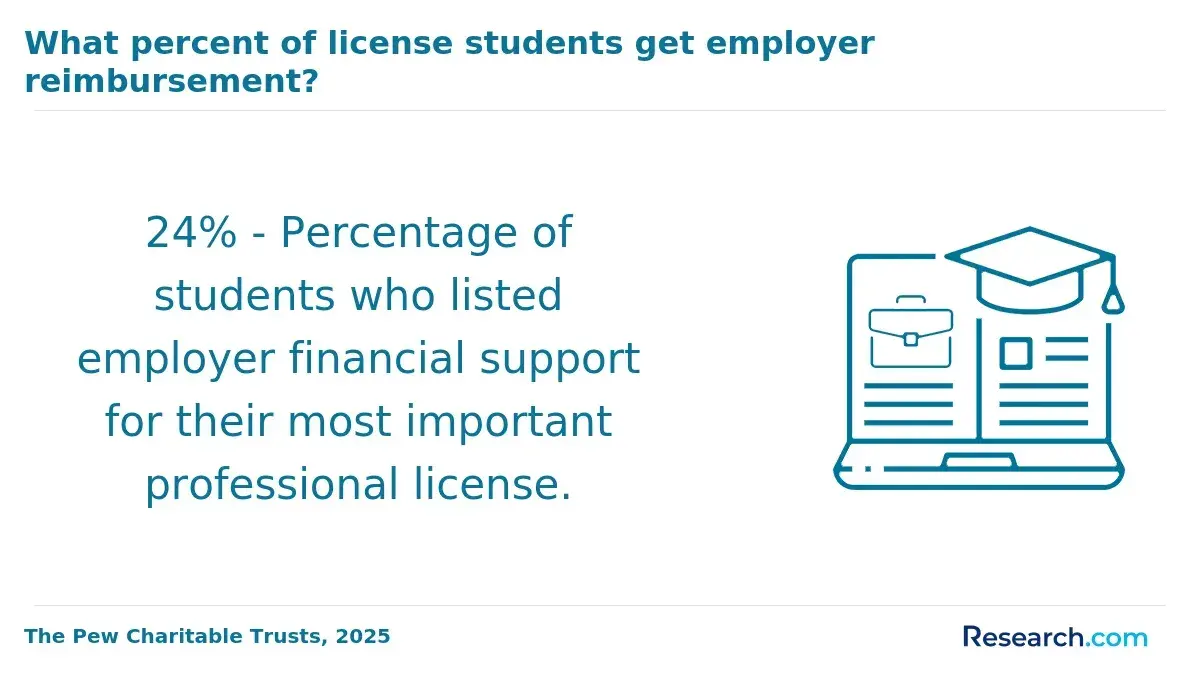
For engineering-related technology careers, licensure rules can be more formal. Students interested in computer engineering, electrical engineering, robotics, or systems that affect public safety should ask whether an ABET-accredited degree, the Fundamentals of Engineering exam, supervised experience, or a Professional Engineer license is relevant in their state or industry.
Other Things You Should Know About
Computer science is usually the broadest technical choice, while information systems is often better for students who want a mix of technology and business. If you are undecided, choose a program with flexible electives and take introductory courses in programming, data, cybersecurity, and systems before specializing.
Computer science is broader and often better for software, AI, and systems roles. Cybersecurity is more focused on protecting networks, data, and infrastructure. Choose cybersecurity if you are drawn to risk, investigation, defense, and compliance; choose computer science if you want deeper software and computing theory.
An associate degree can support entry-level roles in IT support, networking, systems support, or help desk work, especially when paired with certifications and hands-on labs. For software engineering, data science, cybersecurity engineering, and management roles, many employers prefer or require a bachelor's degree.
It depends on the major. Computer engineering, computer science, data science, and AI-focused programs usually require stronger math. Information technology, cybersecurity, UX, and information systems may require less advanced math, though analytical problem-solving is still important.
References
- The 10 most in-demand tech jobs for 2025 — and how to hire for them | CIO https://www.cio.com/article/230935/hiring-the-most-in-demand-tech-jobs-for-2021.html
- How long does it take to complete an IT program? | WCC - Western Community College https://wcc.ca/blog/how-long-does-it-take-to-complete-an-it-program/
- 10 Best Degrees for the Future: Top Majors in Demand for 2025+ https://pioneeracademics.com/news/future-proof-college-majors/
- Types of College Degrees https://www.act.org/content/act/en/students-and-parents/high-school-success/what-to-do-after-high-school/college-degrees.html
- Accreditation processes for technical programs https://edquip.co/blog/accreditation-processes-for-technical-programs
- Online Degree vs. Traditional: Choosing the Right Path https://beal.edu/online-degree-vs-traditional/
- How Long is Trade School for Information Technology? | CBT Technology Institute https://www.cbt.edu/blog/how-long-is-trade-school-for-information-technology/