2027 How to Choose a Major if You Want to Start Your Own Business

Co-Founder and Chief Data Scientist
Choosing a major as a future founder is really a decision about what kind of business you want to build and which skills you cannot afford to outsource early. The U.S. Census Bureau reported more than 5.2 million business applications in 2024, showing that entrepreneurship remains highly competitive and opportunity-rich.
This guide is for students comparing business, entrepreneurship, technology, communications, and other majors. You will learn how to match a major to your strengths, costs, career backup plans, and startup goals so you can choose a practical academic path.
Key Things You Should Know
- The best major for starting a business depends on your business model: entrepreneurship and business administration are strong general choices, while computer science, finance, marketing, communications, and engineering may be better for specific ventures.
- Cost and ROI matter: College Board's 2024 pricing data lists average published tuition and fees at $11,610 for in-state public four-year colleges and $43,350 for private nonprofit four-year colleges, before aid.
- A strong founder-focused program should include accounting, finance, marketing, operations, analytics, business law, sales, leadership, and hands-on work such as internships, incubators, pitch competitions, or capstone ventures.
What are the best college majors if you want to start your own business?
The best college major for an aspiring entrepreneur is the one that gives you the highest-value skills for the type of company you want to launch.
A student who wants to build a software startup may get more direct value from computer science than from a general entrepreneurship degree, while someone planning to open a retail, service, consulting, or franchise business may benefit more from business administration, marketing, finance, or management.
A major is not a business plan, but it can shape your first network, technical skills, internship options, and credibility with customers or investors. The table below compares common majors by the founder problems they help solve.
| Major | Best fit for future founders who want to | Founder skills you are likely to build | Potential limitation |
| Entrepreneurship | Launch a startup, test ideas, pitch investors, or join incubators | Opportunity recognition, business modeling, venture planning, pitching | May be less technical or specialized than industry-specific majors |
| Business Administration | Run a small business, manage teams, understand multiple business functions | Accounting, finance, marketing, operations, management | Can be broad unless paired with a concentration or experiential work |
| Management | Lead employees, scale operations, manage projects, or take over a family business | Leadership, organizational behavior, staffing, strategy | May not go deeply into startup finance, coding, or product development |
| Marketing | Build customer demand, launch brands, sell products, or run an agency | Market research, branding, digital marketing, consumer behavior | May require added finance or operations coursework |
| Finance | Start investment, real estate, fintech, consulting, or capital-intensive businesses | Budgeting, valuation, risk analysis, capital planning | May not emphasize customer discovery or creative product development |
| Computer Science | Build software, AI tools, apps, platforms, or technical products | Programming, systems thinking, product development, data structures | Business, sales, and accounting skills may need to be added separately |
| Communications | Start a media, public relations, creator, consulting, or sales-driven venture | Messaging, persuasion, writing, public speaking, audience strategy | May need stronger quantitative business training |
If income potential is part of your decision, compare business-friendly options with broader salary outcomes across fields. Research on what majors make the most money can help you weigh startup ambitions against backup career paths, especially if you plan to work before launching full time.
How do entrepreneurship, business administration, and management majors differ for future founders?
Entrepreneurship, business administration, and management majors overlap, but they are not interchangeable. The practical difference is emphasis: entrepreneurship focuses on starting and validating ventures, business administration covers the full business toolkit, and management focuses on leading people and systems.
Use the comparison below to decide which one fits your founder profile. It is especially useful if several schools use similar program names but offer very different course sequences.
| Major | Primary focus | Best for | Look for these courses or experiences |
| Entrepreneurship | Creating, testing, funding, and launching new ventures | Students who already have ideas or want to build startups during college | Lean startup methods, venture finance, pitch labs, incubators, new product development |
| Business Administration | Broad preparation across core business functions | Students who want flexibility across industries, ownership, management, or corporate roles | Accounting, finance, marketing, analytics, operations, business law, strategy |
| Management | Leading teams, improving organizations, and running operations | Students who expect to manage employees, family businesses, franchises, or growing companies | Organizational behavior, human resources, project management, leadership, supply chain |
Choose entrepreneurship if you want structured help building and pitching a venture. Choose business administration if you want the broadest foundation and a strong fallback path. Choose management if your biggest challenge will be hiring, supervising, training, and scaling a team.
A common mistake is choosing an entrepreneurship major only because the word sounds exciting. Before enrolling, check whether the program includes real customer research, financial modeling, and venture-building opportunities, not just motivational courses about famous founders.
How can your interests, strengths, and business goals guide your choice of major?
Your major should match the business problems you want to solve every week, not just the identity of being an entrepreneur. Founders spend time selling, hiring, budgeting, building products, handling customer complaints, negotiating, analyzing data, and making uncertain decisions. The right major strengthens the parts of that work you are most likely to do yourself.
Use this sequence to narrow your options before comparing schools:
- Define the business category you are most likely to pursue, such as software, healthcare, retail, real estate, education, consulting, food service, media, trades, or professional services.
- Identify the most expensive skill to outsource in that business, such as coding, financial analysis, sales, regulatory knowledge, design, supply chain, or digital marketing.
- Choose a major that helps you build that expensive skill while leaving room for business electives, internships, or a minor.
- Check whether the major gives you a credible backup job if your first venture takes longer than expected.
- Compare programs by hands-on opportunities, not only by course titles or rankings.
If you are a strong communicator, marketing, communications, sales-focused business programs, or public relations may fit well. If you are analytical, finance, accounting, economics, data analytics, computer science, or supply chain may be stronger. If you are a builder, consider engineering, design, computer science, information systems, or product-focused business programs.
Be honest about your weaknesses, too. A technical founder who avoids finance may underprice products or misunderstand cash flow. A creative founder who avoids analytics may spend too much on marketing that does not convert. Your major should either build your core advantage or directly address a high-risk gap.
Which non-business majors (like computer science or communications) are valuable for entrepreneurs?
Many successful founder paths start outside the business school. Non-business majors can be especially valuable when the company depends on technical expertise, regulated knowledge, creative production, scientific research, or specialized services. In those cases, a business minor or entrepreneurship certificate may be enough to round out the degree.
The table below shows non-business majors that can be strategically useful for entrepreneurs. These majors are most valuable when they connect directly to a product, market, or professional service you want to offer.
| Non-business major | Entrepreneurial advantage | Possible business types | Best complement |
| Computer Science | Ability to build software products instead of relying entirely on outside developers | SaaS, mobile apps, AI tools, cybersecurity, platforms | Entrepreneurship, product management, marketing, finance |
| Information Systems | Bridge between business needs, data, software, and operations | IT consulting, workflow automation, analytics services | Business analytics, operations, project management |
| Communications | Strong messaging, persuasion, media, writing, and audience-building skills | PR agency, creator business, consulting, media brand, sales organization | Marketing, analytics, entrepreneurship |
| Engineering | Product design, prototyping, problem solving, and technical credibility | Hardware, manufacturing, robotics, clean tech, medical devices | Business administration, finance, intellectual property basics |
| Design | User experience, brand identity, product usability, and visual problem solving | E-commerce, UX studio, product design, branding agency | Marketing, sales, accounting |
| Health Sciences | Industry knowledge in a large, regulated, service-heavy market | Wellness services, healthcare technology, clinics, patient support businesses | Healthcare administration, compliance, finance |
Computer science is particularly relevant because AI, automation, and digital platforms now affect many new ventures, even outside the tech sector. However, not every founder needs to code. If your business depends more on trust, relationships, local operations, or personal service, communications, marketing, management, or finance may provide a better return on your time.
What core courses and skills should your major include to prepare you to run a business?
A founder-friendly major should teach you how money, customers, people, operations, and risk work together. Even if you major in a technical or creative field, you should try to graduate with enough business literacy to read financial statements, price a product, test demand, and manage basic legal and ethical responsibilities.
The most useful programs usually include a balanced mix of quantitative, strategic, and people-focused coursework. Look for these subjects in the required curriculum, electives, minor options, or certificates.
- Accounting and financial statements, so you can understand profit, cash flow, margins, taxes, and financing needs.
- Corporate finance or entrepreneurial finance, so you can evaluate funding, debt, equity, valuation, and investment trade-offs.
- Marketing and market research, so you can identify customers, test demand, position your offer, and measure campaigns.
- Sales, negotiation, or business communication, because early founders often sell before they can hire a sales team.
- Operations, supply chain, or project management, so you can deliver consistently and control costs.
- Business analytics, statistics, or data visualization, so you can make decisions from evidence instead of instinct alone.
- Business law, ethics, and risk management, so you understand contracts, liability, intellectual property basics, and compliance questions.
- Leadership, organizational behavior, or human resources, so you can hire, motivate, and manage people responsibly.
Skills matter as much as course names. Strong programs should require presentations, team projects, case analysis, spreadsheets, writing, customer research, and real-world problem solving. If every course is exam-based and disconnected from practice, you may need internships, competitions, or independent projects to fill the gap.
AI is also changing the founder skill set. You do not need to be an AI engineer for every business, but you should understand how automation can support market research, customer service, bookkeeping, content operations, coding assistance, and workflow design. Programs that integrate analytics and responsible technology use are often more practical than programs that treat digital tools as optional.
How do online business and entrepreneurship degrees compare with campus programs for aspiring founders?
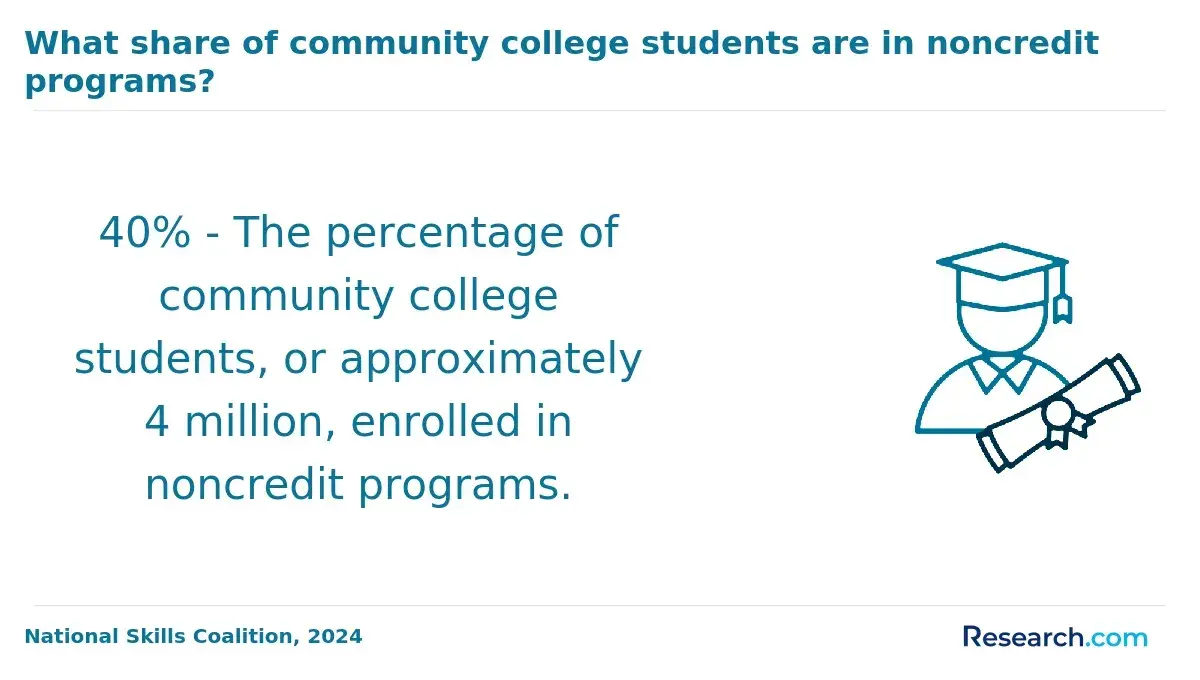
Online and campus programs can both work for future entrepreneurs, but they serve different needs. Online programs often fit students who are working, caring for family, saving money, or already building a business. Campus programs may offer stronger in-person networking, incubators, student organizations, and local investor access.
The comparison below summarizes the major trade-offs. Use it to decide which format supports your schedule and your startup goals.
| Factor | Online programs | Campus programs |
| Schedule flexibility | Often better for working adults, parents, transfer students, and active entrepreneurs | Usually stronger for students who can attend classes, events, and team projects in person |
| Networking | Can be strong if the program offers live sessions, cohorts, mentoring, and alumni access | Often easier through clubs, incubators, faculty offices, competitions, and local events |
| Cost control | May reduce housing, commuting, and relocation expenses | May provide more campus resources but can increase living and transportation costs |
| Experiential learning | Depends heavily on virtual consulting projects, remote internships, and capstones | Often easier to access labs, makerspaces, pitch nights, and in-person venture support |
| Best fit | Self-directed students who can manage time and build networks intentionally | Students who benefit from structure, face-to-face collaboration, and campus ecosystems |
If affordability is a major concern, compare tuition, fees, transfer credit policies, and completion timelines before applying. Lists of the best affordable online colleges can be a useful starting point, but you should still verify accreditation, business program quality, and total cost after financial aid.
A common mistake is assuming online means easier or lower quality. The better question is whether the program has regional or national institutional accreditation, qualified faculty, clear student support, employer-recognized credentials, and practical assignments tied to real business problems.
How can you evaluate accreditation and program quality when choosing a major for entrepreneurship?
Accreditation protects you from choosing a program that may limit transfer credits, graduate school options, employer recognition, or financial aid eligibility. At minimum, the college should hold recognized institutional accreditation. For business programs, additional programmatic accreditation from organizations such as AACSB, ACBSP, or IACBE can signal that the business curriculum has gone through field-specific review.
Accreditation is only the first screen. A properly accredited program can still be a poor fit if it lacks experiential learning, weak advising, limited electives, or few connections to entrepreneurs. Before enrolling, ask schools specific questions that reveal quality:
- Is the institution accredited by an agency recognized by the U.S. Department of Education or the Council for Higher Education Accreditation?
- Does the business school or business program hold AACSB, ACBSP, IACBE, or another relevant programmatic accreditation?
- How many courses require real projects, business plans, client work, simulations, internships, or venture development?
- Does the school offer incubators, accelerators, pitch competitions, entrepreneurship clubs, mentors, or startup funding opportunities?
- Can students from non-business majors access entrepreneurship courses, minors, certificates, or venture labs?
- What career services are available for students who want either startup support or a traditional job after graduation?
- What are the transfer credit, prior learning, and course repeat policies if you need to control cost or change schools?
Watch for red flags. Be cautious if a school avoids clear accreditation answers, advertises unrealistic income outcomes, pressures you to enroll immediately, hides fees, provides vague course descriptions, or cannot explain how online students access advising and experiential learning.
What are typical costs, financial aid options, and ROI for business-related majors?
The cost of a business-related major depends heavily on institution type, residency status, transfer credits, housing, fees, program length, and financial aid. College Board's 2024 pricing data shows that average published tuition and fees vary widely before grants and scholarships are applied, so the listed price is only the starting point.
The table below gives a cost baseline for four-year undergraduate study. Use these figures to frame your budget, then request a net price estimate from each school.
| Institution type | Average published tuition and fees for 2024-25 | What it means for aspiring founders |
| Public four-year, in-state | $11,610 | Often the strongest starting point for cost control if the program has solid business courses and entrepreneurship support |
| Public four-year, out-of-state | $30,780 | May make sense for a distinctive program, but compare the premium with scholarships and in-state alternatives |
| Private nonprofit four-year | $43,350 | Can be worthwhile with strong aid, alumni networks, or startup resources, but net price matters more than sticker price |
Financial aid can change the real cost substantially. Future founders should be especially careful about debt because early businesses may produce uneven income. Consider these options before borrowing more than necessary.
- Federal grants and loans through the FAFSA, if you are eligible.
- State grants, institutional scholarships, transfer scholarships, and merit awards.
- Community college transfer pathways for general education and lower-division business courses.
- Employer tuition assistance if you plan to work while studying.
- Credit for prior learning, military training, AP, CLEP, dual enrollment, or professional certifications when accepted by the school.
- Part-time or online study if it lets you keep income while completing the degree.
ROI is not just the highest salary after graduation. For an aspiring entrepreneur, ROI includes lower debt, useful skills, access to mentors, a strong network, a credible backup job, and the ability to launch or test a venture while enrolled.
If you are comparing easier or shorter options, use guides on what's the easiest bachelor's degree to get carefully; the simplest path is not always the best investment if it does not build the skills your business requires.
What career paths, job roles, and salary ranges can business and entrepreneurship majors lead to?
Many students who want to start a business still work for an employer first to build savings, industry knowledge, customer insight, and professional contacts. That is a practical strategy, not a failure. A business-related major can lead to roles in management, sales, finance, marketing, operations, consulting, and analytics while you prepare to launch.
The U.S. Bureau of Labor Statistics reported a median annual wage of $122,090 for management occupations in May 2024, but individual roles vary by industry, location, experience, and responsibilities. The table below shows common career paths that can support future entrepreneurship.
| Role | How it helps future founders | Salary context |
| General and Operations Manager | Builds experience in staffing, budgeting, process improvement, and day-to-day business execution | Often aligned with management occupation wage data, but varies widely by company size and sector |
| Market Research Analyst | Teaches customer research, competitive analysis, survey design, and demand forecasting | BLS lists this as a business and financial operations role, with wages influenced by data skills and industry |
| Marketing Manager | Develops brand, campaign, pricing, channel, and customer acquisition experience | Typically higher than many entry-level marketing roles, but usually requires experience before management |
| Sales Manager | Builds revenue leadership, pipeline management, negotiation, and team coaching skills | Compensation may include commissions or bonuses depending on the employer |
| Accountant or Financial Analyst | Strengthens financial discipline, reporting, planning, and investment analysis | Useful for founders who need strong cash-flow and funding judgment |
| Product Manager | Connects customer needs, technology, design, business strategy, and execution | Common in technology and digital companies; salaries vary by technical depth and market |
| Founder or Small Business Owner | Applies business skills directly to venture creation, ownership, and growth | Income is highly variable and depends on business performance, funding, expenses, and market demand |
Some students later pursue graduate study when they need deeper leadership, finance, analytics, or specialized management skills. If you are considering that path, resources on what is the easiest master's degree can help you compare workload, but future founders should prioritize relevance, network quality, and opportunity cost over ease alone.
AI and automation are also changing these roles. Founders and employees who can use analytics tools, customer relationship platforms, automation software, and AI-assisted research may be better prepared to operate lean businesses. However, technology does not replace judgment, ethics, relationship-building, or financial discipline.
Are there certificates, minors, or experiential programs that complement your major as an entrepreneur?
You do not always need to major in entrepreneurship to prepare for entrepreneurship. A certificate, minor, concentration, incubator, practicum, or internship can add business-building skills to another major without changing your primary academic path.
These add-ons are especially useful when your main major gives you technical, creative, or industry expertise but not enough business training. Look for options that require applied work rather than only lecture-based courses, such as the following:
- Entrepreneurship minor or certificate, especially if it includes venture creation, customer discovery, and pitch practice.
- Marketing or digital marketing certificate for students who need customer acquisition, branding, social media, SEO, or advertising skills.
- Accounting or finance minor for students who want stronger budgeting, tax, financial modeling, or funding skills.
- Business analytics certificate for students who want to make data-driven pricing, product, and customer decisions.
- Sales or professional selling program for students entering service, B2B, real estate, consulting, or high-touch customer businesses.
- Project management certificate for students who expect to coordinate teams, vendors, timelines, and deliverables.
- University incubator, accelerator, makerspace, student-run enterprise, consulting clinic, or pitch competition for hands-on venture experience.
Experiential programs can be more valuable than an extra credential if they help you talk to real customers, test pricing, build a prototype, or receive feedback from mentors. If you need flexible pacing while balancing work or a startup idea, compare self-paced online colleges with structured programs to see which format best supports completion and accountability.
The smartest combination is often a major that builds your core advantage, plus a minor or certificate that fills your founder gaps. For example, computer science plus entrepreneurship, communications plus marketing analytics, finance plus real estate, or engineering plus product management may be more powerful than a generic path with no clear business model.
Other Things You Should Know About Choosing a Major
Entrepreneurship can be a good major if the program includes practical venture work, mentoring, finance, customer research, and pitching. If it is mostly theory, a broader business, technical, or industry-specific major with an entrepreneurship minor may be stronger.
Choose computer science if building the product is your biggest early challenge. Choose business if your venture depends more on sales, operations, finance, or management. Many tech founders benefit from combining computer science with entrepreneurship, product management, or business electives.
No, a degree is not legally required to start most businesses. However, college can provide structured learning, networks, internships, credibility, and backup career options. For regulated fields such as healthcare, accounting, law, or engineering services, specific credentials or licenses may be required.
The safest major is usually one that supports both your business idea and a realistic job path. Business administration, accounting, finance, marketing, computer science, and information systems are often practical because they can lead to employment while also building useful founder skills.
References
- What Should I Major in If I Want to Start My Own Business?| University of Bridgeport https://www.bridgeport.edu/news/what-should-you-major-in-if-you-want-to-start-your-own-business/
- Entrepreneurship Certificate and Minor | UNCP https://www.uncp.edu/academics/all-majors-and-minors/entrepreneurship.html
- What to Consider When Choosing Your Major | Student.com https://www.student.com/articles/choosing-your-major
- CourseCareers https://coursecareers.com/blog-posts/how-to-build-the-skills-to-start-a-business
- Business vs. Entrepreneurship Degree: Whatâs the Difference? https://potomac.edu/business-vs-entrepreneurship/
- Why Accreditation Matters When Choosing a Business School https://docentibusinessschool.com/why-accreditation-matters-when-choosing-a-business-school/
- Best Degrees for Entrepreneurs - College Educated https://collegeeducated.com/online-degrees/best-degrees-for-entrepreneurs/