2027 Which Majors Are Best for Students Who Want Broad Career Options?

Co-Founder and Chief Data Scientist
Choosing a major is harder when you want flexibility instead of a single narrow career track. Employers are also changing what they value: the National Association of Colleges and Employers' 2024 Job Outlook report found that problem-solving is the top skill employers seek on resumes.
This guide is for students who want a degree that can move across industries, survive labor market changes, and support graduate study later. You will learn which majors offer broad options, how they compare, and how to choose one based on skills, cost, salary potential, and risk.
Key Things You Should Know
- Business, computer science, data analytics, economics, communication, engineering, health sciences, psychology, public policy, and information systems are among the most versatile majors because they build transferable skills used across many employers and industries.
- According to the U.S. Bureau of Labor Statistics 2024 occupational projections, several broad career clusters tied to these majors are expected to grow faster than average through 2033, especially data science, information security, healthcare management, logistics, and management analysis.
- The best major for broad career options is not always the highest-paying one; students should compare accreditation, internship access, transferability, total cost, quantitative skill development, and whether the curriculum leaves room for minors, certificates, or graduate study.
Which college majors offer the broadest and most versatile career options today?
A versatile major is one that teaches skills employers can use in multiple fields rather than preparing students for only one licensed occupation. Broad majors usually combine writing, analysis, technology, research, communication, and decision-making. They are especially valuable for students who are still exploring career goals or who want a degree that can support pivots later.
The strongest flexible majors tend to fall into three groups: quantitative majors, organization-focused majors, and people-and-society majors. Quantitative majors offer strong job-market resilience because more employers rely on data, automation, cybersecurity, and digital operations.
Organization-focused majors work well for students who like management, finance, marketing, logistics, or entrepreneurship. People-and-society majors can be flexible when students deliberately add research, writing, statistics, public speaking, or digital skills.
The table below compares broad majors by the kinds of pathways they commonly support. It is not a ranking of guaranteed outcomes; it is a decision tool for matching a major to your strengths and risk tolerance.
| Major | Why it is versatile | Common career directions | Best fit for students who |
| Business Administration | Covers management, accounting, marketing, finance, operations, and strategy | Sales, operations, human resources, consulting, management, entrepreneurship | Want a practical, employer-recognized degree with room to specialize |
| Computer Science | Builds programming, systems, problem-solving, and automation skills | Software, cybersecurity, data engineering, product roles, technical consulting | Like logic, coding, technical projects, and continuous learning |
| Data Analytics or Statistics | Connects math, software, evidence-based decision-making, and business insight | Data analysis, research, operations, finance, healthcare analytics, marketing analytics | Want a quantitative major that applies across industries |
| Economics | Combines analytical thinking, policy, markets, incentives, and statistics | Finance, consulting, policy, research, analytics, graduate study | Enjoy explaining how systems, markets, and decisions work |
| Information Systems | Bridges business operations and technology | Business analysis, IT project coordination, systems analysis, cybersecurity support | Want tech-adjacent roles without a pure programming focus |
| Communication | Develops writing, messaging, media, presentation, and audience analysis | Public relations, marketing, internal communications, recruiting, content strategy | Are strong writers and speakers willing to add digital or analytics skills |
| Health Sciences | Introduces healthcare systems, biology, public health, and patient-centered work | Healthcare administration, public health, clinical prerequisites, health education | Want healthcare options without committing immediately to one clinical license |
| Engineering | Builds technical problem-solving, systems design, math, and project skills | Manufacturing, energy, product development, operations, consulting, management | Can handle rigorous math and science and want technical credibility |
| Psychology | Explores behavior, research, human development, and motivation | Human services, HR, UX research, market research, graduate school pathways | Want people-focused work and understand that many advanced roles need graduate study |
| Public Policy or Political Science | Teaches research, institutions, writing, argumentation, and civic systems | Government, nonprofit management, policy analysis, law, advocacy, public affairs | Care about public problems and are prepared to build data or legal knowledge |
For most students, the best broad major is one that includes both a core discipline and an employable skill layer. For example, communication becomes more marketable with analytics or digital marketing, psychology becomes more flexible with statistics and research methods, and business becomes stronger with accounting, data, supply chain, or information systems coursework.
How do different versatile majors compare in skills, flexibility, and industry relevance?
Broad career options depend less on the name of the major alone and more on the skills it proves. Employers can train industry context more easily than they can train strong writing, quantitative reasoning, project discipline, technical fluency, or professional judgment.
According to BLS occupational data released in 2024, computer and mathematical occupations had a median annual wage of $104,420 in May 2023, well above the median for all occupations. That does not mean every computer-related graduate reaches that level, but it shows why technical skill sets can widen both salary and mobility options.
The comparison below shows how majors differ in transferable skills. Use it to identify gaps you may need to fill through electives, internships, minors, or certificates.
| Major category | Core transferable skills | Flexibility level | Industry relevance | Main limitation to manage |
| Business and management | Planning, budgeting, operations, leadership, customer and market understanding | High | Useful in nearly every employer type | Can be too general without internships or a concentration |
| Computing and information systems | Programming, systems thinking, troubleshooting, automation, security awareness | High | Strong in technology, finance, healthcare, logistics, government, and manufacturing | Requires ongoing skill updates as tools change |
| Data, math, and economics | Modeling, statistics, forecasting, evidence interpretation, decision analysis | High | Valuable where organizations use data to allocate resources | Students need software fluency to compete for applied roles |
| Communication and media | Writing, presentation, messaging, persuasion, audience research | Moderate to high | Relevant in marketing, public relations, sales, HR, and content roles | Stronger with portfolio work and digital analytics |
| Health and life sciences | Scientific literacy, healthcare context, ethics, patient systems, research basics | Moderate to high | Strong in healthcare, public health, biotech, and administration | Some high-paying clinical roles require licensure or graduate education |
| Social sciences and public affairs | Research, writing, policy analysis, human behavior, institutional knowledge | Moderate | Useful in government, nonprofits, law, research, education, and advocacy | Often needs internships, quantitative coursework, or graduate credentials for advancement |
AI and automation make skill combinations more important. A student who can write clearly, interpret data, use AI tools responsibly, and explain recommendations to nontechnical audiences is often more flexible than a student who has only one isolated skill.
Which degrees provide the best balance of career flexibility, salary potential, and job security?
The best balance usually comes from majors that combine market demand, transferable skills, and multiple fallback paths. Salary potential matters, but it should be weighed against academic fit, program difficulty, debt, and the likelihood that you will actually complete the degree.
BLS projections published in 2024 estimate that data scientist employment will grow 36% from 2023 to 2033. That figure is unusually strong compared with the average for all occupations, but the practical lesson is broader: majors that teach data interpretation and computational thinking can remain useful even when job titles change.
The table below summarizes strong options for students who want flexibility without ignoring earnings and stability.
| Degree | Flexibility | Salary potential | Job security factors | Best strategy |
| Computer Science | High | High | Demand across software, security, automation, and digital infrastructure | Build a project portfolio and learn cloud, security, or data tools |
| Data Analytics, Statistics, or Applied Mathematics | High | High | Organizations need measurement, forecasting, and decision support | Add SQL, Python, visualization, and domain knowledge |
| Business Administration with analytics, accounting, finance, or supply chain | High | Moderate to high | Business functions exist in most industries | Avoid a vague path by choosing a concentration and internship |
| Information Systems | High | Moderate to high | Companies need professionals who translate between business and IT | Pair business courses with cybersecurity, databases, or project management |
| Engineering | Moderate to high | High | Technical problem-solving remains valuable in infrastructure, energy, manufacturing, and product work | Choose a discipline with broad industry use, such as mechanical, electrical, industrial, or civil engineering |
| Health Sciences or Healthcare Administration | Moderate to high | Moderate to high | Healthcare demand is tied to population needs and complex delivery systems | Clarify whether you want administration, public health, clinical prerequisites, or graduate study |
| Economics | High | Moderate to high | Analytical training applies to finance, policy, consulting, research, and business | Take statistics, econometrics, spreadsheets, and programming electives |
Students who want the safest flexible choice should look for a major that produces visible evidence of skill. A portfolio, internship, capstone, lab project, case competition, research assistantship, or employer-sponsored project can make a broad degree much more credible.
What general education and prerequisite courses prepare students for multiple career paths?
General education courses can either feel like boxes to check or become the foundation for flexibility. The most useful courses help students reason quantitatively, communicate clearly, understand institutions, and adapt to new tools.
Students who are undecided should prioritize courses that keep prerequisites open for several majors. The following course areas are especially useful because they support business, technology, health, social science, and graduate-school pathways:
- College writing and professional communication: These courses help students produce memos, reports, proposals, presentations, and persuasive arguments used in almost every job.
- Statistics or quantitative reasoning: Statistics is useful for research, business analytics, psychology, public health, economics, marketing, and policy work.
- Introductory computer science or information systems: A first course in programming, databases, or digital systems helps students understand how modern organizations operate.
- Microeconomics or macroeconomics: Economics gives students a language for markets, incentives, policy, and resource decisions.
- Biology or health systems: These courses keep healthcare, public health, and life-science pathways open.
- Accounting or personal finance: Financial literacy supports business decisions, entrepreneurship, nonprofit work, and management roles.
- Research methods: Research design helps students evaluate evidence, avoid weak claims, and prepare for graduate-level work.
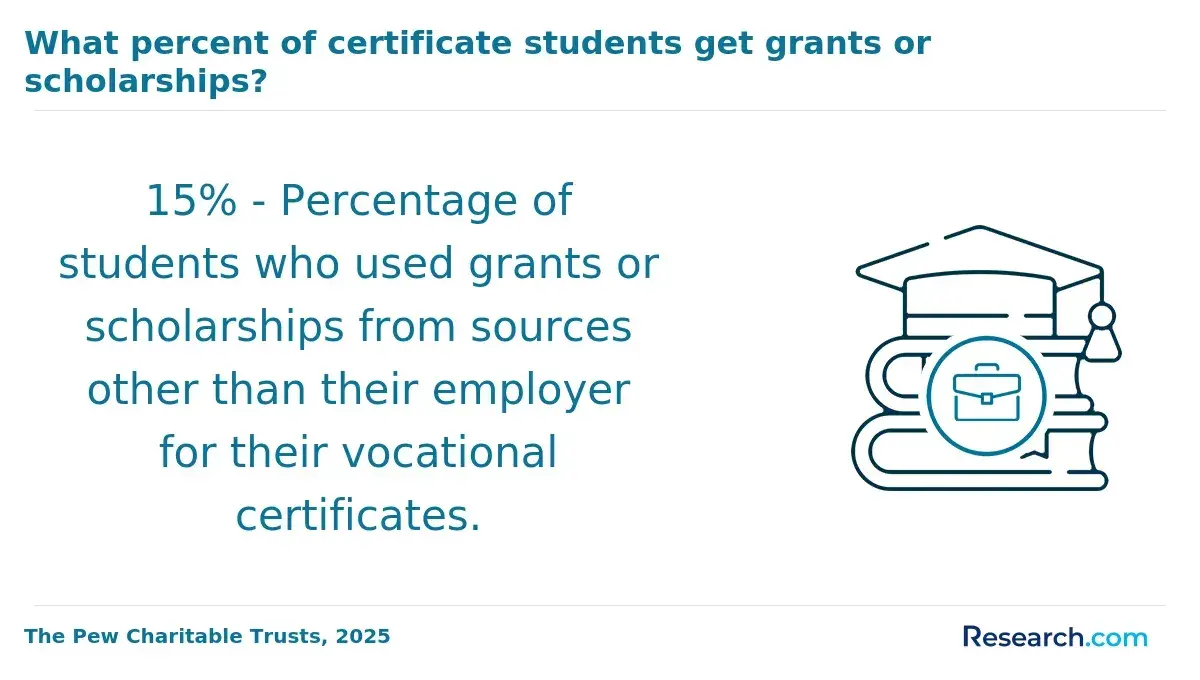
Students can also use short credentials to test an interest before changing majors. For example, carefully chosen certificate programs that pay well may help students build job-ready skills in areas such as data, IT, project management, healthcare support, or business operations without committing to a full degree change.
A common mistake is avoiding math, writing, or technology courses early because they seem difficult. That can narrow options later. If you are unsure of your major, it is usually better to complete foundational courses with tutoring support than to postpone them until they become barriers.
How do online, hybrid, and campus-based programs differ for broad-based majors?
Flexible majors are widely available online, hybrid, and on campus, but the best format depends on the major's learning model and your need for structure. Business, communication, psychology, criminal justice, information systems, and some data programs often work well online. Engineering, lab sciences, clinical health programs, and studio-based fields may require more in-person components.
College Board's 2024 pricing data lists average published tuition and fees for in-state students at public four-year institutions at $11,610 for the 2024-25 academic year. That figure is useful because it reminds students to compare online programs against local public options, not just against private or out-of-state schools.
The table below outlines how program format affects flexibility, cost, networking, and hands-on learning.
| Format | Strengths | Trade-offs | Best for |
| Online | Flexible scheduling, broader school choice, easier for working adults | Requires self-discipline and may offer fewer spontaneous networking opportunities | Business, communication, psychology, IT, data analytics, public administration, general studies |
| Hybrid | Balances flexibility with campus access, labs, advising, and peer connection | Commute and scheduling requirements can still be challenging | Students who want online convenience but need structure or hands-on sessions |
| Campus-based | Strongest for labs, studios, research, clubs, internships, and direct faculty access | Less schedule flexibility and often higher living or commuting costs | Engineering, lab sciences, pre-health, performing arts, residential-age students |
Students comparing online options should look beyond tuition and check transfer policies, course availability, student support, internship access, and whether the diploma or transcript clearly identifies the same accredited institution. Those focused on affordability can begin by comparing the cheapest online university in USA options with local public universities and community college transfer pathways.
What should students look for in accreditation and program quality for flexible majors?
Accreditation is one of the most important checks before enrolling because it affects credit transfer, federal financial aid eligibility, graduate admission, employer recognition, and licensure pathways. In the U.S., students should first confirm that the institution is accredited by an agency recognized by the U.S. Department of Education or the Council for Higher Education Accreditation.
Programmatic accreditation matters more for some majors than others. Engineering students may need ABET-accredited programs for certain professional pathways. Business students may look for AACSB, ACBSP, or IACBE accreditation, though not every good business program has the same business accreditor. Nursing, education, social work, counseling, and allied health fields can have licensure-related approval rules that vary by state.
Before applying, students should ask schools for evidence that the program delivers real outcomes. The most useful quality checks include:
- Recognized institutional accreditation: Verify accreditation directly through official accreditor or federal databases, not only through a school's marketing page.
- Clear curriculum map: The program should show required courses, elective options, prerequisites, capstones, and expected sequencing.
- Career-aligned learning: Look for internships, projects, portfolios, labs, case studies, practicums, or employer partnerships.
- Transparent outcomes: Ask for graduation rates, retention rates, job placement methods, graduate school placement, and career services support.
- Transfer and credit policies: Confirm how prior college credit, military credit, AP or IB credit, and professional certifications are evaluated.
- Faculty qualifications: Strong programs usually combine academically qualified faculty with instructors who understand current industry practice.
Red flags include pressure to enroll immediately, unclear accreditation language, vague career claims, unusually high fees, poor transferability, or promises that a degree will automatically lead to a specific salary or job. A legitimate program should be willing to explain its costs, outcomes, and limitations clearly.
How do admission requirements, program length, and total costs vary across these majors?
Most bachelor's degrees require about 120 credits, but the path can vary significantly. Engineering, nursing prerequisites, lab sciences, and some computer science programs may have stricter course sequences. Business, communication, psychology, public policy, and interdisciplinary programs often offer more elective flexibility, which can help transfer students graduate sooner.
Total cost depends on tuition, fees, books, technology, transportation, housing, lost work hours, and the number of credits that actually apply to graduation. The biggest cost mistake is comparing only per-credit tuition while ignoring transfer credit loss, repeated courses, lab fees, or delayed graduation.
The table below summarizes common differences students should expect when comparing broad majors. Exact requirements vary by school, so use this as a planning framework rather than a universal rule.
| Major type | Typical admission considerations | Program length factors | Cost factors to watch |
| Business, communication, psychology, public policy | General college admission; some programs require a minimum GPA before upper-division courses | Often transfer-friendly with many electives | Internship costs, software, portfolio tools, optional certificates |
| Computer science, data analytics, information systems | Math placement, prior programming helpful but not always required | Prerequisite chains in math, programming, databases, or systems | Technology fees, software, hardware, bootcamp-like add-ons |
| Engineering | Strong math and science preparation; competitive admission at some schools | Sequential calculus, physics, labs, and design courses can limit acceleration | Lab fees, equipment, longer time to degree if prerequisites are missing |
| Health sciences and pre-health pathways | Science prerequisites and GPA expectations may be important for later clinical programs | Lab sciences and clinical prerequisites must be sequenced carefully | Lab fees, immunizations, background checks, clinical requirements, graduate school costs |
| Economics and quantitative social science | College algebra or calculus placement may affect progress | Statistics, econometrics, and math prerequisites can shape timing | Software, tutoring, research opportunities, graduate exam preparation |
Students considering graduate school should plan costs early because a flexible bachelor's degree may become more powerful with a targeted master's. If affordability is the main concern, comparing the cheapest masters program options can help you understand whether a lower-cost bachelor's plus a specialized graduate degree is a better ROI path than an expensive undergraduate program.
Which careers and job roles are most accessible with broadly applicable degrees?
Broadly applicable degrees usually open entry-level roles where employers value communication, analysis, organization, technology use, or customer understanding. Some roles require specific majors, licenses, or portfolios, but many early-career jobs are accessible through a combination of degree, internships, projects, and demonstrated skills.
BLS projections released in 2024 show that management analyst employment is expected to grow 11% from 2023 to 2033. This matters because consulting-style problem-solving, process improvement, and organizational analysis are common destinations for graduates from business, economics, data, public policy, and related majors.
The table below connects versatile majors to accessible job roles and the skills that help candidates stand out.
| Career area | Accessible entry-level roles | Majors that often fit | Skills that improve access |
| Business operations | Operations coordinator, management trainee, project coordinator, business analyst assistant | Business, information systems, economics, communication | Spreadsheets, process mapping, reporting, project management basics |
| Data and analytics | Data analyst, reporting analyst, research assistant, marketing analyst | Data analytics, statistics, economics, computer science, psychology | SQL, Python or R, dashboards, statistics, data storytelling |
| Technology | Junior developer, QA tester, IT support analyst, systems analyst assistant | Computer science, information systems, data analytics | Portfolio projects, troubleshooting, databases, cybersecurity basics |
| Marketing and communication | Marketing coordinator, PR assistant, content specialist, social media analyst | Communication, business, psychology, English, marketing | Writing samples, campaign analytics, SEO basics, audience research |
| Healthcare administration | Patient services coordinator, health program assistant, medical office manager trainee | Health sciences, business, public health, psychology | Healthcare systems knowledge, compliance awareness, customer service, data entry accuracy |
| Government and nonprofit | Program assistant, policy aide, community outreach coordinator, grants assistant | Public policy, political science, sociology, communication, economics | Research, writing, budgeting basics, stakeholder communication |
| Human resources and recruiting | HR assistant, recruiting coordinator, training assistant | Psychology, business, communication, sociology | Interview coordination, employment law basics, HR software, interpersonal judgment |
Students with legal records, interrupted education, or nontraditional backgrounds should be especially careful about career restrictions, background checks, and licensure rules. A resource on what is the best degree for a convicted felon can help identify options where a degree may still support stable work while avoiding fields with strict disqualifying rules.
What are typical salary ranges and long-term earnings for graduates of versatile majors?
Salary outcomes vary by role, region, employer, experience, internships, graduate education, and skill level. A major can influence access to certain jobs, but it does not determine earnings by itself. Students should compare the occupations a major commonly leads to rather than relying only on broad major-level averages.
BLS wage data published in 2024 reported a May 2023 median annual wage of $79,050 for business and financial operations occupations. That number is useful because many versatile majors feed into this broad category, but individual roles such as analyst, accountant, buyer, HR specialist, and financial analyst can differ substantially.
The table below presents broad salary context by career direction. These are occupational comparisons, not promises about any individual graduate.
| Career direction | Relevant versatile majors | Salary context | Long-term earnings factors |
| Computer and IT | Computer science, information systems, data analytics | Often among the stronger wage categories for bachelor's-level candidates | Portfolio depth, specialization, certifications, security knowledge, cloud skills |
| Business and finance | Business, economics, accounting, finance, information systems | Moderate to high depending on function and industry | Internships, licenses or credentials, analytical skills, advancement into management |
| Data and research | Statistics, data analytics, economics, psychology, public policy | Strong when paired with software and applied domain knowledge | SQL, programming, visualization, graduate study, industry specialization |
| Healthcare administration and public health | Health sciences, business, public health, psychology | Varies widely between support, administration, and management roles | Healthcare experience, compliance knowledge, graduate credentials, leadership roles |
| Marketing, communication, and media | Communication, marketing, business, psychology, English | Can start lower but improve with measurable campaign, sales, or strategy results | Portfolio, analytics, industry specialization, management responsibility |
| Government, nonprofit, and policy | Public policy, political science, economics, sociology, communication | Often stable but varies by agency, funding, and location | Graduate education, grant writing, budgeting, policy analysis, leadership experience |
For long-term earnings, the strongest move is to build a stack: a broad degree, a practical concentration, an internship, a technical tool set, and a portfolio of evidence. Students should also calculate debt-to-income risk before choosing a higher-cost school for a major that may require graduate education.
How can students choose the right major to keep future career options open?
The right flexible major should match three things: what you can complete successfully, what employers can recognize, and what gives you room to specialize. A major that sounds broad but leaves you with no marketable skills is less useful than a focused major with transferable tools.
Use the following steps to narrow your choice in a practical way:
- Start with work activities, not job titles: Decide whether you prefer analyzing data, helping people, building systems, writing, managing projects, solving technical problems, or explaining ideas.
- Choose a primary skill lane: Pick one strength area such as quantitative analysis, technology, communication, healthcare knowledge, operations, or public problem-solving.
- Add a complementary skill: Pair communication with analytics, business with information systems, psychology with statistics, economics with programming, or health sciences with administration.
- Check course sequencing: Make sure prerequisites will not delay graduation, especially in engineering, computer science, pre-health, and quantitative majors.
- Compare total cost and transfer credit: Ask how many credits apply to the degree, not just how many credits a school accepts.
- Look for proof-building opportunities: Favor programs with internships, capstones, employer projects, labs, research, portfolios, or cooperative education.
- Review likely next steps: Identify whether your target roles require graduate school, licensure, certifications, security clearance, or background checks.
Students who already know they may want advanced credentials should also consider how the undergraduate major connects to graduate study. Some online masters programs can help working adults specialize later, but they work best when the bachelor's degree has already built the prerequisites and professional foundation needed for the field.
The biggest mistake is choosing a major only because it is popular, easy to explain, or currently trending. The better question is: "What skill set will this major prove, and how many credible next steps will I have if my first plan changes?"
Other Things You Should Know About Choosing a Major
Business administration is often one of the most versatile because it applies to many industries, but it is strongest when paired with a concentration such as analytics, accounting, finance, supply chain, or information systems. Computer science, data analytics, economics, and communication can be equally flexible for students whose skills match those fields.
A broad major is better if you are still exploring careers or want multiple options. A specialized major is better if your target career requires specific preparation, such as engineering, nursing, accounting, or teaching. The best compromise is often a broad major with a practical specialization.
No major is fully protected from automation, but students can reduce risk by developing skills that AI does not replace easily: judgment, ethical reasoning, complex problem-solving, human communication, domain expertise, and the ability to use AI tools productively. Data, technology, healthcare, business analysis, and communication majors can all remain relevant when students keep skills current.
Yes, but students need to be intentional. Liberal arts majors such as psychology, English, sociology, history, and political science can support many careers when students add internships, statistics, writing samples, digital tools, research experience, or a career-focused minor.
References
- How Prerequisite Courses Prepare You for Advanced Courses https://www.straighterline.com/blog/how-prerequisite-courses-prepare-you-for-advanced-courses
- Most Useful Degrees https://www.collegeadvisor.com/resources/most-useful-degrees/
- What are General Education Courses? Its Purpose and Benefits https://www.edvisorly.com/student-guides/general-education-courses-overview
- Accreditation Standards - Standards for Accreditation of Education https://www.accreditation.info/accreditation/accreditation-standards.html
- Online, Hybrid, and More: Flexible Learning Options in College - ReUp Education https://reupeducation.com/blog/online-hybrid-and-more-flexible-learning-options-in-college/
- 25 Inspiring Career Readiness Examples in College Courses - Every Learner Everywhere® https://www.everylearnereverywhere.org/blog/25-inspiring-career-readiness-examples-in-college-courses/
- Career earnings by college major - The Hamilton Project https://www.hamiltonproject.org/data/career-earnings-by-college-major/
- Online vs Hybrid vs Campus Learning in Healthcare: Which Is Right for You? https://www.edumed.org/articles/online-vs-hybrid-vs-campus/
- Differences between hybrid, online and on-campus classes? https://uniexperts.com/en/news/differences-hybrid-online-and-on-campus-classes/