2027 Biggest Mistakes Students Make When Choosing a Major

Co-Founder and Chief Data Scientist
Choosing a major is often the first big career decision students make, and the cost of guessing is rising. College Board data shows the average published price for tuition, fees, housing, and food at a public four-year in-state college reached $24,920 for 2024-25.
This guide is for high school seniors, college students, transfers, and families comparing majors. You will learn how to avoid rushed choices, test career fit, evaluate workload and ROI, and use advisors more effectively before declaring or changing a major.
Key Things You Should Know
- The biggest mistake is choosing a major from pressure, prestige, or fear without checking curriculum fit, career paths, and total cost; the average published public four-year in-state cost for tuition, fees, housing, and food was $24,920 in 2024-25.
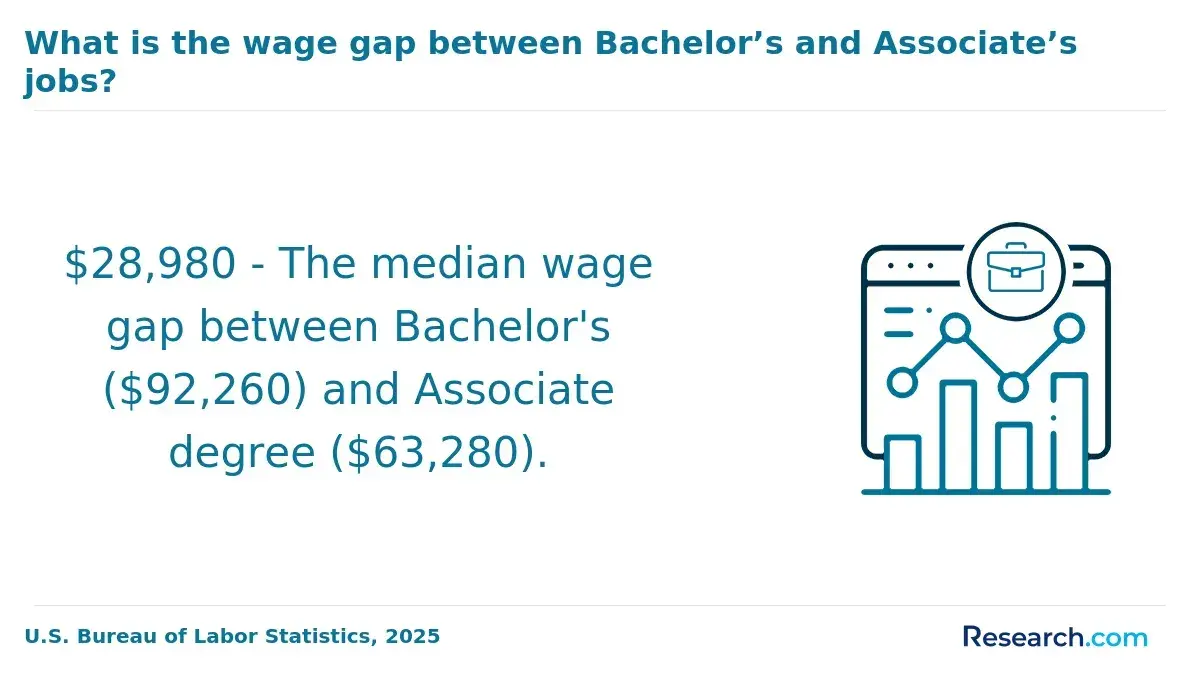
- Salary matters, but it should be weighed with job demand, required credentials, personal strengths, and risk tolerance; BLS data shows bachelor's degree holders had median weekly earnings of $1,543 in 2024, but outcomes vary widely by field and role.
- Students should compare majors using evidence; degree requirements, prerequisite difficulty, internship access, accreditation or licensure rules, transfer-credit policies, and BLS job outlook data, including projected growth for 2023-2033 occupations.
What are the biggest mistakes students make when choosing a major?
The biggest mistakes students make when choosing a major are deciding too early, focusing only on salary or prestige, ignoring degree requirements, and assuming one major creates only one career path.
A major is a structured academic program, but it is also a set of prerequisites, skill signals, networking opportunities, and possible career routes. The right choice should connect what you can realistically study well with the work you may want to do after graduation.
The table below summarizes common decision traps and the risk each one creates. Use it to diagnose whether your current favorite major is based on evidence or on assumptions:
| Mistake | Why it creates risk | Decision signal to check |
| Choosing based on family pressure | The student may lack motivation for demanding prerequisites or required internships. | Interest in the actual upper-division courses, not just the job title. |
| Following a friend group | Social comfort can hide a mismatch with strengths, schedule, or career goals. | Independent performance in introductory courses and advising conversations. |
| Chasing only the highest salary | High-paying paths may require graduate school, licensing, geographic mobility, or intense competition. | Required credentials, job outlook, and typical entry-level responsibilities. |
| Avoiding hard majors automatically | Students may rule out strong-fit fields because the first class feels difficult. | Whether difficulty comes from weak preparation, poor fit, or temporary adjustment. |
| Ignoring total degree requirements | Hidden prerequisites can extend graduation time and increase costs. | Four-year plan, prerequisite sequence, GPA rules, and course availability. |
A better approach is to treat major selection as a research project rather than a personality quiz. Before declaring, students should complete a short evidence check:
- Read the full degree map, including prerequisites and capstone, clinical, lab, or internship requirements.
- Compare at least three career paths connected to the major, including one non-obvious path.
- Ask a faculty member what students usually underestimate about the major.
- Review job postings to identify the skills and software tools employers actually request.
- Estimate the financial impact if the major adds one extra semester or requires graduate school.
Why do students choose a major too quickly?
Students often choose a major too quickly because the college process rewards early labels. Applications ask for intended majors, orientation programs sort students into colleges, and families often want a clear answer before the student has taken college-level courses. The result is a decision that feels official before it is fully tested.
Another reason is fear of falling behind. This fear is understandable, especially in majors with long prerequisite chains such as nursing, engineering, computer science, architecture, and teacher education. But speed is not the same as clarity.
Students considering accelerated pathways, including fast online degrees, should still verify that the program matches their target career, transfer plans, and licensing requirements where applicable.
Rushing can also happen when students confuse an interesting subject with a sustainable academic path. Liking psychology, biology, business, or game design is a good starting point, but students should ask whether they also like the methods used in that field: statistics, lab work, accounting rules, coding, writing-intensive analysis, or client-facing communication.
Students can slow the decision without losing momentum by using a "test before declaring" plan:
- Take one gateway course in the major and one course in a realistic backup field.
- Attend a department information session before the declaration deadline.
- Interview one junior or senior in the major about workload and professor expectations.
- Visit career services to identify internships tied to the major.
- Set a decision date after grades, advising feedback, and career research are available.
How can students avoid picking a major for the wrong reasons?
Students can avoid picking a major for the wrong reasons by separating outside pressure from evidence. A wrong reason is not simply "my parents suggested it" or "the field pays well." Those can be useful inputs. The problem is choosing without confirming that the major fits your abilities, constraints, values, and career options.
Students with unusual admissions concerns, interruptions in education, or justice-involved backgrounds should be especially careful not to choose a major only because it feels like the only option.
Resources on online colleges that accept felons can help applicants compare programs more realistically, but career licensing rules, background-check requirements, and employer policies should still be reviewed before committing to fields such as healthcare, education, law enforcement, finance, or social services.
The following checklist helps identify whether a major is being chosen for a weak reason. If several items apply, pause before declaring:
- You cannot explain what people with the major do in entry-level jobs.
- You like the title of the career more than the daily tasks attached to it.
- You are choosing the major mainly because it sounds impressive to others.
- You have not reviewed upper-division course descriptions.
- You are ignoring a major you perform well in because it feels less prestigious.
- You assume graduate school will fix any uncertainty about the bachelor's degree.
A stronger decision uses multiple forms of evidence. Combine grades, advising input, career research, work experience, and personal constraints such as commute, finances, family responsibilities, and health. A major that looks perfect on paper may still be a poor fit if its schedule, required unpaid hours, or location demands make completion unrealistic.
How should students match a major to their strengths?
Students should match a major to their strengths by looking beyond favorite subjects and identifying the kind of work they can repeat, improve, and tolerate under pressure. Strengths include academic skills, work habits, communication style, tolerance for ambiguity, quantitative ability, creativity, persistence, and comfort with people, systems, data, or physical environments.
The table below connects common strength patterns with majors students might explore. It is not a placement test; it is a way to start better conversations with advisors and faculty:
| Strength pattern | Majors to explore | Fit question |
| Strong quantitative reasoning and patience with complex problems | Engineering, computer science, economics, statistics, finance, data science | Do you enjoy solving problems even when the answer is not immediate? |
| Strong writing, reading, and argument analysis | English, history, philosophy, political science, communications, pre-law tracks | Can you produce clear written work consistently under deadlines? |
| Strong interpersonal skills and service orientation | Education, nursing, social work, psychology, human services, hospitality | Can you handle emotionally demanding situations professionally? |
| Strong visual, spatial, or design thinking | Architecture, graphic design, industrial design, digital media, urban planning | Are you willing to build a portfolio and revise work repeatedly? |
| Strong organization and interest in systems | Accounting, supply chain management, information systems, public administration | Do you like improving processes and working within rules or constraints? |
Current labor-market trends make skill matching even more important. AI tools can automate some routine tasks, but they also increase demand for students who can ask good questions, evaluate outputs, use data responsibly, communicate clearly, and apply judgment in real-world contexts. A major should help you build both technical skills and durable human skills.
To evaluate fit, students should use a simple evidence loop.
- Identify three skills the major requires every week, not just at graduation.
- Compare those skills with courses where you have performed well and improved over time.
- Complete one applied experience, such as a project, job shadow, lab, volunteer role, or informational interview.
- Ask whether the hardest parts of the major are challenges you want to get better at.
What research should students do before choosing a major?
Before choosing a major, students should research the curriculum, costs, career outcomes, transfer rules, accreditation, and experiential learning options. This matters because two majors with similar names can lead to different requirements depending on the college. For example, "information technology," "computer science," and "information systems" may involve different levels of programming, math, business coursework, and internship expectations.
Cost research should include more than tuition. College Board reported the average published tuition and fees for public two-year in-district colleges at $4,050 for 2024-25, which can make transfer planning attractive for some students. However, the lowest sticker price is not automatically the best option if credits do not transfer cleanly or the program lacks the courses needed for a target major.
The table below shows the main research categories students should compare before declaring. Each category affects either graduation time, career preparation, or total cost:
| Research area | What to look for | Why it matters |
| Curriculum | Prerequisites, course sequence, electives, capstone, labs, fieldwork | Requirements can affect difficulty, schedule flexibility, and time to graduation. |
| Accreditation or approval | Programmatic accreditation, state approval, licensure alignment | Some careers require graduates from approved or accredited programs. |
| Career outcomes | Internship access, employer partnerships, alumni roles, placement support | A major should connect students to real work experience and hiring networks. |
| Transfer policies | Course equivalencies, residency requirements, articulation agreements | Poor transfer planning can add semesters and increase costs. |
| Financial aid impact | Satisfactory academic progress, scholarship rules, credit limits | Changing majors late can affect aid eligibility and borrowing needs. |
After reviewing the basics, students should ask direct questions before declaring.
- Which courses most often delay students in this major?
- Are required courses offered every semester or only once per year?
- What GPA is needed to stay in the major or enter upper-division coursework?
- Does the major require unpaid clinical, practicum, student-teaching, or internship hours?
- What software, lab fees, equipment, background checks, or certification exams may add cost?
- What jobs do recent graduates typically pursue with only the bachelor's degree?
How do major requirements affect course difficulty and workload?
Major requirements affect difficulty because they determine not only what students study, but also the order, pace, grading standards, and outside time required. A major with fewer total credits can still be difficult if it has strict prerequisites, competitive progression rules, labs, studios, clinical rotations, or intensive writing requirements.
Workload also depends on the type of assignments. STEM majors may require long problem sets, labs, and sequential math courses. Design and arts programs may require studio time, portfolio revisions, and critiques. Education, social work, and healthcare programs may require field placements during daytime hours. Business and communication majors may include group projects, presentations, case work, and internships.
Students should review workload before they fall behind. The following steps help estimate whether the major is manageable with work, commuting, athletics, caregiving, or other commitments.
- Map every prerequisite from the first course to graduation, including minimum grades required to advance.
- Check whether any course is a "gateway" that blocks multiple later classes if not completed on time.
- Ask how many hours per week successful students usually spend outside class in the hardest semester.
- Identify required activities that may not fit a normal class schedule, such as clinicals, labs, student teaching, or internships.
- Build a backup schedule in case a required course is full, failed, withdrawn, or unavailable.
A difficult major is not automatically the wrong major. The better question is whether the difficulty is productive. If a student struggles but improves with tutoring, office hours, and consistent study, the major may still fit. If the required tasks are consistently draining and disconnected from the student's goals, a related major may be a better match.
What should students know about career outcomes before declaring?
Students should know that a major influences career options, but it rarely determines only one outcome. Employers often evaluate the combination of major, internships, projects, software skills, communication ability, certifications, and work experience. Some fields have clear degree-to-job pipelines, while others require students to build a portfolio of experiences around the major.
Students should also understand whether their target career requires graduate education. For example, psychology can be a strong undergraduate major, but many counseling, clinical, or therapy roles require graduate degrees and licensure.
Students comparing advanced options, including a 6-month master's degree online, should verify accreditation, admissions standards, state authorization, and whether the credential is accepted for their intended role.
The table below illustrates how career connection differs across majors. It helps students see whether a major has a direct pathway, a flexible pathway, or a pathway that often needs additional credentials:
| Major area | Common early career direction | Outcome issue to verify |
| Nursing | Registered nurse roles after approved education and licensure | State board approval, clinical placement quality, NCLEX preparation |
| Computer science | Software, data, cybersecurity, systems, or technical analyst roles | Portfolio quality, internships, coding depth, and AI-related skills |
| Business | Marketing, finance, operations, sales, HR, analytics, or management training | Concentration choice, internships, quantitative skills, and employer network |
| Psychology | Human services, research assistant, HR, case management, or graduate study | Whether target roles require a master's degree, doctorate, or licensure |
| Biology | Lab support, healthcare preparation, environmental work, research, or graduate study | Need for professional school, lab experience, and specialization |
BLS data provides useful context, but students should avoid reading it as a personal prediction. For example, the BLS Occupational Outlook Handbook lists software developers with 17% projected job growth for 2023-2033 and 2024 median pay of $133,080. That signals strong market demand, but individual outcomes still depend on skills, location, internships, competition, and hiring cycles.
How important are salary and job outlook when choosing a major?
Salary and job outlook are important, but they should not be the only factors in choosing a major. They help students understand economic risk, especially if they expect to borrow, support family members, attend graduate school, or live in a high-cost region. However, salary data is usually reported by occupation, not by major, and many majors lead to several different occupations.
BLS reported that bachelor's degree holders had median weekly earnings of $1,543 in 2024. This supports the broad value of completing a bachelor's degree, but it does not mean every major or graduate has the same return. Students should compare realistic jobs they could pursue, not just the highest-paying role associated with a field.
The best salary review includes both upside and friction. Before declaring, students should evaluate the following factors together:
- Entry-level roles available with the degree, not only senior roles that require years of experience.
- Projected demand in the occupations most closely connected to the major.
- Graduate school, licensure, certification, relocation, or unpaid training required for the target career.
- Regional salary differences, because national medians may not reflect local labor markets.
- Debt level and total time to completion, including the cost of switching majors late.
- Personal sustainability, including schedule, stress, values, and long-term interest in the work.
A practical rule is to compare the major's "minimum acceptable outcome," not just its best-case scenario. If you would be comfortable with the common entry-level jobs, required credentials, and salary range, the major may be financially and personally reasonable. If you only like the highest-status outcome, keep researching.
When should students consider changing or double majoring?
Students should consider changing majors when new evidence shows a poor fit, not simply when a semester becomes difficult. A low grade in one course may signal a need for tutoring, better study habits, or a lighter course load. Repeated disinterest in core courses, avoidance of required tasks, or a mismatch with career goals may signal a deeper problem.
For some students, changing majors is less costly when paired with transfer planning or a staged credential. Students who want a lower-cost starting point may compare associates degrees online, but they should confirm transferability before assuming an associate program will shorten the path to a bachelor's degree.
The table below compares changing, double majoring, minoring, and adding a certificate. It helps students choose the option that solves the actual problem without adding unnecessary credits:
| Option | When it may make sense | Main trade-off |
| Change major | The current major does not match strengths, requirements, or career goals. | May add time if prerequisites do not overlap. |
| Double major | Two fields strongly support a specific career plan and requirements overlap well. | Can reduce elective flexibility and increase workload. |
| Minor | A second field adds useful skills without needing a full second major. | May not carry the same depth as a major. |
| Certificate | A targeted skill, such as analytics, coding, project management, or language ability, improves employability. | Quality and employer recognition vary by provider. |
Students should consider a change or add-on credential when several signs appear together:
- You dislike the required work of the major, not just one professor or one class.
- Your strongest grades and projects are consistently in another field.
- Your target career does not require the current major.
- Changing now would add less time than staying and needing graduate school to redirect later.
- An advisor confirms that remaining requirements in the new path are realistic.
How can students compare majors with advisors and career services?
Students can compare majors effectively by using advisors for degree requirements and career services for labor-market testing. Academic advisors help with course sequencing, graduation rules, transfer credits, and policy details. Career services can help students connect majors to internships, job postings, alumni, resumes, and employer expectations.
Students with academic setbacks should not assume their options are closed. Some programs and institutions offer flexible admissions routes, and resources on online colleges that accept low GPA can help students identify alternative pathways. Still, students should ask whether the major itself has minimum GPA rules, competitive admission, or progression standards after enrollment.
The most productive advising meetings happen when students bring specific questions. Use this sequence before declaring, changing, or adding a second major:
- Ask an academic advisor to compare the remaining credits, prerequisite chains, and likely graduation date for each major.
- Ask the department advisor which courses are most difficult to schedule and which ones students most often repeat.
- Ask career services for sample job postings connected to each major and identify repeated skill requirements.
- Ask about internships, employer visits, alumni contacts, undergraduate research, and portfolio-building opportunities.
- Ask financial aid how a major change, extra credits, or slower progress could affect scholarships, grants, loans, or satisfactory academic progress.
Students should leave each meeting with written next steps. A strong comparison usually includes a degree map, a career target list, a cost estimate, and one action that tests fit, such as taking a gateway course, shadowing a professional, completing a project, or meeting a faculty member.
Other Things You Should Know About
The most common mistake is choosing based on pressure, prestige, or a vague career idea without checking the actual courses, workload, credentials, and entry-level jobs connected to the major.
No. Salary is a valid factor, especially if cost and debt are concerns. The mistake is using salary alone. Students should also compare job outlook, required graduate education, personal fit, and realistic entry-level roles.
It is too late only when the added time, cost, or lost progress outweighs the benefit of changing. Students should compare remaining credits, financial aid limits, graduation timeline, and career goals with an advisor before deciding.
It can be reasonable if the college offers structured advising, exploratory courses, and clear deadlines. Undecided students should still build a plan, complete general education strategically, and test likely majors early.
References
- Career Readiness in High School: Building Career Confidence Before Graduation https://transfrinc.com/resources/blog/career-readiness-in-high-school-building-confidence-before-graduation
- How Course Difficulty Influences Student Decision-Making - US Daily Hub https://usdailyhub.com/how-course-difficulty-influences-student-decision-making/
- Picking the wrong college major can be an expensive error https://www.nbcnews.com/businessmain/picking-wrong-college-major-can-be-expensive-error-2d11664963
- Preparing for your future career while studying https://www.kangan.edu.au/study-with-us/our-blog/Preparing-for-your-future-career-while-studying
- Future of Higher Education: Choosing Major | Wally Boston https://wallyboston.com/choosing-major/
- Why Choosing a Major is Not Choosing a Career (...and not the end of the world) https://nacada.ksu.edu/Resources/Academic-Advising-Today/View-Articles/Why-Choosing-a-Major-is-Not-Choosing-a-Career-and-not-the-end-of-the-world
- How to Choose a College Major: Career-Focused Tips https://beal.edu/how-to-choose-a-college-major/
- How Career Services Can Blend Academic Advising and Career Coaching - uConnect https://www.gouconnect.com/career-everywhere/how-career-services-can-blend-academic-advising-and-career-coaching/