2027 BA vs BS: Which Should You Choose?

Co-Founder and Chief Data Scientist
Choosing between a BA and a BS can affect your classes, skill profile, graduate school options, and early career positioning. The stakes are real: BLS data for 2024 shows workers with a bachelor's degree had median weekly earnings of $1,543 and a 2.5% unemployment rate, but outcomes still vary by major, school, and experience.
This guide is for students comparing college programs, transfer paths, or online options. You'll learn how BA and BS degrees differ, when each makes sense, and how to choose the option that best fits your goals.
Key Things You Should Know
- A BA and a BS are both bachelor's degrees; the main difference is usually curriculum design, with BA programs emphasizing breadth, communication, and liberal arts and BS programs emphasizing technical, quantitative, scientific, or professional coursework.
- Cost is usually driven more by institution and enrollment format than by BA vs BS: College Board's 2024-25 data lists average published tuition and fees at $11,610 for in-state public four-year colleges and $43,350 for private nonprofit four-year colleges.
- Salary potential depends more on major, skills, internships, location, and industry than the letters on the diploma, but BS-heavy fields such as computing, engineering, data, and health sciences often align with higher-paying technical roles.
What is the difference between a BA and a BS degree in the United States?
A Bachelor of Arts, or BA, and a Bachelor of Science, or BS, are both undergraduate degrees that typically require about four years of full-time study and around 120 semester credits. Neither is automatically "better." The difference is usually in how the program distributes credits across general education, major courses, electives, research, labs, quantitative methods, and foreign language or humanities requirements.
A BA usually gives students broader academic flexibility. It often includes more coursework in humanities, social sciences, languages, writing, theory, culture, or interdisciplinary study. A BS usually requires more major-specific, technical, laboratory, mathematical, scientific, or applied coursework. That distinction is especially important when the same major is offered in both formats, such as psychology, economics, computer science, biology, or public health.
The table below summarizes the practical differences most students should compare before choosing. Requirements vary by college, so use this as a decision framework rather than a universal rule.
| Comparison point | BA degree | BS degree |
| Academic focus | Broader study across liberal arts, communication, culture, language, and theory | Deeper concentration in science, math, analytics, technology, labs, or applied professional skills |
| Best fit for | Students who want flexibility, writing-heavy work, interdisciplinary study, or people-centered roles | Students who want technical depth, quantitative training, research preparation, or specialized professional roles |
| Common coursework | Writing, foreign language, humanities, social science theory, electives, qualitative research | Statistics, calculus, lab science, programming, data analysis, research methods, technical electives |
| Career positioning | Often useful for communications, policy, education, business, public service, law preparation, and human services | Often useful for STEM, analytics, health science, engineering-adjacent, laboratory, and technical business roles |
| Graduate school implications | Can be strong for law, public policy, education, humanities, social science, and many professional master's programs | Can be strong for science, engineering, data, healthcare, quantitative graduate programs, and research-heavy pathways |
The smartest way to compare BA vs BS programs is to look beyond the degree label. Open the degree audit or curriculum map and count how many credits go toward the major, electives, labs, math, statistics, writing, and internship requirements. That tells you far more than the title alone.
How do BA and BS degrees affect career paths, job roles, and advancement?
BA and BS degrees can lead to overlapping careers, but they often prepare students for different entry points. A BA may help you build strengths in writing, analysis, communication, policy, research interpretation, and cross-cultural understanding. A BS may help you build strengths in technical tools, experimentation, quantitative modeling, systems thinking, and applied problem solving.
Career outcomes depend heavily on major. For example, a BA in psychology may prepare a student for human services, case coordination, HR, sales, research assistance, or graduate study.
A BS in psychology may include more statistics, neuroscience, lab, or research design coursework, which can be useful for data-oriented research roles or clinical graduate preparation. In computer science, a BA may allow room for design, linguistics, business, or policy electives, while a BS may require more algorithms, systems, math, and advanced computing courses.
Use the next table to think about how the degree type can shape job fit. The examples are not strict rules; they show common alignment between curriculum and work responsibilities.
| Career direction | BA can be useful when the role emphasizes | BS can be useful when the role emphasizes |
| Business and marketing | Brand messaging, client communication, consumer behavior, writing, public relations | Market analytics, pricing models, operations data, business intelligence, forecasting |
| Psychology and social science | Counseling preparation, community programs, qualitative research, advocacy, policy | Experimental methods, statistics, neuroscience, research labs, behavioral data |
| Computer science and technology | Product design, human-computer interaction, tech policy, technical communication | Software engineering, systems, cybersecurity, data engineering, artificial intelligence foundations |
| Biology and health science | Science communication, public health outreach, environmental policy, education | Laboratory research, pre-health prerequisites, biotechnology, clinical science preparation |
| Public service and law preparation | Policy analysis, writing, debate, ethics, history, government, social context | Quantitative policy, environmental science, forensic science, public health analytics |
Employers increasingly care about evidence of skills, not just degree labels. This is especially true in fields shaped by AI, automation, and analytics, where students who can combine communication with data literacy may stand out. If you are comparing majors by return on investment, review fields commonly associated with degrees that pay well, then compare the actual BA or BS curriculum against the skills those roles require.
For advancement, the best choice is the one that builds the prerequisites for your next step. Choose the BA if you need room for a second major, language study, pre-law courses, teaching preparation, or writing-intensive electives. Choose the BS if your target roles expect lab experience, coding, advanced statistics, calculus, research methods, or technical portfolios.
Does choosing a BA or BS change salary potential and long-term earning power?
BA vs BS can influence salary indirectly, but it rarely determines earnings by itself. The stronger drivers are major, occupation, industry, internships, location, employer type, graduate education, technical tools, and professional credentials.
A BS may align more often with technical and quantitative roles that have higher median pay, but a BA can also lead to high-earning pathways in law, management, sales leadership, consulting, public policy, communications strategy, and business development.
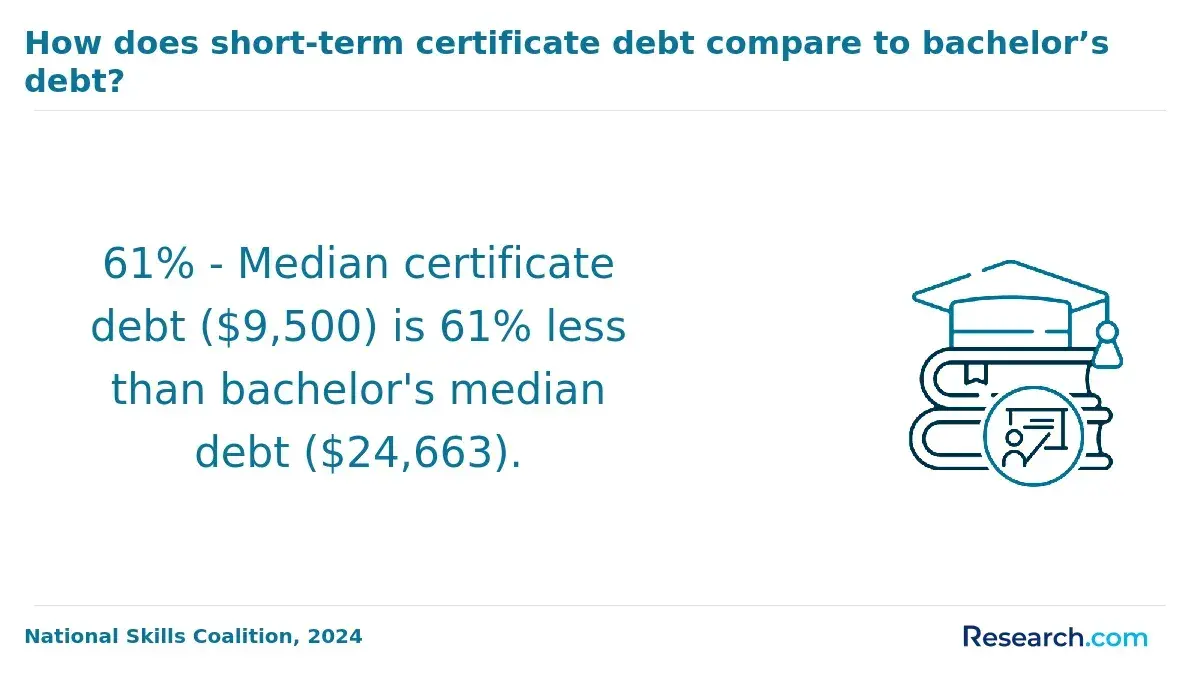
BLS 2024 data shows bachelor's degree holders had median weekly earnings of $1,543, compared with $930 for workers whose highest education was a high school diploma. That gap shows why degree completion matters, but it does not mean every bachelor's degree produces the same financial outcome. A student's major and work experience can matter as much as, or more than, whether the degree is a BA or BS.
The table below shows how to evaluate salary potential without overreading the degree abbreviation. It is designed to help you connect curriculum choices with labor-market value.
| Salary factor | Why it matters | What to check before choosing |
| Major and specialization | Occupational pay varies widely across fields such as engineering, education, computing, social science, and business | Compare actual job titles connected to the major, not only the department name |
| Technical skill depth | Data, programming, lab, finance, statistics, and software skills can expand access to higher-paying roles | Review required courses, electives, software tools, projects, and capstone expectations |
| Internships and experience | Work experience can improve entry-level competitiveness and help students clarify career fit | Ask how often students complete internships, co-ops, research assistantships, or client projects |
| Graduate or professional school | Some careers require advanced degrees, licenses, or certifications before earnings rise substantially | Confirm whether the BA or BS includes prerequisites for the next credential |
| Geography and industry | Pay differs by region, cost of living, public vs private sector, and industry demand | Review job postings in your target city or remote-work market |
A common mistake is assuming a BS always pays more than a BA. That can be true in some technical majors, but it is not a rule. A BA student who completes internships, develops data skills, builds a portfolio, and chooses a strong industry may outperform a BS student who graduates without practical experience.
To evaluate long-term earning power, compare likely entry-level roles, promotion paths, and whether the degree prepares you for credentials that unlock higher responsibility. For example, management, analytics, product, clinical, finance, law, and graduate research paths may all require different combinations of undergraduate coursework and later training.
How do BA and BS curricula, coursework, and credit requirements typically compare?
Most BA and BS degrees require similar total credits, but they distribute those credits differently. A BA often leaves more room for electives, minors, interdisciplinary work, or language study. A BS often uses more credits for major requirements, lab sequences, advanced math, research methods, or technical electives.
This distinction matters most when you already know your target next step. A pre-med student, for example, must complete specific science prerequisites regardless of whether the transcript says BA or BS. A future data analyst should look for statistics, programming, databases, and applied projects. A future attorney may value logic, writing, debate, history, economics, or political science courses.
The comparison below shows typical curriculum patterns. Always confirm the requirements at the college level because departments can define BA and BS options differently.
| Curriculum component | BA pattern | BS pattern |
| General education | Often includes broad liberal arts distribution and may require foreign language | Often includes general education but may allow science or quantitative courses to satisfy more requirements |
| Major core | May include fewer required major credits and more room for electives | Usually includes more required major credits or more sequenced technical coursework |
| Math and statistics | May require introductory quantitative reasoning or statistics, depending on the major | More likely to require calculus, advanced statistics, analytics, or quantitative methods |
| Labs and research | May include research methods, fieldwork, writing seminars, or qualitative projects | More likely to include lab science, experimental design, technical research, or capstone projects |
| Elective flexibility | Often stronger for minors, double majors, study abroad, or interdisciplinary interests | Often more structured, with fewer free electives because of prerequisite chains |
Before you enroll, take these practical steps to avoid choosing the wrong curriculum path. They can help you compare programs more accurately than relying on marketing language.
- Download the official degree plan for both the BA and BS, not just the admissions page summary.
- Mark every course that is required for your target career, graduate program, license, or certification.
- Check whether prerequisites create sequencing issues that could delay graduation if you start part time or transfer.
- Ask whether internships, capstones, labs, clinical hours, or research projects are required or optional.
- Compare how many electives remain after required courses, especially if you want a minor or second major.
The biggest red flag is choosing the degree with the easier-looking course list without checking whether it supports your next step. A lighter math or lab load may be helpful if your goal is law, communications, or public service, but risky if your target graduate program expects technical prerequisites.
Which majors are usually offered as a BA vs a BS, and why does it matter?
Some majors are almost always offered as a BA, some are usually offered as a BS, and some are offered both ways. The overlap is where students need to pay the most attention. When a school offers both a BA and BS in the same field, the department is usually signaling two different academic pathways.
Majors tied to humanities, arts, language, history, philosophy, and cultural study are commonly BA degrees. Majors tied to engineering, natural science, health science, computer science, and quantitative fields are commonly BS degrees. Social sciences and business-related fields may go either way depending on the school's curriculum philosophy.
The table below shows common patterns and why they matter for planning. It does not replace a school's catalog, but it can help you know what to look for.
| Major area | Common BA option | Common BS option | Why the distinction matters |
| Psychology | Counseling preparation, social behavior, human development, applied settings | Research methods, neuroscience, statistics, lab work | Graduate programs may expect research and statistics preparation for clinical or experimental tracks |
| Computer science | Interdisciplinary computing, design, language, policy, digital humanities | Algorithms, systems, software engineering, math, computing theory | Technical employers may look for project depth, coding ability, and systems coursework |
| Biology | Science communication, environmental policy, education, public engagement | Lab science, molecular biology, physiology, pre-health preparation | Pre-health and lab roles often require specific science sequences |
| Economics | Policy, history of thought, social context, qualitative analysis | Econometrics, math economics, statistical modeling, analytics | Analytics, finance, and graduate economics programs may prefer quantitative depth |
| Public health | Community health, health education, policy, equity, communication | Epidemiology, biostatistics, environmental health, health data | Career fit depends on whether you want outreach, policy, data, or clinical-adjacent work |
It matters because the major name alone can hide important differences. A "biology degree" may or may not include enough chemistry for pre-med. A "computer science degree" may or may not include enough theory for certain software or graduate programs. A "psychology degree" may or may not include enough lab and statistics preparation for competitive research roles.
If you are undecided, the safest approach is to choose the path that keeps the most important doors open without pushing you into courses you are unlikely to complete successfully. For students who enjoy both communication and analytics, a BA plus a data-focused minor or a BS plus writing-heavy electives can be a strong hybrid strategy.
How should you choose between a BA and BS based on your skills and interests?
The right choice starts with fit. A BA may be better if you enjoy reading, writing, discussion, languages, theory, policy, culture, creativity, and people-centered analysis. A BS may be better if you enjoy math, science, technology, experiments, coding, technical systems, data, and structured problem solving.
Fit does not mean choosing only what feels easy. It means choosing the curriculum that you are motivated to complete and that builds credible preparation for your goal. If you dislike advanced math but want a data-heavy career, you may need support and practice rather than avoidance. If you love technical work but want leadership roles, communication-heavy electives can be just as valuable as another technical course.
Use this decision sequence to narrow your choice. It works especially well when the same college offers both a BA and BS in your intended major.
- Write down three target outcomes: an entry-level job, a graduate program, and a backup career option.
- Review job postings and graduate admissions pages for required coursework, skills, software, prerequisites, or portfolio evidence.
- Compare the BA and BS degree maps side by side and identify which one covers more required preparation.
- Choose the BA if flexibility, writing, interdisciplinary study, or a second field strengthens your plan.
- Choose the BS if technical depth, lab work, math, research methods, or professional prerequisites are essential.
- Ask an academic advisor what happens if you switch from one track to the other after the first year.
Students who want speed should be careful. Accelerated formats can reduce time to completion, but only if the course load is realistic and transfer credits apply cleanly. If time is a major factor, compare BA and BS options against reputable fast-track career programs and ask whether acceleration changes internship access, lab availability, or graduate school preparation.
One common mistake is choosing a BS because it sounds more prestigious or choosing a BA because it sounds easier. Both assumptions can backfire. The better question is: which curriculum gives you the strongest evidence of readiness for the next opportunity you want?
Are BA and BS degrees viewed differently by employers, grad schools, or licensing boards?
Employers usually care more about major, school reputation, experience, skills, portfolio, internships, GPA when relevant, and interview performance than whether the degree is a BA or BS. However, in technical fields, the BS curriculum may more clearly signal preparation in math, lab science, computing, or quantitative methods. In communication-heavy, policy, education, arts, or humanities-related fields, a BA can be just as appropriate or stronger.
Graduate schools evaluate prerequisites, grades, recommendations, research experience, writing ability, test scores when required, and fit with the program. Some programs do not care whether the bachelor's credential is a BA or BS as long as required courses are completed. Others, especially in engineering, data science, laboratory science, or health-related fields, may expect specific technical prerequisites that are more commonly built into a BS.
Licensing boards are different because they follow formal rules. Teacher licensure, nursing, engineering, accounting, counseling, social work, and healthcare pathways may require specific accredited programs, supervised hours, exams, or state-approved coursework. The BA or BS label matters less than whether the program satisfies the board's requirements.
Ask these questions before assuming a BA or BS will qualify you for a regulated career. Requirements can vary by state and by profession.
- Does the program meet the education requirements for the state where I plan to work?
- Is the degree connected to specialized accreditation required or preferred in the field?
- Are clinical, practicum, lab, student teaching, or supervised experience hours included?
- Will online, transfer, or accelerated courses be accepted by the licensing board?
- Does the program publish exam pass rates, placement outcomes, or graduate school admission support?
If your long-term plan includes graduate study, look ahead early. Some students choose a BA for flexibility and later pursue master's or doctoral study; others choose a BS to complete prerequisites sooner. Students comparing advanced routes may also want to understand options such as the shortest PhD programs, but they should still verify admission requirements, accreditation, and whether the program structure fits their academic goals.
How do online BA and BS programs compare to campus-based options in quality and outcomes?
Online BA and BS programs can be high quality when they are offered by accredited institutions, taught by qualified faculty, and designed with strong student support. The delivery format alone does not determine quality. What matters is whether the program provides the coursework, interaction, advising, assessment, and career preparation students need.
Online programs often work well for working adults, parents, military learners, transfer students, and students who need geographic flexibility. Campus programs may be better for students who want face-to-face labs, residential life, in-person networking, athletic participation, studio work, or direct access to research facilities. Hybrid programs can offer a middle ground, especially for science, health, education, or technical fields that require hands-on components.
The table below compares format differences that can affect learning and outcomes. Use it to identify trade-offs, not to assume one format is always better.
| Factor | Online BA or BS | Campus-based BA or BS |
| Schedule flexibility | Often stronger for working students, especially with asynchronous courses | More structured weekly schedule with set class meeting times |
| Hands-on learning | May require local placements, simulations, virtual labs, or short residencies | Often easier access to physical labs, studios, clinics, and campus research spaces |
| Networking | Depends on virtual events, discussion boards, alumni networks, and career services | Often easier through campus clubs, faculty office hours, events, and peer interaction |
| Student support | Quality varies; strong programs offer online tutoring, advising, library access, and tech support | Support may be easier to access in person, but availability still varies by institution |
| Employer perception | Generally strongest when the institution is accredited and the transcript does not suggest a lower-quality shortcut | Generally familiar to employers, especially when paired with internships or campus recruitment |
For online BS programs, check lab, clinical, practicum, or internship requirements early. Some programs require students to find local placements, travel for intensives, or complete proctored assessments. For online BA programs, check whether writing feedback, discussion quality, faculty access, and career advising are strong enough to support your goals.
A major red flag is an online program that advertises extreme speed, unusually low effort, or guaranteed employment. Legitimate online bachelor's programs still require substantial reading, assignments, assessments, and faculty evaluation.
What do accreditation standards mean for BA and BS programs, and how can you verify them?
Accreditation is one of the most important checks before enrolling in any BA or BS program. In the United States, institutional accreditation indicates that a college or university has been reviewed for academic quality, governance, student support, faculty qualifications, and financial stability. Programmatic accreditation may also matter for fields such as engineering, business, nursing, education, social work, public health, and computing.
The U.S. Department of Education's 2024 accreditation materials continue to emphasize that recognized accrediting agencies act as quality-review bodies for institutions and programs. For students, the practical meaning is simple: accreditation can affect transfer credits, financial aid eligibility, graduate school admission, employer recognition, and licensure pathways.
Follow these steps before applying or paying a deposit. They are especially important for online, accelerated, for-profit, or out-of-state programs.
- Confirm the institution's accreditor through official federal or accreditor databases, not only the school's website.
- Check whether your major requires programmatic accreditation for licensure, certification, or employer preference.
- Ask whether the BA or BS version of the major is included under the same accreditation status.
- Verify whether transfer credits, credit for prior learning, or alternative credits will apply to major requirements.
- For regulated careers, contact the licensing board in the state where you plan to work.
- Save written confirmation from admissions or advising if accreditation or licensure eligibility affects your decision.
Students planning graduate education should apply the same scrutiny to advanced programs. For example, if you later compare doctoral programs online no dissertation, accreditation, faculty supervision, capstone expectations, and employer acceptance should matter more than speed or convenience.
Common accreditation red flags include vague claims such as "internationally approved," pressure to enroll immediately, no clear accreditor name, unclear transfer policies, or a program that claims to meet licensure requirements in every state without documentation. If a school cannot answer accreditation questions clearly, keep looking.
How do program length, tuition costs, and financial aid differ between BA and BS pathways?
BA and BS programs usually take the same amount of time on paper: about four years of full-time study. In practice, time to completion depends on credit load, course sequencing, transfer credits, remedial requirements, major changes, internships, labs, and whether the student attends full time or part time. A BS with strict prerequisite chains may be harder to accelerate if courses must be taken in sequence, while a BA may offer more elective flexibility.
Cost also depends more on school type, residency, credits required, and living expenses than on BA vs BS. College Board's 2024-25 data lists average published tuition and fees at $11,610 for in-state students at public four-year institutions and $43,350 at private nonprofit four-year institutions. That difference shows why comparing institutions, transfer options, and aid packages can matter more than the degree abbreviation.
The table below outlines cost factors that can change the real price of either degree. Use it to estimate total cost, not just annual tuition.
| Cost factor | How it can affect a BA | How it can affect a BS |
| Tuition and fees | Usually based on institution, residency, and credit hours rather than BA designation | Usually based on institution, residency, and credit hours rather than BS designation |
| Course materials | May include books, writing resources, language materials, or field experiences | May include lab fees, software, equipment, calculators, or technical supplies |
| Time to completion | Elective flexibility may help transfer students apply more credits | Sequenced math, lab, or technical courses may limit acceleration |
| Opportunity cost | Internships, study abroad, or double majors may extend time if not planned carefully | Labs, co-ops, clinical placements, or heavy course loads may affect work hours |
| Financial aid | Federal, state, institutional, and scholarship aid generally depends on eligibility and enrollment status | Federal, state, institutional, and scholarship aid generally depends on eligibility and enrollment status |
To reduce costs, compare net price rather than sticker price. Net price accounts for grants and scholarships that do not need to be repaid. Also ask how transfer credits apply to the major, not only to elective credit, because unused transfer credits can still leave you paying for extra semesters.
Before committing, take these cost-control steps. They can help you avoid debt that does not support your career plan.
- Request a written degree completion plan showing remaining credits, required courses, and estimated graduation term.
- Compare net price offers from multiple accredited schools before choosing the most familiar name.
- Ask whether summer courses, online courses, community college transfer credits, or credit for prior learning can reduce total cost.
- Check whether scholarships require full-time enrollment, minimum GPA, major declaration, or continuous attendance.
- Estimate loan repayment using conservative entry-level salary assumptions, not best-case salary claims.
If you expect to continue after a bachelor's degree, include graduate costs in your planning. Students comparing future options may want to research affordable online master's programs early so they can choose undergraduate coursework that supports admission while keeping total education debt manageable.
Other Things You Should Know About
Not necessarily. A BA may have fewer lab or advanced math requirements, but it can be demanding in writing, reading, research, language, and analysis. A BS may feel harder for students who dislike quantitative work, but easier for students who prefer structured technical problem solving.
Most employers focus on your major, skills, experience, internships, portfolio, and interview performance. A BS may help signal technical preparation in some STEM or analytics roles, while a BA can be highly relevant for communication, policy, business, education, and people-centered roles.
Often yes, but it depends on the school and how far you are into the curriculum. Switching from BA to BS may add math, lab, or technical prerequisites, while switching from BS to BA may free electives but change graduate school preparation.
The better option is the one that satisfies the graduate program's prerequisites. Many programs accept either degree, but science, health, engineering, data, and research-heavy programs may expect coursework more commonly found in a BS.
References
- B.A. vs. B.S. Degrees — What’s the Difference? | Coalition for College https://www.coalitionforcollegeaccess.org/mycoalition-counselor-all/ba-vs-bs-degrees
- What Is College Accreditation? How to Check If a School Is Legit https://abound.college/finishcollege/advice/accreditation-why-is-it-so-important/
- What is the difference between BA and BSc degrees? https://www.rcl.ac.uk/news/difference-between-ba-and-bsc/
- How a Bachelor’s Degree Boosts Earning Potential https://www.snu.edu/blog/how-a-bachelors-degree-boosts-earning-potential
- What Does Accredited Mean and Why Should You Care? https://www.ets.org/grad-school-journey/what-is-accredited.html
- Undergraduate Tuition & Financial Aid https://www.baypath.edu/admissions-aid/undergraduate-admissions/tuition-financial-aid/
- How does a college degree improve graduates’ employment and earnings potential? - APLU https://www.aplu.org/our-work/4-policy-and-advocacy/publicuvalues/employment-earnings/
- How to Choose a BS/MD Programs - Ultimate Guide https://www.collegeadvisor.com/resources/choose-bs-md-programs/
- Benefits of a College Degree on Salary & Earning Potential | UMass Global https://www.umassglobal.edu/blog-news/how-college-impacts-salary-and-future-earning-potential
- Online Degree vs. Traditional: Choosing the Right Path https://beal.edu/online-degree-vs-traditional/