2027 How to Choose a Major if You Want Flexibility After Graduation

Co-Founder and Chief Data Scientist
Choosing a major feels risky when job titles, technologies, and employer expectations keep shifting. The U.S. Bureau of Labor Statistics projects total employment to grow 4% from 2023 to 2033, but growth is uneven across fields, making flexibility a practical advantage rather than a backup plan.
This guide is for students who want strong career options without locking themselves into one narrow role. You will learn how to compare majors, skills, program formats, costs, credentials, and career outcomes so you can choose a degree that supports several realistic paths after graduation.
Key Things You Should Know
- A flexible major combines broad employer demand with portable skills such as data analysis, writing, problem-solving, teamwork, and digital fluency; BLS projections published in 2024 show especially strong growth in several analytical, healthcare, technology, and management roles through 2033.
- College Board data for 2024-25 lists average published tuition and fees of $11,610 at public four-year in-state colleges and $43,350 at private nonprofit four-year colleges.
- The safest choice is usually a major with room for electives, internships, certificates, or a minor, because these add career direction without forcing you to restart your degree if your goals change.
How can you choose a major that keeps multiple career paths open after graduation?
The best way to choose a flexible major is to start with career families, not a single dream job. A flexible major is one that can lead to multiple occupations, works across industries, and lets you add technical or specialized skills through electives, internships, minors, certificates, or graduate study.
Use the process below to narrow your choices without overcommitting too early:
- List three to five career clusters you could genuinely see yourself exploring, such as business, healthcare, technology, education, public service, media, or research.
- Look for overlap between those clusters and majors that build broad capabilities, such as communication, analytics, finance, psychology, biology, computer science, public health, or management.
- Check whether the major has structured electives, concentrations, or experiential learning that can point you toward different industries.
- Compare entry-level job postings for roles connected to the major and note repeated skills, software tools, certifications, and experience requirements.
- Ask the department for graduate outcome data, internship partners, employer connections, transfer policies, and examples of alumni job titles.
The goal is to identify majors that fit your interests while still giving you practical options in the labor market.
A common mistake is choosing a major only because it sounds broad. Broad is helpful only when the curriculum builds marketable skills and gives you evidence of experience before graduation.
| Common mistake | Why it limits flexibility | Better approach |
| Choosing a major based only on popularity | Popular programs can still vary widely in curriculum quality, advising, internships, and employer access. | Compare courses, outcomes, experiential learning, and alumni paths before deciding. |
| Avoiding all specialization | Employers often want proof that you can do specific work, not just general knowledge. | Pair a broad major with a focused minor, certificate, portfolio, or internship. |
| Assuming one major equals one career | Many careers accept several academic backgrounds, while some licensed roles require exact prerequisites. | Map your target roles to required degrees, recommended skills, and optional credentials. |
| Ignoring prerequisite chains | STEM, healthcare, and some business tracks may require sequenced courses that delay graduation if started late. | Review the four-year plan and meet an advisor before switching or declaring. |
Which majors and degree types typically offer the greatest career flexibility?
Majors with the greatest flexibility usually fall into two categories: broad applied majors that match many job functions, and technical majors that can be used in multiple industries. The right choice depends on whether you want flexibility through breadth, specialized skills, or a combination of both.
The table below compares common flexible majors by the type of adaptability they offer. Use it to think about where each major can take you, not as a guarantee of any one job outcome.
| Major or degree area | Why it can be flexible | Possible career directions | Best fit |
| Business administration or management | Covers operations, finance, marketing, people management, and strategy. | Sales, operations, human resources, consulting, entrepreneurship, project coordination. | Students who want broad private-sector or nonprofit options. |
| Computer science or information systems | Technical skills apply across finance, healthcare, retail, government, education, and media. | Software development, data, cybersecurity, product support, systems analysis. | Students who enjoy logic, problem-solving, and continuous technical learning. |
| Data analytics, statistics, or applied mathematics | Organizations in many fields need people who can interpret data and support decisions. | Data analysis, business intelligence, operations research, marketing analytics, research support. | Students who like numbers, patterns, evidence, and decision-making. |
| Communication, English, or writing | Clear writing, persuasion, editing, and audience analysis are useful in many fields. | Marketing, public relations, technical writing, content strategy, internal communications. | Students who want people-centered work and can build digital or industry-specific skills. |
| Psychology or sociology | Builds understanding of behavior, research, groups, and social systems. | Human services, HR, user research, market research, case management, graduate study. | Students interested in people, organizations, research, or helping professions. |
| Biology, health science, or public health | Can support healthcare, research, public agencies, biotech, and graduate professional paths. | Clinical preparation, lab work, health education, public health, regulatory support. | Students considering health-related careers but still comparing clinical and nonclinical options. |
| Economics, finance, or accounting | Quantitative and business knowledge transfers across industries and organization types. | Financial analysis, accounting, banking, policy analysis, risk, consulting. | Students who want structured analytical careers with clear advancement paths. |
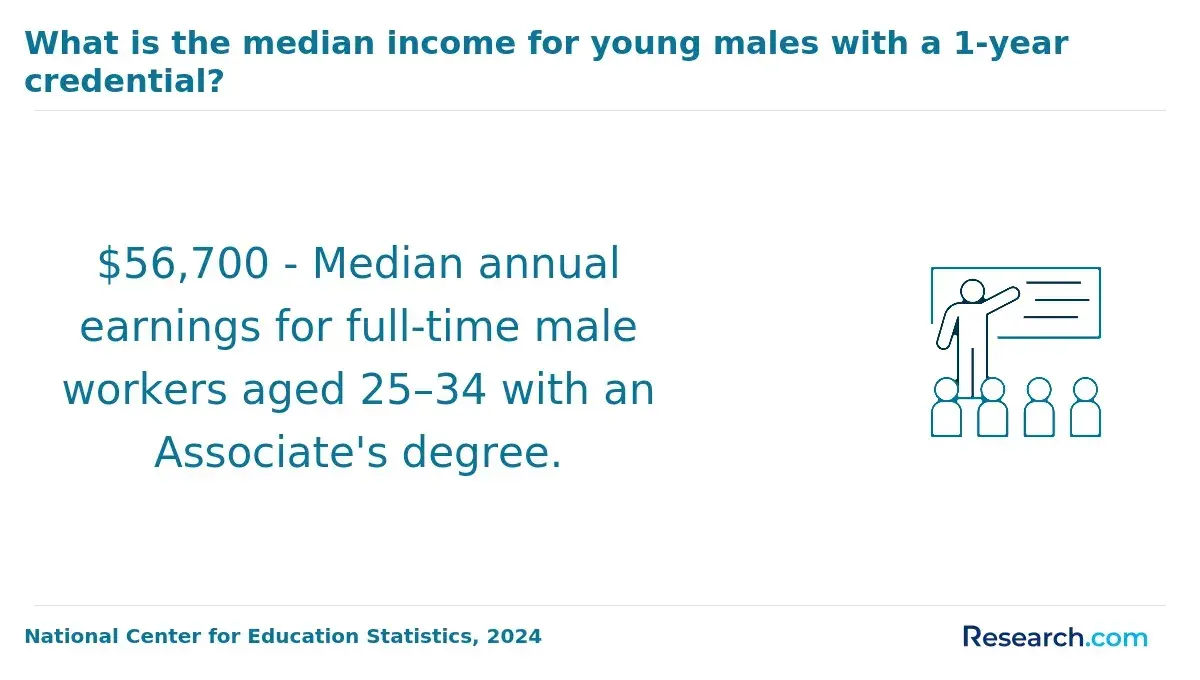
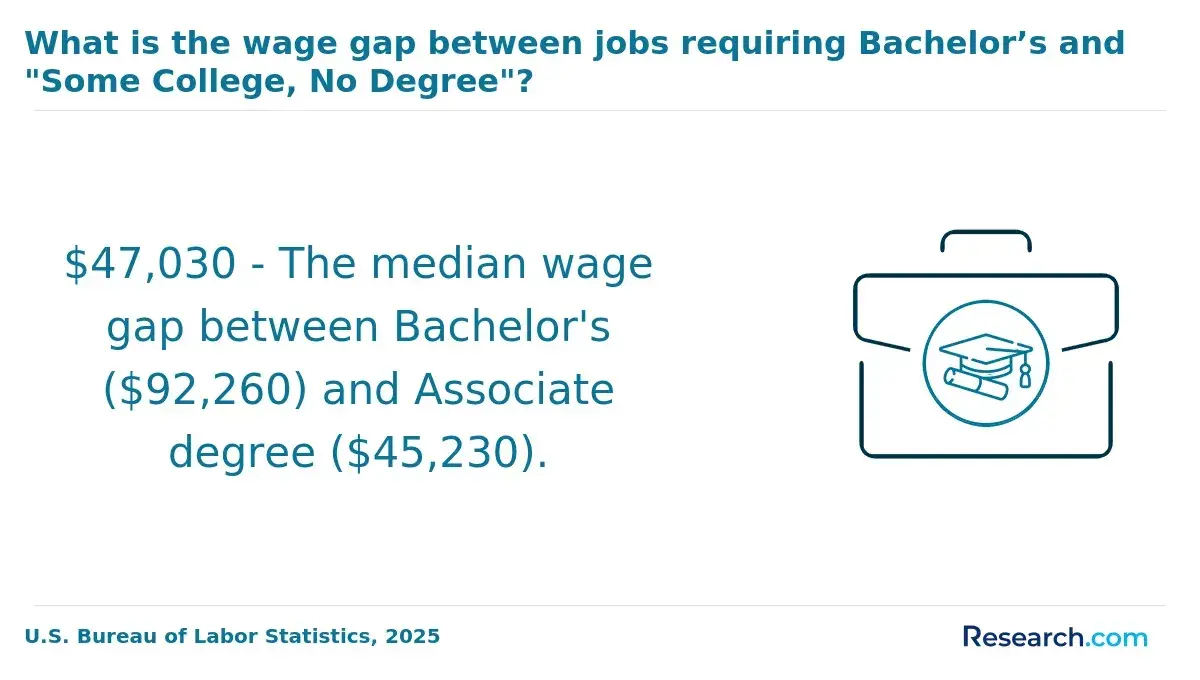
Degree type matters, too. An associate degree can be a lower-cost starting point, a bachelor's degree is the most common baseline for many professional roles, and a master's degree can help with advancement or career pivots. If you already have a bachelor's degree and need a faster graduate credential, comparing 12-month master's programs online can be useful, but only if the program's curriculum and outcomes match your target field.
What transferable skills should you prioritize when selecting a flexible major?
Transferable skills are the abilities that remain valuable even if your job title, industry, or technology stack changes. A flexible major should help you build these skills through graded projects, labs, presentations, writing assignments, internships, or portfolios, not just through course descriptions.
Prioritize the following skill categories when comparing majors and programs:
- Analytical thinking: Choose courses that require interpreting evidence, working with data, evaluating trade-offs, and defending recommendations.
- Communication: Look for writing-intensive classes, presentations, client-style projects, and opportunities to explain complex ideas to nonexperts.
- Digital fluency: Build comfort with spreadsheets, databases, collaboration tools, analytics platforms, basic coding, or field-specific software.
- Research and information literacy: Learn how to locate credible sources, assess evidence, summarize findings, and avoid unsupported conclusions.
- Project management: Seek courses where you manage deadlines, coordinate with teams, document decisions, and deliver a finished product.
- Ethical judgment: Flexible careers often involve data, people, money, or public impact, so you need practice recognizing risks and responsibilities.
These are especially important because AI and automation are changing routine work, while employers still need people who can frame problems, communicate judgment, and apply tools responsibly.
One practical test is to ask whether you will graduate with proof of these skills. A transcript helps, but employers often respond better to work samples, internship evaluations, research posters, coding repositories, case competitions, lab experience, or capstone projects.
How do online, hybrid, and campus-based programs compare for flexible majors?
Online, hybrid, and campus-based programs can all support flexible majors, but they fit different students. The best format is the one that lets you complete the degree, access the right experiences, and build credible evidence of skill.
The comparison below shows how each format affects scheduling, networking, hands-on learning, and career flexibility. Use it to identify trade-offs before focusing only on convenience.
| Program format | Strengths | Limitations | Best fit |
| Online | Flexible scheduling, wider school choice, often better for working adults or students with family responsibilities. | May require more self-direction; some programs offer fewer in-person labs, clubs, or local employer events. | Students who need schedule control and can create networking opportunities intentionally. |
| Hybrid | Combines online convenience with some campus access for labs, advising, presentations, or networking. | Campus requirements may be difficult if you live far away or work unpredictable hours. | Students who want flexibility but still benefit from occasional face-to-face support. |
| Campus-based | Stronger access to labs, student organizations, faculty, career fairs, and peer networks. | Less scheduling flexibility and may involve housing, commuting, or relocation costs. | Students who want a traditional college environment or need in-person facilities. |
For students trying to move quickly into the workforce or reduce upfront costs, starting with 1-year associate degree programs may make sense if credits transfer cleanly into a bachelor's program. Before enrolling, confirm transfer agreements, accreditation, course equivalencies, and whether the shortened timeline still includes the prerequisites your future major requires.
How do accreditation and program reputation affect long-term career flexibility?
Accreditation affects flexibility because it influences credit transfer, graduate school eligibility, employer trust, and access to federal financial aid. At a minimum, choose an institution accredited by an agency recognized by the U.S. Department of Education or the Council for Higher Education Accreditation.
Program reputation also matters, but it should be evaluated carefully. A famous school name can help in some networks, but strong advising, relevant curriculum, employer partnerships, licensure alignment, internship access, and alumni outcomes may matter more for day-to-day career mobility.
Check these items before you commit, especially if you may transfer, pursue graduate school, or enter a regulated field:
- Verify institutional accreditation through official accreditation databases rather than relying only on marketing language.
- Look for specialized accreditation when it matters, such as ABET for some engineering and computing programs, AACSB or ACBSP for business, CCNE or ACEN for nursing, or CAEP for educator preparation.
- Ask whether credits transfer to public universities in your state and whether the school has articulation agreements.
- Review licensure disclosures if the major leads to nursing, teaching, counseling, social work, accounting, engineering, or another regulated profession.
- Request career outcome data by program, not just schoolwide employment figures.
Red flags include pressure to enroll immediately, vague accreditation claims, unclear total cost, weak transfer policies, missing faculty information, and outcome data that cannot be separated by program. If a school cannot explain how its degree supports your next step, keep comparing options.
What admission requirements and prerequisites matter when applying to flexible majors?
Admission requirements can shape how flexible your major really is. Some majors let you explore for a year before declaring, while others require early prerequisite sequences that are harder to enter later.
Pay close attention to requirements in these areas. They can affect your timeline, cost, and ability to switch tracks without losing credits.
- Math placement: Business, economics, computer science, engineering, data analytics, and health science programs may require college algebra, statistics, calculus, or quantitative reasoning.
- Science prerequisites: Biology, nursing, public health, pre-medical, and allied health tracks often require sequenced lab sciences.
- Portfolio or audition requirements: Design, media, music, theater, and architecture programs may require evidence of prior creative work.
- Minimum GPA rules: Some competitive majors require a separate internal application after you complete first-year courses.
- Background checks or clinical requirements: Education, healthcare, and human services programs may require immunizations, clearances, or field placement eligibility.
- Transfer-credit limits: Schools may cap how many outside credits apply to the major, concentration, or final residency requirement.
If speed is a major concern, an accelerated degree program can reduce time in school, but it may leave less room to explore electives or change direction. Ask an advisor to show you what happens if you switch majors after one semester, one year, or after completing prerequisites.
How should you evaluate curriculum, electives, and concentrations for future adaptability?
A flexible major should not be a random collection of general courses. It should have a clear core, room to specialize, and enough electives to adapt as your goals become more specific.
When reviewing a curriculum, look beyond the major title. The checklist below helps you judge whether the program gives you both structure and room to pivot:
- Confirm that the core courses build durable skills, such as research, analysis, communication, ethics, quantitative reasoning, and technology use.
- Check whether electives can be grouped into marketable themes, such as data analytics, healthcare administration, digital marketing, public policy, cybersecurity, UX research, or nonprofit management.
- Look for a required capstone, practicum, internship, lab, consulting project, or research experience that produces evidence of your abilities.
- Ask whether you can add a minor or certificate without extending graduation.
- Review how often key courses are offered, because a flexible-looking plan can become rigid if required classes are available only once per year.
- Compare free electives with major electives; free electives usually offer more room to explore another field.
Graduate curriculum deserves the same scrutiny. Shorter options, including fast masters degrees, can be useful for career changers, but they work best when you already know the role, credential, or skill gap you are trying to address.
What are the typical costs, funding options, and time to completion for flexible degrees?
Flexible degrees vary widely in cost because tuition, fees, housing, transfer credits, course load, and time to completion all matter. College Board data for 2024-25 gives a useful starting point for published tuition and fees, but your net price may be lower after grants, scholarships, employer benefits, or state aid.
Common published tuition-and-fee benchmarks include the following. These figures are averages, so always compare the school's net price calculator and your full cost of attendance.
- Public two-year in-district colleges: $4,050
- Public four-year in-state colleges: $11,610
- Public four-year out-of-state colleges: $30,780
- Private nonprofit four-year colleges: $43,350
The table below summarizes typical time-to-completion patterns. Use it to estimate opportunity cost, not just tuition.
| Path | Typical completion time | Cost considerations | Flexibility trade-off |
| Associate degree to bachelor's transfer | About two years plus remaining bachelor's requirements | Can lower early tuition costs if credits transfer efficiently. | Requires careful planning to avoid excess credits. |
| Traditional bachelor's degree | About four years full time | Housing, fees, books, and lost work hours can be significant. | Often offers more time for exploration, internships, and campus networks. |
| Accelerated bachelor's pathway | Varies by credit load and transfer credit | May reduce time costs but can require heavier terms. | Less room to change majors or add exploratory electives. |
| Part-time degree | Often longer than full time | Can allow continued income and employer tuition assistance. | Longer timelines may delay career transitions. |
| Master's degree after bachelor's | Often one to three years depending on program and enrollment intensity | Best evaluated against the specific career move it supports. | Can add specialization after a broad undergraduate major. |
Funding options may include federal grants, state grants, institutional scholarships, work-study, employer tuition assistance, military or veteran benefits, and federal student loans. The biggest mistake is comparing only sticker tuition; instead, compare net price, debt at graduation, transfer credit acceptance, graduation rates, required fees, and the realistic salary range for your target roles.
Which careers, salaries, and job outlooks align with flexible majors and broad skill sets?
Flexible majors can lead to many occupations, but outcomes depend on internships, geography, industry, technical skills, graduate education, licensing rules, and employer needs. Use salary and outlook data as a planning tool, not a promise.
The table below uses U.S. Bureau of Labor Statistics wage and outlook data published in 2024, including May 2024 median annual wage figures and 2023-33 employment projections. It highlights roles commonly connected to broad, adaptable majors and skill sets.
| Career path | Related flexible majors | Typical responsibilities | Median annual wage | Projected growth, 2023-33 |
| Market research analyst | Marketing, business, communication, statistics, psychology | Analyze customer behavior, market data, surveys, and campaign performance. | $76,950 | 8% |
| Management analyst | Business, economics, public administration, data analytics | Evaluate operations, recommend improvements, and support organizational change. | $101,190 | 11% |
| Accountant or auditor | Accounting, finance, business | Prepare financial records, assess compliance, analyze costs, and support reporting. | $81,680 | 6% |
| Software developer | Computer science, information systems, software engineering | Design, build, test, and improve applications or systems. | $133,080 | 17% |
| Data scientist | Data analytics, statistics, computer science, mathematics | Use data, models, and tools to solve complex organizational problems. | $112,590 | 36% |
| Human resources specialist | Business, psychology, communication, sociology | Support recruiting, employee relations, benefits, training, and compliance. | $72,910 | 8% |
| Medical and health services manager | Health administration, public health, business, nursing | Coordinate healthcare facilities, departments, budgets, staff, and compliance work. | $117,960 | 29% |
These paths show why flexibility is not the same as being undecided. A student who majors in communication but adds analytics and internships may pursue marketing or user research; a biology major with public health coursework may move toward health education, clinical preparation, or healthcare administration; a business major with information systems electives may target operations, product support, or analytics.
AI is also changing how flexible majors translate into work. Roles that rely only on routine content, basic reporting, or repetitive administrative tasks may face more automation pressure, while workers who can use AI tools, verify outputs, communicate recommendations, and understand business context may be better positioned.
How can minors, certificates, and internships expand the flexibility of your major choice?
Minors, certificates, and internships are the fastest ways to give a broad major a sharper career direction. They help you test interests, build evidence, and signal practical skills without necessarily changing your primary degree.
Use add-ons strategically rather than collecting credentials at random. The best combinations make your story easier for employers or graduate programs to understand.
- Pair a people-focused major with a technical add-on: Psychology, sociology, communication, or English can become more career-ready with data analytics, UX, HR, digital marketing, or information systems.
- Pair a technical major with a business or communication add-on: Computer science, biology, statistics, or engineering students can benefit from entrepreneurship, management, technical writing, policy, or ethics.
- Use certificates for tool-based skills: Certificates can be useful for project management, cybersecurity foundations, bookkeeping, GIS, data visualization, medical coding, or digital marketing when they align with job postings.
- Treat internships as career experiments: One internship can confirm an interest, while another can help you rule out a path before graduation.
- Build a portfolio: Save projects, writing samples, dashboards, research summaries, presentations, lab work, or case studies that demonstrate what you can do.
Some students eventually add graduate education for leadership, research, clinical, or academic goals. If you are comparing advanced formats later, options such as an online PhD no dissertation may appear attractive, but you should verify accreditation, employer recognition, research expectations, and whether the degree fits your long-term field.
Other Things You Should Know About Choosing a Major
There is no single most flexible major for every student. Business, computer science, data analytics, communication, psychology, economics, biology, and public health can all be flexible when paired with strong electives, internships, and transferable skills.
Choose a broad major if you are still comparing career families and want room to pivot. Choose a specialized major if your target career has specific prerequisites, licensure rules, or technical requirements. Many students get the best balance by choosing a broad major with a focused minor or certificate.
No, but it can become costly if you ignore prerequisite sequences or delay planning too long. If you are undecided, take general education courses that apply to several majors, meet with advisors early, and explore careers through introductory courses, job shadowing, and internships.
Compare net price, likely debt, graduation timeline, transfer credits, internship access, and realistic career options. A flexible major is more likely to be worth it when it builds demonstrable skills and connects to several roles you would actually pursue.
References
- How Accreditation Impacts Student Success and Employability https://ukeducationbridge.co.uk/how-accreditation-impacts-student-success-and-employability/
- Flexibility of Study in North America — Go Campus Scholarship Program https://gocampus.us/blog/flexibility-study-north-america/
- Hybrid Programs- Which Students Want Them? https://encoura.org/resources/wake-up-call/hybrid-programs-which-students-want-them/
- Online vs Hybrid vs Campus Learning in Healthcare: Which Is Right for You? https://www.edumed.org/articles/online-vs-hybrid-vs-campus/
- Beyond Recognition: How Accreditation Impacts Career Mobility and Leadership Credibility - Acacia https://acacia.edu/blog/beyond-recognition-how-accreditation-impacts-career-mobility-and-leadership-credibility/
- Online Degree vs. Traditional: Choosing the Right Path https://beal.edu/online-degree-vs-traditional/
- Online and hybrid college programs explained. Flexibility, risk, and the real value equation | CG https://collegegrind.org/posts/online-and-hybrid-college-programs-explained/
- Accreditation as a Strategic Driver of Alignment Across Higher Education and Industry https://acbspjournal.org/2026/05/22/accreditation-as-a-strategic-driver-of-alignment-across-higher-education-and-industry/