2027 How to Choose a Major if You Plan to Go to Graduate School

Co-Founder and Chief Data Scientist
Choosing a major becomes more complicated when graduate school is part of the plan, because your undergraduate record may need to support admissions, prerequisites, licensing, and future career options. The stakes are real: the Bureau of Labor Statistics reported that workers with a master's degree had median weekly earnings of $1,840 in 2024, compared with $1,543 for bachelor's degree holders.
This guide is for students comparing majors before applying to law, medical, business, education, STEM, health, or research-focused graduate programs. You will learn how to choose a major that keeps doors open without wasting credits, time, or money.
Key Things You Should Know
- Your best undergraduate major depends less on prestige and more on fit with your target graduate program, required prerequisites, GPA strength, and relevant experience.
- BLS 2024 data shows master's degree holders had median weekly earnings of $1,840, but outcomes depend heavily on occupation, licensing, location, and debt.
- Before declaring a major, compare total cost, accreditation, prerequisite overlap, research or internship access, and whether the major leaves a practical backup career if graduate admission is delayed.
What should you major in if you plan to attend graduate school?
The best major for graduate school is usually the one that helps you earn strong grades, complete required prerequisites, build relevant experience, and explain a clear academic direction. Graduate admissions committees rarely reward a difficult major by itself if the rest of the application is weak. They usually look for evidence that you can handle advanced work in the field you want to enter.
Start by identifying the graduate degree first, then work backward to the undergraduate major. If you are still exploring options, reviewing lists of best majors can help you compare fields by flexibility, career relevance, and preparation for further study.
The table below summarizes common undergraduate major choices and when they tend to make sense for graduate-school-bound students. Use it to compare fit, not as a rule that every applicant must follow:
| Graduate school goal | Common undergraduate major options | Why it can work | Main caution |
| Medical, dental, pharmacy, or physician assistant school | Biology, biochemistry, neuroscience, chemistry, public health, or any major with required science courses | These majors often overlap with lab science prerequisites and help students prepare for standardized exams. | A science major is not required for many health professional schools, and GPA can matter more than the label of the major. |
| Law school | Political science, philosophy, English, history, economics, business, or STEM fields | Strong writing, reasoning, reading, and analytical skills are valuable for law admissions and legal study. | There is no required pre-law major, so choosing one only because it sounds "legal" can be limiting. |
| MBA or business graduate programs | Business, economics, accounting, finance, data analytics, engineering, or communications | Quantitative, leadership, and work-experience preparation can support business school readiness. | Many MBA programs value professional experience, so the major alone may not be enough. |
| Psychology, counseling, or social work graduate programs | Psychology, human services, sociology, social work, education, or neuroscience | These majors can provide research methods, human behavior, and service-learning foundations. | Licensure tracks often require very specific graduate program accreditation and supervised hours. |
| Engineering, computer science, or data science graduate programs | Engineering, computer science, mathematics, statistics, physics, or information systems | Advanced quantitative coursework and technical projects can demonstrate graduate-level readiness. | Applicants from unrelated majors may need bridge coursework before admission. |
| Education, public policy, or public administration | Education, subject-area majors, public policy, sociology, political science, economics, or communications | These programs often value field experience, writing ability, and a clear service or leadership focus. | Teacher licensure and school leadership requirements vary by state. |
A strong major choice should pass three tests: it should prepare you academically, support your application story, and still have value if your graduate plans change. That last point matters because even motivated students may take gap years, change interests, or need to work before continuing school.
How does your intended graduate program affect your major choice?
Your intended graduate program affects your major choice by determining which prerequisites, skills, exams, experiences, and application materials matter most. A student planning for medical school needs a different undergraduate strategy from a student planning for a master's in public policy, even if both students are strong writers and high achievers.
Think of graduate programs in four broad categories. Each category values different evidence of readiness:
| Graduate program type | What admissions usually emphasizes | Major-choice implication | Examples of useful preparation |
| Professional health programs | Prerequisite sciences, patient-facing experience, GPA, entrance exams, and service | Choose a major that lets you complete science labs without overloading every semester. | Biology, chemistry, anatomy, statistics, volunteering, clinical exposure, research, and shadowing where appropriate |
| Research master's or PhD programs | Research experience, faculty recommendations, methods training, writing sample, and fit with faculty interests | Choose a major with thesis options, lab access, advanced seminars, or independent study. | Research assistantships, statistics, methods courses, conference posters, senior thesis, and faculty mentoring |
| Law, policy, and humanities programs | Reading, writing, reasoning, argumentation, GPA, and evidence of intellectual maturity | Choose a major that develops sustained writing and critical analysis, not just content knowledge. | Writing-intensive courses, logic, economics, history, ethics, debate, internships, and policy analysis |
| Business, analytics, and management programs | Quantitative readiness, leadership, work experience, recommendations, and career clarity | Choose a major that builds marketable skills while leaving room for internships and projects. | Accounting, finance, statistics, coding, operations, consulting projects, entrepreneurship, and leadership roles |
If you are undecided between two graduate paths, choose the major that preserves the most prerequisites and keeps your GPA realistic. For example, a biology major can fit several health paths, but a public health major with the right science electives may offer a better balance for a student who also wants policy, epidemiology, or nonprofit options.
Which majors best prepare you for competitive graduate admissions?
Majors that best prepare students for competitive graduate admissions are not always the hardest majors. They are the majors that create a strong application pattern: rigorous coursework, high grades, relevant experience, strong recommendations, and clear motivation.
A 2024 BLS education analysis also shows why advanced planning matters: occupations requiring a master's degree for entry are projected to grow faster than the average for all occupations from 2023 to 2033, which can increase competition in fields where graduate credentials are valued.
The comparison below shows what "competitive preparation" looks like across different major types. The goal is to identify what each path can prove to an admissions committee:
| Major type | Strength for graduate admissions | Best fit | Potential weakness to manage |
| STEM majors | Demonstrate quantitative rigor, lab skills, problem-solving, and technical fluency | Health professions, engineering, computer science, data science, economics, and research programs | Heavy course loads can make GPA management harder if support systems are weak. |
| Social science majors | Build research literacy, statistics, policy analysis, and understanding of human behavior | Psychology, social work, public policy, education, law, public health, and business analytics | Students may need extra quantitative or lab coursework for some STEM-heavy programs. |
| Humanities majors | Develop writing, interpretation, argumentation, ethics, and reading stamina | Law, humanities graduate study, education, communications, public policy, and some business programs | Students should add measurable skills such as data analysis, language proficiency, or internships. |
| Business majors | Provide applied knowledge in finance, accounting, management, marketing, or operations | MBA, accounting, analytics, management, entrepreneurship, and public administration | Applicants to research-heavy programs may need more methods, theory, or advanced quantitative coursework. |
| Interdisciplinary majors | Allow students to connect fields such as technology, health, policy, ethics, and society | Emerging fields, public health, sustainability, data ethics, design, and policy programs | The student must explain the academic focus clearly so the transcript does not look scattered. |
To strengthen any major for graduate admissions, focus on evidence rather than assumptions. These elements matter because they give admissions committees concrete proof of readiness:
- Advanced coursework: Take upper-division classes related to your intended graduate field, especially if your major is broad.
- Faculty relationships: Build relationships with professors who can write detailed recommendations based on your work, not just your attendance.
- Research, internships, or clinical exposure: Use applied experiences to test your interest and produce examples for essays and interviews.
- Writing and quantitative proof: Keep strong papers, projects, presentations, coding work, lab reports, or portfolios that show your graduate-level potential.
- Consistent academic story: Make your electives, experiences, and personal statement point toward a coherent goal.
A common mistake is choosing a major because it sounds impressive while ignoring fit. A competitive transcript in a slightly less traditional major can be stronger than a weak transcript in a famous "pre-grad" major, especially when the student has completed the right prerequisites.
How do prerequisite courses shape your major decision?
Prerequisite courses can shape your major decision more than the major title itself. A prerequisite is a course you must complete before entering a graduate or professional program, such as organic chemistry for many health programs, statistics for psychology graduate programs, accounting for some business master's programs, or calculus for quantitative graduate tracks.
Some students save time by starting with lower-cost credits before transferring into a bachelor's program. If that is part of your strategy, an online associates degree may be worth comparing, but only if the credits transfer cleanly and include the prerequisites your future bachelor's and graduate programs require.
Use this sequence before declaring or changing your major:
- List three to five target graduate programs and copy their prerequisite courses exactly as written.
- Compare those prerequisites with the degree plan for each undergraduate major you are considering.
- Mark which courses count toward the major, general education, electives, or extra credits.
- Ask an academic advisor whether any prerequisite has a minimum grade requirement or expiration policy.
- Check whether labs, clinical hours, internships, field placements, or research methods courses are required.
- Create a four-year or transfer timeline that includes retakes, summer courses, exam preparation, and application deadlines.
The table below shows how prerequisite-heavy paths can affect major choice. It can help you see when a related major is efficient and when a different major with careful electives may work just as well:
| Graduate goal | Prerequisite pressure | Major strategy | Risk if ignored |
| Medical or dental school | High | Choose a major that allows multiple lab sciences without delaying graduation. | You may need a post-baccalaureate program before applying. |
| Law school | Low formal prerequisite pressure | Choose a major that strengthens writing, logic, reading, and GPA. | You may over-focus on "pre-law" branding instead of LSAT readiness and analytical skill. |
| Psychology graduate programs | Moderate to high | Include statistics, research methods, abnormal psychology, developmental psychology, and lab or research experience where relevant. | You may lack research preparation for competitive master's or doctoral programs. |
| Data science or analytics graduate programs | High for quantitative tracks | Build calculus, statistics, programming, databases, and linear algebra into the plan. | You may be admitted conditionally or required to complete bridge courses. |
| Teacher preparation graduate programs | Varies by state and subject | Match the undergraduate major with the teaching subject or licensure pathway. | You may need extra subject-area credits or state-specific exams. |
Do not assume an advisor from one department knows every requirement for every graduate pathway. For high-stakes paths such as health professions, teaching, counseling, architecture, and engineering, confirm requirements with both your undergraduate advisor and the graduate programs themselves.
Should you choose a major based on your career goals?
Yes, you should choose a major based on your career goals, but not only on the job title you want immediately after college. Graduate-school planning should connect your undergraduate major, advanced degree, licensing requirements, expected debt, and backup options into one realistic path.
A useful question is: "If I do not enter graduate school right away, what can I do with this bachelor's degree?" That question protects you from choosing a major that only works under one perfect scenario. It also helps you compare whether graduate school is necessary, optional, or potentially premature.
The table below compares how career goals can change the smartest undergraduate major strategy. It focuses on decision fit rather than ranking majors from best to worst:
| Career goal | Is graduate school usually needed? | Undergraduate major approach | Backup value to consider |
| Physician, dentist, pharmacist, veterinarian, or physical therapist | Yes, for professional practice | Choose any major that fits prerequisites, GPA strength, and clinical exposure. | Science, health, public health, research, or healthcare administration roles may be possible depending on experience. |
| Lawyer | Yes, a JD is required to practice law | Choose a major that builds writing, reasoning, reading, and analytical discipline. | Policy, compliance, business, communications, government, and nonprofit roles may be options. |
| Licensed counselor, therapist, or social worker | Usually yes, plus supervised experience and state licensure | Choose a major that introduces human behavior, research methods, ethics, and helping professions. | Case management, human services, community programs, and behavioral health support roles may fit. |
| Data scientist, engineer, or AI-focused professional | Sometimes, depending on specialization | Choose a major with strong math, computing, statistics, and project-based work. | Software, analytics, quality assurance, database, or technical support roles may provide entry points. |
| Professor or academic researcher | Usually yes, often a PhD | Choose a major with research methods, writing, faculty mentorship, and advanced seminars. | Research assistant, policy analyst, lab technician, technical writer, or education roles may help build experience. |
AI and automation are also changing how students should think about career goals. Majors that combine domain knowledge with data literacy, communication, ethical judgment, and applied technology can be more resilient than majors that teach only narrow task-based skills.
This does not mean every student should major in computer science; it means students in fields such as business, education, psychology, public health, and humanities should intentionally add technical and analytical competencies where relevant.
How important are accreditation and licensing requirements?
Accreditation and licensing requirements are critical when your graduate path leads to a regulated profession. Accreditation means a school or program has been reviewed against recognized quality standards. Licensing is legal permission to practice in a profession, usually controlled by a state board or professional authority.
For graduate-school planning, there are two accreditation levels to understand. Institutional accreditation applies to the college or university as a whole, while programmatic accreditation applies to specific fields such as nursing, counseling, social work, engineering, education, business, or architecture. Some graduate programs and licensing boards may care about both.
The table below explains where accreditation and licensing usually matter most. Requirements vary, so always confirm with the state board or professional body for your intended location:
| Field or pathway | Why accreditation matters | Why licensing matters | What to verify before choosing a major |
| Nursing, counseling, social work, teaching, and allied health | Programmatic accreditation may affect graduate admission, licensure eligibility, or employer acceptance. | Most roles require state approval, exams, supervised practice, or approved education. | Whether the undergraduate path supports admission into accredited graduate programs. |
| Engineering and architecture | Accredited undergraduate or graduate programs may affect professional licensure routes. | Licensure can be required for signing plans, public safety work, or professional title use. | Whether the bachelor's program meets expected technical standards for later licensing. |
| Business and accounting | Program accreditation may signal quality, though licensing rules depend on the profession. | CPA requirements vary by state and often include specific accounting credits beyond a bachelor's degree. | Whether your major includes the accounting and business credits required in your state. |
| Law | Law school accreditation matters more than the undergraduate major for bar eligibility. | Bar admission is controlled by state rules and character-and-fitness review. | Whether your undergraduate record supports law school admission and professional suitability. |
Red flags include vague accreditation claims, pressure to enroll before you can review licensure outcomes, unclear transfer policies, and programs that say they "prepare" students for licensed careers without stating whether graduates meet state requirements. If a profession requires a license, do not rely on marketing language; verify the rule directly.
What should you compare in graduate-ready degree programs?
Graduate-ready degree programs should be compared on more than major name and school reputation. You are looking for the undergraduate environment that helps you finish prerequisites, earn strong grades, access mentors, manage cost, and build evidence for your application.
Cost deserves special attention because graduate school may add another layer of debt. The College Board reported that average published tuition and fees for full-time undergraduates were $11,610 at public four-year in-state institutions and $43,350 at private nonprofit four-year institutions for 2024-25. Published price is not the same as net price after grants, but it shows why students should compare total cost early.
The table below summarizes the program features that matter most for graduate-school planning. Use it as a comparison framework when evaluating colleges or changing majors:
| Feature to compare | Why it matters for graduate school | What a strong program often provides | Possible red flag |
| Prerequisite fit | Missing courses can delay graduation or require post-baccalaureate study. | Clear degree maps that include common graduate prerequisites. | Advisors cannot explain how the major connects to your target graduate path. |
| Faculty access | Detailed recommendations often come from professors who know your work well. | Small seminars, office-hour culture, research mentorship, and independent study options. | Large programs with little advising support or limited access to full-time faculty. |
| Research and applied learning | Graduate programs value proof that you understand the field beyond the classroom. | Labs, field placements, internships, clinics, capstones, or community projects. | Experiential learning exists only for a small number of students. |
| Academic support | GPA matters in many competitive admissions processes. | Tutoring, writing centers, exam prep, supplemental instruction, and early-alert systems. | High failure or withdrawal courses with little structured support. |
| Cost and aid | Lower undergraduate debt can make graduate school more realistic. | Transparent net price estimates, transfer pathways, scholarships, and credit for prior learning where appropriate. | The school highlights monthly payments but avoids total cost. |
| Career services | Internships and backup career options strengthen both applications and financial stability. | Employer partnerships, alumni networks, interview prep, and graduate school advising. | Career outcomes are presented vaguely without program-level detail. |
One common mistake is relying only on rankings. A highly ranked university may be a poor fit if it lacks advising for your pathway, has limited access to required courses, or creates a financial burden that makes graduate school harder. A less famous program can be the better choice if it offers strong mentoring, lower net cost, and better prerequisite alignment.
How do online and campus majors differ for graduate school planning?
Online and campus majors can both prepare students for graduate school, but they differ in structure, networking, lab access, scheduling, and how students build relationships with faculty. The right format depends on your field, your responsibilities outside school, and whether your future graduate program expects in-person labs, studios, clinicals, or field placements.
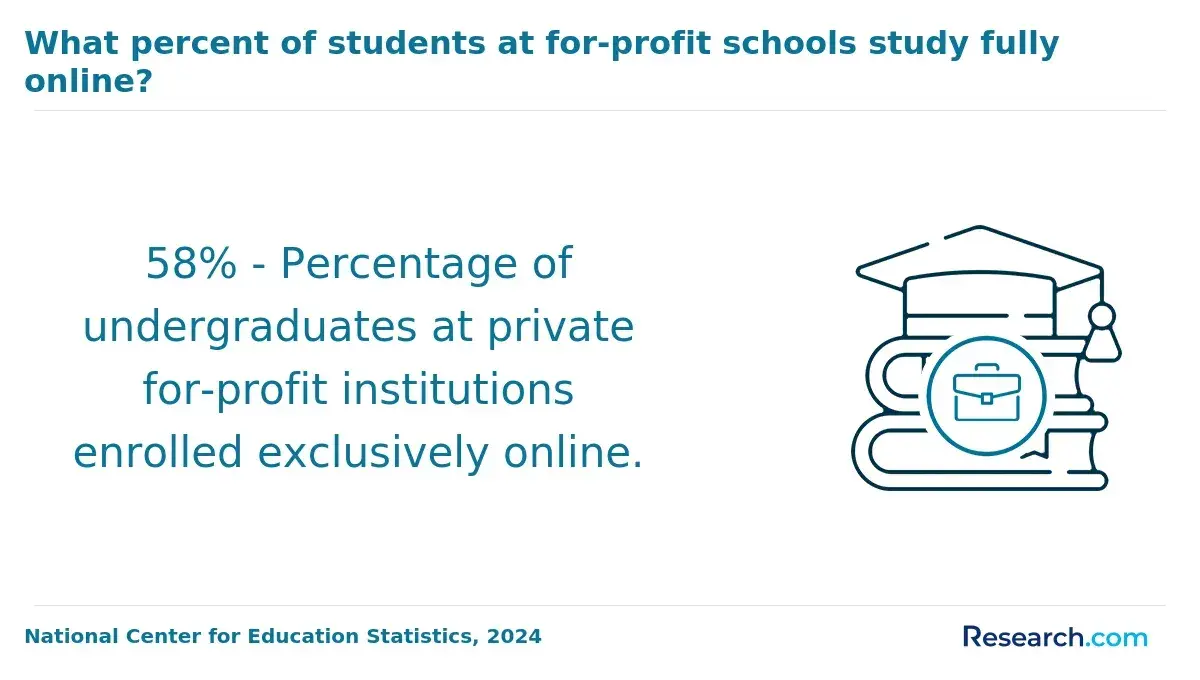
Online learning can be especially helpful for working adults, parents, military-affiliated students, rural students, and students returning after a break. Learners balancing family responsibilities may also compare flexible resources such as online courses for moms when deciding whether an online pathway can realistically fit their schedule.
The table below compares online and campus major formats for graduate-school planning. It focuses on practical differences that can affect admissions readiness:
| Factor | Online major | Campus major | Best fit |
| Schedule flexibility | Often stronger for students who work, parent, or need asynchronous coursework. | Usually more structured with fixed class meeting times. | Online may fit students who need flexibility; campus may fit students who benefit from routine. |
| Lab, studio, and clinical access | May require local placements, intensives, simulations, or hybrid sessions. | Often easier to access in-person facilities and supervised experiences. | Campus or hybrid formats may be better for lab-heavy or clinical fields. |
| Faculty relationships | Possible, but students must be proactive through office hours, projects, and communication. | Often easier to build through in-person seminars, labs, and campus involvement. | Either can work if the program supports interaction. |
| Research opportunities | Available in some programs but may require remote projects or local arrangements. | Often more visible through labs, centers, and faculty-led teams. | Campus can be helpful for research-intensive graduate paths. |
| Cost structure | May reduce commuting or relocation costs, though technology and fees still matter. | May involve housing, transportation, parking, or relocation expenses. | Online can lower indirect costs for some students, but net price should still be compared. |
If you choose an online major, protect your graduate-school readiness by confirming that the institution is accredited, courses appear normally on the transcript, prerequisites include required labs where needed, and faculty are available for recommendations. Online is not automatically easier or weaker; the quality depends on program design, student support, and field requirements.
What salary and job outlook should influence your major choice?
Salary and job outlook should influence your major choice, but they should not be the only factors. A high-paying field may require long graduate training, competitive admissions, unpaid or low-paid internships, licensing exams, relocation, or high tuition. A lower-paying field may still be worthwhile if it fits your strengths, has manageable debt, and leads to meaningful work.
When comparing financial outcomes, look at the occupation you are targeting, not just the undergraduate major. You can also review top paying degrees to understand which bachelor's fields tend to have strong labor-market value even before graduate school.
The table below uses recent BLS May 2024 wage data for selected occupations connected to graduate or professional education. These figures describe national median wages for occupations, not guaranteed outcomes for any individual graduate:
| Career path | Typical graduate credential connection | 2024 national median annual wage | How to use this in major planning |
| Lawyer | JD and bar admission | $151,160 | Choose a major that supports strong GPA, reading, writing, reasoning, and a realistic law-school cost plan. |
| Physician assistant | Master's-level PA program and licensure | $133,260 | Prioritize science prerequisites, patient-care exposure, and strong academic performance. |
| Software developer | Bachelor's may be enough; graduate study can support specialization | $133,080 | Consider whether a technical bachelor's plus experience may be more efficient than immediate graduate school. |
| Psychologist | Often graduate or doctoral training, depending on role and state | $94,310 | Build research methods, statistics, supervised experience, and clarity about licensure routes. |
| Postsecondary teacher | Often master's or doctorate, depending on institution and field | $83,980 | Choose a major with research, writing, teaching experience, and faculty mentorship. |
Job outlook should also be interpreted by field. For example, growth in healthcare and data-related roles reflects demand for services and technology, while academic hiring can vary by discipline and institution type. Use salary and outlook data to test whether the path can support your expected debt, but do not treat national medians as personal predictions.
A practical rule is to compare three numbers before committing: likely undergraduate net cost, likely graduate school cost, and the median wage range for the occupation you are actually targeting. If the path requires licensing, also include exam fees, supervised hours, and time before full professional earnings.
How can you confirm a major aligns with your long-term path?
You can confirm a major aligns with your long-term path by testing it against evidence: requirements, performance, experience, cost, and career realities. Alignment is not a feeling that a major sounds right; it is a pattern showing that the major helps you move toward the graduate program and profession you want.
Students with additional barriers should be especially careful about licensing, background checks, and employer rules. For example, applicants researching best degrees for felons should verify whether a target profession has character-and-fitness reviews, clinical placement restrictions, state licensing limits, or employer background-screen policies before investing in a path.
Use the following checklist before declaring, switching, or staying in a major. It is designed to help you catch problems early, when they are easier to fix:
- Graduate fit: At least three target graduate programs accept students from your major or list prerequisites you can complete on time.
- Course map: Your four-year plan includes required courses, electives, exam preparation, internships, research, and application deadlines.
- GPA realism: You can perform well in the major without constantly sacrificing health, work obligations, or required experience.
- Faculty support: You can identify professors, supervisors, or mentors who may eventually write strong recommendations.
- Experience access: The program offers or allows research, fieldwork, volunteering, clinical exposure, internships, or portfolio projects relevant to your goal.
- Financial plan: You understand net price, likely borrowing, scholarship options, transfer credits, and whether graduate school debt is likely.
- Backup plan: The major can support employment, service, research, or additional preparation if graduate school is delayed or your goals change.
- Licensure check: If your field is regulated, you have confirmed state and program requirements directly rather than relying on assumptions.
Finally, talk to people who can test your plan from different angles: a major advisor, a pre-professional advisor, a faculty member, a graduate admissions contact, a financial aid counselor, and someone working in the field. If their answers conflict, do not panic. Use the disagreement to identify what needs more verification before you commit.
Other Things You Should Know About
The safest major is usually one that you enjoy, can do well in, and can adapt with electives. Broad fields such as biology, psychology, economics, computer science, English, public health, and business can support many graduate paths when paired with the right prerequisites and experiences.
Some programs prefer or require specific coursework, but many do not require a specific major. Admissions committees usually evaluate GPA, course rigor, prerequisites, recommendations, experience, essays, test scores when required, and fit with the program.
Not necessarily. A strong GPA matters, but graduate schools also look at whether your coursework prepared you for advanced study. The better strategy is to choose a major that is challenging enough to show readiness but realistic enough for you to perform well.
A double major can help if it adds clear preparation, such as pairing economics with math or biology with public health. It can hurt if it lowers your GPA, delays graduation, increases cost, or leaves less time for research, internships, or exam preparation.
References
- How to Choose a Major in College – Tips to Consider https://www.umassglobal.edu/blog-news/choose-a-major-college-tips-consider
- Struggling to Find Your Future? Discover Your Career Path Today! https://matchtocollege.com/blog/find-your-career-path-ultimate-student-guide
- Choose the Right Major for Career Success | Professional Guidance | Exeed ECX https://myexeed.com/how-to-choose-the-right-major-for-your-career-goals/
- The benefits of picking the right major and minor for your career goals - Take Stock in Children https://www.takestockinchildren.org/the-benefits-of-picking-the-right-major-and-minor-for-your-career-goals/
- Major decisions: How labour market opportunities affect students’ choice of subjects https://cepr.org/voxeu/columns/major-decisions-how-labour-market-opportunities-affect-students-choice-subjects
- The Impact of Your College Major on Graduate School Options https://www.princetonreview.sg/impact-of-college-major-on-graduate-school/
- Why is Accreditation Important? - Vibration Institute https://vi-institute.org/why-is-accreditation-important/
- How to Choose a Major: Balancing Interests and Job Prospects https://www.cialfo.co/blog/how-to-choose-a-major