2027 Best College Majors by Industry Demand

Co-Founder and Chief Data Scientist
Choosing a major is now a labor-market decision as much as an academic one. The U.S. Bureau of Labor Statistics projects data scientist employment to grow 34% from 2024 to 2034, showing how quickly employer demand can shift toward technical, healthcare, and analytical skills.
This guide is for students, career changers, and parents comparing college majors with real job-market value. You will learn which majors align with strong industries, what they can lead to, how online and campus pathways compare, and how to choose a degree that fits your goals and budget.
Key Things You Should Know
- Computer science, data science, nursing, engineering, accounting, cybersecurity, and healthcare administration stand out because they connect directly to industries with measurable hiring demand, not just broad academic interest.
- BLS May 2024 wage data places several related occupations above the U.S. median wage, including software developers at $133,080, information security analysts at $124,910, and medical and health services managers at $117,960.
- The strongest major is not always the highest-paying one; the best choice depends on required licensure, internship access, program accreditation, regional hiring, and whether the student wants technical, people-focused, analytical, or regulated work.
Which college majors are most in demand across major U.S. industries right now?
The most in-demand college majors are those that prepare students for occupations employers repeatedly hire for across growing or essential industries. "Industry demand" means more than popularity; it includes projected job openings, employer skill needs, replacement hiring, credential requirements, and how directly a degree maps to real roles.
The table below compares majors with strong connections to major U.S. industries. Use it as a starting point, not as a universal ranking, because demand varies by region, employer type, and the student's experience level:
| Major | Industries with strong demand | Common career direction | Why demand is strong |
| Computer Science | Technology, finance, healthcare, defense, retail, logistics | Software developer, systems analyst, cloud engineer | Nearly every industry needs software, automation, cybersecurity, and data infrastructure. |
| Data Science or Statistics | Technology, insurance, finance, healthcare, marketing, government | Data scientist, analytics analyst, machine learning analyst | Employers need workers who can turn large data sets into decisions, forecasts, and risk models. |
| Nursing | Hospitals, clinics, long-term care, public health, telehealth | Registered nurse, care coordinator, nurse manager | Healthcare staffing needs remain high because of population aging, chronic disease management, and care access needs. |
| Cybersecurity | Technology, banking, government, healthcare, defense, utilities | Information security analyst, security operations analyst | Cyber risk has become a core business risk, increasing demand for security monitoring, compliance, and incident response. |
| Engineering | Manufacturing, energy, construction, aerospace, infrastructure, transportation | Civil, mechanical, electrical, industrial, or environmental engineer | Engineering majors support infrastructure, automation, clean energy, product design, and advanced manufacturing. |
| Accounting or Finance | Corporate business, public accounting, banking, insurance, government | Accountant, auditor, financial analyst, risk analyst | Organizations need financial reporting, tax planning, compliance, budgeting, and risk controls. |
| Healthcare Administration | Hospitals, insurers, physician groups, senior care, health technology | Medical and health services manager, operations coordinator | Healthcare systems need managers who understand regulation, staffing, quality metrics, and cost control. |
| Supply Chain Management | Retail, manufacturing, e-commerce, logistics, healthcare, food systems | Logistics analyst, procurement specialist, operations analyst | Companies are redesigning supply networks after disruptions and using analytics to reduce cost and risk. |
For most students, the strongest short list starts with majors that combine a clear occupational target with transferable skills. Computer science and data science are powerful when you enjoy problem-solving and continuous technical learning.
Nursing and healthcare administration are better fits for students drawn to patient care, operations, or regulated healthcare environments. Engineering and supply chain appeal to students who like systems, design, manufacturing, and practical problem-solving.
How does industry demand for top college majors translate into career stability and growth?
Industry demand affects career stability because it shapes how many employers need a skill set, how often roles are replaced or expanded, and whether the work is tied to essential services. A high-demand major usually offers more than one job title, which matters when technology, interest rates, or local hiring conditions change.
Career stability is strongest when a major meets at least two of these conditions: the work is essential, the skill is hard to automate fully, the role is regulated or credentialed, and the degree can transfer across industries. The following comparison shows how stability and growth differ by major type:
| Major area | Stability factor | Growth factor | Main limitation to consider |
| Healthcare majors | Care delivery is essential and often tied to licensure. | Aging populations and complex care needs support long-term hiring. | Some roles require clinical placements, state licensure, and shift-based work. |
| Computing and cybersecurity majors | Digital systems are central to business operations. | AI, cloud computing, data security, and automation expand technical needs. | Skills can become outdated quickly without ongoing learning. |
| Engineering majors | Infrastructure, energy, manufacturing, and product systems require technical design expertise. | Automation, clean energy, construction, and advanced manufacturing can create specialized demand. | Some roles prefer ABET-accredited degrees and internship experience. |
| Business, accounting, and finance majors | Financial reporting, budgeting, tax, and compliance are recurring business needs. | Analytics, regulation, and risk management create advancement pathways. | General business degrees can be weaker without a concentration, internship, or technical skill. |
| Education and human services majors | Schools, public agencies, and community organizations have persistent staffing needs. | Demand often reflects local funding, population trends, and policy needs. | Pay and licensure requirements vary widely by state and district. |
BLS projections for 2024 to 2034 show that information security analysts are expected to grow 29%, which is much faster than the average for all occupations. For students, this means cybersecurity demand is not limited to technology companies; banks, hospitals, utilities, public agencies, and retailers also need security talent.
However, stability is not the same as certainty. A major can open doors, but career growth still depends on internships, portfolios, clinical hours, certifications, location, communication skills, and the ability to keep learning after graduation.
Which in-demand majors offer the highest salary potential and strongest return on investment?
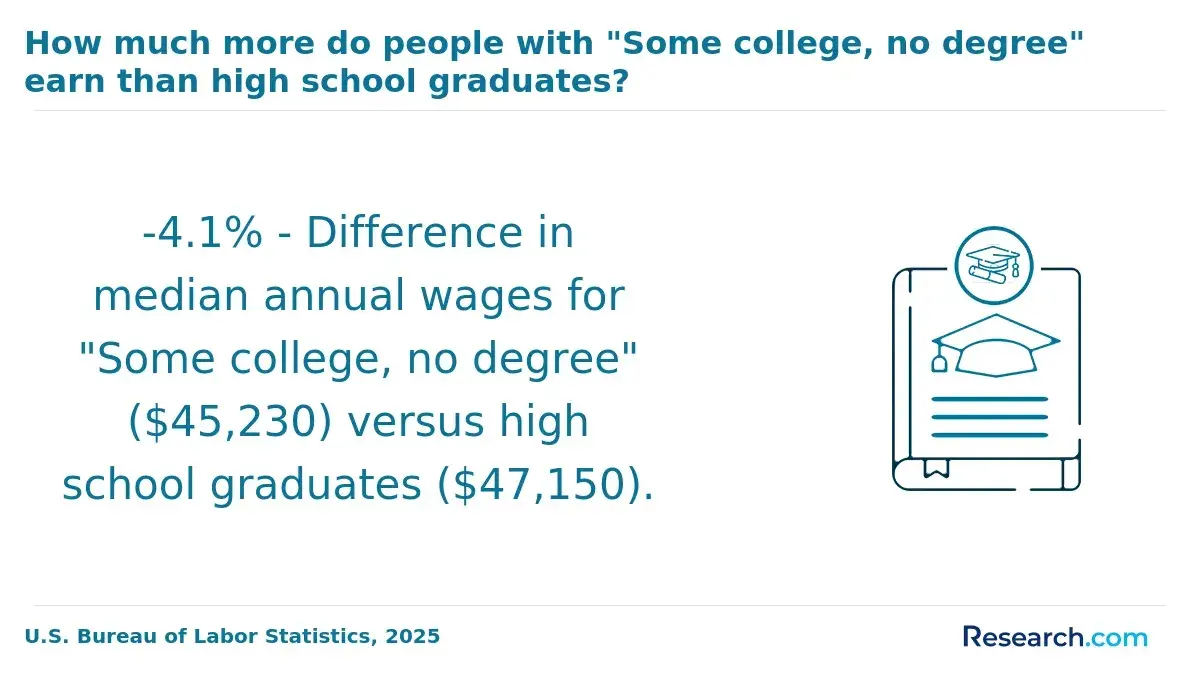
The majors with the strongest salary potential usually combine high employer demand with scarce technical, analytical, clinical, or managerial skills. Salary return on investment depends on total education cost, time to completion, debt, internships, licensing exams, and whether the student enters a field with clear advancement ladders.
The salary figures below use BLS May 2024 national median wages for representative occupations connected to common in-demand majors. They are not promises for new graduates, but they help compare the earning potential associated with different pathways:
| Major | Representative occupation | May 2024 median annual wage | ROI signal |
| Computer Science | Software Developer | $133,080 | Strong when students build coding portfolios, complete internships, and learn current tools. |
| Cybersecurity | Information Security Analyst | $124,910 | Strong for students who combine technical labs with networking, cloud, and security certifications. |
| Data Science or Statistics | Data Scientist | $112,590 | Strong when paired with programming, machine learning, and domain knowledge such as finance or healthcare. |
| Healthcare Administration | Medical and Health Services Manager | $117,960 | Often stronger after experience; entry-level roles may begin in operations or coordination. |
| Nursing | Registered Nurse | $93,600 | Strong when licensure is achieved and local healthcare employers hire consistently. |
| Accounting | Accountant or Auditor | $81,680 | Improves with CPA eligibility, audit or tax experience, and analytics skills. |
| Civil Engineering | Civil Engineer | $99,590 | Strong when the degree is ABET-accredited and students pursue professional engineering experience. |
Students comparing what degrees make the most money should separate early-career pay from long-term earning power. Some majors, such as nursing, can lead to relatively direct employment after licensure, while majors like healthcare administration or finance may require several years of experience before the highest-paying roles are realistic.
A practical ROI test is to compare the likely starting role with the total cost of attendance. A lower-cost public or transfer pathway can make a moderately paid major financially stronger than an expensive program in a higher-paid field, especially if the student would need graduate school later.
What education level and degree pathway are required for the most sought-after majors?
Most high-demand majors are available at the bachelor's level, but the required education level depends on the target occupation. Some fields, especially nursing, teaching, counseling, architecture, and engineering licensure pathways, may include state-specific rules or accredited clinical and professional requirements.
The table below summarizes the typical degree pathway for major areas with strong demand. Students should verify requirements with the school, employer, and state licensing board before enrolling:
| Major area | Common minimum degree | When graduate study may matter | Best fit |
| Computer Science | Bachelor's degree, though some entry roles accept strong portfolios or associate pathways | Advanced AI, research, specialized systems, or leadership roles | Students who like coding, logic, systems, and technical problem-solving |
| Nursing | ADN or BSN plus RN licensure; many hospitals prefer or require BSN-prepared nurses | Nurse practitioner, nurse educator, nurse anesthetist, or leadership roles | Students comfortable with patient care, science, clinical work, and licensure exams |
| Engineering | Bachelor's degree, preferably from an ABET-accredited program for many professional tracks | Specialized design, research, management, or advanced technical fields | Students who enjoy math, physics, design, and applied problem-solving |
| Accounting | Bachelor's degree; CPA eligibility often requires additional credits depending on state rules | CPA preparation, taxation, forensic accounting, analytics, or leadership | Students who are detail-oriented and comfortable with rules, systems, and financial data |
| Data Science | Bachelor's degree in data science, statistics, computer science, or applied math | Machine learning, research, advanced analytics, or senior data roles | Students who like statistics, programming, modeling, and business questions |
| Healthcare Administration | Bachelor's degree for many coordinator roles | Hospital administration, policy, consulting, or executive management | Students interested in healthcare systems rather than direct clinical care |
Accelerated and transfer-friendly formats can reduce time in school, but speed should not override program quality. A fast track bachelor degree may make sense for adults with transfer credits or prior college coursework, while first-time students in clinical or engineering fields may need a more structured timeline because labs, prerequisites, and placements are harder to compress.
Students should be cautious about choosing a degree level based only on job ads. Employers may list a bachelor's degree as preferred, but competitive applicants often bring internships, certifications, project work, or relevant work experience.
How do online programs compare to campus programs for majors in high industry demand?
Online programs can be a strong option for high-demand majors when the field relies heavily on digital coursework, asynchronous projects, business cases, or analytics labs. Campus programs may be better when the major requires wet labs, clinical placements, studio work, engineering facilities, or frequent in-person teamwork.
The comparison below shows where online and campus formats tend to differ. The better choice depends on the major, the student's schedule, and how the program handles hands-on requirements:
| Program format | Strengths | Trade-offs | Majors where it often works well |
| Fully online | Flexible schedule, easier for working adults, may reduce commuting or relocation costs | Requires self-discipline; internships and labs may need separate arrangements | Business analytics, accounting, IT, cybersecurity, healthcare administration |
| Hybrid | Balances flexibility with in-person labs, networking, or clinical experiences | May still require travel on fixed days | Nursing completion programs, engineering technology, education, public health |
| Campus-based | More direct access to labs, faculty, student teams, career fairs, and local employers | Less flexible and may involve housing or commuting costs | Engineering, traditional nursing, lab sciences, architecture |
Students researching degrees you can get online that pay well should look beyond convenience. The best online option is one that provides career services, employer-recognized coursework, proctored assessments where needed, internship support, and clear evidence that graduates enter the roles the program advertises.
Online learning is especially practical for career changers who already have work experience. It can be risky for students who need extensive networking, labs, or supervised practice and choose a program that leaves them responsible for finding every placement on their own.
What accreditation and program quality indicators matter most for in-demand college majors?
Accreditation is one of the most important quality checks because it affects transfer credits, financial aid eligibility, graduate school admission, employer recognition, and licensure preparation. At minimum, students should confirm that the institution is accredited by an agency recognized by the U.S. Department of Education or the Council for Higher Education Accreditation.
Programmatic accreditation can matter even more in regulated or technical fields. The following indicators help students judge whether a high-demand major is academically credible and career-aligned:
| Quality indicator | Why it matters | Examples to check |
| Institutional accreditation | Supports credit transfer, federal aid eligibility, and general legitimacy | Accreditor status, school disclosures, state authorization |
| Programmatic accreditation | May be required or strongly preferred for licensure or professional recognition | ABET for engineering, CCNE or ACEN for nursing, AACSB or ACBSP for business programs |
| Licensure alignment | Ensures the curriculum meets state or professional exam requirements | RN licensure, teacher certification, CPA education requirements, engineering FE and PE pathways |
| Career outcomes | Shows whether students progress into relevant roles | Job placement data, internship employers, exam pass rates, graduate school outcomes |
| Faculty and curriculum currency | Matters in fast-changing fields such as AI, cybersecurity, data analytics, and healthcare regulation | Recent course updates, industry advisory boards, practitioner faculty, lab tools |
Students comparing prestigious online universities should not rely on brand alone. A well-known school can still offer a weak fit for a specific major if it lacks the right accreditation, clinical support, technical labs, or employer connections.
Common red flags include vague accreditation language, unclear transfer policies, limited faculty access, no published licensure disclosures, pressure-heavy admissions calls, and programs that advertise high salaries without explaining role requirements or local labor-market variation.
What typical coursework and skills are taught in the most employable college majors?
The most employable majors teach both technical content and durable workplace skills. Employers increasingly want graduates who can use tools responsibly, communicate findings, work across teams, and adapt as technology changes.
The table below summarizes the coursework and skill clusters students should expect in high-demand majors. A strong program will connect these courses to projects, labs, internships, simulations, or clinical practice:
| Major | Typical coursework | Career-ready skills developed |
| Computer Science | Programming, data structures, algorithms, databases, operating systems, software engineering | Coding, debugging, system design, teamwork, technical documentation |
| Data Science | Statistics, Python or R, databases, machine learning, data visualization, ethics | Modeling, data cleaning, analytical reasoning, storytelling with data |
| Cybersecurity | Networking, systems security, cryptography, risk management, incident response, cloud security | Threat analysis, security monitoring, compliance awareness, problem escalation |
| Nursing | Anatomy, physiology, pharmacology, health assessment, clinical practice, evidence-based care | Patient assessment, care planning, communication, clinical judgment |
| Engineering | Calculus, physics, materials, mechanics, circuits, design labs, capstone projects | Design thinking, quantitative analysis, testing, project management |
| Accounting and Finance | Financial accounting, managerial accounting, taxation, auditing, corporate finance, analytics | Financial analysis, compliance, reporting, spreadsheet modeling, ethical judgment |
| Healthcare Administration | Healthcare policy, finance, operations, quality improvement, informatics, law and ethics | Operations analysis, regulatory awareness, budgeting, leadership communication |
AI is changing what "career-ready" means. Students in technical majors should learn how AI tools work, where they fail, and how to validate outputs. Students in healthcare, business, and education should learn how to use data and automation without ignoring privacy, ethics, bias, or professional judgment.
A practical way to evaluate coursework is to ask whether the program requires a portfolio, practicum, capstone, internship, or clinical experience. Courses alone are useful, but evidence of applied skill is often what helps students compete for entry-level roles.
What are the admissions requirements and program lengths for competitive high-demand majors?
Admissions requirements vary by school and major, but competitive high-demand programs often require stronger preparation in math, science, writing, or prerequisite coursework. Nursing, engineering, computer science, and selective business programs may have progression requirements after admission, meaning students must earn specific grades before entering upper-division courses.
The table below outlines common admissions patterns and typical program lengths. Individual schools may differ, especially for transfer, part-time, and accelerated students:
| Major area | Common admissions requirements | Typical length | Important warning |
| Computer Science | High school math readiness, placement tests, programming interest, transfer prerequisites | About four years for a bachelor's degree | Some programs have capacity limits for upper-division courses. |
| Nursing | Science prerequisites, minimum GPA, background check, immunizations, entrance exam, clinical eligibility | Two to four years depending on ADN, BSN, or RN-to-BSN route | Admission to the college may not equal admission to the nursing cohort. |
| Engineering | Calculus readiness, physics preparation, strong math record, lab science background | About four years, sometimes longer with co-ops | Falling behind in math sequences can delay graduation. |
| Accounting or Finance | General college admission, business prerequisites, minimum grades for major declaration | About four years for a bachelor's degree | CPA goals may require credits beyond the bachelor's degree depending on state rules. |
| Data Science | Math preparation, statistics readiness, programming coursework or placement | About four years for a bachelor's degree | Programs vary widely; some are more statistical, while others are more computer-science focused. |
| Healthcare Administration | General college admission, writing readiness, business or health prerequisites | About four years for a bachelor's degree | Leadership roles may require healthcare experience beyond the degree. |
Before enrolling, students should take a sequence-based view of the degree. The fastest advertised timeline may not apply if required courses are offered only once per year, clinical placements are limited, or transfer credits do not meet major requirements.
Students considering a fast track bachelor degree should ask admissions advisors which requirements are truly accelerated and which cannot be shortened. Acceleration works best when a student brings transfer credits, can study year-round, and does not need extensive in-person labs or clinical hours.
What entry-level jobs, licensing, and certifications follow from these high-demand majors?
Entry-level jobs depend on the major, local hiring market, internships, and whether the field requires licensure. A degree may qualify a student academically, but employers often expect proof of applied skill through clinical hours, projects, co-ops, certifications, or supervised practice.
The table below connects common high-demand majors to early-career roles and credentials. Requirements can vary by state, employer, and industry, so students should verify the rules for their intended location:
| Major | Entry-level job examples | Licensing or certification considerations |
| Computer Science | Junior software developer, QA analyst, systems analyst, application support specialist | Usually no license; cloud, programming, or vendor certifications may help. |
| Cybersecurity | Security operations center analyst, IT support security specialist, risk analyst | CompTIA Security+, Network+, cloud security, or vendor credentials may support entry. |
| Nursing | Registered nurse, public health nurse, clinic nurse, hospital staff nurse | Requires passing the NCLEX-RN and meeting state board requirements. |
| Engineering | Engineering associate, design engineer, field engineer, project engineer | FE exam and later PE licensure may matter, especially in civil and public-facing engineering work. |
| Accounting | Staff accountant, audit associate, tax associate, accounts analyst | CPA eligibility depends on state education and experience rules; other credentials may help in audit, fraud, or management accounting. |
| Data Science | Data analyst, business intelligence analyst, junior data scientist | No standard license; portfolio projects and tool proficiency are often important. |
| Healthcare Administration | Administrative coordinator, revenue cycle analyst, operations assistant, quality improvement associate | Some senior care administrator roles require state licensure; general healthcare management roles vary. |
Students should not wait until senior year to prepare for employment. The smartest path is usually a staged plan that turns coursework into evidence employers can evaluate.
- Identify three target job titles before choosing upper-division electives.
- Review job postings in your region to find repeated skills, software tools, certifications, and degree requirements.
- Build proof through internships, clinical placements, co-ops, GitHub projects, case competitions, research, or supervised fieldwork.
- Confirm whether the job requires a license, exam, background check, state approval, or additional credits.
- Use career services early for resume review, mock interviews, employer events, and alumni referrals.
Students who want practical programs with shorter timelines can compare degrees you can get online that pay well, but they should still verify whether the program leads to the specific entry-level role they want. A quick degree is only useful if the credential, curriculum, and employer expectations match.
How can students choose the right in-demand major based on career goals and labor trends?
The right in-demand major is the one that aligns labor-market strength with your abilities, constraints, and preferred work style. A major with strong national demand may still be a poor fit if you dislike the daily work, cannot complete required clinical or lab hours, or would need expensive graduate study to reach your target role.
A practical decision process helps students avoid choosing based only on rankings, salary headlines, or family pressure. Use the steps below to narrow your options:
- Start with career tasks, not major names: Decide whether you want to code, care for patients, analyze financial data, design systems, manage operations, teach, or investigate security risks.
- Check labor demand locally and nationally: Compare BLS outlooks with job postings in the cities or states where you realistically want to work.
- Calculate total cost: Include tuition, fees, books, commuting, housing, lost work time, exam fees, software, and any required travel for labs or clinical placements.
- Confirm credential rules: Verify accreditation, licensure, certification, and graduate school requirements before committing.
- Test the field early: Take an introductory course, complete a job shadow, interview a professional, join a student organization, or complete a small project.
- Choose a backup pathway: Pick electives or minors that keep another related career option open if hiring conditions or interests change.
Fit also includes personality and work environment. Students who prefer independent, low-interruption work may want to compare technical analysis, accounting, research, writing, or data-focused roles with lists of good jobs for introverts, while students energized by people-facing work may prefer nursing, education, management, or consulting-oriented pathways.
Common mistakes include choosing a major only because it sounds prestigious, ignoring accreditation, assuming salary medians apply to new graduates, overlooking transfer credit rules, and enrolling in an online program that does not support required placements. The better approach is to match the major to a specific career path, verify the school's quality indicators, and build experience before graduation.
Other Things You Should Know About
There is no single best major for every student, but computer science, data science, nursing, cybersecurity, engineering, accounting, and healthcare administration are among the strongest choices because they connect to large or fast-growing U.S. industries.
No. Some high-demand fields offer strong stability but moderate pay, while some high-paying fields require advanced skills, competitive internships, or graduate education. Students should compare salary potential with total cost, time to completion, licensure, and personal fit.
Yes, especially in fields such as business analytics, accounting, IT, cybersecurity, and healthcare administration. For nursing, engineering, education, and lab-based sciences, students should confirm how the online program handles clinical placements, labs, licensure, and accreditation.
Compare the daily work, required coursework, job postings in your target location, accreditation needs, internship access, and long-term advancement path. If possible, take an introductory course or complete a small project in each field before deciding.
References
- Evidence From Accounting and Marketing Majors https://articlegateway.com/journals/index.php/JABE/article/download/7616/7203/12747
- The Most Employable Degrees - Goingto.Universiy https://goingto.university/choosing-a-course/most-employable-degrees/
- How Online Degrees Are Reshaping Competition in Higher Education - ProMarket https://www.promarket.org/2026/02/09/how-online-degrees-are-reshaping-competition-in-higher-education/
- How Changing College Majors Are Reshaping the Future Workforce — The Burning Glass Institute https://www.burningglassinstitute.org/bginsights/how-changing-college-majors-are-reshaping-the-future-workforce
- 10 Best Degrees for the Future: Top Majors in Demand for 2025+ https://pioneeracademics.com/news/future-proof-college-majors/
- Choosing a Major to Support Your Career Goals | Wizeprep Blog https://www.wizeprep.com/blog/choosing-a-major-to-support-your-career-goals
- Online Degree vs. Traditional: Choosing the Right Path https://beal.edu/online-degree-vs-traditional/
- Why Accreditation Matters: Ensuring Quality in Higher Education https://ukeducationbridge.co.uk/why-accreditation-matters-ensuring-quality-in-higher-education/
- College Admissions by Major: What It Means & How to Apply Strategically in 2025 — Cosmic College Consulting https://www.cosmic.nyc/blog/what-does-it-mean-to-admit-by-major