2027 Best Majors for Students Who Want Social Impact Careers

Co-Founder and Chief Data Scientist
Choosing a major for a social impact career means balancing purpose, employability, cost, and the credentials employers actually require. The field is broad: BLS data from May 2024 places the median annual wage for community and social service occupations at $58,380, showing that mission-driven work can also support stable career planning.
This guide is for students who want work in public service, equity, health, climate, education, nonprofit leadership, or community change. You will learn which majors fit which causes, what degrees cost, and how to choose a program wisely.
Key Things You Should Know
- Social work, public health, environmental science, public policy, education, urban planning, nonprofit management, and data-focused majors are among the strongest choices because they connect directly to identifiable roles, internships, and graduate pathways.
- Associate and bachelor's degrees can lead to entry-level human services, advocacy, education support, and nonprofit roles, while licensed clinical social work, counseling, public health leadership, urban planning, and policy analysis often require a master's degree.
- BLS May 2024 wage data shows median pay of $78,240 for social and community service managers and $80,060 for environmental scientists, but salaries vary by region, employer type, licensure, experience, and funding source.
What are the best college majors for students who want social impact careers?
The best college majors for students who want social impact careers are the ones that combine a cause area with employable skills. "Social impact" usually means work that improves social, environmental, educational, health, civic, or economic outcomes for communities. That can happen inside nonprofits, schools, hospitals, government agencies, foundations, mission-driven companies, advocacy groups, or research organizations.
A helpful way to choose is to compare your preferred cause with the daily work you want to do. If you are still exploring good majors in college, social impact fields are strongest when the major includes fieldwork, data literacy, communication, and a clear path to either employment or graduate study.
The table below compares strong majors by fit, typical entry point, and the type of student each major serves best. It is not a ranking by prestige; it is a decision tool for matching purpose with practical outcomes:
| Major | Best fit for students who want to... | Common early career roles | When it may not be enough by itself |
| Social Work | Support individuals, families, and vulnerable communities directly | Case manager, family services worker, community outreach coordinator | Clinical therapy and many advanced practice roles require a master's degree and state licensure |
| Public Health | Improve health outcomes at the population level | Health educator, community health worker, program assistant | Epidemiology, policy leadership, and senior program roles often prefer an MPH |
| Environmental Science | Work on climate, conservation, pollution, and sustainability | Environmental technician, sustainability coordinator, field analyst | Research-heavy or regulatory science roles may require graduate study or specialized technical training |
| Public Policy or Political Science | Influence systems, laws, public budgets, and civic institutions | Policy assistant, legislative aide, advocacy associate | Quantitative policy analysis and leadership roles often favor an MPP, MPA, or related master's degree |
| Education | Promote learning, equity, and youth development | Teacher, instructional aide, youth program coordinator | Public school teaching requires state-approved preparation and licensure |
| Urban Planning or Geography | Shape housing, transit, land use, and resilient communities | Planning assistant, GIS technician, community development associate | Planner roles frequently prefer a master's degree from an accredited planning program |
| Nonprofit Management or Business | Lead mission-driven organizations and social enterprises | Development assistant, volunteer coordinator, operations associate | Students may need internships or cause-specific coursework to avoid a degree that feels too general |
| Data Science, Statistics, or Economics | Measure impact, evaluate programs, and improve decisions with evidence | Research assistant, data analyst, evaluation associate | Students should add ethics, policy, or community-based experience to show mission fit |
For many students, the best choice is a major-plus strategy: major in a field that builds strong job skills, then add a minor, certificate, internship, or research project tied to the cause you care about.
How do different social impact majors align with specific causes and career paths?
Different social impact majors lead to different types of change. Some careers focus on direct service, while others influence policy, funding, research, design, or organizational leadership. Students should avoid choosing a major only because it sounds meaningful; the better question is what kind of impact work you want to do every week.
The table below connects common causes with majors and practical career paths. Use it to narrow your options before comparing schools or degree levels:
| Cause area | Strong majors to consider | Possible career paths | Key skills to build |
| Poverty, housing, and family stability | Social work, sociology, public policy, human services | Case management, housing advocacy, benefits navigation, community development | Trauma-informed communication, policy knowledge, documentation, referral coordination |
| Public health and health equity | Public health, health education, biology, statistics | Health education, community health, epidemiology support, program evaluation | Health communication, survey design, basic biostatistics, cultural competence |
| Climate and environmental justice | Environmental science, sustainability, geography, engineering | Environmental compliance, climate resilience planning, conservation, sustainability reporting | Field methods, GIS, environmental regulation, data analysis |
| Education access and youth development | Education, psychology, child development, special education | Teaching, student support, youth programming, curriculum coordination | Instructional design, classroom management, assessment, family engagement |
| Criminal justice reform and reentry | Criminal justice, social work, psychology, public policy | Reentry services, victim advocacy, probation support, policy advocacy | Ethics, restorative practices, legal system literacy, crisis response |
| Civic engagement and human rights | Political science, international relations, communications, law-related studies | Advocacy, campaign organizing, legal aid support, public affairs | Persuasive writing, coalition building, research, media strategy |
| Nonprofit and philanthropic leadership | Nonprofit management, business, accounting, communications | Fundraising, operations, grant management, program administration | Budgeting, donor communication, grant writing, project management |
Students who want direct client work should prioritize supervised field placements and licensure-aligned programs. Students who want systems-level change should look for quantitative methods, policy labs, GIS, economics, budgeting, or evaluation coursework.
What education levels and degree types are most common for social impact careers?
Social impact careers are available at every education level, but the level you need depends on whether the role is entry-level, licensed, managerial, analytical, or clinical. The smartest degree choice is the lowest-cost credential that qualifies you for the next realistic step without blocking long-term goals.
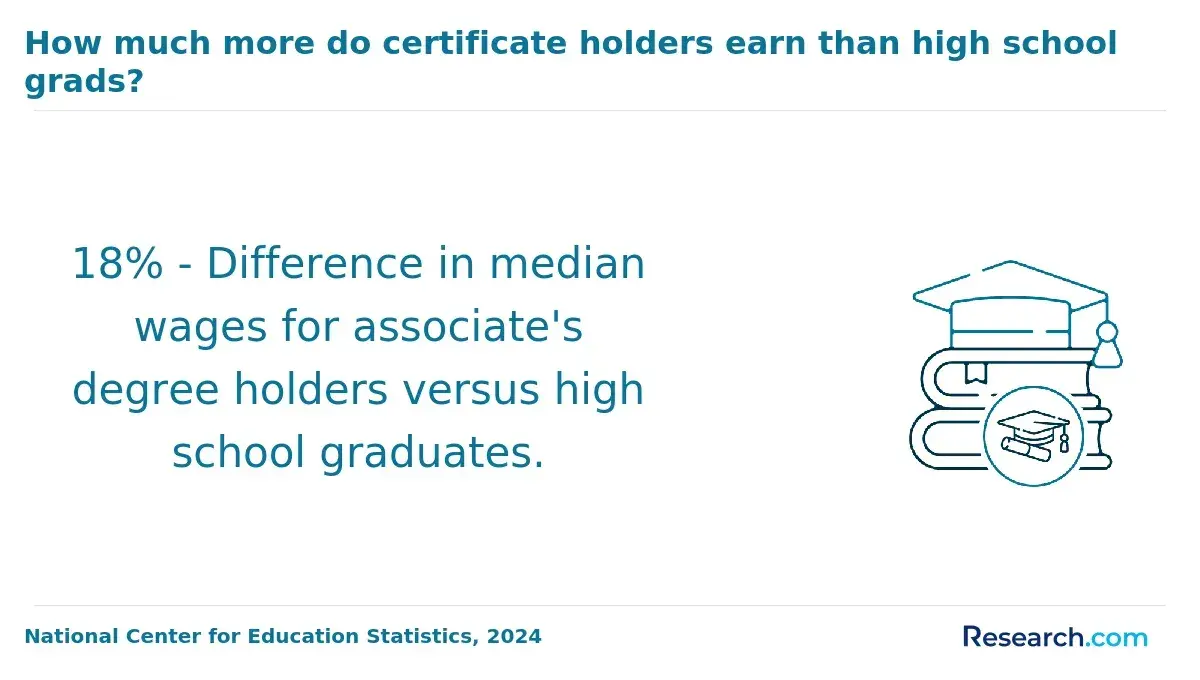
Students who need a faster or lower-cost start may consider an accelerated associate degree in human services, criminal justice, early childhood education, public administration support, or business administration, especially if the credits can transfer into a bachelor's program.
The table below summarizes common education levels and where they fit in social impact career planning:
| Education level | Typical use in social impact careers | Best for | Important limitation |
| Certificate | Short training in grant writing, nonprofit management, GIS, public health, data analytics, or trauma-informed care | Skill-building, career changers, working professionals | Usually not a substitute for a degree when employers require one |
| Associate Degree | Entry-level support roles in human services, community programs, public safety, early childhood settings, or administration | Students seeking lower cost, faster entry, or transfer options | Advancement may require a bachelor's degree |
| Bachelor's Degree | Common baseline for case management, nonprofit work, advocacy, public health support, policy assistance, and environmental roles | Students seeking broad entry-level options and graduate school preparation | Some specialized roles require licensure, certification, or graduate study |
| Master's Degree | Advanced practice, leadership, clinical services, planning, policy analysis, school administration, and public health roles | Students targeting licensed or higher-responsibility roles | Higher cost means ROI should be evaluated carefully |
| Doctoral or Professional Degree | Research, university teaching, law, psychology, medicine, or senior policy expertise | Students aiming for highly specialized authority or independent practice | Longer timelines and opportunity costs are substantial |
A common mistake is assuming that a bachelor's degree in any mission-oriented subject will automatically lead to a social impact job. Employers often want proof of practical skills, such as case notes, survey design, grant budgets, program evaluation, public speaking, or data visualization.
How do online social impact programs compare with campus-based options for quality and access?
Online social impact programs can be high quality when they are accredited, interactive, and connected to field experience. They work especially well for working adults, transfer students, caregivers, rural learners, and students who need flexible scheduling. Campus-based programs may be stronger for students who want daily access to faculty, local internships, student organizing, research labs, or cohort-based support.
When comparing format, students should look beyond convenience and ask whether the program provides the same advising, internship coordination, library access, career services, and licensure support. A good starting point is to compare accredited options among the best online universities, then verify whether the specific program meets your career requirements.
The table below highlights the trade-offs that matter most for social impact majors, where practical experience is often as important as classroom content:
| Factor | Online programs | Campus-based programs | Best decision rule |
| Access | Strong for students who need flexibility or cannot relocate | Strong for students who can attend regularly and use campus resources | Choose the format that you can complete consistently |
| Field experience | May require local placements arranged with school approval | Often benefits from existing regional employer relationships | Ask how placements are found before enrolling |
| Networking | Can be strong when programs include live sessions, cohorts, and alumni events | Often easier through campus clubs, service learning, and faculty projects | Prioritize programs with structured networking, not just discussion boards |
| Cost control | Can reduce commuting or relocation costs | May offer campus jobs, local grants, or residential scholarships | Compare total cost, not tuition alone |
| Licensure alignment | Varies by state and profession | Often designed around the state where the campus is located | Confirm state requirements in writing for teaching, counseling, and social work |
Online quality has improved, but students should be cautious with programs that provide little faculty contact, no supervised placement support, unclear transfer policies, or vague career outcomes.
Which accreditation standards and program credentials matter most for social impact degrees?
Accreditation is one of the most important trust signals for any social impact degree. Institutional accreditation indicates that the college or university has met broad academic and administrative standards. Programmatic accreditation matters when a profession has discipline-specific expectations, field education requirements, or licensure pathways.
The table below summarizes credentials and accreditation signals students should check before applying. Requirements vary by state and employer, so students should confirm details with licensing boards, school advisors, and target employers:
| Field | Credential or accreditation to check | Why it matters |
| Social Work | CSWE accreditation for BSW and MSW programs | Often required or strongly preferred for social work licensure pathways |
| Public Health | CEPH accreditation for public health schools and programs | Signals alignment with recognized public health competencies |
| Public Administration and Policy | NASPAA accreditation for many MPA and public policy programs | Helps identify programs with public service management standards |
| Teacher Education | State approval, plus CAEP or AAQEP where applicable | Teaching licensure depends heavily on state-approved preparation |
| Counseling | CACREP accreditation where relevant | Can affect licensure eligibility and employer recognition in some states |
| Urban Planning | Planning Accreditation Board accreditation for planning programs | Often valued by planning employers and professional pathways |
| Engineering-related sustainability roles | ABET accreditation for engineering programs | Important for engineering licensure and technical credibility |
Red flags include schools that avoid answering accreditation questions, advertise "licensure-ready" programs without naming specific states, or claim that one credential qualifies students for every social impact role. Accreditation does not guarantee employment, but weak or missing accreditation can limit transfer credits, financial aid access, graduate admission, and licensure eligibility.
What core courses and skills do top social impact majors typically include?
Top social impact majors are interdisciplinary. They usually blend social science, ethics, communication, data analysis, applied research, and field learning. The strongest programs do not only teach students what problems exist; they train students to design, fund, measure, and improve solutions.
The table below summarizes core courses and skill areas that often appear across high-quality social impact programs. Students should compare catalogs to see whether a program offers both mission-focused and employer-valued training:
| Course or skill area | Why it matters for social impact careers | Examples of where it is used |
| Research Methods | Helps students evaluate evidence and avoid relying on assumptions | Program evaluation, needs assessments, policy briefs |
| Statistics and Data Analysis | Supports evidence-based decisions and impact measurement | Public health dashboards, nonprofit outcomes, policy analysis |
| Ethics and Equity | Builds judgment for working with communities, data, and public resources | Client services, research consent, advocacy campaigns |
| Policy and Systems Analysis | Explains how laws, budgets, institutions, and incentives shape outcomes | Housing policy, health systems, education reform |
| Grant Writing and Budgeting | Connects mission work to funding and implementation | Nonprofit programs, community initiatives, research projects |
| Communication and Facilitation | Improves collaboration with clients, communities, donors, and policymakers | Public meetings, casework, training, advocacy |
| Technology, AI, and Data Ethics | Prepares students to use digital tools without harming privacy or fairness | Screening tools, predictive analytics, service delivery platforms |
AI and automation are changing social impact work by speeding up data cleaning, grant research, translation, scheduling, mapping, and reporting. Students should learn these tools, but they should also understand bias, privacy, human oversight, and the limits of automated decision-making in high-stakes settings.
Before choosing a program, look for applied learning that produces real portfolio evidence. Strong examples include the following:
- A supervised internship with a school, agency, nonprofit, public health office, planning department, or advocacy group.
- A capstone project that solves a real community, policy, environmental, or organizational problem.
- Training in widely used tools such as spreadsheets, survey platforms, GIS, statistical software, case management systems, or data visualization platforms.
- Opportunities to write policy memos, grant proposals, evaluation reports, public comments, or community education materials.
What are typical admission requirements and application tips for social impact degree programs?
Admission requirements vary by school and degree level, but social impact programs usually look for academic readiness, communication skills, service orientation, and evidence that the applicant understands the field. Competitive programs may also evaluate writing samples, interviews, prerequisite coursework, and prior volunteer or work experience.
Students with justice-system involvement, career interruptions, or nontraditional backgrounds should ask programs about background checks, field placement rules, and licensing limitations before enrolling. Resources on options such as the best associate degrees for felons can help applicants identify practical pathways, but licensure and placement rules still need direct verification.
Most applicants should prepare the following items and use them to show fit, not just eligibility:
- Transcripts showing completion of required general education or prerequisite courses.
- A personal statement that connects a specific cause area to realistic career goals.
- Letters of recommendation from teachers, supervisors, volunteer coordinators, or community leaders.
- A resume showing service, work experience, leadership, research, language skills, or community involvement.
- For graduate programs, a writing sample, interview, GRE policy review, and evidence of field readiness may be required.
Strong applications are specific. Instead of saying you want to "help people," explain the population, problem, or system you want to work with and what experience helped you reach that goal.
Common application mistakes can be avoided with a simple review process:
- Check whether the program's accreditation matches your intended career path.
- Ask whether online, transfer, or part-time students receive the same placement support as full-time campus students.
- Confirm whether your state requires a specific degree, exam, supervised hours, or approved educator preparation route.
- Compare total cost after aid, fees, transportation, books, placement expenses, and lost work time.
- Request recent student outcome information, but treat it as context rather than a guarantee.
How long do social impact majors take, and what do they typically cost?
Most associate degrees take about two years of full-time study, bachelor's degrees take about four years, and master's degrees commonly take one to three years depending on format, credit load, and field placement requirements. Accelerated, transfer-friendly, and part-time options can change the timeline, but students should make sure speed does not come at the cost of licensure eligibility or practical training.
Cost varies widely by institution type, residency, aid, and delivery format. College Board's 2024 Trends in College Pricing reports the following average published tuition and fees for the 2024-25 academic year, before grants or scholarships:
- Public two-year in-district: $4,050
- Public four-year in-state: $11,610
- Public four-year out-of-state: $30,780
- Private nonprofit four-year: $43,350
These figures show why public in-state, community college transfer, and employer-supported options can matter for social impact students, especially because some mission-driven roles have moderate starting pay. Students comparing online degrees should also calculate technology fees, proctored exam costs, internship travel, background checks, and whether credits will transfer.
The table below outlines the main cost and time trade-offs by degree route. Use it to identify the path that fits your budget and career urgency:
| Route | Typical timeline | Cost advantage | Main trade-off |
| Community college to bachelor's transfer | Four years if credits transfer smoothly | Lower first two years of tuition | Requires careful advising to avoid lost credits |
| Public in-state bachelor's program | Four years full time | Often strong balance of cost, internships, and recognition | May be less flexible for working adults |
| Private nonprofit program | Four years full time, sometimes flexible | May offer institutional grants that reduce net price | Published tuition can be high before aid |
| Online bachelor's completion program | Often two to three years after transfer credit | Can reduce relocation and commuting costs | Field placement and networking require extra planning |
| Master's program | One to three years | Can unlock licensed, specialized, or leadership roles | ROI depends heavily on target occupation and funding |
To reduce cost, prioritize transferable credits, complete the FAFSA, compare net price rather than sticker price, ask about service-based scholarships, and consider AmeriCorps, employer tuition assistance, public service loan forgiveness eligibility, or paid internships where appropriate.
What salaries, advancement opportunities, and job outlook can social impact graduates expect?
Social impact salaries vary more by role than by major name. A sociology major working in nonprofit administration, a public health graduate working in evaluation, and an environmental science graduate working in compliance may have very different earnings even if they all describe their work as mission-driven. Students should compare target occupations, not just degree titles.
The table below uses BLS May 2024 wage data and BLS occupational outlook information to show salary context for common social impact career paths. These figures describe occupations nationally, not guaranteed outcomes for any individual graduate:
| Career path | Relevant majors | Median annual wage, May 2024 | Outlook context |
| Social Worker | Social work, psychology, sociology | $61,330 | Demand is supported by healthcare, school, family service, and community needs; clinical roles require licensure |
| Substance Abuse, Behavioral Disorder, and Mental Health Counselor | Psychology, counseling, social work, human services | $59,190 | BLS projects much faster-than-average growth from 2023 to 2033, but licensure rules vary by state |
| Health Education Specialist or Community Health Worker | Public health, health education, community health | $62,860 for health education specialists | Population health, prevention, and health equity initiatives support continued demand |
| Environmental Scientist or Specialist | Environmental science, sustainability, biology, chemistry | $80,060 | Climate adaptation, compliance, and remediation needs support opportunities across public and private sectors |
| Urban and Regional Planner | Urban planning, geography, public policy | $81,800 | Housing, transportation, resilience, and land-use issues keep planning skills relevant |
| Social and Community Service Manager | Nonprofit management, public administration, social work | $78,240 | Management roles typically require experience plus budgeting, supervision, and program evaluation skills |
| Fundraiser | Nonprofit management, communications, business | $64,160 | Advancement depends on relationship-building, campaign results, and sector knowledge |
Advancement often comes from moving from direct service to supervision, program design, evaluation, grant management, policy analysis, or executive leadership. Graduate school can help, but only when it matches a defined target role.
A master's degree in social work, public health, public administration, urban planning, education, counseling, or data analytics is most valuable when it unlocks a license, technical specialization, or leadership track that a bachelor's degree cannot.
Students should also understand the funding environment. Nonprofits and public agencies may depend on grants, contracts, budgets, and policy changes, which can affect hiring cycles. Building transferable skills in data, budgeting, communication, and project management makes graduates more resilient across mission-driven sectors.
How can students choose reputable schools and build experience for social impact careers?
Choosing a reputable school for a social impact career requires more than reading rankings. The right program should fit your cause area, budget, schedule, credential needs, and need for field experience. A lower-cost program with strong advising, accreditation, and internships may be a better investment than a higher-ranked program that does not support your target role.
Use the following steps to compare programs before applying or enrolling:
- Define your target role first, such as licensed social worker, public health analyst, teacher, planner, nonprofit fundraiser, or environmental specialist.
- Check whether the degree level and accreditation match that role's requirements in your state.
- Review the curriculum for applied skills, including data analysis, writing, ethics, budgeting, technology, and supervised practice.
- Ask where students complete internships, practicums, student teaching, capstones, or field placements.
- Compare net price after grants and scholarships, not just published tuition.
- Request transfer credit rules, time-to-completion estimates, and part-time options in writing.
- Look for student support services, including career advising, disability services, tutoring, mentoring, and alumni networks.
Students can start building experience before graduation. Employers in social impact fields often value consistent service, community trust, and project evidence as much as classroom performance.
- Volunteer with a mission-aligned organization long enough to take on real responsibility.
- Join a research project, service-learning course, student government initiative, mutual aid group, or campus sustainability project.
- Build a small portfolio with a policy memo, grant proposal, data dashboard, community resource guide, lesson plan, or evaluation report.
- Seek informational interviews with people doing the job you want, and ask what credentials actually helped them advance.
- Track measurable results from internships or projects, such as people served, funds raised, reports produced, workshops delivered, or processes improved.
The biggest red flags are vague career promises, unclear accreditation, weak field placement support, pressure to enroll quickly, and no transparent answer about licensure. A reputable program should help you understand both the opportunities and the limits of the degree.
Other Things You Should Know About
There is no single best major for every student. Social work is strong for direct service, public health for health equity, environmental science for climate work, public policy for systems change, education for teaching, and nonprofit management or business for mission-driven leadership.
Yes, many entry-level roles in case management, advocacy, nonprofit operations, public health support, environmental work, and policy assistance are available with a bachelor's degree. Licensed clinical, counseling, senior planning, and advanced policy roles often require graduate education or state credentials.
They can be respected when the school is properly accredited, the curriculum is rigorous, and the program includes meaningful field experience or applied projects. Students should confirm licensure alignment, internship support, and employer recognition before enrolling.
It can be worth it when the degree matches a specific career path, the total cost is manageable, and the student builds practical skills. Because salaries vary by role and sector, students should compare net price, debt, licensure requirements, and realistic target occupations before committing.
References
- Social Capital Is the Fundamental Outcome of Work-Based Learning https://edsystemsniu.org/social-capital-is-the-fundamental-outcome-of-work-based-learning/
- The Best Business Schools for Social Impact https://www.clearadmit.com/best-business-schools/social-impact/
- 5 Degrees That Lead to Careers Helping People https://www.pacificu.edu/blog/5-degrees-that-lead-to-careers-helping-people
- Accreditation Standards - Standards for Accreditation of Education https://www.accreditation.info/accreditation/accreditation-standards.html
- Annual Grad Report — ZipRecruiter Economic Research https://www.ziprecruiter-research.org/annual-grad-report
- How to Change Careers to Social Impact: Step 3 – Shortlist Causes https://blog.movingworlds.org/career-change-to-social-impact-step-3-causes/
- Why Earn a Social Impact Degree? https://claremontlincoln.edu/news-blog/why-earn-a-social-impact-degree/
- Will a Social Impact MBA Help You Reach Your Career Goals? https://www.stacyblackman.com/blog/career-goals-social-impact-mba/
- 10 Best Degrees for the Future: Top Majors in Demand for 2025+ https://pioneeracademics.com/news/future-proof-college-majors/
- Social impact majors deserve better careers: Universities know it and the public needs it - Local News Matters https://localnewsmatters.org/2025/10/11/social-impact-majors-deserve-better-careers-universities-know-it-and-the-public-needs-it/