2027 Best College Majors for Students Who Want Global Careers

Co-Founder and Chief Data Scientist
Choosing a major for a global career means balancing language skills, international knowledge, technology, and employable specialization. The decision matters because many globally connected roles are also strong U. S. career paths: BLS May 2024 data places median pay for management analysts at $101,190, a common destination for business, economics, and international affairs graduates.
This guide is for students who want work involving cross-border organizations, cultures, markets, supply chains, policy, or travel. You will learn which majors fit different strengths, what careers they lead to, and how to compare programs wisely.
Key Things You Should Know
- The strongest global-career majors combine international context with a marketable function, such as business, analytics, supply chain, public health, cybersecurity, engineering, economics, or communications.
- College Board 2024-25 figures list average published tuition and fees at $11,610 for in-state public four-year colleges, $30,780 for out-of-state public colleges, and $43,350 for private nonprofit four-year colleges.
- BLS May 2024 median wages include $101,190 for management analysts, $80,880 for logisticians, and $59,440 for interpreters and translators.
What are the best college majors for students seeking international and global careers?
The best college majors for global careers are not always the ones with "international" in the title. The strongest options usually pair global awareness with a skill employers can immediately use, such as data analysis, finance, language translation, logistics, diplomacy, health systems, environmental compliance, or technology implementation.
A practical way to choose is to compare majors by three questions: what global problem you want to work on, what technical or professional skill the major builds, and whether the degree leads to clear entry-level jobs. Students comparing broader options can also review this guide to the best college majors to see how global-career majors fit into wider employment and education choices.
The table below summarizes high-value majors for students who want international work. Use it to match each major with the type of global career it supports, not as a strict ranking that applies to every student:
| Major | Best fit for students who want to work in | Why it supports global careers | Important complement |
| International Business | Global companies, consulting, trade, market expansion | Connects finance, marketing, management, and cross-cultural business strategy | Data analytics, accounting, or a second language |
| Economics | Policy, development, finance, research, consulting | Builds quantitative reasoning and understanding of markets, trade, labor, and public policy | Statistics, econometrics, or programming |
| International Relations or Political Science | Government, diplomacy, NGOs, risk analysis, public affairs | Focuses on institutions, conflict, security, policy, and global governance | Regional specialization and research methods |
| Supply Chain Management or Logistics | Global operations, manufacturing, shipping, retail, procurement | Prepares students to manage cross-border movement of goods, suppliers, and risk | ERP systems, analytics, or customs compliance |
| Data Science or Statistics | International business intelligence, policy analysis, finance, health analytics | Translates global data into decisions for organizations operating across regions | Domain focus such as economics, health, or marketing |
| Computer Science or Cybersecurity | Global technology firms, cloud systems, security, digital infrastructure | Develops portable technical skills used by multinational employers | Security certifications or international privacy knowledge |
| Foreign Language, Linguistics, or Translation | Interpretation, localization, education, diplomacy, media | Builds high-level language and cultural competence for multilingual work | Subject specialization such as law, health, business, or technology |
| Public Health or Global Health | Health agencies, nonprofits, humanitarian work, research, community programs | Focuses on population health, epidemiology, prevention, and health equity | Biostatistics, epidemiology, or program evaluation |
| Environmental Science or Sustainability | Climate policy, ESG, conservation, compliance, energy | Addresses environmental problems that cross borders and affect companies and governments | GIS, environmental policy, or engineering fundamentals |
| Communications, Journalism, or Public Relations | Global media, corporate communications, public diplomacy, advocacy | Builds skills for explaining complex issues across cultures and audiences | Digital media analytics and a regional focus |
A major becomes more powerful when it has a clear "career engine." For example, international relations plus data analysis can lead to risk analysis, while language study plus cybersecurity can support localization or intelligence-adjacent work. Students should avoid choosing a globally themed major without building at least one employer-recognized skill.
Which global career paths do these internationally focused majors typically lead to?
Global-career majors can lead to corporate, government, nonprofit, education, technology, and research roles. The exact job title depends less on whether the degree sounds international and more on the student's internships, language proficiency, technical skills, and work authorization requirements for specific employers.
The following table connects common globally oriented majors to realistic career paths. Salary figures are U.S. national medians from BLS May 2024 data where a close occupational match is available, so they should be used as broad labor-market context rather than a promise for any individual graduate:
| Career path | Relevant majors | Typical responsibilities | U.S. median wage context |
| Management analyst or global strategy analyst | International business, economics, data analytics | Evaluate operations, recommend improvements, research markets, support expansion decisions | $101,190 for management analysts |
| Logistician or supply chain analyst | Supply chain management, business analytics, industrial engineering | Coordinate suppliers, inventory, transportation, customs issues, and disruption planning | $80,880 for logisticians |
| Market research analyst | Marketing, economics, statistics, international business | Analyze customer behavior, competitor activity, and demand in domestic and foreign markets | $76,950 for market research analysts and marketing specialists |
| Interpreter, translator, or localization specialist | Foreign language, linguistics, communications, technical writing | Convert spoken or written content, adapt products or media for language and cultural context | $59,440 for interpreters and translators |
| Public relations or global communications specialist | Communications, journalism, public relations, global studies | Manage messaging, media relations, crisis communication, and stakeholder outreach | $69,780 for public relations specialists |
| Epidemiologist or public health analyst | Public health, biology, statistics, global health | Analyze disease patterns, evaluate programs, and support prevention strategies | $83,980 for epidemiologists |
| Information security analyst | Cybersecurity, computer science, information systems | Protect networks, monitor threats, investigate incidents, and support compliance | $120,360 for information security analysts |
Entry-level global work often starts domestically. A student may begin as a business analyst, import coordinator, research assistant, campaign associate, technical support analyst, or program assistant before moving into roles with travel, international clients, regional portfolios, or overseas postings. This is normal and often more reliable than waiting for a first job that is immediately international.
Students should also understand that "global career" does not always mean constant travel. Many global roles involve remote collaboration across time zones, international data, multinational clients, compliance with foreign regulations, or multilingual communication from a U.S.-based office.
How can students choose the right globally oriented major based on interests and strengths?
The right major depends on the type of global problem a student wants to solve and the kind of work they enjoy doing every week. Students who like numbers may thrive in economics, analytics, finance, or supply chain. Students who like people, culture, and communication may prefer languages, international relations, journalism, public relations, or education. Students who like systems and technical problem-solving may fit cybersecurity, engineering, environmental science, or public health analytics.
A useful decision process is to start with strengths, then test them against job-market reality. The steps below help students move from a broad global interest to a major that supports employability:
- Choose a global theme, such as trade, security, health, climate, migration, education, technology, media, or development.
- Identify the work style you prefer, such as research, writing, negotiation, analysis, technical building, fieldwork, advocacy, or management.
- Match the theme and work style to a major with clear skills, such as economics for policy analysis or supply chain management for global operations.
- Add a second capability through a minor, certificate, internship, language sequence, or technical coursework.
- Review actual job postings for entry-level roles and note recurring requirements, software tools, language expectations, and preferred experience.
Students should be honest about trade-offs. A broad major like global studies can be excellent for students who actively build internships, language proficiency, and research skills, but it may feel too open-ended for students who want a direct occupational pathway.
A specialized major like cybersecurity or accounting may offer clearer early job targets, but students may need electives or international experiences to connect the degree to global work.
Common mistakes include choosing a major only because it sounds prestigious, assuming study abroad is enough to create a global career, ignoring quantitative skills, or delaying internships until senior year. A better approach is to combine global interest with evidence: course plans, internship options, alumni outcomes, language depth, and employer requirements.
What types of degree programs support global careers, from bachelor's to graduate levels?
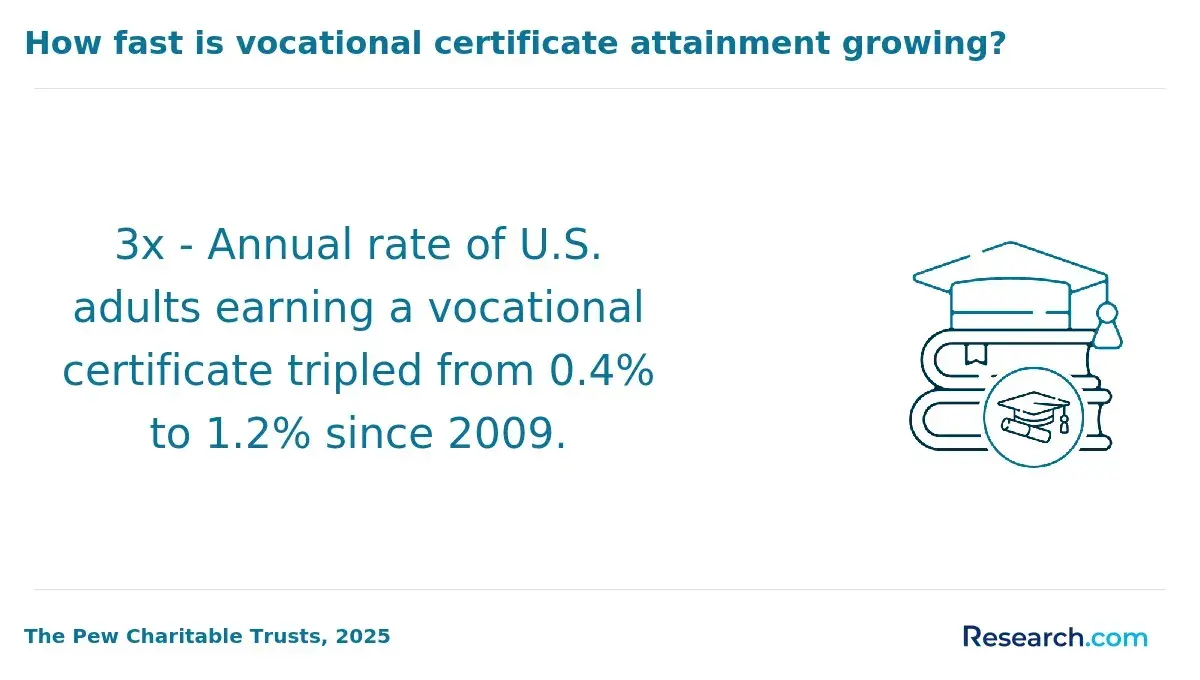
Students can prepare for global careers through associate, bachelor's, master's, certificate, and doctoral pathways. The best level depends on the target role: many business, logistics, communications, and technology jobs are accessible with a bachelor's degree, while diplomacy, public health research, advanced policy analysis, and international development roles may prefer or require graduate study.
The table below compares degree levels by purpose and typical fit. It is especially useful for students deciding whether to enter the workforce quickly or invest in a longer academic path:
| Program type | Typical length | Best for | Global-career value |
| Associate degree | About 2 years full time | Students seeking lower-cost entry, transfer preparation, or support roles | Can build foundations in business, language, IT, or communications before transfer |
| Bachelor's degree | About 4 years full time | Most entry-level professional global-career roles | Provides the main credential for analyst, coordinator, specialist, and trainee positions |
| Undergraduate certificate | Often less than 1 year | Students adding focused skills to a major | Can strengthen language, analytics, cybersecurity, GIS, project management, or trade knowledge |
| Master's degree | Usually 1 to 3 years | Students targeting advanced policy, public health, data, international affairs, or management roles | Can support specialization, career switching, and leadership preparation |
| Doctoral or professional degree | Varies widely | Students pursuing research, academia, law, medicine, or high-level technical expertise | Important for specialized fields but unnecessary for many business and operations roles |
Accelerated study can make sense for students with transfer credits, prior college experience, military education, or a clear career goal. Students exploring a faster completion route should compare whether a 1-year bachelor degree online is realistic for their credit history, major requirements, and workload capacity.
Graduate school should not be treated as the automatic next step after a globally focused bachelor's degree. It is usually most valuable when it unlocks a specific role, such as epidemiologist, foreign service-oriented policy analyst, data scientist, international development specialist, or public administration leader. If the target job postings value experience more than a master's degree, working first may produce a better return.
How do online, hybrid, and campus-based programs compare for global career preparation?
Online, hybrid, and campus-based programs can all support global careers, but they prepare students differently. The best format depends on the student's need for flexibility, access to internships, language immersion, lab or fieldwork, networking, and study-abroad participation.
The table below compares formats based on factors that matter specifically for globally oriented majors. Students should focus on the experiences built into the program, not just the delivery mode printed on the degree:
| Format | Strengths | Limitations | Best fit |
| Online | Flexible scheduling, access from different locations, often strong for working adults | May require extra effort to build networking, internships, language practice, or international experiences | Business, analytics, cybersecurity, communications, public administration, and degree-completion students |
| Hybrid | Combines flexibility with in-person collaboration, labs, advising, or short residencies | Travel to campus can add cost and scheduling complexity | Students who need flexibility but still want structured networking and applied experiences |
| Campus-based | Strong access to clubs, study abroad offices, language tables, faculty, labs, and recruiting events | Less flexible for working students and often involves relocation or housing costs | Traditional-age students, language-intensive majors, lab sciences, engineering, and students seeking immersive campus networks |
Students considering online study should verify institutional accreditation, transfer policies, internship support, and whether the school has experience serving distance learners. A useful starting point is to compare accredited schools online, then narrow the list by major, cost, student support, and career outcomes.
Online programs can be especially practical for global careers because remote collaboration is now common in multinational teams. However, students should intentionally add global exposure through virtual exchange projects, internationally focused internships, language conversation practice, employer-sponsored projects, or short-term study abroad if available.
What coursework and language or study-abroad requirements strengthen global career readiness?
Strong global-career preparation usually includes four layers: disciplinary knowledge, cross-cultural competence, applied experience, and technical or language skills. A major alone may not be enough if the transcript does not show evidence of practical preparation.
Students should look for programs that include the following elements because they make global interests more visible to employers and graduate schools:
- Core courses in international economics, comparative politics, global marketing, intercultural communication, international law, world regional studies, public health systems, sustainability, or global technology policy.
- Quantitative coursework such as statistics, data analytics, accounting, econometrics, GIS, coding, operations management, or research methods.
- Language study beyond the introductory level, especially if the student wants diplomacy, translation, international education, intelligence-adjacent, nonprofit, or regional-specialist work.
- Applied learning through internships, consulting projects, simulations, capstones, fieldwork, service learning, or employer-sponsored research.
- International exposure through study abroad, virtual exchange, global classrooms, international case competitions, or short-term faculty-led programs.
Study abroad can be valuable, but it should be planned strategically. A short program may build cultural exposure, while a semester or year abroad may better support language fluency and regional expertise. Students should ask whether credits apply to the major, whether financial aid travels with them, and whether the host courses align with career goals.
Language requirements vary widely. Students who want functional professional fluency should plan for multiple years of study, immersion, conversation practice, and field-specific vocabulary.
A student aiming for international finance, for example, benefits from language study but may also need accounting, modeling, and regulatory knowledge. A student aiming for translation needs much deeper language mastery and often subject-matter specialization.
What admission requirements, program length, and typical costs apply to these majors?
Admission requirements for globally oriented majors are usually similar to other undergraduate programs, but competitive schools or specialized programs may expect stronger preparation in math, writing, language, science, or technology. Students applying to international business, economics, engineering, computer science, public health, or data programs should review major-specific prerequisites carefully.
Most bachelor's degrees take about four years of full-time study, but timelines vary with transfer credits, placement results, course sequencing, internships, co-ops, study abroad, and part-time enrollment. Students who need flexibility may compare a self-paced bachelor's degree with standard semester-based programs, especially if they are working, serving in the military, or returning to college with prior credits.
The table below summarizes common admissions and cost factors. It helps students see why the cheapest listed tuition is not always the lowest total cost:
| Category | What students should expect | Decision point |
| Admissions materials | Application, transcripts, personal statement, recommendations, and sometimes test scores or portfolios | Check whether the major has separate admission after first-year enrollment |
| Academic preparation | Writing, math, social science, language, lab science, or computing foundations depending on major | Weak prerequisites can extend the timeline or require summer courses |
| Program length | About 120 credits for many bachelor's degrees | Internships, co-ops, and study abroad may add time but improve career readiness |
| Published tuition and fees | College Board 2024-25 averages include $11,610 in-state public, $30,780 out-of-state public, and $43,350 private nonprofit | Net price after grants and scholarships is more useful than sticker price |
| Extra costs | Housing, technology, books, travel, passport or visa expenses, language exams, study abroad fees, and professional certifications | Ask for a full cost-of-attendance estimate before enrolling |
To control costs, students should compare transfer credit policies, scholarship renewal rules, study-abroad aid, tuition discounts, employer tuition assistance, and whether internships are paid. Students should also ask whether required international experiences can be completed through lower-cost options such as virtual exchange, local global organizations, or short-term faculty-led programs.
What salaries, benefits, and geographic mobility can graduates in global fields expect?
Global-career salaries depend on occupation, industry, location, experience, technical skill, language proficiency, clearance requirements, and graduate education. The major influences the first step, but the role and industry usually have the bigger effect on pay.
The table below gives salary context for selected U.S. occupations commonly connected to global-career majors. These are national median wages from BLS May 2024 data, so individual offers may be higher or lower depending on employer and region:
| Occupation | Commonly aligned majors | Median annual wage | Mobility considerations |
| Management analyst | International business, economics, analytics | $101,190 | Often concentrated in consulting, corporate headquarters, and government contractors |
| Information security analyst | Cybersecurity, computer science, information systems | $120,360 | Remote and hybrid work can expand options, but some roles require U.S.-based work or clearance |
| Logistician | Supply chain management, operations, business analytics | $80,880 | Roles may cluster near ports, manufacturing hubs, distribution centers, and major metros |
| Market research analyst | Marketing, economics, statistics, international business | $76,950 | Useful in firms serving international customers, consumer brands, and digital platforms |
| Public relations specialist | Communications, journalism, public relations | $69,780 | Global communications work is often found in agencies, large employers, nonprofits, and public institutions |
| Interpreter or translator | Foreign language, linguistics, translation | $59,440 | Freelance, remote, court, healthcare, education, and conference work vary significantly by language pair |
Benefits can include travel opportunities, remote collaboration, multilingual work environments, relocation support, professional development, tuition assistance, and exposure to international teams. However, students should not assume travel is automatic. Many employers reserve international travel for experienced staff, client-facing roles, technical specialists, or managers.
Geographic mobility is strongest when a graduate has portable skills. Data analysis, cybersecurity, accounting, supply chain, project management, language fluency, and technical writing can transfer across industries more easily than a general interest in global affairs.
Students who want to work abroad should also research visa rules, employer sponsorship practices, and whether their U.S. credential is recognized in the target country.
What accreditations, licenses, and certifications matter for internationally focused professions?
Accreditation and credentials matter because global-career fields often cross professional, technical, and regulatory boundaries. Institutional accreditation is the baseline for federal financial aid, transfer credit, and graduate school eligibility. Programmatic accreditation or certification can matter in fields such as business, engineering, public health, cybersecurity, accounting, and education.
Students should understand the difference between accreditation, licensure, and certification before choosing a program:
- Institutional accreditation evaluates the college or university as a whole and is usually the first accreditation students should verify.
- Programmatic accreditation evaluates specific departments or degrees, such as business, engineering, public health, or public administration programs.
- Licensure is a legal authorization required for regulated professions and may vary by state or country.
- Certification is usually an industry credential that can show specialized competence but may not replace a degree or license.
Common examples include AACSB, ACBSP, or IACBE for business programs; ABET for many engineering and computing programs; CEPH for public health; and NASPAA for public policy or public administration. These accreditations do not guarantee employment, but they can signal that a program follows recognized academic or professional standards.
Useful certifications depend on the career path. Supply chain students may consider APICS-related credentials such as CSCP or CPIM after building experience. Cybersecurity students may pursue Security+, CISSP, or cloud security credentials as they advance. Business and finance students may consider CPA, CFA, FRM, or project management credentials when aligned with their roles. Language professionals may need court, medical, or conference interpreting credentials depending on the setting.
A major red flag is a program that makes broad promises about international employment but does not clearly disclose accreditation, licensure alignment, internship support, faculty qualifications, or career outcomes. Students entering regulated fields should verify requirements directly with the relevant state board, professional body, or employer category.
How can students evaluate and compare accredited U.S. colleges for global career majors?
Students should compare colleges using evidence, not just rankings, campus photos, or the word "global" in a program name. A strong program should connect curriculum, experiential learning, advising, employer relationships, and measurable outcomes.
The following checklist helps students evaluate U.S. colleges before committing. It is designed to reveal whether a program can support a real global career path rather than only a broad academic interest:
- Verify institutional accreditation through the school's official accreditation page and recognized accreditor listings.
- Review the exact degree plan, including required courses, electives, prerequisites, capstones, and internship options.
- Ask how many students complete study abroad, virtual exchange, research, internships, co-ops, or service learning connected to the major.
- Compare net price, not only tuition, by reviewing financial aid estimates, fees, housing, travel costs, and scholarship renewal rules.
- Check career services for international employer connections, alumni networks, resume support, internship databases, and graduate school advising.
- Look for language depth, regional expertise, technical electives, and opportunities to combine majors or add certificates.
- Ask for outcome data by program when available, including employment fields, graduate school placement, and common job titles.
Working adults should also ask about credit for prior learning, evening or asynchronous courses, employer tuition assistance, and shorter academic terms. Students comparing flexible options can review accelerated degree programs for working adults while still checking accreditation, workload, transfer limits, and major availability.
Be cautious of schools that refuse to provide total cost estimates, pressure students to enroll immediately, lack transparent accreditation details, or advertise unusually broad career outcomes without evidence. The best choice is usually the program that fits the student's target role, budget, learning format, and support needs-not simply the most famous or the fastest option.
Other Things You Should Know About
International business, economics, supply chain management, data science, computer science, international relations, public health, and foreign languages are among the strongest options. The best choice depends on whether you want to analyze markets, manage operations, work in policy, use languages, build technology, or address health and environmental issues.
No, but study abroad can help. Employers usually care more about skills, internships, language ability, cultural competence, and relevant experience. If study abroad is too expensive or difficult, consider virtual exchange, local internships with international organizations, language immersion, or global capstone projects.
They can be worth it when paired with practical skills such as research methods, data analysis, writing, language proficiency, policy analysis, communications, or regional expertise. Students should avoid relying on the major name alone and should build a clear path to internships, graduate school, or entry-level roles.
Majors connected to technology, analytics, cybersecurity, finance, engineering, supply chain, and consulting often align with higher-paying roles. However, salaries vary by occupation, region, employer, experience, and advanced credentials, so students should compare actual job titles rather than choosing only by major name.
References
- Nine Career Benefits of Study Abroad - IFSA https://ifsa-butler.org/9-career-benefits-of-studying-abroad/
- Going Global? Here’s What You Need to Know https://www.globalization-partners.com/blog/benefits-challenges-global-mobility/
- New National Study Confirms Study Abroad Builds Career-Ready Graduates | IES Abroad https://www.iesabroad.org/news/new-national-study-confirms-study-abroad-builds-career-ready-graduates
- Top College Majors That Open Doors to Global Careers https://www.indwes.edu/articles/2025/05/top-college-majors
- What to Expect in a Study Abroad Program: Academics and Beyond - aramfo.org https://www.aramfo.org/blogs/post/how-study-abroad-programs-enhance-career-opportunities1
- Online vs Hybrid vs Campus Learning in Healthcare: Which Is Right for You? https://www.edumed.org/articles/online-vs-hybrid-vs-campus/
- High School Classes Required for College Admission - National Association for College Admission Counseling (NACAC) https://www.nacacnet.org/high-school-classes-required-for-college-admission/
- Types of College Degrees https://www.act.org/content/act/en/students-and-parents/high-school-success/what-to-do-after-high-school/college-degrees.html
- College Admissions by Major: What It Means & How to Apply Strategically in 2025 — Cosmic College Consulting https://www.cosmic.nyc/blog/what-does-it-mean-to-admit-by-major
- College Requirements: Understanding What Colleges Expect https://cbrg.info/college-requirements-guide/