2027 How to Choose a Major if You Want a High-Paying Job

Co-Founder and Chief Data Scientist
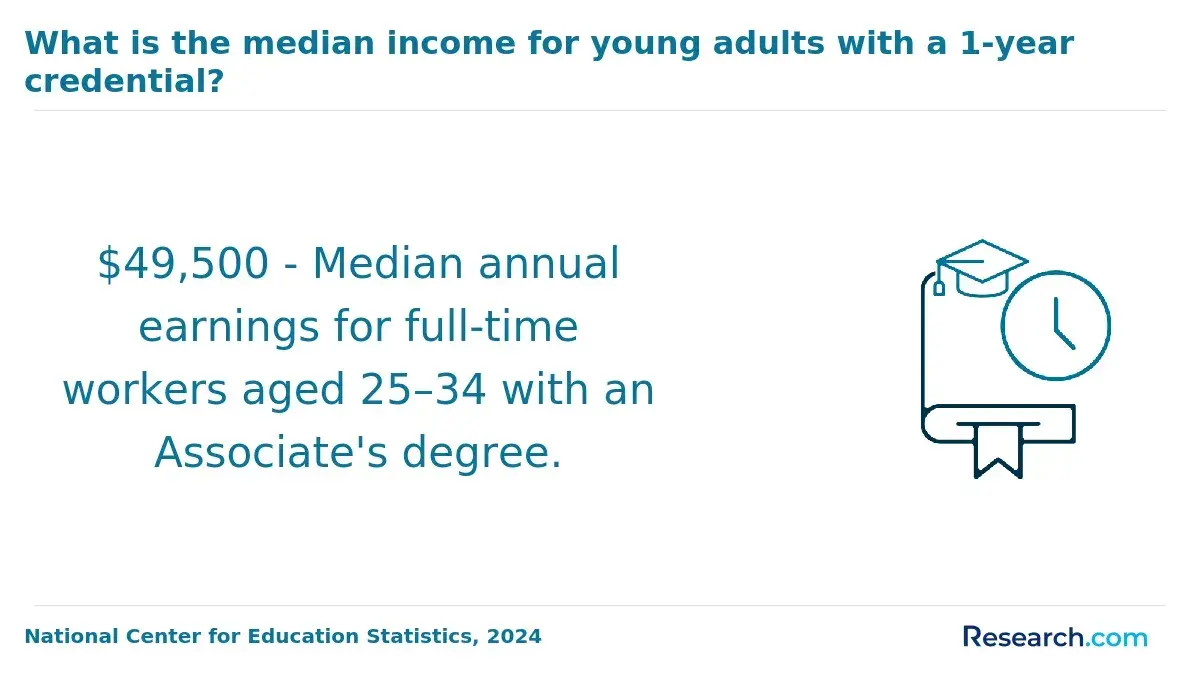
Choosing a major is partly a career investment: the U. S. Bureau of Labor Statistics reported a $49,500 median annual wage for all workers in May 2024, while many technical, healthcare, engineering, and business leadership roles pay far above that.
This guide is for students, career changers, and families comparing majors with income potential. You will learn which fields tend to pay well, what education and licensing they require, how to compare costs, and how to avoid choosing a program that looks impressive but does not match your goals.
Key Things You Should Know
- High-paying majors most often connect to specific labor markets; engineering, computer science, data, nursing and allied health, finance, actuarial science, accounting, and pre-professional pathways usually have clearer salary pipelines than broad majors without technical specialization.
- College Board data for 2024-25 lists average published tuition and fees at $11,610 for in-state public four-year colleges and $43,350 for private nonprofit four-year colleges, so return on investment can vary widely even within the same major.
- No major guarantees high pay; use BLS wage and outlook data, accreditation checks, internship access, licensure rules, and graduate outcomes together before deciding.
How do you choose a major that realistically leads to a high-paying job?
To choose a major that can realistically lead to a high-paying job, start with the job market rather than the course catalog. A major is not just a subject you study; it is a signal to employers, a gateway to certain internships, and sometimes a requirement for licensure or graduate school.
A practical approach is to work backward from target occupations. Compare what the job requires, what the major teaches, how selective the field is, and whether the salary upside is worth the time and cost. If you want a broader scan of strong fields, reviewing top degrees in demand for the future can help you identify majors that connect to durable employer needs.
Use the following process to narrow your choices without relying on rankings alone:
- Choose three to five target careers before choosing one major, then identify the majors employers or licensing boards most commonly accept.
- Check whether the field pays well at the entry level, after five to 10 years, or only after graduate school or management experience.
- Compare job outlook, automation exposure, geographic demand, and whether the work is concentrated in a few expensive metro areas.
- Review the curriculum for quantitative, technical, clinical, writing, or business skills that employers actually screen for.
- Ask schools for internship placement, licensure pass rates, career outcomes, transfer policies, and total program cost, not just advertised tuition.
The common mistake is choosing a major because it sounds high-paying without checking the route from degree to job. For example, "biology" can lead to strong outcomes for students who continue into medicine, pharmacy, biotechnology, or research, but it may produce different results for students who stop at the bachelor's level without lab experience or a clear specialization.
This table summarizes how different decision factors affect your choice. It is meant to help you compare majors based on career mechanics, not just reputation:
| Decision factor | Why it matters | What to look for |
| Career linkage | Some majors map directly to occupations, while others require extra credentials or networking. | Clear job titles, internship pipelines, licensure alignment, and employer recruiting activity. |
| Salary timing | Some fields pay well immediately; others pay more after graduate school or promotion. | Starting salary, mid-career salary, and the credential needed for advancement. |
| Program difficulty | High-paying fields often require math, science, coding, clinical practice, or intensive writing. | Prerequisites, course sequencing, tutoring support, and retention rates in the major. |
| Labor market depth | A strong major should connect to multiple industries, not only one narrow employer type. | Job postings across regions, public and private sector options, and transferable skills. |
| Total cost | A high salary may not offset excessive debt if the school is expensive or completion takes longer. | Net price, time to degree, scholarship renewal rules, and expected borrowing. |
Which majors currently offer the highest starting salaries and long-term earnings?
The highest-paying majors usually share one trait: they build scarce, measurable skills that employers can connect to revenue, safety, compliance, technology, or patient outcomes. That is why engineering, computer science, data science, nursing, finance, accounting, economics, and certain health science tracks consistently appear near the top of salary comparisons.
For starting salaries, employer demand is especially strong in technical fields. The National Association of Colleges and Employers' 2025 salary projections place engineering and computer science among the highest-paying bachelor's degree categories, with projected average starting salaries in the mid-$70,000 range. This is useful because it reflects employer hiring expectations, but it should not be read as a promise for every graduate or every region.
The table below compares common high-paying major families with the kinds of roles they typically support. Use it to see whether a major's salary potential comes from the bachelor's degree itself, a required license, or later graduate training:
| Major family | Common roles | Typical salary pattern | Important caveat |
| Computer science and software engineering | Software developer, systems analyst, cybersecurity analyst, data engineer | Often strong at the bachelor's level, especially with internships and a project portfolio. | Hiring can be competitive, and employers increasingly test practical coding, cloud, AI, and security skills. |
| Engineering | Mechanical, electrical, civil, chemical, aerospace, industrial engineer | Strong entry-level pay and stable long-term earnings in licensed or technical roles. | ABET accreditation can matter, especially for professional engineering licensure. |
| Nursing and allied health | Registered nurse, sonographer, respiratory therapist, radiologic technologist | Can offer solid pay with associate or bachelor's preparation, depending on the role and state. | Clinical hours, state licensure, and program approval are essential. |
| Finance, accounting, and economics | Financial analyst, accountant, risk analyst, actuary, consultant | Pay can rise sharply with certifications, quantitative skills, or movement into management. | Top outcomes often depend on internships, school recruiting networks, and exam progress. |
| Data science, statistics, and applied math | Data analyst, statistician, operations research analyst, actuary | Strong when paired with programming, business knowledge, or industry specialization. | Some advanced roles prefer or require a master's degree. |
| Pre-med, pre-dental, and pre-pharmacy pathways | Physician, dentist, pharmacist, physician assistant | Long-term earnings can be high after professional school and licensure. | The bachelor's major alone is not enough; admissions, debt, and training length are major factors. |
For long-term earnings, the major matters, but occupation matters more. A computer science graduate who becomes a software engineer will usually have a different earnings path than one who moves into general tech support, just as a biology major headed to medical school has a different path than one entering the workforce immediately after college.
How can you balance salary potential with your interests, strengths, and career fit?
A high-paying major is only a good choice if you can complete it, perform well in it, and tolerate the day-to-day work it leads to. Salary should be one input in the decision, not the only one.
Start by separating interest from fit. Interest means you like the subject; fit means your strengths, work style, values, and constraints match the academic path and career environment.
If you are drawn to a lower-stress or more flexible route, comparing an easiest bachelor degree list may be useful, but do not confuse "easier to complete" with "best for high pay." The right major should be challenging enough to build marketable skills but realistic enough that you can finish with strong grades and experience.
Use these questions to test fit before committing:
- Do I enjoy the work tasks behind the salary, such as debugging code, analyzing financial models, caring for patients, designing systems, writing reports, or interpreting regulations?
- Can I handle the gateway courses, such as calculus, chemistry, anatomy, statistics, programming, or accounting?
- Will I need graduate school, professional exams, clinical placements, or state licensure before the major produces the salary I expect?
- Do I prefer predictable schedules, client-facing work, remote work, fieldwork, lab work, shift work, or leadership roles?
- Can I build evidence of skill through internships, projects, research, clinical rotations, portfolios, competitions, or certifications?
One common mistake is choosing the highest salary field and ignoring completion risk. Another is choosing a favorite subject without checking whether it leads to a clear occupation. The better strategy is to find the overlap between labor market value and personal sustainability.
This comparison can help you think through that trade-off. It is not a ranking; it shows when different major choices make sense:
| Student profile | Major strategy that may fit | Risk to manage |
| Strong in math, logic, and independent problem-solving | Computer science, engineering, data science, actuarial science, applied math | Competitive internships and fast-changing technical expectations. |
| Strong in science and comfortable with patient care | Nursing, allied health, pre-med, public health with clinical planning | Licensure rules, clinical placement availability, and emotional demands of care work. |
| Strong in communication and quantitative business analysis | Finance, accounting, economics, supply chain, information systems | Salary can depend heavily on internships, networking, exams, and employer recruiting. |
| Creative or people-focused but income-conscious | UX design, technical communication, marketing analytics, human resources analytics, product management pathway | Portfolio quality and technical/business add-ons often matter more than the major name alone. |
| Unsure but wants optionality | Business analytics, information systems, statistics, economics, engineering technology | Broad programs require intentional electives, internships, and skill proof to avoid vague outcomes. |
What education level and licensing are required for the highest-paying careers?
The highest-paying careers do not all require the same education level. Some can start with an associate degree, many require a bachelor's degree, and others require graduate or professional school plus licensing.
If speed matters, an accelerated bachelor's degree may reduce time to completion, but it should still match the credential rules for your target field. A faster degree is not a shortcut around accreditation, clinical hours, engineering standards, or professional exams.
Before enrolling, check the credential floor for the role you want. The table below shows common high-paying paths and the education or licensing structure typically involved in the U.S.:
| Career path | Common minimum education | Licensing or certification issue | Important planning note |
| Software developer or cybersecurity analyst | Bachelor's degree often preferred, though some employers consider portfolios and experience. | Vendor certifications can help, but state licensure is usually not required. | Projects, internships, GitHub work, cloud tools, and security labs can matter as much as coursework. |
| Engineer | Bachelor's degree in engineering for most entry-level roles. | Professional Engineer licensure may require an ABET-accredited degree, exams, and supervised experience. | Licensure matters more in civil, structural, environmental, and public-facing engineering roles. |
| Registered nurse | Associate Degree in Nursing or Bachelor of Science in Nursing, depending on employer and career goal. | NCLEX-RN passage and state board approval are required. | Some hospitals prefer or require a BSN for advancement. |
| Accountant or CPA pathway | Bachelor's degree for many accounting roles. | CPA licensure usually requires additional credit hours, exam passage, and state-specific experience. | Check your state board before choosing electives or a combined bachelor's/master's route. |
| Physician, dentist, or pharmacist | Bachelor's prerequisites plus professional doctorate. | Licensure, board exams, and supervised training are required. | High earnings potential comes after a long and expensive training path. |
| Physical therapist, physician assistant, or advanced practice nurse | Graduate degree after undergraduate prerequisites. | National exams and state licensure are required. | Clinical experience and prerequisite sequencing are critical for admission. |
The key is to distinguish the major from the credential. A bachelor's in biology, psychology, or health science may be useful preparation, but it does not by itself qualify someone to practice medicine, therapy, dentistry, or advanced nursing.
How do online degree programs compare to campus programs for high-paying fields?
Online degree programs can work well for high-paying fields when the program is accredited, the format supports the required learning outcomes, and the school has credible career support. They are often strongest for computer science, business, accounting, data analytics, cybersecurity, information systems, healthcare administration, and degree-completion programs.
An accelerated bachelor's degree online may be especially useful for working adults with transfer credits, military credit, or prior college experience. However, online format alone does not make a program faster or cheaper; course load, transfer policy, term structure, and required labs or clinical placements matter more.
Use this comparison to decide whether online or campus study is the better route for your target major. The main issue is not prestige in the abstract; it is whether the format gives you access to the training, supervision, equipment, and recruiting you need:
| Program format | Best fit | Potential drawback | What to verify |
| Fully online | Business, accounting, IT, cybersecurity, data analytics, management, degree completion. | May offer fewer local networking, lab, or internship opportunities unless the school builds them in. | Accreditation, employer recognition, career services, project work, and exam preparation. |
| Hybrid | Nursing, allied health, engineering technology, lab sciences, teacher preparation, counseling prerequisites. | Campus visits or local placements can limit flexibility. | Clinical site availability, lab scheduling, state authorization, and licensure alignment. |
| Campus-based | Engineering, lab-intensive sciences, traditional nursing, architecture, research-heavy programs. | May cost more in housing, transportation, and opportunity cost. | Facilities, internship access, employer recruiting, research opportunities, and graduation rates. |
A common red flag is an online program that advertises a licensed career but does not clearly explain clinical placements, state authorization, or exam eligibility. For any regulated field, confirm directly with the licensing board before enrolling.
How can you verify that a program and school are properly accredited?
Accreditation is one of the most important checks when choosing a major for a high-paying career. Institutional accreditation affects credit transfer, graduate school eligibility, and federal financial aid access. Programmatic accreditation can determine whether your degree meets professional standards in fields such as engineering, nursing, business, public health, social work, counseling, pharmacy, medicine, and law.
Follow these steps before you apply or pay a deposit:
- Confirm the institution appears in the U.S. Department of Education's Database of Accredited Postsecondary Institutions and Programs or the accreditor's official directory.
- Check whether your major needs programmatic accreditation, such as ABET for many engineering programs, AACSB or ACBSP for business, CCNE or ACEN for nursing, or field-specific accreditors for licensed health professions.
- Ask whether the program meets licensure requirements in your state, especially for nursing, teaching, counseling, engineering, social work, and allied health.
- Verify that credits can transfer to public universities or graduate programs you may want later.
- Look for outcome data, including graduation rates, licensure exam pass rates, job placement reporting methods, and median debt where available.
The biggest mistake is assuming "accredited" means every program at the school is approved for every career. A university can be institutionally accredited while a specific nursing, engineering, counseling, or education program lacks the approval needed for licensure in a particular state.
This table shows which accreditation questions matter most by field. Use it as a screening tool when comparing schools:
| Field | Accreditation or approval to check | Why it matters |
| Engineering | ABET accreditation for many engineering disciplines. | Can affect eligibility for Professional Engineer licensure and employer recognition. |
| Nursing | State board approval plus CCNE or ACEN program accreditation. | Determines NCLEX eligibility and may affect graduate school or employer preference. |
| Business and accounting | Institutional accreditation; AACSB, ACBSP, or IACBE may add value. | Can influence recruiting, graduate admission, and CPA education planning. |
| Healthcare professions | Field-specific accreditors such as CAPTE, ARC-PA, ACPE, CODA, or CAAHEP depending on the profession. | Often required for board exams, clinical practice, or state licensure. |
| Computer science and IT | Institutional accreditation; ABET may matter for some computing programs. | Employers often focus on skills, but accreditation still affects transfer and graduate study. |
What coursework and skills do high-paying majors typically require and develop?
High-paying majors typically develop skills that are hard to replace, easy to measure, or costly for employers to train from scratch. These include quantitative reasoning, technical design, programming, clinical judgment, financial analysis, compliance knowledge, and communication under pressure.
Expect challenging coursework in many of these majors. The point is not difficulty for its own sake; rigorous courses help prove you can handle complex workplace problems. The following list summarizes common skill clusters and why they matter:
- Quantitative analysis: Calculus, statistics, econometrics, operations research, and data modeling help students qualify for roles in analytics, engineering, finance, actuarial science, and research.
- Technical production: Programming, databases, cloud computing, cybersecurity, CAD, lab methods, and systems design help students turn theory into usable products or processes.
- Clinical and safety judgment: Anatomy, physiology, pharmacology, patient assessment, and evidence-based practice prepare students for regulated healthcare work.
- Business decision-making: Accounting, corporate finance, supply chain, market analysis, and risk management support careers tied to revenue, cost control, and compliance.
- Communication and leadership: Technical writing, presentations, documentation, teamwork, and stakeholder management help graduates advance beyond entry-level technical roles.
AI is changing the skill mix, not eliminating the need for strong majors. In software, data, finance, and analytics, employers increasingly expect graduates to use AI tools responsibly while still understanding fundamentals. In healthcare and engineering, technology can support decision-making, but accountability, safety, ethics, and licensing remain human-centered.
A good curriculum should combine core theory with proof of application. Look for capstone projects, labs, simulations, clinical rotations, case competitions, research assistantships, co-ops, internships, and portfolio-building assignments.
What are the typical program length, costs, and financial aid options for these majors?
Program length and cost vary widely, even for the same major. A high-paying career path can be worth the investment, but only if you understand the full price: tuition, fees, housing, books, equipment, exam fees, lost work hours, transportation, and additional years of graduate or professional study.
College Board's 2024-25 pricing data shows why school choice matters: average published tuition and fees are $11,610 for in-state students at public four-year colleges, $30,780 for out-of-state students at public four-year colleges, and $43,350 at private nonprofit four-year colleges. These are sticker prices, so your net cost may be lower after grants and scholarships, but they are still a useful warning against judging ROI by major alone.
If your high-paying path requires graduate education, compare programs carefully; a list of the cheapest online masters can be a starting point for cost research, especially in fields where a master's degree improves advancement but is not tied to expensive lab or clinical infrastructure.
The table below outlines common timelines and cost issues. Use it to estimate how long it may take before you reach full earning eligibility:
| Path | Typical length | Cost factors | Financial aid considerations |
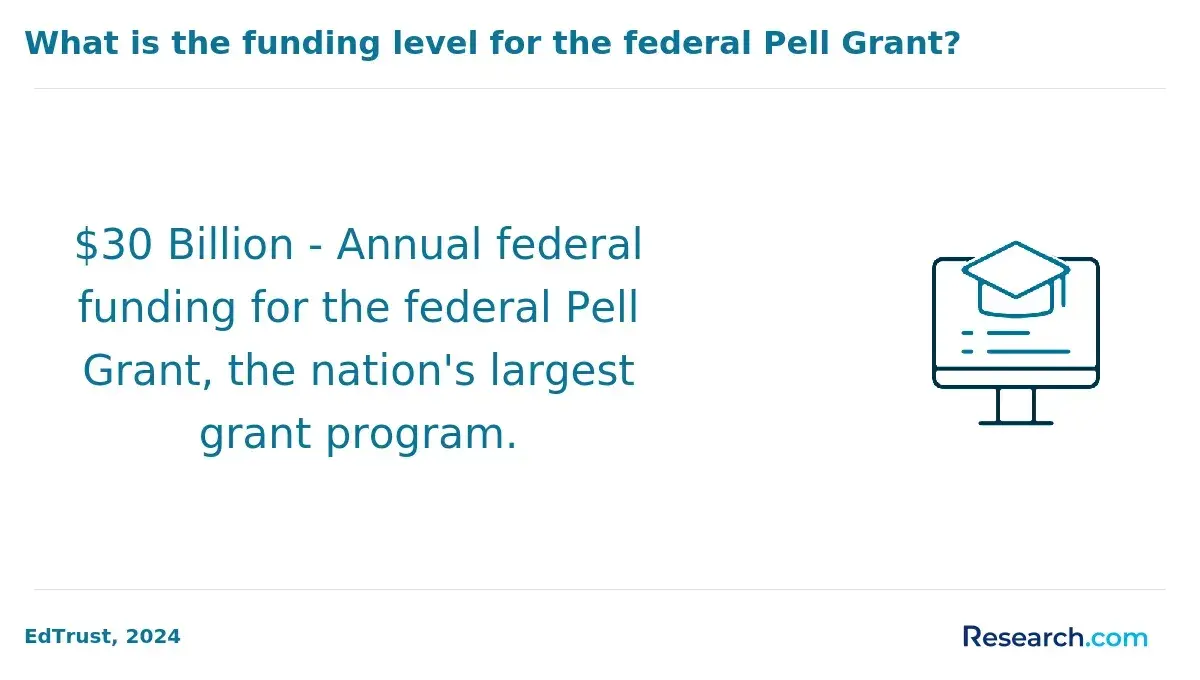
| Associate degree to workforce | About two years full time. | Community college tuition, clinical fees, equipment, certification or licensure exams. | Pell Grants, state grants, employer tuition support, and federal loans may apply. |
| Bachelor's degree | About four years full time; shorter with transfer or accelerated credit. | Tuition, fees, housing, books, software, lab fees, internship travel, and delayed earnings. | Federal aid, institutional scholarships, work-study, state aid, and transfer pathways can reduce net cost. |
| Bachelor's plus master's | Usually five to seven total years, depending on program structure. | Graduate tuition, fewer grant options, exam fees, and opportunity cost. | Assistantships, employer reimbursement, scholarships, and careful borrowing limits are important. |
| Professional doctorate | Often seven or more total years after high school, depending on profession. | High tuition, living costs, board exams, residency or supervised practice, and interest accumulation. | Federal graduate loans, scholarships, service programs, and income-driven repayment may be relevant. |
To reduce costs, complete transferable general education credits at a community college, apply early for institutional aid, ask about scholarship renewal requirements, compare net price rather than sticker price, and avoid changing majors late without understanding how many credits will still count.
What are the job outlook and industry demand for popular high-paying career paths?
Job outlook should influence your major because high pay is more achievable when employers are hiring. The best signals are not headlines; they are occupational projections, industry growth, replacement demand, and whether the work is expanding across many regions.
BLS projections for 2023-33, released in 2024, show especially strong demand in computer and mathematical occupations, healthcare, and several professional services fields. This matters because majors connected to these areas often give graduates more chances to enter, switch employers, and specialize over time.
The table below connects popular high-paying paths to demand drivers. It helps you distinguish fields with broad structural demand from fields where pay may depend on a narrower employer market:
| Career path | Demand driver | What it means for major choice |
| Computer science, cybersecurity, and data | Cloud adoption, AI tools, cyber risk, software modernization, and data infrastructure. | Choose programs with current technical coursework, projects, internships, and security or data electives. |
| Nursing and allied health | Aging population, chronic disease management, hospital staffing needs, outpatient care growth. | Prioritize approved programs with strong clinical placements and licensure pass rates. |
| Engineering | Infrastructure, manufacturing, energy systems, automation, defense, transportation, and environmental projects. | Look for ABET alignment, labs, co-ops, and regional employer partnerships. |
| Finance, accounting, and risk | Regulation, audit needs, investment analysis, insurance modeling, and corporate decision support. | Build Excel, data, accounting systems, statistics, and professional exam readiness. |
| Supply chain and operations | Logistics complexity, reshoring, e-commerce, analytics, and risk management. | Choose programs that combine analytics, operations, procurement, and technology systems. |
Be careful with fields that are trendy but immature. For example, AI-related roles can be high-paying, but many employers still hire from computer science, statistics, engineering, data science, or applied math backgrounds rather than from narrowly titled AI majors. A broad technical foundation can be safer than a very specialized degree if the job market shifts.
How can you research and compare salary data for different majors and careers?
Good salary research uses multiple sources because every dataset has limits. Some report occupations, others report majors, and others report graduates from a specific school. The most reliable decision comes from comparing them together.
Use these sources in combination when comparing majors:
- College scorecard: Best for program-level debt and earnings data where available, especially when comparing specific schools.
- State workforce dashboards: Best for regional demand, local wages, and employer concentration.
- School career outcomes reports: Useful when they define response rates, employment status, salary reporting, and whether data is major-specific.
- Professional associations: Useful for certification, licensure, exam, and specialty salary context.
When using salary data, compare apples to apples. A "median salary for software developers" is not the same as "earnings for computer science majors," and a school's graduate survey may exclude nonrespondents. Also check geography: a higher salary in San Francisco, Seattle, Boston, or New York may come with a higher cost of living.
Follow this salary-check sequence before you commit to a major:
- Identify the exact job titles you want, not just the major name.
- Check the BLS median wage and employment outlook for each job title.
- Compare state or metro wage data for the region where you are likely to work.
- Review school-specific outcomes and ask how many graduates were included in the salary report.
- Estimate monthly loan payments and compare them with conservative entry-level pay, not best-case pay.
- Confirm whether the salary requires graduate school, licensure, relocation, night shifts, commission, overtime, or management responsibility.
The safest interpretation is conservative. If a major can lead to a high salary only after graduate school, top-tier internships, or relocation, treat those as requirements in your plan rather than optional bonuses.
Other Things You Should Know About
Start with majors that connect directly to high-demand occupations: engineering, computer science, data science, nursing, finance, accounting, economics, actuarial science, and certain health science pathways. Then choose based on your strengths, willingness to meet licensure or graduate school requirements, and the internships available at your school.
Choose the strongest major you can complete well while building marketable experience. A difficult major with poor grades, no internships, and low motivation may not outperform a more manageable major combined with analytics, technical, business, or healthcare skills.
Not always. Software, engineering, nursing, accounting, finance, cybersecurity, and some data roles can pay well with a bachelor's degree or less, depending on the position. Medicine, dentistry, pharmacy, advanced practice nursing, physical therapy, law, and many research roles usually require graduate or professional education.
Compare total program cost, expected borrowing, completion time, entry-level wages, job outlook, and credential requirements. Use conservative salary estimates and check whether the program is accredited, has strong career outcomes, and gives you access to internships, clinical placements, projects, or exam preparation.
References
- How to Choose a Career That Aligns with Your Strengths (A Practical Guide to Finding Your Purpose) - Careers by Design https://www.careersbydesign.ca/blog/choose-a-career-that-aligns-with-your-strengths/
- 15 High-Paying Jobs That’ll Be in Demand for Years to Come | The Muse https://www.themuse.com/advice/high-paying-jobs-in-demand-for-future
- CHEA - Find Accredited Higher Education Institutions & Programs https://www.chea.org/directories
- Top 10 Highest Paying Majors to Choose From - University of the Potomac https://potomac.edu/highest-paying-majors/
- Career earnings by college major - The Hamilton Project https://www.hamiltonproject.org/data/career-earnings-by-college-major/
- Finding Your Ideal Career: Balancing Passion, Skills, and Income for Long-Term Success – Sara Shadabi https://sarashadabi.com/finding-your-ideal-career-balancing-passion-skills-and-income-for-long-term-success/
- How to Choose a Major: Balancing Interests and Job Prospects https://www.cialfo.co/blog/how-to-choose-a-major
- What Is College Accreditation? How to Check If a School Is Legit https://abound.college/finishcollege/advice/accreditation-why-is-it-so-important/
- Here's how you land a high-paying job—it has nothing to do with your college major, says advisor of 20 years https://www.cnbc.com/2026/04/09/heres-what-actually-leads-to-high-paying-jobsits-not-the-major-you-pick-college-expert.html