2027 Best College Majors for Students Who Want Leadership Roles

Co-Founder and Chief Data Scientist
Choosing a major for leadership is really a choice about the problems you want to manage: people, money, technology, operations, policy, or care delivery. The stakes are high because the U.S. Bureau of Labor Statistics reported a May 2024 median annual wage of $122,090 for management occupations, far above the median for all occupations.
This guide is for students who want authority, mobility, and long-term career options. You will learn which majors fit different leadership goals, what credentials matter, and how to compare programs before investing time and tuition.
Key Things You Should Know
- Business administration, management, finance, computer science, engineering, healthcare administration, public administration, and organizational leadership are among the strongest majors for students who want supervisory, executive, or operations-focused careers.
- The highest-paying leadership tracks are often tied to technical or financial responsibility; BLS May 2024 data places computer and information systems managers at a median annual wage of $171,200 and financial managers at $161,700.
- Program fit matters as much as the major: students should check accreditation, internship access, transfer credit rules, licensure alignment, and total cost before choosing an online or campus-based leadership degree.
What are the best college majors for leadership roles?
The best college majors for leadership roles are majors that combine decision-making, communication, analytical reasoning, and domain expertise. A leadership role is not just a job title; it usually means being accountable for people, budgets, strategy, risk, compliance, performance, or change.
For most students, the right major depends on the type of leadership they want. A future hospital administrator needs a different foundation from a future engineering manager, school principal, nonprofit director, or chief technology officer. Students looking for less demanding academic options should be careful not to confuse easy degrees to get with degrees that produce strong leadership preparation; the best choice is the one that matches the industry and responsibility level you want.
The table below compares strong leadership-oriented majors by the type of authority they typically prepare students to pursue. Use it to narrow your options before comparing individual schools.
| Major | Best fit for students who want to lead in | Leadership strengths developed | Potential limitation |
| Business Administration or Management | General management, operations, entrepreneurship, corporate leadership | Budgeting, strategy, team supervision, organizational decision-making | Can be broad unless paired with internships, analytics, or an industry concentration |
| Finance | Banking, corporate finance, investment operations, risk management | Capital planning, financial analysis, compliance, strategic resource allocation | Leadership roles often require strong quantitative skills and experience |
| Computer Science or Information Systems | Technology management, product leadership, cybersecurity, data operations | Systems thinking, technical decision-making, project leadership, digital transformation | Management roles may require later training in communication and people leadership |
| Engineering | Manufacturing, infrastructure, energy, aerospace, product development | Process improvement, technical supervision, quality control, project execution | Some fields require ABET-accredited programs or professional licensure for advancement |
| Healthcare Administration | Hospitals, clinics, long-term care, health systems, public health organizations | Compliance, patient-centered operations, staffing, healthcare finance | Licensure rules may apply in areas such as nursing home administration |
| Public Administration or Political Science | Government, public policy, civic organizations, public service management | Policy analysis, stakeholder management, ethics, public budgeting | Some leadership roles require graduate education or public-sector experience |
| Organizational Leadership | Human resources, training, nonprofit management, team development | Conflict resolution, change management, coaching, communication | Best when combined with a practical industry focus |
| Education | Schools, district administration, student services, training organizations | Instructional leadership, assessment, community engagement, staff development | Principal or superintendent roles typically require state credentials |
The safest strategy is to choose a major that gives you both leadership tools and a marketable professional base. A broad management degree can work well for students who are still exploring industries, while a technical major can be better for students who already know they want to lead in technology, engineering, healthcare, or finance.
Which majors lead to the highest-paying leadership careers?
The highest-paying leadership careers usually sit at the intersection of responsibility, technical expertise, revenue impact, and risk. BLS May 2024 wage data shows that many management occupations have six-figure median pay, but salaries vary by industry, region, employer size, and experience.
The table below connects common majors to leadership occupations with strong salary potential. These figures describe occupational medians, not guaranteed outcomes for a specific graduate.
| Leadership career | Relevant majors | BLS May 2024 median annual wage | What the role usually manages |
| Computer and Information Systems Manager | Computer Science, Information Systems, Cybersecurity, Business Analytics | $171,200 | IT teams, software systems, cybersecurity strategy, data infrastructure |
| Architectural and Engineering Manager | Engineering, Engineering Management | $167,740 | Technical teams, design work, product development, engineering projects |
| Financial Manager | Finance, Accounting, Economics, Business Administration | $161,700 | Budgets, investment strategy, reporting, risk, financial controls |
| Human Resources Manager | Human Resources, Organizational Leadership, Business Administration | $140,030 | Hiring strategy, compensation, employee relations, workforce planning |
| Sales Manager | Marketing, Business Administration, Communications | $138,060 | Sales teams, revenue targets, client strategy, market expansion |
| Medical and Health Services Manager | Healthcare Administration, Public Health, Business Administration | $117,960 | Clinical operations, staffing, compliance, patient service delivery |
| Construction Manager | Construction Management, Civil Engineering, Business Administration | $106,980 | Job sites, contractors, budgets, timelines, safety compliance |
Students seeking high-paying leadership paths should not choose by salary alone. A finance major may lead to strong compensation, but it demands comfort with numbers and regulation. A computer science or engineering major may offer high leadership upside, but technical coursework can be rigorous. Healthcare administration can be attractive for mission-driven students, but it operates in a highly regulated environment where compliance and patient outcomes matter as much as business performance.
AI is also changing what "high-paying leadership" looks like. Employers increasingly value managers who can evaluate automation tools, protect data, lead cross-functional teams, and explain technical choices to nontechnical stakeholders. This makes analytics, ethics, and communication valuable across nearly every leadership major.
What degree paths prepare you for management jobs?
Most management jobs do not begin with the word "manager." Students usually build toward leadership through entry-level work, internships, project responsibility, supervisory experience, and sometimes graduate education. A bachelor's degree is the most common starting point for professional management tracks, while graduate programs can help experienced workers move into executive or specialized roles.
The table below summarizes the main degree paths that can lead to leadership roles. It is most useful if you already know whether you want to enter the workforce quickly, change careers, or advance after gaining experience.
| Degree path | Typical purpose | Best for | Leadership outcome |
| Associate degree | Build a foundation and reduce cost before transfer | Students planning to complete a bachelor's later or enter assistant-level roles | Team lead or coordinator roles after experience; stronger with transfer to a bachelor's program |
| Bachelor's degree | Prepare for professional entry-level roles and future promotion | Most first-time college students pursuing business, technology, healthcare, public service, or operations careers | Supervisor, analyst, operations coordinator, project associate, department manager over time |
| Graduate certificate | Add targeted skills without a full degree | Working adults who need training in project management, analytics, HR, or leadership | Supports promotion when paired with experience, but may not replace a degree for senior roles |
| Master's degree | Develop advanced management, strategy, or technical leadership skills | Professionals aiming for director, executive, administrator, or specialized management roles | Senior manager, director, administrator, consultant, executive-track roles |
| Doctorate or professional degree | Prepare for top-level administration, research leadership, or specialized professional authority | Future superintendents, university administrators, policy leaders, healthcare executives, or scholar-practitioners | Executive, senior administrator, research director, policy leader |
A practical path for many students is to earn a bachelor's degree in a field with clear employment options, then consider an online masters degree after gaining experience. This sequence can help students avoid paying for graduate school before they know which leadership track actually fits their goals.
If you are comparing degree levels, ask yourself three questions before enrolling. These questions help prevent overpaying for credentials that do not match your career stage.
- Do the jobs I want require a specific degree level, or do they mainly require experience?
- Will this program help me build measurable skills such as budgeting, analytics, supervision, project management, or compliance?
- Can I connect the program to internships, employer tuition assistance, professional certifications, or promotion opportunities?
Which leadership majors require accreditation or licensure?
Accreditation and licensure matter most when leadership responsibilities affect public safety, professional practice, public funds, or regulated services. Institutional accreditation is important for any college, but programmatic accreditation or state approval may also matter in fields such as engineering, education, nursing, accounting, public health, and healthcare administration.
The table below shows where students should pay special attention. Requirements can vary by state, employer, and role, so students should verify rules before enrolling.
| Major or field | Credential issue to check | Why it matters for leadership roles |
| Engineering | ABET accreditation and state professional engineer pathways | Some technical leadership roles value or require professional engineering credentials, especially in public-facing or safety-sensitive work |
| Education | State-approved teacher, principal, or administrator preparation | School leadership roles often require teaching experience, graduate study, and state administrator licensure |
| Accounting | CPA education requirements and state board rules | Controller, audit, and finance leadership roles may prefer or require CPA eligibility |
| Healthcare Administration | State rules for nursing home administrator or long-term care licensure | Some healthcare management roles involve regulated facilities and mandatory licensing |
| Nursing or Health Professions | Program approval, clinical requirements, and state licensure eligibility | Clinical leadership usually requires an active professional license before moving into management |
| Business | Programmatic business accreditation such as AACSB, ACBSP, or IACBE | Not always required, but it may signal stronger curriculum review and employer recognition |
| Public Administration | NASPAA accreditation for some graduate public affairs programs | Not universally required, but it can matter for students pursuing policy, government, or nonprofit leadership |
A common mistake is assuming that any online or out-of-state program automatically meets local licensing rules. This is risky for education, healthcare, counseling, nursing, and some public-sector roles. Before applying, students should contact the relevant state licensing board and ask the school for written confirmation of whether the program is designed to meet requirements in their state.
How do online and campus leadership programs compare?
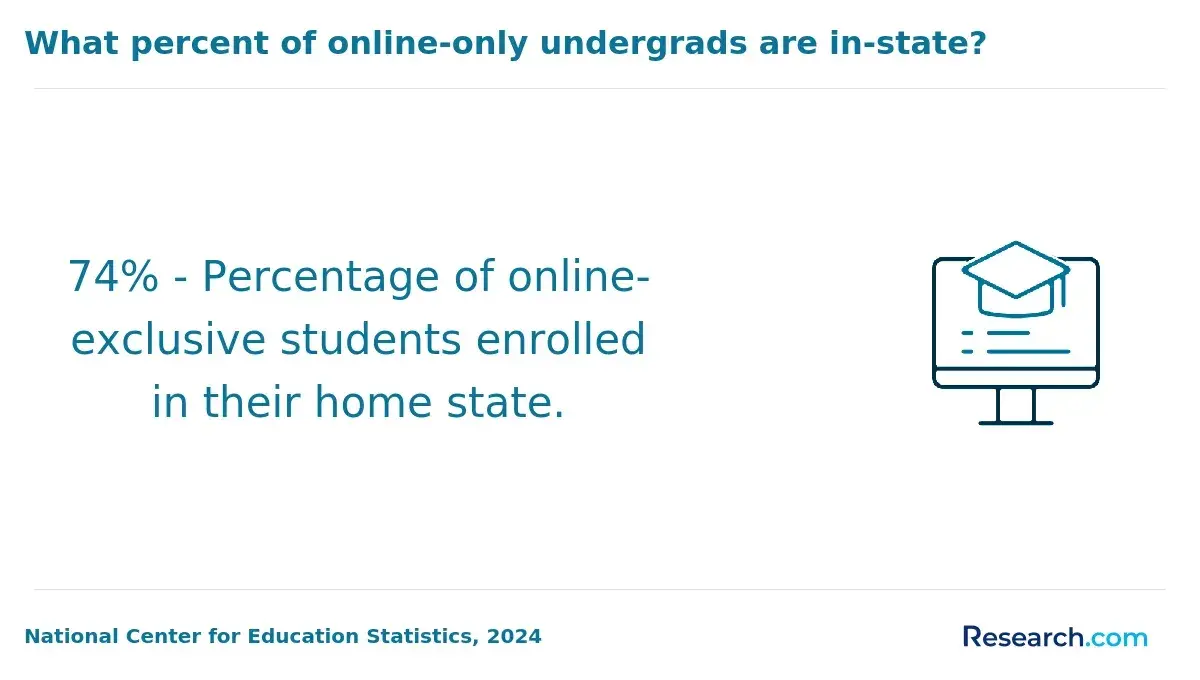
Online and campus programs can both prepare students for leadership roles if they are properly accredited and include strong coursework, faculty support, and career connections. The better format depends on your schedule, need for in-person networking, discipline, and whether your field requires labs, clinical placements, practicums, or site-based internships.
The table below compares online and campus formats using practical decision factors. It can help you decide which learning environment supports your leadership goals instead of simply choosing the most convenient option.
| Factor | Online leadership program | Campus leadership program |
| Schedule flexibility | Often better for working adults, parents, military students, and career changers | Better for students who want a fixed schedule and face-to-face accountability |
| Networking | Can be strong if the program includes live sessions, cohort projects, alumni groups, and employer partnerships | Often stronger for local internships, student organizations, campus recruiting, and informal faculty access |
| Hands-on requirements | May require local placements for healthcare, education, counseling, or fieldwork-heavy programs | Easier access to labs, simulations, campus facilities, and supervised field experiences |
| Cost control | Can reduce relocation and commuting costs, but technology fees and out-of-state tuition still matter | May include higher housing and transportation costs, but some public universities offer lower in-state tuition |
| Best fit | Self-directed students who can manage deadlines and communicate proactively | Students who benefit from in-person structure, campus culture, and local employer networks |
Students choosing online study should focus on accreditation, student support, and transparency rather than marketing claims. A non profit online university may be a strong option for some learners, but nonprofit status alone does not guarantee quality, affordability, or strong outcomes.
Before choosing a format, compare the trade-offs that directly affect completion. Online programs can be excellent for motivated adults, but they are not ideal if you need frequent face-to-face coaching. Campus programs can offer richer in-person networking, but they may be harder to fit around work or family obligations.
What coursework builds leadership skills in college majors?
Leadership coursework should do more than teach theory. The strongest majors require students to practice analysis, communication, ethical judgment, teamwork, and decision-making under constraints. Employers often promote people who can solve problems, explain trade-offs, and keep teams moving when conditions change.
Look for courses and learning experiences that build the following skill clusters. These are especially useful because they transfer across industries and job titles.
- Management and organizational behavior: Teaches motivation, team dynamics, supervision, culture, conflict, and organizational design.
- Accounting, finance, and budgeting: Helps future leaders understand costs, revenue, resource allocation, forecasting, and financial risk.
- Business analytics or data literacy: Prepares students to interpret dashboards, question assumptions, use evidence, and communicate findings clearly.
- Project management: Builds planning, scheduling, risk management, stakeholder communication, and execution skills.
- Ethics, law, and compliance: Helps students understand accountability, privacy, labor rules, safety obligations, and responsible decision-making.
- Human resources and talent development: Covers hiring, performance management, training, compensation, and employee relations.
- Communication and negotiation: Strengthens presentations, writing, persuasion, active listening, and conflict resolution.
- Internships, practicums, simulations, or capstones: Turn classroom learning into evidence students can discuss in interviews.
AI-related coursework is becoming more valuable in leadership programs, even outside technology majors. Students do not necessarily need to become programmers, but they should understand how automation affects staffing, privacy, decision quality, bias, customer service, and productivity.
A useful rule is to review syllabi for deliverables. Programs that require case analyses, consulting projects, presentations, budgets, dashboards, and team-based capstones usually provide stronger leadership preparation than programs built mostly around exams and discussion posts.
What are the admission requirements for leadership-focused degree programs?
Admission requirements vary by school, level, and major. Bachelor's programs usually focus on transcripts and college readiness, while graduate leadership programs often evaluate work experience, career goals, undergraduate performance, and readiness for advanced writing or quantitative coursework.
Students who need scheduling flexibility may also compare online colleges with flexible start dates, but convenience should not replace careful review of accreditation, transfer policies, and academic support.
Most applicants should prepare for the following requirements. The exact mix will differ, but these items cover what schools commonly request.
- For bachelor's programs: High school transcript or GED, application form, possible test scores, personal statement, placement assessments, and transfer transcripts if applicable.
- For competitive business, engineering, nursing, or technology programs: Minimum GPA, prerequisite math or science courses, selective admission to the major, and sometimes a separate departmental application.
- For master's programs: Bachelor's degree from an accredited institution, undergraduate transcripts, resume, statement of purpose, recommendations, and sometimes professional experience.
- For MBA or executive programs: Work experience, leadership potential, quantitative readiness, interview, and occasionally GMAT or GRE scores, though many programs now offer waivers.
- For licensure-linked programs: Background checks, field placement eligibility, state-specific disclosures, clinical or practicum requirements, and proof that the program aligns with the student's intended state.
One common red flag is an admissions process that feels too vague for a regulated field. If a school cannot clearly explain prerequisites, transfer rules, field placement support, or licensure alignment, students should pause and request written answers before paying application or enrollment fees.
How long do leadership degree programs take to finish?
Leadership degree timelines depend on degree level, enrollment intensity, transfer credits, prerequisites, and whether the program includes internships, practicums, clinical placements, or a thesis. Faster is not always better; accelerated formats can save time, but they also compress reading, projects, and team assignments.
The table below shows common U.S. timelines. Use it as a planning tool rather than a promise, because individual programs may differ.
| Program type | Common full-time timeline | Common part-time timeline | Best use case |
| Associate degree | About 2 years | About 3 years or more | Lower-cost start, transfer pathway, or entry-level support role |
| Bachelor's degree | About 4 years | About 5 to 6 years or more | Main preparation for professional entry and long-term management growth |
| Undergraduate certificate | A few months to 1 year | Varies widely | Targeted skills such as supervision, HR basics, project management, or analytics |
| Master's degree | About 1 to 2 years | About 2 to 3 years | Career advancement, specialization, or transition into higher-level management |
| Doctorate | About 3 to 5 years or more | Often longer | Executive, academic, policy, or research-focused leadership |
Some students search for a 6 month masters degree because they want the fastest possible path to promotion. Very short graduate timelines may work only for highly accelerated programs, students with strong preparation, or narrow professional goals; they should be evaluated carefully for accreditation, workload, employer recognition, and whether the pace leaves enough room to build real leadership skills.
To finish on time, students should map prerequisites early, confirm how transfer credits apply, avoid course sequencing surprises, and ask whether required internships or capstones are available every term. Delays often happen because students focus only on total credits and overlook when required courses are actually offered.
Which careers do leadership majors qualify you for?
Leadership majors can qualify students for a wide range of careers, but most graduates still need experience before reaching formal management titles. The first job often builds technical credibility; the promotion path then depends on performance, communication, judgment, and the ability to coordinate people and resources.
The table below connects common leadership-related careers to typical responsibilities. It helps show why the same major can lead to different outcomes depending on industry and experience.
| Career path | Common entry point | Leadership responsibilities over time | Majors that often fit |
| Operations Manager | Operations associate, analyst, coordinator, shift supervisor | Process improvement, scheduling, quality control, staffing, vendor coordination | Business Administration, Supply Chain, Management, Industrial Engineering |
| Project Manager | Project coordinator, business analyst, technical associate | Scope, timelines, budgets, team coordination, stakeholder communication | Business, Engineering, Information Systems, Construction Management |
| Healthcare Administrator | Administrative assistant, clinic coordinator, department analyst | Staffing, compliance, patient flow, budgets, service quality | Healthcare Administration, Public Health, Business Administration |
| Technology Manager | Developer, systems analyst, cybersecurity analyst, IT support specialist | Technical roadmaps, system reliability, data security, team supervision | Computer Science, Information Systems, Cybersecurity |
| Financial Manager | Financial analyst, accountant, auditor, budget analyst | Reporting, forecasting, controls, investment decisions, risk management | Finance, Accounting, Economics, Business |
| Human Resources Manager | HR coordinator, recruiter, training specialist | Talent strategy, employee relations, compensation, compliance, workforce planning | Human Resources, Organizational Leadership, Psychology, Business |
| School or Education Administrator | Teacher, academic advisor, student services coordinator | Instructional leadership, staff development, student outcomes, family engagement | Education, Educational Leadership, Public Administration |
| Nonprofit or Public Sector Manager | Program coordinator, policy analyst, community outreach specialist | Program design, grants, budgets, partnerships, public accountability | Public Administration, Political Science, Social Work, Nonprofit Management |
Students should think in terms of career ladders, not just first jobs. For example, a computer science graduate may begin as a developer and later manage engineering teams, while a healthcare administration graduate may start in patient services and move into department operations. The best major is the one that gives you a credible entry point into the field where you want to lead.
How do you choose a reputable leadership degree program?
A reputable leadership degree program should be accredited, transparent about costs and outcomes, aligned with your target career, and strong enough to help you build evidence of leadership ability. Cost matters, but it should be evaluated alongside completion support, employer connections, and career relevance. The College Board reported average published tuition and fees of $11,610 for in-state students at public four-year colleges for the 2024-25 academic year, which makes total cost planning essential before borrowing.
Use the following steps to compare programs before you apply. This sequence helps you avoid relying only on rankings, ads, or a school's brand name.
- Confirm institutional accreditation through a recognized accreditor and check whether programmatic accreditation matters for your field.
- Match the major to your target industry, not just to the word "leadership" in the program title.
- Ask for a full cost estimate including tuition, fees, books, technology charges, residency requirements, travel, and living expenses.
- Review course requirements for analytics, budgeting, communication, ethics, project management, and experiential learning.
- Check internship, practicum, capstone, employer partnership, and career services access for online and campus students.
- Ask how transfer credits, prior learning credits, military credits, or employer training credits are evaluated.
- Compare graduate outcomes carefully, remembering that salary data can vary by region, prior experience, and industry.
- Talk with admissions, financial aid, and the department before enrolling, and keep written copies of important answers.
Also watch for common mistakes. Choosing a program only because it is fast, cheap, famous, or fully online can backfire if it does not fit your career path. Be especially cautious if a school is unclear about licensure eligibility, avoids discussing total cost, makes unrealistic salary claims, pressures you to enroll quickly, or cannot explain how students gain practical leadership experience.
The best final choice is usually the program that balances affordability, credibility, flexibility, and career alignment. A slightly slower or more structured program may be worth it if it provides stronger internships, better faculty access, clearer licensure alignment, or more respected preparation in your chosen industry.
Other Things You Should Know About
Business administration is one of the most flexible leadership majors because it covers management, finance, marketing, operations, and strategy. It is strongest when paired with internships, analytics coursework, a concentration, or industry experience.
Yes. Many managers start in technical, healthcare, education, engineering, public service, or creative roles before moving into supervision. A non-business major can be a strong path if it gives you industry credibility and you later build management skills.
Not always. Many supervisory and middle-management roles are reachable with a bachelor's degree and experience. A master's degree can be helpful for executive roles, career changes, specialized fields, or industries where graduate education is common.
Useful minors include data analytics, finance, communication, psychology, human resources, computer science, public policy, or entrepreneurship. The best minor fills a skill gap in your major and supports the industry where you want to lead.
References
- The Benefits of Student Leadership Programs for Career Readiness https://www.nsls.org/learning-center/the-benefits-of-student-leadership-programs-for-career-readiness
- Organizational Leadership Job and Salary Opportunities https://www.pointloma.edu/resources/business-leadership/organizational-leadership-job-salary-opportunities
- How Long is an Online EdD Program? Full-Time vs Part-Time EdD Programs https://www.onlineeddprograms.com/faqs/length-of-edd-programs
- Why Leadership Skills Are Essential for College Students https://nscs.org/blog/why-leadership-skills-are-essential-for-college-students
- Bachelor's in Management studies in Warsaw | Poland | Europe - SWPS University https://english.swps.pl/academics/warsaw/ba-programs/ibm
- How Long Does It Take to Get a Business Administration Degree? - Team Academy https://teamacademy.nl/how-long-does-it-take-to-get-a-business-administration-degree/
- 3 Tips to Develop Leadership Skills as a College Student https://www.internshipondemand.com/post/3-tips-to-develop-leadership-skills-as-a-college-student
- Types of Leadership Degrees: Your Guide to Success https://claremontlincoln.edu/news-blog/types-of-leadership-degrees/
- In-Person vs Online Leadership Training: How to Choose - ExecOnline https://www.execonline.com/compare-online-vs-in-person-leadership-training/
- Career Paths With a Degree in Organizational Leadership https://www.calcoast.edu/news/career-paths-with-a-degree-in-organizational-leadership