2027 Which Majors Have the Most Lab Work?

Co-Founder and Chief Data Scientist
Choosing a lab-heavy major means choosing a different college experience: longer class blocks, safety training, equipment fees, research projects, and hands-on assessments. It also can lead to strong career pathways. 2024 wage data from the U.S. Bureau of Labor Statistics places the median pay for medical scientists at $100,590, showing why many students accept intensive lab requirements.
This guide is for students comparing science, engineering, health, and studio-based majors. You will learn which programs require the most hands-on work, how labs affect your schedule, and how to choose a program that fits your goals.
Key Things You Should Know
- Majors with the most lab work are usually chemistry, biochemistry, biology, biomedical engineering, chemical engineering, nursing, medical laboratory science, physics, geology, architecture, and some studio art or design programs.
- Lab-heavy majors often add 3 to 12 scheduled hours per week beyond lectures, and upper-division courses may require independent research, clinical rotations, fieldwork, or capstone design projects.
- Career outcomes vary widely: BLS May 2024 data reports median pay of $61,890 for clinical laboratory technologists and technicians, $87,180 for chemists and materials scientists, and $121,860 for chemical engineers.
Which college majors typically involve the most hands-on lab and studio work?
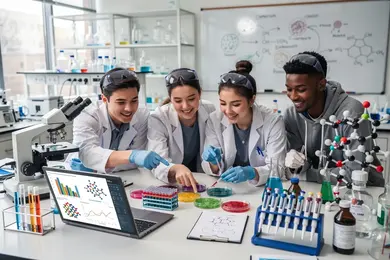
The majors with the most lab work are those where students must prove they can safely observe, measure, build, test, diagnose, or create under real-world conditions. In college, "lab work" can mean wet labs with chemicals or biological samples, dry labs using computation and simulation, engineering design labs, clinical skills labs, field labs, or studio critiques.
For most students, the biggest difference is time. A lecture may meet for 50 to 75 minutes, while a lab can run for two to four hours because setup, experimentation, cleanup, and documentation all happen in the same session. Studio courses can be even more open-ended because students often continue projects outside scheduled class time.
The table below compares common lab-heavy majors by the type of hands-on work they usually require. Use it to identify which majors match the kind of learning you want, not just the career title you have in mind.
| Major or field | Typical hands-on format | Why lab or studio time is intensive | Best fit for students who enjoy |
| Chemistry | Wet labs, instrumental analysis, synthesis, safety procedures | Students must handle chemicals, run reactions, analyze unknowns, and document results precisely | Controlled experiments, measurement, problem solving, and lab notebooks |
| Biochemistry | Molecular biology labs, protein work, enzyme assays, research projects | Courses often combine biology and chemistry techniques in multi-step experiments | Cellular processes, medicine, biotechnology, and research |
| Biology | Microscopy, dissection, ecology fieldwork, genetics labs | Labs vary from organism observation to data collection in natural environments | Living systems, health careers, conservation, and graduate study |
| Nursing | Simulation labs, clinical rotations, patient-care skills practice | Students must demonstrate safe care procedures before and during supervised clinical placements | Hands-on patient care, teamwork, and applied health science |
| Medical laboratory science | Clinical diagnostics labs, hematology, microbiology, immunology, chemistry testing | The major directly trains students to produce accurate laboratory results used in patient care | Healthcare work without constant bedside interaction |
| Engineering | Design labs, prototyping, circuits, materials testing, capstone projects | Students move from theory to building, testing, and revising working systems | Design, technology, math, and applied problem solving |
| Physics | Measurement labs, electronics, optics, computational modeling | Students must connect abstract equations to experimental evidence and uncertainty analysis | Mathematical reasoning, instrumentation, and research |
| Geology and environmental science | Field labs, soil and water sampling, mapping, specimen analysis | Students collect real-world data outside the classroom and analyze it in the lab | Outdoor work, earth systems, sustainability, and environmental testing |
| Architecture and studio art | Design studios, model building, critiques, portfolio development | Students spend extended time creating, revising, and presenting visual or spatial work | Creative production, iteration, critique, and portfolio-based careers |
Students who want hands-on learning but prefer shorter training should also compare degree alternatives, such as 2-year online degrees that pay well, especially if their goal is a faster route into technical, healthcare, or applied career fields.
What science and engineering majors require intensive laboratory coursework and research projects?
Science and engineering majors become lab-intensive because students are not only learning facts; they are learning how evidence is produced. In upper-level courses, lab work often shifts from following instructions to designing procedures, troubleshooting errors, interpreting data, and presenting results.
The most lab-intensive science and engineering majors usually share three features: sequential prerequisites, equipment-based courses, and a culminating research, design, or capstone experience. Students should expect labs to become more independent and less predictable as they move into junior and senior year.
These majors are especially likely to include intensive laboratory coursework and research expectations:
- Chemistry: General chemistry, organic chemistry, analytical chemistry, physical chemistry, and instrumental analysis commonly require separate lab sections, safety training, and detailed reports.
- Biochemistry and molecular biology: Students often complete labs in genetics, cell biology, microbiology, protein methods, and research techniques used in biotechnology and medical science.
- Chemical engineering: Coursework may include process labs, thermodynamics applications, transport phenomena, materials testing, and plant or process design simulations.
- Biomedical engineering: Labs may involve biomechanics, biomaterials, imaging, instrumentation, medical device design, and team-based capstone projects.
- Electrical and computer engineering: Students work with circuits, embedded systems, electronics benches, signal processing, robotics, and hardware-software integration.
- Mechanical engineering: Labs often focus on mechanics, fluids, heat transfer, manufacturing processes, CAD, instrumentation, and senior design prototypes.
- Physics: Students complete experiments in mechanics, electricity and magnetism, optics, modern physics, electronics, and computational modeling.
- Environmental science and geology: These programs often combine field sampling, geographic information systems, soil and water testing, mapping, and lab-based analysis.
A key trend affecting these majors is the growth of data-driven and AI-assisted laboratory work. Students increasingly use simulation tools, coding, statistical software, digital sensors, and automated instruments. That does not eliminate hands-on work; it changes what "hands-on" means. A strong student may need both bench skills and the ability to interpret large datasets responsibly.
If your goal is career mobility after a bachelor's degree, compare lab-heavy majors against broader lists of the best bachelor's degrees to see whether the program's workload, salary potential, graduate school expectations, and licensing requirements align with your plan.
How does lab work differ across biology, chemistry, physics, and health-related majors?
Not all lab-heavy majors feel the same. Biology labs often emphasize living systems and observation. Chemistry labs emphasize precision, safety, reactions, and measurement. Physics labs focus on modeling, instrumentation, and uncertainty. Health-related labs train students to perform procedures correctly because mistakes can affect patient care.
The table below summarizes the practical differences. This matters because students sometimes choose a major based on a favorite high school science class, then discover that the college lab culture is very different.
| Field | Typical lab experience | Common assignments | Main challenge | Career relevance |
| Biology | Microscopy, specimens, genetics, ecology, anatomy, microbiology | Lab reports, organism identification, field notes, data analysis | Managing variability in living systems and interpreting imperfect results | Useful for healthcare preparation, research, conservation, biotech, and education |
| Chemistry | Chemical reactions, synthesis, titration, spectroscopy, chromatography | Pre-lab calculations, safety documentation, formal lab reports | Precision, contamination control, time management, and safety compliance | Directly relevant to pharmaceuticals, materials, environmental testing, and quality control |
| Physics | Mechanics, circuits, optics, sensors, computational experiments | Error analysis, graphs, modeling, technical write-ups | Connecting theoretical models with measured results and uncertainty | Useful for engineering, research, data science, instrumentation, and graduate study |
| Health-related majors | Simulation, clinical skills, diagnostics, anatomy, patient-care practice | Skills checkoffs, clinical documentation, competency assessments | Meeting strict performance standards in realistic care settings | Essential for nursing, medical laboratory science, respiratory therapy, radiologic technology, and pre-professional paths |
Biology is often the broadest choice, but it may require graduate or professional school for many research and healthcare careers. Chemistry is more technique-heavy and can lead to laboratory roles after a bachelor's degree, though advanced roles may require graduate study. Physics can be highly quantitative and is often strongest when paired with programming or engineering applications. Health-related majors tend to be more structured because accreditation, clinical placement, and licensure rules shape the curriculum.
Students should also consider their tolerance for uncertainty. In a chemistry lab, a failed reaction may mean a procedural error. In biology or environmental science, messy results can be part of studying real living systems. In health programs, the standard is different: procedures must be performed safely and consistently because the work connects to patient outcomes.
What skills and competencies do students develop through extensive lab-based majors?
Lab-heavy majors build more than technical knowledge. They train students to plan carefully, follow procedures, document evidence, use specialized tools, and communicate results. These skills are valuable because employers in healthcare, engineering, research, manufacturing, environmental services, and biotechnology need workers who can make decisions from evidence rather than assumptions.
The most useful competencies from lab-based majors often fall into several categories. Students should look for programs that assess these skills repeatedly, not just mention them in course descriptions.
- Technical procedure: Using instruments, preparing samples, calibrating equipment, following protocols, and maintaining a clean and safe work area.
- Scientific reasoning: Forming hypotheses, designing tests, recognizing limitations, evaluating controls, and distinguishing signal from noise.
- Quantitative analysis: Applying statistics, graphing results, calculating uncertainty, using spreadsheets or coding tools, and interpreting datasets.
- Documentation: Keeping accurate lab notebooks, writing technical reports, recording methods, and explaining results clearly enough for others to review.
- Safety and compliance: Understanding chemical hygiene, biosafety, personal protective equipment, waste handling, and ethical research practices.
- Collaboration: Working in lab teams, dividing responsibilities, troubleshooting experiments, and communicating under time pressure.
- Problem solving: Adjusting when experiments fail, identifying sources of error, and improving designs through iteration.
These strengths also make some lab-centered careers appealing to students who prefer focused, independent, or small-team work. If that sounds like you, compare laboratory and technical roles with broader lists of introvert jobs that pay well to identify roles that match both your work style and your education plan.
One common mistake is assuming that strong grades in lecture courses automatically mean strong lab performance. Lab success requires preparation before class, careful attention during procedures, and timely writing afterward. Students who treat labs as secondary often lose points on safety, documentation, and analysis even when they understand the science.
How do program formats impact lab requirements in online versus campus-based degrees?
Online learning can work well for lecture-based courses, general education, statistics, coding, healthcare administration, and some theory-heavy science courses. Lab-heavy majors are more complicated because many outcomes require physical equipment, supervised procedures, clinical placement, or studio critique.
The practical question is not whether a program is online or on campus. The better question is how the program verifies hands-on competency. A reputable online or hybrid program should clearly explain how students complete labs, where they complete them, who supervises them, and whether those experiences meet accreditation or licensure expectations.
The table below compares common formats for lab-heavy degrees. Use it to identify trade-offs before enrolling, especially if you are considering a program outside your state.
| Format | How labs are usually completed | Best for | Potential drawback |
| Campus-based | Scheduled labs in university facilities, studios, clinics, or field sites | Students who need regular equipment access, faculty supervision, and peer collaboration | Less flexible schedule and possible commuting or housing costs |
| Hybrid | Online lectures plus in-person labs, intensives, simulations, or clinical placements | Working students who can travel periodically for required hands-on sessions | Travel weeks, placement coordination, and limited lab scheduling windows |
| Online with lab kits | At-home experiments using approved materials, virtual simulations, or remote labs | Introductory science courses that do not require advanced equipment or regulated procedures | May not satisfy requirements for advanced science, health, engineering, or pre-professional tracks |
| Online completion program | Students transfer prior lab credits or complete clinical/lab hours locally | Students who already hold an associate degree, licensure, or prior lab coursework | Eligibility may depend on transfer credits, employer partnerships, or local site approval |
Students pursuing nursing, medical laboratory science, radiologic technology, respiratory therapy, engineering, architecture, or teacher licensure should be especially cautious. State authorization, clinical placement rules, professional accreditation, and licensing board requirements can vary. Before enrolling, ask the school to confirm in writing whether the program meets requirements in the state where you plan to work.
Online labs can be legitimate when they match the course level and learning outcomes. However, a red flag is any program that advertises a fully online lab-heavy degree but gives vague answers about clinicals, safety training, supervised competencies, or accreditation.
What admission requirements and prerequisites are common for lab-heavy undergraduate majors?
Lab-heavy majors often have stricter preparation requirements because courses build in sequence. If you start behind in math or science, you may still be admitted to the college, but you may need prerequisite courses before entering the major or progressing to upper-division labs.
Common admissions and progression requirements vary by institution, but students should expect several recurring expectations. These requirements matter because missing one course can delay labs that are offered only once per year.
- High school science preparation: Biology, chemistry, physics, anatomy, or environmental science may be recommended or required, depending on the major.
- Math readiness: Engineering, chemistry, physics, and computer-related lab majors often expect placement into college algebra, precalculus, or calculus.
- Minimum college GPA: Nursing, medical laboratory science, engineering, and other selective majors may require students to earn a minimum GPA before formal admission to the professional sequence.
- Prerequisite grades: Programs may require minimum grades in anatomy, physiology, microbiology, chemistry, calculus, or physics before students can take advanced labs.
- Health and safety documentation: Health programs commonly require immunizations, background checks, drug screening, CPR certification, liability insurance, or clinical onboarding.
- Portfolio or audition materials: Architecture, design, and studio art programs may require evidence of creative work rather than only science prerequisites.
- Transfer credit review: Students transferring into lab-heavy majors may need syllabi reviewed because not all lab credits are considered equivalent.
Students who are not ready for a full lab-heavy bachelor's program can still build employable skills through shorter credentials. For example, quick certifications that pay well may help some learners enter healthcare support, IT, manufacturing, or technical roles while deciding whether to continue into a degree.
The biggest mistake is assuming that general admission to a university equals admission to a competitive major. In many programs, the first year is a pre-major period. Ask whether the major has secondary admission, how many seats are available, what GPA is competitive, and whether repeated prerequisite courses are allowed.
How long do lab-intensive degree programs take, and what extra time do labs add?
Most bachelor's degrees are designed to take four years of full-time study, but lab-heavy majors are less forgiving when students change majors, fail prerequisites, transfer credits, or study part time. The reason is sequencing. General chemistry may lead to organic chemistry, which leads to biochemistry, which leads to research methods. Missing one course can push the next lab to a later term.
Labs add time in three ways: scheduled contact hours, preparation before class, and reporting after class. A course listed as four credits may include three lecture hours plus one three-hour lab each week. Studio and engineering design courses may require substantial unscheduled time to complete projects, prototypes, or portfolio pieces.
The table below shows typical timelines and time pressures. These are general patterns, so students should confirm the plan of study at each school.
| Program type | Typical full-time timeline | Common added time from labs | What can extend completion |
| Associate degree in laboratory or health technology | About 2 years | Weekly labs, simulations, practicums, or clinical hours | Limited clinical seats, prerequisite gaps, or part-time enrollment |
| Bachelor's in biology, chemistry, physics, or environmental science | About 4 years | Multiple lab courses each term, research projects, fieldwork, or capstones | Course sequencing, summer research, transfer credit issues, or graduate school preparation |
| Bachelor's in engineering | About 4 years | Design labs, project teams, prototyping, and senior capstone work | Calculus sequence delays, accreditation requirements, or co-op participation |
| Nursing or allied health bachelor's programs | About 4 years, though accelerated options may be shorter for eligible students | Simulation labs, clinical rotations, skills checkoffs, and licensure preparation | Competitive progression, clinical placement availability, or state-specific requirements |
| Architecture | Often 5 years for a professional Bachelor of Architecture | Design studios, model building, critiques, and portfolio development | Studio workload, accreditation path, internships, or portfolio review |
Cost is another time-related factor. College Board's 2024-25 data lists average published tuition and fees at $11,610 for in-state students at public four-year institutions and $43,350 at private nonprofit four-year institutions. Lab fees, studio supplies, software, protective equipment, clinical onboarding, and transportation can raise the real cost beyond tuition, so students should ask for a program-level cost estimate.
A practical planning step is to map every required lab course by semester before enrolling. If a required lab is offered only in spring, you need to know that early. Students who work many hours per week should also ask whether labs are available in evenings, weekends, summers, or block formats.
What careers and job roles are available to graduates of lab-focused majors?
Lab-focused majors can lead to several career directions: direct laboratory employment, licensed health professions, engineering roles, research support, environmental testing, manufacturing quality control, or graduate and professional school. The best path depends on whether the major is career-specific or broadly scientific.
Some majors, such as nursing or medical laboratory science, are designed around a specific profession. Others, such as biology or chemistry, may require students to add internships, research experience, certifications, licensure, or graduate education to qualify for their target role.
The table below connects common lab-heavy majors to career paths. It is meant to help students think beyond the major name and focus on the role they want after graduation.
| Major background | Possible entry-level roles | Advanced or specialized paths | Important notes |
| Biology | Research assistant, biological technician, environmental technician, lab assistant | Physician, physician assistant, veterinarian, genetic counselor, research scientist | Many healthcare and research paths require graduate or professional school |
| Chemistry or biochemistry | Quality control analyst, laboratory technician, research associate, formulation assistant | Pharmaceutical scientist, toxicologist, materials scientist, forensic chemist | Instrument experience and internships can strongly affect employability |
| Medical laboratory science | Clinical laboratory technologist, medical laboratory scientist, diagnostic lab specialist | Lab supervisor, specialist in microbiology or hematology, laboratory manager | Certification and state licensure requirements vary by employer and state |
| Nursing | Registered nurse, clinical nurse, public health nurse | Nurse practitioner, nurse anesthetist, nurse educator, nurse manager | Licensure is required, and clinical placement quality matters |
| Engineering | Design engineer, test engineer, process engineer, manufacturing engineer | Project manager, research and development engineer, systems engineer, licensed professional engineer | ABET accreditation can be important for licensure and employer recognition |
| Physics | Lab technician, data analyst, engineering assistant, instrumentation specialist | Physicist, optical engineer, medical physicist, quantitative analyst | Programming, electronics, or graduate study often improves career options |
| Environmental science or geology | Environmental technician, field scientist, GIS technician, water quality analyst | Hydrologist, environmental consultant, geoscientist, remediation specialist | Fieldwork, GIS, and regulatory knowledge are valuable |
| Architecture or studio design | Design assistant, drafter, junior designer, visualization specialist | Licensed architect, design director, urban designer, creative lead | Portfolio quality and professional accreditation can matter as much as grades |
Students should be careful not to confuse "lab-heavy" with "automatically job-ready." A biology major with no internship, no research experience, and no clear career target may face a harder job search than a student in a more structured applied program. On the other hand, broad science majors can be excellent preparation for graduate school, medicine, biotechnology, or interdisciplinary roles when planned carefully.
What salary ranges and job outlook can students expect in lab-centric fields?
Salaries in lab-centric fields vary because the same major can lead to technician roles, licensed clinical roles, engineering jobs, research careers, or graduate school. The most useful way to evaluate salary is to compare the occupation you want, not just the degree title.
BLS May 2024 wage data provides a helpful baseline for several lab-related occupations. These figures are national medians, so actual pay can differ by state, employer, experience, shift schedule, union coverage, licensure, and graduate education.
| Occupation | Common education path | Median pay from BLS May 2024 data | How to interpret the figure |
| Clinical laboratory technologists and technicians | Medical laboratory science, clinical lab science, or related health laboratory training | $61,890 | A strong fit for students who want healthcare laboratory work, but licensure and certification rules vary |
| Biological technicians | Biology, biotechnology, or related laboratory science | $51,430 | Often an entry-level research support role; advancement may require specialized skills or graduate study |
| Chemists and materials scientists | Chemistry, materials science, biochemistry, or related fields | $87,180 | Laboratory instrumentation, industry experience, and advanced degrees can influence opportunities |
| Chemical engineers | Chemical engineering | $121,860 | Typically requires a rigorous engineering curriculum with strong math, chemistry, and process design labs |
| Medical scientists | Biology, biochemistry, biomedical science, or advanced graduate study | $100,590 | Many roles require a graduate or professional degree, not only an undergraduate major |
Job outlook should also be read by occupation. Healthcare diagnostics, biotechnology, environmental testing, semiconductor manufacturing, advanced materials, and medical device development all rely on laboratory skills, but they do not hire the same majors in the same way. Students should look at employer postings in their target region before choosing electives or internships.
AI and automation are changing lab work rather than removing it. Automated analyzers, robotics, machine learning, and digital lab notebooks can reduce repetitive tasks, but they increase demand for workers who understand quality control, instrument validation, data interpretation, and error detection. For students, that means computing and statistics skills can make a lab-heavy major more marketable.
A common salary mistake is using the highest-paying possible career to justify any science major. For example, a biology degree can support a medical school path, but it does not by itself produce physician-level earnings. Evaluate the full pathway, including graduate school admission risk, debt, licensure, and time out of the workforce.
How can students evaluate accredited, reputable programs with strong laboratory resources?
A strong lab-heavy program should give students access to safe facilities, current equipment, qualified faculty, research or clinical opportunities, and transparent outcome information. Accreditation matters because it signals that the school or program has been reviewed against recognized standards. For some fields, programmatic accreditation can affect licensure, certification, graduate admission, or employer acceptance.
Students should evaluate programs with a structured checklist instead of relying only on rankings, campus photos, or brand recognition. This is especially important because two programs with the same major name can offer very different lab access and career preparation.
- Confirm institutional accreditation: Make sure the college or university is accredited by an agency recognized by the U.S. Department of Education or the Council for Higher Education Accreditation.
- Check programmatic accreditation when relevant: Look for field-specific accreditation such as ABET for many engineering programs, CCNE or ACEN for nursing, NAACLS for medical laboratory science, or NAAB for professional architecture programs.
- Ask how many lab courses are required: Review the degree map and count separate lab sections, clinicals, studios, fieldwork, research credits, and capstone courses.
- Inspect lab access and equipment: Ask whether undergraduates use modern instruments, simulation labs, makerspaces, studios, field stations, or research facilities.
- Review safety and supervision: Strong programs should have clear safety training, lab ratios, faculty oversight, and procedures for regulated materials or clinical environments.
- Compare outcomes: Ask about graduation rates, certification exam pass rates where relevant, graduate school placement, internship access, and employer partnerships.
- Calculate total cost: Include tuition, lab fees, technology fees, supplies, commuting, clinical onboarding, software, protective gear, and summer coursework.
- Ask about transfer and scheduling risks: Confirm whether required labs transfer, whether labs are offered every term, and whether part-time students can progress without long delays.
Institution type alone does not determine quality or return on investment. Public, private nonprofit, and other accredited institutions can all vary in cost, support, outcomes, and lab resources. Students comparing flexible options may want to start with accredited non profit universities, then narrow choices by major-specific accreditation and hands-on requirements.
Red flags include vague accreditation language, no clear lab schedule, limited information about clinical placement, outdated equipment, high fees that are not disclosed early, and advisors who cannot explain whether the program meets requirements for your intended state or occupation. When in doubt, ask for written confirmation before enrolling.
Other Things You Should Know About
Chemistry, biochemistry, medical laboratory science, nursing, and engineering are usually among the most lab-intensive majors. The "most" depends on whether you count wet labs, clinical rotations, engineering design labs, research hours, or studio time.
They can be more time-intensive because students must attend long lab sessions, prepare before class, write reports, and follow strict safety or competency standards. Difficulty depends on your strengths; students who enjoy hands-on problem solving may prefer labs over lecture-heavy coursework.
Some introductory labs can be completed online through simulations or lab kits, but advanced science, engineering, nursing, clinical, and studio programs usually require in-person labs, intensives, fieldwork, or clinical placements. Always confirm accreditation and state requirements before enrolling.
A lab-heavy major such as biology, biochemistry, chemistry, or neuroscience can help you complete prerequisites and gain research experience, but medical schools typically do not require one specific major. Choose a major where you can earn strong grades, complete required science courses, and build clinical or service experience.
References
- Overcoming Limitations with Remote Labs in Higher Education | Caduceus https://cipcourses.com/blog/overcoming-limitations-with-remote-labs-in-higher-education/
- Learn about The 10 Most In- Demand Majors. https://studyfans.com/en/blogs/970
- Evaluating sources https://www.anu.edu.au/students/academic-skills/study-skills/researching/evaluating-sources
- Design Differences: Chemistry, Biology, Physics & STEM Labs https://sblabs.co.uk/news/chem-bio-physics-stem-labs/
- Complete List of College Majors & Degrees | How to Choose https://www.act.org/content/act/en/students-and-parents/college-planning-resources/choosing-a-college/how-to-choose-a-major.html
- Top 50 College-Based Research Programs for High School Students https://pioneeracademics.com/news/top-50-college-based-research-opportunities-for-high-school-students/
- IB Sciences: Biology vs Physics -- Which Has More Labs? https://www.revisiondojo.com/blog/ib-biology-vs-ib-physics-which-science-has-more-labs
- What Are the Highest-Paying Science Jobs in 2026? https://www.straighterline.com/blog/high-paying-science-jobs-that-are-in-demand
- International Intensive Programmes https://lab.fi/en/international-intensive-programmes
- Unlocking the Secrets of Science: Exploring Different Types of Majors - San Diego Squared https://sd2.org/unlocking-the-secrets-of-science-exploring-different-types-of-majors/