2027 Can Changing Your Major Be a Smart Move?

Co-Founder and Chief Data Scientist
Changing your major is not just an academic choice; it can affect your graduation date, tuition bill, financial aid, and first career steps. College Board data shows published in-state tuition and fees at public four-year colleges averaged $11,610 in 2024-25, so even one extra term can matter.
This guide is for students questioning their current major, parents helping with planning, and adult learners considering a pivot. You will learn how to compare majors, estimate trade-offs, ask better advising questions, and decide whether switching is worth it.
Key Things You Should Know
- Changing majors is smart when it improves academic fit without creating avoidable delays; compare remaining credits, prerequisites, GPA rules, and course sequencing before you submit a change request.
- Cost is often the biggest hidden risk; 2024-25 published tuition and fees averaged $11,610 for in-state public four-year students and $43,350 at private nonprofit four-year colleges, before housing, books, transportation, and lost work time.
- Career alignment matters more than the label of the major; use 2024 BLS wage data, job outlook information, internship requirements, and licensure rules to test whether the new major leads to the roles you actually want.
When is changing your major a smart move for your academic and career goals?
Changing your major can be a smart move when your current program no longer matches your strengths, career goals, learning style, or required credentials. A major is the main academic field you complete for a degree; switching majors means replacing your degree requirements with a different set of courses, sometimes within the same school and sometimes in a different college or department.
The best reason to change is not temporary frustration with one difficult class. It is a pattern: you consistently perform better in another subject, enjoy related projects, seek out extracurricular work in that area, or discover that your target career requires different preparation.
For example, a student who entered biology for "healthcare" but prefers data analysis may be better served by public health, health informatics, statistics, or computer science, depending on the role they want.
Before deciding, distinguish between three different problems. Each calls for a different solution:
| What you are experiencing | What it may mean | Best next move |
| You dislike one required course but still like the field | You may need tutoring, a different instructor, or a better study strategy | Talk with the instructor and advisor before changing majors |
| You enjoy the subject but not the career outcomes | The major may fit academically but not professionally | Research occupations, internships, and alumni paths |
| You consistently struggle in core courses and feel more engaged elsewhere | The current major may not fit your strengths or motivation | Compare degree plans for the current and new major |
| You chose the major because of family pressure or prestige | The decision may not reflect your values or long-term goals | Use career counseling and interest assessments before switching |
A change can also be strategic if it helps you adapt to current labor-market shifts. AI, automation, and data tools are reshaping many fields, so students increasingly benefit from majors that build transferable skills: quantitative reasoning, writing, computing, project management, communication, and ethical decision-making. If you are unsure whether a full major switch is necessary, testing the new area through online courses, electives, or a minor can reduce risk.
How can changing your major impact graduation timeline, credits, and overall degree progress?
The academic impact of changing your major depends on how many completed credits apply to the new degree. General education courses often transfer easily within the same institution, but major-specific courses may become electives or may not count toward the new program at all. This is why switching from psychology to sociology may be less disruptive than switching from music performance to mechanical engineering.
The biggest timeline issue is course sequencing. Some majors require prerequisites that must be taken in order, and a missed fall-only course can delay graduation even if your total credit count looks high. Before switching, ask for a degree audit for both the current and new major so you can compare remaining credits, required grades, and course availability.
This table summarizes the most common academic effects and why they matter:
| Factor | How it can affect your progress | What to verify |
| Completed general education credits | Usually the easiest credits to keep | Whether they satisfy the new major's distribution rules |
| Major-specific courses | May become free electives or not apply | How many count toward the new degree |
| Prerequisites | Can create a chain of courses over multiple terms | Which courses must be completed before upper-level work |
| Course rotation | Some courses are offered only once per year | Whether required classes fit your planned graduation term |
| Credit limits | Some financial aid rules and institutional policies cap attempted credits | Whether excess credits could affect aid or registration priority |
A smart switch usually has a clear credit plan. If the new major adds only one semester but better matches your career path, it may be worth it. If it adds two years and large additional costs, alternatives such as a minor, concentration, certificate, postbaccalaureate program, or graduate study may be more efficient.
What financial, scholarship, and student loan consequences can result from changing your major?
Changing your major can affect tuition, scholarships, grants, satisfactory academic progress, loan borrowing, and opportunity cost. The financial question is not just "Can I afford next semester?" It is "What is the total cost of the new path compared with the value it may create?"
Federal student loan costs also matter. For loans first disbursed in the 2024-25 award year, the fixed interest rate for Direct Subsidized and Unsubsidized Loans for undergraduates was 6.53%. That means extra borrowing caused by a delayed graduation date can continue affecting your budget after you leave school.
Review these financial issues before filing a major-change form. They are especially important if you have merit aid, program-specific scholarships, athletic aid, military benefits, employer tuition assistance, or state grants tied to credit completion:
- Scholarship eligibility: Some awards are tied to a department, college, GPA, enrollment status, or specific major.
- Satisfactory academic progress: Federal aid generally requires students to maintain GPA and completion-rate standards, and excess attempted credits can become a problem.
- Additional terms of enrollment: Extra semesters can add tuition, fees, transportation, books, housing, food, and lost full-time earnings.
- Course repeat limits: Repeating courses to meet new prerequisites may not always receive the same aid treatment.
- Graduate-school alternatives: If you are close to finishing, completing the current degree and later choosing one of the most affordable masters degrees online may be cheaper than restarting undergraduate requirements.
One common mistake is comparing only tuition while ignoring time. A lower-cost major that adds several terms may become more expensive than a higher-cost path that uses more of your existing credits. Ask the financial aid office for a written estimate of remaining aid eligibility under the new degree plan.
How should you evaluate a new major's career paths, salary potential, and job outlook?
To evaluate a new major, start with occupations, not course titles. A major may sound appealing but lead to multiple career paths with different salaries, hiring requirements, locations, and advancement options. For example, "biology" can connect to lab work, healthcare preparation, environmental science, education, biotechnology sales, or graduate research, each with different expectations.
Use official labor-market data carefully. The U.S. Bureau of Labor Statistics reported that workers age 25 and older with a bachelor's degree had median weekly earnings of $1,543 in 2024, but that figure is not a promise for every graduate. Major, occupation, region, internship experience, licensure, technical skills, and economic conditions all influence outcomes.
This comparison can help you think beyond broad salary averages and evaluate whether a major fits your intended work:
| Career factor | Why it matters | How to evaluate it |
| Typical job titles | Clarifies what the major actually prepares you to do | Review job postings, alumni profiles, and department outcomes |
| Entry-level requirements | Shows whether a bachelor's degree is enough | Check whether employers expect internships, portfolios, exams, or graduate study |
| Salary range | Helps estimate return on investment | Compare BLS median wage data with local job postings |
| Job outlook | Shows whether the field is expanding, stable, or competitive | Use BLS projections and employer demand in your target region |
| Skill durability | Helps you adapt as AI and technology change work | Look for analytical, technical, communication, and problem-solving skills |
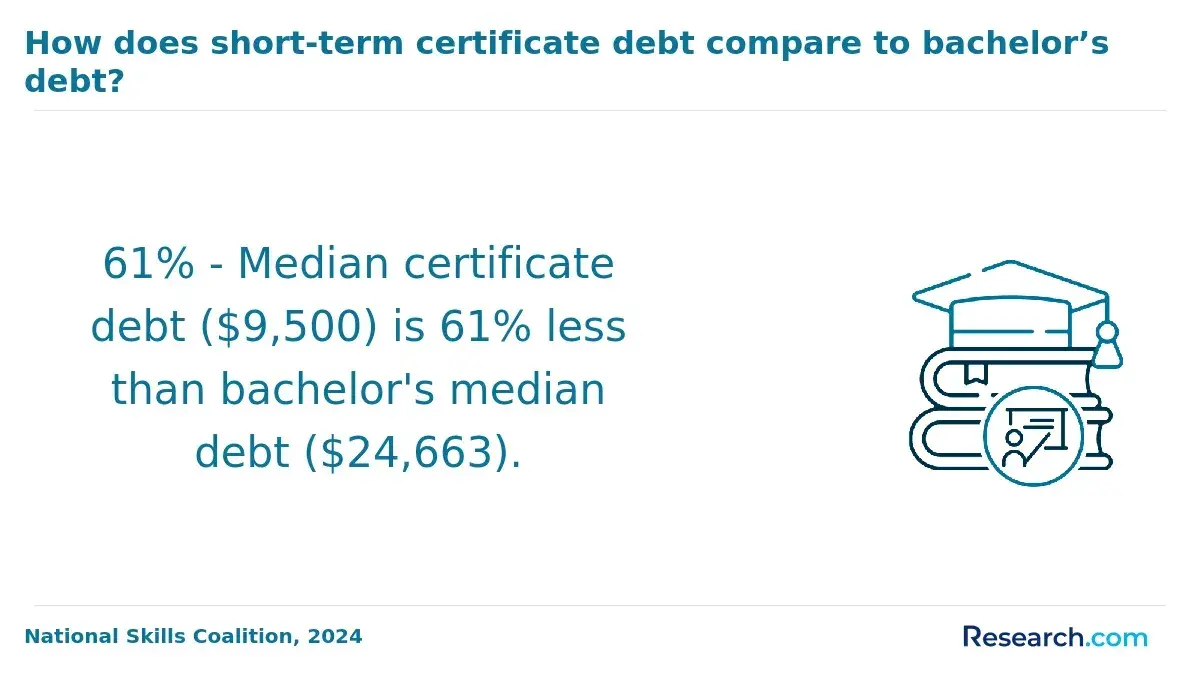
If you are uncertain, use a lower-risk test before committing. A related internship, volunteer role, student organization, job shadow, lab placement, or one of the short term certificate programs can help you confirm interest without immediately changing your entire degree plan.
What steps should you take with academic advisors when you're considering a major change?
Academic advisors are essential because major changes involve policies that are not always obvious in a course catalog. You may need input from your current advisor, the advisor for the new major, financial aid, registrar, career services, and sometimes a department chair.
Use the advising meeting to get documents, not just verbal reassurance. A good advising process should leave you with a side-by-side degree plan, a list of courses that still count, and a realistic graduation estimate.
- Request a degree audit for your current major and the proposed new major.
- Ask which completed courses will satisfy new requirements, which will become electives, and which will not apply.
- Confirm prerequisite sequences, minimum grades, GPA requirements, and course rotation.
- Meet with financial aid to review scholarship eligibility, satisfactory academic progress, and remaining loan or grant limits.
- Speak with career services about internships, job outcomes, employer expectations, and alumni paths in the new field.
- Ask for a written semester-by-semester plan before submitting the official major-change form.
Avoid the common mistake of switching after one conversation with a peer or professor. Their advice may be useful, but institutional requirements are specific. The smartest decision combines personal fit, academic feasibility, financial impact, and career evidence.
How do major-specific admission, GPA, and prerequisite requirements affect your ability to switch?
Some majors are open to any student in good standing, while others are selective. Business, engineering, nursing, computer science, architecture, education, and performing arts programs often have separate admission rules, GPA minimums, prerequisite grades, portfolio reviews, auditions, background checks, or clinical placement requirements.
A major change can fail if you assume admission is automatic. Even within the same university, changing from one college to another may require a competitive internal transfer process. Some departments also limit seats because of lab space, faculty capacity, accreditation requirements, or clinical-site availability.
Pay close attention to these requirements before building your plan:
- Minimum cumulative GPA: Some programs require a higher GPA than the university's general good-standing rule.
- Prerequisite GPA: A department may calculate grades only from gateway courses such as calculus, chemistry, accounting, or anatomy.
- Application timing: Internal transfer windows may open only once or twice per year.
- Repeat policies: A repeated prerequisite may be averaged, capped, or treated differently by selective programs.
- Capacity limits: Meeting minimum criteria may not guarantee admission if the program has more qualified applicants than seats.
If the new major is selective, create a backup plan. That could mean a related major in the same career family, a minor, a transfer institution, or a certificate that builds the missing skill set. For students who need a faster skills bridge, carefully chosen easy certifications to get may supplement a degree, but they should not replace required credentials for regulated careers.
How can you compare online versus campus-based options when changing into a new major?
Online and campus-based programs can both be strong options when changing majors, but they solve different problems. Online formats may help working students, parents, commuters, military learners, and students who need flexible scheduling. Campus programs may be better for majors that rely heavily on labs, studios, clinical placements, equipment, ensembles, or frequent in-person collaboration.
The National Center for Education Statistics reported in 2024 that distance education remained a major part of U.S. higher education after the pandemic-era surge.
For students changing majors, this means there are more flexible pathways than before, but quality, support, transfer-credit rules, and licensure alignment still vary by school.
This table compares the main trade-offs:
| Format | Best fit | Potential drawback |
| Fully online | Students who need schedule flexibility and can learn independently | May offer fewer in-person labs, networking events, or campus recruiting opportunities |
| Hybrid | Students who want flexibility but still need labs, studios, or occasional campus access | Commute requirements can be hard if campus visits are frequent or unpredictable |
| Campus-based | Students who benefit from in-person advising, facilities, cohort learning, or clinical access | Less flexible for students balancing work or family responsibilities |
| Online completion program | Students with prior credits who need to finish a degree efficiently | May have strict transfer-credit and residency requirements |
When comparing formats, ask whether the same faculty teach the courses, whether online students receive the same advising and career services, and whether the degree transcript differs by format. Also confirm whether online courses are asynchronous, live, or mixed, because scheduling can affect your ability to work while studying.
What role do accreditation and licensure requirements play when switching into regulated fields?
Accreditation and licensure are crucial if the new major leads to a regulated profession. Institutional accreditation affects federal financial aid eligibility and credit transfer. Programmatic accreditation may be required or strongly preferred in fields such as nursing, teaching, social work, counseling, engineering, architecture, dietetics, and some health professions.
Licensure rules are usually set by state boards, not by the college alone. A program that meets requirements in one state may not automatically meet requirements in another, especially for clinical, teaching, counseling, or healthcare roles. This matters if you plan to study online in one state and work in another.
Before switching into a regulated field, verify these items directly with the school and the relevant licensing board:
- Institutional accreditation: Confirm the college is accredited by an agency recognized for federal aid purposes.
- Programmatic accreditation: Check whether the specific major needs field-specific accreditation for licensure, certification, or employer acceptance.
- State authorization: Online students should confirm whether the school can enroll students from their state.
- Clinical or practicum placement: Ask who arranges placements and whether placements are available near you.
- Exam eligibility: Confirm that graduates of the program can sit for the required licensing or certification exam in your intended state.
For longer regulated pathways, think several steps ahead. A student moving toward psychology, education leadership, physical therapy, or advanced healthcare may eventually compare graduate or doctoral options, including the cheapest doctorate degree online, but only after confirming that the program's accreditation and licensure alignment fit the intended career.
How do you assess curriculum, coursework, and required experiences in a potential new major?
A new major should be evaluated by its full curriculum, not by the name on the diploma. Read the degree map from introductory courses through the capstone. Look for required experiences such as internships, labs, student teaching, practicums, portfolios, research, fieldwork, studios, or senior projects.
Curriculum fit is especially important as employers place more emphasis on demonstrable skills. A major that includes applied projects, data tools, writing-intensive assignments, teamwork, and supervised experience may provide stronger career preparation than a program with interesting topics but few practical outputs.
Use the curriculum review to identify whether the program builds the competencies you need. Focus on the evidence of learning you can later show employers or graduate programs:
- Core courses: Do they match the knowledge expected in entry-level roles or graduate admissions?
- Skill-building courses: Do they include writing, analysis, technology, statistics, research methods, communication, or design where relevant?
- Applied experiences: Does the major require internships, labs, practicums, clinicals, fieldwork, or portfolios?
- Capstone or final project: Will you graduate with work samples that demonstrate your abilities?
- Elective flexibility: Can you add a minor, concentration, or targeted electives without delaying graduation?
A common red flag is a program that sounds career-focused but does not include the experience employers expect. If a major lacks built-in applied learning, you may need to create it through internships, research assistantships, campus employment, freelance work, or professional projects.
What strategies help you choose a new major aligned with your strengths, interests, and values?
The smartest major is usually the one that balances four factors: what you are good at, what you can stay motivated to study, what careers it can reasonably lead to, and what you can afford to complete. No assessment can make the decision for you, but structured reflection can prevent a rushed or emotion-driven switch.
Start by separating interest from environment. You might dislike a major because the subject is wrong for you, but you might also be reacting to a single professor, a competitive culture, poor advising, burnout, or unrealistic expectations. The solution may be a section change, tutoring, counseling, a lighter course load, or a different study strategy rather than a new major.
Use these strategies to reach a decision with less guesswork:
- List the courses, assignments, and projects where you have performed well and felt engaged.
- Identify three career outcomes you want, including the work setting, daily tasks, income needs, and lifestyle trade-offs.
- Compare your current major, proposed major, minor, certificate, and graduate-school options against those outcomes.
- Interview at least two people in the target field, such as alumni, faculty, internship supervisors, or working professionals.
- Test the new field through one course, project, internship, volunteer role, or student organization before making the change final when possible.
- Set a decision deadline so you do not lose another registration cycle or miss required prerequisite sequences.
If the evidence is mixed, choose the option that preserves flexibility. A major with broad transferable skills, strong advising, manageable cost, and room for electives may serve you better than a highly specialized switch based only on short-term enthusiasm.
Other Things You Should Know About
No. Changing your major is not bad if the decision is based on academic fit, credit planning, cost, and career evidence. It becomes risky when students switch repeatedly without checking degree requirements, financial aid rules, or job outcomes.
It may be too late if the new major adds substantial time and cost without improving your career path. If you are close to graduating, consider finishing the current degree and adding a minor, certificate, internship, postbaccalaureate coursework, or graduate program instead.
It can. A major change may affect scholarships, satisfactory academic progress, attempted-credit limits, and remaining loan eligibility. Always ask the financial aid office to review the new degree plan before you submit the change.
Compare your strengths, interests, values, preferred work tasks, required credentials, and realistic career outcomes. The right major should be one you can complete successfully, afford responsibly, and connect to roles you would seriously consider pursuing.
References
- Chosen Major, Its Admissions Impact | Blog | Admissions Angle https://www.admissionsangle.com/blog/how-do-i-choose-my-major-and-will-it-affect-my-chance-of-admission
- What to Consider When Choosing Your Major | Student.com https://www.student.com/articles/choosing-your-major
- Undergraduate Research Experiences Grow Career-Ready Transferable Skills - The Council on Undergraduate Research https://www.cur.org/journal-article/undergraduate-research-experiences-grow-career-ready-transferable-skills/
- Coursework Curriculum - Procedures https://www.unisc.edu.au/about/policies-and-procedures/coursework-curriculum-procedures
- Regulated Occupations and Licensing Requirements https://www.saskatchewan.ca/residents/moving-to-saskatchewan/live-in-saskatchewan/to-work/regulated-occupations-and-licensing-requirements
- Career Exploration Guide — The Strategic Student https://www.thestrategicstudent.com/strategy-guides/career-exploration-guide
- Certification vs. Accreditation vs. Licensure: What’s the Difference in Health Care? https://www.icevonline.com/blog/certification-accreditation-licensure-whats-the-difference-in-health-care
- Students change major frequently, candidates to lose financial aid https://the-telescope.com/15835/news/students-change-major-frequently-candidates-to-lose-financial-aid/
- How to Choose the Right Online College https://www.straighterline.com/blog/goodie-how-to-choose-the-right-online-college