2027 Education vs Psychology Major: Which Is Better for Helping Careers?

Co-Founder and Chief Data Scientist
Choosing between an education major and a psychology major usually comes down to how you want to help people through teaching and learning, or through behavior, mental health, and human development. The decision matters because the U.S. Bureau of Labor Statistics projects faster-than-average growth for psychologists in its 2024-2034 outlook, while many K-12 teaching roles are projected to remain relatively stable.
This guide is for students comparing helping careers and explains the degrees, licenses, salaries, work settings, and trade-offs that should shape your choice.
Key Things You Should Know
- An education major is usually the stronger choice if your main goal is to become a licensed K-12 teacher; a psychology major is usually better if you want counseling, assessment, research, behavioral health, or graduate-level clinical options.
- Salary potential often rises more sharply in psychology after graduate study. BLS May 2024 data places psychologists at a median annual pay of $94,310, while many teaching roles cluster in the low-to-mid $60,000 range.
- Teacher certification can often begin after a bachelor's degree and student teaching, while psychologist licensure generally requires a doctoral degree, supervised experience, and a state exam.
What are the key differences between an education major and a psychology major for helping careers?
The key difference is the problem each major trains you to solve. An education major focuses on how people learn in classrooms and school systems. A psychology major focuses on how people think, feel, behave, develop, and respond to social, emotional, or cognitive challenges.
For helping careers, neither major is automatically "better." Education is more direct if you want to teach, design lessons, manage classrooms, support learning differences, or work in school leadership. Psychology is more flexible if you are interested in mental health, behavior intervention, assessment, research, human services, or eventually becoming a counselor, therapist, school psychologist, or licensed psychologist.
The table below summarizes the practical differences that matter most before you choose a major. Use it to compare the work you want to do, the training you are willing to complete, and the settings where you see yourself long term.
| Comparison point | Education major | Psychology major |
| Primary focus | Teaching, curriculum, learning theory, classroom management, assessment, and school systems | Behavior, cognition, development, mental health, research methods, and human services |
| Best fit | Students who want structured, school-based helping work with clear licensure pathways | Students who want broader helping-career options and may be open to graduate school |
| Typical bachelor's outcome | Teacher certification pathway, education assistant roles, tutoring, curriculum support, youth programs | Human services, case management, behavioral technician roles, research assistant roles, graduate school preparation |
| Common advanced paths | Special education, literacy, curriculum design, school administration, instructional coaching | Counseling, social work, school psychology, clinical psychology, industrial-organizational psychology, research |
| Main constraint | State teacher licensure rules can be specific and may limit mobility across states | Many higher-paying or clinical roles require a master's or doctoral degree |
A good shortcut is this: choose education if you want your daily work to be organized around instruction; choose psychology if you want your daily work to be organized around understanding and changing behavior, emotional health, or developmental outcomes.
Which major is better if you want to work directly with children and teens?
If you want to work directly with children and teens every day, an education major is often the better first choice for classroom-based careers. It gives you the coursework, supervised teaching experience, and state certification preparation needed for public school teaching. It also helps you build practical skills in lesson planning, behavior management, parent communication, and adapting instruction for different learners.
A psychology major can also lead to child-focused work, but the route is usually less direct at the bachelor's level. With psychology, you may work with children and teens as a behavior technician, youth program staff member, case aide, research assistant, or paraprofessional. To become a school psychologist, child therapist, licensed counselor, or clinical psychologist, you should expect graduate school and supervised experience.
The better major depends on the type of child-focused helping work you want. These distinctions can help you decide:
- Choose education if you want to teach a subject or grade level, manage a classroom, evaluate learning progress, and follow a school-year rhythm.
- Choose psychology if you want to understand behavior, trauma, motivation, learning challenges, emotional development, or mental health more deeply.
- Consider special education if you want a bridge between the two fields because it combines instruction, disability support, behavior planning, and family collaboration.
- Consider school psychology, counseling, or social work if you want to help students but do not want to be the primary classroom teacher.
One important reality is that working with minors often involves background checks, mandated reporter training, and state-specific rules. If you have a criminal record, do not assume every path is closed, but do check state licensure and placement policies early.
Students comparing second-chance education options may also benefit from reviewing guidance on the best degree for felons before committing to a licensure-dependent path.
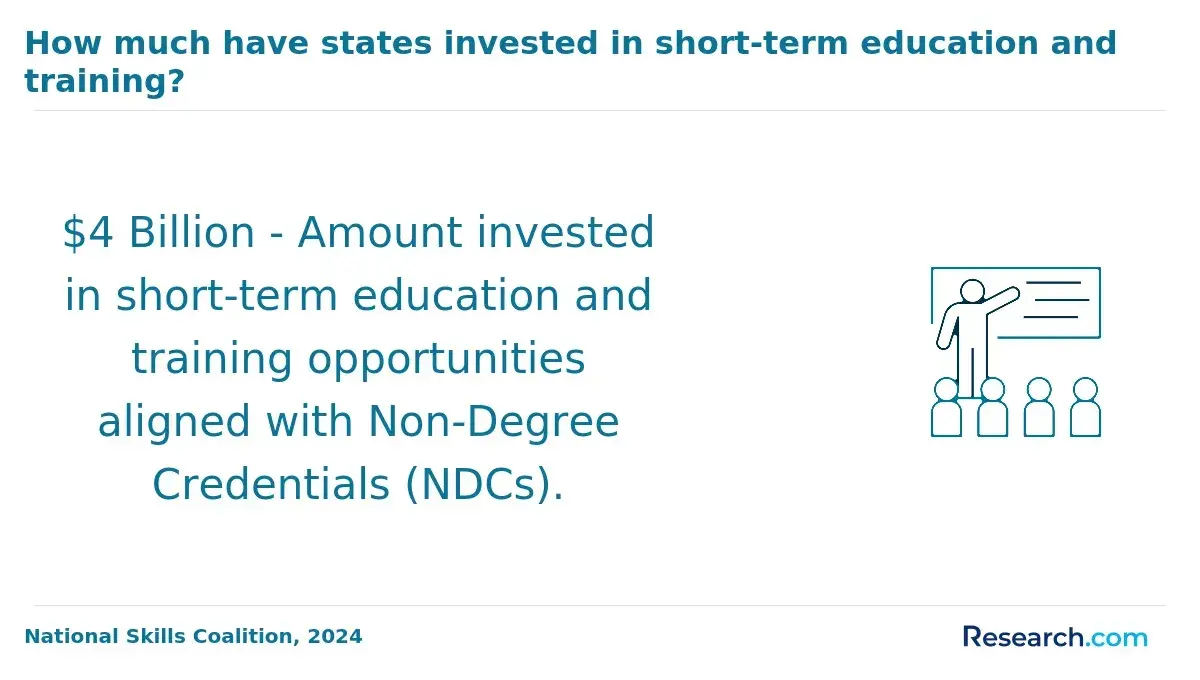
How do career paths and job roles differ for education vs psychology graduates?
Education and psychology graduates can both enter helping professions, but their career ladders look different. Education graduates usually move into school-based roles first, while psychology graduates often start in support roles and advance after graduate training or specialized credentials.
The table below compares common roles by major. It is not a guarantee of eligibility because state rules, employer requirements, and licensure standards vary, but it shows how each degree typically connects to the labor market.
| Career path | Common degree route | Typical responsibilities | Licensure or graduate study usually needed? |
| K-12 teacher | Bachelor's in education or approved teacher preparation program | Plan lessons, teach classes, assess learning, manage classroom behavior, communicate with families | Yes, state teacher certification is typically required for public schools |
| Special education teacher | Bachelor's in special education or education with special education endorsement | Support students with disabilities, write or implement IEPs, adapt instruction, collaborate with specialists | Yes, state certification and special education endorsement are commonly required |
| School counselor | Psychology, education, or related bachelor's followed by a counseling master's | Support academic planning, social-emotional needs, college readiness, and crisis referrals | Yes, usually a master's and state school counseling credential |
| School psychologist | Psychology or education bachelor's followed by specialist-level or doctoral graduate study | Assess learning and behavioral needs, consult with teachers, support interventions, participate in special education evaluations | Yes, graduate degree and state credential are typically required |
| Behavior technician | Psychology, education, or related bachelor's | Implement behavior plans, collect data, support children with autism or behavioral needs | Often requires employer training or certification; bachelor's-level entry is possible |
| Human services case aide | Psychology, human services, social science, or education | Connect clients to services, document needs, support families, coordinate with agencies | Varies; advancement may require social work or counseling graduate study |
| Instructional coordinator | Education bachelor's plus teaching experience; often a master's | Develop curriculum, train teachers, evaluate instructional materials, analyze learning outcomes | Often requires teaching experience and sometimes administrator or specialist credentials |
The main decision point is whether you want a defined entry path or a flexible but longer pathway. Education can lead to a clearly regulated first career after the bachelor's degree. Psychology can open many doors, but the most independent helping roles often require additional education.
What degrees and licenses do you need to become a teacher vs a psychologist?
Licensure is where the education vs psychology decision becomes most concrete. A bachelor's degree in education can be enough to begin a teaching career if the program is state-approved and includes student teaching. A psychology bachelor's degree, by contrast, is usually not enough to become a licensed psychologist or therapist.
The table below outlines common credential pathways. Always verify requirements with your state education department or licensing board because exams, supervised hours, and approved degree names can differ by state.
| Goal | Typical degree path | Fieldwork requirement | Common license or credential |
| Elementary, middle, or high school teacher | Bachelor's in education or bachelor's plus teacher preparation program | Student teaching or supervised clinical practice | State teaching license or certification |
| Special education teacher | Bachelor's in special education or approved endorsement pathway | Student teaching in special education settings | Teaching license with special education endorsement |
| School counselor | Master's in school counseling or related approved program | Practicum and internship in school settings | State school counselor credential |
| School psychologist | Education specialist degree, master's-plus program, PsyD, PhD, or EdS depending on state | Supervised internship, often in schools | State school psychologist credential; national certification may be optional or preferred |
| Licensed psychologist | Doctoral degree such as PhD or PsyD in psychology | Extensive supervised clinical experience and postdoctoral hours in many states | State psychologist license |
| Licensed professional counselor or therapist | Master's in counseling, marriage and family therapy, social work, or related approved field | Supervised practicum, internship, and post-degree clinical hours | State counseling, therapy, or social work license |
For teaching, the smartest move is to choose a program approved for certification in the state where you plan to work. For psychology, the smartest move is to identify the exact licensed role first, then work backward to the required degree and accreditation standards.
Students considering the psychologist route should also think carefully about doctoral cost and time. If you eventually need a doctorate, comparing the most affordable online doctoral programs can help you understand cost structures, but licensure alignment matters more than price alone.
How do salaries and long-term earning potential compare for education and psychology careers?
Education careers tend to offer earlier workforce entry, predictable public-sector salary scales, and strong mission fit. Psychology careers can offer higher long-term earning potential, especially after graduate study, but the route may take longer and cost more.
BLS May 2024 wage data gives a useful snapshot of how selected helping careers compare. These figures are medians or rounded wage ranges, so they should be used as benchmarks rather than personal salary predictions.
| Role or career area | Typical major foundation | 2024 salary context | What it means for your decision |
| K-12 classroom teacher | Education | Many elementary, middle, and high school teaching roles fall in the low-to-mid $60,000 range | Teaching can provide earlier entry after a bachelor's degree, but pay growth often depends on district salary schedules, years of service, and graduate credits |
| Special education teacher | Education or special education | Often similar to other K-12 teaching roles, with variation by district and endorsement | Demand can be strong in many districts, but workload and compliance responsibilities can be higher |
| School and career counselor | Psychology, education, or counseling pathway | BLS reported median pay of $65,140 for school and career counselors and advisors in May 2024 | This role may fit students who want school-based helping work without leading a classroom |
| Psychologist | Psychology | BLS reported median pay of $94,310 for psychologists in May 2024 | Higher median pay is possible, but the pathway usually requires doctoral training, supervised experience, and licensure |
Cost changes the ROI calculation. College Board's 2024 Trends in College Pricing reported average published tuition and fees of $11,610 for in-state students at public four-year institutions in 2024-25, compared with $43,350 at private nonprofit four-year institutions. That gap matters because psychology students may need graduate school before reaching their target role.
To compare value, estimate total cost, not just first-year tuition. Include books, fees, transportation, technology, unpaid fieldwork time, exam fees, licensure fees, and lost earnings if you must study full time. A lower-cost education program that leads directly to certification may have a faster payoff, while a psychology path may make sense if you are committed to advanced practice and can manage the longer timeline.
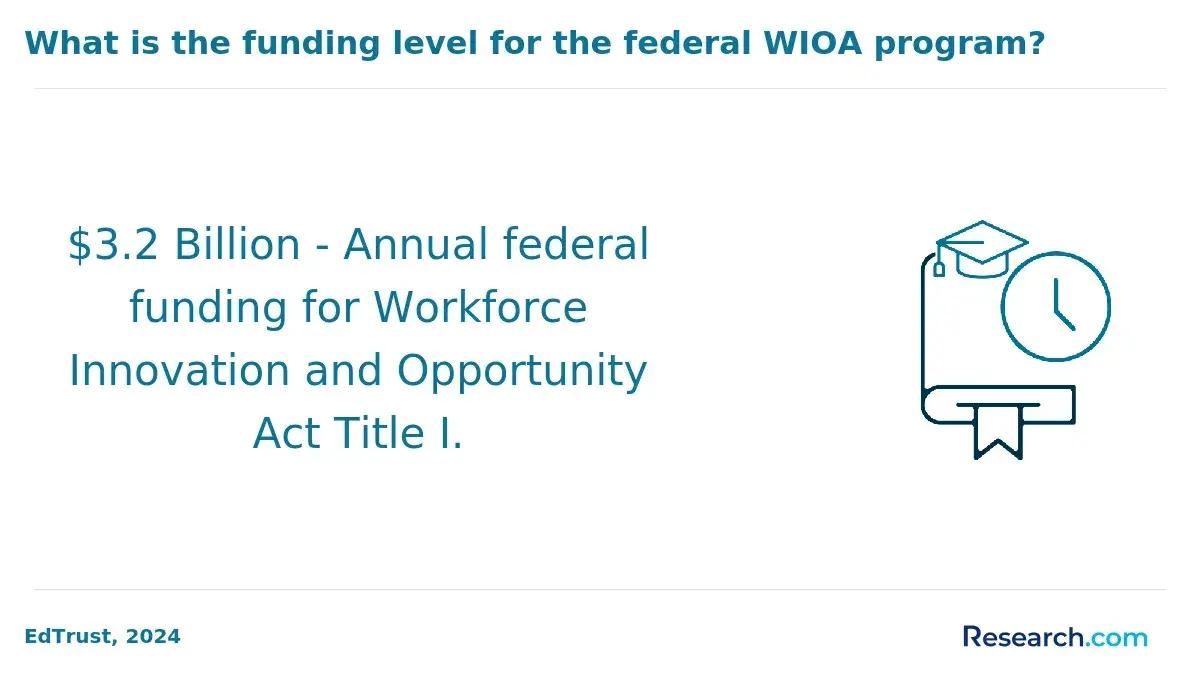
What is the job outlook and demand for education and psychology professionals in the U.S.?
Demand differs by occupation, location, subject area, and credential. The national picture is mixed: mental health-related psychology roles are supported by ongoing demand for behavioral health services, while K-12 teacher hiring depends heavily on state budgets, retirements, local shortages, and enrollment patterns.
BLS 2024-2034 projections classify psychologist employment as growing faster than the average for all occupations. That does not mean every psychology graduate will find a psychology job immediately, because licensed roles still require advanced credentials. It does mean that students willing to complete graduate training may be entering a field with favorable long-term demand.
For teachers, national projections are more restrained, with many K-12 teaching occupations expected to show little or no overall employment change. However, that national average can hide real local demand. Districts may still struggle to hire in special education, STEM, bilingual education, rural schools, and high-poverty areas.
Current trends affecting both fields include:
- Student mental health needs are pushing schools to hire or contract more counseling, psychology, and behavioral support professionals where budgets allow.
- AI and education technology are changing instructional planning, tutoring tools, assessment practices, and data-informed student support, but they are not replacing the need for licensed teachers or clinicians.
- Telehealth has made some psychology and counseling services more accessible, although state licensure rules still control where professionals can practice.
- Teacher shortages remain uneven, which means job prospects can be much better in certain subjects, states, and school districts than national averages suggest.
The practical takeaway is to research your target state and role, not just the national average. A psychology major may offer stronger long-term growth if you are prepared for graduate school, while an education major may be more efficient if your goal is to start helping students in classrooms as soon as possible.
How do education and psychology curricula differ in coursework, fieldwork, and skill development?
Education and psychology programs both study human development, but they train different habits of thinking. Education coursework asks, "How do I help this learner master a skill or concept?" Psychology coursework asks, "What explains this behavior, emotion, cognition, or developmental pattern?"
The table below shows how coursework and fieldwork usually differ. It can help you choose the major that builds the skills you actually want to use at work.
| Program component | Education major | Psychology major |
| Core coursework | Curriculum design, classroom management, child development, literacy, assessment, educational technology, special education foundations | General psychology, developmental psychology, abnormal psychology, cognitive psychology, statistics, research methods, social psychology |
| Skill emphasis | Lesson planning, instruction, classroom leadership, differentiation, student assessment, family communication | Research literacy, behavior analysis, interviewing foundations, data interpretation, human development, ethical reasoning |
| Fieldwork | Classroom observations, practicum, student teaching, supervised school placements | Research labs, internships, human services placements, behavior support experience, graduate-school preparation |
| Capstone or assessment | Teaching portfolio, performance assessment, licensure exam preparation | Research project, thesis option, applied internship, statistics or methods sequence |
| Technology trend | Learning management systems, adaptive learning tools, AI-assisted planning, student data dashboards | Data analysis software, telebehavioral health awareness, digital assessment tools, research platforms |
If you enjoy explaining concepts, organizing groups, and watching students grow over months, education is probably a better fit. If you enjoy asking why people behave the way they do and using evidence to understand behavior, psychology may fit better.
Students who want flexibility can also combine interests through minors, electives, or certificates. For example, an education major can add psychology, autism studies, or counseling-related electives. A psychology major can add child development, special education, or instructional design courses.
Are online education and psychology programs as reputable as campus-based options?
Online education and psychology programs can be reputable when they are properly accredited, academically rigorous, and aligned with your career goal. The format itself is not the problem; poor accreditation, weak field placement support, and unclear licensure alignment are the real risks.
Online study can work especially well for general psychology, education studies, human development, educational technology, and non-licensure programs. It can also work for some teacher preparation, counseling, and school psychology pathways, but only if the program includes approved in-person fieldwork in your state or has clear placement partnerships.
The table below explains when online and campus-based formats tend to make sense. Use it to compare delivery format against your need for supervision, networking, and licensure preparation.
| Format | Best for | Potential limitation | What to verify |
| Fully online | Working adults, transfer students, non-licensure degrees, theory-heavy coursework | May not include local field placements or meet state licensure rules | Institutional accreditation, state authorization, licensure disclosures, transfer policy |
| Hybrid | Teacher preparation, counseling preparation, school-based programs, students needing some in-person support | Campus visits or local practicum days may be required | Placement locations, travel expectations, exam pass rates, supervisor qualifications |
| Campus-based | Students who want frequent faculty contact, lab experience, school partnerships, or structured peer support | May be less flexible for working students | Total cost, commute, class schedule, fieldwork access, local employer connections |
When comparing online degrees, do not choose based only on convenience. A program that is flexible but not approved for your intended license can delay your career and increase your total cost.
A strong online program should provide clear syllabi, qualified faculty, library access, advising, disability services, career support, and transparent outcome information. For licensure programs, it should also state exactly which states it is designed to serve.
How can you use a psychology degree to work in education or school settings?
A psychology degree can be very useful in education settings, especially if you are interested in student behavior, learning differences, counseling, research, or intervention rather than classroom teaching alone. Many schools need professionals who can understand why students struggle and help teams design better supports.
Common ways to use psychology in education include school counseling, school psychology, behavioral intervention, student affairs, academic advising, special education support, educational research, and social-emotional learning program coordination. Some roles are available at the bachelor's level, but the more independent roles usually require graduate study.
If you want to turn a psychology degree into an education career, use the following steps to avoid wasting time or credits:
- Choose the exact school-based role you want, such as school counselor, school psychologist, behavior specialist, student support coordinator, or teacher.
- Check your state's credential requirements for that role before choosing electives or graduate programs.
- Add child development, special education, education policy, statistics, and assessment-related courses when possible.
- Get supervised experience with children or teens through tutoring, after-school programs, research labs, behavior clinics, or school-based internships.
- Ask graduate programs whether they place students in schools and whether their graduates qualify for credentials in your state.
A psychology major can also support a later transition into teaching, but you may need an alternative certification program or a master's in teaching. If you already have a bachelor's degree and want a faster graduate route, comparing the shortest master's degree programs online can help you understand accelerated formats, though teacher or counseling licensure requirements should remain the priority.
What should you look for in an accredited education or psychology program before enrolling?
Before enrolling, your first question should not be "Is this school popular?" It should be "Will this program legally and practically qualify me for the job I want in the state where I plan to work?" That is especially important for education, counseling, school psychology, and clinical psychology pathways.
For education programs, look for institutional accreditation and state approval for teacher preparation. For psychology programs, institutional accreditation is essential, and doctoral programs leading to psychologist licensure often need specialized accreditation or must meet specific state board standards. Counseling, social work, and school psychology programs may have their own programmatic accreditation expectations.
Use this checklist before committing to a program:
- Confirm institutional accreditation through a recognized accreditor and make sure the school is eligible for federal financial aid if you plan to use it.
- Verify state approval for teacher certification, school counseling, school psychology, or clinical licensure if your career requires a credential.
- Ask whether field placements are arranged by the school or left for students to find independently.
- Review licensure exam pass rates, graduation rates, student teaching completion rates, internship match information, or other relevant outcomes.
- Compare total cost, including fees, background checks, testing, transportation, books, technology, and unpaid practicum time.
- Check transfer credit limits, residency requirements, and whether prior credits apply to the major rather than only to electives.
- Ask how the program supports online students, adult learners, career changers, and students who need evening or part-time schedules.
Common red flags include vague licensure language, pressure to enroll quickly, unclear practicum arrangements, missing accreditation details, and promises of guaranteed jobs or salaries. Be especially cautious if an online program says it "may" meet licensure requirements but does not identify the states where it is approved.
Cost is a major factor, but the cheapest option is not always the best value if it does not lead to your credential. Still, students trying to reduce debt should compare accredited cheap online colleges alongside public universities, transfer pathways, scholarships, employer tuition benefits, and community college articulation agreements.
Other Things You Should Know About Choosing a Major
Education is usually better if you want to become a licensed K-12 teacher because it is designed around teacher preparation, student teaching, and state certification. Psychology can still lead to teaching, but you may need an alternative certification route or a graduate teaching program.
Yes, psychology is usually the better starting point for mental health careers. However, most counseling, therapy, school psychology, and licensed psychologist roles require graduate study, supervised experience, and state licensure.
Yes. Psychology graduates can work in schools as behavior technicians, support staff, research assistants, student services professionals, or, with graduate training, school counselors or school psychologists. The best path depends on your state's credential rules.
Psychology is often more flexible across human services, research, education, business, and graduate-school pathways. Education is more direct for teaching and school-based instructional roles, but it can be less flexible if your program is tied to one state's licensure requirements.
References
- Online Classes or On Campus: Which is Right for You? - Graduate Programs for Educators https://www.graduateprogram.org/blog/online-classes-or-on-campus-which-is-right-for-you/
- Research Summary: Education and Lifetime Earnings https://www.ssa.gov/policy/docs/research-summaries/education-earnings.html
- Psychologist Job Outlook https://healthguideusa.org/careers/psychologist_job_outlook.htm
- Research Journal for Social Affairs https://rjsaonline.com/journals/index.php/rjsa/article/view/629/796
- How To Choose A Psychology Program | Psychology.org https://www.psychology.org/resources/choosing-a-program/
- How to Become a Psychologist https://onlinecounselingprograms.com/mental-health-careers/how-to-become-psychologist/
- 7 Mistakes to Avoid in an Online Psychology Bachelor's Program https://www.counselingpsychology.org/articles/mistakes-bachelors-degree-psychology/