2027 How to Choose a Major if You Are Focused on ROI

Co-Founder and Chief Data Scientist
Choosing a major is partly an academic decision, but it is also a financial one. BLS data shows workers with a bachelor's degree had median weekly earnings of $1,543 in 2024, compared with $930 for workers with only a high school diploma. That gap matters, but ROI varies widely by major, school, cost, and career path.
This guide is for students, parents, and working adults who want a practical way to compare majors, estimate payoff, avoid debt traps, and choose a program that fits both earning goals and personal strengths.
Key Things You Should Know
- A high-ROI major is not simply the highest-paying major. It is the option where expected career outcomes are strong enough to justify tuition, fees, living costs, time out of the workforce, and debt.
- Recent BLS wage data shows many technology, engineering, healthcare, finance, and analytics roles report median annual pay above the national median, but outcomes depend on skill level, location, internships, and employer demand.
- College Board's 2024-25 pricing data shows published tuition and fees can differ by tens of thousands of dollars between public in-state and private nonprofit colleges, so school choice can change ROI as much as major choice.
How do you define ROI when choosing a college major?
ROI, or return on investment, measures whether the financial benefits of a major are likely to outweigh the cost of earning the degree. For college decisions, ROI should include more than starting salary.
A strong ROI calculation considers total attendance cost, grants and scholarships, expected debt, time to graduation, job placement, wage growth, and the risk that you may need additional credentials before reaching your target career.
A practical way to think about ROI is, "How long will it take for the degree to pay back its net cost, and what career options will it open?" This matters because two students can choose the same major and get very different results if one attends an affordable public university with strong employer partnerships while the other borrows heavily for a program with weak completion rates.
Use the table below to separate the factors that improve ROI from those that can weaken it. This helps you compare majors without relying only on rankings or broad salary lists.
| ROI factor | What it means | Why it matters |
| Net price | The cost after grants, scholarships, and tuition discounts | A lower net price reduces the salary needed to make the degree pay off |
| Completion time | How long it takes to graduate | Extra semesters add tuition costs and delay full-time earnings |
| Debt burden | How much you must borrow and repay | High monthly payments can erase the benefit of a higher salary |
| Labor market demand | Whether employers are hiring for roles tied to the major | Strong demand can improve job access, especially after graduation |
| Career ceiling | Long-term advancement and salary growth potential | Some majors start modestly but lead to strong mid-career returns |
| Fit and persistence | Whether your strengths match the coursework and career tasks | A major with high salaries may have poor ROI if you struggle to finish or dislike the work |
A common mistake is comparing majors only by first-year pay. A better approach is to compare the full path: cost to complete, likelihood of graduating, entry-level job access, and the additional education or certifications needed to advance.
Which majors typically offer the highest return on investment?
Majors that often produce stronger ROI tend to connect directly to high-demand occupations, measurable technical skills, licensure-based fields, or industries where employers compete for talent.
This does not mean every student should choose the highest-paying field. It means students focused on ROI should give extra attention to majors with clear job pathways and strong employer demand.
For a broader comparison of fields with strong earnings potential, review this guide to the best degrees to make money.
The table below summarizes major groups that often rank well for ROI and the trade-offs students should understand before choosing one. Use it as a starting point, then verify outcomes for the specific school and program you are considering.
| Major area | Common career direction | Why ROI can be strong | Important trade-off |
| Computer science and software-related majors | Software development, cybersecurity, data systems, cloud computing | Strong demand for technical talent and high median wages in many computing roles | Employers often expect portfolios, internships, coding skills, and continuous learning |
| Engineering | Civil, mechanical, electrical, industrial, computer, or environmental engineering | Direct connection between degree requirements and licensed or technical roles | Programs are math-heavy and may require careful accreditation review |
| Nursing and allied health | Registered nursing, healthcare administration, imaging, lab science, public health support | Healthcare demand remains durable because of aging populations and care needs | Licensure, clinical placements, and state requirements can affect speed to employment |
| Finance, accounting, and economics | Financial analysis, accounting, auditing, risk, corporate finance | Business roles exist across many industries and can scale with experience | Some higher-paying paths favor internships, professional exams, or graduate credentials |
| Data analytics, statistics, and applied math | Business intelligence, data science support, operations research, analytics | Organizations increasingly need workers who can turn data into decisions | Students may need programming, visualization, and domain-specific experience |
| Education in shortage specialties | Special education, STEM teaching, bilingual education, instructional leadership | Some regions offer strong hiring demand, loan forgiveness, or stable public-sector benefits | Salary varies substantially by state, district, and union contract |
High ROI is more likely when the major teaches skills employers can evaluate. Examples include coding, financial modeling, lab methods, clinical care, CAD, data visualization, project management, technical writing, and regulatory compliance. Majors with broader outcomes can still be worthwhile, but students may need a stronger internship plan and a clearer career narrative.
How can you estimate the ROI of a specific major and school?
To estimate ROI for a specific major and school, compare the program's net cost against realistic career outcomes. Do not rely on a university's sticker price, a national salary average, or a single ranking. Your best estimate comes from combining school-level financial aid data, program-level outcomes, job market information, and your own graduation timeline.
Follow this sequence to make the comparison more reliable. Each step reduces the risk of choosing a major that looks profitable on paper but does not match your actual cost or career path.
- Find the school's net price, not just tuition, by reviewing your financial aid offer, required fees, housing, books, transportation, and technology expenses.
- Estimate your completion timeline, including transfer credits, prerequisite courses, clinical hours, co-op terms, or part-time enrollment.
- Check whether graduates from the program enter the roles you want, using career services reports, internship placement data, licensing exam pass rates, and employer partnerships.
- Compare entry-level and mid-career roles tied to the major using BLS occupation data and local job postings rather than relying on national averages alone.
- Calculate expected borrowing and monthly loan payments before committing, then compare those payments with likely early-career income.
- Test an alternative path, such as a lower-cost public institution, transfer pathway, employer-funded program, certificate, or different major with similar career outcomes.
A simple payback calculation can help: divide your net degree cost by the estimated annual earnings premium over your next-best option. For example, if a major costs much more than a cheaper alternative but leads to similar entry-level roles, the higher-cost option may have weaker ROI even if the school has a stronger brand.
Red flags include programs that will not share placement outcomes, majors with no clear link to your target job, aggressive admissions promises, unclear transfer policies, and financial aid packages that depend heavily on loans. If a school cannot explain how students move from the major into employment, treat the ROI claim cautiously.
How should interests and strengths factor into a high-ROI major choice?
Interests and strengths matter because ROI depends on completion, performance, and career persistence. A high-paying major can become a poor investment if you repeatedly fail gateway courses, avoid the required work, or leave the field shortly after graduation. The goal is not to ignore passion. It is to find the strongest overlap between what you can do well, what employers pay for, and what you can afford.
Use the table below to connect personal fit with financial logic. It shows how different student profiles might approach high-ROI major choices without treating salary as the only factor.
| Your profile | Majors to explore | Why it may fit | What to verify |
| You like math, systems, and solving technical problems | Computer science, engineering, data analytics, actuarial science | These fields often reward quantitative skill and structured problem-solving | Course rigor, internship access, lab quality, and employer recruiting |
| You want stable people-centered work | Nursing, health sciences, education shortage areas, human services administration | These paths can connect personal service interests with steady labor demand | Licensure requirements, clinical placements, local wage levels, and burnout risk |
| You enjoy business, persuasion, and analysis | Finance, accounting, economics, supply chain, information systems | These majors can lead to roles across industries and scale with experience | Internship pipelines, professional exam expectations, and regional employer base |
| You are creative but ROI-conscious | UX design, digital marketing analytics, technical communication, product design | These options can pair creativity with measurable business or technology skills | Portfolio expectations, software tools, job placement data, and freelance risk |
If you are undecided, start with a broad first-year plan that keeps high-ROI options open. Taking math, writing, statistics, introductory computing, economics, and lab science courses can preserve flexibility while you test your strengths.
A useful decision rule is to avoid choosing a major only because it sounds lucrative. Instead, ask whether you are willing to do the daily work associated with the field. Software roles involve debugging and constant learning. Nursing involves clinical pressure and shift work. Accounting involves deadlines and compliance. Engineering involves design constraints and technical documentation. ROI is strongest when the work fits your temperament as well as your financial goals.
What role do program costs, financial aid, and debt play in ROI?
Program cost can make or break ROI. College Board's 2024-25 data shows average published tuition and fees were $11,610 for in-state students at public four-year institutions and $43,350 at private nonprofit four-year institutions. Because those are published prices, not necessarily what every student pays, your personal net price after grants and scholarships is the number that matters most.
If a graduate degree may be part of your pathway, compare low-cost options early; this overview of affordable online masters programs can help you understand how price differences affect long-term ROI.
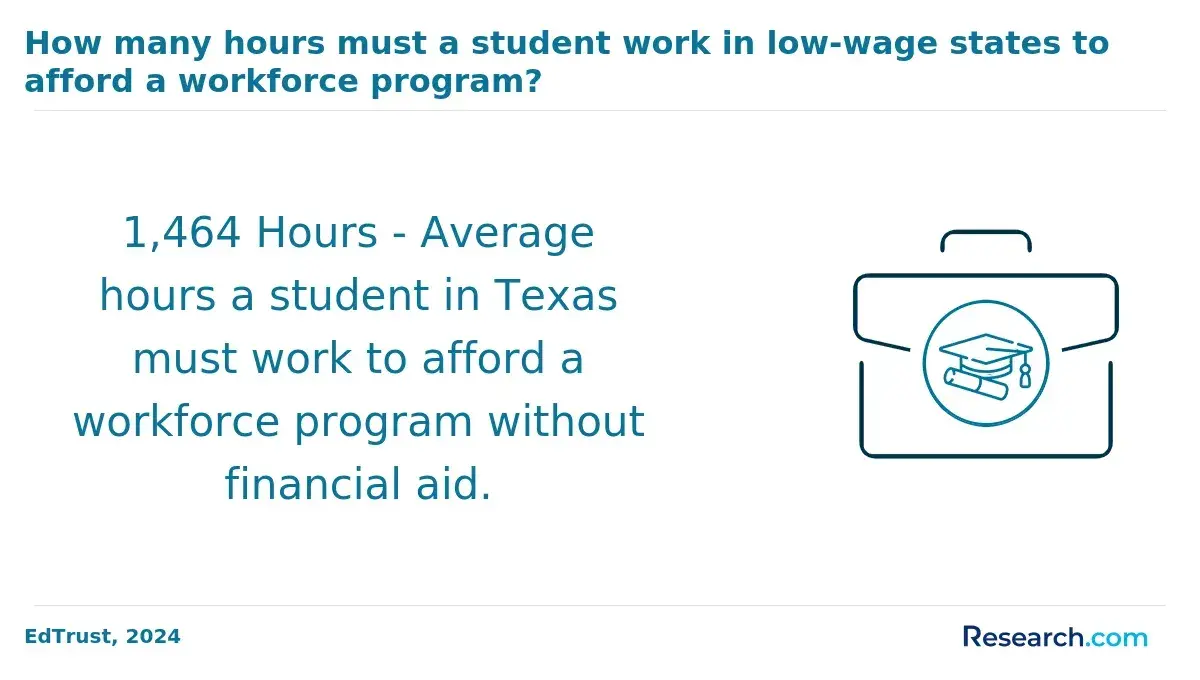
When evaluating cost, separate expenses into direct charges and indirect costs. Direct charges include tuition and mandatory fees. Indirect costs include housing, food, transportation, childcare, books, lost work hours, and technology. A school with lower tuition may not be the cheapest option if it requires relocation or delays your graduation.
Before enrolling, review the financial risk points below:
- Borrowing more than expected because grants are front-loaded in the first year but not guaranteed for later years.
- Ignoring fees for labs, clinicals, online course access, equipment, background checks, testing, or licensure exams.
- Choosing a major that requires graduate school for the desired job without budgeting for the second credential.
- Losing credits after transferring because the receiving school does not apply them to major requirements.
- Extending time to degree by changing majors late, failing prerequisite sequences, or attending part time without a course plan.
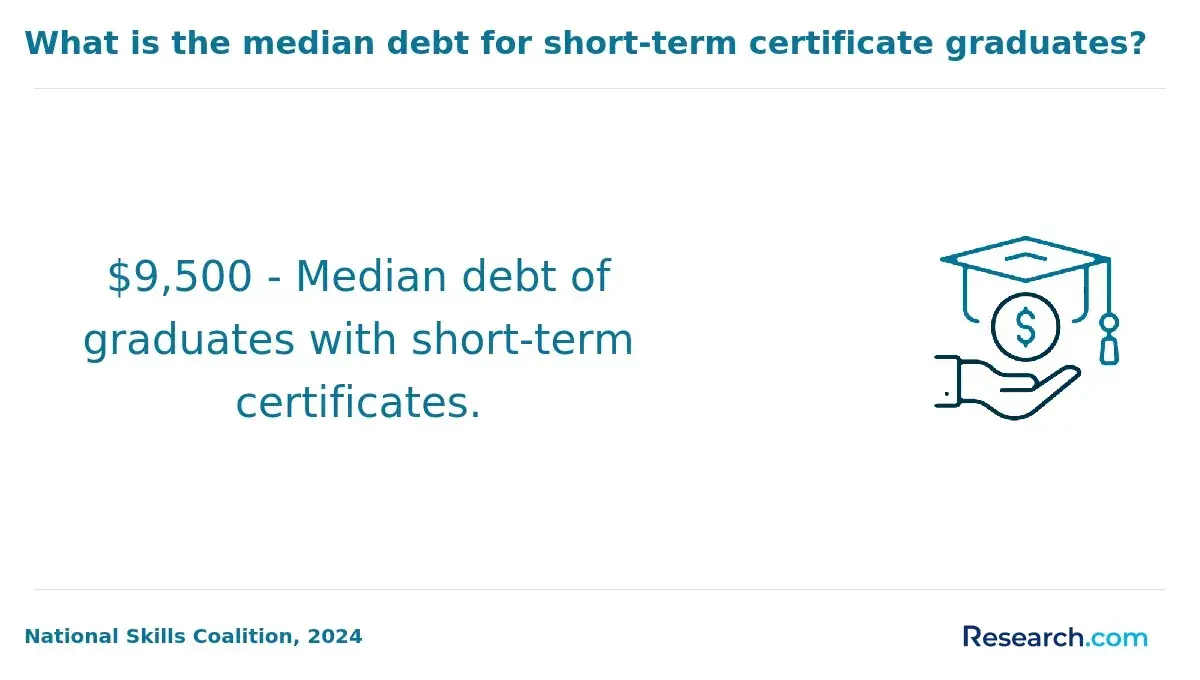
Debt is not automatically bad if it funds a credential with strong, realistic earnings potential. The danger is borrowing for a program whose graduates commonly enter low-paying roles, require further unpaid training, or face uncertain job access. A safer rule is to keep total borrowing aligned with likely early-career income rather than projected peak salary.
How do online degree programs compare to campus programs for ROI?
Online programs can improve ROI when they reduce relocation costs, allow students to keep working, or offer faster paths through transfer credits and flexible scheduling. They can weaken ROI if the program lacks accreditation, has poor student support, does not provide career services, or fails to meet licensure requirements in your state.
Working adults should compare flexible formats carefully, especially when looking at bachelor degree programs for working adults that may shorten time to completion through transfer credits or accelerated terms.
The table below compares online and campus programs on the ROI factors that usually matter most. The better format depends on your schedule, learning style, target field, and need for hands-on training.
| Factor | Online program | Campus program | ROI takeaway |
| Schedule flexibility | Often better for working students or caregivers | Usually more structured around fixed class times | Online can protect income while studying |
| Networking | Depends heavily on virtual career services and cohort design | Often easier for in-person clubs, labs, recruiting, and faculty access | Campus may help students who need stronger built-in networks |
| Hands-on requirements | Can work well for business, IT, analytics, and some completion degrees | Often stronger for labs, studios, clinicals, and equipment-heavy fields | Format should match the major's practical training needs |
| Cost control | May reduce housing, commuting, and relocation costs | May offer stronger institutional scholarships or state aid in some cases | Compare net price, not format labels |
| Employer perception | Strong when the school is accredited and reputable | Strong when the institution has recognized employer pipelines | Accreditation and outcomes matter more than delivery mode alone |
Online programs are often a strong ROI choice for degree completion, business, technology, analytics, education, and some healthcare administration pathways. Campus programs may be better when the major depends on labs, clinical placements, undergraduate research, equipment, or intensive local recruiting.
A key mistake is assuming online automatically means cheaper. Some online programs charge premium tuition, limit transfer credits, or add technology fees. Always compare the total program cost and ask whether online students receive the same advising, tutoring, career support, and internship access as campus students.
Why is accreditation important for ROI, and how do you verify it?
Accreditation is one of the most important ROI safeguards because it affects credit transfer, financial aid eligibility, graduate school admission, licensure, and employer confidence. For ROI-focused students, an unaccredited or poorly recognized program can turn even a low tuition price into a bad investment.
Students comparing doctoral pathways should be especially cautious about accreditation and total cost. This list of the cheapest online PhD options can be a starting point for cost comparison, but accreditation should still be verified directly.
Accreditation comes in two broad forms. Institutional accreditation applies to the college or university as a whole. Programmatic accreditation applies to specific fields, such as nursing, engineering, business, education, counseling, architecture, or public health. In some careers, programmatic accreditation is essential for licensure or professional recognition.
Use the steps below before applying or paying a deposit. Accreditation verification is simple, but skipping it can create serious financial and career problems.
- Search the school in the U.S. Department of Education's Database of Accredited Postsecondary Institutions and Programs.
- Confirm the accrediting agency is recognized and current, not expired, probationary, or limited to a different campus.
- Check whether your specific program has required programmatic accreditation for your intended career.
- If licensure is involved, confirm with the state licensing board that the program meets education requirements in the state where you plan to work.
- Ask whether credits transfer to public universities, graduate schools, or professional programs you may attend later.
Red flags include vague claims such as "nationally recognized," refusal to name the accreditor, pressure to enroll quickly, unclear licensure disclosures, and programs that say accreditation is "in progress." For ROI, pending accreditation should not be treated the same as current accreditation.
Which entry-level careers and industries align with high-ROI majors?
High-ROI majors usually align with industries that hire graduates into defined entry-level roles. The best major for ROI is often the one that connects coursework, internships, and early job titles into a coherent path. This is especially important because many employers now screen for skills, projects, tools, and experience in addition to degrees.
The table below connects common high-ROI major areas with entry-level roles and industries. It is not a promise of employment, but it helps you see where each major commonly points.
| Major area | Entry-level roles to research | Industries that commonly hire | Skills employers often expect |
| Computer science, IT, cybersecurity | Junior software developer, security analyst, systems analyst, cloud support associate | Technology, finance, healthcare, government, consulting, retail, defense | Programming, databases, networks, cloud platforms, troubleshooting, documentation |
| Engineering | Design engineer, project engineer, field engineer, quality engineer | Manufacturing, construction, energy, transportation, aerospace, infrastructure | CAD, modeling, testing, technical reports, safety standards, project coordination |
| Nursing and health sciences | Registered nurse, care coordinator, clinical lab specialist, health data analyst | Hospitals, clinics, long-term care, insurance, public health, medical technology | Clinical judgment, patient communication, compliance, records systems, teamwork |
| Accounting and finance | Staff accountant, audit associate, financial analyst, credit analyst | Public accounting, banks, corporations, nonprofits, government, insurance | Excel, financial statements, accounting systems, risk analysis, professional writing |
| Data analytics and statistics | Data analyst, business intelligence analyst, operations analyst, reporting analyst | Technology, logistics, healthcare, finance, marketing, government | SQL, spreadsheets, visualization tools, statistics, communication, business context |
| Supply chain and operations | Procurement analyst, logistics coordinator, operations analyst, inventory planner | Manufacturing, retail, e-commerce, transportation, healthcare, food systems | Process improvement, analytics, vendor management, forecasting, systems thinking |
AI and automation are changing, not eliminating, the ROI conversation. Majors that combine domain knowledge with data, technology, communication, and judgment may hold value because employers need people who can use AI tools responsibly, check outputs, protect data, and make decisions in context.
For students choosing between similar majors, look at job postings in your target region. If employers repeatedly ask for specific tools, certifications, projects, or internship experience, build those requirements into your academic plan before senior year.
What salary ranges and job outlook can you expect from high-ROI majors?
Salary and job outlook are useful ROI signals, but they should be interpreted carefully. BLS May 2024 wage data reflects national median pay by occupation, not what every graduate earns. Early-career workers may earn less than the median, while experienced workers in high-cost regions or specialized industries may earn more.
The table below gives examples of occupations commonly connected to high-ROI majors, using recent BLS wage and outlook data where available. Use these figures to compare career direction, not to predict an individual outcome.
| Occupation | Common related major | Median annual pay, May 2024 | Projected employment growth, 2023-2033 |
| Software developers, quality assurance analysts, and testers | Computer science, software engineering, information systems | $133,080 | 17% |
| Information security analysts | Cybersecurity, computer science, information technology | $124,910 | 29% |
| Data scientists | Data science, statistics, computer science, applied math | $112,590 | 36% |
| Electrical and electronics engineers | Electrical engineering, computer engineering | $116,950 | 9% |
| Mechanical engineers | Mechanical engineering | $102,320 | 11% |
| Registered nurses | Nursing | $93,600 | 6% |
| Financial analysts | Finance, economics, accounting | $101,910 | 9% |
| Accountants and auditors | Accounting | $81,680 | 6% |
These figures show why many ROI-focused students look at technology, engineering, healthcare, finance, and analytics. However, salary alone is incomplete. A role with a slightly lower median wage may offer better local hiring, lower education costs, stronger benefits, licensing stability, or a clearer path from graduation to employment.
Job outlook also varies by region and specialization. A national growth rate can hide local differences, so compare BLS data with state labor market tools, internship postings, employer career pages, and alumni outcomes from the schools you are considering.
How can internships, co-ops, and certifications increase a major's ROI?
Internships, co-ops, and certifications can raise ROI because they convert academic learning into employer-recognized evidence. For many fields, the degree gets you considered, but experience helps you compete. This is especially true in technology, engineering, business, analytics, healthcare administration, media, and operations roles.
If you want a faster skills boost before or during a degree, compare short certificate programs that pay well online with your target job postings to see which credentials employers actually request.
To improve ROI while still in school, focus on experiences that make your resume specific. The steps below can help you build career value before graduation:
- Choose a major with embedded career milestones, such as labs, clinicals, capstones, portfolios, practicum courses, or co-op terms.
- Apply for internships early, ideally after your first or second year, so you can test the field before committing to advanced coursework.
- Build a portfolio of measurable work, such as code repositories, dashboards, design projects, financial models, writing samples, lab reports, or case analyses.
- Use certifications strategically by choosing credentials tied to your target role rather than collecting unrelated badges.
- Ask career services for employer lists, salary reporting methods, internship conversion rates, and alumni contacts in your intended field.
- Join professional associations, student chapters, competitions, or research projects that connect you with working professionals.
Certifications can help, but they are not magic. In IT, cloud, cybersecurity, project management, accounting software, data tools, and healthcare compliance, the right credential can signal job readiness. In other fields, employers may care more about licensure, supervised hours, portfolios, or internships.
The biggest mistake is waiting until senior year to think about employability. ROI improves when career preparation starts early and is built into course selection, summer plans, part-time work, and networking.
Other Things You Should Know About Choosing a Major
There is no single best major for every student, but computer science, engineering, nursing, data analytics, finance, accounting, and some healthcare fields often show strong ROI because they connect to clear labor market demand and measurable skills.
No. Pay matters, but a major has poor ROI if you are unlikely to finish it, dislike the work, or need costly extra credentials you did not plan for. The best choice balances earnings potential, cost, fit, and job access.
It can be, especially if it lowers living costs or lets you keep working. Verify accreditation, total cost, transfer credit policies, licensure eligibility, and career support before assuming online is cheaper or faster.
Avoid judging debt by the loan amount alone. Compare projected monthly payments with realistic early-career income in your target field. If repayment would severely limit basic expenses or require a salary well above typical entry-level pay, reconsider the school, major, or financing plan.
References
- How Student Loan Debt Impacts Your College ROI https://www.lendkey.com/blog/student-loans/how-student-loan-debt-impacts-your-college-roi/
- ROI in Higher Education - FREOPP https://freopp.org/roi-in-higher-education/
- Scholarships and ROI: How Money Changes the Equation | Articles | Unimy https://www.unimy.com/article/scholarships-and-roi-how-money-changes-the-equation
- The Importance and Benefits of Company Accreditation https://iacus.org/blogs/accreditation/the-importance-and-benefits-of-company-accreditation
- Planning for college? How to get a bigger return on your investment https://www.citizensbank.com/learning/how-to-get-more-from-your-college-investment.aspx
- The Top 7 Factors to Consider When Choosing the Right College Major — College Ready | College Admissions Consulting https://collegereadyplan.com/the-top-7-factors-to-consider-when-choosing-the-right-college-major/
- Is College Worth it? | Return on Investment Analysis of College Degree https://educationdata.org/college-degree-roi