2027 Best Majors for Introverts

Co-Founder and Chief Data Scientist
Choosing a major can feel harder when group-heavy classes, networking pressure, or constant public interaction drain your energy. The best majors for introverts usually emphasize deep focus, analysis, writing, design, research, or technical problem-solving. This matters because many quiet-work careers are also growing: the U.S. Bureau of Labor Statistics projects information security analyst employment to grow 33% through 2033.
This guide helps students compare introvert-friendly majors, education levels, online options, salaries, credentials, and program quality so they can choose a path that fits both personality and career goals.
Key Things You Should Know
- The strongest majors for introverts often lead to careers in technology, data, research, accounting, writing, laboratory science, design, archives, and engineering, where independent work is a major part of the job.
- High-paying low-interaction options include computer science, cybersecurity, data science, actuarial science, statistics, and engineering; BLS median pay for information security analysts was $120,360, with 33% projected growth through 2033.
- Program fit matters as much as the major: introverted students should compare accreditation, class format, capstone expectations, internship requirements, transfer policies, and whether the career requires licensure or certification.
What are the best college majors for introverts who prefer independent work?
The best college majors for introverts are not simply "quiet" majors. They are programs that let students use concentration, pattern recognition, written communication, technical skill, creativity, or research without requiring constant persuasion, sales, or large-group performance.
The table below compares strong introvert-friendly majors by work style, common outcomes, and interaction level. Use it as a starting point, not a rigid ranking, because the right choice depends on your strengths and tolerance for collaboration.
| Major | Why it fits many introverts | Common career paths | Typical interaction level |
| Computer Science | Emphasizes logic, coding, systems, and independent problem-solving | Software developer, systems analyst, application developer | Moderate; often team-based but task-focused |
| Cybersecurity | Focuses on monitoring, investigation, risk analysis, and technical defense | Information security analyst, security engineer, incident response analyst | Moderate; more written reporting than public-facing work |
| Data Science or Statistics | Rewards analytical thinking, modeling, and working with data | Data analyst, data scientist, statistician, business intelligence analyst | Moderate; results must be explained clearly |
| Accounting | Uses structured rules, detail orientation, documentation, and analysis | Accountant, auditor, tax associate, forensic accounting analyst | Low to moderate; client contact varies by role |
| Actuarial Science | Centers on math, risk modeling, probability, and exam-based advancement | Actuarial analyst, risk analyst, insurance analyst | Moderate; technical communication is important |
| Technical Writing or English | Uses writing, editing, research, and documentation skills | Technical writer, editor, content strategist, documentation specialist | Low to moderate; collaboration with subject experts |
| Laboratory Science | Provides structured, procedure-based work in controlled environments | Medical laboratory scientist, research assistant, lab technician | Low to moderate; teamwork in lab settings |
| Graphic Design or UX Design | Combines creativity, independent production, and portfolio-based work | Graphic designer, UX designer, production artist, web designer | Moderate; client feedback and revisions are common |
| Library Science, Archives, or History | Supports research, cataloging, preservation, and information organization | Archivist, records analyst, museum technician, librarian | Low to moderate; public service varies by setting |
| Engineering | Emphasizes systems, technical design, math, testing, and documentation | Mechanical, civil, electrical, industrial, or environmental engineer | Moderate; project teams are common |
Introverts should not assume that all high-interaction majors are bad or that all technical majors are solitary. Most modern careers require some collaboration, but the majors above tend to make interaction purposeful, structured, and tied to problem-solving rather than constant social performance.
How can introverts choose a major that fits their personality, strengths, and interests?
Introversion usually means you regain energy through quieter, lower-stimulation environments; it does not mean you lack leadership, communication skills, or ambition. The best major is one that matches how you prefer to think, learn, and contribute.
A practical way to choose is to compare your energy pattern with the work the major actually prepares you to do. Before declaring a major, work through these steps in order.
- Identify the tasks that give you energy, such as writing, coding, analyzing numbers, designing visuals, researching, organizing information, or solving technical problems.
- Separate social discomfort from true dislike; a major with presentations may still be right if the career mostly involves independent analysis.
- Review upper-division courses, not just freshman classes, because advanced coursework reveals the real identity of the major.
- Look at internship postings tied to the major and note whether daily duties involve customer service, sales, research, documentation, lab work, coding, or project support.
- Ask departments how many group projects, presentations, labs, field placements, or client-facing assignments are required.
- Choose a major-minor combination that balances employability and interest, such as computer science with writing, accounting with analytics, or psychology with statistics.
One common mistake is choosing only by personality label. For example, an introvert who loves people one-on-one may thrive in counseling, occupational therapy, or human resources, while another may prefer database administration or tax accounting. The better question is not "Is this major for introverts?" but "Does this major let me do my best work without draining my energy every day?"
Which majors for introverts lead to high-paying, low-interaction careers?
Majors tied to specialized technical, quantitative, or regulated skills usually offer the strongest pay potential for introverts who prefer lower-interaction work. These fields still require communication, but much of the value comes from producing accurate, secure, compliant, or technically sound work.
The table below summarizes majors that commonly connect to higher-paying roles where independent work is a large part of the job. Salary figures are national BLS median pay levels for related occupations and should be used as broad benchmarks, not promises for individual graduates.
| Major | Related role | Median pay | Projected growth through 2033 | Why it can fit introverts |
| Cybersecurity | Information security analyst | $120,360 | 33% | Security monitoring, investigation, documentation, and risk analysis |
| Computer Science | Software developer | $132,270 | 17% | Code development, debugging, systems thinking, and project-based teamwork |
| Data Science | Data scientist | $108,020 | 36% | Modeling, analytics, data cleaning, and translating findings into recommendations |
| Actuarial Science | Actuary | $120,000 | 22% | Risk modeling, probability, exams, and analytical decision support |
| Statistics | Statistician | $104,110 | 11% | Research design, quantitative analysis, and technical reporting |
| Accounting | Accountant or auditor | $79,880 | 6% | Financial records, compliance, tax preparation, and audit documentation |
Students aiming for higher-paying paths should also consider education level. Some roles are accessible with a bachelor's degree and a strong portfolio, while others become more competitive with graduate study; students comparing accelerated advanced options can review quick master's degrees online when a master's degree is genuinely useful for their target role.
Artificial intelligence is also changing these careers. Routine coding, bookkeeping, and basic reporting are increasingly supported by automation, so introverts should build skills that are harder to automate: problem framing, quality control, cybersecurity judgment, statistical reasoning, domain expertise, and clear written explanation.
What degree pathways and levels of education do introvert-friendly majors typically require?
Introvert-friendly careers exist at every education level, from certificates to doctoral programs. The right pathway depends on how quickly you need to work, whether your target role requires a degree, and how much specialization you want.
The table below compares common education levels and when each makes sense. It can help you avoid overpaying for more education than your first career goal requires.
| Education pathway | Typical length | Best for | Examples of introvert-friendly fields | Key trade-off |
| Certificate | Several months to 1 year | Skill upgrades, career changers, entry-level technical support | Cybersecurity fundamentals, bookkeeping, coding, data analytics | Fast, but may not replace a degree for many roles |
| Associate degree | About 2 years full time | Lower-cost start, transfer preparation, technical roles | Computer support, medical laboratory technology, accounting technology | Affordable, but advancement may require a bachelor's degree |
| Bachelor's degree | About 4 years full time | Most professional entry-level roles | Computer science, accounting, statistics, engineering, technical writing | Strongest general credential, but higher cost and time commitment |
| Master's degree | 1 to 3 years | Specialized analytics, research, leadership, licensure, or career advancement | Data science, library science, statistics, cybersecurity, engineering | Can improve access to advanced roles, but ROI depends on field and cost |
| Doctoral or professional degree | 4 or more years after bachelor's | Research, academia, advanced clinical or scientific work | Psychology research, biostatistics, physics, advanced engineering research | Deep specialization, but long training timeline |
Cost is an important part of this decision. The College Board reported average published tuition and fees for in-state students at public four-year institutions at $11,260 for 2024-2025, before room, board, books, and other expenses. That figure shows why transfer credits, employer tuition assistance, public universities, and careful program selection can matter as much as the major itself.
Students who want to enter the workforce sooner may compare certificates, associate degrees, and quick degree programs, but speed should not override accreditation, transferability, or whether the credential matches the intended career.
How do online programs compare to campus-based options for introverted students?
Online programs can be a strong fit for introverted students because they often reduce overstimulation, commuting, and spontaneous classroom pressure. However, online learning is not automatically easier; it requires self-direction, written communication, time management, and comfort using learning platforms.
The comparison below highlights the main differences introverted students should weigh before choosing a format. The best option is the one that supports both your learning style and your career requirements.
| Factor | Online programs | Campus-based programs | Best choice when... |
| Interaction style | Discussion boards, video meetings, email, group tools | In-person classes, labs, office hours, campus events | Online fits students who communicate well in writing; campus fits students who need real-time support |
| Flexibility | Often better for working adults and caregivers | More fixed class schedules | Online is better when schedule control is essential |
| Labs and equipment | May require simulations, local placements, or short residencies | Direct access to labs, studios, equipment, and faculty | Campus may be better for laboratory science, engineering labs, or studio-heavy programs |
| Networking | More intentional and self-directed | More informal access to peers, faculty, and recruiters | Campus may help students who want structured recruiting events |
| Self-management | High | Moderate to high | Online fits students who can plan weekly work without frequent reminders |
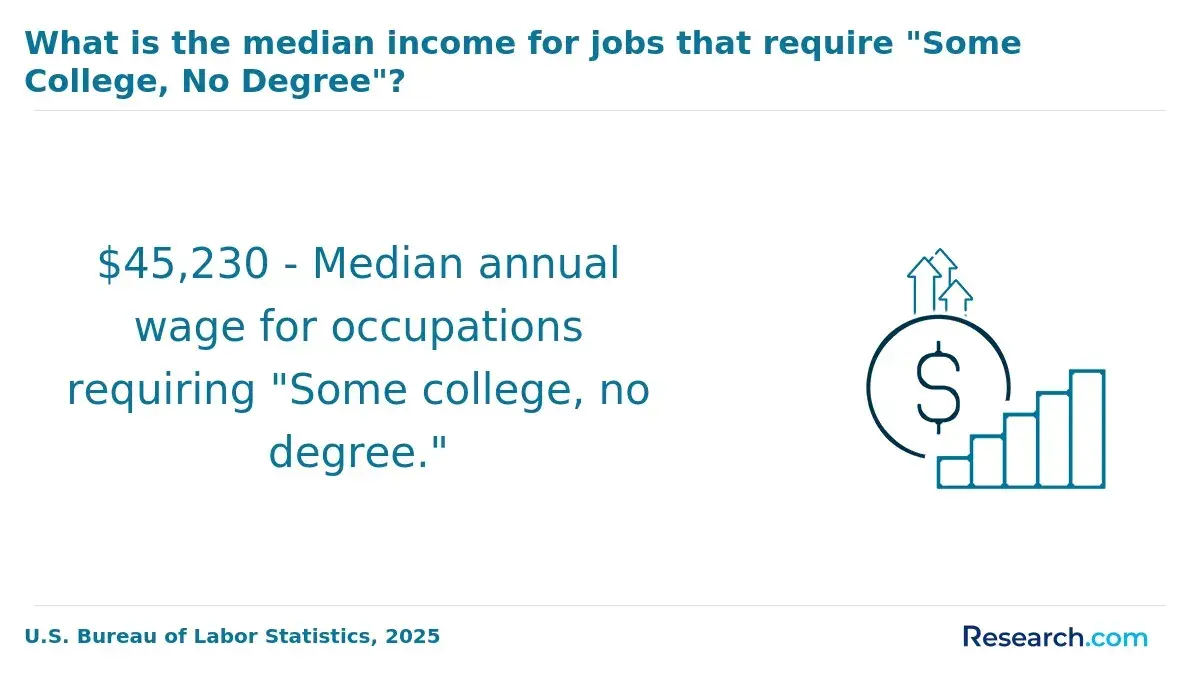
According to the National Center for Education Statistics, millions of U.S. college students take at least one distance education course, showing that online study is now a mainstream format rather than a niche option. For introverts, the key is choosing a program with strong advising, accessible faculty, career services, and clear technology support.
If you prefer remote learning, compare accredited options carefully rather than choosing only by convenience; a good starting point is a vetted list of the best online schools.
What coursework and learning environments should introverts expect in these majors?
Introvert-friendly majors are not free of collaboration. Most include some presentations, labs, critiques, peer reviews, or team projects because employers expect graduates to communicate with coworkers and explain their work.
The coursework below shows what students commonly encounter in popular introvert-friendly fields. Knowing this in advance can help you choose a program that stretches your skills without overwhelming your learning style.
| Major area | Common coursework | Learning environment | Potential challenge for introverts |
| Computer science and cybersecurity | Programming, networks, algorithms, databases, secure systems | Labs, coding projects, debugging, capstones | Team software projects and technical presentations |
| Data science and statistics | Probability, modeling, machine learning, databases, visualization | Problem sets, analytics projects, research reports | Explaining findings to nontechnical audiences |
| Accounting and actuarial science | Financial reporting, auditing, taxation, risk, business law | Structured assignments, case studies, exam preparation | Client-facing internships or busy-season workload |
| Technical writing and design | Editing, documentation, usability, layout, digital media | Portfolio work, peer critique, revision cycles | Receiving feedback and presenting creative choices |
| Laboratory and life sciences | Chemistry, biology, lab methods, safety, research design | Hands-on labs, protocols, reports, sometimes fieldwork | Partner labs and strict attendance requirements |
Introverts can make these environments more manageable by preparing for the predictable interaction points. A few habits are especially useful before upper-division courses become more demanding.
- Choose project roles that match your strengths, such as documentation lead, data analyst, editor, tester, researcher, or quality reviewer.
- Use faculty office hours early, especially in technical courses where one missed concept can affect several weeks of work.
- Build a small peer network instead of trying to socialize broadly; two reliable classmates can make labs and group projects easier.
- Practice concise explanations of your work, because written and verbal clarity often separates strong candidates from technically skilled but hard-to-understand applicants.
How do majors for introverts translate into specific job roles and career paths?
A major is not a job title. The same degree can lead to different roles depending on electives, internships, portfolios, certifications, and industry experience. The table below connects common introvert-friendly majors to entry-level roles and advancement paths. This helps you choose courses and experiences that point toward a real job market rather than a vague interest.
| Major | Entry-level roles | Mid-career paths | Skills that improve mobility |
| Computer Science | Junior developer, QA tester, systems support analyst | Software engineer, DevOps engineer, solutions architect | Git, cloud platforms, testing, system design, secure coding |
| Cybersecurity | SOC analyst, IT security technician, compliance analyst | Security engineer, incident response lead, security architect | Networking, scripting, risk frameworks, threat detection, clear reporting |
| Data Science or Statistics | Data analyst, research assistant, reporting analyst | Data scientist, machine learning analyst, biostatistician | Python, SQL, visualization, experimental design, domain knowledge |
| Accounting | Staff accountant, audit associate, tax preparer | Senior accountant, auditor, controller, forensic accountant | Excel, ERP systems, tax software, audit documentation, CPA readiness |
| Technical Writing | Documentation assistant, copy editor, content coordinator | Technical writer, UX writer, documentation manager | Plain-language writing, information architecture, API documentation, editing |
| Graphic or UX Design | Production artist, junior designer, UX research assistant | UX designer, product designer, creative lead | Portfolio quality, usability testing, design systems, accessibility |
| Library Science or Archives | Library assistant, records technician, museum technician | Archivist, digital asset manager, librarian | Metadata, preservation, database systems, research support |
To make the transition from major to job smoother, students should start building evidence of skill before graduation. Employers often value concrete proof, especially in fields where quiet independent work produces visible outputs.
- Save strong class projects and turn them into a portfolio, GitHub repository, writing sample, case study, or design collection.
- Use internships, student research, freelance work, campus jobs, or volunteer projects to test whether the daily work suits your energy level.
- Track job postings every semester and adjust electives toward the tools employers repeatedly request.
- Ask alumni what they actually do each day, not just what their job title is.
What are the salary ranges and job outlook for careers tied to introvert-friendly majors?
Salary and outlook vary by region, employer, experience, degree level, and industry. National medians are useful for comparing fields, but they should not be treated as guaranteed outcomes for any individual student.
The table below summarizes U.S. labor market benchmarks for several careers commonly linked to introvert-friendly majors. Use the figures to compare broad opportunities, then check local postings in the state or city where you plan to work.
| Career | Related major | Median pay | Projected growth through 2033 | Interpretation for students |
| Software developer | Computer science | $132,270 | 17% | Strong pay and demand, but portfolios and practical coding skill matter heavily |
| Information security analyst | Cybersecurity | $120,360 | 33% | Excellent growth outlook, especially for students with networking and security fundamentals |
| Data scientist | Data science, statistics | $108,020 | 36% | Fast-growing field, but entry-level roles can be competitive and tool-heavy |
| Actuary | Actuarial science, mathematics | $120,000 | 22% | High earning potential, but professional exams are a major commitment |
| Technical writer | Technical writing, English, communication | $80,050 | 4% | Good fit for strong writers who can explain complex products or processes |
| Accountant or auditor | Accounting | $79,880 | 6% | Stable path with stronger prospects for students who meet CPA requirements |
| Medical laboratory technologist or technician | Laboratory science | $60,780 | 5% | Structured lab work, but pay and requirements vary by credential and setting |
A smart salary comparison looks beyond the median. Students should consider tuition, debt, time out of the workforce, internship access, licensing costs, and whether the field offers remote or hybrid roles. For introverts, remote work can be appealing, but it may also require more written updates, asynchronous collaboration, and self-advocacy.
How can introverts evaluate accredited programs and avoid low-quality schools?
Accreditation is one of the most important quality checks because it affects credit transfer, financial aid eligibility, graduate school admission, employer recognition, and licensure pathways. Introverted students should be especially careful with programs that use aggressive recruiting or vague career claims, since these tactics can pressure applicants into quick decisions.
Use the checklist below before enrolling. It focuses on practical signals that reveal whether a program can support your academic and career goals.
- Confirm institutional accreditation through a recognized accreditor and verify any programmatic accreditation needed for fields such as engineering, accounting, counseling, medical laboratory science, or library science.
- Ask whether online and campus students receive the same transcript wording, faculty access, career services, library resources, and internship support.
- Review total cost, including fees, books, software, lab kits, proctoring, travel for residencies, and lost transfer credits.
- Check graduation, retention, licensure pass, and job placement information when available, but be cautious if a school presents outcomes without explaining the sample or time period.
- Read the curriculum closely and make sure the courses match current job postings in your target field.
- Ask how group projects, presentations, labs, practicums, or internships are handled so you can plan for interaction-heavy requirements.
Common red flags include guaranteed job or salary promises, unclear accreditation language, pressure to enroll immediately, unusually limited transfer policies, weak faculty information, and programs that refuse to provide detailed cost estimates. Students with additional background concerns, including applicants navigating criminal records, should also confirm admissions, internship, and licensing implications early.
Resources on the best degrees for felons can help frame those questions before enrollment.
Are there licenses, certifications, or professional credentials linked to these majors?
Many introvert-friendly majors become more valuable when paired with the right credential. Credentials can signal specialized competence, but they vary in cost, exam difficulty, renewal requirements, and employer recognition.
The table below outlines common credentials connected to introvert-friendly majors. Requirements can change, so students should verify details with the credentialing body, state board, or employer before committing money or time.
| Field | Credential examples | When it matters | Important caution |
| Accounting | CPA, CMA, Enrolled Agent | Public accounting, tax, audit, controllership, government roles | CPA education and experience rules vary by state |
| Cybersecurity | Security+, CySA+, CISSP, SSCP | Security operations, risk, compliance, incident response | Advanced credentials often require experience |
| Data and analytics | Vendor certificates in cloud, analytics, databases, or visualization tools | Entry-level differentiation and tool-specific roles | Certificates should support a portfolio, not replace skill |
| Actuarial science | SOA or CAS actuarial exams | Insurance, risk, pension, and actuarial analyst roles | Exam progress is central to advancement |
| Engineering | FE exam, PE license | Public engineering services, signing off on certain projects | Licensure rules vary by state and engineering discipline |
| Library science | ALA-accredited master's degree, state school librarian credentials | Librarian and school library roles | School roles may require educator credentials |
| Medical laboratory science | ASCP certification, state licensure where required | Hospital and clinical laboratory roles | Some states impose specific licensing requirements |
Credentials make the most sense when they are clearly tied to job postings you want. If you are not ready for a full degree or want to test a field first, compare respected online certifications that pay well and verify that employers in your target market actually request them.
The main mistake to avoid is collecting credentials without a career plan. A stronger strategy is to choose one target role, identify the required degree or credential, build a portfolio or experience record, and then add certifications that remove specific hiring barriers.
Other Things You Should Know About
There is no single best major, but strong options include computer science, accounting, data science, statistics, technical writing, laboratory science, and cybersecurity. A shy student should look for programs with structured communication rather than majors that require constant public interaction.
Yes. Many high-paying careers reward focus, independent problem-solving, accuracy, research, and technical judgment. Fields such as software development, cybersecurity, data science, actuarial science, and engineering can fit introverts who are willing to build communication skills for professional settings.
Not automatically. Most careers require some collaboration, so limited presentations and group projects can be useful practice. The better approach is to avoid programs where the main career outcome depends on constant sales, public performance, or high-volume customer interaction if those tasks consistently drain you.
An online degree can be better if you are self-motivated, organized, and comfortable communicating in writing. Campus programs may be better for students who need labs, studios, in-person mentoring, or stronger built-in networking. Accreditation and career fit matter more than format alone.
References
- 12 best jobs for introverts in 2025 | Multiverse https://www.multiverse.io/blog/best-jobs-for-introverts
- Introverts’ vs. Extraverts’ Career Path | Personality Junkie https://personalityjunkie.com/introverts-vs-extraverts-career-path/
- Finding Success In Online Learning As An Introvert https://www.academicinfo.net/blog/2024-10-27-finding-success-in-online-learning-as-an-introvert/
- Best jobs for introverts, even with ADHD, anxiety + no experience | Monarch https://www.monarch.edu.au/blog/best-jobs-careers-for-introverts-with-anxiety-adhd
- Accounting certifications (beyond a CPA license) https://www.becker.com/blog/career/accounting-certifications
- The 5 best courses for introverts https://www.hotcoursesabroad.com/study-abroad-info/applying-to-university/5-courses-for-introverts/
- 30 Best Low-Stress Jobs for Introverts With Anxiety | SoFi https://www.sofi.com/learn/content/low-stress-jobs-for-introverts-with-anxiety/
- Are You an Introvert? Get to Know 5 Majors That Are Suitable for Introverts! https://eduplanindonesia.com/are-you-an-introvert-get-to-know-5-majors-that-are-suitable-for-introverts/