
Best Diagnostic Medical Sonographer Training Programs & Trade Schools - Top Sonography Schools in South Carolina for 2026

Co-Founder and Chief Data Scientist
Choosing a medical sonographer trade school in South Carolina is mainly a question of fit: accreditation, clinical training access, cost, schedule, certification preparation, and how quickly the program can help you move into paid healthcare work. This 2026 guide is written for students comparing sonography programs, career changers looking for a practical healthcare pathway, and working adults who need to understand whether a campus, hybrid, or online-supported format can realistically work for them.
The Research.com team of data scientists developed this ranking to help readers identify medical sonography trade school options in South Carolina that are worth closer review. Because sonography is a hands-on diagnostic field, the best choice is not simply the cheapest or fastest program. You should also look closely at clinical placement quality, lab training, ARDMS exam preparation, student support, and employer connections.
Use this guide to compare expected program length, costs, prerequisites, common courses, salary expectations, financial aid options, and career paths after graduation. The goal is to help you narrow your choices with confidence before contacting admissions offices or applying.
Key benefits of finishing medical sonographer trade school in South Carolina
- Strong earning potential after a relatively short program: Graduates can expect an average salary of around $74,930 per year, with entry-level positions starting near $50,300. For many students, that creates a practical path into healthcare without committing to a four-year degree first.
- Multiple employment paths: Many graduates work as diagnostic medical sonographers or ultrasound technicians. Others build careers in focused areas such as vascular sonography, cardiac sonography, abdominal imaging, or OB/GYN sonography.
- Flexible training options: Completing a medical sonographer trade school online or through a hybrid format can make training more accessible for students balancing work, family, and commuting. However, sonography always requires in-person lab practice and supervised clinical training, so students should confirm clinical placement requirements before enrolling.
What can I expect from medical sonographer trade schools in South Carolina?
Medical sonographer trade schools in South Carolina combine classroom instruction, ultrasound lab practice, and supervised clinical rotations. The training is designed to prepare students to produce diagnostic images, communicate clearly with patients, follow safety protocols, and work under the direction of physicians and imaging teams.
Programs at schools such as Greenville Technical College and Spartanburg Community College commonly cover ultrasound physics, human anatomy, sectional anatomy, patient care, medical terminology, and imaging procedures. These courses give students the scientific foundation needed to understand what they are scanning and why image quality matters.
Hands-on training is a central part of the experience. Students practice scanning techniques in ultrasound labs before moving into clinical settings. At institutions such as Midlands Technical College, clinical rotations may place students in environments such as trauma hospitals, vascular clinics, outpatient imaging centers, and OB/GYN offices. These experiences help students learn workflow, patient positioning, documentation, professional communication, and how to respond when scans do not go as expected.
Program length varies. Some certificate pathways take about 15 months, while associate degree programs may take up to two years. Students should expect a demanding schedule, especially during clinical rotations. Success usually requires consistent attendance, strong study habits, comfort with technology, and the ability to work professionally with patients who may be anxious, uncomfortable, or in pain.
Where can I work after finishing medical sonographer trade schools in South Carolina?
After finishing a medical sonographer trade school program in South Carolina, graduates can work in several healthcare settings. The most common employers include hospitals, outpatient imaging centers, physician offices, specialty clinics, and community health organizations. Larger systems may offer exposure to complex cases and advanced imaging equipment, while smaller clinics may give sonographers more direct responsibility for patient flow and exam preparation.
Hospitals such as MUSC in Charleston and facilities in Columbia may hire graduates for diagnostic medical sonographer or ultrasound technologist roles. These positions often involve a broad range of exams and may require evenings, weekends, or on-call availability, depending on the department.
Community health centers such as CareSouth Carolina may offer a different work environment. In smaller or rural settings, sonographers may manage more of the patient interaction independently, coordinate closely with providers, and serve patients who otherwise have limited access to imaging services.
Graduates may also work in outpatient imaging centers and specialized physician offices. Common specialty areas include obstetrics, gynecology, cardiology, vascular medicine, pediatrics, and abdominal imaging. These workplaces may offer more predictable schedules than hospital departments, although responsibilities vary by employer.
When comparing job options, students should look beyond the title. Ask about exam types, schedule expectations, patient volume, mentoring for new graduates, certification requirements, and whether the employer supports continuing education.
How much can I make after finishing medical sonographer trade schools in South Carolina?
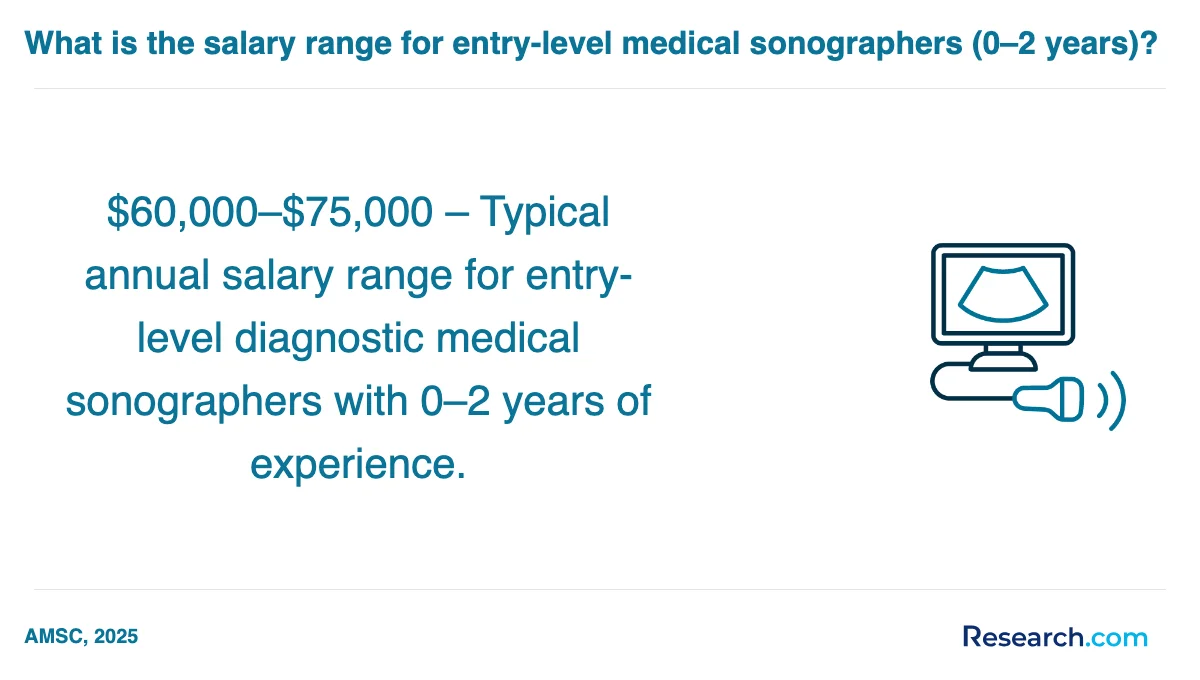
Salary after medical sonographer trade school in South Carolina depends on certification, specialty, employer type, location, shift, and experience. Graduates typically start with salaries around $60,000 per year, while many entry-level or early-career wages are reported between $72,000 and $74,930 annually. These figures show that sonography can offer a solid return for students who complete accredited training and earn employer-recognized credentials.
Specialization can affect pay. Sonographers who move into vascular or cardiac sonography may see faster salary growth, especially in hospitals or specialty clinics with high demand. Some new professionals in urban hospitals or specialized clinics have reported starting salaries as high as $108,289 per year or hourly rates near $52.
Hourly wages average about $37.61 statewide, but the actual offer can vary widely. A hospital role with call requirements may pay differently from an outpatient imaging job with weekday hours. Travel assignments, specialty credentials, and experience with high-demand procedures may also influence compensation.
Before choosing a program, ask admissions staff about graduate placement outcomes and whether recent graduates are working in general, OB/GYN, vascular, or cardiac sonography. The stronger the connection between training, certification eligibility, and local employer demand, the better your chance of turning the program into a competitive job offer.
Best Diagnostic Medical Sonographer Training Programs & Trade Schools - Top Sonography Schools in South Carolina for 2026
# 1 position
Greenville Technical College - Diagnostic Medical Sonography/Sonographer and Ultrasound Technician.
associateGreenville Technical College offers a Diagnostic Medical Sonography/Sonographer and Ultrasound Technician program with a hybrid format, including some distance education. The program trains students to use ultrasound techniques for medical diagnosis under physician supervision, covering patient care, data recording, sonographic processing, and professional ethics. Annual in-state tuition is $5,639. Graduates earn a median salary of $59,685 one year after completing the program. The program is accredited by the Southern Association of Colleges and Schools Commission on Colleges.
# 2 position
Southeastern College-Charleston - Diagnostic Medical Sonography/Sonographer and Ultrasound Technician.
associateThe Diagnostic Medical Sonography/Sonographer and Ultrasound Technician program at Southeastern College-Charleston offers a hybrid format with some distance-education options. It prepares students to use ultrasound techniques under physician supervision to diagnose various conditions. The curriculum covers patient care, sonographic data processing, and professional ethics. Annual in-state tuition is $24,184. The program is accredited by the Accrediting Commission of Career Schools and Colleges.
# 3 position
Southeastern College-Columbia - Diagnostic Medical Sonography/Sonographer and Ultrasound Technician.
associateThe Diagnostic Medical Sonography/Sonographer and Ultrasound Technician program at Southeastern College-Columbia offers a hybrid format with some distance-education options. The program prepares students to use medical ultrasound techniques for diagnostic purposes, covering patient care, sonographic data processing, and professional ethics. Annual in-state tuition is $24,184. The program is accredited by the Accrediting Commission of Career Schools and Colleges.
# 4 position
Horry-Georgetown Technical College - Diagnostic Medical Sonography/Sonographer and Ultrasound Technician.
certificate or diplomaHorry-Georgetown Technical College offers a Diagnostic Medical Sonography/Sonographer and Ultrasound Technician program with a hybrid format, combining in-person and distance education. The program prepares students to use ultrasound techniques under physician supervision to collect diagnostic sonographic data. It covers patient care, data integration, equipment operation, and professional ethics. Annual in-state tuition is $4,468. Graduates earn a median salary of $42,533 one year after completion. The program is accredited by the Southern Association of Colleges and Schools Commission on Colleges.
# 5 position
Piedmont Technical College - Diagnostic Medical Sonography/Sonographer and Ultrasound Technician.
certificate or diplomaThe Diagnostic Medical Sonography/Sonographer and Ultrasound Technician program at Piedmont Technical College offers a hybrid format with some distance-education options. It prepares students to perform medical ultrasound techniques under physician supervision, including patient care, data recording, and sonography equipment operation. The program is accredited by the Southern Association of Colleges and Schools Commission on Colleges. Annual in-state tuition is $4,775, and median earnings one year after completion are $34,637.
# 6 position
Orangeburg Calhoun Technical College - Mammography Technology/Technician.
certificate or diplomaOrangeburg Calhoun Technical College offers a hybrid Mammography Technology/Technician program that prepares registered radiographers to become registered mammographers. The curriculum includes anatomy, physiology, mammography instrumentation, positioning, procedures, and quality assurance. The program’s annual in-state tuition is $4,970. It is accredited by the Southern Association of Colleges and Schools Commission on Colleges.
Key Findings
- Medical sonographer programs in South Carolina typically offer a 2-year associate degree or a 15-month certificate covering abdominal and OB/GYN sonography.
- Admission requires a high school diploma or GED, a minimum 3.0 GPA in prerequisite courses, and may include entrance exams and background checks.
- Certification from the American Registry for Diagnostic Medical Sonography (ARDMS) is required by most employers, with eligibility requiring graduation from an accredited program and passing specialty exams.
- The total cost for associate degree programs ranges from $10,000 to $30,000, excluding books, uniforms, and exam fees.
- Entry-level medical sonographers in South Carolina earn between $54,000 and $60,000 annually, while experienced professionals can earn $70,000 or more.
How long does it take to complete medical sonographer trade schools in South Carolina?
Most medical sonographer trade school programs in South Carolina take between 18 and 24 months to complete. The timeline depends on whether the student enrolls in a certificate, diploma, or associate degree pathway and whether the program is full time, part time, or cohort based.
Students in shorter certificate pathways may complete focused sonography training more quickly, but these programs often require completed prerequisites before admission. Associate degree programs usually take longer because they include general education courses alongside sonography-specific coursework and clinical requirements.
The clinical schedule is often the biggest factor in how the program feels day to day. Students may need to be available during standard healthcare hours, and some clinical sites may require early mornings or specific weekday blocks. This can affect students who work part time or have caregiving responsibilities.
A practical way to compare programs is to ask each school three questions: how long the sonography sequence takes after prerequisites, how many clinical hours are required, and whether students are assigned to clinical sites near their home or must travel. A program that looks short on paper may still require a demanding weekly schedule.
What's the difference between online and on-campus medical sonographer trade school programs?
The main difference between online and on-campus medical sonographer trade school programs is how lecture content is delivered. The hands-on requirements do not disappear. Sonography is a clinical imaging profession, so students must complete in-person scanning labs and supervised clinical rotations regardless of format.
On-campus programs, such as those associated with Greenville Technical College and Spartanburg Community College, typically provide in-person labs, direct instructor feedback, peer practice, and structured access to ultrasound equipment. This format can be valuable for students who learn best through immediate demonstration and correction.
Online or hybrid programs may deliver lecture-based courses digitally, which can help students manage work, commuting, or family responsibilities. However, students still need approved clinical sites or campus-based lab sessions. Programs connected with schools such as Horry Georgetown Technical College may require students to complete hands-on components in person even if some coursework is online.
Students considering online options should verify accreditation, clinical placement support, lab requirements, and ARDMS eligibility before enrolling. A flexible schedule is useful only if the program also provides the supervised scanning experience employers and certification bodies expect.
- Choose on-campus if you want more structured lab time, face-to-face support, and frequent instructor feedback.
- Choose online or hybrid if you need lecture flexibility and can still meet all in-person clinical requirements.
- Avoid any program that cannot clearly explain where and how you will complete required clinical training.
What is the average cost of medical sonographer trade schools in South Carolina?
The cost of medical sonographer trade schools in South Carolina varies by institution type, residency status, program length, and included fees. Public community and technical colleges are often less expensive than private trade schools, but students should compare total program cost rather than tuition alone.
At Greenville Technical College, a public institution, tuition costs are reported around $7,759 for families earning between $48,000 and $75,000 annually. Private schools such as Southeastern College in Charleston and Columbia have tuition fees near $25,080. These different price points can significantly affect borrowing, financial aid needs, and overall return on investment.
Total expenses may include tuition, books, uniforms, lab fees, background checks, immunizations, CPR certification, transportation to clinical sites, and exam fees. At Central Carolina Community College, in-state students experience a total cost of approximately $9,912, which includes tuition, books, and fees. Out-of-state students face a higher total cost estimated at $22,732, excluding some additional fees and materials.
Before committing, ask each school for an itemized cost sheet and clarify what is included. A lower advertised tuition may not include required supplies or certification exam expenses. Students comparing sonography with other healthcare professions should also consider how quickly the program leads to credential eligibility and employment.
What financial aid is available for medical sonographer trade schools in South Carolina?
Financial aid for medical sonographer trade schools in South Carolina may come from federal grants, state aid, institutional scholarships, professional scholarships, payment plans, employer tuition assistance, and student loans. The exact options depend on the school’s eligibility, the student’s financial situation, and whether the program qualifies for aid.
Many students begin with the Free Application for Federal Student Aid because it determines eligibility for federal support. The Federal Pell Grant can provide up to $6,895 annually to eligible students. Students with greater financial need may also qualify for the Federal Supplemental Educational Opportunity Grant (FSEOG), which can add several hundred to a few thousand dollars in aid.
South Carolina residents may be able to use state-based aid programs at local trade schools and community colleges. Because eligibility rules can vary, students should speak directly with the financial aid office before assuming a program is covered.
Professional organizations may also help reduce costs. The Society of Diagnostic Medical Sonography (SDMS) offers scholarships, including the $2,500 Sonography Student Scholarship. Institutional scholarships and payment plans can also make tuition more manageable, while some healthcare employers may offer tuition reimbursement for employees pursuing in-demand clinical credentials.
A smart financial aid strategy is to compare net cost, not sticker price. Ask each school how much graduates typically borrow, what fees are due before classes begin, and whether aid covers clinical-related expenses such as uniforms, immunizations, background checks, or transportation.
What are the prerequisites for enrolling in medical sonographer trade schools in South Carolina?
Prerequisites for medical sonographer trade schools in South Carolina are designed to make sure applicants are ready for a selective and academically demanding healthcare program. Most schools require a high school diploma or GED and completed prerequisite coursework before students enter the sonography sequence.
Common prerequisite areas include biology, anatomy, physiology, physics, algebra or college math, medical terminology, and communication. Many programs also require or strongly recommend healthcare-related preparation, such as CPR certification, patient care coursework, or previous exposure to clinical environments.
Applicants may also need to meet admissions standards beyond coursework. These can include a minimum GPA, entrance exams, placement tests, interviews, background checks, drug screening, immunization records, and proof of physical ability to perform clinical tasks. The Key Findings for this guide note that admission may require a minimum 3.0 GPA in prerequisite courses.
Common prerequisites include:
- High school diploma or GED;
- Completion of required science and math courses;
- CPR certification or basic healthcare experience, when required;
- Entrance exam or placement test, depending on the school;
- Background check, drug screen, and immunization documentation for clinical placement.
Students should not wait until the application deadline to check these requirements. Missing one prerequisite can delay admission by a full cycle, especially in cohort-based programs with limited seats.
What are the typical courses in medical sonographer trade schools in South Carolina?
Medical sonographer trade school courses in South Carolina are built around image production, anatomy, patient care, and clinical decision support. Students learn how ultrasound equipment works, how to scan safely, how to recognize normal and abnormal anatomy, and how to document findings for interpretation by qualified providers.
Typical courses include:
- Ultrasound Physics: Covers sound wave behavior, transducers, image optimization, Doppler principles, artifacts, and equipment controls.
- Human Anatomy and Physiology: Builds the foundation for understanding organs, body systems, and anatomical relationships seen during ultrasound exams.
- Abdominal Sonography: Focuses on organs such as the liver and kidneys and prepares students for common abdominal imaging procedures.
- OB/GYN Sonography: Covers reproductive anatomy, pregnancy-related imaging, fetal development, and patient-centered communication in obstetric settings.
- Vascular Sonography: Introduces blood flow assessment, Doppler technology, and scanning methods used to evaluate vascular conditions.
- Patient Care and Medical Ethics: Emphasizes professionalism, safety, infection control, privacy, communication, and ethical decision-making.
Clinical rotations connect these courses to real patients and real imaging workflows. Students learn how to position patients, obtain diagnostic-quality images, work efficiently, and communicate with supervising sonographers and physicians. This is also where many students discover which specialty area best fits their strengths.
What are the available specializations in medical sonographer trade schools in South Carolina?
Medical sonography specialization programs in South Carolina may prepare students for general diagnostic medical sonography or for more focused areas such as abdominal, obstetric and gynecologic, cardiac, and vascular sonography. The right specialization depends on the student’s interests, local employer demand, and certification goals.
Common specialization areas include:
- Abdominal Sonography: Imaging of organs and structures in the abdomen, often used in hospitals and outpatient imaging centers.
- Obstetric and Gynecologic Sonography: Imaging related to pregnancy, fetal development, and reproductive health.
- Cardiac Sonography: Ultrasound imaging of the heart, often used in cardiology settings.
- Vascular Sonography: Assessment of blood vessels and circulation using ultrasound and Doppler techniques.
- Musculoskeletal, Pediatric, Neurosonography, and Breast Sonography: More focused areas that may require additional training, experience, or credentialing depending on the employer.
Programs connected with institutions such as the University of South Carolina's School of Medicine and Greenville Technical College may expose students to multiple areas of applied sonography. This breadth can help students prepare for certification exams and make better decisions about where they want to work after graduation.
Students who need more flexible study options can also review the best online programs for sonography, while remembering that clinical sonography training must still include supervised in-person experience.
How do you choose the best medical sonographer trade school program in South Carolina?
The best medical sonographer trade school program in South Carolina is the one that is accredited, clinically strong, affordable for your situation, realistic for your schedule, and aligned with the certification and job outcomes you want. Do not choose based on location or tuition alone.
Start with accreditation. Programs accredited by the Commission on Accreditation of Allied Health Education Programs (CAAHEP) are designed to meet recognized quality standards and can support certification eligibility. Students considering schools such as Greenville Technical College, Midlands Technical College, or Horry-Georgetown Technical College should confirm current accreditation status directly with the program and the accrediting body.
Next, review clinical training. Strong programs should clearly explain where students complete rotations, how sites are assigned, what types of exams students observe or perform, and whether students receive enough supervised scanning experience to feel job-ready. Partnerships with facilities such as those affiliated with the Medical University of South Carolina can be valuable, but the details matter.
Certification preparation is also important. South Carolina does not require licensure, but many employers expect ARDMS certification. A program that builds exam preparation into the curriculum can improve your readiness and strengthen your employment profile.
- Check accreditation: Confirm CAAHEP status or other relevant approvals before applying.
- Compare clinical placements: Ask about site availability, travel expectations, and specialty exposure.
- Review program length and schedule: Make sure class and clinical hours fit your work and family obligations.
- Calculate total cost: Include tuition, fees, books, uniforms, background checks, transportation, and exams.
- Ask about outcomes: Request information on completion, certification, and job placement support.
It can also help to compare expected pay for ultrasound tech roles with the cost of attendance. A program with strong clinical training and employer connections may offer better long-term value than a cheaper program with limited support.
What career paths are available for medical sonographer trade school graduates in South Carolina?
Medical sonographer trade school graduates in South Carolina can pursue several diagnostic imaging career paths. Most begin as diagnostic medical sonographers in hospitals, outpatient imaging centers, private practices, or specialty clinics. Training in abdominal and OB/GYN sonography can broaden early job options, while additional credentials may support movement into cardiac, vascular, pediatric, or other specialty roles.
Career options include:
- Working as a diagnostic medical sonographer in hospitals, outpatient imaging centers, or physician offices;
- Specializing in abdominal, obstetric and gynecologic, vascular, cardiac, or pediatric sonography;
- Working in maternal-fetal medicine offices or vascular labs;
- Pursuing travel sonography positions offering flexibility and competitive pay, with some recent roles averaging $1,795 weekly;
- Advancing into supervisory, administrative, or technical support roles within healthcare or medical device companies;
- Contributing to research or teaching future sonographers at educational institutions.
Because South Carolina employers commonly rely on national certification, ARDMS credentials can be important for long-term mobility. Students should understand certification pathways early so they can choose courses, clinical experiences, and specialties that support their goals.
Those still comparing imaging careers can review ultrasound tech requirements to understand how training, certification, and employment expectations fit together.
What is the job market for medical sonographer trade school graduates in South Carolina?
The job market for medical sonographer trade school graduates in South Carolina is favorable, with medical sonographer job openings projected to increase by 26.4% through 2026. Demand comes from hospitals, outpatient imaging centers, specialty practices, and rural clinics that need trained professionals to perform diagnostic ultrasound exams.
Graduates may find opportunities in larger urban markets such as Charleston and Columbia, where hospitals and specialty departments may offer broader exposure to advanced imaging. Rural clinics and community facilities may also need sonographers, especially in areas where access to diagnostic imaging is limited.
Pay data can vary by source, timing, role type, and specialty. As of mid-2025, the average salary is approximately $102,143 annually, with weekly pay for staff sonographers around $1,964. These figures indicate strong earning potential, but applicants should compare local job postings, shift requirements, benefits, certification expectations, and whether the role is staff, PRN, contract, or travel-based.
Employers typically value graduates with accredited training, strong clinical references, patient care skills, and readiness for ARDMS certification. Students who want to understand related imaging pathways can explore what jobs can you get with a radiology degree for a broader view of careers connected to diagnostic imaging and radiology.
Frequently Asked Questions about medical sonographer
After completing a medical sonographer trade school program in South Carolina, graduates can pursue certifications such as the Registered Diagnostic Medical Sonographer (RDMS) and specialties like obstetrics and gynecology or abdominal sonography through the American Registry for Diagnostic Medical Sonography (ARDMS). These certifications validate expertise and enhance job prospects.
To prepare for the job market in South Carolina after completing a medical sonographer trade school program, focus on networking through local healthcare associations, attending job fairs, and maintaining updated resumes and professional LinkedIn profiles. Consider acquiring professional certifications and staying updated with technological advancements in ultrasound equipment.
In South Carolina, gaining practical experience while studying medical sonography can be achieved through clinical rotations and internships, which are often part of the curriculum. Many schools partner with local hospitals and clinics, providing students hands-on training under professional supervision, enhancing both skill and confidence in real-world settings.
To create a standout application for a sonography program in South Carolina, emphasize relevant experience, a strong academic background in sciences, and a genuine passion for patient care. Tailor your personal statement to highlight specific skills and experiences that align with the program's values and goals, showcasing any volunteering or shadowing experiences in healthcare settings.
Related Medical Sonographer Rankings for Nearby States
- Best Diagnostic Medical Sonographer Training Programs & Trade Schools - Top Sonography Schools in North Carolina for 2026
- Best Diagnostic Medical Sonographer Training Programs & Trade Schools - Top Sonography Schools in Florida for 2026
- Best Diagnostic Medical Sonographer Training Programs & Trade Schools - Top Sonography Schools in Mississippi for 2026
- Best Diagnostic Medical Sonographer Training Programs & Trade Schools - Top Sonography Schools in West Virginia for 2026
- Best Diagnostic Medical Sonographer Training Programs & Trade Schools - Top Sonography Schools in Louisiana for 2026
- Best Diagnostic Medical Sonographer Training Programs & Trade Schools - Top Sonography Schools in Maryland for 2026
- Best Diagnostic Medical Sonographer Training Programs & Trade Schools - Top Sonography Schools in Missouri for 2026
- Best Diagnostic Medical Sonographer Training Programs & Trade Schools - Top Sonography Schools in Ohio for 2026
- Best Diagnostic Medical Sonographer Training Programs & Trade Schools - Top Sonography Schools in Indiana for 2026
- Best Diagnostic Medical Sonographer Training Programs & Trade Schools - Top Sonography Schools in Pennsylvania for 2026
Top Trending Rankings
References
- Diagnostic Medical Sonographers in South Carolina - Healthcare Degree Search https://healthcaredegreesearch.com/careers/diagnostic-medical-sonographers/south-carolina-us/
- Ultrasound Technologist | CareSouth Carolina Bennettsville, SC https://www.caresouth-carolina.com/careers/ultrasound-technologist
- Diagnostic Medical Sonographers and Cardiovascular Technologists and Technicians : Occupational Outlook Handbook: : U.S. Bureau of Labor Statistics https://www.bls.gov/ooh/healthcare/diagnostic-medical-sonographers.htm
- Find Accredited Ultrasound Technician Schools in South Carolina https://www.ultrasoundschoolsinfo.com/south-carolina/
- University of South Carolina | Ultra Sound Sonographer https://uscjobs.sc.edu/titles/156310
- Diagnostic Medical Sonography Program | Greenville Technical College https://www.gvltec.edu/academics_learning/health-sciences/diagnostic_medical_sonography/index.html
- General Sonography - Training Certificate | Midlands Technical College https://www.midlandstech.edu/programs-and-courses/health-care/general-sonography
- Ultrasound Institute - School of Medicine Columbia | University of South Carolina https://sc.edu/study/colleges_schools/medicine/centers_and_institutes_new/ultrasound_institute/
- Diagnostic Medical Sonography - Associate in Applied Science Degree | Horry-Georgetown Technical College https://www.hgtc.edu/academics/academic-departments/imaging-sciences/diagnostic-medical-sonography-degree.html
- Diagnostic Medical Sonography | Southeastern College https://www.sec.edu/academic-program/diagnostic-medical-sonography/


