
# 1 position
Most Affordable Interior Design Schools & Degrees in Arizona for 2027
Audited and Verified:
Our Editorial and Data Verification Process
Research.com uses government datasets, official education statistics and primary institutional information to support its career and degree guides. Our review process checks factual accuracy, occupational definitions, source dates and the requirements associated with the credentials discussed.
How This Article Was Fact-Checked
Our editorial team verifies salary estimates, employment projections, education requirements and program information against original data providers and official organizations. Salary figures are checked against the relevant occupational definitions and reporting periods. Information about licensure, accreditation and required in-person training is reviewed separately.
Fact-checked and verified on:

Co-Founder and Chief Data Scientist

Reviewed by Karolina Broda
Fact-Checker and Data Verification
The cheapest interior design program is not necessarily the cheapest route to a job: software, supplies, travel, and time away from work can change the total. The U.S. Bureau of Labor Statistics projects 2.7% growth for interior designers nationally from 2025 to 2035, making the fit between training and career goals worth examining. For students and career changers, this guide explains Arizona pathways, costs, credentials, and employment prospects. It also accompanies the Most Affordable Interior Design Trade Schools in Arizona for 2027 ranking, created by the Research.com team of data scientists to help students identify programs worth considering.
Key findings about interior design degrees in Arizona
- The U.S. median annual wage for interior designers was $67,190 in May 2025; it is an occupation-wide benchmark, not an Arizona starting salary or a promised outcome for certificate holders (U.S. Bureau of Labor Statistics).
- For a lower-cost entry route, compare Arizona community-college certificates with associate-level programs and employer training. The right choice depends on whether you need portfolio work, technical drafting skills, or a broader credential.
- Arizona does not require a general occupational license simply to work as an interior designer, but building-code and professional-scope rules still matter on projects. Verify who may prepare or approve the work you hope to perform (Arizona State Board of Technical Registration).
Table of Contents
- Most Affordable Interior Design Schools & Degrees in Arizona for 2027
- What can I expect from an interior design trade school program in Arizona?
- Where can I work with an interior design trade school training in Arizona?
What can I expect from an interior design trade school program in Arizona?
Expect a mix of design principles and job-ready production: space planning, materials, lighting, drawing, computer-aided drafting, and presentations to clients. A useful program makes you produce work that can be critiqued and revised, not merely watch demonstrations. Ask to see the assignments graduates use in portfolios and whether instructors teach current drafting and visualization workflows.
Arizona students may compare a shorter certificate, an associate degree, or supervised entry-level work with a design firm or showroom. A certificate suits someone testing the field or adding drafting skills; an associate degree may suit someone seeking more studio practice and general education alongside technical work. Employer training can reduce upfront tuition but may teach a narrower set of products or tasks. Online vocational schools can widen access, particularly outside major metros, but compare their portfolio feedback and software requirements before assuming they offer equivalent practical preparation.
Where can I work with an interior design trade school training in Arizona?
Potential settings include residential design firms, furniture and kitchen-and-bath showrooms, architectural or construction teams, hospitality projects, and commercial furnishings suppliers. Phoenix-area applicants may have access to a wider mix of firms and showrooms; someone in a smaller community should check local openings and whether remote drafting or client work is realistic before choosing a specialized program.
The first job may be design assistant, showroom consultant, or drafter rather than an independently responsible interior designer. The U.S. Bureau of Labor Statistics describes interior designers as planning functional spaces while considering building codes and accessibility. That distinction matters: sales-focused showroom experience can be valuable, but it may not provide the technical project experience needed for more complex commercial work.
Use job postings and Arizona-specific wage data when estimating local pay; a national occupation-wide median cannot tell you what a new certificate holder will earn in Phoenix or Tucson. The most recent national U.S. Bureau of Labor Statistics median supplied for interior designers is $67,190 annually in May 2025. It includes experienced workers and varied employers, so treat it as a career benchmark rather than an entry-level offer.
Pay also depends on the role. A showroom sales position, drafting job, and design-firm position can have different compensation structures even when they use similar visual skills. Before borrowing for training, compare actual openings you would accept, their stated pay and software requirements, and whether the credential you are considering meets them.
Length depends on the credential and course schedule: a focused certificate generally takes less time than an associate degree, while part-time study extends either route. There is no single Arizona-mandated clock-hour requirement for general entry into interior design (Arizona State Board of Technical Registration). Instead of comparing advertised completion dates alone, request the required credits, course rotation, studio time, and expected weekly workload.
Short training is useful when you need a specific skill quickly, but it may not leave enough time to build a convincing portfolio. Readers comparing best 6 month online courses that pay well should check whether an interior design option actually includes substantial drawing assignments and individualized critique. Ask whether internship or project opportunities can fit around your work schedule; they are not interchangeable with classroom hours.
Online study can work well for design history, specifications, drafting software, and digital presentations. Campus instruction offers direct access to materials libraries, studio critique, and collaborative project work. Neither format automatically produces a stronger portfolio; the deciding factors are the assignments, feedback, equipment access, and opportunities to work with real constraints.
A hybrid option may reduce commuting while preserving studio sessions. Before paying a deposit, confirm whether exams, critiques, material demonstrations, or internships require travel, and whether your computer can run the required software. If application charges affect your comparison, a list of best accredited online schools with free application can provide a separate starting point - but verify that any interior design training you find fits your intended work. An online credential alone does not establish eligibility for an optional professional certification.
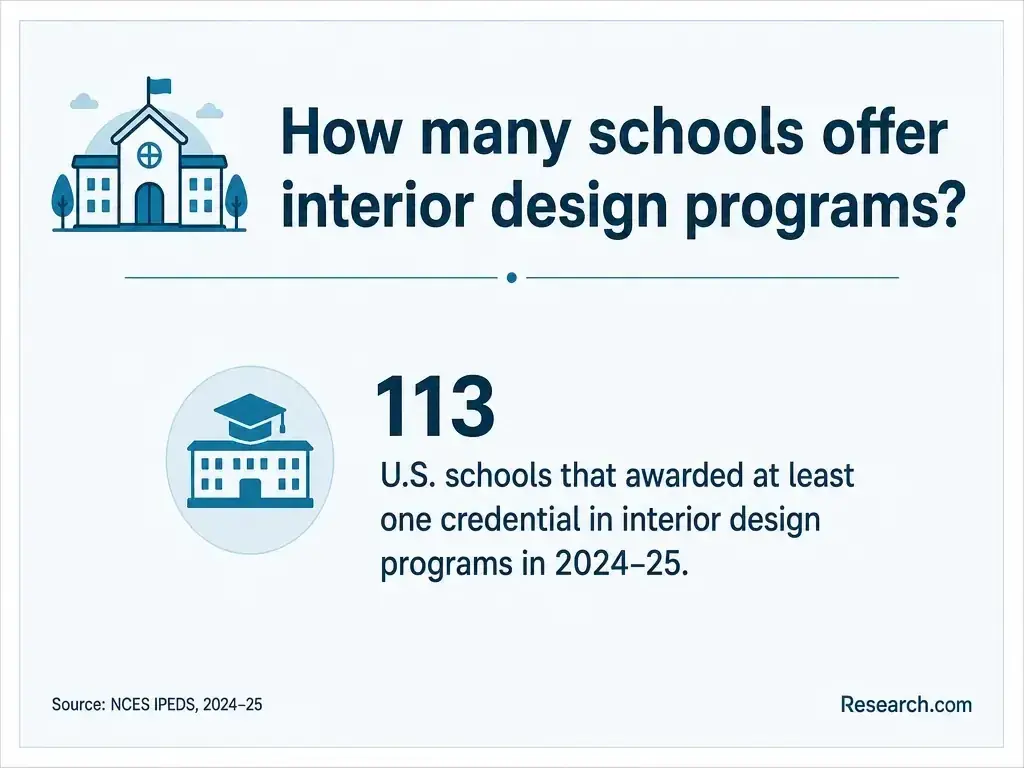
There is no defensible single average for every Arizona certificate, associate program, and employer-training route: credentials, course loads, residency rates, and included supplies differ. Request a written, program-specific estimate rather than treating a school's general annual tuition figure as the price of becoming job-ready. Arizona public-college resident and nonresident rates can differ, so confirm the rate you qualify for with the institution.
Compare total costs in the same categories for every option:
- School charges: tuition, mandatory fees, and any studio or technology fees.
- Work materials: computer and software access, printing, samples, books, and presentation supplies.
- Career-entry costs: transportation to studio or work placements, optional certification expenses, and earnings forgone while studying.
- Offsets: grants, scholarships, eligible federal aid, employer support, and paid work experience.
An associate-level comparison such as cheap associate degrees online is useful only if the quoted cost includes the courses and practical work you need. Check federal-aid eligibility with the school and Federal Student Aid; do not assume every short certificate qualifies.
The award may be a college certificate or an associate degree; a short course may instead provide only a completion document. These are school credentials, not occupational licenses or professional certifications. Read the catalog's exact award name and course requirements, then compare them with the qualifications in jobs you want.
Ask whether certificate credits can apply toward an associate degree at the same institution and whether another college will accept them. Transfer is determined by the receiving institution, not guaranteed by a similar course title. This matters if you want to start with a lower-cost, shorter credential without repeating studio or drafting courses later.
Requirements vary by provider and credential. A community-college program may have general college admission followed by course placement or prerequisites; a private career school may use its own application and enrollment process. Ask whether a portfolio, prior software experience, specific computer, or materials purchase is required before the first class. Do not assume that open college admission guarantees an immediate seat in every studio course.
School authorization, institutional accreditation, and admission are separate questions. If considering a private vocational provider, verify its Arizona authorization with the Arizona State Board for Private Postsecondary Education where applicable. Check institutional accreditation independently, and ask the school what that status means for aid or credit transfer; neither authorization nor accreditation alone establishes professional certification eligibility.
Core training typically connects measured drawings and digital models to decisions about circulation, finishes, lighting, furnishings, budgets, and client needs. Strong assignments require more than an attractive rendering: students must explain why a layout functions, specify materials, and communicate revisions accurately. The U.S. Bureau of Labor Statistics identifies drawing, computer-aided design, building codes, and accessibility as relevant to interior designers' work.
Compare the actual work produced in a certificate and an associate program. Ask how many projects receive instructor critique, whether students document existing spaces, and whether commercial or residential projects reflect your target jobs. Visualization software and AI-assisted imagery may help communicate an idea, but employers still need people who can check dimensions, specifications, and whether a proposal can be built.
Arizona does not have a general occupational license that every interior designer must obtain before working. That does not authorize an unregistered designer to perform work reserved for a registered design professional or override building-permit requirements. Ask the Arizona State Board of Technical Registration and the relevant local permitting authority about the scope of work on projects you intend to handle (Arizona State Board of Technical Registration).
Professional certification is a different matter. The optional NCIDQ credential has its own education, experience, and examination eligibility rules set by the Council for Interior Design Qualification; completing a school program does not automatically qualify someone for the exam. If certification is a long-term goal, check your prospective credential and planned work experience against the council's current pathway before enrolling. Programmatic accreditation, where available, is also distinct from institutional accreditation and from occupational permission to practice.
Start with the job you want, then compare programs on the work they teach you to produce - not their ranking position alone. A low-price certificate can be an excellent investment for a showroom employee adding drafting skills, but a poor fit for someone who needs extensive commercial project experience. Conversely, a longer program is difficult to justify if it duplicates skills you already use at work.
Use these questions when speaking with admissions staff and instructors:
- What is the exact credential, and can I inspect recent student portfolios from the program?
- Which software, technical drawings, codes, and client projects are taught and assessed?
- What are my total charges and required purchases through completion, and which credits will transfer?
- How often are required courses offered, and what in-person work or travel is unavoidable?
- What entry-level roles have recent completers pursued, and what evidence supports those outcomes?
Check the answers against local job postings. Comparing easiest online bachelor's degree programs online is a separate education decision; for this trade-school choice, prioritize the shortest credible route that supplies the skills and portfolio your intended role requires. A common mistake is choosing the lowest tuition without accounting for delayed completion, supplies, debt, or lost earnings.
A practical progression is from assistant, showroom consultant, or drafting support into more independent project responsibilities after building a portfolio and work experience. Someone interested in residential furnishings may value product knowledge and client consultations; someone aiming at commercial interiors should look harder at technical documentation, accessibility, and collaboration with registered design professionals. These are different training targets, even when programs share the words "interior design."
Self-employment is another possible later step, not an automatic outcome of completing a certificate. It adds estimating, contracts, client acquisition, and responsibility for staying within applicable professional-scope rules. Optional certification and specialization can support advancement, but neither substitutes for evidence that you can complete the work employers or clients need.
The U.S. Bureau of Labor Statistics projects 2.7% national employment growth for interior designers from 2025 to 2035. This is a modest national projection, not an Arizona forecast or a measure of openings for new trainees. It argues for evaluating a program's portfolio development and employer connections rather than assuming that completing any credential will lead directly to a designer title.
For a local decision, compare current postings in the part of Arizona where you can work and review Arizona Office of Economic Opportunity projections when available for the matching occupation and period. Notice whether openings request sales experience, drafting software, or commercial documentation. If the roles you want cluster far from home, commuting or relocation costs belong in your training investment calculation.
Most Affordable Interior Design Schools & Degrees in Arizona for 2027
Investing in training is an important decision. Research.com created its ranking to help readers compare interior design programs against other programs in the same occupation and location, rather than against unrelated schools. The team checks multiple sources for credibility and accuracy, but the ranking has a defined scope: only programs with completions reported to the Integrated Postsecondary Education Data System (IPEDS) are included. A provider's absence does not mean it lacks quality or authorization.
The most affordable ranking scores tuition, cost of attendance, median student debt, and federal loan default rate. Indicator weights are assigned using an entropy-based method, which gives more weight to measures that differ more across programs. Unlike Research.com's separate best programs rankings, this affordability score does not include accreditation or other quality indicators. Best-program rankings evaluate student outcomes, earnings and return on investment, costs and debt, and quality and recognition; their current weights assign 20% to relevant programmatic accreditation or industry recognition, 10% to institutional accreditation, 10% to student support services, and 60% collectively to outcomes, earnings, and costs through entropy-based weighting.
The ranking draws on the following sources. Some cover other occupations and should not be read as interior design accreditors or as endorsements of a particular program:
- IPEDS database - institutional reporting, including program completions and education measures.
- National Center for Education Statistics - federal education data and documentation.
- College Scorecard database - federal institution-level cost, debt, and outcome information where available.
- Peterson's database - supplementary institutional information.
- Commission on Accreditation of Allied Health Education Programs - occupation-specific accreditation information for applicable fields, not interior design accreditation.
- Accrediting Bureau of Health Education Schools - health education accreditation information, not interior design accreditation.
- Commission on Dental Accreditation - dental program accreditation information, not interior design accreditation.
- Dental Assisting National Board - dental assisting credential information, not an interior design credential.
- National Center for Construction Education and Research - construction training and credential information where applicable.
- Apprenticeship.gov Partner Finder - information on apprenticeship partners where applicable.
Use the ranking to narrow a price comparison, then verify each program's current charges, curriculum, practical training, and suitability for the work you want. Research.com explains its approach further on its methodology page.
# 2 position
Scottsdale Community College - Interior Design.
certificate or diploma# 3 position
Phoenix College - Interior Design.
associate# 4 position
Phoenix College - Interior Design.
certificate or diploma# 5 position
Northern Arizona University - Interior Design.
certificate or diploma
Frequently asked questions about interior design programs in Arizona
Is a certificate enough to start working in interior design?
It can support entry into assistant, showroom, or drafting-related roles if you can show relevant work. Check the requirements of actual openings; a certificate alone does not establish professional certification eligibility.
Are Arizona interior design programs available fully online?
Some coursework can be remote, but formats vary. Confirm how you will receive studio critique, make material selections, complete projects, and meet any in-person requirements before enrolling.
Do I need an apprenticeship?
There is no general Arizona interior design apprenticeship requirement for occupational entry (Arizona State Board of Technical Registration). Supervised employment or an internship can nevertheless help you build experience and a portfolio.
Is the most affordable program the one with the lowest tuition?
Not necessarily. Compare required software and supplies, fees, travel, aid, completion time, and potential lost earnings alongside tuition.
Will completing a program qualify me for NCIDQ certification?
Not automatically. The Council for Interior Design Qualification sets separate education, experience, and examination requirements. Verify its current pathway against the exact credential and experience you plan to earn.
- U.S. Bureau of Labor Statistics - Interior Designers
Used to verify salary, employment outlook, and typical education requirements.
https://www.bls.gov/ooh/arts-and-design/interior-designers.htm - NCES College Navigator (IPEDS)
Used to verify programs offered and institutional accreditation.
https://nces.ed.gov/collegenavigator/ - CIDQ - NCIDQ Certification
Professional certification reference for graduates of this occupation.
https://www.cidq.org/ - Scottsdale Community College - official website
Official school website (programs, tuition, admissions).
https://www.scottsdalecc.edu/ - Phoenix College - official website
Official school website (programs, tuition, admissions).
https://www.phoenixcollege.edu/ - Northern Arizona University - official website
Official school website (programs, tuition, admissions).
https://nau.edu/