# 1 position


Audited and Verified:
Our Editorial and Data Verification Process
Research.com uses government datasets, official education statistics and primary institutional information to support its career and degree guides. Our review process checks factual accuracy, occupational definitions, source dates and the requirements associated with the credentials discussed.
How This Article Was Fact-Checked
Our editorial team verifies salary estimates, employment projections, education requirements and program information against original data providers and official organizations. Salary figures are checked against the relevant occupational definitions and reporting periods. Information about licensure, accreditation and required in-person training is reviewed separately.
Fact-checked and verified on:

Co-Founder and Chief Data Scientist

Reviewed by Karolina Broda
Fact-Checker and Data Verification
The cheapest interior design program is not necessarily the cheapest route to a job: software, materials, travel, and time away from work can change the total. The U.S. Bureau of Labor Statistics projects 2.7% national growth for interior designers from 2025 to 2035, making preparation and portfolio quality worth weighing alongside price. This guide accompanies the Most Affordable Interior Design Trade Schools in Missouri for 2027 ranking, created by the Research.com team of data scientists to help students identify training programs worth considering and choose a path that fits their goals.
Expect a mix of design studio projects and technical work: measuring spaces, planning layouts, selecting finishes, preparing drawings, presenting ideas to clients, and revising designs around budgets and building constraints. Interior design goes beyond decorating when a role involves detailed space planning, accessibility, construction documents, or coordination with architects and contractors. The U.S. Bureau of Labor Statistics describes these tasks as part of the interior designer occupation.
A short certificate can introduce software and residential projects, but it may not provide the technical depth or substantial portfolio work sought for some design-firm roles. An associate-degree program generally allows more time for drafting, materials, codes, and successive studio projects. Compare actual assignments and supervised critique - not just credential names. An internship or employer project is especially useful if it produces work you can discuss in an interview.
School is not the only entry route. A furniture showroom, kitchen-and-bath business, or design firm may train a new employee in product specification, customer service, and its software. That can reduce upfront education costs and provide income, but training may be narrow and employer-dependent. There is no universal interior-design apprenticeship requirement in Missouri; if a provider advertises an apprenticeship, ask who sponsors it, whether it is registered, what wages it pays, and which credential it leads to.
Potential workplaces include residential design firms, furniture and finish showrooms, kitchen-and-bath businesses, architecture and commercial design firms, and facilities teams. An entry-level opening may be labeled design assistant, showroom consultant, or drafting assistant rather than interior designer. The distinction matters: a sales-focused showroom job may reward product knowledge, while a commercial-firm role may require stronger drafting, code awareness, and construction-document skills (U.S. Bureau of Labor Statistics).
Search the St. Louis and Kansas City labor markets separately rather than assuming opportunities are evenly distributed statewide. Students outside major metros should check where internships and entry-level employers are located before choosing a campus: a low tuition bill may be offset by a long commute or a move. Ask a prospective program where students complete projects or internships and whether those placements are available near you.
There is no single reliable salary for a new Missouri interior design trainee. The U.S. Bureau of Labor Statistics reports a May 2025 U.S. median of $67,190 for employed interior designers, but that figure includes experienced workers and does not describe design assistants or showroom sales staff. Use Missouri occupational wage estimates from the U.S. Bureau of Labor Statistics or the state labor-market agency when comparing local offers, and match the job title and duties before using any figure in a budget.
For a personal return-on-investment estimate, compare the pay you could earn without training with realistic local openings after training. Factor in completion probability, grants, debt payments, lost earnings during study, the time needed to build a portfolio, and how long you expect to work in the field. A program can be inexpensive yet a poor investment if its projects do not prepare you for the jobs you intend to seek.
Duration depends on the credential and schedule. A focused certificate may take months; an associate degree commonly takes about two academic years of full-time study, with part-time enrollment taking longer. These are planning ranges, not Missouri-mandated training hours. Ask each provider for its published credit or clock hours, course sequence, studio hours, and next available start dates before estimating your finish date.
Acceleration is most useful when it preserves studio access and time for a strong portfolio. If you are weighing an accelerated associate degree, check whether compressed courses leave enough time for iterative projects, software practice, and employer feedback. Also ask whether prior coursework or documented experience can earn credit; a shorter schedule only saves money if required classes are available when you need them.
Online study can make design history, introductory software instruction, and some drawing or presentation assignments easier to fit around work. Campus or scheduled in-person sessions make it easier to inspect materials, measure real spaces, build samples, receive live studio critique, and collaborate on projects. A hybrid program can work well if it specifies how students access software, equipment, instructors, and local project sites.
Comparing cheapest online colleges can help identify flexible study options, but price and remote access do not establish that an interior design program offers adequate hands-on practice. Request sample projects and ask where material work, critiques, and any internship occur. If professional registration is a long-term goal, check the credential and education requirements with the relevant authority rather than assuming an online format qualifies or disqualifies you.
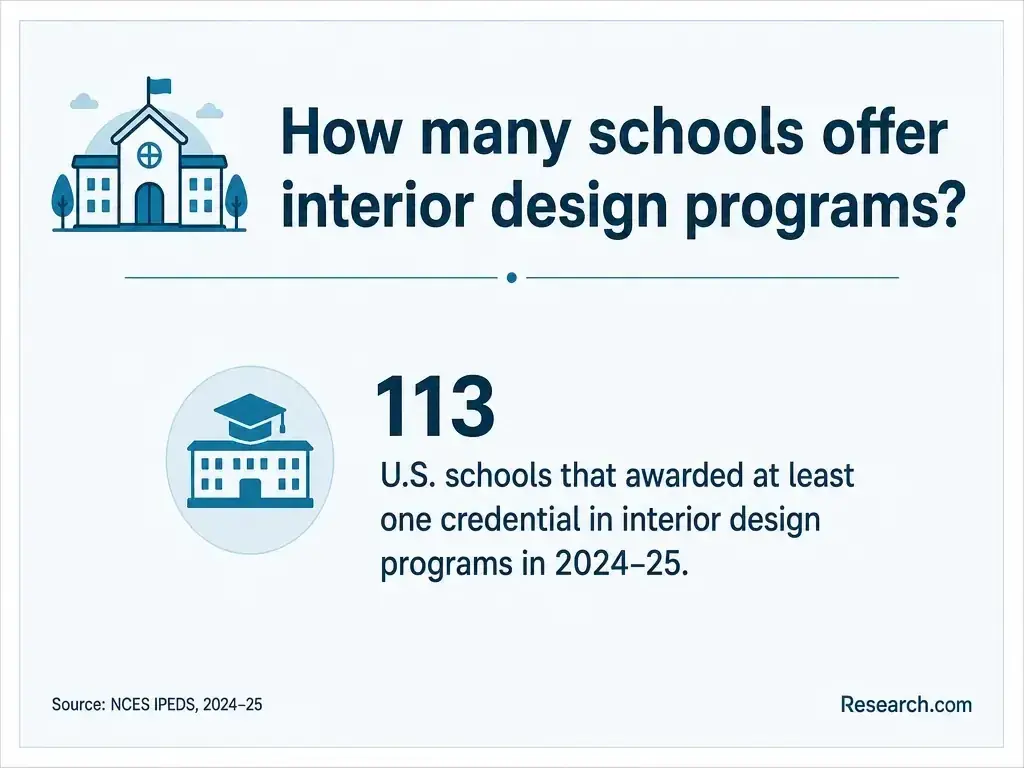
A defensible statewide average for Missouri interior design trade programs is not established here: certificates, associate-degree programs, and employer training have different pricing and are not all captured in college datasets. Request a written, program-specific cost estimate instead. Public-college resident tuition can differ from nonresident tuition, so confirm your classification and whether quoted rates apply to every required course.
To compare two offers, calculate the amount you would need to spend and earn less before you can seek work. The estimate should include tuition, mandatory fees, books, design software and computer requirements, samples and other project materials, transportation, and any internship costs. Subtract confirmed grants or employer payments, but keep loans in the calculation as debt, not savings. Federal Student Aid determines federal-aid eligibility by school and program; Missouri aid programs also have their own eligibility rules. A Missouri Job Center can help you check whether workforce funding applies to a particular provider.
Trade-oriented options may award a certificate, diploma, or associate degree; employer training may instead produce documented work experience and a portfolio. The credential matters, but its title alone says little about drafting proficiency, technical projects, or readiness for a particular job. Confirm the exact award on the program's catalog page and ask whether coursework transfers if you later pursue more training.
The comparison below shows what each route is most likely to contribute. Actual curricula and employer expectations vary, so use it to frame questions rather than to assume two similarly named programs are equivalent.
| Training route | Best fit | Key item to verify |
| Certificate or diploma | Targeted skills, career exploration, or a portfolio update | Studio depth and software used by local employers |
| Associate degree | Broader technical preparation and repeated design projects | Required studios, transferability, and total time to completion |
| Employer-sponsored training | Learning while working in a specific design or product setting | Pay, mentorship, and whether skills transfer to other employers |
Questions such as which universities offer dual degree concern a different education decision. For this occupational choice, first establish which trade credential and portfolio your intended Missouri employers recognize.
Requirements vary by provider and credential. A school may request a secondary-school credential, placement information, or samples of creative work; a particular course may also require prerequisites. Do not assume that a portfolio is required - or that admission guarantees access to a limited-capacity studio. Check the current catalog and ask when students can begin the courses they need.
For employer training, entry requirements are set by the employer rather than a school. Customer-facing communication, basic computer ability, and willingness to learn product specifications may matter as much as prior drawing experience. If you need evening study, accessibility accommodations, or a placement near home, confirm those arrangements before accepting an offer.
A useful interior design curriculum develops both visual judgment and the ability to communicate a buildable proposal. Look for measured drawings, space planning, digital drafting or modeling, color and materials, lighting, client presentations, budgeting, and an introduction to accessibility and applicable building requirements. The U.S. Bureau of Labor Statistics identifies drawings, material selection, and coordination with construction professionals as central occupational tasks.
Ask to see the sequence of projects, not just a course list. For example, does a student measure an existing space, propose alternatives, revise after critique, specify materials, and produce a final presentation? That sequence reveals more about practical preparation than a single polished image. Verify who provides the software and whether finished student work can be used in a job-search portfolio.
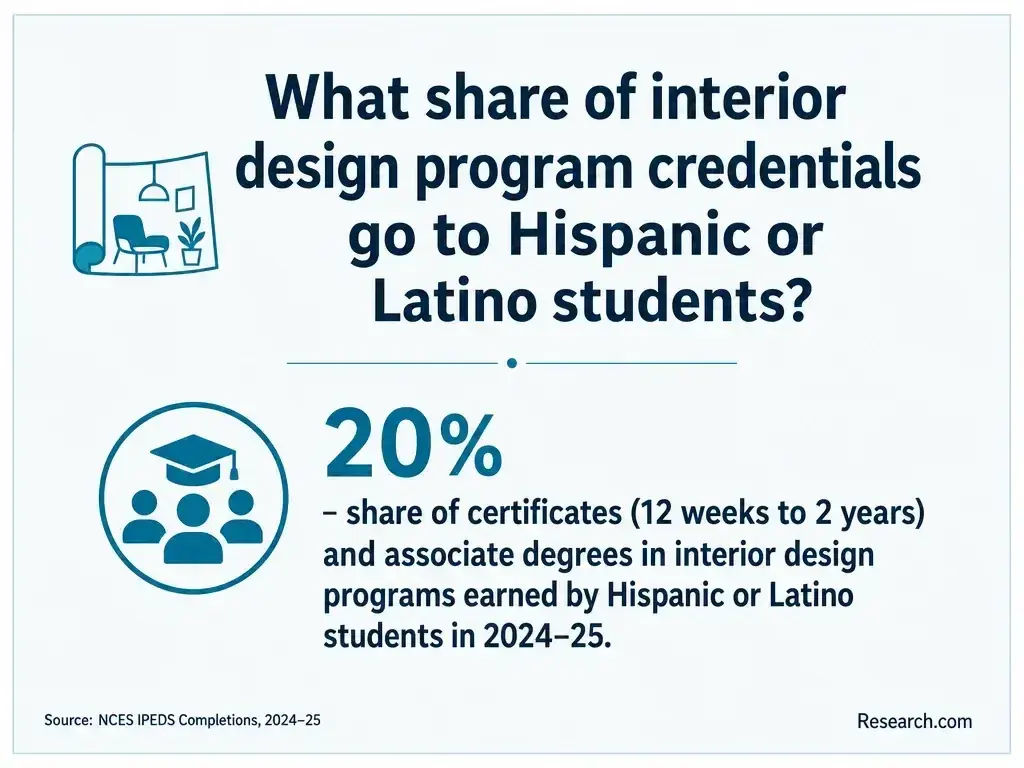
Do not confuse general design work with use of a regulated professional title or with authority to perform work reserved to another licensed profession. Missouri's Interior Design Council administers registration for qualified interior designers; students considering that path should check its current education, experience, and examination requirements directly with the Missouri Division of Professional Registration. A school credential, institutional accreditation, or internship does not automatically confer registration or authorize architectural work.
Professional certification is a separate question. The Council for Interior Design Qualification administers the NCIDQ examination and sets eligibility routes involving education and experience. The Council for Interior Design Accreditation evaluates qualifying interior design programs; its programmatic accreditation is distinct from a school's institutional accreditation and from Missouri registration. If registration is your goal, ask the school for the precise credential and curriculum, then confirm how your proposed route fits current requirements with the relevant organizations before paying a deposit.
Start with a target job - such as residential design assistant, showroom specialist, or commercial drafting assistant - and compare programs against its actual tasks. Saint Louis Community College and Stevens-The Institute of Business & Arts are two providers whose current offerings, schedules, costs, and portfolio requirements readers can investigate directly. Do not infer that either offers a particular credential or course this year without checking its current catalog.
Before enrolling, get comparable answers from each provider. These questions expose the most consequential gaps between an attractive advertised price and a workable path into employment:
A red flag is a promise of employment or professional eligibility without a named credential, documented requirements, and a clear explanation of costs. Check institutional accreditation through the accreditor or U.S. Department of Education, verify any programmatic claim with its accreditor, and check Missouri school authorization where applicable. These are separate checks; none replaces evaluating the portfolio you will build.
A focused trade program may support entry into showroom consulting, design assistance, product specification, or drafting support. With a stronger technical portfolio and relevant work experience, a worker may pursue broader residential or commercial project responsibilities, specialize in a setting such as kitchen-and-bath design, or eventually seek independent clients. Advancement depends on demonstrated work, employer needs, and any rules governing the tasks or title used - not simply time since graduation.
Readers comparing a master's degree that pay well with occupational training are evaluating different investments. For an entry-level interior design goal, focus first on the cost and quality of the practical training needed to compete for the intended role. A paid assistant position may be the better immediate step for someone who already has a credible portfolio; someone lacking drawing and materials fundamentals may benefit more from structured studio instruction.
The U.S. Bureau of Labor Statistics projects 2.7% U.S. employment growth for interior designers from 2025 to 2035. That national projection is not a Missouri forecast or a count of entry-level vacancies. It suggests students should take competition and portfolio development seriously rather than assume that completing any program will produce an offer.
For a local decision, compare recent openings in the Missouri area where you intend to live, note which software and project experience employers request, and ask programs how students obtain that experience. A guide to the easiest phd addresses a different education path; it will not tell you whether a nearby studio course or a paid design-assistant role is the more useful next step.
Investing in occupational training is an important decision. Research.com created this ranking to help readers compare affordable programs against other interior design options in Missouri, rather than against unrelated occupations or locations. The team uses published education and outcome data to make the comparison more consistent and verifiable; readers should still confirm current prices and program details directly with each school.
The most-affordable ranking scores costs and debt only: tuition, cost of attendance, median student debt, and federal loan default rate. Weights are distributed using an entropy-based method, which gives more weight to indicators that vary more across programs. Accreditation, student support, earnings, and other quality indicators are not part of this affordability score. Only programs with completions reported to IPEDS are eligible, so an absent apprenticeship, employer program, or other training provider should not be presumed unavailable or inferior.
Research.com uses the following sources in its trade-school ranking work. Some cover other occupations and should not be mistaken for interior design accreditation or certification authorities:
The resulting ranking is a starting point for finding lower-cost options, not a verdict on portfolio quality, job placement, or fitness for professional registration. Research.com explains its broader approach on its methodology page.
# 1 position
# 2 position
# 3 position

Not necessarily. Compare mandatory fees, software, materials, commuting, aid, debt, and earnings you may give up while studying. Also check whether the program provides enough practical work to help you seek the job you want.
Potentially. Showrooms and design employers may offer entry-level roles with workplace training. A structured program can be more useful if you need technical drawing instruction, sustained studio critique, or a portfolio.
It depends on the job and the work you can demonstrate. Ask how the program handles measured spaces, materials, critique, and portfolio development; compare those projects with local job postings.
Not automatically. Missouri registration has requirements separate from graduation. Confirm current eligibility with the Missouri Interior Design Council before choosing a program for that purpose.
Ask the school for the exact program's aid eligibility and written cost of attendance. Confirm federal-aid rules through Federal Student Aid and any state-aid eligibility through Missouri's administering agency before relying on an award in your budget.