# 1 position


Audited and Verified:
Our Editorial and Data Verification Process
Research.com uses government datasets, official education statistics and primary institutional information to support its career and degree guides. Our review process checks factual accuracy, occupational definitions, source dates and the requirements associated with the credentials discussed.
How This Article Was Fact-Checked
Our editorial team verifies salary estimates, employment projections, education requirements and program information against original data providers and official organizations. Salary figures are checked against the relevant occupational definitions and reporting periods. Information about licensure, accreditation and required in-person training is reviewed separately.
Fact-checked and verified on:

Co-Founder and Chief Data Scientist

Reviewed by Karolina Broda
Fact-Checker and Data Verification
Choosing an affordable interior design program means looking beyond tuition: will it teach you to produce a portfolio, use design software, and qualify for the work you want? The U.S. Bureau of Labor Statistics projects 2.7% national employment growth for interior designers from 2025 to 2035, making career fit as important as price. This guide explains Oklahoma training options, costs, credentials, and career requirements. It also accompanies the Most Affordable Interior Design Trade Schools in Oklahoma for 2027 ranking, created by the Research.com team of data scientists to help students identify programs worth considering.
Expect a mix of visual design, technical drawing, software, materials selection, and client communication. A strong program asks students to develop and revise design proposals, not simply study decorating styles. Interior design can involve space planning and construction-related coordination; decorating generally concentrates on furnishings and finishes. The distinction matters if you want commercial project work rather than a retail styling role (U.S. Bureau of Labor Statistics).
Oklahoma students can compare community-college training, career-school programs, and employer-based entry routes. Tulsa Community College and Clary Sage College are examples to investigate, but confirm their current awards, schedules, studio access, and total charges directly. A short certificate may suit someone building drafting or presentation skills; a broader associate-degree program may better suit a newcomer who needs a sustained portfolio. An assistant role with supervised learning can cost less upfront, but the training and advancement available depend on the employer.
Before selecting accelerated courses, ask what studio projects and software practice the shorter schedule retains. Faster completion helps only if the resulting work demonstrates the skills employers expect.
Potential workplaces include residential design businesses, furniture and kitchen-and-bath showrooms, architecture and construction firms, and companies planning offices, hospitality spaces, or other commercial interiors. Positions may be titled design assistant, showroom consultant, CAD drafter, or interior designer; the title alone does not establish identical duties or state-registration eligibility (U.S. Bureau of Labor Statistics; Oklahoma Board of Architects, Landscape Architects and Registered Commercial Interior Designers).
Students seeking commercial work should ask where a program places students for projects or work experience. In smaller communities, local opportunities may lean toward sales and residential services, while a student pursuing commercial project teams may need to search across a wider commuting area. Review actual job postings for the software, portfolio, and experience requested before choosing a specialty.
There is no single reliable starting salary for every Oklahoma design graduate. The national median annual wage for interior designers was $67,190 in May 2025, according to the U.S. Bureau of Labor Statistics. A median covers workers at different career stages and does not predict pay for a first job, a showroom sales position, or self-employment.
For an Oklahoma-specific comparison, use the latest state or metro occupational wage release from the U.S. Bureau of Labor Statistics or Oklahoma's labor-market agency, matching the occupation and reference year. Then compare local job advertisements by duties: commission-based showroom work, entry-level drafting, and experienced commercial design should not be treated as one pay scale.
Duration depends on the award and schedule. A focused certificate generally takes less time than an associate degree, while part-time study extends the calendar even if the required coursework is unchanged. There is no universal Oklahoma clock-hour requirement that makes every interior design training program the same length; request each provider's catalog requirements and a realistic full-time or part-time completion plan.
Time to employment may differ from time to graduation. Building a competitive portfolio, gaining supervised project experience, or meeting requirements for optional professional credentials can take longer. If speed is your priority, compare a short program with direct entry into a design-assistant or showroom role - and ask whether either route will develop the technical skills your target jobs require. Broader lists of best trade school jobs can suggest alternatives, but they cannot replace checking the requirements of local design openings.
Online delivery can make lectures, design history, research, and some software assignments easier to fit around work. Campus studios can provide direct feedback on drawings, samples, presentations, and collaborative projects. A hybrid program may combine those benefits, but its in-person schedule and travel costs still matter.
Ask to see how students receive critiques, produce measured plans, work with materials, and assemble portfolios. Some design exercises can be completed remotely with suitable equipment; site visits, physical-material evaluation, and certain collaborative experiences may require local access. Neither an online label nor a campus address establishes eligibility for Oklahoma commercial interior designer registration. Verify that separately with the state board.
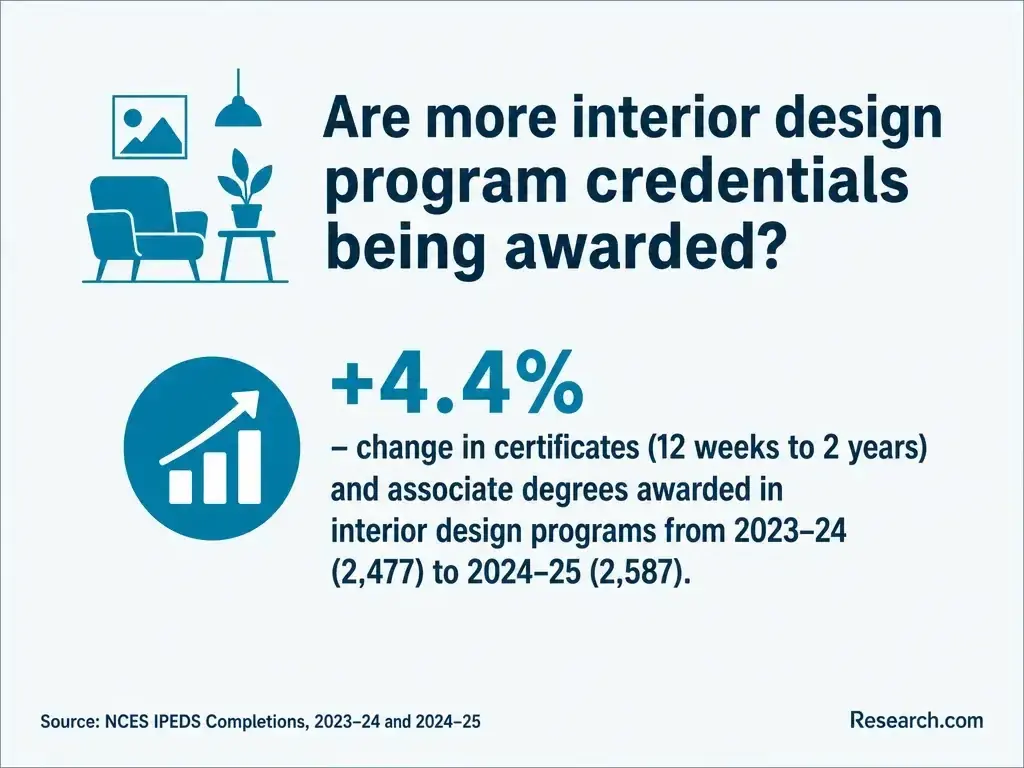
A dependable statewide average for all Oklahoma interior design trade programs is not available from a single comprehensive source. Published tuition may cover different credentials and exclude expenses, while IPEDS does not capture every training provider. For an affordability decision, compare each program's total cost to become job-ready, not an unsupported statewide average.
Request an itemized estimate covering tuition, mandatory fees, textbooks, design supplies, computer and software requirements, portfolio materials, and travel to studios or work placements. Include any credential-exam fees you actually plan to incur and the earnings you might forgo while studying. Subtract only aid you are eligible to receive, not advertised maximum awards. Federal Student Aid explains that federal aid depends on both student and program eligibility; Oklahoma Works can help identify workforce-training assistance, subject to its eligibility rules.
An inexpensive program is a poor bargain if it leaves you paying later for essential software instruction or portfolio development. Conversely, a longer program may be worthwhile when its additional projects and support match the jobs you intend to pursue.
The award may be a certificate, diploma, or associate degree, depending on the program. These are educational credentials, not interchangeable proof of professional certification or Oklahoma commercial interior designer registration. Ask for the exact award name, transcripted coursework, portfolio requirements, and whether credits can transfer or count toward further training; transfer decisions belong to the receiving institution.
Professional certification, such as the NCIDQ credential administered through the Council for Interior Design Qualification, has separate eligibility and examination rules. If your aim is a design-assistant position, a demonstrable portfolio and relevant software skills may matter more immediately than an optional exam. If your aim is registered commercial practice, start with the Oklahoma board's requirements and work backward to suitable training and experience (Council for Interior Design Qualification; Oklahoma Board of Architects, Landscape Architects and Registered Commercial Interior Designers).
Other educational comparisons, including highest earning bachelor degrees, answer a different investment question; they should not be used to judge whether a particular trade program provides the preparation needed for interior design work.
Requirements vary by provider and credential. Ask whether admission calls for a high school diploma or equivalent, placement testing, prerequisite coursework, a portfolio, or particular computer equipment. Also distinguish admission to the institution from entry into a specific design program; one does not necessarily secure the other.
Someone entering through a showroom or assistant job faces employer-set hiring requirements instead of school admission requirements. This can be a practical way to test the occupation before paying tuition, although it may offer less structured technical instruction. If you already have relevant coursework or job experience, ask whether the program grants transfer or prior-learning credit - and obtain the decision in writing before relying on a shorter completion timeline.
Relevant instruction can include measured drawing, space planning, computer-aided drafting, three-dimensional visualization, color and lighting, materials, specifications, accessibility concepts, budgeting, and client presentations. The emphasis should match the intended job: a showroom role may rely heavily on product knowledge and sales, while commercial project work calls for stronger technical documentation and coordination (U.S. Bureau of Labor Statistics; O*NET).
Review student projects rather than relying on a course list. Look for plans developed from a client brief, revisions after critique, material selections supported by practical reasoning, and a finished portfolio. Ask what software students use, whether access is included in the price, and who evaluates work. Generative tools can help with early concepts, but students still need to check dimensions, feasibility, and specifications themselves.
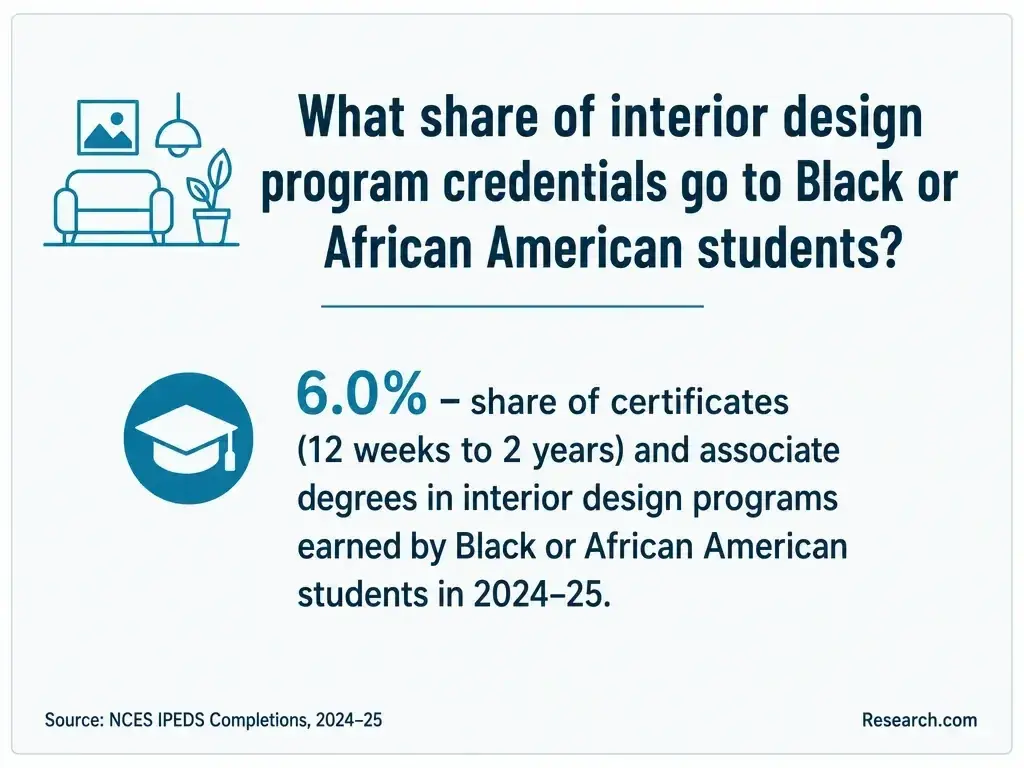
Not every interior-design-related job requires an Oklahoma occupational license. However, the state regulates registration and the professional designation of registered commercial interior designer. General design training, institutional accreditation, NCIDQ certification, and state registration are different things; completing a program does not automatically confer any of the others (Oklahoma Board of Architects, Landscape Architects and Registered Commercial Interior Designers; Council for Interior Design Qualification).
If registered commercial practice is your goal, check the Oklahoma board's current education, experience, examination, application, and title-use rules before enrolling. Ask a program to identify precisely which requirements its coursework addresses and which you must satisfy afterward. If your goal is residential styling or showroom sales, do not pay for a claimed registration pathway without first establishing that your intended work needs it.
Start with the job, not the ranking. Identify several Oklahoma positions you would pursue, note their portfolio and software requirements, and compare programs against that evidence. An affordability ranking helps narrow the search, but its cost-and-debt score does not evaluate studio quality, registration eligibility, or whether graduates complete the credential.
Before paying an enrollment deposit, get answers to these questions in writing:
Verify institutional accreditation through the accreditor or U.S. Department of Education, state authorization through the appropriate Oklahoma regulator, and professional eligibility through the Oklahoma board. These checks answer different questions. Treat guaranteed-job claims, unclear fees, and promises that an online certificate automatically permits registered practice as red flags. Unrelated searches such as the easiest master's degree to get should not distract from the credential and practical experience your chosen occupation requires.
Training can support entry into design assistance, drafting, residential design services, or showroom consulting. With suitable experience and additional qualifications, a worker may pursue more complex projects, a specialty such as kitchen-and-bath design, supervisory responsibilities, or independent services. Registered commercial interior design is a distinct goal with state requirements; it is not an automatic promotion from an entry-level role (U.S. Bureau of Labor Statistics; Oklahoma Board of Architects, Landscape Architects and Registered Commercial Interior Designers).
Choose a first role for the experience it offers, not just its title. Someone hoping to move into technical project work should seek opportunities to prepare plans, observe client revisions, and coordinate specifications. Someone considering self-employment should also learn estimating, contracts, and client management. A search for shortest doctorate programs is not a substitute for the supervised project experience relevant to this trade pathway.
The U.S. Bureau of Labor Statistics projects 2.7% growth in employment for interior designers nationally from 2025 to 2035. That is a national occupational projection, not an Oklahoma hiring forecast or a measure of openings for new graduates. It suggests students should plan for a competitive search and develop work samples suited to identifiable employers rather than assume a credential alone will secure a job.
For a local decision, check Oklahoma's current occupational projections and recent postings in the places you can realistically work. Separate interior designer openings from retail sales and drafting roles, then compare the skills requested with a program's projects. This gives a better test of likely return than applying national growth to one Oklahoma community - or comparing the trade with unrelated lists of highest earning bachelor degrees.
Education is a significant investment, so Research.com's team evaluates comparable programs in the same occupation and location rather than treating every training provider as interchangeable. The affordability ranking considers tuition, cost of attendance, median student debt, and federal loan default rates; an entropy-based method gives more weight to measures that differ more across programs. Only programs with completions reported to IPEDS are eligible. Accreditation and other quality measures are not part of the affordability score, so readers should check them separately.
The team uses the following data sources in its ranking research. Some cover institutions broadly or serve other occupations; their inclusion as research sources does not mean every source supplies an interior-design-specific measure.
The ranking provides a starting point for comparing reported costs and borrowing, not a verdict on every available provider. IPEDS and College Scorecard do not comprehensively cover employer training or every career school. Readers can learn more about Research.com's approach on its methodology page.
# 1 position
# 2 position
# 3 position
Compare the full price of a short public-college or career-school credential with the cost of entering a showroom or assistant role and learning on the job. The cheapest route depends on aid, equipment needs, commuting, and whether the training develops the portfolio your target jobs require.
Online coursework can teach design concepts and software, but you should check how the program provides critique, practical projects, and portfolio development. Online completion alone does not establish eligibility for Oklahoma commercial interior designer registration.
Requirements depend on the employer and duties. Compare job postings before choosing a certificate, diploma, or associate-degree program; commercial roles may demand more technical preparation than an entry-level showroom position.
It may, if both the student and program meet the relevant aid rules. Confirm federal-aid eligibility with the provider and Federal Student Aid, and ask Oklahoma Works about any workforce funding for which you qualify.
No. Oklahoma registration has separate requirements. Check the Oklahoma Board of Architects, Landscape Architects and Registered Commercial Interior Designers before selecting a program for that goal.