# 1 position


Audited and Verified:
Our Editorial and Data Verification Process
Research.com uses government datasets, official education statistics and primary institutional information to support its career and degree guides. Our review process checks factual accuracy, occupational definitions, source dates and the requirements associated with the credentials discussed.
How This Article Was Fact-Checked
Our editorial team verifies salary estimates, employment projections, education requirements and program information against original data providers and official organizations. Salary figures are checked against the relevant occupational definitions and reporting periods. Information about licensure, accreditation and required in-person training is reviewed separately.
Fact-checked and verified on:

Co-Founder and Chief Data Scientist

Reviewed by Karolina Broda
Fact-Checker and Data Verification
Choosing an affordable interior design program means comparing more than tuition: you need the right portfolio training, practical experience, and credential for the work you want. The U.S. Bureau of Labor Statistics projects 2.7% national employment growth for interior designers from 2025 to 2035, making preparation and cost worth weighing carefully. This guide explains Illinois training routes, expenses, career prospects, and registration rules. It also accompanies the Most Affordable Interior Design Trade Schools in Illinois for 2027 ranking, created by the Research.com team of data scientists to help students identify programs worth considering.
Expect a mix of design studio work and technical communication. Interior design concerns how interior spaces function, look, and meet users' needs; it is not interchangeable with decorating. Depending on the program, students may develop floor plans, material specifications, digital drawings, presentations, and a portfolio. The U.S. Bureau of Labor Statistics identifies blueprints, building codes, accessibility, and collaboration with construction professionals as parts of interior designers' work.
In Illinois, compare a community-college certificate with an associate degree and a focused career-school course by looking at actual assignments, lab access, and employer connections. A shorter decorating-focused course can suit someone seeking retail or styling work. For commercial-space planning, look for supervised studio projects involving technical drawings and code research. There is no universal Illinois clock-hour requirement for entry-level interior design training; ask each provider for its required credits, scheduled studio hours, and any internship expectations.
Potential workplaces include interior design firms, architecture practices, furniture and materials showrooms, residential remodeling businesses, and corporate or institutional facilities teams. Chicago-area firms may offer more specialized commercial projects; a student elsewhere in Illinois should also consider commute costs and whether local employers seek residential design, sales, drafting, or project coordination. A showroom role may value product knowledge and client service, while a design-firm assistant role may require stronger CAD drawings and a technical portfolio.
Direct entry through a showroom or employer training can be a lower-cost alternative to school for sales and product-support roles. It is less dependable as a substitute for structured studio and technical training if your goal is to prepare plans or pursue Illinois registration. Ask prospective employers which tasks a new hire may perform and what training they provide.
The U.S. Bureau of Labor Statistics reports a $67,190 national median annual wage for interior designers in May 2025. That figure covers workers across experience levels and locations; it is neither an Illinois-specific wage nor an expected first-job offer. For a local pay comparison, consult the Illinois Department of Employment Security's occupational wage data for the area where you intend to work, using the interior designers occupation rather than a broader creative-jobs category.
Pay also depends on the role: showroom sales, drafting support, and independent residential projects do not necessarily follow the same compensation model. When judging a program's return, compare plausible entry-level openings - not the national occupation-wide median - with your present earnings, expected debt, completion prospects, and the time you will spend training.
Duration depends on the credential and schedule. A focused certificate can take less time than an associate degree; part-time enrollment extends either route. Calendar length alone is a poor comparison: ask how many credits, studio contact hours, portfolio projects, and internship hours each program requires. Illinois does not impose one standard set of classroom hours for every interior design training program.
Accelerated study can reduce time away from work, but a shortened schedule is worthwhile only if you can complete substantial design projects and obtain feedback. Guides to fast track degrees address a different kind of program; for this decision, request the interior design course sequence and confirm when required studios are offered. That matters especially if missing a once-a-year studio would delay completion.
Online delivery can work for design history, software demonstrations, and some critique sessions. Campus access can be more valuable for materials libraries, model-making, measured site work, and immediate feedback on drawings. A hybrid program may combine both, but "online" does not tell you whether software access, supervised studio work, or an internship is included.
The comparison below focuses on activities that affect job readiness, not on a claim that one format is always better:
| Format | Potential advantage | Point to verify |
| On-campus | Scheduled studio access and face-to-face critique | Commute, studio hours, and available equipment |
| Hybrid | Less frequent travel while retaining in-person work | Which projects and site visits require attendance |
| Online | Flexible access to lectures and digital assignments | How practical skills, portfolio review, and local work experience are assessed |
If Illinois registration is a long-term goal, check your intended examination and registration pathway before assuming any delivery format qualifies. A portfolio of independently completed digital exercises may not demonstrate the same preparation as reviewed technical studio projects.
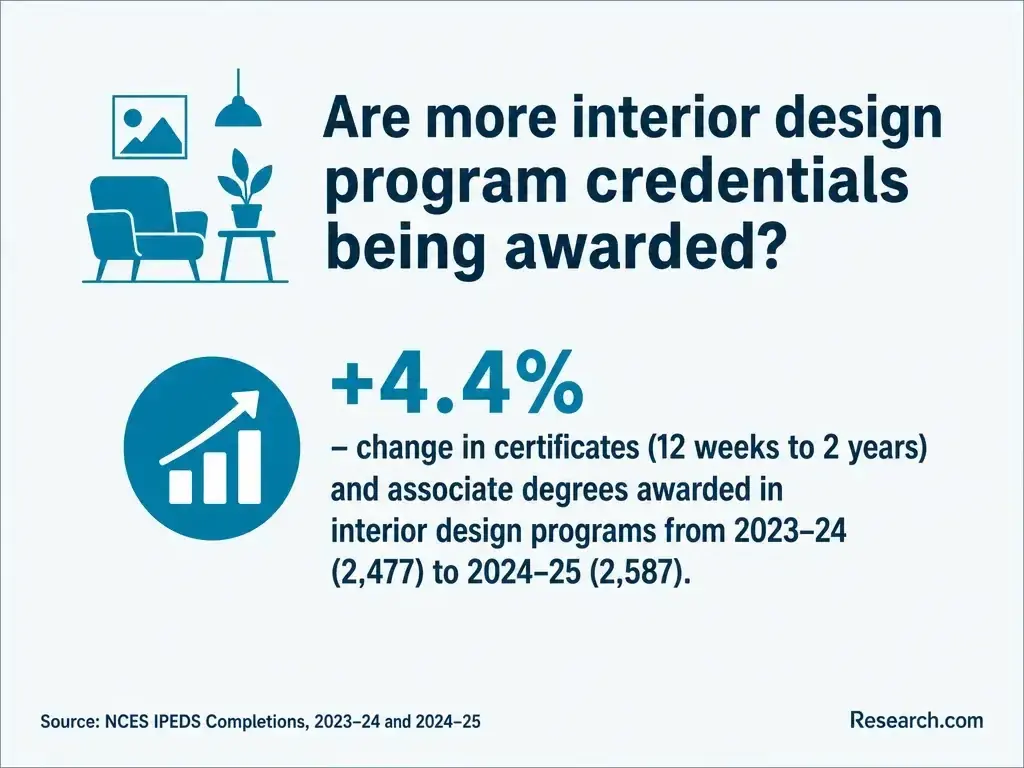
There is no defensible single statewide average that covers Illinois community-college certificates, associate degrees, and private career training on the same basis. Compare each provider's total cost to become job-ready: resident or nonresident tuition, mandatory fees, software and computer needs, drawing and model materials, books, travel to campus or sites, and any portfolio-production costs. Add the earnings you may forgo if the schedule reduces paid work.
Financial aid can change the comparison. Ask whether the specific program qualifies for federal aid and, if you are eligible, Illinois Monetary Award Program assistance; eligibility is not established merely because a school offers another aid-eligible program (Federal Student Aid; Illinois Student Assistance Commission). A directory of online schools fafsa approved can help frame aid questions, but confirm the status of the interior design credential with the school's financial aid office.
Request a written, itemized estimate from each provider for the same enrollment plan. A lower sticker price can become the costlier choice if required courses are hard to schedule, credits do not transfer, or essential software is excluded.
Common outcomes include a certificate, a diploma, or an associate degree, depending on the provider and course sequence. The award describes completed education; it does not itself grant the right to use Illinois's regulated registered interior designer title. A portfolio, technical competence, and relevant work experience remain important when seeking employment (Illinois Department of Financial and Professional Regulation; U.S. Bureau of Labor Statistics).
If you are weighing an easy bachelors degree against occupational training, keep the decision tied to your intended job: this guide compares trade-school credentials, not alternative academic routes. Ask whether a certificate's courses apply toward the provider's associate degree and obtain the transfer or stacking policy in writing before paying.
Requirements vary by provider and credential. Community-college applicants should check general admission, course placement or prerequisites, and whether the design sequence has separate entry rules. A private career school may set different enrollment and payment conditions. Do not assume a portfolio is required - or that admission guarantees a place in every studio - without checking the current program catalog.
Before committing, confirm the award, start dates, course availability, and whether prior coursework can count. Searches for universities that offer double degrees concern a different decision; an interior design applicant needs to know whether this training sequence leads to the skills and credential their intended role calls for.
A strong technical program should let students practice space planning, drawing and digital modeling, materials selection, lighting concepts, presentation, and client communication. For work involving built interiors, look for assignments that require students to investigate accessibility, applicable codes, budgets, and coordination with construction professionals. The U.S. Bureau of Labor Statistics describes these technical and collaborative tasks as part of interior design work.
Evaluate the work students actually produce. A course centered on mood boards may serve a styling goal, but it is not equivalent to one requiring measured plans, specifications, and iterative critique. A phd online no dissertation search serves a different educational aim; for occupational entry, assess the supervised projects and portfolio you will finish, not the appeal of an unrelated credential.
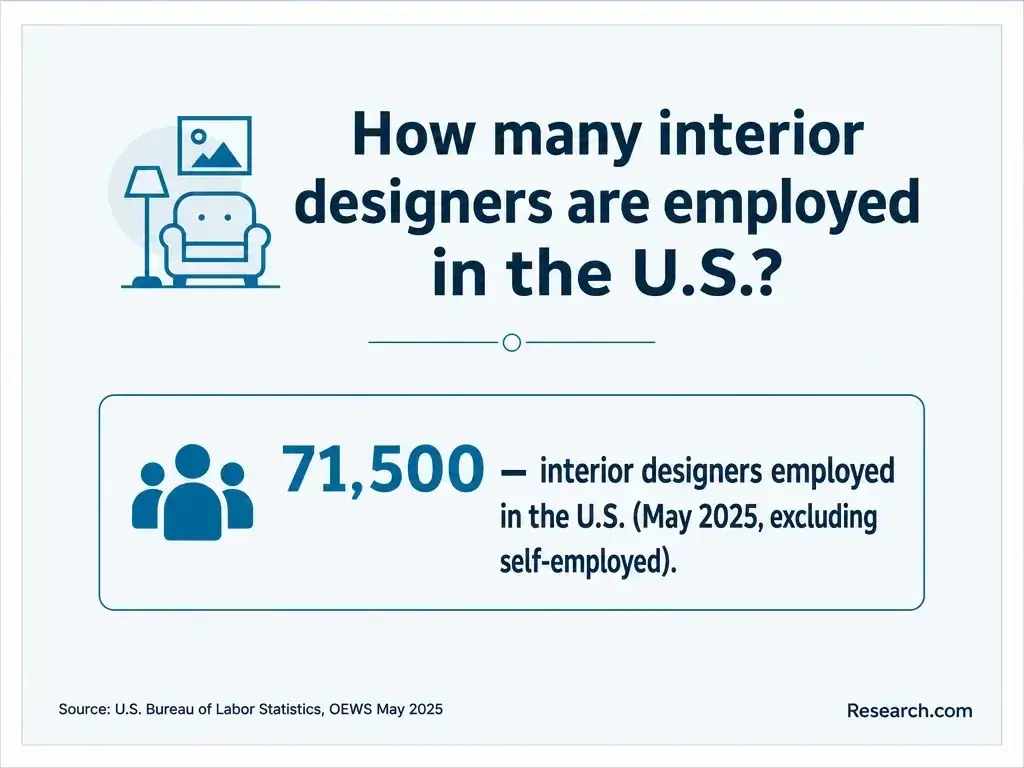
Illinois regulates the registered interior designer title through the Illinois Department of Financial and Professional Regulation (IDFPR). Registration is distinct from taking an entry-level design, showroom, or decorating job; do not assume every interior design position requires registration. If you want to use the protected title or undertake work reserved for registrants, check IDFPR's current education, experience, examination, and application rules before choosing a program.
Keep the approvals separate. Institutional accreditation concerns the school; programmatic accreditation concerns a particular program where available; state school authorization concerns permission to operate; professional examinations assess an individual; and Illinois registration is a state credential. None automatically substitutes for another (IDFPR; U.S. Department of Education). The Council for Interior Design Qualification's examination requirements should also be checked against your proposed education and experience route if you intend to pursue that examination.
Start with the work you want: decorating and sales, drafting support, or a longer-term path toward registered practice. Then compare programs on the evidence most likely to affect that outcome. The affordability ranking identifies cost-oriented options, but its score does not assess accreditation or portfolio quality.
Ask each provider the following questions, and request catalog or policy documents rather than relying only on a verbal answer:
For a local comparison, review the current catalogs of William Rainey Harper College, Joliet Junior College, and College of DuPage for relevant offerings and costs; do not assume each offers the same credential or curriculum. Avoid a program that advertises "licensure-ready" status without explaining the remaining experience, examination, and state-application steps.
A short, product-focused credential may support showroom sales, decorating assistance, or residential client service. Stronger drafting and studio preparation may support design-assistant or space-planning roles, where an employer can assess a portfolio of plans and specifications. With further qualifying experience and any applicable examination and registration steps, some workers pursue registered practice or independent client work (IDFPR; U.S. Bureau of Labor Statistics).
These are pathways, not automatic promotions. Employer-sponsored product or software training can be sensible if you already have an entry role; a structured college or career-school program makes more sense when you need sustained critique and a technical portfolio. Before choosing either route, inspect several local job descriptions and note the software, project types, and credentials they actually request.
The U.S. Bureau of Labor Statistics projects 2.7% national growth for interior designers from 2025 to 2035. That is a national occupation projection, not an Illinois hiring forecast or a promise of an opening after graduation. For an Illinois decision, compare current regional postings and Illinois Department of Employment Security projections with the projects in your intended portfolio.
Specialization and location matter. A student targeting Chicago-area commercial firms should look for technical planning and building-related assignments; someone seeking work closer to home may find a different mix of residential, remodeling, and showroom opportunities. Let that local employer evidence guide your training choice rather than paying for the fastest credential without checking its fit.
Education is a substantial investment. Research.com created this ranking to help readers compare affordable interior design programs against other programs serving the same occupation and location, rather than against unrelated schools nationwide. The team uses reported data and a consistent scoring method, but the ranking is a starting point: verify each program's current price, curriculum, and fit before enrolling.
Only programs with completions reported to IPEDS are eligible. The most affordable ranking scores tuition, cost of attendance, median student debt, and federal loan default rate. Its weights use an entropy-based method, which gives more weight to cost and debt indicators that vary more across programs. Accreditation and other quality measures are not part of this affordability score.
That differs from Research.com's best-program rankings, which consider student outcomes; earnings and return on investment; costs and debt; and quality and recognition. In those rankings, occupation-relevant programmatic accreditation or industry recognition receives 20%, institutional accreditation 10%, student support 10%, and outcomes, earnings, and costs together 60%, with the latter indicators weighted by the entropy-based method.
The following sources are used in the ranking process. Some cover other trades and do not imply that an organization accredits or certifies interior design programs:
IPEDS-based eligibility does not capture every private training provider, employer course, or other route into design work. Absence from the ranking is not evidence that a provider lacks authorization or quality. Readers can find further details on the Research.com methodology page.
# 1 position
# 2 position
# 3 position

# 4 position
# 5 position

# 6 position
Compare local community-college certificates with employer-provided showroom training, then price the complete pathway. The cheapest starting option is not necessarily the cheapest route to technical design work if you later need additional studio courses.
A certificate may help you enter styling, sales, or assistant work if its skills match the job. It does not automatically satisfy Illinois registered-title requirements or replace experience and any applicable examination (Illinois Department of Financial and Professional Regulation).
It can teach some software and design concepts. Check how the program assesses drawings, materials, site work, and portfolio projects; do not assume online completion establishes examination or Illinois registration eligibility.
There is no single apprenticeship requirement for entry-level interior design training. Some programs offer internships or work experience, while professional registration has separate eligibility rules. Verify both with the provider and IDFPR.
No. Aid depends on the student, institution, and specific program. Ask the financial aid office to confirm federal and Illinois aid eligibility for the exact credential and enrollment schedule (Federal Student Aid; Illinois Student Assistance Commission).