# 1 position
West Valley College - Interior Design.
associate

Audited and Verified:
Our Editorial and Data Verification Process
Research.com uses government datasets, official education statistics and primary institutional information to support its career and degree guides. Our review process checks factual accuracy, occupational definitions, source dates and the requirements associated with the credentials discussed.
How This Article Was Fact-Checked
Our editorial team verifies salary estimates, employment projections, education requirements and program information against original data providers and official organizations. Salary figures are checked against the relevant occupational definitions and reporting periods. Information about licensure, accreditation and required in-person training is reviewed separately.
Fact-checked and verified on:

Co-Founder and Chief Data Scientist

Reviewed by Karolina Broda
Fact-Checker and Data Verification
The cheapest interior design program is not necessarily the least expensive route into the work you want. You also need to consider studio practice, software access, and whether a credential supports your career goals. The U.S. Bureau of Labor Statistics projects 2.7% national employment growth for interior designers from 2025 to 2035. For prospective students and career changers, the Research.com team of data scientists created the Most Affordable Interior Design Trade Schools in California for 2027 ranking to help identify programs worth considering. This guide explains how to compare their costs, training, and career fit.
Expect a mix of design studio work and technical instruction: measuring spaces, developing plans, selecting materials, preparing presentations, and revising designs to meet a client's budget and a project's constraints. For work involving building interiors, ask whether assignments address California building, accessibility, and energy requirements - not just decorating. The California Building Standards Commission's code framework makes local code literacy particularly useful when comparing otherwise similar curricula.
These pathways lead to different credentials and levels of structured practice. Compare the actual course sequence and portfolio requirements, not just the program title.
| Pathway | Typical credential or outcome | Best fit and limitation |
| Community college certificate | Occupational certificate | Focused skills at a shorter training commitment; verify the depth of studio and technical coursework. |
| Community college associate program | Associate degree | Broader studio and general coursework; usually a longer commitment than a certificate. |
| Private career training | Certificate or diploma, depending on provider | May offer a concentrated schedule; compare total charges, authorization, and portfolio work. |
| Employer-sponsored training | Work experience; any formal credential varies | Useful for entering a showroom or design-support role while earning, but instruction may be narrow. |
California does not impose a universal minimum number of classroom or studio hours for entry-level interior design work. Ask each provider for its scheduled contact hours, supervised studio time, site visits, and portfolio deliverables. A similarly named certificate with little feedback on measured drawings is not equivalent to one built around substantial design projects.
Possible settings include residential design firms, commercial interiors teams, furniture and kitchen showrooms, home-improvement businesses, and suppliers of finishes or furnishings. California's large urban markets offer more kinds of firms to investigate, while students farther from those markets should check the commute to both training sites and prospective employers before enrolling. A showroom role may emphasize product knowledge and client service; a design-assistant role may require stronger drawing, documentation, and software skills.
Entry-level openings may be listed as design assistant, showroom consultant, or drafting support rather than interior designer. Compare local postings with the coursework and portfolio you would finish. If a role asks for construction documents or code-related experience, a styling-only program may be a poor match.
A reliable California-specific wage figure is more useful than applying a national salary to every local job, but no single wage describes all California design-support roles. The U.S. Bureau of Labor Statistics reports a May 2025 national median annual wage of $67,190 for interior designers. That figure covers employed workers across experience levels; it is not what a new certificate holder should expect to earn.
Before estimating a return on training, look up the latest California Employment Development Department wage estimates for the occupation and compare them with pay ranges in current postings in your intended area. Also check the job title: showroom sales, drafting support, and interior designer positions have different duties and should not be treated as one salary category. Ask programs for documented placement outcomes, including job titles and measurement periods, rather than relying on a stated earning potential.
A focused certificate can take months to roughly a year, depending on required courses and scheduling; an associate program commonly takes about two years of full-time study. Part-time enrollment, course prerequisites, and studios offered only in particular terms can extend either path. Request a term-by-term plan showing when you can actually take every required class and complete the portfolio.
Be cautious when comparing listings for 6 month associate programs online with interior design training. An accelerated timeline does not establish that a particular program has enough studio practice for your target job. There is no statewide minimum training-hour requirement for simply entering interior design work; eligibility for California's separate Certified Interior Designer title follows its own rules (California Council for Interior Design Certification).
Online coursework can work well for design history, presentations, and some computer-aided drafting assignments. In-person studios make it easier to get immediate critique, handle material samples, measure spaces, and collaborate on installations or site-based projects. A hybrid program can combine those benefits, but only if students can reach its required studios and have suitable software and computer equipment at home.
Do not interpret listings for easy online degree programs accredited as evidence that interior design practice is easy - or that an online credential meets a particular employer's expectations. Ask how drawings are reviewed, whether students build a portfolio, what happens on campus, and whether the software license is included. Institutional accreditation and an online format answer different questions; neither replaces a review of practical skills.
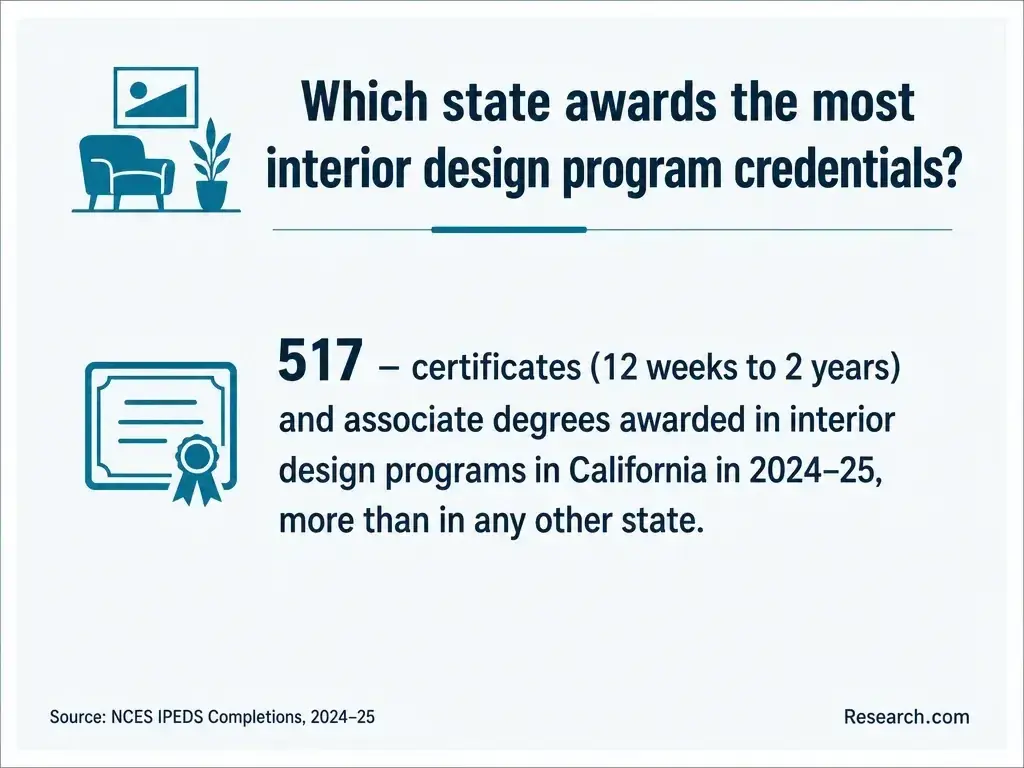
There is no reliable single average covering California community colleges, private training providers, different credential lengths, and students with different residency or aid eligibility. Start with the school's current written cost estimate. The statewide public-college rate below is a useful baseline, not a total program price or a confirmed 2027 quote.
For a realistic comparison, add required fees, drawing and model-making materials, computer and software costs, transportation to studios or site visits, and any credential application or exam charges. Include lost earnings if the timetable limits paid work. Then subtract grants or fee waivers for which you actually qualify - not aid you merely hope to receive. California's College Promise Grant can waive eligible community college enrollment fees, but it does not make supplies and living costs disappear (California Community Colleges Chancellor's Office).
Lists of the most affordable associate degrees online can offer a cost-comparison starting point, but confirm that any interior design option provides the studio feedback and portfolio development your intended job requires. For return on investment, weigh completion likelihood, debt, time away from work, expected change from your current earnings, and how long you expect to use the training; institution type or low tuition alone cannot settle the question.
Depending on the program, you may earn a certificate, diploma, or associate degree. These are educational credentials, not California occupational licenses. An employer training route may provide experience without awarding a school credential. Ask for the exact credential name, the issuing institution, a sample of completed student work, and whether coursework can count toward further study if your plans change.
California's optional Certified Interior Designer designation is a separate professional title administered through the California Council for Interior Design Certification. Finishing a school program does not automatically confer it: applicants must meet the council's applicable education and experience criteria and examination requirements. Verify your proposed coursework directly against the current requirements before paying for training specifically to pursue that title.
Requirements vary by provider and credential. A community college may use open-access admission while placing students into sequenced design courses; a private provider may request an application or assessment. Employers hiring trainees may prioritize customer-service ability and familiarity with design software. Ask whether a portfolio is required to enter or is something you will build during training, and check prerequisites before assuming every studio will be available in your first term.
An application-fee comparison - including lists of accredited online universities free to apply - addresses only a small part of the decision. For an interior design program, verify the institution's accreditation, the provider's applicable California authorization, total charges, and what the credential and portfolio will enable you to do. State authorization, institutional accreditation, professional certification, and employer recognition are distinct; none automatically substitutes for the others.
A useful curriculum links visual decisions to usable plans. Look for measured drawing, space planning, color and materials, lighting, furniture and finish selection, client presentations, and digital drafting or modeling. Project briefs should require students to explain choices against budgets, accessibility needs, and building constraints - not just assemble attractive images. Software helps produce and revise drawings, but employers can also assess how well a candidate measures, communicates, and checks details.
For California projects, ask how the program introduces applicable building and accessibility standards and how students learn to recognize work that needs another qualified professional. The California Building Standards Commission publishes the state building-code framework; classroom exposure does not authorize a graduate to take on every kind of construction-document or structural task.
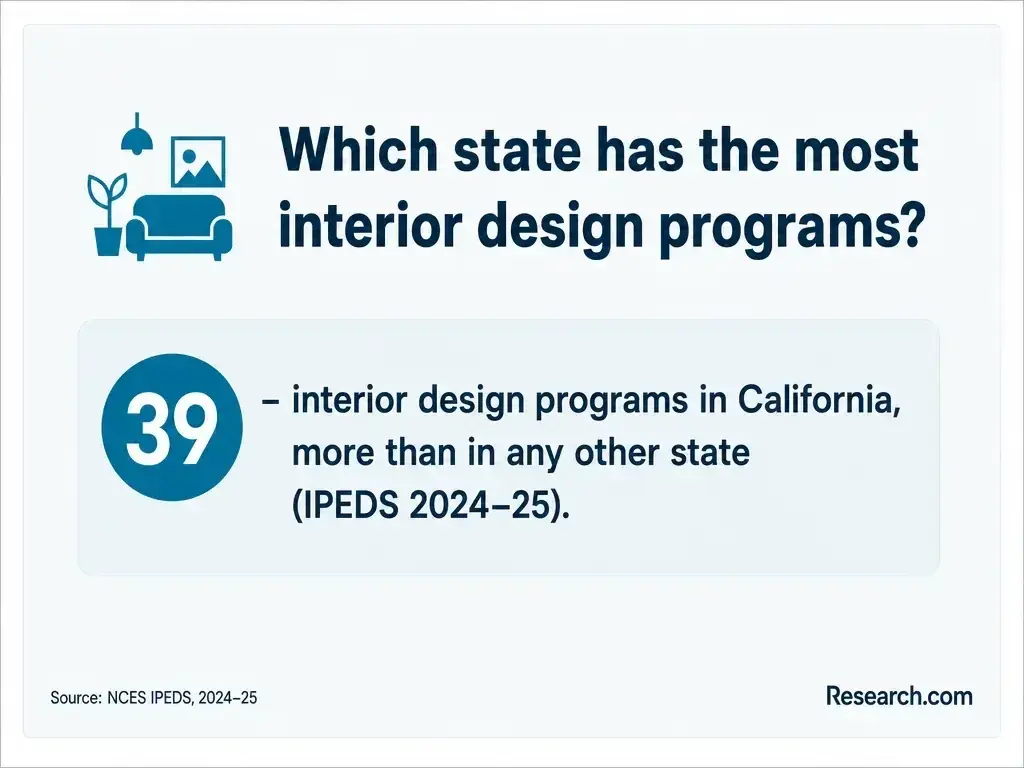
No general occupational license is required simply to work as an interior designer in California. The state instead regulates use of the voluntary Certified Interior Designer title through a distinct certification framework (California Council for Interior Design Certification). Certification is not a substitute for an architect's or engineer's license, and the scope of any permit-related work remains subject to applicable rules and the authority reviewing the project.
If you want the Certified Interior Designer title, check the council's current education-and-experience pathways and examination rules before enrolling. If you want an entry-level showroom or design-assistant job, first check local employer requirements; paying for training solely because you believe certification is mandatory could be an avoidable expense. Institutional accreditation confirms neither certification eligibility nor permission to perform work outside an interior designer's scope.
Start with the job you want, then compare programs against evidence of preparation for that job. A low-cost certificate may be an excellent choice for showroom work; someone aiming to produce technical plans may need more sustained drafting, code, and studio instruction. A paid entry-level role can also make sense if an employer will train you and the work builds a portfolio, though its instruction may be less comprehensive than a structured program.
Before enrolling, get answers to these questions in writing. They expose costly gaps that a ranking or tuition quote may not show.
Red flags include a promise of guaranteed design employment, a salary claim based on experienced workers, or an online program that cannot explain how practical work is assessed. Compare the written answers with local job postings and your budget before committing.
A common progression is from showroom or design-support work to more independent client projects as a worker develops a portfolio, technical judgment, and contacts. Other directions include kitchen and bath planning, commercial interiors support, materials specification, and eventually self-employment. Progress depends on the kind of projects completed and responsibilities earned; a certificate alone does not establish readiness to lead complex work.
If you are comparing what are some certificate programs that pay well, distinguish a school certificate from a professional certification and compare pay for the actual entry job you could obtain. For interior design, ask whether the program helps you produce work samples employers will review and whether its skills transfer beyond one product line. Consider optional certification later if it serves the clients and responsibilities you intend to pursue.
The U.S. Bureau of Labor Statistics projects 2.7% growth nationwide for interior designers from 2025 to 2035. This is a national occupational projection, not a forecast of California openings or a promise that new program completers will find work. It suggests students should test their plans against actual demand rather than assume that finishing a credential will be enough.
Use California Employment Development Department projections alongside current local postings to see where opportunities and required skills overlap. Compare openings for interior designers with design assistants and showroom roles separately. If nearby jobs consistently require technical drawings, choose training that produces them; if your accessible market is primarily retail-facing, a shorter program plus relevant work experience may offer a better first step.
Investing in training is an important decision, so Research.com evaluates programs against others in the same occupation and location rather than treating every trade program as interchangeable. Only programs with completions reported to IPEDS are eligible. That makes the ranking useful for comparing reported college programs, but it does not cover every private trainer, employer program, or other route into interior design.
The most affordable ranking scores costs and debt: in-state and out-of-state tuition, cost of attendance, median student debt - including debt held by students who withdrew - and federal loan default rate. Weights are assigned using an entropy-based method, which gives more weight to indicators that vary more across programs. Accreditation and other quality indicators are not part of this affordability score. Readers should therefore check curriculum, practical training, and recognition separately.
For context, Research.com's distinct best programs rankings assess student outcomes; earnings and return on investment; costs and debt; and quality and recognition. Programmatic accreditation or relevant industry recognition accounts for 20%, institutional accreditation for 10%, and student support for 10%. The remaining 60% covers outcomes, earnings, and costs with entropy-based weighting. Indicators include completion and full- and part-time retention, earnings one year after completion, earnings relative to annual attendance cost, and the cost and debt measures above. These are not the scoring weights for this affordability ranking.
The Research.com team draws on the following sources to check education, cost, outcome, and occupation-specific information. Several professional and apprenticeship sources cover trades other than interior design; their inclusion as methodology sources does not mean their approvals apply to an interior design program.
This approach helps readers narrow local options, not assume that the lowest-ranked cost guarantees the best personal value. See Research.com's methodology for more information about how rankings are created.
# 1 position
# 2 position
# 3 position

# 4 position

# 5 position
# 6 position

# 7 position
# 8 position
# 9 position
# 10 position
# 11 position

# 12 position
# 13 position

# 14 position
# 15 position

# 16 position
# 17 position

# 18 position
# 19 position

# 20 position
Compare resident community college certificates first, then check eligibility for the California College Promise Grant. Include supplies, software, fees, and travel; the lowest enrollment charge may not mean the lowest total cost (California Community Colleges Chancellor's Office).
A certificate can prepare you to seek entry-level design-support or showroom work if it builds relevant skills and a portfolio. It does not guarantee a job or automatically grant California's Certified Interior Designer title (California Council for Interior Design Certification).
It depends on the work you want and how the program assesses drawings and practical projects. Confirm opportunities for critique, material work, and any required site or studio activity before choosing an entirely remote option.
There is no general occupational license for interior design work. California's Certified Interior Designer title has separate eligibility and examination rules; check them if that title is your goal (California Council for Interior Design Certification).
Choose by curriculum and target job, not duration alone. A short certificate may suit showroom entry; an associate program may offer more time for technical courses and portfolio development. Compare both against local postings and total cost.
Do not assume an interior design job or internship is a registered apprenticeship. Employer-sponsored training may provide paid experience, but its structure and credential vary. Ask the employer what instruction, supervision, and advancement the role includes.