# 1 position


Audited and Verified:
Our Editorial and Data Verification Process
Research.com uses government datasets, official education statistics and primary institutional information to support its career and degree guides. Our review process checks factual accuracy, occupational definitions, source dates and the requirements associated with the credentials discussed.
How This Article Was Fact-Checked
Our editorial team verifies salary estimates, employment projections, education requirements and program information against original data providers and official organizations. Salary figures are checked against the relevant occupational definitions and reporting periods. Information about licensure, accreditation and required in-person training is reviewed separately.
Fact-checked and verified on:

Co-Founder and Chief Data Scientist

Reviewed by Karolina Broda
Fact-Checker and Data Verification
Choosing an affordable interior design program in Puerto Rico means looking beyond tuition: you need training that builds a portfolio and fits the work you want to do. The U.S. Bureau of Labor Statistics reports a $67,190 national median annual wage for interior designers in May 2025, but that figure is not a Puerto Rico starting salary. This guide explains credentials, costs, practical training, and career requirements. It also accompanies the Research.com team of data scientists' Most Affordable Interior Design Trade Schools in Puerto Rico for 2027 ranking, created to help students identify programs worth considering.
Expect a mix of design fundamentals and applied work: measuring spaces, developing layouts, selecting materials, preparing drawings, presenting concepts, and revising designs around a client's budget. A useful program lets you show those abilities through completed projects, not just quizzes or software tutorials. For work on the island, ask whether assignments address humidity, maintenance, and locally available materials; those constraints can change what constitutes a practical design.
"Trade school" covers different routes. A certificate or diploma may emphasize drafting, visualization, or decorating support. An associate-degree program generally adds broader technical and general coursework. Employer training in a furniture showroom or design practice may provide paid, job-specific experience but might not award a portable school credential. Compare these routes by the work you want to perform, rather than assuming the shortest program leads to the same opportunities.
If flexibility is the priority, compare the curriculum and project requirements behind online certificate programs that pay well with those of a local design program. A general certificate list cannot establish local design-job prospects or professional eligibility.
Potential settings include residential design practices, furniture and finish showrooms, kitchen-and-bath businesses, hospitality properties, and firms supporting commercial interiors. The work differs: a showroom assistant may help customers choose products, while a design-office assistant may spend more time on drawings, specifications, and site coordination. The U.S. Bureau of Labor Statistics describes interior designers as coordinating functional and aesthetic spaces with clients and construction professionals; a particular entry-level role may cover only part of that work.
Ask programs where their recent students completed projects or work placements and which employers hired them. If local placements are important, a convenient campus is less useful than one with access to appropriate firms and a schedule you can manage around travel and work.
A verified Puerto Rico wage figure should be your benchmark for local pay; the national figure should not stand in for it. The U.S. Bureau of Labor Statistics reports a $67,190 national median annual wage for interior designers in May 2025. A median describes workers across experience levels and does not predict what a new program completer - or someone hired into a showroom support role - will earn.
For a realistic return-on-investment estimate, look up the latest Puerto Rico occupational wage release from the U.S. Bureau of Labor Statistics or Puerto Rico's labor-market agency, then compare it with actual job postings for the roles your training targets. Keep design-assistant and sales postings separate from professional interior-designer postings; combining them would make an entry-level pay estimate misleading.
There is no single required trade-school duration for every interior design role. A focused certificate may take substantially less time than an associate-degree program, while part-time study can extend either route. The meaningful comparison is the program's published credits or clock hours, scheduled studio time, and the number of projects you will finish - not its credential name alone.
Ask for a term-by-term schedule and distinguish supervised studio or site hours from independent homework. A shorter program can make sense for someone already working in retail or construction who needs drafting skills. Someone seeking a broader design-office role may benefit from more time developing technical drawings, documentation, and a portfolio. Do not assume that hours completed in a course satisfy any professional experience requirement; confirm that separately with the relevant Puerto Rico authority.
Online delivery can work well for design history, specifications, digital drafting demonstrations, and critiques of submitted work. On-campus or hybrid delivery can make it easier to measure actual spaces, handle finish samples, use equipment, and receive immediate feedback on models and presentations. The right format depends less on where lectures occur than on how the program verifies practical competence.
For a remote option, ask whether required software runs on your computer, whether physical materials must be purchased and shipped to Puerto Rico, and whether any studio, site visit, or assessment requires travel. An online credential does not, by itself, establish eligibility to practice a regulated profession. Compare the practical work and regulatory implications before choosing convenience over a local studio.
There is no dependable single average that covers every Puerto Rico certificate, diploma, associate-degree program, and employer-training route. Their lengths and included supplies differ, and a published tuition figure may omit substantial expenses. Request a written, program-specific estimate instead of using an unsupported island-wide average.
Build that estimate from tuition and mandatory fees, then add books, drafting or modeling software, computer requirements, printing and portfolio materials, transportation, and any required site visits. Include income you would give up to attend. Subtract only aid or employer support you have a realistic basis to expect. For eligible programs, Federal Student Aid information and a school's financial-aid office can help you check grant and loan options; cheapest online schools that accept fafsa can offer comparison context, but eligibility must be confirmed for the specific institution and program.
To judge whether the expense is worth it, compare total net cost and likely borrowing with your current earnings, plausible local pay after training, time away from work, and the chance you will complete the program. A low tuition price alone does not establish a strong return.
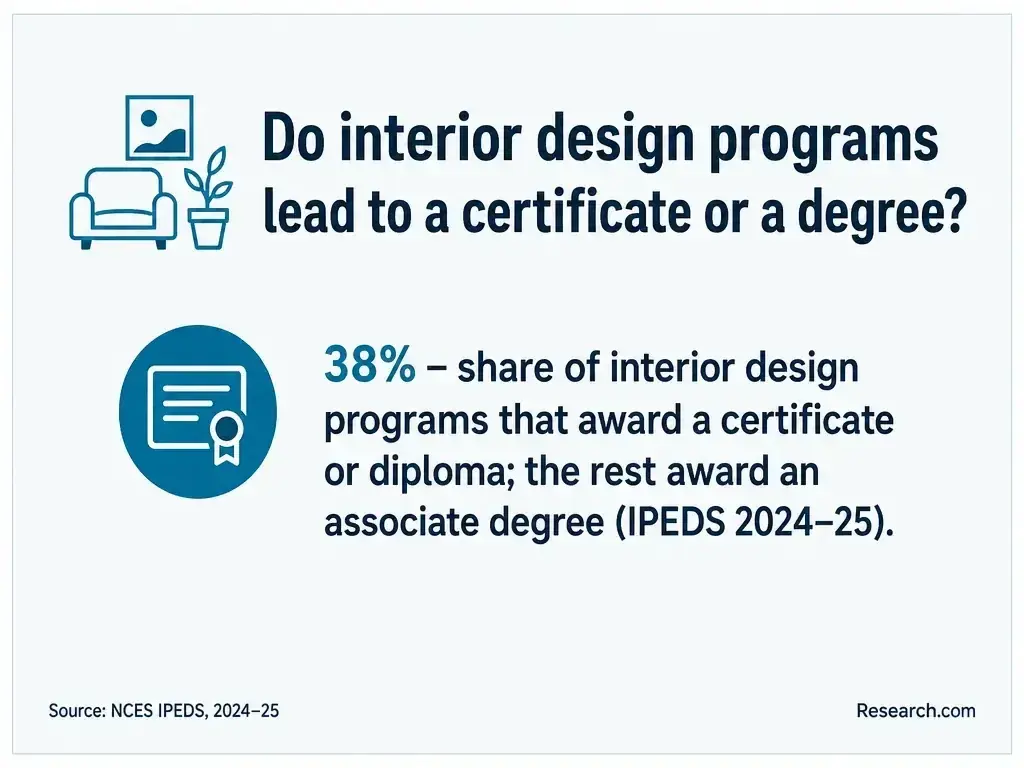
The award depends on the route: a school may offer a certificate, diploma, or associate degree, while employer training may document skills without granting an academic credential. Confirm the exact award on the school's current program page and ask whether it appears on an official transcript. An attractive course title is not evidence of a particular credential.
The comparison below shows why the credential and the practical work behind it both matter. Durations and requirements vary by provider.
| Pathway | Typical award or record | Best fit and main limitation |
| Focused school training | Certificate or diploma | Targeted skills for support work; scope of studio training varies |
| Broader college training | Associate degree | More extensive coursework; requires a greater time commitment |
| Employer-sponsored training | Work experience or employer-issued record | Direct exposure to workplace tasks; skills and recognition may be employer-specific |
Students considering an associate route can use cheapest online associate programs for cost-comparison context, then check whether any design program under consideration supplies sufficient studio practice and meets their particular career goal.
Requirements are set by each provider and may differ between a short course and an associate-degree program. Expect to check the current application for prior-education documentation, language of instruction, technology requirements, placement procedures, and any portfolio request. Do not buy software or equipment until the program confirms its specifications.
For working adults, admissions is only one part of entry planning. Ask whether evening or part-time classes are actually scheduled, whether previous coursework can transfer, and whether a portfolio or work experience can be evaluated for credit. Get any promised advanced standing in writing before estimating your completion date or cost.
Strong occupational training connects visual decisions to measurements and documentation. Look for space planning, color and materials, drawing conventions, computer-aided drafting or visualization, budgeting, client presentations, and revisions based on feedback. Work involving construction documentation also calls for an understanding of applicable codes and coordination with appropriately qualified professionals; a short decorating course may not teach that scope. The U.S. Bureau of Labor Statistics identifies drawings, materials selection, and project coordination among interior designers' duties.
Ask to see examples of completed student projects and the assessment rubric. A portfolio containing measured plans, material specifications, and documented revisions tells a prospective employer more about your readiness than a list of software names. If fieldwork is advertised, verify where it occurs, whether it is supervised, and whether students must arrange their own placement.
Do not assume every design-related job has the same legal requirements. Assisting with product selection or preparing drawings under supervision is different from independently offering services under a regulated professional title or scope. Before enrolling for the latter goal, verify current requirements directly with Puerto Rico's Department of State and the applicable professional examining board. Ask which education, experience, examinations, and application steps apply to the specific services you intend to provide.
Institutional accreditation, school authorization, program recognition, professional certification, and an occupational license answer different questions. The U.S. Department of Education can help verify recognized institutional accreditation; Puerto Rico's postsecondary regulator addresses institutional authorization. Neither finding, by itself, proves that a particular interior design credential qualifies you for professional practice. Ask the licensing authority to confirm the program's eligibility in writing before relying on a school's marketing claim. Optional industry credentials may demonstrate particular skills but should not be confused with legal permission to practice.
Start with the job you want, then test each program against it. A low-cost decorating course may suit a showroom employee but disappoint someone who needs extensive technical documentation and supervised design work. Conversely, a longer program may be an unnecessary expense if the immediate goal is to improve product-selection and presentation skills in an existing role.
Use this sequence to narrow a shortlist before paying an enrollment deposit:
Be wary of a program that promises professional eligibility without identifying the responsible Puerto Rico authority, or that advertises a price without mandatory fees. Lists of online nationally accredited colleges can help frame an accreditation check, but no list replaces verification of the exact school, credential, and intended occupational pathway. Likewise, a search for a 1 year masters program online addresses a different educational level and cannot establish whether entry-level trade training fits this goal.
A practical progression can begin with showroom assistance, drafting support, or project coordination and move toward greater responsibility as a worker develops a portfolio and experience. Specializing in kitchens and baths, hospitality interiors, or commercial materials can make training more relevant to a particular employer. Independent professional work is a separate decision that may involve regulatory requirements; experience alone should not be assumed to satisfy them.
School is not the only starting point. Someone already employed by a furniture retailer or design-related business might gain supervised product and client experience while taking a focused course. That route can reduce time away from paid work, but it may offer less structured technical instruction than a school program. Ask the employer what training is provided and whether the resulting skills will be useful beyond that workplace.
The U.S. Bureau of Labor Statistics projects 2.7% growth nationally for interior designers over 2025-2035. It does not follow that jobs on the island will grow at the same rate or that graduates will enter an interior-designer position immediately. Local demand and the availability of support roles are the more useful tests of a Puerto Rico training investment.
Before choosing a program, review current local postings across the roles you would accept - not only listings titled "interior designer." Note required software, portfolio samples, experience, work location, and language expectations. Compare those requirements with the program's actual assignments. That exercise also helps distinguish a genuine skills gap from a job that primarily requires experience a classroom cannot provide.
Investing in training is an important decision, especially when a low advertised price may not reflect the full cost of becoming job-ready. Research.com evaluates trade-school programs against programs in the same occupation and location so readers can compare realistic local options. Only programs with completions reported to IPEDS are eligible for the ranking; a provider's absence does not mean it lacks authorization or offers poor training.
The most affordable ranking scores costs and debt: tuition, cost of attendance, median student debt, and federal loan default rate. Its weights use an entropy-based method, which assigns more weight to indicators that distinguish programs more clearly. Accreditation, student support, and other quality measures are not included in the affordability score. That differs from Research.com's best-program rankings, which also assess outcomes, earnings, and recognition. Readers should therefore use an affordability ranking as a shortlist, then check curriculum, hands-on work, and career fit themselves.
The Research.com team draws on the following data sources when creating its trade-school rankings. Some occupation-specific sources in the broader methodology concern other trades; their inclusion does not imply that they accredit interior design programs or set Puerto Rico licensing rules.
For details on how the measures are assembled, see Research.com's methodology. The ranking can narrow a search, but the best investment depends on a program's total cost and whether its credential and practical training support your intended work.
# 1 position
# 2 position

# 3 position

Not necessarily. Compare total cost, supervised project work, the credential awarded, and the jobs it prepares you for. A cheaper program that omits skills your target employer requires may cost more to supplement later.
Some coursework can be remote, but ask how the program handles measured spaces, materials, critiques, and any required site experience. Online delivery alone does not establish eligibility for regulated professional work.
Do not assume so. Check the intended services and title with Puerto Rico's Department of State and the applicable examining board, then confirm whether the specific certificate meets any relevant requirements.
Possibly, if both the institution and the specific program meet applicable federal aid rules and you qualify as a student. Confirm eligibility with the school's financial-aid office and Federal Student Aid before budgeting for a grant or loan.
Ask for the exact credential, a term-by-term schedule, supervised project requirements, an itemized total price, and evidence of outcomes for that specific program. If professional practice is your goal, independently verify licensing eligibility.