
# 1 position
Most Affordable Interior Design Schools & Degrees in Dearborn for 2027
Audited and Verified:
Our Editorial and Data Verification Process
Research.com uses government datasets, official education statistics and primary institutional information to support its career and degree guides. Our review process checks factual accuracy, occupational definitions, source dates and the requirements associated with the credentials discussed.
How This Article Was Fact-Checked
Our editorial team verifies salary estimates, employment projections, education requirements and program information against original data providers and official organizations. Salary figures are checked against the relevant occupational definitions and reporting periods. Information about licensure, accreditation and required in-person training is reviewed separately.
Fact-checked and verified on:

Co-Founder and Chief Data Scientist

Reviewed by Karolina Broda
Fact-Checker and Data Verification
Choosing an affordable interior design program means looking beyond tuition: the lowest-priced option may not provide the portfolio work, software training, or experience your intended job requires. The Research.com team of data scientists created the Most Affordable Interior Design Trade Schools in Dearborn for 2027 ranking to help prospective students and career changers identify programs worth considering. The U.S. Bureau of Labor Statistics reports a May 2025 national median annual wage of $67,190 for interior designers. This guide explains how to compare training costs, credentials, practical skills, and career prospects before enrolling.
Key findings about interior design degrees in Dearborn
- Start with the credential and portfolio you need, not the lowest tuition: a short decorating certificate and an associate degree prepare students for different scopes of work.
- The U.S. Bureau of Labor Statistics reports a $67,190 national median annual wage for interior designers in May 2025; it is not a Dearborn wage or a likely starting salary.
- Before paying, confirm total program cost and hands-on access to drafting, materials, and client projects. A low-cost online option may still require local practice to build a competitive portfolio.
Table of Contents
- Most Affordable Interior Design Schools & Degrees in Dearborn for 2027
- What can I expect from an interior design trade school program in Dearborn?
- Where can I work with an interior design trade school training in Dearborn?
What can I expect from an interior design trade school program in Dearborn?
Expect training in space planning, measured drawings, materials, lighting, computer-aided drafting, and presentations. Interior design goes beyond choosing finishes: designers must account for how people use a space, how products are specified, and when building-code or accessibility questions need review by qualified professionals. The U.S. Bureau of Labor Statistics describes design and technical coordination as parts of the occupation.
A worthwhile program should leave you with work you can show an employer: plans, digital models, material schedules, and a documented design process. Ask to see the required projects and software list. If the goal is a design-assistant role with a commercial firm, a program centered almost entirely on residential styling may be a poor match.
Where can I work with an interior design trade school training in Dearborn?
Dearborn students can look beyond city limits to the wider Detroit-area market. Potential settings include residential design businesses, furniture and kitchen-and-bath showrooms, architectural and design firms, workplace-design teams, and suppliers serving renovation or construction projects. The geographic advantage is a broader commuting area; the trade-off is travel time to classes, client sites, showrooms, or internships.
Entry work may involve drafting, product research, measurements, or showroom consultations rather than independently directing a complete project. Review local postings for the software, portfolio, and experience they request before choosing a credential. Those requirements offer a more useful test of program fit than a school's general claim that graduates can work in "design."
A dependable Dearborn-specific pay figure is not available here, so the national benchmark should be used cautiously. The U.S. Bureau of Labor Statistics reports a May 2025 median annual wage of $67,190 for interior designers across the United States. The median covers experienced workers as well as newer entrants and does not describe the pay for every showroom, drafting, or decorating job.
For a useful local estimate, compare current Detroit-area postings for the exact entry role you want, noting whether compensation is hourly, salaried, or partly commission-based. Then weigh that likely starting pay against your current earnings, training costs, and time away from work - not against the national median alone.
Length depends on the credential and schedule. A focused certificate may cover selected skills more quickly; an associate degree generally requires a longer course sequence that can include broader design and technical work. Part-time attendance extends calendar time, while accelerated scheduling can leave less time to develop a portfolio. There is no universal interior-design clock-hour requirement that makes every similarly named program equivalent.
Ask each provider for its published credits or contact hours, course sequence, studio hours, and expected completion time at your planned pace. If speed matters, compare accelerated college courses only as a scheduling concept: a shorter calendar does not replace the projects and feedback needed for the job you want.
Online study can make lectures, design history, some software exercises, and critique meetings easier to fit around work. Campus access can make it easier to receive immediate feedback on drawings, handle samples, use equipment, and collaborate. Neither format automatically produces a stronger portfolio; what matters is the quality and quantity of completed work.
The comparison below focuses on practical demands. Ask any provider to identify activities that require attendance rather than assuming "online" means no travel.
| Format | Potential advantage | Question to resolve |
| On-campus | Direct access to studio space, samples, and instructors | Can you attend scheduled studios and commute consistently? |
| Hybrid | Remote coursework with scheduled in-person work | How often must you attend, and where? |
| Online | Flexible access to coursework and digital critique | How will you practice measurement, materials selection, and client presentations? |
Online convenience is valuable if it reduces missed work or commuting. If you are comparing affordable degrees online, check the interior design curriculum separately: general affordability says little about studio access, required software, or local portfolio-building opportunities.
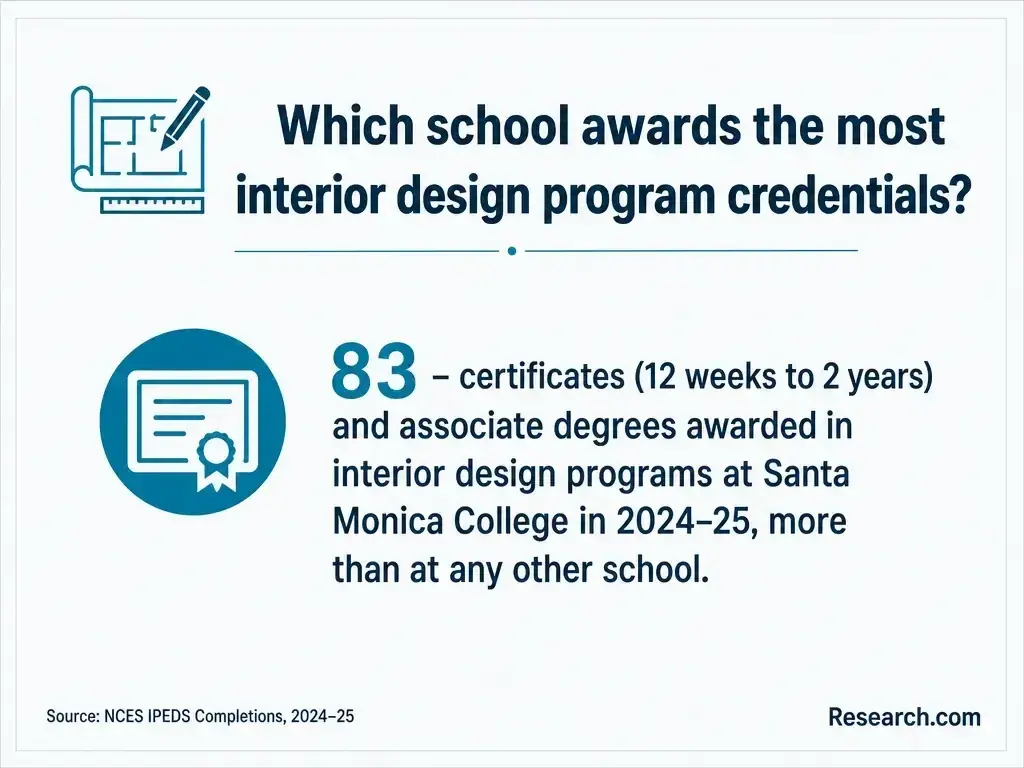
There is no reliable single average for Dearborn interior design training presented here. Prices can differ by credential, residency, course load, and provider, and tuition alone understates the amount needed to become job-ready. Request an itemized, current quote for the entire program rather than multiplying one term's bill without checking future requirements.
Compare these cost categories on the same basis for every option:
- Tuition, mandatory fees, and any resident-rate eligibility requirements.
- Computer and software access, drawing supplies, materials, printing, and portfolio production.
- Travel to campus, studios, showrooms, or work placements, plus earnings you may give up while studying.
- Expected aid, scholarships, employer support, and borrowing costs - not just the advertised price.
Henry Ford College is a local public-college option to investigate, but verify its current catalog before assuming it offers the specific interior design credential you want. Ask its admissions and financial-aid staff about current charges and aid eligibility. Federal Student Aid notes that aid eligibility depends on the student and eligible program; a low-cost course is not automatically aid-eligible.
The award may be a short certificate, a longer certificate or diploma, or an associate degree. The credential name alone does not establish how much studio instruction you receive or whether it meets a future professional credential's education rules. Check the official catalog for the award, required courses, and completed projects.
These pathways serve different goals; the right choice depends on the work you intend to seek after training.
| Pathway | Best fit | Key limitation to check |
| Focused certificate | Someone adding drafting, software, or decorating skills | May not provide broad technical preparation |
| Comprehensive certificate or diploma | Someone seeking a structured portfolio and entry-level skills | Content and employer recognition vary by provider |
| Associate degree | Someone seeking a broader course sequence and more studio work | Usually takes longer and may cost more overall |
| Employer training | Someone able to enter through a showroom or design-support job | Skills may be specific to that employer |
Do not choose a program merely because its name resembles an advanced academic pathway. Searches for dual degree colleges address a different decision; for trade training, compare the actual interior design credential, projects, and cost.
Requirements vary by provider and credential. Ask whether admission requires prior coursework, a portfolio, a placement process, or computer access, and distinguish admission to the school from acceptance into a particular design sequence. Also check whether individual courses have prerequisites that could delay completion.
For employment, a portfolio and proficiency with the software named in local postings may matter more than meeting a school's minimum entry standard. If you already have relevant drawing or software experience, ask whether the provider awards transfer or prior-learning credit - and whether doing so would remove valuable portfolio projects.
A job-oriented curriculum should connect design decisions to deliverables: measured floor plans, layouts, drawings, digital presentations, specifications, and a portfolio. Courses may also address color, materials, lighting, furniture, design history, and professional communication. Commercially oriented work may require greater attention to accessibility and code coordination than a residential styling project.
Ask how instructors assess real measurements, revisions after critique, and client-style presentations. A portfolio containing only polished images may conceal weak technical drawings; conversely, software exercises alone may not show that you can develop a coherent design for a user and a budget. These distinctions matter when comparing a brief course with a more extensive program.
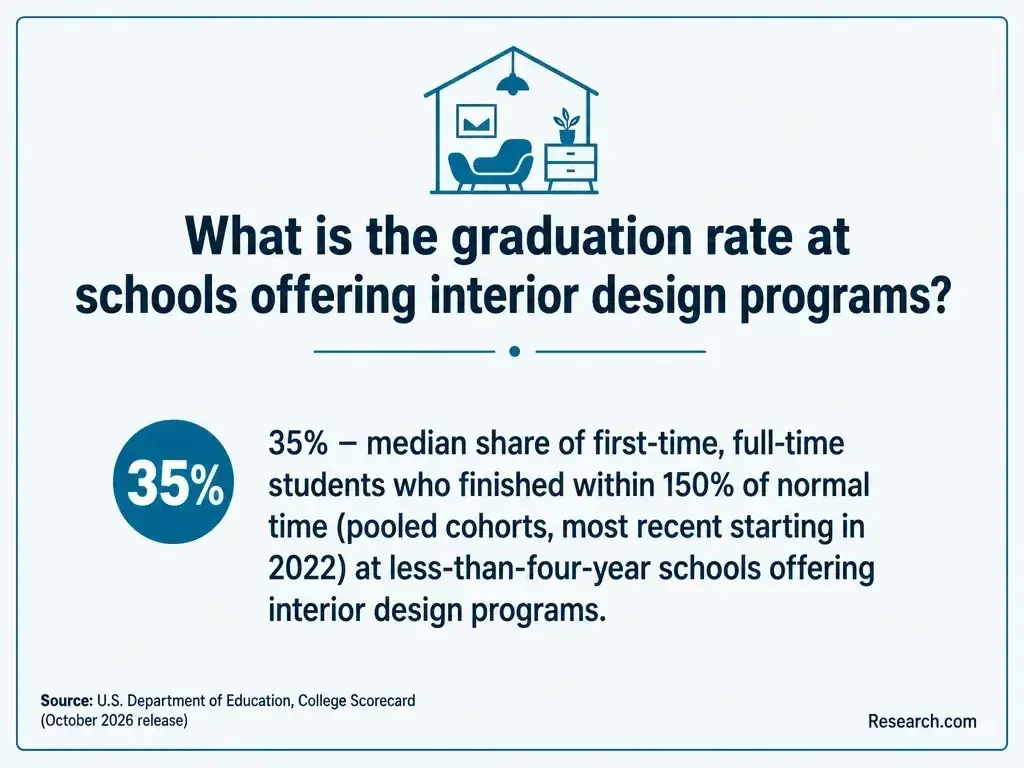
Do not confuse school accreditation, professional certification, and permission to perform regulated work. Michigan does not generally require an occupational license simply to offer interior design or decorating services, but that does not authorize someone to practice architecture or take responsibility for work reserved to licensed professionals. Confirm the scope of a planned commercial role with Michigan's Department of Licensing and Regulatory Affairs and the employer before enrolling.
The Council for Interior Design Qualification administers the NCIDQ credential and sets its own education and experience eligibility rules. The Council for Interior Design Accreditation evaluates eligible interior design programs; institutional accreditation, CIDA program accreditation, and NCIDQ certification are distinct. If NCIDQ is a long-term goal, check the Council's current eligibility rules against the specific credential and coursework offered. A certificate or accredited institution does not, by itself, establish exam eligibility.
Start with the role you want, then test whether a program supplies the relevant work samples at a cost you can sustain. An affordability ranking helps narrow options, but it does not score portfolio quality, studio access, or career fit. Likewise, searches for easy phd programs to get into will not help evaluate an occupational interior design credential.
Use these checks before committing:
- Collect local job postings for your target role and note recurring portfolio, software, and experience requirements.
- Request each program's course list, studio requirements, sample student work, schedule, and itemized total cost.
- Verify the institution's accreditation and any claimed programmatic recognition directly with the relevant accreditor; check state authorization separately where applicable.
- Ask how students obtain critique, work experience, and employer contacts, and what happens if a required course is unavailable.
- Compare net cost and borrowing with your likely entry-level options, completion time, and earnings you would forgo while training.
A common mistake is choosing the cheapest advertised tuition without checking software, materials, or whether the curriculum supports the desired job. If a provider promises certification or employment, ask for the exact eligibility requirements and documented outcome measure rather than relying on the promise.
Depending on the portfolio and employer, an entrant might pursue showroom sales and design support, kitchen-and-bath planning, drafting assistance, residential project support, or a junior role with a design firm. These positions are not interchangeable: sales-oriented work may emphasize products and client service, while firm-based work may demand more technical documentation and coordination.
Experience can open opportunities to take on larger projects, specialize, supervise work, or operate a design business. Further credentials may be useful for particular goals, but they should not be mistaken for universal entry requirements. An employer-sponsored route may suit someone who can obtain paid support work now; structured school training may suit someone who needs guided projects and a portfolio before applying.
The U.S. Bureau of Labor Statistics projects 2.7% national employment growth for interior designers from 2025 to 2035. That is an occupation-wide U.S. projection, not a forecast of Dearborn openings. It suggests students should plan for competition and build evidence of the technical and client-facing skills employers request, rather than assume that completing a credential will produce a job.
The wider Detroit-area job search may offer more types of employers than a Dearborn-only search, but it also changes commuting costs and the positions you can realistically accept. Check current postings across the area and distinguish interior designer roles from related showroom, sales, and drafting jobs when judging demand.
Most Affordable Interior Design Schools & Degrees in Dearborn for 2027
Investing in training is a consequential decision, so Research.com designed this ranking to compare programs against other options in the same occupation and location. The team uses multiple education and workforce sources, checks the scope of available data, and applies a consistent scoring method. Only programs with completions reported to IPEDS are eligible; an unlisted training provider is not necessarily unapproved or unsuitable.
For the most affordable ranking, scores reflect tuition, cost of attendance, median student debt, and federal loan default rates. Weights are assigned through an entropy-based method, which gives more weight to measures that vary more across eligible programs. Accreditation, student support, and other quality measures do not contribute to this affordability score. That differs from Research.com's best programs rankings, which also evaluate outcomes, earnings, recognition, and support.
The ranking methodology draws on the following data sources. Some cover occupations other than interior design; their inclusion in the broader source inventory does not mean a healthcare or construction credential is relevant to this ranking.
- IPEDS database - program completions and institutional reporting.
- National Center for Education Statistics - federal education data and definitions.
- College Scorecard database - institutional cost, debt, and outcome measures where available.
- Peterson's database - supplemental institutional information.
- Commission on Accreditation of Allied Health Education Programs (CAAHEP) - occupation-specific recognition information for applicable fields.
- Accrediting Bureau of Health Education Schools (ABHES) - occupation-specific recognition information for applicable fields.
- Commission on Dental Accreditation (CODA) - occupation-specific recognition information for applicable fields.
- Dental Assisting National Board (DANB) - certification information for applicable fields.
- National Center for Construction Education and Research (NCCER) - industry-recognition information for applicable fields.
- Apprenticeship.gov Partner Finder - information about apprenticeship alternatives where applicable.
Use the ranking to narrow the price search, then verify each interior design program's curriculum, full cost, and fit for your intended work. Research.com explains its approach further on its methodology page.
# 2 position
Henry Ford College - Interior Design.
certificate or diplomaFrequently asked questions about interior design programs in Dearborn
Is the cheapest interior design program the best value?
Not necessarily. Compare total cost with the credential, studio work, portfolio, schedule, and likely entry role. A cheaper program that leaves major skill gaps can cost more to remedy later.
Can I enter the field with a certificate?
Possibly, especially in decorating, showroom, or design-support work. Check local postings and the program's actual projects; a certificate does not automatically qualify you for every interior designer role or the NCIDQ exam.
Can I study interior design entirely online?
Some coursework can be remote, but you still need credible practice with measurements, materials, drawings, and presentations. Ask how an online program assesses those skills and whether any attendance is required.
Does Dearborn have a mandatory interior designer apprenticeship?
There is no general apprenticeship requirement for entry into interior design. Employer training and supervised work can nevertheless be valuable, and a professional certification may have separate experience requirements.
How should I compare a local program with a faster option?
Ask both providers for total cost, completion time, required projects, and access to feedback. If a faster course saves time but produces too little portfolio work for your target jobs, the shorter schedule may not be the better investment.
- U.S. Bureau of Labor Statistics - Interior Designers
Used to verify salary, employment outlook, and typical education requirements.
https://www.bls.gov/ooh/arts-and-design/interior-designers.htm - NCES College Navigator (IPEDS)
Used to verify programs offered and institutional accreditation.
https://nces.ed.gov/collegenavigator/ - CIDQ - NCIDQ Certification
Professional certification reference for graduates of this occupation.
https://www.cidq.org/ - Henry Ford College - official website
Official school website (programs, tuition, admissions).
https://www.hfcc.edu/