# 1 position


Audited and Verified:
Our Editorial and Data Verification Process
Research.com uses government datasets, official education statistics and primary institutional information to support its career and degree guides. Our review process checks factual accuracy, occupational definitions, source dates and the requirements associated with the credentials discussed.
How This Article Was Fact-Checked
Our editorial team verifies salary estimates, employment projections, education requirements and program information against original data providers and official organizations. Salary figures are checked against the relevant occupational definitions and reporting periods. Information about licensure, accreditation and required in-person training is reviewed separately.
Fact-checked and verified on:

Co-Founder and Chief Data Scientist

Reviewed by Karolina Broda
Fact-Checker and Data Verification
An inexpensive interior design program is only a good deal if it builds the portfolio and technical skills your intended job requires. The U.S. Bureau of Labor Statistics reports a $67,190 national median annual wage for interior designers in May 2025, but that is not a starting salary or an Indianapolis wage. This guide compares credentials, costs, practical training, and career entry. It also accompanies the Most Affordable Interior Design Trade Schools in Indianapolis for 2027 ranking, created by the Research.com team of data scientists to help students identify programs worth considering.
Expect project-based training rather than only lessons on color and furniture. A useful program has students measure spaces, prepare drawings, select materials, work within a budget, present proposals, and revise a portfolio after critique. For technical design jobs, ask whether assignments also cover construction documents, building codes, accessibility, and computer-aided design. The U.S. Bureau of Labor Statistics identifies drawings, codes, accessibility, and coordination with contractors as parts of interior designers' work.
Match the training to the job. A focused certificate may be sufficient for an entry-level showroom or decorating role if it produces convincing work samples. An associate-degree program can provide more sustained studio and technical practice, but costs more time. Direct entry into retail or an employer's training program may cost less for someone who mainly wants product or sales experience; it is not a substitute for documented technical-design training. Compare these routes with other careers available through trade-school training if design is one of several interests.
Indianapolis applicants should verify which interior-design courses are actually offered locally and when required studios meet. A published credential is less useful if its essential courses require a commute or are not scheduled when you can attend.
Potential workplaces include residential design practices, furniture and finish showrooms, kitchen-and-bath businesses, architecture and commercial interiors firms, and construction-related suppliers. They do not all hire for the same skills: a showroom may emphasize customer consultations and product knowledge, while a commercial practice may expect drawings, specifications, accessibility awareness, and coordination with other project professionals (U.S. Bureau of Labor Statistics).
That distinction matters when choosing local training. If your goal is a technical role, ask whether students complete documented projects and meet practitioners; if your goal is retail design assistance, compare the program's cost with paid entry-level work and employer training. Freelance decorating is another possible route, but client acquisition and business expenses make it a different financial decision from seeking a salaried position.
A reliable Indianapolis-specific wage should be matched to the precise occupation and reference year. Without one, the clearest benchmark is the $67,190 U.S. median annual wage for interior designers in May 2025 (U.S. Bureau of Labor Statistics). It includes experienced workers nationwide; it is neither an Indianapolis estimate nor a reasonable promise of first-job pay.
Job title matters as much as geography. Showroom sales, decorating assistance, and technical interior design can fall under different occupational classifications and pay structures. Before borrowing for training, compare local postings for the role you actually want, note their experience and portfolio requirements, and use offered pay - not the national median - to test whether the program's cost is manageable.
There is no single required clock-hour total for every interior-design job. Completion time depends on the credential, course sequence, studio availability, and whether you attend full-time. A focused certificate generally takes less time than an associate-degree program; an employer-trained showroom role may let you earn while learning. Ask each provider for its current credit or contact-hour requirements, an actual term-by-term schedule, and the time needed to finish portfolio projects.
Acceleration is valuable only if it leaves enough time for drawing practice, software work, critique, and revisions. Do not use unrelated timelines, such as those in a guide to one year masters degrees, to estimate how quickly an occupational design credential will make you job-ready.
Online coursework can work well for design history, product research, presentations, and some software instruction. In-person studios can make it easier to measure rooms, examine materials, receive live critique, and collaborate on projects. A hybrid program may combine both, but its campus meetings, equipment access, and scheduling must still fit your commute and job.
Compare formats by the work you will produce, not by the delivery label. Request sample assignments and ask how remote students receive critiques, use required software, document measurements, and assemble a portfolio. A directory of top accredited online non profit universities does not, by itself, establish that a particular interior-design credential offers the practical training or professional eligibility you need. Institutional accreditation and program-specific recognition are separate questions.
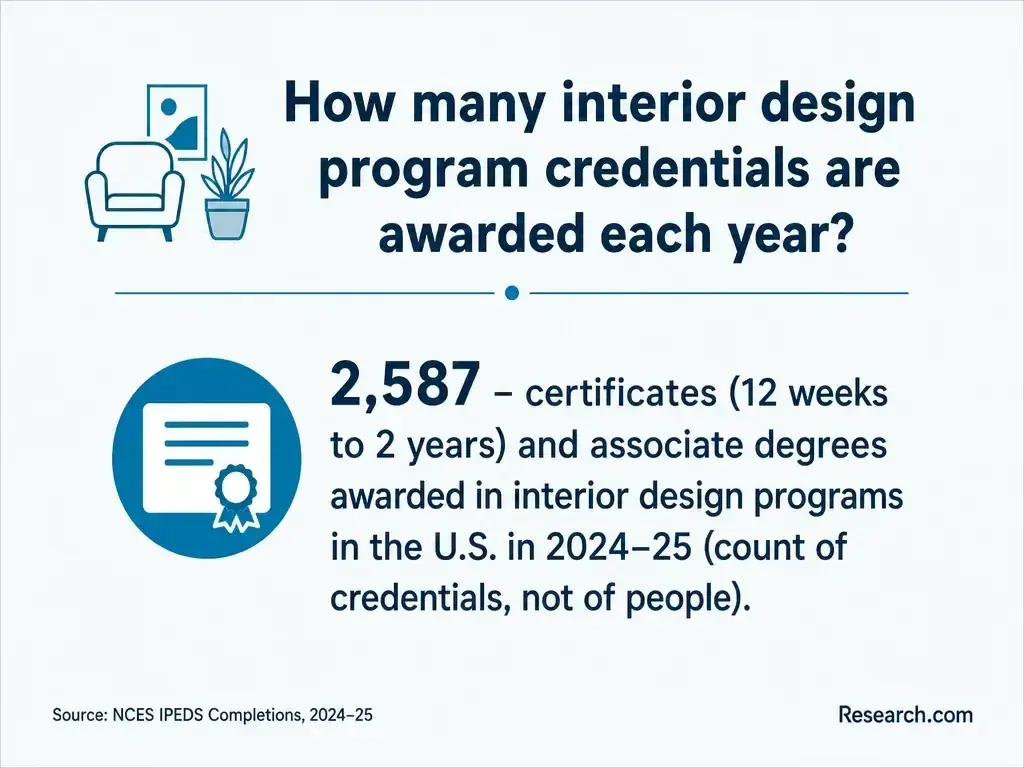
There is no defensible single Indianapolis average without a defined set of currently offered programs, comparable credentials, attendance patterns, and published charges. Ask providers for a written estimate covering the entire credential, rather than multiplying a per-credit price without checking fees or course availability. A comparison of online academic programs, including what is the easiest bachelor's degree to get online, is not a price benchmark for hands-on interior-design training.
The main cost categories below help expose differences that tuition-only comparisons can miss.
| Cost category | What to verify |
| School charges | Tuition for all required courses, mandatory fees, and any residency-based rate |
| Design supplies | Computer specifications, software subscriptions, printing, models, samples, and portfolio materials |
| Attendance | Travel to studios or project sites and earnings forgone during scheduled classes |
| Financing | Grants or scholarships available to this credential, likely borrowing, and repayment obligations |
Federal aid depends on both institutional and program eligibility, not the word "trade" in a school's description (Federal Student Aid). Indiana aid and workforce funding also have their own eligibility rules; check the Indiana Commission for Higher Education and local workforce offices before assuming a short course qualifies. Paid employer training may lower upfront expense, though it may offer less structured studio work.
Depending on the specific offering, you may earn a certificate, diploma, or associate degree; an employer training course may instead document workplace skills without awarding an academic credential. Confirm the exact award on the current program page and transcript. Similar names do not guarantee similar coursework: compare required design studios, technical drawing, and portfolio work.
Institutional accreditation concerns the school. Programmatic accreditation or recognition concerns a particular program. Professional certification is awarded by a certifying body under its own rules, and state authorization concerns permission to operate - not a guarantee of employment. If eventual certification is your goal, obtain the certifier's current education and experience requirements and have the provider explain, in writing, how its credential fits them.
Requirements vary by provider and credential. Ask whether admission requires a secondary-school credential, placement or prerequisite coursework, a portfolio, and a computer capable of running assigned software. Also distinguish admission to the school from admission to a limited-enrollment design sequence, if one exists. Do not buy equipment until you have the current specifications.
If you have prior coursework or relevant work samples, ask about transfer credit or prior-learning assessment before enrolling. Credit acceptance can shorten the schedule, but it should not be assumed to replace required studios. Applicants seeking paid entry-level work instead can ask employers what software, product knowledge, and portfolio examples they expect.
Relevant training connects visual decisions to how a space will actually be used. Look for space planning, measured drawings, materials and finishes, lighting, client interviews, budgeting, presentation, and digital drafting or modeling. Programs intended for technical work should also address applicable codes, accessibility, and communicating specifications to other project professionals (U.S. Bureau of Labor Statistics).
The strongest evidence of learning is completed work. Ask to see the expected portfolio: does it include revised drawings and documented decisions, or only attractive images? Because digital tools are part of the occupation, check that assignments teach students to verify dimensions and requirements rather than relying on software-generated visuals alone.
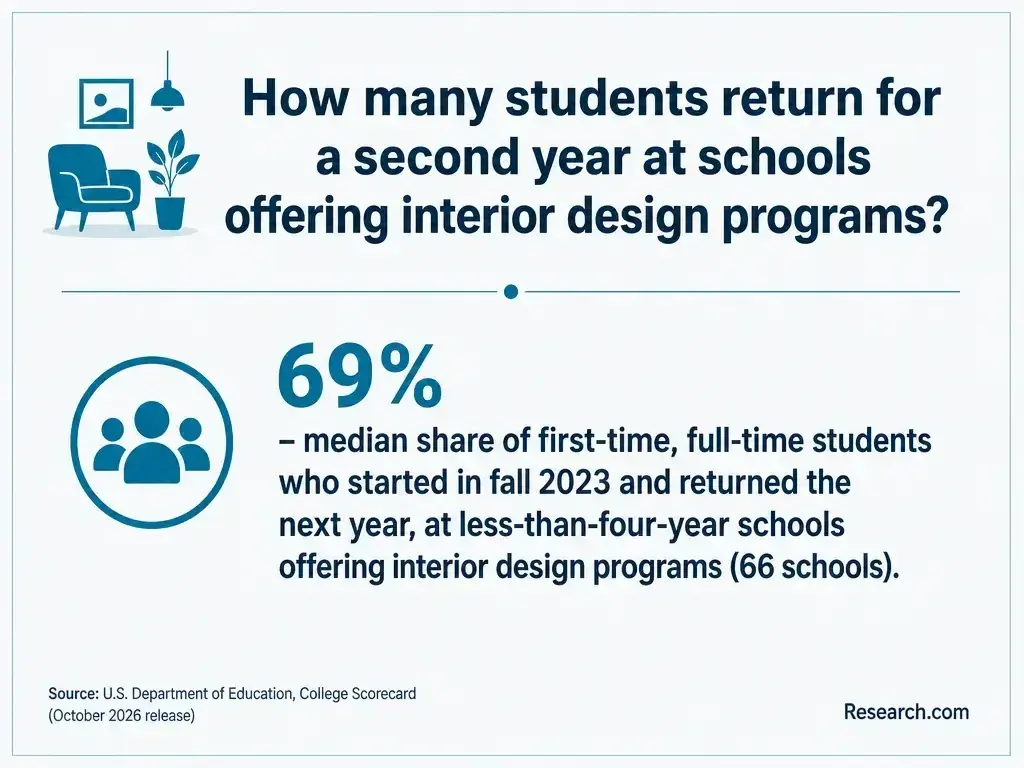
Do not assume every design-related job requires the same credential. Showroom and decorating work, use of a regulated professional title, and responsibility for drawings submitted for building approval raise different questions. Before choosing a program for a regulated role, verify current title, registration, and scope-of-practice rules with the Indiana Professional Licensing Agency and the relevant Indiana statutes. A school's graduation certificate is not itself occupational authorization.
The National Council for Interior Design Qualification (CIDQ) administers the NCIDQ certification process and sets its own education and experience eligibility rules. If you want that optional professional credential or a position that requests it, check CIDQ's current requirements against the specific program before paying a deposit. Ask separately whether a prospective employer requires certification for its entry-level opening.
Start with a target job title, then work backward from local postings to the needed skills and portfolio. The lowest-ranked cost is not the best value if you cannot finish the program or demonstrate the work an employer expects. A useful return-on-investment comparison accounts for total cost, aid, debt, completion likelihood, time out of work, your current earnings, plausible post-training pay, and how long you expect to use the credential.
Before enrolling, put the same questions to each provider so the answers are comparable:
Red flags include vague answers about campus availability, an advertised price that excludes required software, and claims that accreditation alone qualifies a graduate for certification. A guide to a different credential, such as the highest earning master's degree, cannot substitute for this occupation-specific cost and job-entry check.
An entry-level route might begin in showroom consultation, product specification, drafting assistance, or support work in a design practice. With stronger technical work samples and experience, a worker may pursue more responsibility for project documentation, client coordination, or a specialty such as kitchen-and-bath or commercial interiors. Job duties and hiring standards vary; a credential does not automatically move someone between these roles (U.S. Bureau of Labor Statistics).
For a career changer, the practical choice is between building a portfolio through a structured program and gaining narrower product or client experience through paid work first. Ask employers which route they recognize for the position you want. Later certification or independent practice may be worthwhile, but those are separate decisions involving experience, eligibility, and business costs.
National employment of interior designers is projected to grow 2.7% from 2025 to 2035 (U.S. Bureau of Labor Statistics, Employment Projections). This is a national occupational forecast, not a count of Indianapolis vacancies or a forecast for showroom and decorating jobs. For a local decision, review current postings over time and separate technical design roles from sales-oriented titles.
With modest projected national growth, portfolio quality and relevant work experience deserve particular weight alongside price. If local openings repeatedly ask for drawings, specifications, or particular software, choose training that lets you demonstrate those skills. If openings are scarce for your target role, consider whether your budget allows a longer search or travel to a wider set of employers.
Education is a substantial investment, so Research.com designed its ranking to help readers compare programs with other options in the same occupation and location. The team uses multiple education and outcomes sources to check the quality and credibility of its data. Only programs reporting completions to the Integrated Postsecondary Education Data System (IPEDS) can appear; omission does not mean another training provider is unapproved or poor quality.
The most affordable ranking scores tuition, cost of attendance, median student debt, and federal loan default rate. Its indicator weights are assigned using an entropy-based method, which gives more weight to measures that vary more across programs. Unlike a best-programs ranking, it does not score accreditation, student support, completion, or earnings. Use its cost comparison as a starting point, then verify the curriculum and job-entry requirements yourself. More detail is available in Research.com's ranking methodology.
The ranking draws on the following data sources. Some serve Research.com's broader trade-program comparisons rather than representing interior-design-specific approval or accreditation.
# 1 position
# 2 position
# 3 position

# 4 position
For showroom or product-focused work, compare paid entry-level training with a short certificate. For technical design, compare the full cost of programs that produce the drawings and portfolio employers request; the lowest tuition may not meet that goal.
No reliable single price covers different credentials and schedules. Request each program's written estimate for tuition, fees, software, materials, and attendance through completion.
Some coursework and software assignments can be remote. Check how an online program handles measurement, materials, critique, and portfolio projects, and verify any separate certification eligibility directly with the certifying body.
It may suit some showroom or decorating openings. Technical roles may demand stronger drawing skills, experience, or a more extensive portfolio. Compare the certificate's actual assignments with current job descriptions.
No. Institutional accreditation and professional certification serve different purposes. Check the certifier's current education and experience rules against your specific program.