# 1 position


Audited and Verified:
Our Editorial and Data Verification Process
Research.com uses government datasets, official education statistics and primary institutional information to support its career and degree guides. Our review process checks factual accuracy, occupational definitions, source dates and the requirements associated with the credentials discussed.
How This Article Was Fact-Checked
Our editorial team verifies salary estimates, employment projections, education requirements and program information against original data providers and official organizations. Salary figures are checked against the relevant occupational definitions and reporting periods. Information about licensure, accreditation and required in-person training is reviewed separately.
Fact-checked and verified on:

Co-Founder and Chief Data Scientist

Reviewed by Karolina Broda
Fact-Checker and Data Verification
Choosing an affordable interior design program in Charlotte means comparing more than tuition: the right training must also build a portfolio and fit the work you want to do. The U.S. Bureau of Labor Statistics projects 2.7% national growth for interior designers from 2025 to 2035, making program value worth examining carefully. This guide explains credentials, costs, practical training, and North Carolina rules. It accompanies the Most Affordable Interior Design Trade Schools in Charlotte for 2027 ranking, created by the Research.com team of data scientists to help students identify programs worth considering.
An interior design trade program should teach students to turn a client's needs into workable plans, drawings, material selections, and presentations. That differs from decorating-only training, which may emphasize furnishings and visual styling without the same attention to space planning, accessibility, construction documents, or building systems. The distinction matters when a job description asks for technical drawings or coordination with architects and contractors.
Expect projects that require repeated critique and revision - not just software demonstrations. For Charlotte-area applicants, a useful program should offer access to studio equipment or a workable substitute, explain how students build a portfolio, and identify any internship or employer-connected projects. Central Piedmont Community College is one local provider to investigate; confirm its current catalog, credential, schedule, and required in-person work directly rather than assuming every design offering leads to the same occupation.
Training can lead to work with residential design studios, commercial interiors teams, furniture or kitchen-and-bath businesses, builders, and architectural firms. Roles differ substantially: a showroom specialist may focus on products and clients, while a design assistant may prepare drawings, specifications, and presentation materials. Employers' requirements for software, portfolios, and prior experience can therefore matter more than a credential's title alone (U.S. Bureau of Labor Statistics; O*NET).
Charlotte students should seek projects and work experience that match the local employer they hope to join. Someone targeting commercial interiors should ask whether studio assignments address accessibility and coordination with building professionals; someone targeting residential clients should examine the program's client presentations, materials work, and business instruction.
The national median annual wage for interior designers was $67,190 in May 2025 (U.S. Bureau of Labor Statistics). A median divides employed workers into two equal groups; it is neither a Charlotte-specific wage nor a prediction of first-job pay. Before borrowing for training, compare current Charlotte-area postings for the precise role you want - such as design assistant or showroom specialist - and note their requested skills and stated pay, if provided.
Also consider whether an advertised role is salaried, hourly, commission-based, or self-employed. Each arrangement changes the financial value of a training program, particularly if earning a stable income is your immediate priority.
Program length depends on the credential and schedule. A focused certificate can take less time than an associate degree, but a shorter program may leave less room for drafting, technical coursework, and substantial portfolio projects. Ask for the current catalog's credit or contact-hour requirements, course sequence, and part-time availability; there is no single required number of trade-school hours for all entry-level interior design jobs.
An accelerated credential is worthwhile only if it covers the skills your target employers request. Guides to the best 6-month online associate degree programs can help frame questions about accelerated schedules, but do not assume an interior design associate program can be finished in that period or without studio work.
Online coursework can be practical for design history, research, some drawing software, and digital presentations. On-campus instruction may make it easier to receive live critique, work with physical materials, and use studio equipment. A hybrid format can combine those advantages, but its travel requirements may still be substantial for a working student.
Ask a provider which assignments require a campus visit, how students receive feedback on drawings and materials, and whether they must arrange their own site measurements or work experience. A fully online promise is a warning sign if the program cannot explain how students demonstrate practical skills. When comparing the best online nationally accredited schools, verify the specific interior design curriculum separately; institutional accreditation does not establish portfolio quality or eligibility for a North Carolina professional title.
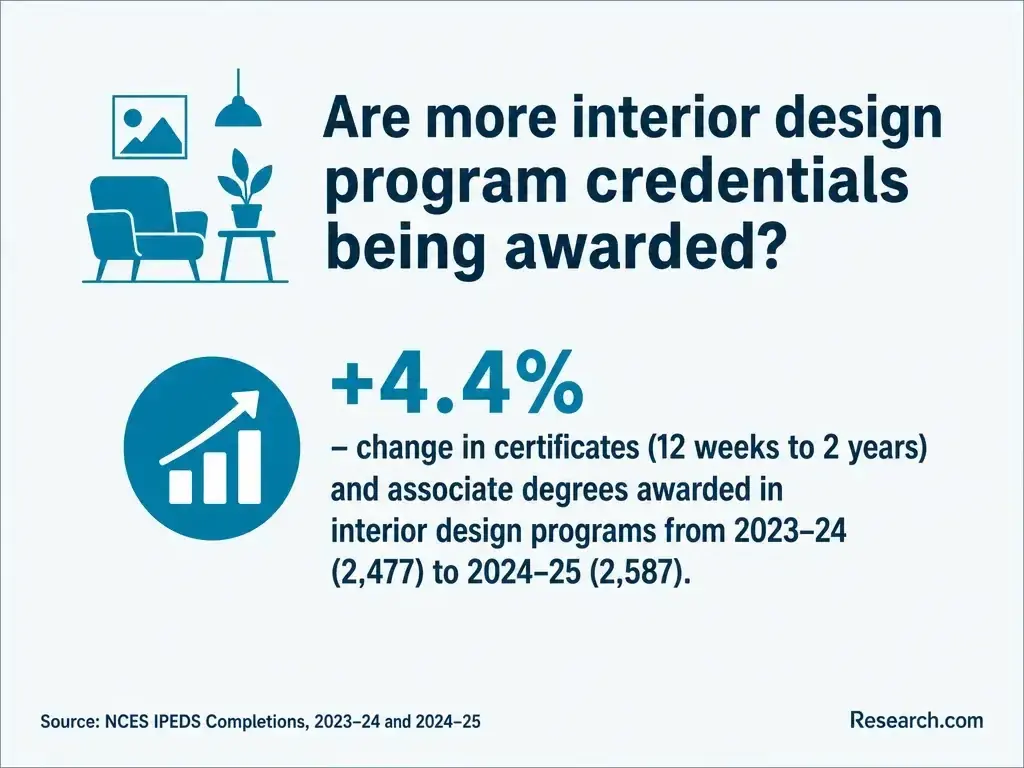
There is no reliable single "average cost" that captures every Charlotte interior design training route. A public college credential, a short course, and employer-sponsored training differ in length and what they include. Request a written estimate through completion that separates tuition from mandatory fees, software and computer requirements, printing or model materials, transportation, and any required placement costs. Add the wages you may forgo if study reduces your work hours.
Compare the net amount you expect to pay after confirmed grants or scholarships, not aid you merely hope to receive. Federal aid depends on both student and program eligibility (Federal Student Aid). Lists of universities with low tuition programs that accept financial aid can illustrate why aid eligibility belongs in a cost comparison, but cannot establish that a particular design course qualifies. Ask the provider's financial aid office about the exact credential.
The credential depends on the specific program: options may include a certificate, diploma, or associate degree. These are educational awards, not a professional license. A certificate may fit someone adding design software or decorating skills; a broader associate program may better serve a student who needs sustained studio work and technical preparation. Compare completed student portfolios and course descriptions rather than assuming similarly named awards teach equivalent skills.
Institutional accreditation concerns the school; programmatic accreditation concerns a particular program; state authorization permits a provider to operate under applicable rules. None automatically grants a job, professional certification, or the right to use a protected title. If you may want North Carolina registration later, check the state board's current education rules against the exact program before enrolling.
Entry requirements vary by provider and credential. A student may need to submit an application and prior education records, then meet placement or prerequisite requirements for particular courses. Studio or software classes may also have computer specifications. Obtain the current admissions checklist and ask whether you can start required design courses immediately or must first complete prerequisites.
If you have previous design coursework or workplace experience, ask whether it can count toward the credential and get any transfer or prior-learning decision in writing. Credit for earlier learning can reduce cost and time, but should not be assumed before the program evaluates it.
A career-focused curriculum commonly combines space planning, drawing and digital drafting, color and materials, lighting, client communication, and portfolio development. More technically oriented training should also address accessibility, building systems, specifications, and how designers coordinate their work with other construction professionals (U.S. Bureau of Labor Statistics; O*NET).
Look beyond course titles. Ask to see the types of plans and presentations students complete, how often instructors critique work, and whether graduates leave with projects they may show employers. Because drafting tools change, assess whether the program teaches design reasoning and accurate documentation as well as a particular software package.
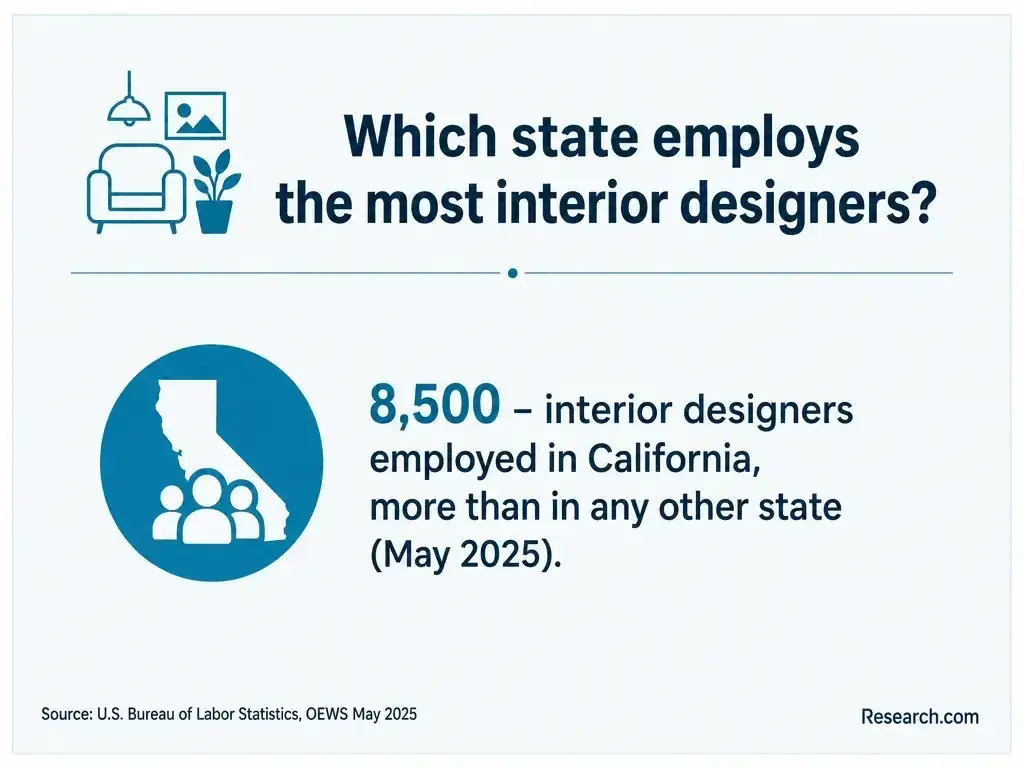
General interior design work in North Carolina does not require every practitioner to hold an occupational license. The state separately regulates the registered interior designer title and the practice privileges associated with registration through the North Carolina Board of Architecture and Registered Interior Designers. Applicants seeking that status must meet the board's applicable education, experience, and examination requirements; completing a trade program alone does not confer registration (North Carolina Board of Architecture and Registered Interior Designers).
For an entry-level decorating or design-support goal, ask employers what they require rather than paying for a program on the assumption that registration is mandatory. If registration is a long-term goal, confirm directly with the board how your proposed education fits its current pathway and what additional experience and examination you would need. Professional credentials and a school's accreditation are distinct from state registration.
Start with the position you want, then compare programs against that job's portfolio and technical requirements. A low-cost course is poor value if it omits the drafting skills your target role requires; a longer program may be unnecessary if you already have those skills and need only focused portfolio work. Rankings can narrow the search, but they cannot replace a review of current course content and total cost.
Before committing, ask each provider for answers to these decision-changing questions:
For this decision, compare trade credentials on their own merits rather than assuming advice about what is the easiest bachelors degree to get applies to studio training. The relevant return depends on completion probability, aid, debt, lost earnings during study, and the jobs your resulting portfolio can realistically support.
An accessible first step may be a design assistant, showroom, or furnishings role in which you build client-facing experience while developing technical skills. With a stronger portfolio and relevant work experience, a designer may pursue more complex residential or commercial projects, specialize, supervise work, or operate an independent practice. These are possible paths, not automatic promotions (U.S. Bureau of Labor Statistics; O*NET).
Direct entry or employer training can make more sense than another school credential for someone who already drafts well and needs workplace experience. Conversely, a structured program can help a career changer who lacks drawings and projects to show. Comparisons with highest earning master's degrees are not a sound shortcut for judging an interior design trade program: evaluate the specific job, training cost, and likely time to competent work instead.
The U.S. Bureau of Labor Statistics projects 2.7% growth for interior designers from 2025 to 2035. This national projection indicates continued demand but does not measure Charlotte openings or guarantee a job for a new trainee. It also covers an occupation broader than any one entry-level job title.
For a local reality check, collect recent Charlotte-area postings for the role you want and record recurring software, portfolio, technical, and experience requirements. If most suitable openings ask for skills a prospective program does not teach, either choose stronger training or plan a separate route to acquire them before paying tuition.
Education is a significant investment, so Research.com designed this ranking to help readers compare reported costs and debt among relevant local programs - not to suggest that the lowest-priced option is automatically the best fit. Programs are compared with others in the same occupation and location. Only programs with completions reported to the Integrated Postsecondary Education Data System (IPEDS) are eligible; employer training and providers outside that dataset may still be valid options.
The most affordable ranking evaluates tuition, cost of attendance, median student debt, and federal loan default rates. An entropy-based method assigns more weight to indicators that vary more across eligible programs. Accreditation, portfolio quality, and other quality measures are not part of this affordability score. Research.com separately evaluates best-program rankings using student outcomes, earnings, costs, debt, accreditation or industry recognition, and student support. Readers should verify current prices and program details before enrolling.
The team uses the following data sources in its ranking work. Some cover occupations other than interior design; their inclusion here does not mean their approvals or certifications apply to interior design programs.
Use the ranking as a shortlist, then compare each program's current total price, studio instruction, graduate work, and relevance to your intended job. More detail on the approach appears in Research.com's methodology.
# 1 position
# 2 position
There is no universal winner: the least expensive suitable option depends on the credential, aid eligibility, required materials, and whether you already have design skills. Compare written costs through completion, not advertised tuition alone.
It may help with styling or furnishings work, but technical roles can require drafting, space planning, and a stronger portfolio. Check the requirements of jobs you actually want.
Some coursework can be remote. Ask how an online program provides critique, practical projects, material experience, and any in-person work you need for your career goal.
Not for every general interior design role. North Carolina regulates the registered interior designer title and its associated privileges; check the state board's rules if registration is your goal.
No. This ranking includes eligible programs with completions reported to IPEDS; it may not capture employer training or every other provider. Treat it as a comparison tool, not a complete directory.