# 1 position
Ensign College - Interior Design.
associate

Audited and Verified:
Our Editorial and Data Verification Process
Research.com uses government datasets, official education statistics and primary institutional information to support its career and degree guides. Our review process checks factual accuracy, occupational definitions, source dates and the requirements associated with the credentials discussed.
How This Article Was Fact-Checked
Our editorial team verifies salary estimates, employment projections, education requirements and program information against original data providers and official organizations. Salary figures are checked against the relevant occupational definitions and reporting periods. Information about licensure, accreditation and required in-person training is reviewed separately.
Fact-checked and verified on:

Co-Founder and Chief Data Scientist

Reviewed by Karolina Broda
Fact-Checker and Data Verification
Choosing an affordable interior design program in Utah means comparing more than tuition: the credential, studio training, software costs, and time away from work all affect its value. The U.S. Bureau of Labor Statistics reports a $67,190 national median annual wage for interior designers in May 2025, but that is not a starting salary. This guide accompanies the Most Affordable Interior Design Trade Schools in Utah for 2027 ranking, created by the Research.com team of data scientists to help students identify training programs worth considering and choose a path that fits their goals.
Expect a mix of design theory and practical production: measuring rooms, planning layouts, selecting materials, preparing drawings, and presenting choices to a client. Interior design training goes beyond decorating when it addresses circulation, lighting, accessibility, building systems, and construction documentation. The exact balance matters: a program centered on residential styling is not interchangeable with one that teaches technical work for commercial projects.
Utah applicants can compare current offerings at Ensign College and Salt Lake Community College, while checking whether Weber State University or Bridgerland Technical College has a relevant credential or course that meets their specific goal. Do not assume every named institution offers the same kind of interior design training. Request a course sequence and examples of student projects before applying.
Studio critiques, software labs, site visits, or client projects can turn coursework into portfolio evidence. Ask how many projects require original drawings, what software students can access outside class, and whether an internship or employer project is available. An internship can help with contacts and experience, but it is not the same thing as a registered apprenticeship.
Potential workplaces include residential design firms, furniture and kitchen-and-bath showrooms, architecture firms, building-products suppliers, and in-house design teams. Roles differ substantially: a showroom consultant may focus on products and sales, while a drafting assistant may spend more time producing plans and revisions. The U.S. Bureau of Labor Statistics identifies design services, architectural and engineering services, and retail-related settings among employers of interior designers.
Along the Wasatch Front, a student may have more options for combining classes with firm visits or part-time showroom work; someone farther from those employers should check commute and internship requirements before enrolling. Location matters most when a program expects repeated in-person client meetings or work placements, not simply because its lectures are on campus.
Pay depends on the actual role, employer, portfolio, and experience. The U.S. Bureau of Labor Statistics reports a $67,190 national median annual wage for interior designers in May 2025. That figure is a useful occupational benchmark, but it is neither a Utah wage estimate nor an entry-level offer. A showroom sales position and a technical design position may also fall under different occupational classifications.
For a Utah pay comparison, look up the intended occupation and work area in the latest Utah Department of Workforce Services wage data, then compare several local job postings that specify experience and software requirements. Use the lower end of plausible entry-level offers - not the national median - when estimating how quickly a program might pay for itself.
Length depends on the credential and schedule. A focused certificate can cover a narrower skill set than an associate degree, which generally includes more studio and supporting coursework. Part-time attendance can make either route take longer. There is no single Utah-wide clock-hour requirement for ordinary interior design training; ask each provider for its current credits or contact hours, studio hours, and typical full-time and part-time completion times.
Accelerated study is worthwhile only if it leaves time to build a credible portfolio. If you are comparing a short occupational course with an unrelated search such as 1 year masters online, keep the decision tied to the job you want: employers reviewing design work need evidence of relevant skills, not merely a fast completion date.
Online study can work well for design history, specifications, software demonstrations, and some drawing assignments. Campus instruction makes it easier to use shared equipment, examine material samples, receive immediate critiques, and collaborate on measured spaces. A hybrid option may reduce commuting without removing the need for in-person projects. Confirm how required critiques, site measurements, and portfolio reviews actually take place.
The distinction matters more than a program's "online" label. Before choosing among easiest online degree searches or design-specific programs, inspect completed student work and ask what practical feedback is included. A convenient format is a poor bargain if it leaves you unable to produce drawings or explain material choices in an interview.
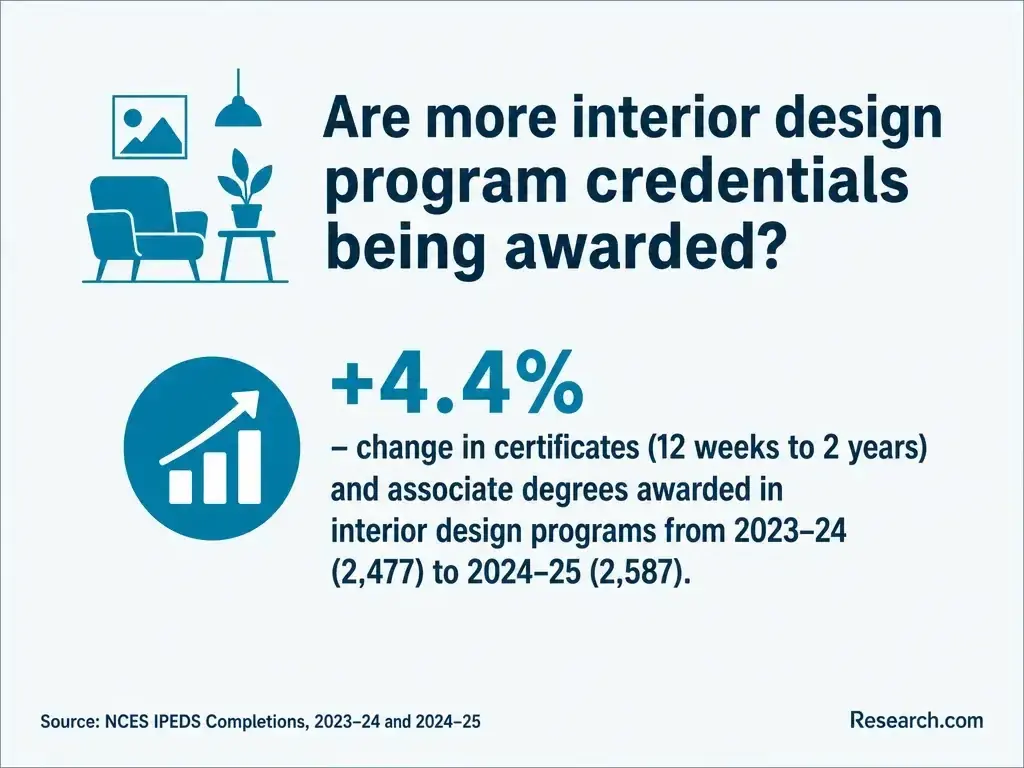
There is no responsible single average for Utah interior design training without specifying the credential, institution, residency status, and what the price includes. Published tuition may exclude mandatory fees, a capable computer, design software, printing, models, samples, and travel to studios or project sites. Request an itemized estimate for the entire program, not just one term.
The comparison below separates charges students often encounter from costs that depend on the program. Its purpose is to help you request like-for-like estimates, not to imply every school requires every item.
| Cost category | What to verify | Why it changes the comparison |
| Tuition and mandatory fees | Total credits or hours; resident rates where applicable | The advertised per-term price may not cover completion. |
| Equipment and materials | Computer specifications, software access, printing, samples | Design work can create substantial costs outside tuition. |
| Attendance and work | Commutes, studio schedule, unpaid project time | Lost earnings can outweigh a small tuition difference. |
| Financing | Eligible aid, scholarships, employer support, borrowing | The amount paid upfront differs from the eventual cost of debt. |
Compare aid eligibility directly with each school; federal aid does not apply to every short course. An online college low tuition search can surface inexpensive options, but it cannot establish the full cost or studio quality of an interior design program. For return on investment, consider completion likelihood, debt, earnings you forgo while studying, realistic post-training pay, and how long you expect to use the skills.
Check the award printed on the school's current program page: it may be a certificate or an associate degree, and a stand-alone course may award only a completion record. Similar-sounding credentials can represent very different amounts of studio work. Ask whether credits apply toward a longer program if your plans change, and get any transfer arrangement in writing from the receiving institution.
A search for the fastest way to get a master's degree addresses a different educational goal. For entry into interior design work, prioritize the credential's curriculum, portfolio output, and employer recognition rather than assuming that a higher-sounding or faster award is more useful.
Requirements vary by provider and credential. Review the current application for prior-schooling requirements, placement procedures, prerequisites, and any portfolio request. Also ask about computer specifications and software access before committing: being admitted does not mean you already have the equipment needed to complete assignments.
If you have drafting, construction, or design experience, ask whether the school evaluates prior learning or accepts transfer credit. Do not count on informal work experience reducing the program until the school confirms which requirements it can satisfy. If you intend to pursue a particular professional credential later, check that organization's current education and experience rules before choosing the shortest entry route.
A job-focused curriculum should let you move from a client brief to a defensible design proposal. Look for space planning, scaled drafting or CAD, digital modeling, materials and finishes, lighting, color, presentation, and project documentation. For technical roles, ask how the program covers accessibility, relevant building-code concepts, and coordination with construction professionals. The U.S. Bureau of Labor Statistics describes interior designers as working with plans, materials, and building requirements, not just visual style.
Judge depth through assignments. A portfolio showing measured plans, revisions after critique, specifications, and a final presentation demonstrates more than a collection of inspiration images. Software matters, but the ability to measure accurately, document decisions, meet deadlines, and communicate with clients remains transferable when tools change.
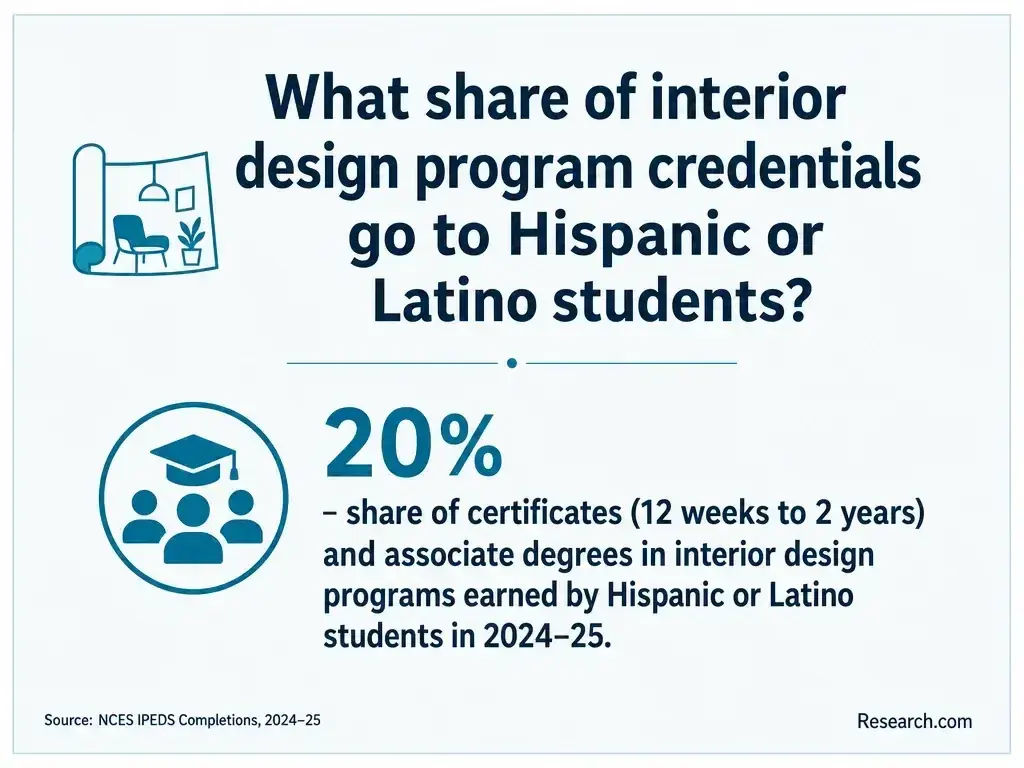
Do not assume a school credential is an occupational license. For the role you want, verify current Utah rules with the Utah Division of Professional Licensing, particularly if work involves architectural services or documents submitted for building approval. Ordinary decorating work and regulated architectural practice are not interchangeable. A program's institutional accreditation establishes neither permission to perform regulated work nor eligibility for an examination.
The Council for Interior Design Qualification's NCIDQ credential is a separate professional certification with its own education and work-experience pathways; it is not automatically awarded at graduation. If that credential is a long-term goal, ask the program to identify which coursework it believes supports eligibility, then confirm the answer directly against the council's current rules. There is no reason to pay for certification preparation solely to enter a role that does not require it.
Start with a target job, then compare programs against the work that job requires. A brief residential styling course may be sensible for a showroom employee adding skills; someone pursuing technical design work should demand substantial drafting, documentation, and reviewed studio projects. A paid employer training opportunity may cost less than school, but confirm whether it teaches transferable skills rather than only one company's product line.
Use these checks before paying an enrollment deposit. They address the most expensive mistakes: comparing tuition alone, assuming every certificate carries the same skills, and relying on a ranking as a substitute for program verification.
A lower-priced program is a better investment only if you can finish it and use its training. If classes conflict with work or its portfolio requirements are too thin for your target role, a longer or more flexible option may provide better value despite a higher posted price.
Early roles may include design assistant, showroom consultant, drafting assistant, or kitchen-and-bath sales support. With stronger technical work and experience, a worker may take on larger residential or commercial projects, specialize in a product area, coordinate projects, or work independently within the scope permitted by applicable rules. These are possible paths, not automatic promotions tied to a particular certificate.
Interior design also involves client interviews, presentations, vendors, and revisions. Readers exploring best high paying jobs for introverts should assess the daily tasks rather than the title: production-focused drafting may offer a different interaction pattern from client-facing showroom sales, although both require clear communication.
The U.S. Bureau of Labor Statistics projects 2.7% national employment growth for interior designers from 2025 to 2035. That projection describes the occupation nationwide, not guaranteed openings in Utah or demand for every related showroom and drafting role. It suggests applicants should treat a strong portfolio and relevant work experience as important competitive assets, not optional extras.
For a local decision, consult Utah Department of Workforce Services projections and recent postings in the area where you can work. Check whether employers seek residential sales, technical drawing, or commercial project experience: a statewide occupation label can conceal very different entry requirements. If your preferred role rarely appears within commuting distance, consider whether an internship, a broader initial job search, or geographic mobility is realistic before paying for training.
Investing in education is a consequential decision, so Research.com compares programs with others in the same occupation and location. Its most-affordable ranking uses tuition, cost of attendance, median student debt, and federal loan default rate; an entropy-based method assigns more weight to measures that differ more across eligible programs. Only programs with completions reported to IPEDS are included. Accreditation and other quality indicators are not part of the affordability score, so readers should verify those separately.
The Research.com team uses the following sources across its trade-program ranking work to check costs, outcomes, recognition, and training context. Several occupation-specific organizations listed here do not accredit interior design programs; their inclusion does not imply otherwise.
IPEDS and College Scorecard do not cover every private training provider or employer-run course. A missing provider is not necessarily unapproved or poor quality. Use the ranking to narrow your cost comparison, then request current, program-specific prices and training details. Research.com explains its broader approach on its methodology page.
# 1 position
# 2 position
# 3 position

# 4 position

# 5 position
First compare a focused course, an employer-training opportunity, and a public-college program against the job you want. Request full program costs and check aid eligibility; the lowest tuition is not necessarily the lowest cost to become job-ready.
A certificate may support entry-level work if it produces the skills and portfolio employers seek. It does not automatically qualify you for every technical role or professional certification pathway.
They can teach useful software and concepts. Check whether they include measured projects, detailed critique, and a portfolio relevant to your target role; verify any separate credential requirements independently.
Not for every training program or entry-level job. It can provide valuable project experience, but ask whether an advertised placement is required, available to all students, and paid or unpaid.
Choose it if its projects and credential meet your immediate goal. If you want technical drafting or complex commercial work, a longer program with substantial supervised studio practice may be more useful.