# 1 position


Audited and Verified:
Our Editorial and Data Verification Process
Research.com uses government datasets, official education statistics and primary institutional information to support its career and degree guides. Our review process checks factual accuracy, occupational definitions, source dates and the requirements associated with the credentials discussed.
How This Article Was Fact-Checked
Our editorial team verifies salary estimates, employment projections, education requirements and program information against original data providers and official organizations. Salary figures are checked against the relevant occupational definitions and reporting periods. Information about licensure, accreditation and required in-person training is reviewed separately.
Fact-checked and verified on:

Co-Founder and Chief Data Scientist

Reviewed by Karolina Broda
Fact-Checker and Data Verification
The cheapest interior design program is not necessarily the cheapest route to a job: software, portfolio materials, travel, and time away from work can change the bill. The U.S. Bureau of Labor Statistics reports a $67,190 national median annual wage for interior designers in May 2025, making training costs worth examining carefully. For prospective students and career changers, the Research.com team of data scientists created a Most Affordable Interior Design Trade Schools in Pennsylvania for 2027 ranking to help identify programs worth considering. This guide explains the costs, credentials, practical training, and career trade-offs behind that choice.
Expect a mix of visual planning and technical work. A career-focused program may teach measured drawings, space planning, materials, lighting, computer-aided drafting, presentation, budgeting, and client communication. Projects should produce portfolio pieces that show how a design meets a brief, not just attractive images. Ask to see the required projects and find out how instructors critique them.
The right scope depends on the job you want. A short decorating certificate may fit someone seeking showroom or residential styling work; it is a weaker match for roles involving construction documents or coordination with architects and contractors. Someone comparing certificate jobs that pay well should check actual job postings rather than assume that any certificate leads to the occupation-wide interior designer wage.
Work-based experience is especially useful when it involves site measurements, vendor communication, installations, or supervised client work. Interior design does not have a standard paid registered-apprenticeship route comparable to some construction trades; a relevant internship or employer-sponsored training opportunity may be a more realistic alternative to paying for another program.
Possible workplaces include residential design studios, furniture and kitchen-and-bath showrooms, architecture and design firms, commercial interiors teams, and suppliers of finishes or furnishings. The U.S. Bureau of Labor Statistics identifies specialized design services and architectural and engineering services among employers of interior designers. The work available to you will depend on your portfolio, software skills, experience, and the scope of the role - not the credential name alone.
Location changes the search. A student near Philadelphia or Pittsburgh may have more firms to approach, while someone in a smaller market may need to consider showroom work, a wider commute, or remote drafting support. Before enrolling, search current openings within a workable commute and note whether they request drawings, a portfolio, client-service experience, or particular software. That is a more useful test of program fit than a statewide job count.
A current Pennsylvania wage figure should come from the state's occupational wage data or the U.S. Bureau of Labor Statistics' state estimates for interior designers; a reliable Pennsylvania figure is not established here. As a national benchmark, the occupation's median annual wage was $67,190 in May 2025 (U.S. Bureau of Labor Statistics). A median covers experienced and newly employed workers alike, so it is not a sensible first-job salary assumption.
Showroom sales, design assistance, and technical drafting can also carry different pay structures and occupational classifications. Compare local postings for the specific role you could enter immediately after training. For an investment decision, test whether plausible incremental earnings over your current work could repay the program's full cost and any borrowing - not whether the national median looks attractive.
Duration depends on the credential, schedule, and depth of studio work. A focused certificate may take months; a more extensive diploma or associate degree takes longer, particularly part-time. Do not infer instructional hours from a school's calendar length: two programs of similar duration may require very different amounts of supervised drafting and project work.
Ask for the published credits or clock hours, weekly studio expectations, and time required for an internship or final portfolio. Pennsylvania does not impose a general interior-design training-hour requirement for nonlicensed design work, so the practical question is whether you will finish with evidence of the skills your target employers request. An accelerated schedule saves time only if you can complete its projects without sacrificing work or income you need.
Online study can work for design history, specifications, software demonstrations, and digital presentations. Campus or scheduled in-person sessions can make it easier to receive live drawing critique, handle material samples, practice measuring spaces, and collaborate on installations. A hybrid program may be a useful compromise, but ask exactly which activities require travel and whether those dates fit your work schedule.
Remote coursework is not a substitute for a reviewed portfolio or practical experience. When comparing a program with the best affordable online colleges that accept financial aid, verify the specific program's aid eligibility, equipment requirements, and opportunities for instructor feedback. A low online price can rise if you must buy capable hardware, licensed software, printing, and materials yourself.
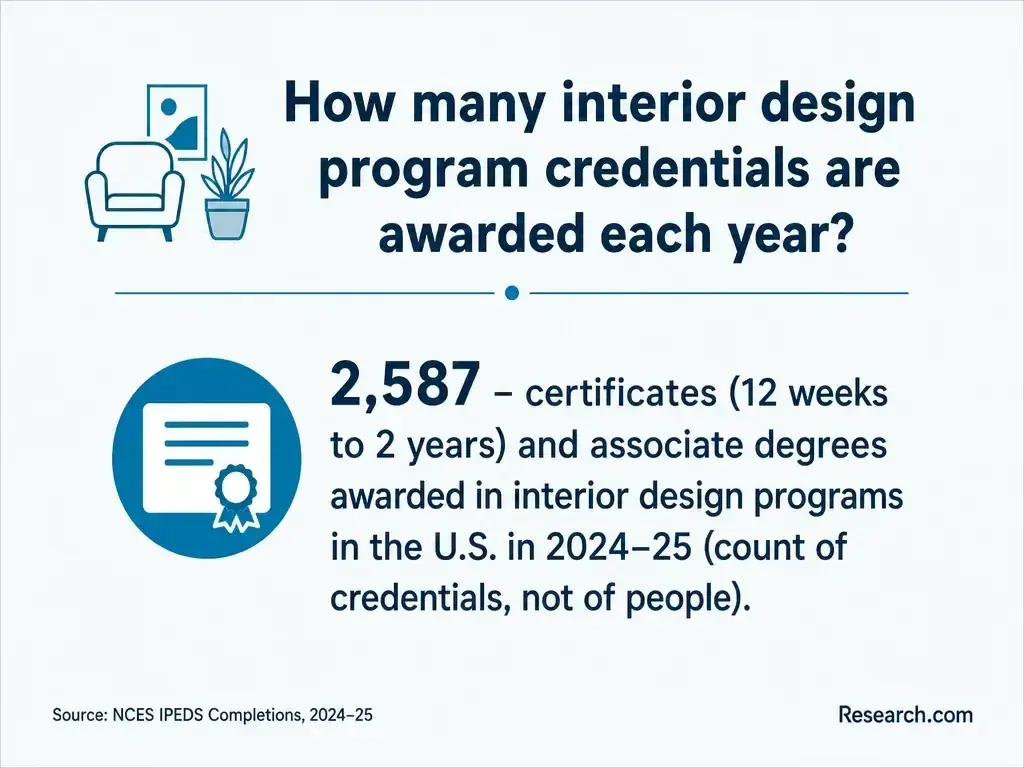
There is no single defensible statewide average that covers short certificates, longer college programs, and non-IPEDS training on comparable terms. Published tuition also may not represent the cost of becoming job-ready. Request a current, program-level estimate from each provider, and compare costs for the credential and schedule you would actually choose.
The following costs can change which offer is cheaper. Separate required charges from optional purchases when you ask for an estimate.
| Cost | What to verify |
| Tuition and mandatory fees | Charges for the full program, including any resident-rate eligibility |
| Software and equipment | Computer specifications, licenses, printing, and whether campus access is included |
| Project materials | Sample boards, models, presentation supplies, and portfolio production |
| Attendance costs | Travel to classes, site visits, or placements, plus earnings forgone while studying |
| Financing | Grants or scholarships you qualify for, and the amount and terms of any loan |
Aid is not automatic: eligibility depends on the student, provider, and program (Federal Student Aid). Pennsylvania residents can also check whether a specific program qualifies for state aid through the Pennsylvania Higher Education Assistance Agency. If you are weighing trade training against searches for the highest paid 4 year degree, do not compare sticker prices or occupational medians alone; time out of work, debt, and the job each credential actually opens matter.
Depending on the provider, you may earn a certificate, diploma, or associate degree. Those are educational awards, not interchangeable professional qualifications. A certificate concentrated on decorating and presentations may suit a showroom goal; a longer program may offer more drafting, systems, and studio work. Review the transcript-level curriculum and required portfolio rather than relying on the award's title.
Institutional accreditation, state authorization, and programmatic accreditation answer different questions. The Council for Interior Design Accreditation evaluates eligible interior design programs, but its accreditation is not a requirement for every entry-level role or a substitute for an individual professional credential (Council for Interior Design Accreditation). Verify any claimed status with the relevant accreditor and ask the school what its particular credential prepares graduates to do.
Requirements vary by provider. A program may request an application, proof of prior schooling, placement information, or examples of creative work; do not assume a portfolio is mandatory or unnecessary without checking the current admissions page. Also ask whether your computer meets software specifications before paying an enrollment deposit.
Career changers should ask whether prior coursework, documented design work, or employer training can count toward the credential. Obtain the policy in writing, including how accepted credit changes the remaining cost and completion time. Entry into a program is separate from later eligibility for a professional examination or credential.
Useful training connects creative choices to constraints: dimensions, circulation, lighting, materials, accessibility considerations, budgets, and what a client can approve or a contractor can build. The U.S. Bureau of Labor Statistics describes interior designers as developing spaces that are functional, safe, and aesthetically appropriate. Programs aimed at technical design work should give students repeated practice turning a brief into drawings, specifications, and a defensible presentation.
Ask whether projects include measured plans, revisions after critique, material selections with cost constraints, and a final portfolio. Digital visualization can speed up early concepts, but it does not verify dimensions or replace sound specifications. A program centered on generated imagery without documented decisions and technical feedback is a poor fit for someone seeking drafting-heavy work.
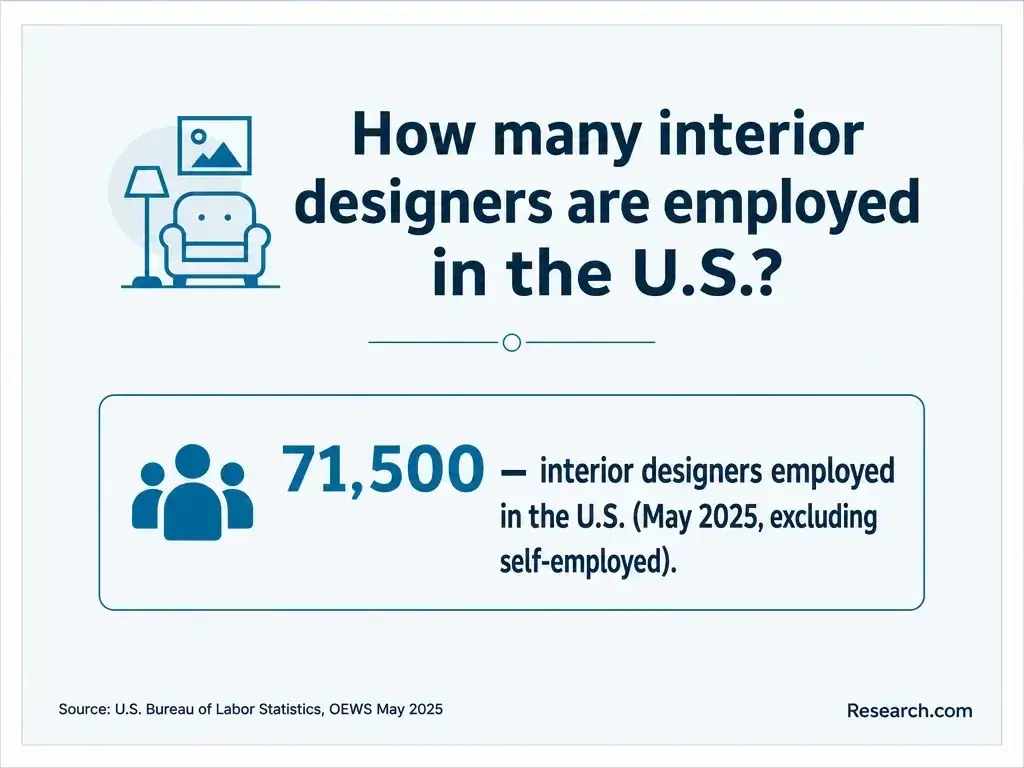
Pennsylvania does not generally require an interior designer occupational license for ordinary nonregulated interior design work. That does not authorize a designer to perform work reserved to another licensed profession, such as architecture; the Pennsylvania State Architects Licensure Board regulates architectural practice. If your intended role includes drawings for construction or code-related responsibilities, clarify the employer's supervision arrangements and the applicable scope of practice before choosing training.
The National Council for Interior Design Qualification's NCIDQ credential is a separate professional certification with its own eligibility rules for education and experience (Council for Interior Design Qualification). It is not automatically awarded with a school certificate or associate degree, and it is not a general Pennsylvania entry license. Ask a provider to document whether its curriculum supports your intended certification pathway; verify current eligibility directly with the certifying body.
Start with a job title and a few local postings, then compare programs against the work those employers describe. For example, a program with extensive drafting and reviewed projects may justify a higher total price for a technical assistant role; it may be unnecessary if you want product-focused showroom work. Affordable and best-fit are different judgments.
Before committing, use this sequence to test whether a program is the right investment:
Do not choose solely from a ranking or assume similarly named credentials provide equivalent studio practice. If you are also browsing easiest bachelor's degrees, keep that separate from the immediate question here: which trade credential supplies the skills and portfolio evidence your target entry-level job requires?
An initial role may involve showroom consulting, design assistance, space planning, or drawing and presentation support. With stronger projects and experience, a worker may take on more client coordination, specialize in residential or commercial interiors, or pursue independent work. Responsibilities and titles differ by employer; a training credential alone does not establish seniority or authorize regulated architectural services.
If a job requires sales and product knowledge more than technical drawings, paid employer training may be a faster, lower-cost entry route. Conversely, someone aiming for a technical design team should prioritize assessed drawing work and relevant supervised experience. Even if you have considered a list of colleges that allow double majors, compare the actual work you want first: adding unrelated study does not replace a focused portfolio.
A comparable, current Pennsylvania-specific projection is not established here. Nationally, employment of interior designers is projected to grow 2.7% from 2025 to 2035 (U.S. Bureau of Labor Statistics, Employment Projections). This indicates modest growth in the occupation overall, not a promise of openings in a particular Pennsylvania county or for graduates of a particular program.
For a local decision, check Pennsylvania's official occupational projections and current postings for both interior designers and the entry-level titles you would accept. Count the postings that match your commute, credential, software skills, and experience. If few do, ask a provider how students obtain practical experience and consider whether a broader job search or a different entry role makes the training worthwhile.
Investing in training is an important decision, so Research.com evaluates programs against others in the same occupation and location rather than against unrelated schools. Its most-affordable ranking considers tuition, cost of attendance, median student debt, and federal loan default rates. An entropy-based method gives more weight to cost and debt indicators that distinguish programs more clearly. Accreditation and other quality indicators do not contribute to the affordability score; readers should check them separately.
Only programs reporting completions to the Integrated Postsecondary Education Data System (IPEDS) are included. This supports comparison but excludes some legitimate training options that do not report IPEDS completions. The Research.com team uses the following sources in its ranking work, applying occupation-specific sources where relevant:
The distinction matters: a low ranking price does not establish that a program teaches the software, drawing, and project skills an employer wants. Use the ranking to narrow the field, then compare each program's current charges and curriculum. More detail about the ranking process is available in Research.com's methodology.
# 1 position
# 2 position

# 3 position
# 4 position
# 5 position

Not necessarily. Compare the full price with the required projects, feedback, portfolio, and experience relevant to your target job. A cheap program that leaves major skill gaps may cost more to supplement.
Yes, particularly for some showroom, decorating, or design-support goals. Check local job requirements first; technical roles may expect more drawing practice and a stronger portfolio than a short certificate provides.
Some coursework can be remote. Ask how the program assesses measurements, materials, revisions, and portfolio work, and whether any visits or placements are mandatory. Online delivery alone establishes neither certification eligibility nor job readiness.
Not generally for ordinary nonregulated interior design work. Work within the scope of architecture is different; check the Pennsylvania State Architects Licensure Board's rules when a proposed role involves architectural services.
Possibly, but eligibility depends on the student, institution, and specific program (Federal Student Aid). Get the school's program-level aid information and a complete cost estimate before deciding what to borrow.