# 1 position


Audited and Verified:
Our Editorial and Data Verification Process
Research.com uses government datasets, official education statistics and primary institutional information to support its career and degree guides. Our review process checks factual accuracy, occupational definitions, source dates and the requirements associated with the credentials discussed.
How This Article Was Fact-Checked
Our editorial team verifies salary estimates, employment projections, education requirements and program information against original data providers and official organizations. Salary figures are checked against the relevant occupational definitions and reporting periods. Information about licensure, accreditation and required in-person training is reviewed separately.
Fact-checked and verified on:

Co-Founder and Chief Data Scientist

Reviewed by Karolina Broda
Fact-Checker and Data Verification
Choosing affordable interior design training in Santa Barbara means looking beyond tuition: a low-cost program still needs to build a portfolio and the technical skills employers expect. The U.S. Bureau of Labor Statistics reports a May 2025 national median annual wage of $67,190 for interior designers, though new entrants may earn less. This guide helps prospective students and career changers compare credentials, costs, practical training, and career prospects. It also accompanies the Most Affordable Interior Design Trade Schools in Santa Barbara for 2027 ranking, created by the Research.com team of data scientists to help readers identify programs worth considering.
Interior design training combines visual planning with technical decisions about space, materials, lighting, accessibility, and documentation. A career-focused program should let students produce drawings and presentations, receive critique, and assemble work they can show an employer. A decorating course may be useful for styling or retail work, but it should not be assumed to cover construction documents or professional certification prerequisites.
Santa Barbara City College is the local public-college option to investigate first. Check its current catalog for the exact interior design offerings, award requirements, course sequence, and availability; do not assume every course runs each term. A short certificate can suit someone testing the field or adding a specific skill. An associate-degree program, where offered, may fit someone seeking broader technical coursework and a longer portfolio-building period. Neither credential by itself guarantees a design job.
Ask to see recent student projects and find out whether instruction includes measured drawings, computer-aided drafting, material specifications, and feedback on revisions. There is no universal interior design trade-school clock-hour requirement for entry-level work in California; the applicable course units and studio hours depend on the program and any certification goal. For readers comparing the scope of occupational awards, easy associate degrees to get is a starting point, not a substitute for examining design coursework.
Possible entry points include design studios, residential remodeling businesses, furniture and kitchen-and-bath showrooms, architectural or construction teams, and property-related businesses. The useful first question is what work an employer will actually let a new hire do: a showroom role may emphasize product knowledge and clients, while a design assistant role may require drafting and specification skills.
Santa Barbara's residential projects can make renovation-focused portfolios relevant, but local opportunities should not be assumed to match national occupation totals. Search current vacancies across Santa Barbara County, note the software and experience requested, and ask whether a program offers supervised client projects, internships, or introductions to working designers. Employer-sponsored experience can be a lower-cost alternative to another course when it provides genuine mentoring and portfolio-worthy work.
The BLS Occupational Outlook Handbook reports a $67,190 national median annual wage for interior designers in May 2025. This is the midpoint for employed designers nationwide - not a Santa Barbara wage estimate or a likely first salary for a certificate holder. Pay can differ substantially between a sales-oriented showroom job, a junior drafting role, and an experienced designer position.
Before using a salary to justify tuition or borrowing, compare current local postings for the specific entry-level title you want. Check whether compensation is hourly, salaried, or commission-based and whether a portfolio or prior experience is required. Broader articles about certifications that pay the most should not be used to predict interior design earnings: the relevant occupation and career stage matter more than the word "certificate."
Duration depends on the award, required courses, and how often studios are scheduled. A focused course or short certificate generally takes less time than an associate-degree program, but an accelerated schedule can leave less room for paid work and portfolio development. Part-time study may lower the amount paid each term while delaying entry into design roles.
Request a term-by-term plan from Santa Barbara City College or another provider before comparing completion times. Check course prerequisites and whether a required studio is offered often enough for your schedule. If you already have relevant coursework, ask for a formal transfer-credit evaluation; experience with drawing or software may help you learn faster but does not automatically waive required courses. Interior design does not ordinarily follow the fixed, paid registered-apprenticeship progression used in some construction trades.
Online coursework can make design history, software demonstrations, research, and some critiques easier to fit around work. In-person instruction can make it easier to handle samples, measure spaces, collaborate, and get immediate feedback on drawings. A hybrid option is worthwhile only if its required campus meetings and project work fit your commute and schedule.
The distinction matters when comparing programs advertised with the same credential name: ask how students complete measured-site projects, present physical materials, and receive portfolio critique. Do not assume an entirely online course meets an optional certification body's education requirements. For working adults weighing remote study costs, low cost online colleges for job holders can inform the scheduling comparison, but the interior design curriculum still needs its own review.
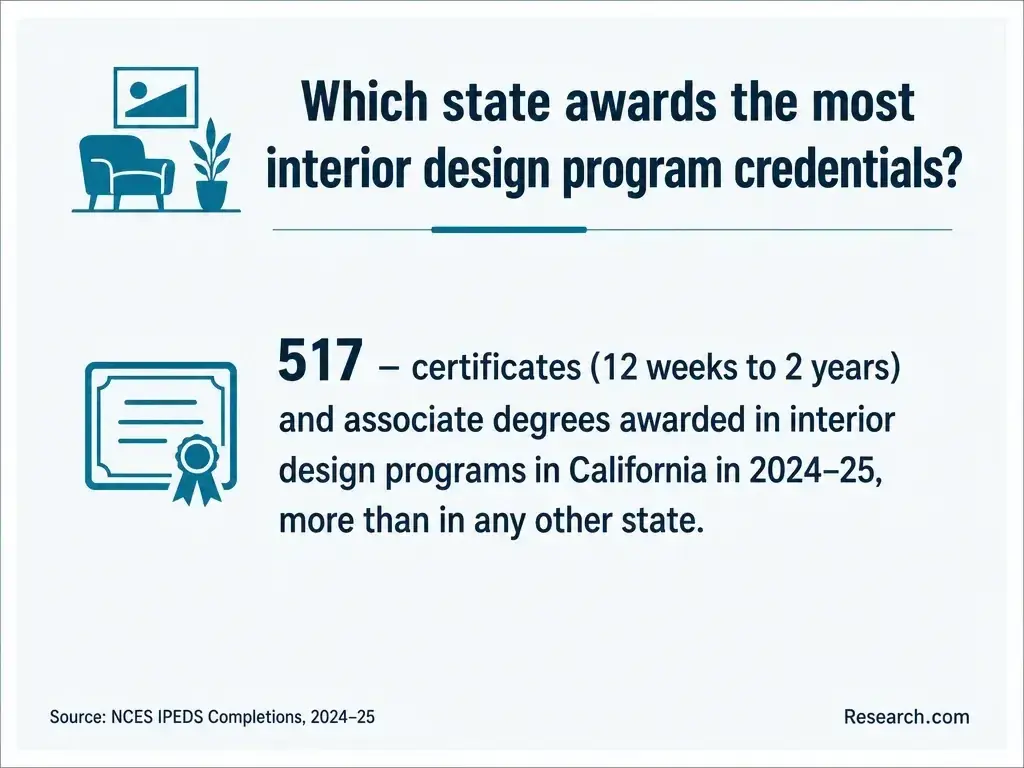
There is no defensible single average for all Santa Barbara interior design training: a public-college course, a longer academic program, and a private short course may use different prices and cover different skills. Published tuition is therefore only the starting figure. For a Santa Barbara City College option, confirm the current per-unit charge, required units, mandatory fees, and your residency classification directly with the college before estimating a total.
Use the same cost checklist for each option so that a cheap-looking course does not become an expensive route to a usable portfolio.
Ask the college whether the specific program is eligible for federal student aid and whether you qualify for the California College Promise Grant; neither applies automatically to every course or student (Federal Student Aid; California Community Colleges Chancellor's Office). A guide to online colleges in florida that accept fafsa may help explain federal-aid terminology, but Florida program eligibility says nothing about a California design course. For a meaningful return-on-investment comparison, include completion likelihood, debt, lost work time, expected entry pay, and how long you expect to use the training - not just tuition divided by a national wage.
The credential depends on the program: a course may yield a record of completion, a career-focused sequence may award a certificate, and an academic program may award an associate degree. Confirm the exact award name in the current catalog. A certificate showing software or drafting training is not interchangeable with a broader interior design credential simply because both mention design.
Institutional accreditation concerns the school; programmatic accreditation concerns a particular curriculum; state authorization concerns permission to operate. None, on its own, is occupational licensure or proof of eligibility for voluntary certification. Ask a prospective provider which body recognizes the program, what that recognition covers, and whether the credential and coursework meet the current rules of any certification you intend to pursue. If your goal is a technical design role rather than a quick styling skill, also compare the quality of completed projects and employer-facing portfolio support.
Requirements vary by provider and award. For a Santa Barbara City College pathway, check the current admissions process, course prerequisites, placement guidance, and any requirements for declaring or completing the award. A private short course may use a different enrollment process. Do not assume that open admission to a college means immediate access to every required studio.
Before enrolling, check whether you can use the required drafting software on your computer and attend scheduled critiques or site activities. Ask whether a portfolio is required to enter the program or is something students develop during it. If you plan to transfer prior coursework, obtain a written evaluation rather than relying on an informal assurance.
A substantial interior design curriculum may teach space planning, drawing conventions, digital drafting, lighting, finishes, furniture and fixture selection, presentations, and communicating with clients or contractors. Code and accessibility awareness can matter in technical work, but students should verify how deeply a particular program teaches them. BLS identifies drawings, materials selection, and collaboration as parts of interior designers' work.
Look for assignments that connect those topics: measuring an existing room, drawing a workable plan, explaining material choices, revising after critique, and assembling a coherent presentation. Students aiming at residential styling can prioritize client communication and product selection; those aiming at technical assistant roles should look harder at drawing accuracy, specifications, and applicable building constraints. Current software skills matter, but the ability to explain and revise a design remains valuable even as digital tools change.
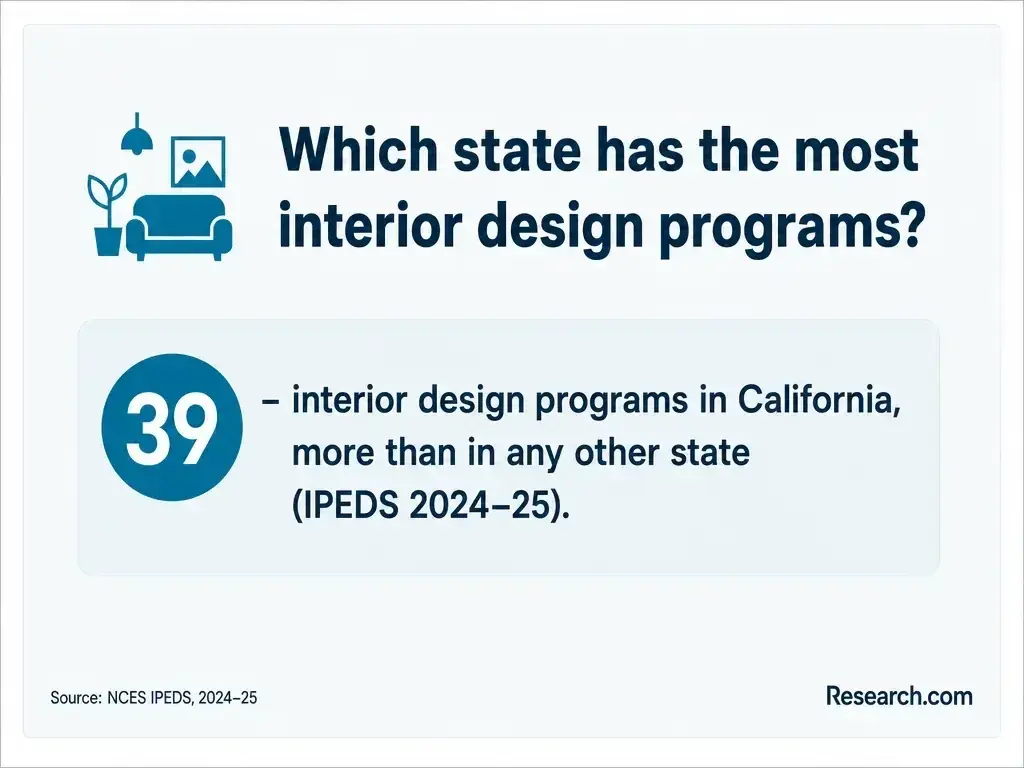
California does not require a general occupational license simply to work as an interior designer. Certified Interior Designer is a protected, voluntary designation with requirements administered through the California Council for Interior Design Certification; earning a school certificate does not automatically confer it (California Council for Interior Design Certification; California Architects Board). Requirements for other voluntary credentials, such as NCIDQ certification, are separate and should be checked with the credentialing organization.
This distinction changes what to ask before paying for training. If your intended work or employer expects certification, request written confirmation of how the program's courses relate to the current education and experience rules. Certification is not a substitute for an architect's or other licensed professional's authority on work reserved to them. For many entry-level support roles, a strong portfolio and demonstrated technical skills may be the more immediate hiring considerations.
Start with the job you want, then compare only programs that teach its required work. A low-cost option is a poor investment if it cannot provide the drafting practice or feedback your target role demands; an expensive option is hard to justify if a shorter course and supervised work would achieve the same goal.
Take these questions to admissions staff and, where possible, to an instructor. Request catalog pages or written answers so you can compare options on the same basis.
Red flags include vague credential names, salary promises based on experienced workers, and claims that accreditation automatically grants professional certification. Compare likely debt and lost earnings against a realistic entry-level role, not a best-case salary. Asking what bachelor's degree makes the most money is a separate earnings question; it cannot establish the return on an interior design trade-school credential.
A first role might involve showroom sales, design assistance, drafting support, materials sourcing, or kitchen-and-bath projects. These paths use different parts of a curriculum: a showroom may value product knowledge and customer communication, while a drafting-support role may expect accurate digital drawings. BLS describes interior designers as planning interior spaces and coordinating with clients and other project professionals, but a trainee should not assume immediate responsibility for all those duties.
Experience and a stronger portfolio can support more independent client work, specialization, or supervision. Self-employment adds pricing, contracts, and business development to design work. An alternative to additional classroom study is supervised work with a design or remodeling business, provided it genuinely develops the skills your target role requires. If paid experience is available, compare its earnings and mentoring with the cost and time of another credential.
BLS projects 2.7% U.S. employment growth for interior designers over 2025-2035. That is a national occupational projection, not a forecast of Santa Barbara hiring or an estimate of openings for recent trainees. It suggests that students should plan for competition and build evidence of usable skills rather than count on growth alone.
For a local reality check, review current Santa Barbara County postings over several weeks and separate design-assistant vacancies from retail and senior positions. Record recurring software, portfolio, and experience requirements. If few suitable entry roles appear, consider whether a commuting radius, related showroom work, or a supervised project can provide a practical first step without taking on more training debt.
Investing in training is an important decision, so Research.com evaluates affordability using comparable, documented measures rather than advertised tuition alone. For this most-affordable ranking, programs are compared with others in the same occupation and location. Only programs with completions reported to IPEDS are eligible; an unlisted training provider is not necessarily unapproved or low quality.
The affordability score considers tuition, cost of attendance, median student debt, and federal loan default rates. Indicator weights are assigned through an entropy-based method, which gives more weight to measures that vary more across programs. Accreditation and other quality measures do not enter this affordability score. Research.com also maintains separate best-program rankings that consider outcomes, earnings, support, accreditation, and industry recognition; readers should not confuse those broader scores with this cost-focused ranking.
To check the credibility and accuracy of its education data, the Research.com team uses the following sources. Several occupation-specific sources cover trades other than interior design and should not be read as interior design endorsements.
The ranking can narrow a cost-conscious shortlist, but it cannot establish that a particular program teaches the software, code literacy, or portfolio skills needed for a specific job. Readers should confirm current offerings and charges with each provider. More detail on the approach appears in Research.com's methodology.
# 1 position
# 2 position
Check the current Santa Barbara City College catalog and total course charges first. If you only need one skill, compare a focused course with the full cost of a longer credential; ask about aid eligibility before enrolling.
It may support an entry-level application, but employers can also assess your portfolio, drafting ability, and experience. Match the certificate's coursework to the specific vacancy rather than relying on its title.
Some coursework can be remote. Confirm how the program handles measurements, materials, critiques, and projects - and check any voluntary certification requirements separately.
No. That voluntary designation has separate requirements administered by the California Council for Interior Design Certification.
Choose it if it teaches the skills your target role requires and leaves you with credible work to show. A longer program may be worthwhile when it supplies technical depth or supervised projects you cannot obtain through work.