# 1 position
Santa Monica College - Interior Design.
associate

Audited and Verified:
Our Editorial and Data Verification Process
Research.com uses government datasets, official education statistics and primary institutional information to support its career and degree guides. Our review process checks factual accuracy, occupational definitions, source dates and the requirements associated with the credentials discussed.
How This Article Was Fact-Checked
Our editorial team verifies salary estimates, employment projections, education requirements and program information against original data providers and official organizations. Salary figures are checked against the relevant occupational definitions and reporting periods. Information about licensure, accreditation and required in-person training is reviewed separately.
Fact-checked and verified on:

Co-Founder and Chief Data Scientist

Reviewed by Karolina Broda
Fact-Checker and Data Verification
Choosing an affordable interior design program means looking beyond tuition: you need training that builds a portfolio and fits the work you want to do. The U.S. Bureau of Labor Statistics projects 2.7% growth in interior designer employment from 2025 to 2035, making preparation and career fit worth examining. This guide explains costs, credentials, practical skills, and California's certification rules. It also accompanies the Most Affordable Interior Design Trade Schools in Santa Monica for 2027 ranking, created by the Research.com team of data scientists to help students identify programs worth considering.
Expect a mix of design studio work and technical communication. Students may develop floor plans, specify materials, present concepts, and revise projects against client needs and building constraints. The important distinction is between learning to decorate a room and learning to document a workable interior design proposal; compare the actual project briefs and finished portfolios before enrolling.
Santa Monica College is a local public-college option to investigate. Ask which interior design credentials and required courses are currently offered, whether a course sequence can be completed on your schedule, and whether studio access or software is included. A focused certificate may suit someone adding drafting or visualization skills to existing work. An associate degree may suit someone seeking a broader foundation and more time to assemble a portfolio. Neither route should be judged by its credential name alone.
Interior design is not typically entered through a required registered apprenticeship. Paid studio-assistant, showroom, or related employer training can nevertheless provide experience while earning wages. Someone considering short certificate programs that pay well should check whether the specific curriculum develops the drawing and portfolio skills required by their intended interior design role.
Possible workplaces include residential design studios, commercial interiors firms, furniture and materials showrooms, and businesses serving renovation or hospitality projects. Work may extend beyond Santa Monica into the wider Los Angeles labor market; that expands the potential search area but makes travel time and access to client sites relevant when choosing training or a first job.
Match training to the workplace. A showroom role may emphasize product knowledge, specifications, and customer communication. A studio assistant may need accurate drawings, digital models, and the ability to incorporate feedback. Ask a program whether its projects resemble the work advertised in the roles you want, and seek an internship or part-time role if available; a classroom portfolio is useful, but it is not the same as paid project experience.
The U.S. Bureau of Labor Statistics reports a $67,190 national median annual wage for interior designers in May 2025. This is the midpoint for employed workers nationwide, not an estimate of first-job pay in Santa Monica. It also does not describe every related job: showroom sales, drafting support, and independent design work can have different compensation structures.
For a local decision, compare current Los Angeles-area postings for the exact role you could qualify for, including experience and software requirements. When weighing a program's cost against potential pay, use a plausible entry-level offer rather than the national occupation-wide median, and account for any earnings you would give up while studying.
There is no single required clock-hour total or standard program length for entry-level interior design work in California. A narrowly focused certificate can be shorter than an associate degree, but calendar time depends on course sequencing, studio availability, and whether you study part time. Ask for a term-by-term plan showing prerequisites and when each required course is offered - not just the minimum time printed in a catalog.
An accelerated schedule is worthwhile only if it leaves enough time for drawings, critique, revisions, and a credible portfolio. Readers comparing an associate degree fast track should ask whether the faster timetable reduces project depth or makes paid work difficult. Credit for prior coursework may shorten a sequence, but the school must confirm what it will accept.
Online study can work for design history, software demonstrations, research, and some digital critiques. Campus or hybrid study can offer access to studios, material samples, equipment, and face-to-face feedback. Neither format automatically produces a stronger portfolio; the deciding question is how often students make, present, and revise work with qualified feedback.
Before choosing remote study, confirm the computer and software requirements, whether critiques happen live, and whether any studio meetings, site visits, or assessments require travel. Santa Monica-area students who work during the day may value a flexible schedule, but should include the cost of equipment and any required trips when comparing it with campus study. For broader scheduling ideas, affordable online universities for job holders can be a comparison resource; verify interior-design-specific practical requirements separately.
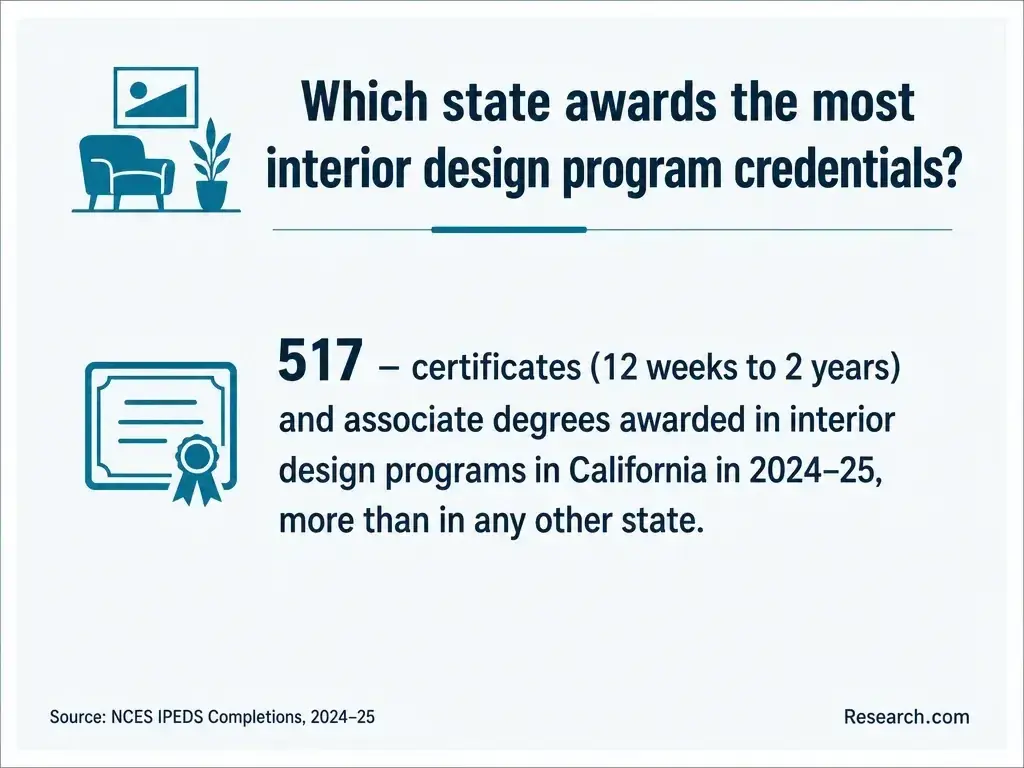
There is no defensible single average price for every Santa Monica interior design training route: a public-college certificate, an associate degree, and employer-supported learning have different charges and durations. Request the current cost for the specific credential and course sequence you plan to take. For public-college study, confirm residency classification before relying on a published tuition rate.
A useful comparison is the total amount needed to complete training and apply for work. Check these costs alongside tuition before deciding that a lower-priced program is cheaper overall:
Ask about grants, scholarships, eligible federal or California aid, and payment timing; eligibility depends on the student and program, according to Federal Student Aid and the California Student Aid Commission. Employer-paid training can offset direct costs, but compare the skills and portfolio opportunities it actually provides. Do not infer that the lowest tuition produces the best return: completion likelihood, borrowing, forgone earnings, and plausible post-training pay all matter.
The award depends on the program: it may be a certificate of achievement or an associate degree, or employer training may produce experience without an academic credential. Confirm the exact award in the current catalog and ask employers whether the coursework and portfolio meet their requirements. A certificate is not interchangeable with a professional certification, and an associate degree is not an occupational license.
These distinctions matter especially if you may seek the voluntary Certified Interior Designer designation in California or the NCIDQ credential later. The California Council for Interior Design Certification and the Council for Interior Design Qualification set their respective eligibility rules; completing a similarly named school program does not automatically establish eligibility for either. Keep course descriptions and records of relevant work experience so you can check the rules that apply when you apply.
Entry requirements vary by credential and provider. Check the current Santa Monica College admission and program information for enrollment steps, placement or prerequisites, and whether individual studio courses have limited availability. Ask whether prior college coursework can satisfy requirements; do not assume prior professional experience will earn credit.
A prospective student should also check practical readiness: access to a computer capable of running required design software, time for project work outside scheduled classes, and the ability to attend any in-person critiques. Employer-sponsored roles have separate hiring requirements and may be more appropriate if you already have a portfolio or related customer-facing experience. Admission to training is not admission to a certification examination.
Relevant training combines visual judgment with documents other people can use. Look for evidence of space planning, drafting, digital modeling, materials and finishes, lighting concepts, presentations, and revision after critique. The U.S. Bureau of Labor Statistics describes interior designers as planning functional and aesthetically appropriate indoor spaces while considering building codes and accessibility; a program should show how those considerations enter its projects.
Compare portfolios, not just course titles. A strong practical sequence should let students progress from a brief to drawings, specifications, and a client-facing presentation. Ask which software is taught and whether instructors assess accuracy as well as appearance. AI-assisted imagery may help explore concepts, but an attractive rendering is not a substitute for measured plans, appropriate specifications, or explaining how a proposed space would work.
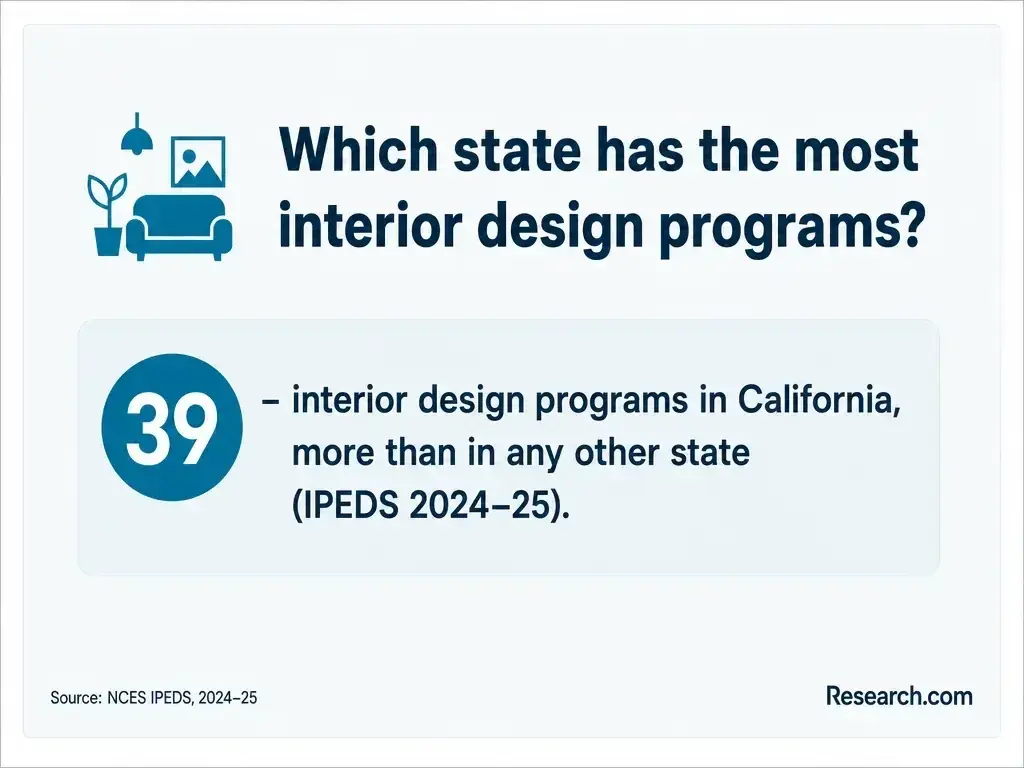
California does not require every person doing interior design work to hold an interior designer occupational license. Certified Interior Designer is a regulated, voluntary designation administered through the California Council for Interior Design Certification under California law. Verify its current education, experience, and examination routes directly with the council before selecting a program for that purpose; a school certificate alone does not confer the title.
The NCIDQ credential, administered by the Council for Interior Design Qualification, is a separate professional qualification with its own eligibility requirements. Neither credential should be confused with authority to perform work reserved for a licensed architect or another regulated professional. If your goal involves permit-related construction documents, ask prospective employers what work you could perform, under whose supervision, and which qualifications they expect.
Start with the role you want, then test each program against its skill requirements. An affordable ranking helps identify options to investigate, but its cost-and-debt score does not assess portfolio quality or certification eligibility. The questions below expose the gaps most likely to affect your decision:
Verify institutional accreditation through the recognized accreditor or U.S. Department of Education, and check program claims with the relevant credentialing body. Accreditation, state authorization, and professional certification serve different purposes; none alone proves a graduate will be hired. Be wary of guaranteed-job claims, unclear required fees, or a program that showcases renderings but cannot explain how it teaches accurate plans. Searches for easiest masters do not answer whether an entry-level interior design training program meets your occupational goal.
An initial portfolio may support applications for design assistant, showroom, materials, or drafting-related roles, depending on the position's requirements. With relevant project experience, a worker may take on more responsibility for client communication, specifications, or project coordination. Independent practice is another possibility, but it adds business-development responsibilities and does not remove limits on regulated work.
Choose training backward from that first attainable role. Someone targeting showroom work may benefit from product fluency and customer-facing experience; someone targeting a design studio should prioritize technical drawings and portfolio critique. A program marketed among quick and easy degrees that pay well should not be assumed to offer a quick route into design practice: employers can evaluate demonstrated work and experience as well as credentials.
The U.S. Bureau of Labor Statistics projects 2.7% national employment growth for interior designers from 2025 to 2035. That is a projection for the occupation across the United States, not a forecast of openings in Santa Monica. It suggests a field with opportunities but does not justify assuming that a credential alone will secure a local position.
For a practical local outlook, review current postings across Santa Monica and the wider Los Angeles area for repeated requirements: software, drawing accuracy, project type, and experience. Then compare those requirements with the work you would leave a program able to show. If postings consistently require skills absent from the curriculum, an inexpensive program may still be the wrong investment.
Investing in education is a consequential decision, so Research.com designed its ranking to help readers compare programs against other interior design options in the same location - not against unrelated trades. The team uses multiple datasets and checks measures of cost and debt. Only programs with completions reported to IPEDS are eligible; an unlisted apprenticeship, employer training option, or other provider is not necessarily unavailable or low quality.
The most affordable ranking scores tuition, cost of attendance, median student debt, and federal loan default rate. Indicator weights are assigned using an entropy-based method, which gives more weight to measures that vary more across programs. Accreditation and other quality indicators are not part of this affordability score. Research.com's separate best programs rankings also consider completion, retention, earnings, support services, accreditation, and relevant industry recognition; readers should not confuse those rankings with this one.
The ranking draws on the following sources. Some cover broad institutional data or occupations other than interior design; their inclusion as sources does not mean every source supplies an interior-design-specific measure.
Use the ranking to shortlist potentially economical options, then verify current program charges, course availability, portfolio work, and credential fit directly with the provider. More detail on Research.com's approach is available on its methodology page.
# 1 position
# 2 position
It may support applications for assistant or showroom roles if you can demonstrate the required skills. Check actual job postings and the program's portfolio work; the certificate alone does not qualify you for every design position.
No. Compare its current offerings with relevant employer training and other options accessible from Santa Monica. A route that provides paid experience may suit someone who can already show design or customer-facing skills.
Some coursework can be remote, but confirm how the program delivers studio projects, critiques, materials work, and any required in-person activities. Online delivery does not itself establish professional-certification eligibility.
No blanket occupational license or certification is required for all interior design work. California's Certified Interior Designer designation is voluntary and has separate eligibility rules, according to the California Council for Interior Design Certification.
Confirm the exact credential, full course sequence, total costs, software and material requirements, studio feedback, and how the resulting portfolio fits your target roles. Get answers in writing when a cost or completion timetable is important to your decision.