
# 1 position
Most Affordable Interior Design Schools & Degrees in San Marcos for 2027
Audited and Verified:
Our Editorial and Data Verification Process
Research.com uses government datasets, official education statistics and primary institutional information to support its career and degree guides. Our review process checks factual accuracy, occupational definitions, source dates and the requirements associated with the credentials discussed.
How This Article Was Fact-Checked
Our editorial team verifies salary estimates, employment projections, education requirements and program information against original data providers and official organizations. Salary figures are checked against the relevant occupational definitions and reporting periods. Information about licensure, accreditation and required in-person training is reviewed separately.
Fact-checked and verified on:

Co-Founder and Chief Data Scientist

Reviewed by Karolina Broda
Fact-Checker and Data Verification
Choosing an affordable interior design program means looking beyond tuition: the credential, portfolio work, and California certification rules may matter more to your career than the advertised price. The U.S. Bureau of Labor Statistics reports a $67,190 national median annual wage for interior designers in May 2025, but that is not a starting-pay estimate. This guide will help prospective students and career changers compare costs, training, and outcomes. It also features the Most Affordable Interior Design Trade Schools in San Marcos for 2027 ranking, created by the Research.com team of data scientists to help students identify programs worth considering.
Key findings about interior design degrees in San Marcos
- For a local public-college option, check Palomar College's current interior design offerings and confirm the exact credential, required courses, and residency-based charges before comparing it with other training.
- The U.S. Bureau of Labor Statistics projects 2.7% national growth for interior designers from 2025 to 2035; that is not a San Marcos hiring forecast or a job guarantee.
- California does not issue an occupational interior designer license, but its protected Certified Interior Designer title has separate requirements. A low-cost certificate does not automatically qualify its holder to use that title (California Council for Interior Design Certification).
Table of Contents
- Most Affordable Interior Design Schools & Degrees in San Marcos for 2027
- What can I expect from an interior design trade school program in San Marcos?
- Where can I work with an interior design trade school training in San Marcos?
What can I expect from an interior design trade school program in San Marcos?
Expect a mix of design theory and applied work: measuring rooms, preparing drawings, selecting materials, using design software, and presenting a proposal that responds to a client's budget and space. A useful program produces portfolio-ready projects and gives instructors opportunities to critique drawings, specifications, and presentations - not just assess quizzes.
San Marcos students can investigate Palomar College as a nearby public-college option. Confirm its current interior design catalog offerings rather than assuming every course runs each term. If your goal is residential styling or showroom sales, a shorter certificate and a strong portfolio may be enough to pursue entry-level work. If you want more sustained technical instruction and a broader credential, compare the available associate-degree pathway and its additional time and cost. Neither credential alone establishes eligibility to use California's protected Certified Interior Designer title (Palomar College; California Council for Interior Design Certification).
Interior design is not generally organized around a mandatory registered apprenticeship. Paid showroom, drafting, or design-assistant work can nevertheless complement classes and may reduce the need to stop earning while you train. Ask whether a program arranges internships or whether finding work experience is your responsibility.
Where can I work with an interior design trade school training in San Marcos?
Potential settings include residential design firms, furniture and finish showrooms, kitchen-and-bath businesses, and firms supporting commercial projects. San Marcos's position within North County San Diego matters: students can search beyond city limits, but travel to clients, suppliers, studios, or internships adds time and expense.
Entry roles may emphasize drafting, product research, measurements, or client coordination rather than independent design responsibility. Match your portfolio to the setting you want. A showroom may value product knowledge and sales communication; a firm handling commercial interiors may expect more technical drawings and familiarity with accessibility and building-code issues. The U.S. Bureau of Labor Statistics describes interior designers as planning functional spaces and coordinating with clients and other building professionals.
The latest national median annual wage supplied by the U.S. Bureau of Labor Statistics is $67,190 for interior designers in May 2025. It covers workers at different career stages across the United States. It is neither a verified San Marcos wage nor a realistic promise of first-job pay.
Before borrowing, compare current postings for the specific entry role you could obtain - such as design assistant or showroom specialist - with the pay and hours of your present job. A national interior designer median may describe a more experienced occupation than your first position. Commission arrangements, part-time schedules, and self-employment expenses can also change what an offer is worth.
There is no universal clock-hour requirement for entry-level interior design training in California. A certificate can be shorter than an associate degree, but actual completion time depends on the published course sequence, prerequisites, term availability, and whether you attend part time. California's separate Certified Interior Designer requirements should not be mistaken for a standard trade-school hours requirement (California Council for Interior Design Certification).
Ask Palomar College for a current education plan showing when required studio and software courses run. An accelerated schedule is useful only if it still leaves time to build a credible portfolio and attend required in-person work. General fast track college programs can illustrate the scheduling trade-off, but their timelines should not be substituted for an interior design program's catalog requirements.
Online instruction can suit design history, research, software demonstrations, and some digital drafting. Campus or scheduled in-person work is particularly useful for material samples, accurate site measurements, collaborative critiques, and meeting local industry contacts. A hybrid program may offer flexibility without eliminating those practical experiences.
For a working student, the deciding question is not simply whether a course is labeled "online." Ask how drawings and portfolios are reviewed, which activities require attendance, what software and computer you must supply, and whether any internship is locally accessible. If application fees or scheduling are barriers, lists of accredited online colleges with no application fee may help with a broader search, but verify that any actual interior design offering meets your hands-on and credential goals. Online delivery does not itself establish California certification eligibility.
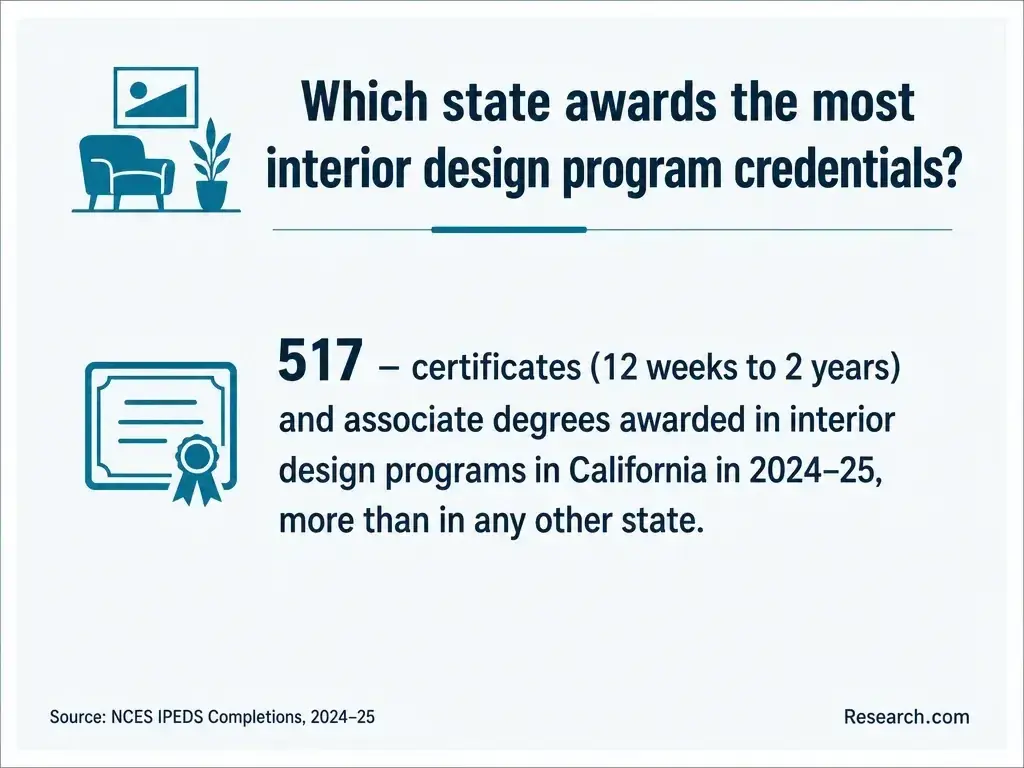
A defensible San Marcos average cannot be stated without comparable, current prices for the available interior design credentials. Public-college charges may differ by residency and course load, and advertised tuition alone omits job-readiness costs. Request a written, term-by-term estimate for your specific pathway rather than treating a ranking position as your personal price.
The comparison below separates charges you pay the school from costs that can make a seemingly inexpensive program harder to complete:
| Cost category | What to verify | Why it changes the decision |
| Enrollment | Applicable tuition or enrollment fees, mandatory campus fees, and residency classification | A different residency status or extra term can change the total. |
| Studio work | Software, a suitable computer, printing, samples, and project materials | Portfolio production can cost more than the course listing suggests. |
| Attendance | Travel to campus, suppliers, sites, or an internship; lost work hours | A flexible schedule may be worth more than a small tuition difference. |
| Career entry | Any optional certification examination or application expenses | These are separate from completing a school credential. |
Ask the financial-aid office which specific credential qualifies for federal aid and whether grants, scholarships, or California aid could reduce your out-of-pocket cost; eligibility is not automatic (Federal Student Aid; Palomar College). Resources on cheapest online universities for job holders can prompt questions about flexibility and total cost, but do not replace a quote for the local trade program you intend to take.
The answer depends on the exact program: a completion certificate and an associate degree are different academic credentials, while a course taken on its own may award neither. Check Palomar College's current catalog for the award attached to the pathway you select, its required courses, and whether credits from a shorter credential apply toward an associate degree. Confirm transfer or prior-learning credit with an adviser before counting on it (Palomar College).
A school credential is distinct from institutional accreditation, a professional certification, and California's protected Certified Interior Designer designation. If you are comparing a fast track associates degree with a shorter certificate, choose based on the courses and portfolio you need - not the credential's name or advertised speed alone.
Start with the current admissions and program pages: general college admission does not necessarily reserve a place in a particular course or remove a prerequisite. Verify placement or prerequisite rules, software and computer requirements, registration dates, and whether advanced studio courses have a required sequence (Palomar College).
For working applicants, course timing can be as important as admission. Ask whether required classes are offered in evenings, online, or every term, and map them against your work schedule before enrolling. If you already have design or drafting experience, ask whether any prior coursework can be evaluated for credit; do not assume workplace experience automatically shortens the credential.
Look for instruction that links creative choices to usable spaces: space planning, drawing and digital drafting, materials and finishes, lighting, client communication, and presentation. For work involving commercial spaces, ask how the curriculum addresses accessibility, building-code awareness, and coordination with other professionals. Exact coverage varies by course sequence (U.S. Bureau of Labor Statistics; Palomar College).
Software practice matters, but a polished image is not the same as a buildable plan. Ask to see the kinds of drawings and material specifications students produce, how instructors evaluate them, and whether portfolio projects reflect real constraints. If your target is mainly decorating or retail styling, a program heavily focused on technical documentation may involve more time and expense than you need.
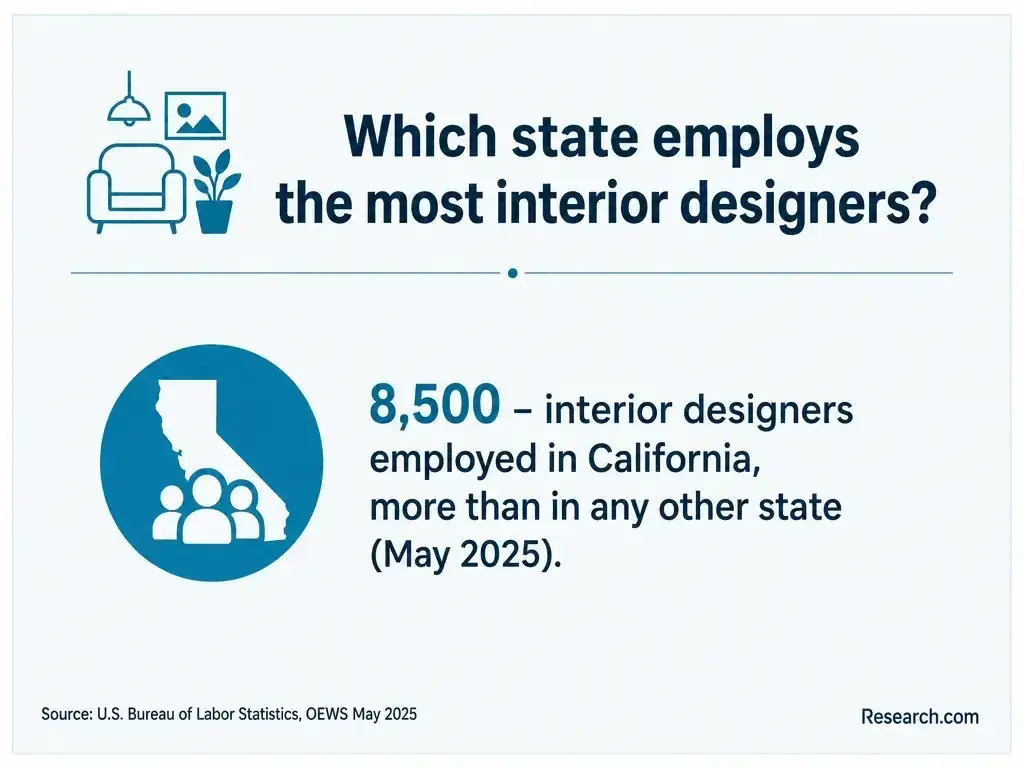
California does not issue a general occupational license for interior designers. Its Certified Interior Designer title is protected, however, and the California Council for Interior Design Certification administers a certification process with education and experience qualifications and an examination. Certification is not awarded automatically when you finish a certificate or associate degree. The scope of work you may perform can also depend on building and professional-practice laws; certification does not replace an architect's or contractor's license where one is required (California Council for Interior Design Certification; California Business and Professions Code).
If that title is a career goal, obtain the certifying body's current eligibility rules and ask the school how its specific courses fit them. Do this before paying for a program. If you aim for a showroom or assistant role instead, compare employers' actual hiring requirements rather than paying for a credential solely because its name sounds official.
Start with the job you want, then compare the least expensive complete route to credible work samples and any credential you actually need. An affordability ranking narrows the search; it does not establish course availability, teaching quality, certification eligibility, or your likelihood of finishing. Institutional accreditation, state authorization, a school award, and professional certification answer different questions.
Use these questions when speaking with a program adviser and a financial-aid representative:
- Which credential will this exact sequence award, and when are required studio courses offered?
- How many projects receive hands-on critique, and can I review the expected portfolio standard?
- What is my full cost, including materials, software, travel, and time away from work?
- Which credits can carry into the next credential, and what evidence supports any certification-eligibility claim?
- What internship, employer contact, or career support is available to students in my schedule?
A common mistake is buying the shortest or cheapest course without checking what it enables you to do. Another is using a national occupational wage as expected first-year pay. Even searches for easy masters degrees do not resolve the practical question here: whether an interior design trade program delivers the portfolio, experience, and applicable eligibility your intended role requires.
A certificate plus relevant samples may support applications for showroom, sales-support, or design-assistant positions. More extensive drafting and studio work may strengthen applications for technical assistant roles. Independent client work usually calls for a stronger portfolio, experience managing budgets and suppliers, and careful attention to the legal limits of the services offered (U.S. Bureau of Labor Statistics; California Council for Interior Design Certification).
Progression is not automatic: an assistant might specialize in residential kitchens, commercial interiors, or product selection after gaining experience. Before choosing a program, review several local job descriptions for your target role and note which request software skills, a portfolio, client-facing experience, or a specific credential. That evidence is more useful than assuming all jobs with "design" in the title have the same entry requirements.
The U.S. Bureau of Labor Statistics projects 2.7% growth for interior designers nationally from 2025 to 2035. This is a national occupational projection, not a count of openings in San Marcos. It suggests evaluating a program for the range of roles it prepares you to pursue, rather than assuming a credential will lead directly to an interior designer vacancy.
For a local reality check, compare current openings across San Marcos and commuting-distance North County communities. Separate entry-level assistant and showroom postings from jobs requiring substantial experience. That distinction will tell you whether to prioritize a lower-cost credential, more technical coursework, or paid experience alongside training.
Most Affordable Interior Design Schools & Degrees in San Marcos for 2027
Investing in training is a consequential financial decision. The Research.com team created the affordability ranking to help readers compare interior design programs with relevant options in the same occupation and location, rather than with unrelated schools. Only programs with completions reported to IPEDS are eligible; a provider's absence does not mean it lacks quality or authorization.
The most affordable ranking scores costs and debt: tuition, cost of attendance, median student debt, and federal loan default rate. Indicator weights are assigned through an entropy-based method, so measures that vary more across eligible programs receive more weight. Accreditation and other quality indicators are not part of this affordability score. The separate best programs methodology considers student outcomes, earnings, costs, accreditation or relevant industry recognition, and student support. Readers should therefore verify practical training and career fit independently of an affordability position.
To build and check its rankings, the team uses the following sources across the occupations it covers. Some sources concern other trades and are not interior design approvals or credentials:
- IPEDS database - program completions and institutional data.
- National Center for Education Statistics - education data and institutional context.
- College Scorecard database - available cost, debt, and earnings measures.
- Peterson's database - supplementary institutional information.
- Commission on Accreditation of Allied Health Education Programs (CAAHEP) - recognition information relevant to covered allied-health occupations.
- Accrediting Bureau of Health Education Schools (ABHES) - accreditation information relevant to covered health occupations.
- Commission on Dental Accreditation (CODA) - accreditation information relevant to covered dental occupations.
- Dental Assisting National Board (DANB) - credential information relevant to covered dental-assisting occupations.
- National Center for Construction Education and Research (NCCER) - training recognition relevant to covered construction occupations.
- Apprenticeship.gov Partner Finder - information on apprenticeship alternatives where relevant.
This approach gives readers a starting point for comparing reported costs and borrowing, not a promise that the lowest-ranked cost will be each student's final bill. See Research.com's methodology for more information about how the rankings are created.
# 2 position
Palomar College - Interior Design.
certificate or diplomaFrequently asked questions about interior design programs in San Marcos
Is Palomar College the only option I should consider?
No. It is a local public-college option to investigate. Compare its current offerings with legitimate online or hybrid training and relevant paid experience, using the same credential, portfolio, and total-cost criteria.
Is a certificate enough to get an interior design job?
It may help with some assistant, showroom, or styling roles. Check local postings and the quality of portfolio work the program helps you produce; a certificate alone does not secure employment.
Can I train entirely online?
Some coursework can be remote, but site measurements, material evaluation, critiques, and local work experience may require in-person participation. Confirm the format of every required course.
Does graduation make me a Certified Interior Designer in California?
No. California's protected title has a separate certification process. Check current education, experience, and examination requirements with the California Council for Interior Design Certification.
What should I ask about financial aid?
Ask whether your exact credential is aid-eligible, what grants or scholarships you may qualify for, and what you would pay after mandatory fees and project expenses (Federal Student Aid; Palomar College).
- U.S. Bureau of Labor Statistics - Interior Designers
Used to verify salary, employment outlook, and typical education requirements.
https://www.bls.gov/ooh/arts-and-design/interior-designers.htm - NCES College Navigator (IPEDS)
Used to verify programs offered and institutional accreditation.
https://nces.ed.gov/collegenavigator/ - CIDQ - NCIDQ Certification
Professional certification reference for graduates of this occupation.
https://www.cidq.org/ - Palomar College - official website
Official school website (programs, tuition, admissions).
https://www2.palomar.edu/