# 1 position
Fullerton College - Interior Design.
associate

Audited and Verified:
Our Editorial and Data Verification Process
Research.com uses government datasets, official education statistics and primary institutional information to support its career and degree guides. Our review process checks factual accuracy, occupational definitions, source dates and the requirements associated with the credentials discussed.
How This Article Was Fact-Checked
Our editorial team verifies salary estimates, employment projections, education requirements and program information against original data providers and official organizations. Salary figures are checked against the relevant occupational definitions and reporting periods. Information about licensure, accreditation and required in-person training is reviewed separately.
Fact-checked and verified on:

Co-Founder and Chief Data Scientist

Reviewed by Karolina Broda
Fact-Checker and Data Verification
Choosing affordable interior design training near Fullerton means looking beyond tuition: you need a credential, a portfolio, and practical skills that match the work you want. The U.S. Bureau of Labor Statistics reports a $67,190 national median annual wage for interior designers in May 2025, but that is not a starting-pay estimate. This guide compares training routes, costs, career prospects, and California credential rules. It also accompanies the Research.com team of data scientists' Most Affordable Interior Design Trade Schools in Fullerton for 2027 ranking, created to help students identify programs worth considering.
Expect training in space planning, drafting, materials, lighting, presentation, and the software used to communicate designs. A useful program produces portfolio work and gives you feedback on decisions that affect real spaces - not just attractive images. For Fullerton residents, Fullerton College is a local public-college option to investigate; confirm its current interior design credentials, course sequence, and availability with the college before comparing it with other training routes.
The routes below serve different goals. "Interior design" can mean a technical design role, while decorating or showroom sales may emphasize product selection and client service.
| Training route | What it generally provides | Best fit | Main limitation to check |
| Occupational certificate | Focused coursework and portfolio projects | Someone seeking a defined entry-level skill set or adding skills to existing experience | Whether it covers technical documentation and the work experience needed for a later credential |
| Associate-degree program | Broader general and design coursework, typically with a longer project sequence | Someone who wants more time to build technical skills and a portfolio | Total time, cost, and whether all required courses are offered when needed |
| Employer-sponsored entry-level training | Workplace instruction in sales, sourcing, drafting support, or project coordination | Someone who can find a suitable opening and wants to earn while learning | Whether the job teaches design competencies rather than only sales tasks |
Interior design is not ordinarily entered through the paid, registered-apprenticeship sequence associated with some construction trades. Relevant workplace experience can still be valuable: a showroom, design firm, or furnishings business may provide client and product exposure that classroom projects cannot. If you are also considering a quick bachelor's degree online, keep that separate from the occupational training and portfolio requirements you are evaluating here.
Fullerton students can look across Orange County and the broader Los Angeles-Long Beach-Anaheim labor market rather than limiting a job search to city boundaries. Potential workplaces include residential design firms, commercial interiors teams, furniture and kitchen-and-bath showrooms, and businesses supporting renovations or property projects. A wider search improves access to varied work, but commuting time and transportation costs should enter the training budget.
The portfolio should match the workplace. A showroom applicant can demonstrate product knowledge and client presentations; a firm seeking drafting support may expect accurate plans, specifications, and software proficiency. Ask programs whether their projects reflect the kind of work you plan to pursue.
The U.S. Bureau of Labor Statistics reports a $67,190 national median annual wage for interior designers in May 2025. That figure covers workers across experience levels and locations; it is neither a Fullerton salary nor a prediction of what a new certificate holder will earn. Showroom sales, drafting support, and independent design work can have different pay structures, so match any wage comparison to the actual job title.
Before estimating a return on training, check the latest BLS Occupational Employment and Wage Statistics for interior designers in the Los Angeles-Long Beach-Anaheim metropolitan area and compare it with local job postings for your intended entry-level role. Treat postings as advertised pay, not proof of what graduates receive. Self-employed designers should also account for business expenses and periods without client work.
Length depends on the credential and course schedule. A focused certificate can take less time than an associate-degree program, while part-time study, course prerequisites, and limited studio sections can extend either route. Ask Fullerton College for the current program map and a term-by-term completion plan based on the hours you can actually attend.
There is no single California clock-hour requirement for everyone entering interior design. Do not confuse time in a training program with experience or examination requirements for an optional professional credential. If speed is your priority, compare what an accelerated schedule leaves time for: portfolio projects, software practice, and relevant work experience. A shorter program is not cheaper if it omits skills you must later purchase or learn elsewhere. Readers searching for what is the easiest bachelors degree to get are asking a different question from how quickly occupational design training can make them job-ready.
Online delivery can make design history, software demonstrations, and some drafting assignments easier to fit around work. Campus or hybrid instruction offers direct critique, access to physical samples, and opportunities to practice measuring spaces and presenting materials. The deciding question is not whether a program has an online label, but how it verifies the practical work employers expect to see.
Ask how students receive feedback on drawings, assemble a portfolio, and work with material samples or site measurements. If an online program claims to prepare you for California's Certified Interior Designer designation or another credential, check its education and experience alignment with the credentialing body; online delivery alone establishes no eligibility. An institution appearing in a top non profit accredited online university comparison likewise tells you little about a particular interior design program's hands-on instruction.
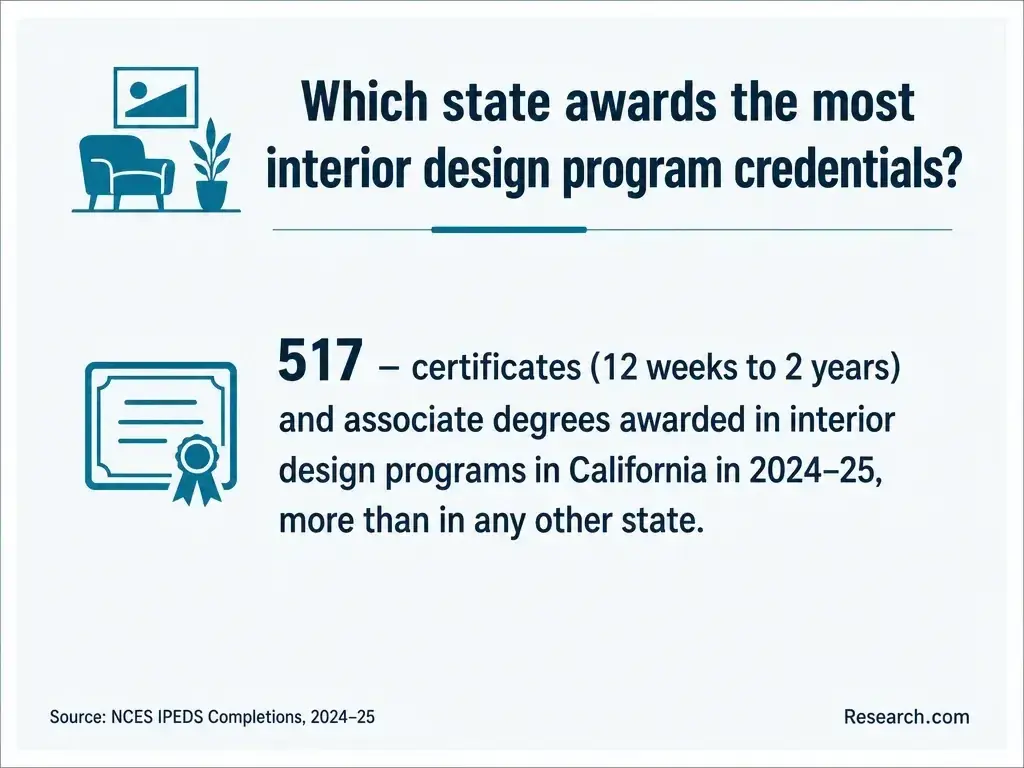
There is no reliable single average price for every Fullerton-area interior design training route: public-college charges, private-program prices, course loads, and employer-paid training are not directly interchangeable. California community colleges publish a resident enrollment fee of $46 per unit (California Community Colleges Chancellor's Office); confirm the rate and any additional charges for your enrollment year with Fullerton College. A per-unit price is not the total cost of completing a credential.
A useful comparison separates charges paid to the school from costs of becoming job-ready. The table shows what to request when obtaining written estimates.
| Cost category | What to include in your estimate | Why it changes the decision |
| School charges | Enrollment or tuition, mandatory fees, and any nonresident charges | Residency and required units can substantially change the bill |
| Project expenses | Software access, computer needs, printing, samples, and other materials | Portfolio-intensive courses can cost more than their advertised tuition |
| Career-entry expenses | Transportation, portfolio preparation, and any optional certification examination or application fees | These may arise after tuition is paid |
| Time and funding | Work hours forgone, grants, scholarships, eligible aid, or wages from related employment | A longer low-tuition route can still have a higher net cost |
Eligible California community-college students may receive a California College Promise Grant that waives enrollment fees; eligibility and other aid should be checked through the college's financial aid office (California Community Colleges Chancellor's Office). Compare the net cost and likely completion time, not just the sticker price. A search for cheap master degrees online addresses a different educational investment and should not substitute for an interior design training-cost comparison.
That depends on the program: it may award an occupational certificate or an associate degree. A course-completion document is not the same as a professional certification, and neither automatically authorizes someone to use California's protected Certified Interior Designer title. Confirm the exact award name and required courses in Fullerton College's current catalog or in any other provider's written materials.
Institutional accreditation concerns the school; programmatic accreditation concerns a particular program; state authorization concerns permission to operate; and professional certification concerns an individual meeting a credentialing body's rules. Those are separate checks. The Council for Interior Design Accreditation evaluates eligible interior design programs, but its recognition should not be assumed for a program merely because the institution is accredited (Council for Interior Design Accreditation). Ask how the specific credential and portfolio align with the jobs you want.
Admissions requirements vary by provider and credential. A public college may have general admission steps plus course placement or prerequisites; a specialized program may request prior coursework, a portfolio, or particular computer equipment. Do not assume that being admitted to a college secures a place in every course needed for a timely completion plan.
Before applying, ask for the current catalog requirements, course rotation, software specifications, and any portfolio expectations. If you have prior coursework or relevant design experience, request a formal review for transfer or prior-learning credit rather than assuming it will shorten training. Direct-entry showroom or design-support jobs have employer-set hiring requirements instead of school admissions rules and may be worth comparing if you already have useful skills.
Strong occupational training connects a client brief to a workable space: measuring and planning interiors, developing drawings, selecting finishes and furnishings, explaining lighting choices, preparing presentations, and revising work after critique. Programs may also address accessibility, codes, budgets, and coordination with other building professionals. The U.S. Bureau of Labor Statistics describes interior designers as planning functional and aesthetically appropriate spaces; a curriculum focused only on visual styling may not prepare you for the full occupation.
Request examples of recent student assignments and ask what software and physical materials students actually use. For technical roles, look for assessed drawings and specifications, not just mood boards. For showroom work, product knowledge and communication may matter more immediately. Whichever route you choose, a portfolio should show your process and decisions as well as finished images.
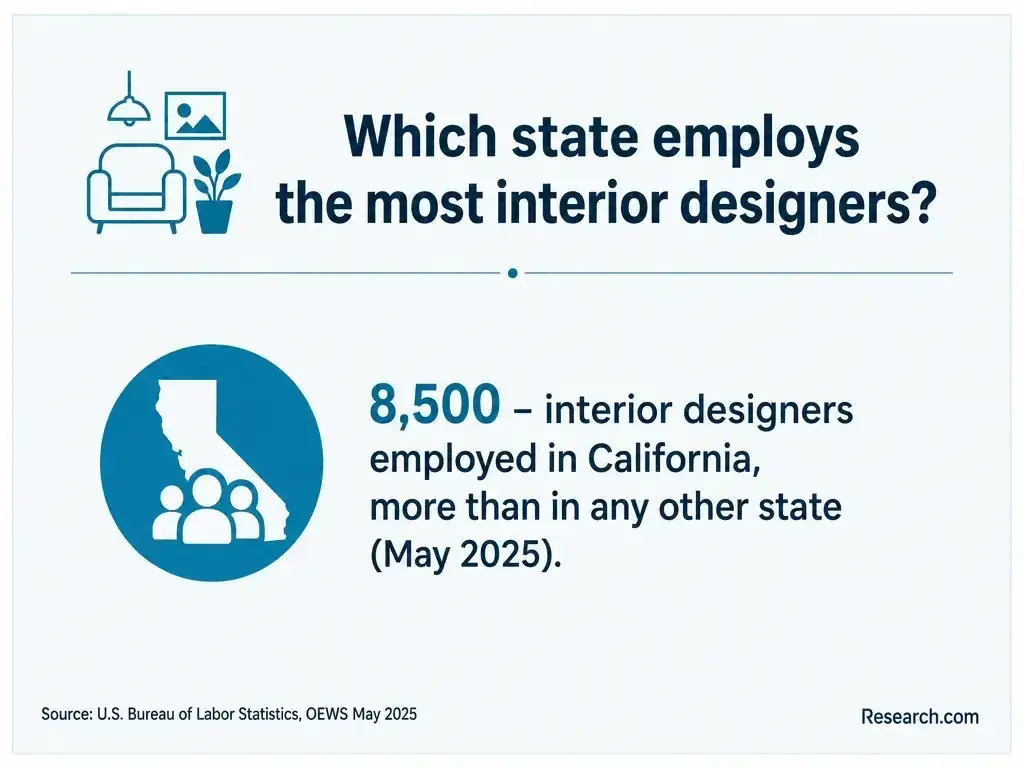
California does not impose a general occupational license on everyone working in interior design. It does regulate use of the Certified Interior Designer title through a separate certification framework (California Business and Professions Code; California Council for Interior Design Certification). Certification is optional for general entry into the field, but its education, experience, and examination rules matter if using that designation is your goal.
The NCIDQ credential is another professional examination pathway with its own eligibility rules; completing a training program alone does not confer it (Council for Interior Design Qualification). Before enrolling for certification preparation, ask the relevant credentialing organization to confirm how the exact curriculum and your work experience will be evaluated. Interior design training also does not grant permission to practice architecture or perform work reserved for other licensed building professionals under California law.
Start with the job, not the ranking position. An affordability ranking can identify programs to investigate, but it does not score the fit of a studio curriculum, portfolio instruction, or local work opportunities. Use these checks to turn a shortlist into a decision:
A common mistake is treating a low per-unit price, an online format, or institutional accreditation as proof that a program fits a technical design career. Another is comparing expected pay with the occupational median without accounting for starting experience. Training is most likely to be worth the investment when its projects, cost, schedule, and credential all support a specific next job.
Possible starting points include design assistant, showroom or furnishings specialist, and drafting or project-support work where the applicant has the required technical skills. With experience and a stronger portfolio, a worker may pursue more independent design responsibilities, a specialization such as kitchen-and-bath or commercial interiors, or self-employment. Advancement depends on demonstrated work and client or employer needs, not simply on holding a certificate.
Compare interior design with other best trade school jobs if your main goal is rapid entry, paid training, or a particular earnings range. For someone primarily interested in product sales and styling, a shorter course paired with relevant employment may make more sense than a broader design program. Someone aiming for technical plans and eventual professional certification should scrutinize curriculum and experience requirements more closely.
The U.S. Bureau of Labor Statistics projects 2.7% national employment growth for interior designers over 2025-2035. This is a national occupation projection, not a forecast of openings in Fullerton. It suggests prospective students should plan for competition and build a portfolio suited to specific employers rather than assuming broad growth will create an immediate opening.
Local opportunity also depends on which role you seek. Residential firms, commercial teams, and showrooms hire for different combinations of technical, presentation, and sales skills across the Orange County-Los Angeles area. Check current regional postings during enrollment, note recurring software and portfolio requirements, and use those findings to select projects and work experience. That is more actionable than relying on a national growth rate alone.
Investing in training is an important decision, especially when the lowest advertised tuition may not represent the lowest total cost. Research.com created this ranking to help readers compare interior design programs with other programs serving the same occupation and location. Its team checks multiple education datasets for credibility and consistency; only programs with completions reported to IPEDS are eligible. That limit means an unlisted employer-training or other nonreporting option is not necessarily a poor choice.
The most affordable ranking scores costs and debt: tuition, cost of attendance, median student debt, and federal loan default rate. It uses an entropy-based method, which gives more weight to measures that differ more across eligible programs. Accreditation and other quality measures do not enter this affordability score. Research.com's separate best programs rankings assess student outcomes, earnings and return on investment, costs and debt, and quality and recognition; they use different weights. Readers should therefore use this affordability ranking as a shortlist, then check curriculum, practical training, and fit for their intended job.
Research.com draws on the following sources across its trade-program ranking work. Some occupation-specific organizations listed here concern other trades; their inclusion does not mean they accredit interior design programs.
Learn more about the ranking approach on Research.com's methodology page. Because published debt or earnings measures may cover an institution rather than the exact interior design credential, confirm program-level outcomes directly before committing.
# 1 position
# 2 position
Yes, it is a local public-college provider to investigate. Check its current catalog for the exact interior design credential, required courses, schedules, and total estimated charges before applying.
It may support an assistant, showroom, or other entry-level application if it builds the skills and portfolio that employer wants. A certificate alone is not a job guarantee or a professional certification.
Some coursework can be remote, but compare how programs handle measurements, material samples, critiques, and portfolio assessment. Confirm any claimed certification alignment directly with the credentialing body.
No general occupational license is required to start working in interior design. California's Certified Interior Designer title has separate rules; check those rules if you intend to use it.
Compare mandatory fees, software and project materials, transportation, aid, time away from paid work, completion schedules, and the quality of portfolio instruction. Ask for a written estimate tied to your exact credential.