
# 1 position
Most Affordable Interior Design Schools & Degrees in Lancaster for 2027
Audited and Verified:
Our Editorial and Data Verification Process
Research.com uses government datasets, official education statistics and primary institutional information to support its career and degree guides. Our review process checks factual accuracy, occupational definitions, source dates and the requirements associated with the credentials discussed.
How This Article Was Fact-Checked
Our editorial team verifies salary estimates, employment projections, education requirements and program information against original data providers and official organizations. Salary figures are checked against the relevant occupational definitions and reporting periods. Information about licensure, accreditation and required in-person training is reviewed separately.
Fact-checked and verified on:

Co-Founder and Chief Data Scientist

Reviewed by Karolina Broda
Fact-Checker and Data Verification
Choosing affordable interior design training in Lancaster means looking beyond tuition: a low-cost credential is useful only if it builds the portfolio and technical skills employers expect. The U.S. Bureau of Labor Statistics projects 2.7% national growth for interior designers from 2025 to 2035, making career fit as important as price. This guide explains local training choices, costs, credentials, and California's certification rules. It accompanies the Most Affordable Interior Design Trade Schools in Lancaster for 2027 ranking, created by the Research.com team of data scientists to help students identify programs worth considering.
Key findings about interior design degrees in Lancaster
- For Lancaster, California, compare total training cost and portfolio-building opportunities - not tuition alone. The affordability ranking covers programs reporting completions to IPEDS, so it is not a census of every training route.
- California does not issue a general license to work as an interior designer, but use of the title "Certified Interior Designer" is regulated; verify certification eligibility separately from a school's accreditation (California Council for Interior Design Certification).
- The national median annual pay for interior designers was $67,190 in May 2025, with 2.7% projected employment growth for 2025-2035. Neither figure represents expected starting pay in Lancaster (U.S. Bureau of Labor Statistics).
Table of Contents
- Most Affordable Interior Design Schools & Degrees in Lancaster for 2027
- What can I expect from an interior design trade school program in Lancaster?
- Where can I work with an interior design trade school training in Lancaster?
What can I expect from an interior design trade school program in Lancaster?
Interior design training combines visual planning with usable, documented spaces. A relevant program should give you repeated practice developing floor plans, selecting materials and furnishings, presenting concepts to clients, and revising work to meet a budget and project constraints. Ask to see student projects: software instruction without completed design work is a weak foundation for a portfolio.
The credential determines what you are buying. A short certificate may suit someone seeking a focused skill, while an associate degree can provide more time for studio work and broader technical instruction. Employment in a design showroom or with a design firm can supplement either route through client contact and supervised project work. Unlike some licensed trades, interior design does not have a standard registered-apprenticeship sequence that every entrant must complete (U.S. Bureau of Labor Statistics; California Council for Interior Design Certification).
For a Lancaster student, access matters as well as curriculum. Confirm where critiques, software labs, and any required site visits take place, and whether commuting beyond the Antelope Valley is necessary for the work experience you want. Do not assume a program awards an interior design credential merely because its institution offers other design or career-training courses; check the current catalog and credential name, including at Antelope Valley Community College District.
Where can I work with an interior design trade school training in Lancaster?
Possible starting points include furniture and finishes showrooms, kitchen-and-bath businesses, residential design firms, homebuilders, and commercial design teams. Tasks may range from product specifications and client presentations to drafting and project coordination. The U.S. Bureau of Labor Statistics identifies design services, architectural and engineering services, and furniture retailers among employers of interior designers; an entry-level showroom or assistant role is not necessarily classified or paid as an interior designer role.
Lancaster students should investigate both nearby employers and opportunities elsewhere in the Los Angeles area. A wider search may offer more specialized projects, but travel time and transportation expense can substantially change the value of an internship or first job. Ask programs which employers have reviewed student portfolios or hosted recent work-based projects; request examples rather than assuming a placement is included.
A reliable, directly comparable Lancaster-specific wage figure is not established here. The national median annual wage was $67,190 for interior designers in May 2025 (U.S. Bureau of Labor Statistics). That is a midpoint for employed people across experience levels and locations - not a forecast for a new graduate, a design assistant, or a self-employed designer in Lancaster.
For a realistic pay target, compare local postings by job title and duties. Note whether compensation is hourly or salaried, whether commissions are involved, and whether the role expects a portfolio, drafting software, client-facing experience, or construction-document skills. Before borrowing for training, use a conservative entry-level pay estimate from jobs you could actually pursue, not the national occupational median.
There is no single California-mandated number of classroom or studio hours that every interior design trainee must complete before taking an entry-level job (California Council for Interior Design Certification). A focused certificate may take less time than an associate degree; part-time scheduling, course availability, prerequisites, and required portfolio projects can extend either path. Ask for the published course sequence and the next dates each required studio course runs, rather than relying only on a program's advertised minimum duration.
An accelerated associate option can save calendar time only if its design studios, software practice, and portfolio work remain accessible. Readers comparing a fast associates degree online should verify the actual interior design credential and in-person requirements before treating its timeline as comparable. Paid assistant work may build experience while you study, though it should not be assumed to replace coursework or experience required for an optional certification.
Online delivery can make lectures, readings, digital drafting assignments, and some critiques easier to schedule around work. Campus study may offer more direct access to materials, equipment, collaborative studios, and feedback. Neither format is automatically stronger: the deciding question is whether students produce and receive detailed critique on a portfolio using the tools relevant to their intended jobs.
This comparison separates coursework that can be remote from activities you should confirm before enrolling. A program described as online may still require travel or independent access to physical materials and project sites.
| Training component | Online or hybrid consideration | On-campus consideration |
| Drafting and presentations | Can often be completed remotely if students have suitable software and a capable computer. | May include access to institution-provided software, labs, and immediate instructor help. |
| Materials and spatial work | Check how students examine finishes, verify measurements, and document real spaces. | Check whether material libraries, model-making, and site-based projects are actually offered. |
| Portfolio critique | Confirm the frequency of live reviews and individual feedback. | Confirm that studio time includes substantive critique, not just supervised computer use. |
Neither an online label nor campus attendance establishes eligibility for California's optional Certified Interior Designer title. Check the applicable education, experience, and examination rules with the California Council for Interior Design Certification.
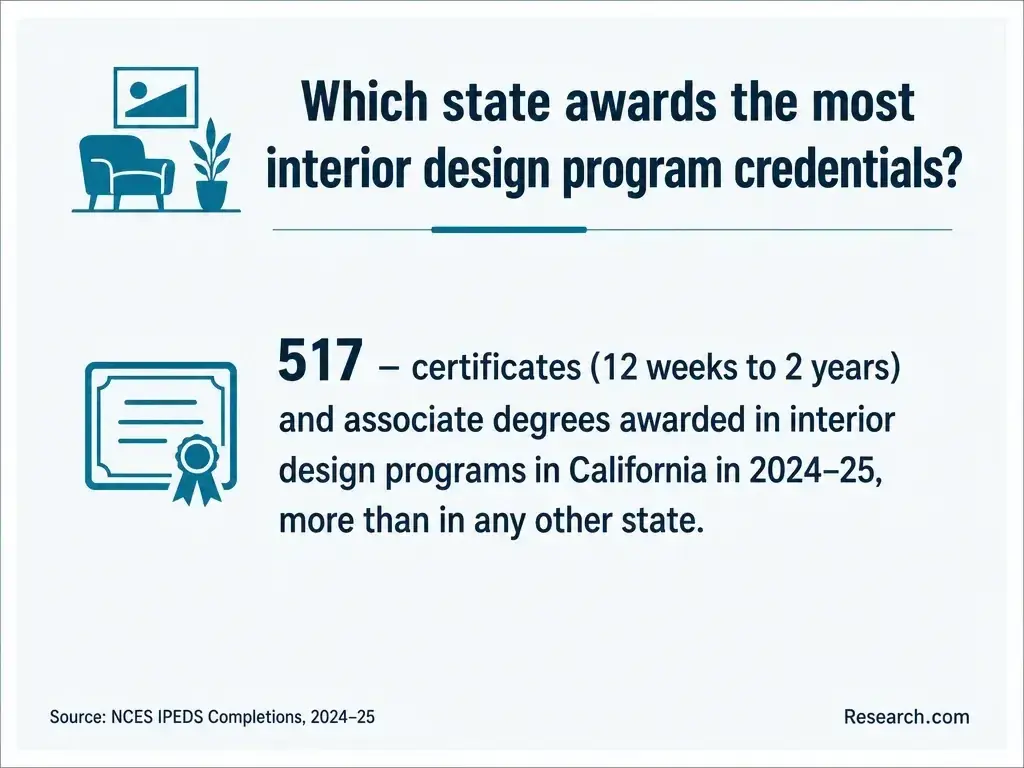
There is no defensible single average here for all Lancaster interior design training: providers, credentials, study loads, and included supplies differ, and some work-based learning is paid rather than tuition-funded. A published tuition figure is a starting point, not the amount needed to become job-ready. Request a written, program-specific estimate for your intended enrollment term.
When comparing offers, put these costs on the same footing so that a shorter-looking or cheaper-looking program does not conceal necessary expenses:
- School charges: tuition, mandatory fees, required courses, and any additional term needed because of course scheduling.
- Project expenses: computer and software access, printing, samples, model-making supplies, and portfolio production.
- Career-entry expenses: transportation to campus or project sites, optional certification-related charges, and earnings forgone while attending classes or unpaid work.
- Offsets: grants, scholarships, eligible aid, employer support, and wages from relevant work.
Ask the financial aid office whether the specific program qualifies for federal aid; institutional participation alone does not establish eligibility for every course or credential (Federal Student Aid). A guide to online college courses that accept fafsa can help frame aid questions, but it does not verify aid eligibility for an interior design program. For return on investment, consider completion probability, aid and debt, foregone earnings, the pay difference between your current work and plausible first jobs, and how long you expect to use the training.
The answer must come from the individual program's current catalog. Interior design-related training may award a course-completion certificate, a credit-bearing certificate, a diploma, or an associate degree; employer training may provide documented experience without an academic award. Similar titles do not guarantee equivalent studio hours, software proficiency, transfer credit, or portfolio quality.
Institutional accreditation concerns the school, while specialized program recognition concerns a particular curriculum. State authorization concerns permission to operate. None, on its own, grants California's "Certified Interior Designer" title or guarantees employment. If you may continue studying later, ask whether courses carry transferable credit and obtain the receiving institution's written evaluation before enrolling. If your immediate goal is a design-assistant job, compare the credential's cost against the quality of work you will be able to show employers.
Requirements vary by provider and credential. A program may ask for an application, prior education records, placement or prerequisite coursework, and access to a computer capable of running required software. Some courses may be open-entry while a sequenced studio program has limited starting terms. There is no universal interior-design apprenticeship entrance examination or California occupational license that must be obtained before beginning ordinary training (California Council for Interior Design Certification).
Before applying, request the current catalog page that identifies prerequisites, software specifications, required campus attendance, and whether a portfolio is needed for admission or only developed during the program. Working adults should also ask when required courses run and whether prior coursework or demonstrated skills can count toward the credential. An admission offer is not proof that the schedule or total cost fits your circumstances.
Useful instruction should connect design decisions to deliverables an employer or client can evaluate: measured plans, furniture layouts, material and finish selections, visual presentations, and clear revisions after critique. Depending on the program, students may also study design history, color, lighting, accessibility concepts, building-system coordination, budgeting, and professional communication. The U.S. Bureau of Labor Statistics describes interior designers as planning functional, safe spaces and using drawings and product specifications to communicate designs.
Look closely at what students do, not just course titles. Ask how many projects involve real measurements, whether students produce technical drawings as well as mood boards, which software they use, and who critiques the final portfolio. If you want commercial design work, verify that projects address the relevant documentation and code concepts; a curriculum centered entirely on decorative styling may be a poor match. Work in a showroom or design office can add customer and vendor experience, but an employer may not provide systematic instruction in every technical skill.
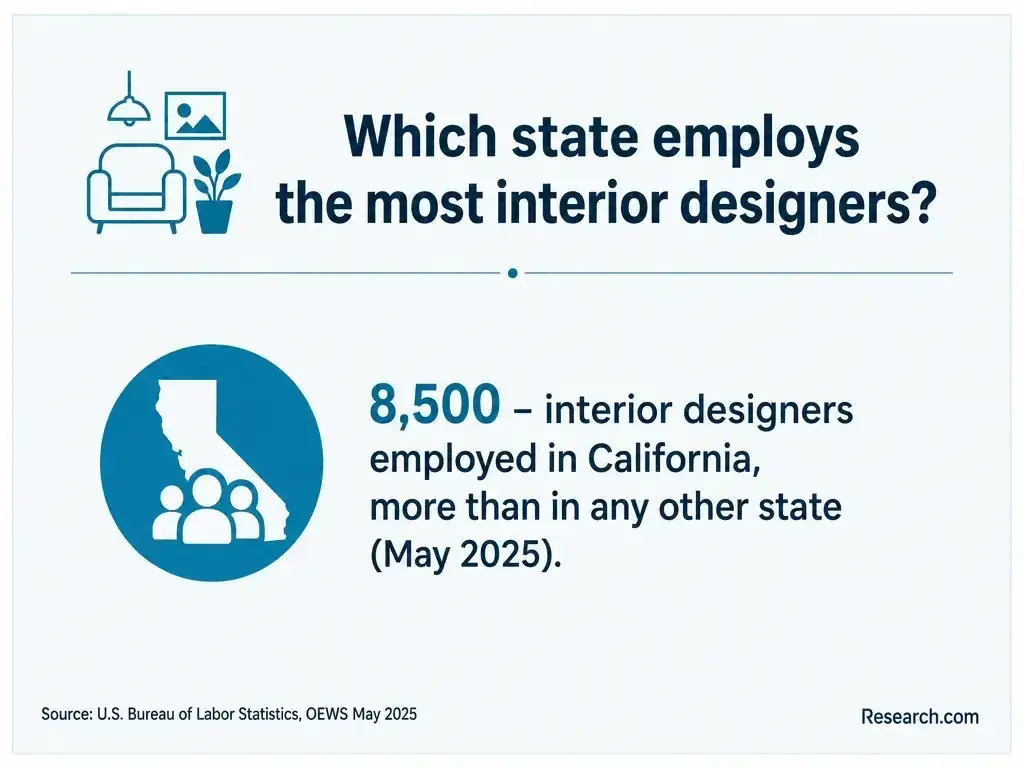
California does not have a general state occupational license for interior designers. It does regulate use of the title "Certified Interior Designer." The California Council for Interior Design Certification administers that title under state law and sets education, experience, and examination requirements, including the IDEX California examination (California Council for Interior Design Certification). Certification is distinct from completing a school program; eligibility depends on the applicable pathway and documented qualifications.
Do not pay a premium for a program solely because it says "certification-ready." Ask the program to identify the exact certification, explain which education requirements its coursework meets, and show how graduates obtain any required experience. Also check the rules for work you intend to perform: an interior design credential does not authorize someone to practice architecture or perform another regulated profession's work. National professional credentials, where relevant to your goals, have their own eligibility rules and are not interchangeable with California's protected title.
Start with the job you want - showroom assistant, residential design support, or a more technical design role - then work backward to the portfolio, skills, and experience requested for that job. A low-cost certificate may be a sound choice for focused skill building; a longer program makes more sense when its additional studio work and documented training match your target. Neither is a good investment if the required courses rarely run or its projects do not resemble the work you hope to do.
Use these questions with each provider, including Antelope Valley Community College District if you are considering its current offerings:
- What exact credential is awarded, and which required courses and studio projects appear on the current program map?
- What is the full expected cost through completion, including software, materials, fees, and any required travel?
- Where and how often do students receive individual critique, and may I review recent portfolios?
- What evidence supports any claims about job placement, transferable credit, or certification eligibility?
- Who verifies institutional accreditation and California authorization, and which claims apply to this specific program?
Check answers against the catalog, aid offer, and the relevant accreditor or regulator rather than relying on rankings alone. A page about schools with dual degree programs addresses a different educational decision; it should not substitute for evidence that an interior design trade program teaches the skills you need.
A plausible progression is from showroom, drafting, or design-assistant work into projects with greater responsibility for client needs, specifications, budgets, and coordination. Experience and a strong portfolio may support specialization in residential interiors, kitchens and baths, workplace interiors, or materials and furnishings. Self-employment is another possible path, but it adds business-development and project-risk responsibilities; a certificate alone does not establish a client base.
Training can also reveal that an adjacent role is a better fit. Someone who enjoys selling and specifying furnishings may prefer showroom work; someone drawn to drawings and documentation may seek technical support roles. Compare postings for each path before choosing courses. Resources about 1 year masters degrees concern a different pathway and are not a substitute for the portfolio and entry-level experience needed for these trade-focused roles.
The U.S. Bureau of Labor Statistics projects 2.7% national employment growth for interior designers from 2025 to 2035. This signals some growth, not rapid expansion, and does not measure vacancies in Lancaster specifically. Openings may also arise when workers leave the occupation. For a local decision, examine current postings across the Antelope Valley and the broader area you are willing to commute to, separating true interior designer positions from retail sales and unrelated drafting jobs.
Employers may evaluate portfolios, software ability, client communication, and project experience alongside credentials. That makes an affordable program more compelling when it provides substantive projects and feedback; it makes an expensive credential harder to justify if it adds little demonstrable work. A guide to what is the easiest doctorate to obtain answers a different search intent and offers no evidence about this local trade labor market.
Most Affordable Interior Design Schools & Degrees in Lancaster for 2027
Education is a consequential investment. Research.com created this ranking to help readers compare affordable training options against other programs in the same occupation and location, rather than against unrelated schools. The team reviews source data for consistency and uses reported measures instead of treating an advertised tuition price as the whole cost.
For the most-affordable ranking, the score uses tuition, cost of attendance, median student debt, and the federal loan default rate. Indicator weights are assigned through an entropy-based method, which gives more weight to measures that differ more across programs. Accreditation and other quality indicators are not part of this affordability score. Research.com's separate best-program rankings also consider student outcomes, earnings, support, and occupation-relevant recognition; readers should not mistake an affordability position for an overall quality judgment.
Only programs with completions reported to IPEDS are included. That boundary matters: an omitted employer-training option or other provider is not necessarily unavailable or unsuitable. The following sources inform the ranking's data collection and verification; occupation-specific relevance varies, and a source's inclusion does not imply that it accredits interior design programs.
- IPEDS database - reported institutional and program information, including completions and costs.
- National Center for Education Statistics - federal education data and definitions.
- College Scorecard database - available cost, debt, and outcomes measures.
- Peterson's database - supplementary institutional information.
- Commission on Accreditation of Allied Health Education Programs (CAAHEP) - occupation-specific accreditation reference where applicable, not an interior design accreditor.
- Accrediting Bureau of Health Education Schools (ABHES) - health-education accreditation reference where applicable.
- Commission on Dental Accreditation (CODA) - dental-program accreditation reference where applicable.
- Dental Assisting National Board (DANB) - dental-assisting credential reference where applicable.
- National Center for Construction Education and Research (NCCER) - construction-training recognition reference where applicable.
- Apprenticeship.gov Partner Finder - reference for registered apprenticeship alternatives where applicable.
Use the ranking to shortlist programs, then confirm each program's current price, curriculum, delivery format, and outcomes directly. More detail on the ranking process is available in Research.com's methodology.
# 2 position
Antelope Valley Community College District - Interior Design.
certificate or diplomaFrequently asked questions about interior design programs in Lancaster
What is the cheapest way to start interior design training?
Compare a focused, credit-bearing certificate with relevant paid entry-level work. Get the full cost of software, supplies, fees, and transportation before deciding; the lowest advertised tuition may not be the lowest total cost.
Does Antelope Valley Community College District offer the credential I want?
Check its current catalog for the exact program name, award, required courses, and availability. Do not assume that related design courses constitute an interior design credential.
Can I become an interior designer with an online certificate?
An online certificate may teach useful skills, but employment depends on the role, portfolio, and experience. Confirm how the program handles physical materials, measured spaces, and critique; completion does not automatically confer California's Certified Interior Designer title.
Is an associate degree better than a certificate?
It may be if its additional studios and technical work serve your target job or longer-term certification plans. A shorter certificate may be more economical for a specific skill or showroom role. Compare curricula and total costs, not credential names alone.
Will an affordable-program ranking tell me which school has the best job outcomes?
No. This affordability ranking scores cost and debt measures, not job placement or portfolio quality. Ask each provider for program-specific outcomes and how they were measured.
- U.S. Bureau of Labor Statistics - Interior Designers
Used to verify salary, employment outlook, and typical education requirements.
https://www.bls.gov/ooh/arts-and-design/interior-designers.htm - NCES College Navigator (IPEDS)
Used to verify programs offered and institutional accreditation.
https://nces.ed.gov/collegenavigator/ - CIDQ - NCIDQ Certification
Professional certification reference for graduates of this occupation.
https://www.cidq.org/ - Antelope Valley Community College District - official website
Official school website (programs, tuition, admissions).
https://www.avc.edu/