# 1 position


Audited and Verified:
Our Editorial and Data Verification Process
Research.com uses government datasets, official education statistics and primary institutional information to support its career and degree guides. Our review process checks factual accuracy, occupational definitions, source dates and the requirements associated with the credentials discussed.
How This Article Was Fact-Checked
Our editorial team verifies salary estimates, employment projections, education requirements and program information against original data providers and official organizations. Salary figures are checked against the relevant occupational definitions and reporting periods. Information about licensure, accreditation and required in-person training is reviewed separately.
Fact-checked and verified on:

Co-Founder and Chief Data Scientist

Reviewed by Karolina Broda
Fact-Checker and Data Verification
Choosing an affordable interior design program in Littleton means looking beyond tuition: the right option must also build a portfolio and teach the technical skills your target job requires. The U.S. Bureau of Labor Statistics projects 2.7% national growth for interior designers from 2025 to 2035, so preparation matters in a competitive field. This guide helps prospective students and career changers compare credentials, costs, practical training, and career prospects. It also accompanies the Most Affordable Interior Design Trade Schools in Littleton for 2027 ranking, created by the Research.com team of data scientists to help students make an informed choice about programs worth considering.
Expect a mix of design studio work and technical instruction. Interior design is more than decorating: designers plan how spaces function, develop drawings and specifications, select materials, and coordinate with clients and construction professionals. A useful program should let you produce work samples - such as measured plans, digital drawings, material selections, and a finished presentation - that demonstrate those abilities (U.S. Bureau of Labor Statistics, Occupational Outlook Handbook).
The routes below lead to different kinds of preparation. Ask Arapahoe Community College which interior design credentials and courses are currently offered at its Littleton campus, since a course listed in a catalog may not run every term.
| Training route | What it generally provides | Best fit and main limitation |
| Focused certificate or short course | Targeted software, drafting, or design skills; a certificate where offered | Useful for adding a skill or testing the field; check whether it includes enough studio work for your target role |
| Community college associate program | An academic credential with a broader sequence of studios and technical courses | Useful for building a substantial portfolio; usually requires more time and total spending |
| Employer-sponsored or direct-entry training | Workplace instruction in a showroom, design firm, or related business; not necessarily a school credential | May provide income and experience sooner, but training breadth depends on the employer |
Unlike some construction trades, interior design does not have a standard paid registered-apprenticeship route that every entrant must complete. Work-based learning is more likely to take the form of an internship, a supervised studio project, or an entry-level job. If speed is your priority, compare a targeted course with other 6 month online courses that pay well - but judge an interior design option by the portfolio and skills it actually produces, not its length alone.
Littleton's position within the Denver metropolitan area makes the practical job search wider than the city itself. Depending on your portfolio and experience, you might seek work with residential or commercial design firms, architecture practices, furniture and kitchen-and-bath showrooms, or businesses that support renovation and space planning. The U.S. Bureau of Labor Statistics identifies design services, architectural and engineering services, and furniture retail among employers of interior designers.
Job titles matter when evaluating a program. A showroom sales-and-design role may emphasize product knowledge and client presentations; a design assistant role may demand accurate drawings, specifications, and familiarity with building-project workflows. Compare postings across the commuting area before choosing electives. Entry through sales support or drafting can provide experience, but it should not be confused with immediately qualifying for every role titled "interior designer."
The U.S. Bureau of Labor Statistics reports a $67,190 national median annual wage for interior designers in May 2025. That figure describes workers across experience levels and locations, not new graduates or Littleton jobs. A local offer will also depend on the role: showroom compensation, design-assistant pay, and earnings from independent client work may have different structures.
For a useful return-on-investment estimate, collect current pay ranges from Denver-area postings that match the credential and portfolio you expect to have. Compare those ranges with your present earnings, likely work hours, training costs, and any income you would give up while studying. Do not use the national median as a promised first-year salary.
Duration depends on the credential and course schedule. A focused software or drafting course can be shorter than a multi-term certificate, while an associate program requires a broader sequence of coursework. Part-time study can reduce the amount of work you miss but extend the time until you have a complete portfolio. Confirm Arapahoe Community College's current catalog requirements and term-by-term course availability rather than assuming every required studio is offered each semester.
There is no single Colorado clock-hour requirement that all interior design trainees must complete for a general occupational license. Individual programs specify their own credit or contact hours; an internship or supervised project is required only if the particular curriculum says so. Ask how much scheduled time involves instructor-reviewed studio work and whether that work culminates in portfolio pieces you can show employers.
Online study can make design history, business topics, and some digital drafting coursework easier to fit around a job. On-campus or hybrid study may offer more immediate feedback on drawings, physical material samples, presentations, and studio projects. What matters is not the delivery label but whether you can complete the same practical work and receive useful critique.
For a Littleton student, travel to campus, a showroom, or a project site can still be part of a hybrid program. Before enrolling, ask whether you need a capable computer and paid design software, how critiques are conducted, and whether any site measurements, material exercises, or internships must happen in person. A fully online program should not be assumed to meet an employer's portfolio expectations or the experience rules for optional certification. If application costs affect your comparison, a list of accredited online colleges with no application fee can help you identify questions about admissions costs, but it does not establish that a listed option teaches interior design.
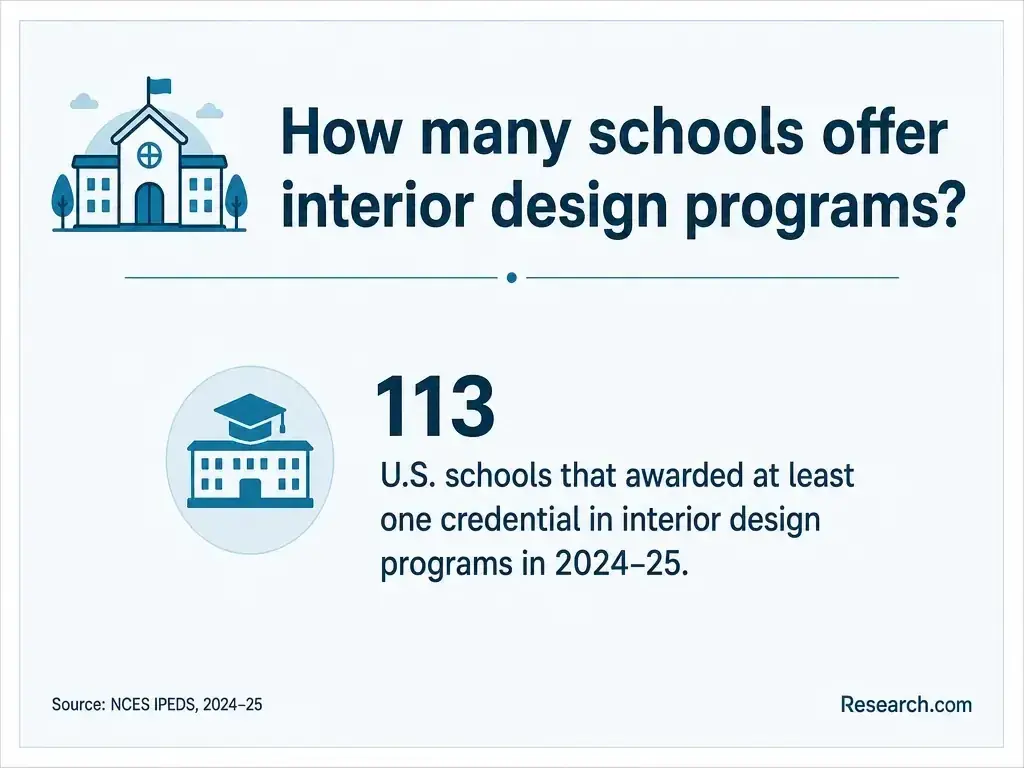
There is no reliable single Littleton-wide average that covers community college programs, private courses, and employer training on comparable terms. Request a current, itemized estimate for the specific credential and attendance schedule you are considering. For a public college, also confirm the tuition classification you would receive; the lowest advertised rate may depend on residency or other eligibility rules.
Calculate total cost to become job-ready, not tuition alone. Include mandatory fees, books, drawing and model-making supplies, computer and software requirements, transportation, and any internship-related expenses. Then account for grants, eligible student aid, employer reimbursement, and wages forgone while attending class. Federal Student Aid notes that aid eligibility depends on both the student and the eligible program; accreditation alone does not establish that a short course qualifies. If you are comparing design with other highest paying trades, compare realistic entry pay and the full cost of preparation rather than salary headlines.
The award depends on the program: it may be a course completion document, a certificate, or an associate degree. These are education credentials, not an occupational license. Ask for the exact award name on the transcript and check whether the coursework can count toward a longer program if you later decide to continue at the same institution.
Institutional accreditation addresses the school; programmatic accreditation addresses a particular curriculum. The Council for Interior Design Accreditation (CIDA) is an interior-design programmatic accreditor, but you should verify the status of a specific program rather than infer it from the institution's name. If your goal is the optional National Council for Interior Design Qualification (NCIDQ) credential, check the Council for Interior Design Qualification's current education, experience, and examination pathways before paying for a course. An academic shortcut - even one found on an easiest masters programs list - does not replace the qualifying training and experience required for that credential.
Requirements vary by provider and credential. A short course may have few formal prerequisites; a community college program may require an application, placement or advising steps, and prerequisite courses before advanced studios. Software-intensive classes may also specify a computer or software subscription. Check the current admissions page and catalog for the exact program rather than treating general college admission as admission to every course.
Ask whether previous drafting or design coursework can meet a prerequisite, whether a portfolio is needed to enter or only to finish, and when required courses are scheduled. If you plan to work while studying, course sequencing matters: being admitted does not mean you can complete every studio in your preferred term.
A career-focused curriculum should connect visual decisions to usable spaces. Look for space planning, measured drawings, digital drafting or modeling, materials and finishes, lighting, client presentations, and the ability to communicate with contractors. Building-code awareness and accessible-design principles are especially important when projects move beyond decoration; a short styling course may not cover them in depth (U.S. Bureau of Labor Statistics, Occupational Outlook Handbook).
Ask to see examples of student assignments and how instructors assess them. A strong portfolio is not simply a collection of attractive images: it should show the problem, your drawings and selections, and the reasoning behind the finished proposal. Digital tools can speed up visualization, but employers still need someone who can check dimensions, understand a client's needs, and revise a plan when site conditions change.
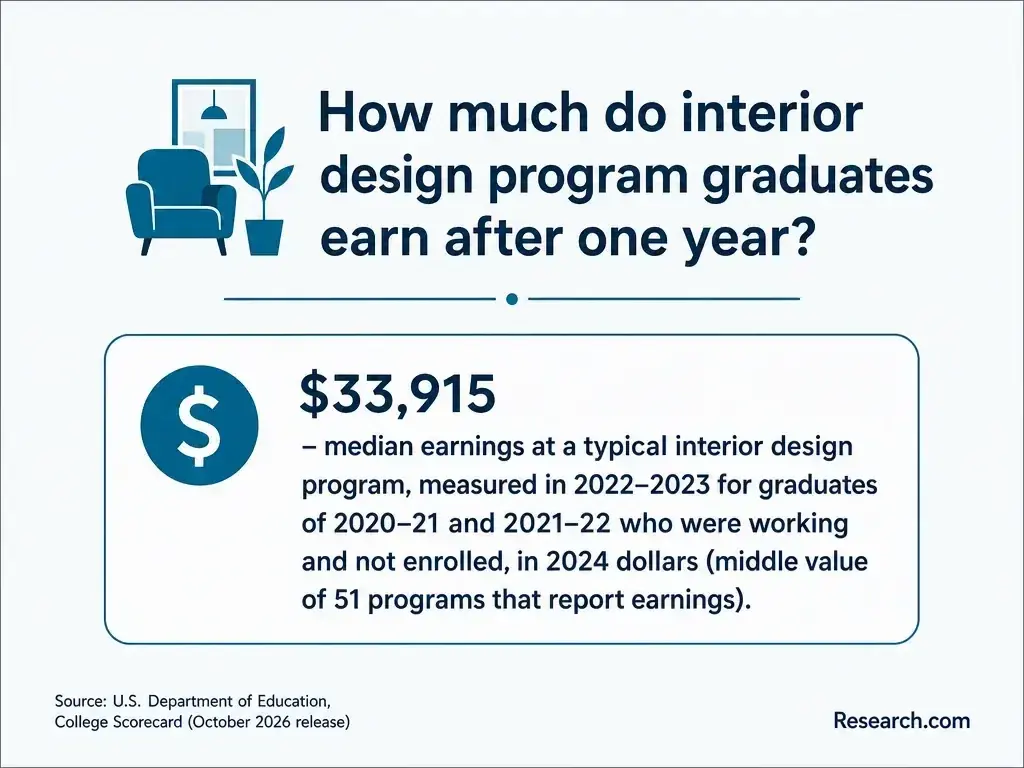
Colorado does not require a general occupational license simply to work as an interior designer (Colorado Department of Regulatory Agencies). That does not authorize a designer to perform work reserved for licensed architects or other regulated professionals. If you want to prepare drawings for a particular construction project, clarify the applicable rules and your role on the project before accepting that responsibility.
NCIDQ certification is a separate, optional professional credential with education, experience, and examination requirements set by the Council for Interior Design Qualification. It is not automatically awarded with a certificate or associate degree. Verify whether the education and supervised work you intend to complete fit a current NCIDQ eligibility pathway; do not assume that institutional accreditation, state school authorization, CIDA accreditation, and certification eligibility mean the same thing.
Choose the lowest-cost option that can credibly prepare you for your specific first role, not simply the option with the lowest tuition or highest ranking position. If you want to test an interest in showroom work, a focused course plus relevant employment may make more sense than a longer program. If you want sustained studio instruction and a larger technical portfolio, compare a fuller credential and its total cost.
Use these checks with admissions staff and program faculty before committing:
A red flag is a promise that an inexpensive credential alone leads to a particular salary, job title, or certification. Return on investment depends on completion, aid, debt, time away from paid work, your current earnings, later earnings, and how long it takes to recover the cost. Rankings are a starting point for the price comparison, not a substitute for checking those factors.
A focused credential can support a move into showroom assistance, product selection, or drafting support if its coursework matches the work. A broader studio-based program may better support applications for design-assistant roles. With experience, designers can pursue more responsibility for client projects, specialize in residential or commercial interiors, or consider independent work; none is an automatic outcome of graduation (U.S. Bureau of Labor Statistics, Occupational Outlook Handbook).
For someone changing careers, the most efficient route may be a portfolio-building course paired with related employment. Someone aiming for technical design work should give greater weight to drawing, documentation, and supervised project experience. A highest paying 4 year degree comparison is not a useful substitute for this decision: the relevant question is whether the training you can afford leads to credible work samples for the jobs you intend to seek.
The U.S. Bureau of Labor Statistics projects 2.7% national employment growth for interior designers from 2025 to 2035. This is a national occupation projection, not a forecast for Littleton or a count of openings available to new trainees. It suggests that students should prepare for competition rather than assume that completing a program will produce a job offer.
The practical local advantage is access to the broader Denver-area market, which lets a Littleton resident search across firms, showrooms, and related businesses without limiting applications to city boundaries. Before enrolling, examine current postings within a commute you would accept. If most roles you want ask for technical drawings or prior project experience, prioritize a program that lets you demonstrate both instead of choosing solely on price.
Investing in training is a consequential decision, particularly when the least expensive program may not offer the coursework or portfolio development a student needs. Research.com's most-affordable ranking compares programs in the same occupation and location using tuition, cost of attendance, median student debt, and federal loan default rates. Weights are assigned through an entropy-based method, which gives more weight to cost and debt measures that differ more across programs. Accreditation and other quality indicators do not contribute to the affordability score; readers should check them separately.
The Research.com team uses the following sources across its trade-program research and verification. Some are relevant to other occupations rather than interior design and should not be mistaken for interior design accreditors:
This approach helps readers compare documented costs among eligible local programs, but it does not capture every private course, employer training option, or program absent from IPEDS. A missing provider is not necessarily unapproved or low quality. Readers can review further details on Research.com's methodology and should confirm current prices and program fit directly before enrolling.
# 1 position
# 2 position
Yes, it is a local provider to investigate. Confirm its current interior design credentials, required courses, Littleton campus availability, and total price directly before applying; offerings and schedules can change.
It may help you enter a support or showroom role, but it may not provide the technical coursework or portfolio expected for other design jobs. Compare the certificate's assignments with actual job postings.
Some coursework can be completed remotely. Check how the program handles instructor critiques, physical materials, site work, and any required internship before assuming its online format meets your needs.
Colorado does not require a general interior designer occupational license. Work reserved for other licensed professionals remains regulated, and optional NCIDQ certification has its own eligibility rules.
If you are exploring the field, compare the full cost of a focused course with entry-level showroom or design-support opportunities that provide workplace learning. If your goal requires a substantial technical portfolio, a longer program may be the better investment despite a higher upfront cost.