# 1 position


Audited and Verified:
Our Editorial and Data Verification Process
Research.com uses government datasets, official education statistics and primary institutional information to support its career and degree guides. Our review process checks factual accuracy, occupational definitions, source dates and the requirements associated with the credentials discussed.
How This Article Was Fact-Checked
Our editorial team verifies salary estimates, employment projections, education requirements and program information against original data providers and official organizations. Salary figures are checked against the relevant occupational definitions and reporting periods. Information about licensure, accreditation and required in-person training is reviewed separately.
Fact-checked and verified on:

Co-Founder and Chief Data Scientist

Reviewed by Karolina Broda
Fact-Checker and Data Verification
Choosing an affordable interior design program in Pasadena, Texas, means looking beyond tuition: will it teach you to produce a portfolio, work with clients, and pursue the credential you want? The U.S. Bureau of Labor Statistics reports a $67,190 national median annual wage for interior designers in May 2025, but that is not a starting-pay estimate. This guide explains costs, training formats, career routes, and Texas registration rules. It also accompanies the Most Affordable Interior Design Trade Schools in Pasadena for 2027 ranking, created by the Research.com team of data scientists to help students make an informed choice.
Expect a mix of design projects and technical communication: measuring spaces, drawing plans, selecting finishes, presenting ideas, and revising work to a client brief. Interior design differs from decorating because many roles also involve accessibility, building-code awareness, specifications, and coordination with construction professionals, according to the U.S. Bureau of Labor Statistics.
In the Pasadena-Houston area, a useful program should give students opportunities to assemble a portfolio and test whether their work fits residential, retail, or commercial clients. Ask to see recent student projects and identify which classes involve supervised studio work, site measurements, or client-style critiques. A course that only teaches visual inspiration may suit a decorator, but it is a weak substitute for technical drafting if that is the work you want.
Possible workplaces include residential design studios, furniture or kitchen-and-bath showrooms, remodeling firms, and commercial design teams serving the wider Houston market. Roles differ substantially: showroom associates may concentrate on products and customers, while design assistants may prepare drawings, specifications, and presentation materials. The U.S. Bureau of Labor Statistics also identifies architectural and design services and furniture-related businesses as employers of interior designers.
Look beyond a program's placement headline. Ask which employers hired recent completers, what those employees actually do, and whether internships or supervised projects produced portfolio work. A commute into Houston may broaden the search, but travel time and transport costs should enter the training and job decision.
The U.S. Bureau of Labor Statistics reports a $67,190 national median annual wage for interior designers in May 2025. A national occupational median includes experienced workers; it is neither a Pasadena wage nor a reasonable promise to someone finishing a short course.
Pay depends on the actual position, portfolio, technical responsibilities, experience, and employer. A retail sales or decorating job may be classified differently from an interior designer job, so do not attach the interior-designer median to every related opening. For a local decision, compare current Pasadena and Houston-area postings by job title, stated experience requirements, and pay range before estimating a return on training.
Duration depends on the credential and schedule, not a universal number of required clock hours. A focused course may cover one skill, such as drafting or digital presentation; a longer certificate can add sequenced studios and a portfolio; an associate-degree program requires a broader set of courses. Part-time study extends calendar time, while an accelerated timetable leaves less time for projects and paid work.
Request the program's current course sequence, contact hours, studio hours, and project deadlines. Then ask whether required classes run every term. If speed is the priority, compare the time to a usable portfolio and a plausible first job - not simply the advertised completion date. The fastest online bachelor's degree for working adults addresses a different educational route; it does not establish how quickly a trade credential can prepare you for interior design work.
Online coursework can work well for design history, software demonstrations, research, and some drawing assignments. On-campus studios make it easier to receive immediate critiques, handle material samples, collaborate, and practice measuring actual spaces. A hybrid program can combine these strengths, provided its in-person sessions are accessible from Pasadena.
The important question is how the program verifies practical competence. Ask whether you must complete supervised projects, visit sites, or present work in person, and whether your own computer can run required software. An entirely online course may help build skills, but its format alone says nothing about professional examination eligibility. If flexible scheduling is decisive, compare the actual studio requirements before using lists of best affordable online colleges for working adults as a starting point.
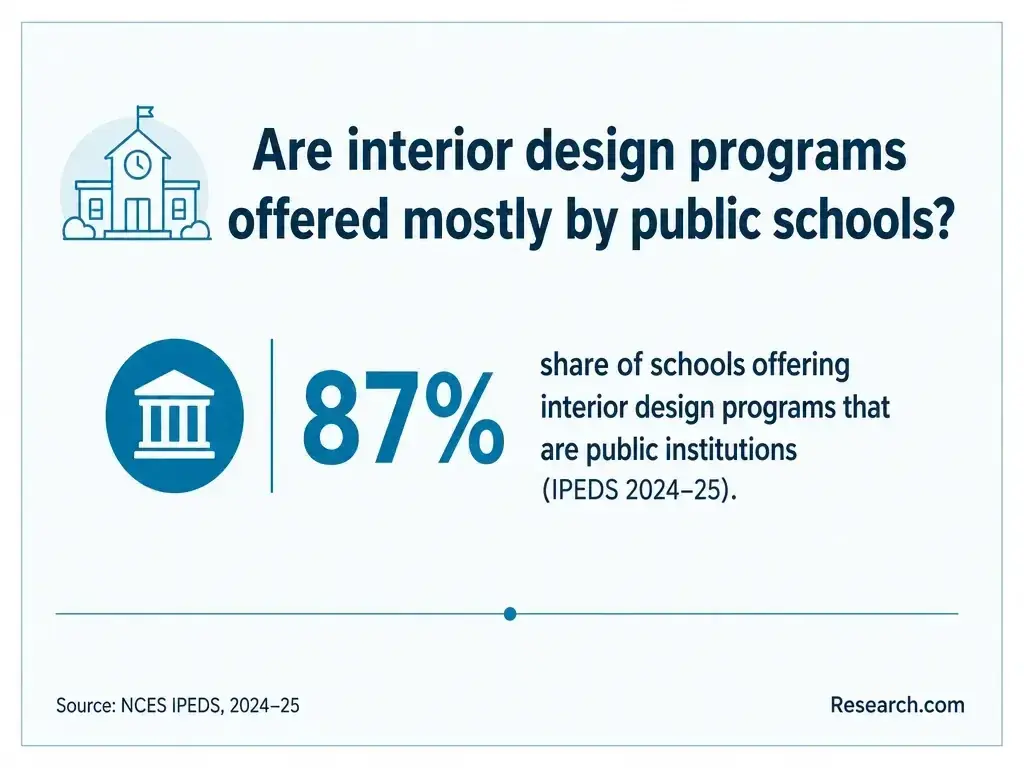
There is no verified, comparable Pasadena-wide average for interior design training. Published prices can refer to a single course, a certificate, or a full associate-degree program, and resident tuition rules can change the public-college price. An average that mixes those options would be more misleading than useful.
Instead, request a written, job-ready total for each option. Include tuition, mandatory fees, a computer and design software, printing and model materials, books, travel to studios or worksites, and any examination costs relevant to your goal. Add earnings you would forgo if the schedule reduces paid work; subtract only grants or employer assistance you are likely to receive. Federal aid depends on both student and program eligibility, so verify the specific credential rather than assuming every short course qualifies. A list of most affordable online schools that accept fafsa cannot establish aid eligibility for a particular interior design course.
Possible awards include a course-completion record, occupational certificate, diploma, or associate degree. They are not interchangeable. A short certificate can document focused software or decorating skills; a longer studio-based credential may produce a stronger technical portfolio. An associate degree is an academic award, but its title alone does not establish eligibility for a professional examination.
Ask for the exact credential name, a transcript or skills record, portfolio requirements, and any transfer or prior-learning policy in writing. Texas registered interior designer status is separate from a school award. If your goal is quicker entry into related work, compare the scope of this credential with other certificate programs that pay well without a degree - but judge interior design training by the tasks you can demonstrate, not by a generic certificate label.
Requirements vary by provider and credential. A short continuing-education course may have few prerequisites; a credit-bearing certificate or associate-degree program may require an application, prior school records, placement steps, or prerequisites for particular courses. Some studios may require a capable computer and software access. Confirm those requirements with admissions before paying a deposit.
If you already have design or drafting experience, ask whether a portfolio, prior coursework, or assessed learning can reduce repeated classes and total cost. Also ask when the first required studio is offered: being admitted is less useful if the classes needed to progress are not available on your schedule.
A technically useful curriculum connects space planning, drafting or computer-aided design, materials, lighting, accessibility, specifications, client presentations, and project budgeting. The U.S. Bureau of Labor Statistics describes interior designers as planning functional spaces and working with drawings, materials, and building requirements; a program aimed at those roles should let students practice more than selecting colors and furnishings.
Inspect the assignments, not just the course titles. A strong portfolio might show an initial brief, measured plan, revisions after critique, material choices, and a final presentation. Ask who evaluates the work and whether students learn to explain practical constraints to clients and contractors. Software fluency is valuable, but the ability to defend a safe, workable design remains important when digital tools make visual mockups easier to produce.
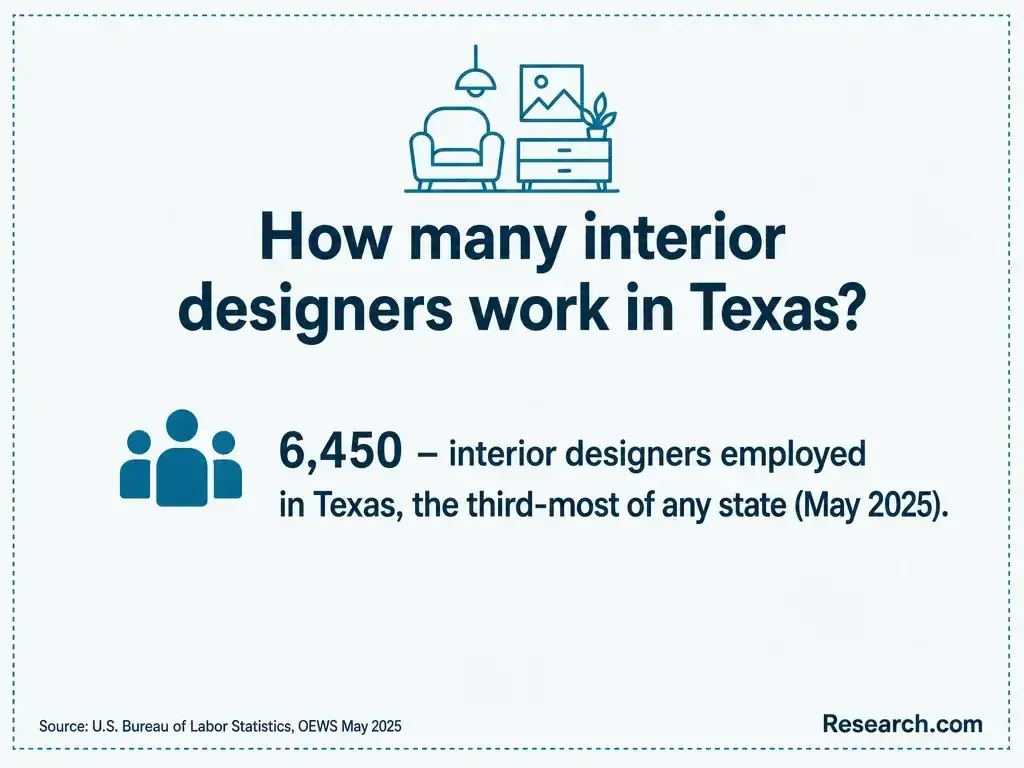
Texas regulates the use of the registered interior designer title through the Texas Board of Architectural Examiners (TBAE). Registration is distinct from completing a school program. People can perform many interior design or decorating activities without holding that title, subject to the rules governing particular services and project types, according to TBAE. Do not assume a certificate permits the use of a regulated title or authorizes work reserved to another licensed profession.
If registration is your goal, check TBAE's current application rules and the Council for Interior Design Qualification's examination eligibility pathways before enrolling. Education, qualifying experience, and examination requirements must be considered separately. Institutional accreditation, any program-specific recognition, Texas school authorization, and professional registration serve different purposes; none automatically substitutes for another.
Choose backward from the work you intend to do. A showroom or decorating role may justify a focused, lower-cost course; technical design work calls for more drawing, code awareness, critique, and experience. A price ranking is useful for finding options to investigate, not for deciding that the cheapest credential fits every goal.
Use these checks when requesting information from each provider:
A common mistake is treating a low tuition figure, an attractive rendering, or a national median wage as proof of return on investment. Weigh completion likelihood, debt, foregone earnings, realistic first-job pay, and the time needed to build experience. A longer program can be worthwhile if its supervised work and credential match your target; it is poor value if you only need one demonstrable skill.
Training can support entry into showroom sales, design assistance, drafting support, kitchen-and-bath design, or decorating, depending on the curriculum and portfolio. With experience, some workers take on larger projects, specialize, manage client relationships, or pursue Texas registration if they meet its separate requirements. The U.S. Bureau of Labor Statistics notes that interior designers may work with architects, builders, and other specialists; that collaboration is worth practicing during training.
Direct entry through a showroom or employer-led training may suit someone who needs wages immediately and can learn product and client skills on the job. A structured trade program may be more useful when you need sustained drawing instruction and portfolio critique. Neither route is an automatic substitute for documented experience or professional eligibility. A master degree that pays well is a different investment and is not a prerequisite for these entry routes.
The U.S. Bureau of Labor Statistics projects 2.7% national employment growth for interior designers from 2025 to 2035. That indicates growth in the occupation nationally, not a forecast of openings in Pasadena or a guarantee that a new graduate will be hired.
Because nearby Houston expands the set of possible employers, search across the broader commuting area - but separate true interior designer openings from retail, sales, and architecture roles with different requirements. Compare repeated skill requests in current postings with each program's projects. If employers ask for technical drawings and a portfolio that a proposed course does not teach, the lower-priced course may cost less yet leave a substantial training gap.
Investing in training is a consequential decision, so the Research.com team evaluates programs against others in the same occupation and location rather than against unrelated schools. The most-affordable ranking considers tuition, cost of attendance, median student debt, and federal loan default rates; an entropy-based method assigns more weight to measures that distinguish programs. Only programs with completions reported to IPEDS can appear. A low-cost rank is not, by itself, a judgment about curriculum quality, portfolio development, or eligibility for Texas registration.
The team draws on the following sources to check institutional, cost, outcome, recognition, and training information. Some cover other trades and should not be mistaken for interior design accreditors:
This approach helps readers shortlist reported programs, then investigate factors a price ranking cannot settle. IPEDS does not cover every employer-led course or other nonreporting training option; absence from the ranking does not establish that a provider is unavailable or poor quality. Research.com's full explanation is on its methodology page.
# 1 position
# 2 position
Not necessarily. Compare the total price with the studio practice, portfolio work, credential, and experience relevant to your target job. A cheaper course may be sufficient for one skill but inadequate for technical design work.
A certificate may help you qualify for some related entry-level work, depending on your skills and the employer. It does not automatically qualify you for the Texas registered interior designer title.
Not for every subject. Design theory and some software work can be taught remotely, but verify how a program handles material selection, measurements, studio critiques, and portfolio assessment.
No reliable citywide average covers the different course and credential types. Request itemized prices and confirm whether you qualify for any resident tuition rate or financial aid.
There is no general interior design apprenticeship requirement for entry-level decorating or design-support work. Employer-supervised experience can still strengthen a portfolio; check the separate experience rules if Texas registration is your goal.