# 1 position


Audited and Verified:
Our Editorial and Data Verification Process
Research.com uses government datasets, official education statistics and primary institutional information to support its career and degree guides. Our review process checks factual accuracy, occupational definitions, source dates and the requirements associated with the credentials discussed.
How This Article Was Fact-Checked
Our editorial team verifies salary estimates, employment projections, education requirements and program information against original data providers and official organizations. Salary figures are checked against the relevant occupational definitions and reporting periods. Information about licensure, accreditation and required in-person training is reviewed separately.
Fact-checked and verified on:

Co-Founder and Chief Data Scientist

Reviewed by Karolina Broda
Fact-Checker and Data Verification
Choosing an affordable interior design program means looking beyond tuition: a low-cost credential is useful only if it builds the portfolio and technical skills your intended job requires. The U.S. Bureau of Labor Statistics projects 2.7% national growth for interior designers from 2025 to 2035, making preparation for a competitive field worth examining carefully. For students and career changers, this guide compares Houston training pathways, costs, pay, and Texas registration rules. It accompanies the Most Affordable Interior Design Trade Schools in Houston for 2027 ranking, created by the Research.com team of data scientists to help students make informed choices about programs worth considering.
Expect a mix of design projects and technical instruction rather than decoration alone. A useful program should have you measure spaces, develop layouts, select materials, produce drawings or digital models, present work to a client, and assemble a portfolio. Programs aimed at commercial interiors should also address accessibility, building codes, specifications, and coordination with construction professionals. The U.S. Bureau of Labor Statistics identifies drawings, material selection, and collaboration with architects and builders as part of interior designers' work.
The right pathway depends on the job you want. A short certificate may help someone move into showroom sales, drafting support, or residential design assistance; an associate degree offers more time for studio work and technical development. Neither credential alone proves that a graduate meets a particular employer's expectations or Texas's requirements for the Registered Interior Designer title.
Ask to see student work from the final term. Strong evidence is a portfolio containing measured plans, documented design decisions, and revised projects - not just attractive mood boards.
Potential workplaces include residential design firms, furniture and materials showrooms, kitchen-and-bath businesses, and firms serving commercial clients. Houston's construction and renovation market also creates opportunities to work alongside contractors, architects, and suppliers, but a training credential does not by itself qualify someone to perform another regulated professional's work.
For an entry-level search, distinguish design support from an independent designer role. Showroom or project-assistant work can provide client contact, product knowledge, and a chance to develop a portfolio while you learn how projects move from drawings to installation. Ask whether an employer offers supervised project experience and software training; those benefits may be worth more than a job title alone.
A verified Houston-specific wage estimate is needed to make a defensible local salary claim. As a benchmark, the U.S. Bureau of Labor Statistics reports a $67,190 national median annual wage for interior designers in May 2025. It includes experienced workers and cannot be treated as an entry-level offer - or as the likely pay for every showroom, drafting, or design-assistant position.
When evaluating Houston jobs, compare pay for the actual role, not just the program's advertised career label. Ask employers whether compensation includes commissions, benefits, paid software training, or reimbursement for work-related travel. For a return-on-investment estimate, compare realistic post-training earnings with what you already earn, then account for debt payments, time out of work, and the possibility that you may not complete the program.
There is no single required number of classroom or clock hours for entry into interior design work in Houston. Certificate timelines vary with course load and whether studios run every term; an associate degree generally takes longer because it includes more coursework and projects. Part-time study can preserve income but may extend the time until you have a job-ready portfolio.
Compare published program maps, not labels such as "accelerated." Ask how often required studios are offered, how many hours each week projects demand outside class, and whether an internship or final portfolio course adds a term. If you are considering Texas Registered Interior Designer status, check the Texas Board of Architectural Examiners' current education, experience, and examination rules before assuming that finishing a short program starts or completes that process.
Online instruction can work well for design history, software demonstrations, and portions of drafting and presentation. On-campus studios make it easier to get immediate critique, handle finish samples, review physical materials, and collaborate on projects. A hybrid program can combine both, but its in-person schedule matters if you work or face a long Houston commute.
Even fully remote coursework should require substantial practical output: measured spaces, drawings, specifications, and a reviewed portfolio. Before enrolling, confirm what equipment and software you must supply, how instructors critique work, and whether any field visits or supervised experiences require attendance. Do not assume that an online credential satisfies an employer's expectations or eligibility for a professional credential.
If a remote option looks inexpensive, compare its total requirements with those of inexpensive online universities that accept financial aid. That comparison is useful for checking aid and delivery costs, but the decisive question here remains whether the interior design training produces the practical work you need.
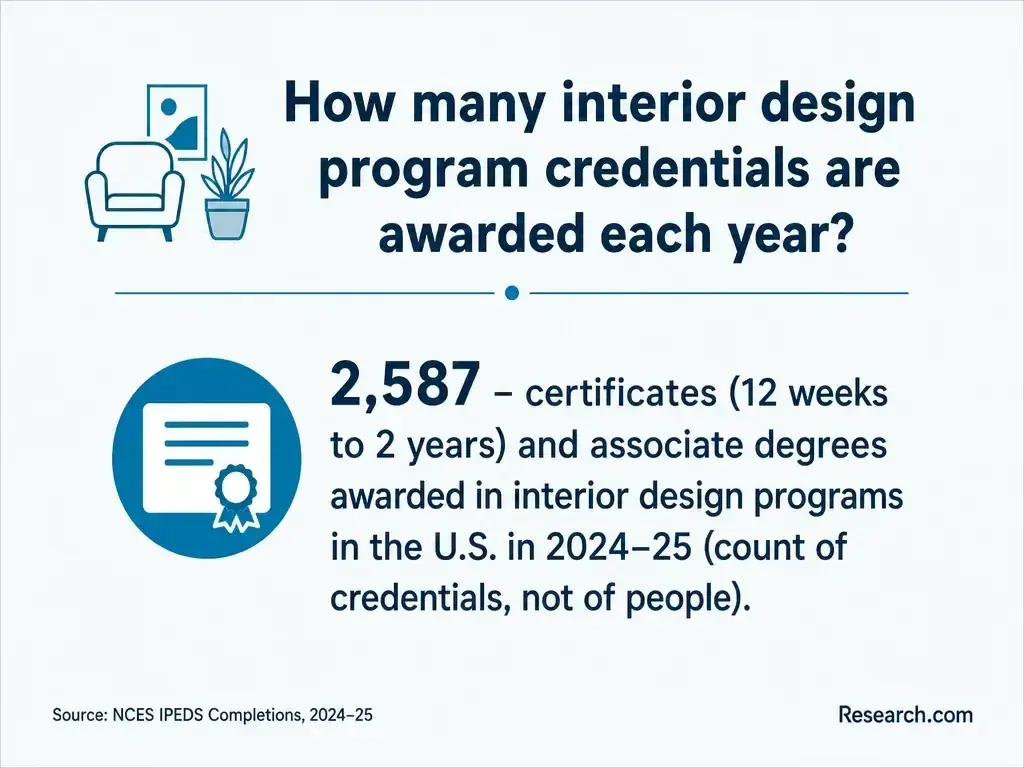
There is no single reliable Houston average that covers short certificates, associate degrees, private training, and employer-sponsored learning on the same basis. Request a program-specific, written cost estimate instead. The categories below show what to include when comparing offers; amounts will vary by provider and by how much equipment you already own.
| Cost category | What to verify | Why it changes the comparison |
| School charges | Tuition by residency status, required fees, and repeat-course charges | A quoted tuition figure may omit mandatory costs. |
| Design supplies | Computer specifications, software access, printing, samples, and project materials | Portfolio assignments can create continuing expenses. |
| Attendance | Commuting, parking, and any field-visit costs | Campus and hybrid schedules have different travel costs. |
| Financing and time | Available grants, loans, employer support, and work hours forgone | Net cost and debt can differ sharply from the sticker price. |
Houston City College's current catalog and financial-aid office are appropriate places to verify its published charges and eligibility; do not rely on an old per-credit figure. Federal Student Aid notes that aid eligibility depends on both the student and the program. Compare the full cost through completion, and ask whether credits from earlier training can transfer before paying to repeat coursework.
The award depends on the program: it may be a certificate, diploma, or associate degree. These are school-issued credentials, not a Texas occupational registration or a professional certification. The distinction matters because two similarly named credentials may contain very different amounts of studio instruction, technical drawing, and assessed portfolio work.
For a narrow career change, a certificate can make sense if its projects match the entry-level jobs you plan to seek. An associate degree may be the better fit if you need a broader sequence of design and technical courses and can accommodate the extra time and cost. Check the exact award on the school's current catalog, whether courses stack toward another credential, and whether credits will transfer; neither stacking nor transfer should be assumed.
Requirements vary by provider and credential. Check the current admissions page for prior-education documentation, placement or course prerequisites, application deadlines, and any portfolio requirement. Also ask about minimum computer specifications: access to design software is an entry cost as well as a learning requirement.
A program may admit you without a prior design portfolio while still expecting substantial drawing and presentation work after enrollment. If you already have work experience, ask whether the school evaluates prior learning or accepts transfer credit - and obtain the decision in writing before choosing a shorter schedule. Admission to a program is separate from eligibility for Texas Registered Interior Designer status.
Look for a progression from measuring and space planning to drafting, digital modeling, materials selection, lighting, specifications, and client presentations. Technical content matters particularly if you want to support commercial projects: the curriculum should introduce accessible design, relevant codes, and the boundary between an interior designer's work and work reserved to other professionals. The U.S. Bureau of Labor Statistics describes these technical and collaborative duties in its interior-designer occupation profile.
Software proficiency is useful, but a course that only teaches software commands is not equivalent to a design program. Ask how many projects receive individual critique and whether final work shows constraints, revisions, and buildable decisions. Those details help employers judge what you can do and help you decide whether the program is worth its cost.
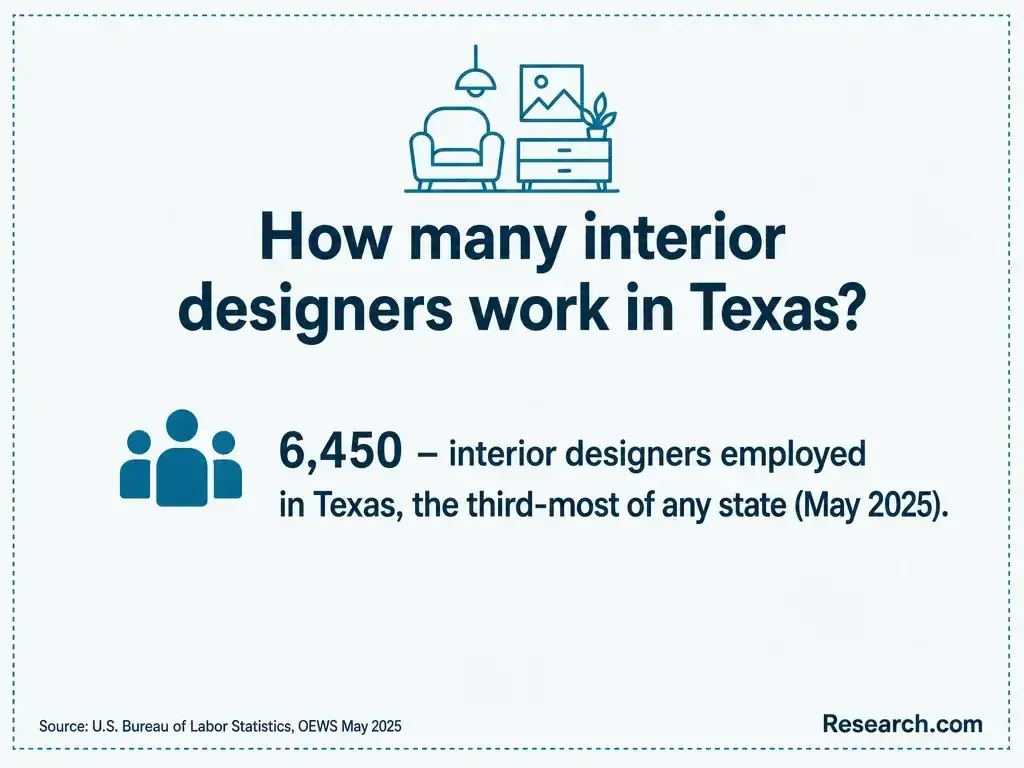
Not for every interior design job. Texas regulates use of the Registered Interior Designer title through the Texas Board of Architectural Examiners (TBAE). Registration is distinct from completing a school program, earning an optional professional certification, or being hired for design-support work. TBAE sets the applicable education, experience, and examination requirements; verify the current route directly with the board before selecting training for that goal.
Likewise, institutional accreditation, state authorization to operate, and any program-specific recognition answer different questions. None automatically confers registration. If a school advertises a route to the Registered Interior Designer title, ask it to identify the precise TBAE requirements its curriculum addresses, what graduates must still complete, and whether its claim applies to your particular credential.
Start with the role you want, then compare programs on evidence of preparation for that role - not ranking position alone. An affordable certificate is a poor investment if it cannot produce the technical drawings an employer requests; a longer program may be unnecessary if your goal is a specific showroom-support position.
Use these questions when speaking with admissions staff and instructors. Request written answers wherever a claim affects cost or credential eligibility:
Verify institutional accreditation with the accreditor and the U.S. Department of Education, and check state authorization separately where relevant. Treat vague job-placement claims, a missing fee schedule, or promises that a credential automatically grants registration as red flags. A search for what is the easiest degree to get online? may be tempting, but ease is a poor substitute for assessed design work. The same is true of comparing this career-entry decision with a cheapest phd list: its price tells you nothing about interior design job readiness.
Possible first roles include design assistant, showroom specialist, kitchen-and-bath design support, and drafting or project support. With a stronger portfolio and work experience, a person may pursue broader residential or commercial design responsibilities, specialize, or consider independent work. Employers may value different combinations of technical drawing, sales, project coordination, and client communication, so match your portfolio to actual Houston job descriptions.
Direct entry through a showroom or employer training can be a practical alternative to school if you can obtain meaningful supervision and project experience. It may reduce upfront tuition, though the training may be narrower and less portable. A trade program makes more sense when you need structured feedback, access to design tools, and a portfolio you cannot readily build at work. For a broader comparison of careers to pursue with a vocational degree, keep the occupation-specific credential and skills requirements in view.
The U.S. Bureau of Labor Statistics projects 2.7% growth nationwide for interior designers from 2025 to 2035. That is an occupational projection, not a forecast of Houston openings or a promise of work for graduates. Local opportunities may also appear under assistant, showroom, and drafting titles rather than "interior designer."
Before paying for training, review current Houston postings for the role you want and note the requested software, portfolio examples, experience, and schedule. Compare those requirements with required - not merely elective - program courses. This gives you a more useful test of local job fit than relying on national growth alone.
Investing in training is a consequential decision, so Research.com evaluates programs against other programs in the same occupation and location. Its most-affordable ranking considers tuition, cost of attendance, median student debt, and federal loan default rates; an entropy-based method gives more weight to cost indicators that differ more across programs. Accreditation and other quality measures do not contribute to this affordability score. Readers should therefore use the ranking to narrow their search, then independently check curriculum, practical training, and career fit.
Only programs reporting completions to IPEDS are eligible. This keeps the comparison consistent but means an unlisted apprenticeship, employer program, or other provider is not necessarily unavailable or poor quality. Research.com uses the following sources in its ranking work; some cover occupations other than interior design and should not be mistaken for interior design approvals:
Research.com separately evaluates its best programs rankings using student outcomes, earnings and return on investment, costs and debt, and quality and recognition. Those rankings assign 20% to relevant programmatic accreditation or industry recognition, 10% to institutional accreditation, 10% to student support, and the remaining 60% to outcomes, earnings, and costs using entropy-based weighting. These are not the weights for the most affordable ranking. See Research.com's methodology for more about the approach.
# 1 position
# 2 position
It can support applications for some entry-level assistant or showroom roles if you also have a relevant portfolio. It does not guarantee a job or automatically qualify you for the Texas Registered Interior Designer title.
Yes, if you can produce measured plans, technical work, and a critiqued portfolio remotely. Confirm software costs and any required in-person activities before enrolling.
There is no general apprenticeship requirement for every interior design job. If your goal is Texas Registered Interior Designer status, check TBAE's current experience requirements rather than assuming ordinary employment or a school credential satisfies them.
Compare total program charges, ask about transfer or prior-learning credit, confirm aid eligibility, and price required software and materials. Also weigh a supervised employer-entry route against the cost of school.
Choose the lowest-cost option that can credibly prepare you for your intended role. Compare completed portfolios, required technical courses, total costs, and any registration-related claims before deciding.