# 1 position


Audited and Verified:
Our Editorial and Data Verification Process
Research.com uses government datasets, official education statistics and primary institutional information to support its career and degree guides. Our review process checks factual accuracy, occupational definitions, source dates and the requirements associated with the credentials discussed.
How This Article Was Fact-Checked
Our editorial team verifies salary estimates, employment projections, education requirements and program information against original data providers and official organizations. Salary figures are checked against the relevant occupational definitions and reporting periods. Information about licensure, accreditation and required in-person training is reviewed separately.
Fact-checked and verified on:

Co-Founder and Chief Data Scientist

Reviewed by Karolina Broda
Fact-Checker and Data Verification
Choosing affordable interior design training in El Paso means comparing more than tuition: you need a credential, a portfolio, and practical skills that match the work you want. The U.S. Bureau of Labor Statistics projects 2.7% national growth for interior designers from 2025 to 2035, making program fit especially important. This guide explains local training options, costs, career prospects, and Texas registration rules. It also accompanies the Most Affordable Interior Design Trade Schools in El Paso for 2027 ranking, created by the Research.com team of data scientists to help students make an informed choice.
Expect training in planning functional spaces, preparing drawings, selecting materials, presenting proposals, and communicating with clients and contractors. Interior design goes beyond decorating: work may involve accessibility, building systems, codes, and coordination with other construction professionals, according to the U.S. Bureau of Labor Statistics.
El Paso Community College is one local public-college option to investigate for current interior-design-related offerings. Verify the exact credential and course schedule rather than assuming every listed course forms a complete occupational program. A short skills certificate may suit someone adding drafting or visualization to existing experience; a more comprehensive associate-degree program may better suit a newcomer who needs sustained studio work and a portfolio. Retail or design-firm training can provide an alternative entry point, but its scope depends on the employer.
Potential settings include residential design firms, furniture and kitchen-and-bath retailers, architectural practices, commercial interiors teams, and businesses supplying finishes or fixtures. The U.S. Bureau of Labor Statistics identifies specialized design services, architectural and engineering services, and retail as employment settings for interior designers nationally. In El Paso, the practical question is whether local openings seek independent design work, sales-supported design, or technical drafting; those roles call for different portfolios.
Ask prospective employers which software, drawing conventions, and project types they use. A portfolio of measured plans, specifications, and revisions may be more persuasive for a design-assistant role than attractive renderings alone.
The U.S. Bureau of Labor Statistics reports a $67,190 national median annual wage for interior designers in May 2025. This is the midpoint for employed workers across experience levels and locations - not an El Paso starting-salary estimate. Design assistants, retail consultants, and drafting-focused workers may also be classified in different occupations, so applying the interior-designer median to every training outcome would be misleading.
For a local pay decision, compare current El Paso postings for the specific job title you could realistically enter, then weigh pay against benefits, commissions, and required experience. Readers comparing college majors that pay well should likewise avoid treating a national occupational median as a return promised by a particular credential.
Duration depends on the credential, course sequence, and whether you attend full time. A focused certificate generally requires fewer courses than an associate degree, but an accelerated schedule may leave less time to develop and revise portfolio projects. Ask El Paso Community College for the current catalog, required credits, prerequisite sequence, and actual term availability; a published course list alone does not establish how quickly you can finish.
There is no single statewide clock-hour requirement for every entry-level interior design job. If your goal is Texas registration as a Registered Interior Designer, check the Texas Board of Architectural Examiners and the Council for Interior Design Qualification for the applicable education, experience, and examination rules before relying on a program's advertised length.
Online delivery can make lectures, research, digital drafting, and some critiques easier to fit around work. On-campus instruction can offer direct feedback on drawings, material samples, measurements, and presentations. Neither format is automatically stronger: compare the work you will produce and the feedback you will receive.
A hybrid option may be useful if travel across El Paso makes frequent campus visits difficult, provided it still offers access to materials, software, and supervised studio critique. Ask how students complete site measurements, group projects, and portfolio reviews. An online credential should not be assumed to meet Texas title-registration requirements simply because it teaches design software.
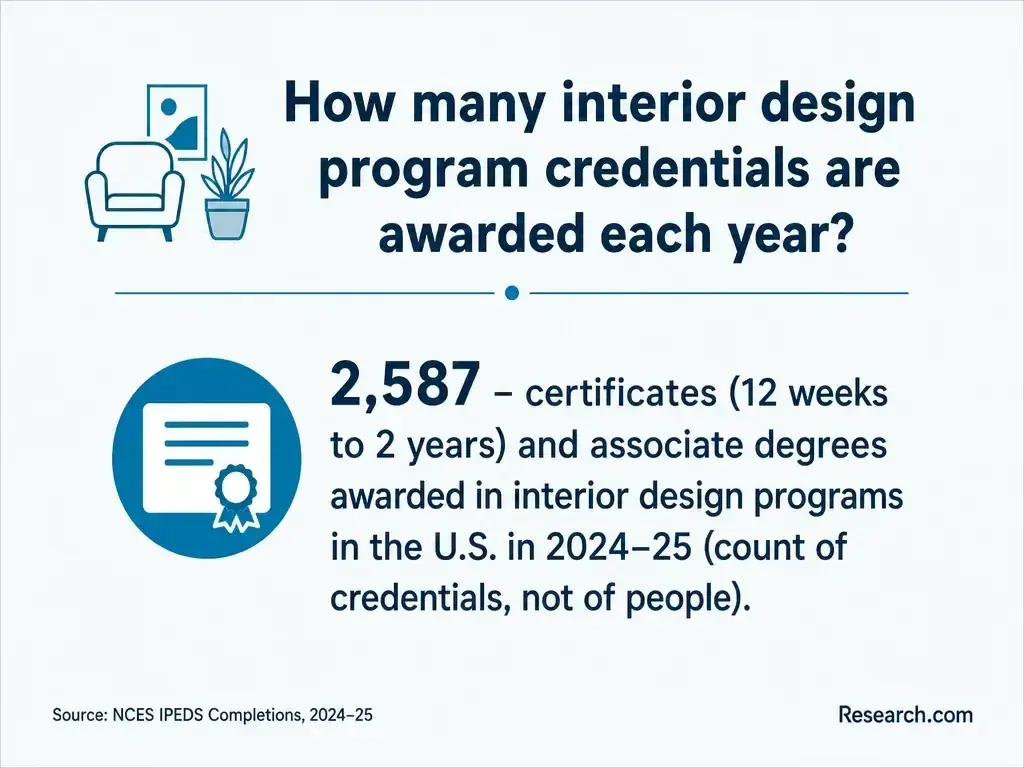
A defensible El Paso-wide average is not available here: certificates, associate-degree programs, standalone courses, and employer training have different prices and are not all captured in college datasets. Request a current, program-specific estimate instead of using a generic trade-school average.
The relevant figure is the total cost to become job-ready. Add tuition and mandatory fees to software or computer requirements, drawing and model-making supplies, books, portfolio production, transportation, and lost earnings from reduced work hours. Then subtract aid you are eligible to receive, not aid advertised as a possibility. Federal Student Aid notes that aid eligibility depends on the student, institution, and program; confirm those details before budgeting around a grant or loan.
For an affordable-versus-accelerated comparison, divide the remaining cost and expected debt by the practical value of the training - not simply by months enrolled. A fastest online associates degree search may reveal a shorter timetable, but speed matters less if the program lacks the studio work your target employer expects.
The award depends on the program: possibilities include a course-completion certificate, an occupational certificate, or an associate degree. These are educational credentials, not interchangeable evidence of job readiness. A short program can be sensible for a worker filling a specific software or drafting gap; a broader credential may provide more opportunities to practice space planning, specifications, and client presentations.
Before enrolling, get the credential's exact name in writing and ask whether completed courses can apply toward a longer program at El Paso Community College. Transfer or prior-learning credit is subject to the receiving program's rules. None of these awards automatically grants the Texas title Registered Interior Designer.
Requirements vary by provider and credential. Check the current program listing for application steps, placement or course prerequisites, software and computer specifications, and any required portfolio. Do not assume that admission to a college also admits you to every occupational course or guarantees a seat when courses are offered.
For a career change, compare entry requirements with what you already know. Someone with retail design or drafting experience may need targeted technical courses rather than repeating introductory material; ask whether prior coursework or documented experience can reduce the remaining requirements.
A useful curriculum links design concepts to deliverables an employer can review: dimensioned plans, digital drawings, material and finish selections, lighting concepts, specifications, and client presentations. The U.S. Bureau of Labor Statistics also identifies problem-solving, visualization, and knowledge of building codes and accessibility as important to interior-design work.
Look closely at the studio component. Ask to see sample assignments and find out whether instructors critique revisions, require students to measure actual spaces, and assess constructible plans rather than renderings alone. Digital visualization tools can speed presentation, but they do not replace accurate measurements, material knowledge, or communication with contractors.
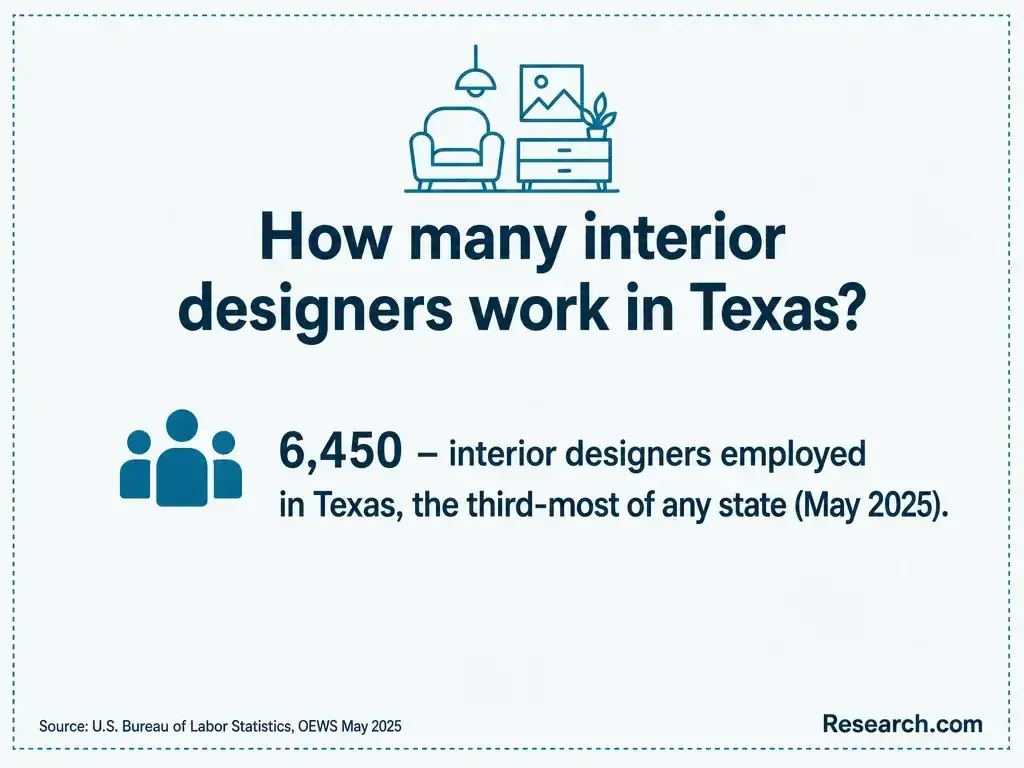
Do not confuse permission to perform interior design work with permission to use a professional title. Texas regulates the title Registered Interior Designer through the Texas Board of Architectural Examiners. The board's registration rules, and the Council for Interior Design Qualification's examination eligibility rules, matter if that title is your goal; an occupational certificate or associate degree alone does not establish eligibility.
Institutional accreditation concerns the school. Interior-design programmatic accreditation, where applicable, concerns a specific program. Neither substitutes for examination, experience, or state registration requirements. If you aim for an assistant, retail, or drafting role rather than the registered title, ask employers what credential and portfolio they require instead of paying for training solely on an assumed licensing need.
Start with the job you want, then test each program against that job. An affordability ranking is a useful shortlist, not proof that the lowest-cost option offers the right portfolio training or schedule. Use these questions when speaking with admissions staff and instructors:
A common mistake is choosing by a broad education label rather than occupational fit. Searches for easy college majors or a phd in 1 year do not answer whether an interior design training program will produce a relevant portfolio. For this decision, prioritize verified cost, completion feasibility, and the work you can show an employer.
Training may support entry into design assistance, furniture or finish selection, kitchen-and-bath sales design, or drafting support. Moving toward responsibility for complete projects usually takes stronger technical work, client experience, and a portfolio demonstrating decisions from initial plan through revision. Self-employment adds estimating, contracts, and client acquisition to the design skills required.
If you prefer concentrated drawing or specifications work over frequent client-facing sales, compare the daily duties in job postings rather than choosing by title alone. A guide to best careers for introverts may help frame that preference, but interior-design roles still require communication with clients, vendors, or project teams.
The U.S. Bureau of Labor Statistics projects 2.7% national employment growth for interior designers from 2025 to 2035. That projection does not measure El Paso openings or predict how quickly a new entrant will find work. Because design-assistant and retail roles can appear under different occupational titles, search those titles separately when assessing the local market.
Use postings to identify repeated requirements - such as drafting software, construction documents, sales experience, or bilingual client communication where specified - then compare them with the projects in a prospective program. If local openings do not match your intended specialization, consider whether remote collaboration, a different entry role, or geographic mobility is realistic before committing to training costs.
Investing in education is a consequential decision. Research.com created this ranking to help readers compare interior design programs with other options in the same occupation and location, using consistent, verifiable measures. Only programs with completions reported to the Integrated Postsecondary Education Data System (IPEDS) are eligible; an omitted provider may still offer legitimate training.
The most affordable ranking scores tuition, cost of attendance, median student debt, and federal loan default rate. Weights are assigned through an entropy-based method, which gives more weight to measures that vary more across eligible programs. Accreditation, student support, and other quality indicators are not part of this affordability score. Readers should therefore use the ranking to narrow a cost comparison, then independently check curriculum, practical training, and career fit.
For context, Research.com's separate best-program rankings also evaluate completion and retention, earnings after completion, institutional accreditation, relevant programmatic accreditation or industry recognition, and support services. Those measures should not be mistaken for components of this affordability ranking. The team draws on the following sources across its trade-program ranking work; occupation-specific sources do not necessarily apply to interior design:
See Research.com's methodology for more about the ranking approach. Cost and debt measures cannot establish whether a particular interior design credential meets an employer's expectations or Texas requirements for a protected professional title.
# 1 position
# 2 position
It is a local public college worth checking. Confirm its current interior-design-related courses, available credential, schedule, and total cost directly before applying; offerings can change.
It can help with a targeted assistant, retail, or technical skill role, but employers may also expect a portfolio and experience. Compare the certificate's projects with actual job requirements.
Some coursework can be remote. Check how the program handles measurements, materials, studio critique, and portfolio development, and independently verify any requirements tied to Texas registration.
Texas regulates use of the Registered Interior Designer title. Check the Texas Board of Architectural Examiners for current title-registration rules; do not assume a school credential itself grants registration.
A manageable total price matters, but so do the likelihood of finishing, relevant hands-on projects, portfolio quality, debt, and fit with attainable jobs. Compare those factors against your current earnings and other training routes.