# 1 position


Audited and Verified:
Our Editorial and Data Verification Process
Research.com uses government datasets, official education statistics and primary institutional information to support its career and degree guides. Our review process checks factual accuracy, occupational definitions, source dates and the requirements associated with the credentials discussed.
How This Article Was Fact-Checked
Our editorial team verifies salary estimates, employment projections, education requirements and program information against original data providers and official organizations. Salary figures are checked against the relevant occupational definitions and reporting periods. Information about licensure, accreditation and required in-person training is reviewed separately.
Fact-checked and verified on:

Co-Founder and Chief Data Scientist

Reviewed by Karolina Broda
Fact-Checker and Data Verification
Choosing an affordable interior design program means looking beyond tuition: the credential, portfolio work, software training, and commute all affect its value. The U.S. Bureau of Labor Statistics reports a $67,190 national median annual wage for interior designers in May 2025, but that is not a starting salary. This guide helps Santa Rosa students and career changers compare training routes and costs. It also accompanies a Most Affordable Interior Design Trade Schools in Santa Rosa for 2027 ranking created by the Research.com team of data scientists to help students make an informed choice about programs worth considering.
Expect to learn how to turn a client's needs into a workable interior plan - not just how to select colors and furnishings. Training may combine space planning, drawing, materials, lighting, building-code awareness, computer-aided design, and presentations. A portfolio of completed projects is especially useful when seeking an assistant or showroom role. Confirm the actual assignments and software in a program's current course outline rather than assuming every similarly named certificate teaches the same skills.
For a local public-college option, examine Santa Rosa Junior College's current catalog for its interior design offerings, course sequence, and awarded credential. Short, targeted instruction can make sense for someone already working in a showroom; a longer sequence with studio projects may better suit a newcomer who needs a portfolio. Neither route automatically provides professional certification or a job.
Interior design is not generally entered through a standard registered apprenticeship. Paid showroom, drafting, or design-assistant work can nevertheless supplement classes and build client-facing experience. Ask whether a program offers employer projects or internships, and whether participation is required, optional, or arranged by students.
Potential settings include residential design practices, furniture and kitchen-and-bath showrooms, renovation businesses, and firms serving hospitality or commercial clients. Sonoma County's mix of homes, hospitality properties, and retail services creates different project types, but it does not mean every employer hires entry-level designers. A student interested in hospitality interiors, for example, should look for coursework that addresses durable materials, accessibility, and coordination with contractors - not only residential styling.
Early roles may be titled design assistant, showroom consultant, or drafting assistant. Read local job postings before choosing a program: they reveal whether employers want a portfolio, particular drawing software, sales ability, or site-measurement experience. If suitable openings are limited nearby, factor travel to other Bay Area worksites into the career decision.
A reliable Santa Rosa-specific starting wage is not established here, so the national figure should be used as context, not a local earnings forecast. The U.S. Bureau of Labor Statistics reports a $67,190 median annual wage in May 2025 for U.S. interior designers. Half of workers in the occupation earned less and half earned more; the measure includes experienced workers and does not isolate recent certificate completers.
Pay also depends on the role. Showroom sales positions may combine wages and commissions, while independent project income can fluctuate and must cover business expenses. For a realistic return-on-investment estimate, compare wages advertised for the specific entry-level jobs you would pursue with your current earnings, training costs, and the time you would give up to study.
Duration depends on the credential and course schedule. A focused course can develop one skill, such as digital drafting, while a multi-course certificate takes longer and provides more opportunities to build a portfolio. An associate degree includes a broader course sequence than a short occupational certificate. Check Santa Rosa Junior College's current catalog for the applicable units, prerequisites, and course rotation; do not assume required studio courses run every term.
There is no universal California clock-hour requirement for entering an ordinary interior design job. Contact hours still matter for learning: ask how much supervised time you will spend drawing plans, revising designs, and presenting work. Part-time study may preserve income but delay the portfolio and job search; an accelerated schedule may reduce elapsed time while leaving less room for paid work.
Online coursework can work well for design history, introductory concepts, and some software assignments. In-person study can make it easier to receive immediate drawing critiques, inspect physical samples, measure spaces, and collaborate on presentations. A hybrid format can offer both, provided its studio access and required meetings fit your schedule.
Compare formats by asking where practical work happens, not just where lectures appear. Can you use the necessary software on your own computer? Are critiques live? Must you travel for materials labs, site visits, or final presentations? A program marketed as online should not be assumed to meet any professional certification requirements without checking those requirements separately.
Lists of top accredited online schools with no application charge may help identify an application-cost question, but an application fee is a small part of the decision here. Portfolio feedback and access to hands-on work matter more for occupational preparation.
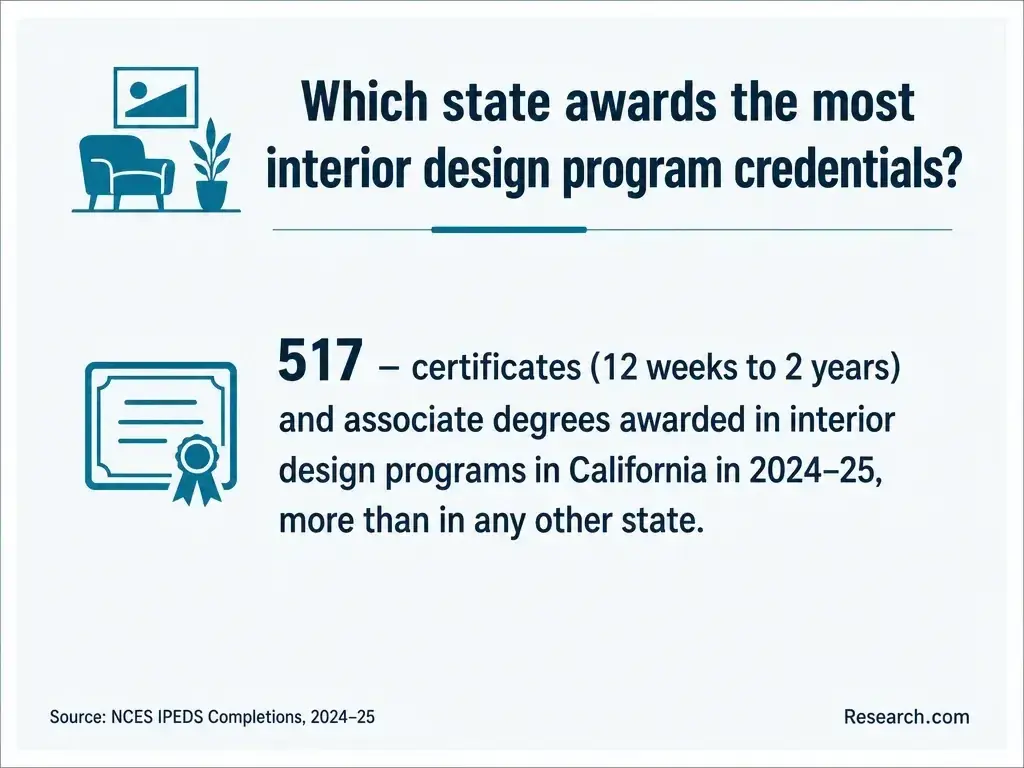
There is no single defensible average for Santa Rosa interior design training: course counts, residency, format, and included supplies vary. The clearest public-college starting point is California's statewide community college enrollment fee. It is a per-unit fee, not a complete program price or a confirmed 2027 quote (California Community Colleges Chancellor's Office).
Build a job-ready budget from the required units, mandatory campus fees, books, drawing and presentation materials, software or computer access, and transportation. Add any optional certification application or exam costs only if that credential serves your goal. Ask whether you qualify for the California College Promise Grant, which can waive eligible community college enrollment fees; a waiver does not necessarily cover supplies or living expenses (California Community Colleges Chancellor's Office).
An inexpensive program is not automatically the better investment. Compare aid and likely debt alongside completion probability, time away from paid work, the portfolio you can produce, and plausible post-training earnings over several years.
The award depends on the specific program: an individual course may yield credit without an occupational credential, a certificate records completion of a defined course sequence, and an associate degree is an academic award with a broader set of requirements. Verify the exact title and requirements in Santa Rosa Junior College's catalog before using a program's name as shorthand for its credential.
A school-awarded certificate is not the same thing as professional certification. California's "Certified Interior Designer" designation is administered through the California Council for Interior Design Certification under state law; finishing a college course does not automatically confer that designation (California Council for Interior Design Certification; California Business and Professions Code). If certification is your eventual goal, check the certifying body's current education and experience rules before choosing courses.
A search for cheap doctoral programs addresses a very different credential decision. For entry into interior design support work, judge training by its relevant skills, portfolio opportunities, and employer fit rather than by how advanced a credential sounds.
Check the provider's current admission policy and then the requirements for the particular courses you want. College admission does not guarantee a place in every class or remove prerequisites. Ask about placement, prior coursework, software access, registration dates, and whether advanced classes require earlier drafting or design courses. Students with relevant work experience should ask whether credit for prior learning or course placement is available; do not assume employer experience automatically reduces required units.
If accessibility is your main concern, lists of universities with open admission address admission policy rather than occupational fit. For this decision, the more useful question is whether you can enter - and complete - the specific interior design sequence on a workable schedule.
Useful training connects visual decisions to measurements, budgets, safety, and client needs. Look for assignments in scaled plans, furniture layouts, material selection, lighting concepts, digital drawing, and presenting revisions. The U.S. Bureau of Labor Statistics describes interior designers as planning indoor spaces that are functional, safe, and aesthetically appropriate; decoration alone is a narrower skill set.
Compare sample projects before enrolling. A prospective kitchen-and-bath assistant may need accurate plans and product specifications; someone aiming for commercial projects should ask how the curriculum addresses accessibility and coordination with building professionals. Strong portfolios show the problem, constraints, drawings, material choices, and revisions - not just polished final images.
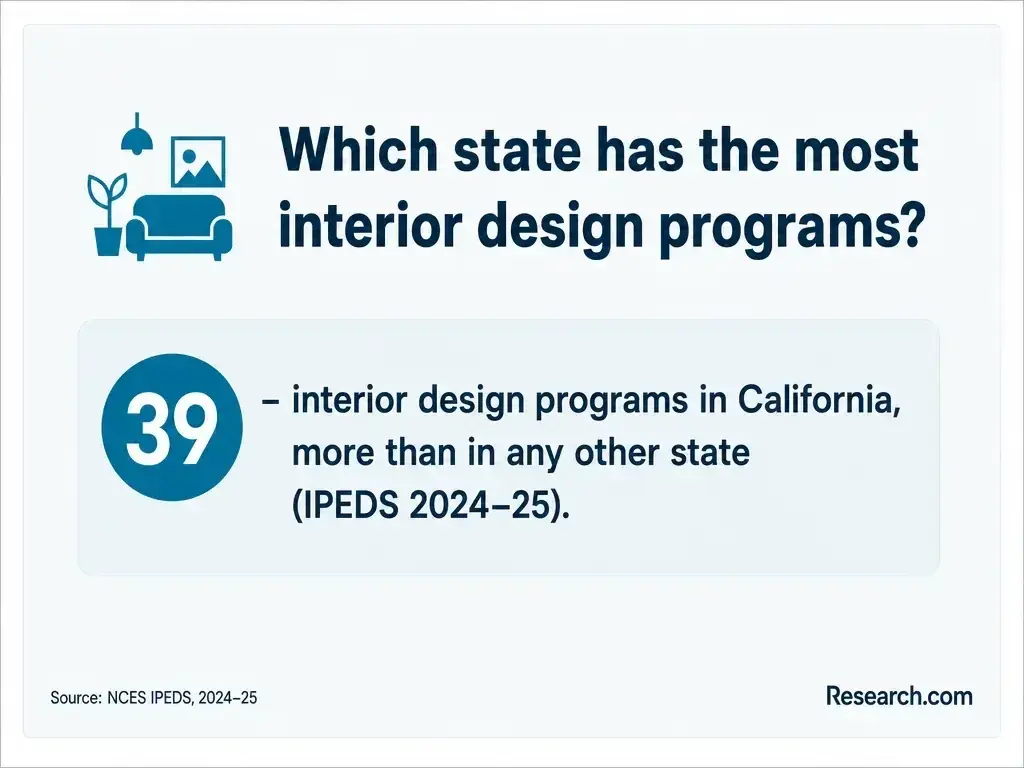
California does not make its voluntary "Certified Interior Designer" designation a blanket prerequisite for all interior design work. The designation has its own eligibility and certification process, so a school credential alone does not authorize someone to use it (California Council for Interior Design Certification; California Business and Professions Code). Requirements for work involving regulated architectural or contracting activities are separate; a design certificate is not a substitute for another occupation's license.
Institutional accreditation, state authorization, and professional certification answer different questions. Accreditation concerns an educational institution or program; certification concerns an individual who meets a certifying body's rules. Before paying for training advertised as "certification-ready," obtain the certifying body's current requirements and ask the school to identify which of them its curriculum satisfies.
Choose backward from your intended first job. For showroom work, prioritize product knowledge, client communication, and scheduling flexibility. For a drafting-assistant role, prioritize measured plans, software practice, and a portfolio with technical drawings. A certificate can be worthwhile when it fills those gaps at a manageable cost; it is less compelling if it repeats skills you already use or offers little feedback on your work.
Use the ranking to form a shortlist, then ask each provider the same questions before committing:
A red flag is a promise of designer-level pay or certification based solely on enrollment. Compare the provider's answers with actual entry-level postings, and get unclear costs or credential claims in writing.
A realistic first step may be a showroom, design-assistant, or drafting-support position. With a stronger portfolio and experience managing client requests, some workers move toward independent projects, specialization, or business ownership. Those are progressions, not automatic outcomes of a certificate. Work involving construction documents or regulated building activities may require collaboration with appropriately licensed professionals.
If you need a narrower, faster skill addition, compare a drafting or software course with a full design sequence. Guides to certification courses that pay well can prompt useful questions about cost and earnings, but a short certificate's title alone cannot establish its value in the local design market.
The U.S. Bureau of Labor Statistics projects 2.7% national employment growth for interior designers from 2025 to 2035. This is a national occupational projection, not a Santa Rosa forecast or a count of local openings. It argues for building demonstrable skills and a portfolio rather than assuming that growth alone will make entry easy.
Check current postings across Sonoma County and commutable Bay Area locations for the titles you would actually accept. If most require experience, a showroom or assistant position alongside training may be more practical than waiting for a designer-titled opening. Broader lists of college majors with best job prospects compare different career choices; for this training investment, local entry requirements and achievable earnings are the closer test.
Investing in training is a consequential decision. Research.com's affordability ranking is designed to help readers compare programs against others in the same occupation and location, rather than against unrelated schools nationwide. The team checks multiple education datasets for credible, comparable information; only programs with completions reported to IPEDS are included.
The most affordable ranking scores tuition, cost of attendance, median student debt, and federal loan default rate. Weights are assigned using an entropy-based method, which gives more weight to measures that differ more among programs. Accreditation and other quality indicators are not part of this affordability score. Research.com's separate best-programs ranking considers student outcomes, earnings, costs, and quality; it should not be confused with this one.
The team uses the following sources to assemble and check ranking information. Some occupation-specific sources are more relevant to other trade rankings than to interior design; their inclusion does not imply that they accredit interior design programs.
Use the ranking to narrow a cost comparison, then confirm the current curriculum, total price, and credential directly with each provider. IPEDS does not cover every short course, employer training route, or apprenticeship; exclusion is not a judgment of quality. More detail on Research.com's approach is available on its methodology page.
# 1 position
# 2 position
Check Santa Rosa Junior College's current course offerings and total per-term charges, including supplies. If you qualify, ask whether the California College Promise Grant will waive your enrollment fees. A single relevant course may be a lower-cost test of your interest than committing immediately to a longer sequence.
A certificate can support entry-level applications when it helps you build relevant skills and a portfolio. It does not by itself award California's voluntary Certified Interior Designer designation or guarantee a designer-titled job.
Some instruction and digital projects may be remote. Check whether the program also requires studio meetings, material work, site visits, or in-person presentations, and how you will receive critiques.
There is no standard registered-apprenticeship requirement for ordinary interior design entry. Relevant paid work in a showroom or assistant role can provide experience while you study.
Use the ranking to compare reported affordability, then verify the current price, course availability, credential, practical assignments, and aid eligibility directly. An affordability score does not measure every feature that makes a program suitable for your goal.